

By Mariama Bundu
The Ministry of Public Administration and Political Affairs (MoPAPA) on Monday, 19 October 2026, engaged journalists in Freetown to provide an update on progress made in transforming Sierra Leone’s public service.
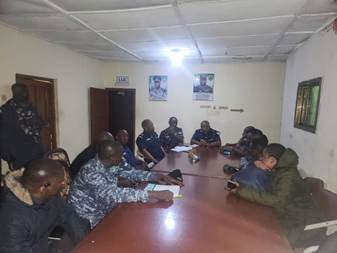
The engagement brought together senior officials of the ministry, representatives of the European Union Project Coordination Unit (PCU-EU), based at the Human Resources Management Office (HRMO), and members of the Fourth Estate.
In his welcome remarks, the Permanent Secretary of MoPAPA said the engagement was important because journalists play a critical role in informing citizens about government programmes and activities. He noted that the ministry had made significant progress in its efforts to reform the public service and wanted the media to have a proper understanding of the reforms to ensure accurate reporting.
He added that the activities were supported through the European Union-funded Multi-Annual Programme Estimate (MAP), which aims to strengthen governance and support public service reforms.
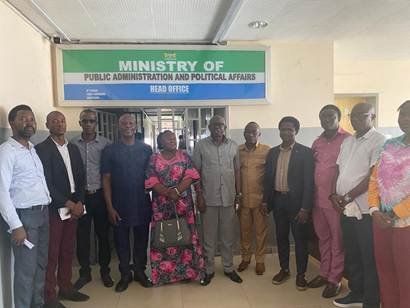
The Programme Coordinator of the EU Project Coordination Unit, Vandi Gamanga, commended MoPAPA for its commitment to implementing activities assigned to the ministry under the EU-funded MAP programme.
He said the Project Coordination Unit was satisfied with the ministry’s progress, particularly its collaboration with HRMO, the Public Service Commission and other stakeholders.
Mr Gamanga noted that the MAP programme was approaching its implementation deadline and urged MoPAPA to complete outstanding activities, properly document deliverables and strengthen measures to sustain the gains made beyond the programme period.
He further described MoPAPA as one of the institutions that had demonstrated a strong commitment to delivering its assigned activities.
Presenting an overview of the ministry’s activities under the Civil Service Reform Component of the MAP programme, the Director of Public Administration, Momoh Conteh, said public service transformation was among President Julius Maada Bio’s development priorities.
He explained that following the 2023 elections, the former Ministry of Political and Public Affairs was transformed into the Ministry of Public Administration and Political Affairs to provide political and technical leadership in transforming Sierra Leone’s public service.
Mr Conteh said the ministry had developed a Strategic Roadmap for the Transformation of the Public Service 2024–2030, which is built around eight key pillars.
These include structural alignment and rationalisation of mandates; human resource management and manpower planning; public sector coordination and management; monitoring and evaluation and performance management; e-governance; pay and incentives; gender inclusion and women’s empowerment; and citizen engagement.
He said the ministry had undertaken several activities with support from the European Union. These included study tours to Kenya and Egypt, short courses in leadership and public policy management, institutional assessments, curriculum development for the Public Service Academy, regional stakeholder engagements, monitoring and evaluation exercises, and training in e-governance.
According to Mr Conteh, transforming the former Civil Service Training College into the Public Service Academy required the development of a new curriculum that could serve the broader public service and link training with career development.
He also said the ministry had conducted stakeholder consultations across the regions to gather contributions from public servants and other stakeholders on the reform process.
On e-governance, he explained that the government was working to move the public service away from paper-based systems towards digital platforms. He added that training and orientation sessions had been conducted for human resource officers and ICT personnel across the country.
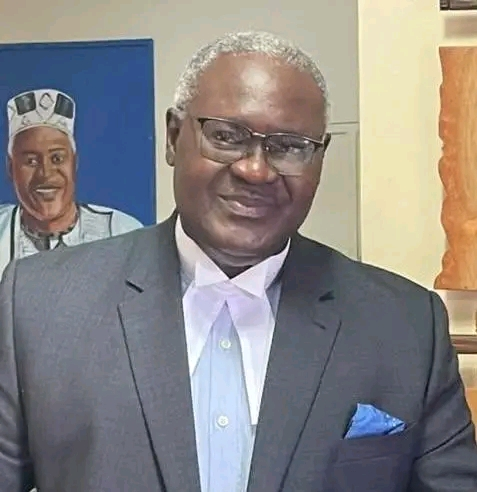
Delivering the keynote address, the Deputy Minister of MoPAPA, Philip Tetema Tondoneh, said significant progress had been made in public service reform since 2023.
He noted that the ministry had received support from development partners, including the United Nations Development Programme (UNDP), the European Union, the Japan International Cooperation Agency (JICA) and the Government of India, for various reform and capacity-building initiatives.
The Deputy Minister highlighted the ministry’s international engagements, including a multi-stakeholder engagement at Bintumani in 2023, South-South cooperation activities, an International Human Resources Conference and capacity-building programmes for public servants.
He said the reforms were intended to address longstanding challenges in the public service, including overlapping institutional mandates, limited career development opportunities, inadequate digitisation and operational inefficiencies.
Mr Tondoneh also highlighted the transformation of the Civil Service Training College into the Public Service Academy, noting that the institution would help build the capacity of personnel in both the public and private sectors.
He said the ministry was also advancing e-governance and procurement reforms, adding that increased digitisation could help reduce opportunities for corruption.
The Deputy Minister further disclosed that a Ministerial Code for Ministers and Political Appointees was being developed with support from UNDP. He said the ministry was also promoting the observance of International Public Service Day on 23 June as an annual national programme.
He added that the ministry was contributing to ongoing constitutional reform discussions aimed at strengthening provisions relating to the public service.
Mr Tondoneh urged journalists to work closely with the ministry to ensure accurate reporting on the reform process, describing effective communication as essential to improving public understanding.
In her closing remarks, the Director of Policy, Planning, Research and Monitoring and Evaluation, Madam Salamatu Martha Kamara, expressed appreciation to the European Union for supporting the ministry’s reform activities.
She appealed for continued support, particularly for gender and social inclusion, which she said required greater attention under the reform programme.
Madam Kamara also thanked journalists for responding to the engagement at short notice and encouraged them to continue engaging the ministry for information and clarification.
She said the ministry remained open to journalists and welcomed constructive criticism as a means of strengthening public administration and improving service delivery.