

By Mariama Bundu
The Sierra Leone Association of Journalists (SLAJ) has renewed calls for stronger constitutional protection of press freedom, freedom of expression and the safety of journalists, as stakeholders validated a proposed standalone chapter on media and free speech in Sierra Leone’s Constitution.
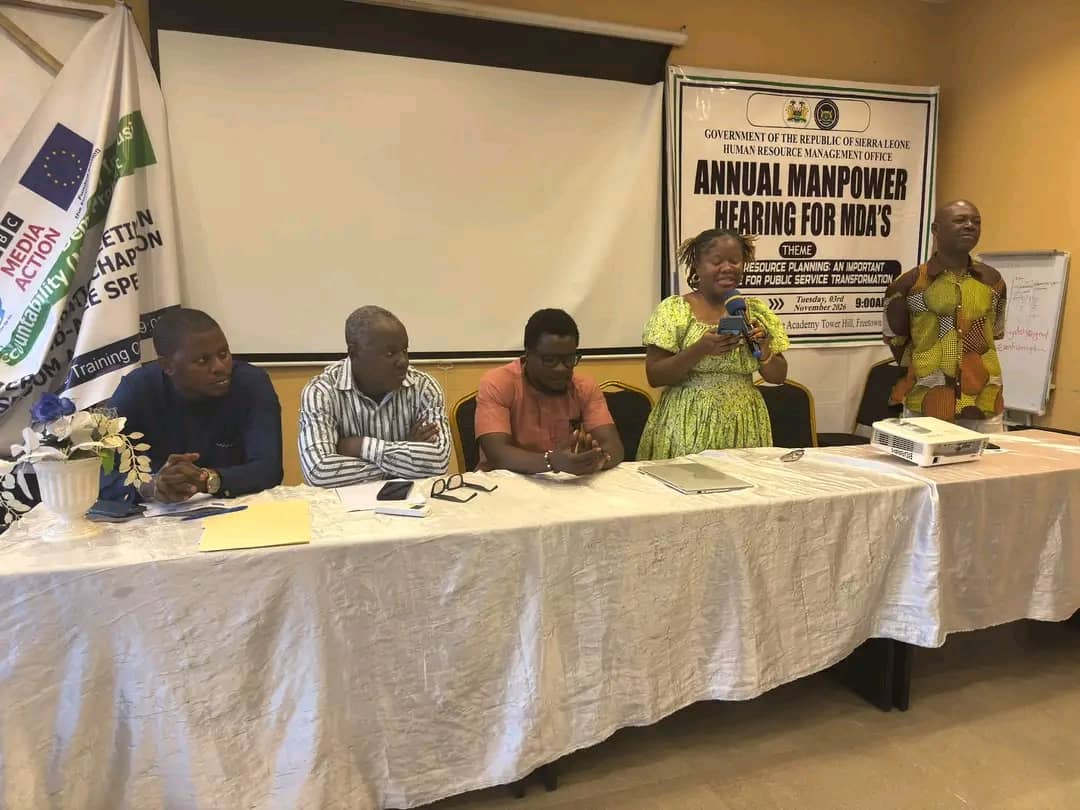
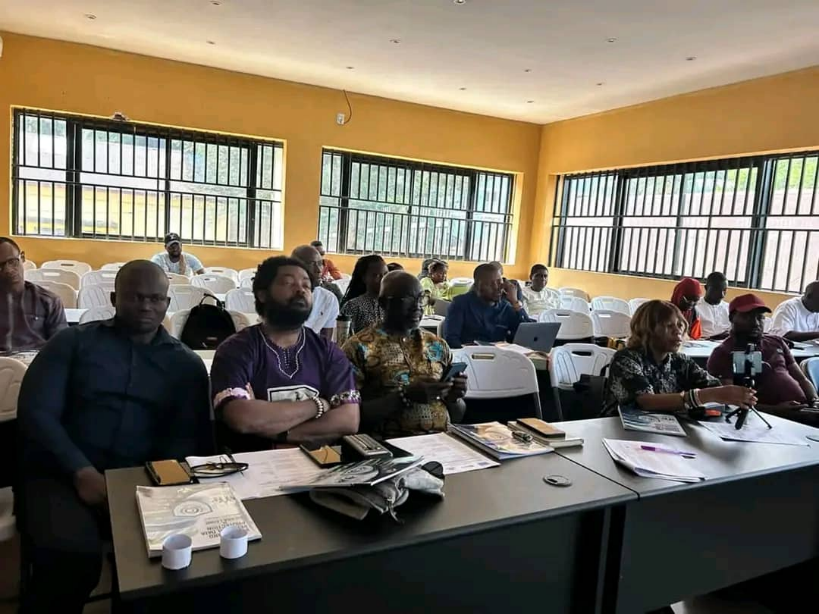
The validation meeting, held on Friday, October 23, 2026, at the Public Service Conference Hall in Tower Hill, Freetown, brought together media practitioners, government officials, civil society organisations, development partners and other stakeholders to review the proposed constitutional framework.
Speaking at the meeting, SLAJ President Alhaji Manika Kamara described the validation exercise as a significant milestone in a process that has spanned more than a decade. He recalled previous attempts to secure explicit constitutional recognition of press freedom, noting that earlier recommendations were not fully incorporated into the final constitutional reform process.
Kamara said SLAJ had engaged the Ministry of Justice on several occasions, including meetings in 2024 and 2025, during which the proposed document was presented for consideration. He disclosed that the current process had received encouragement from the ministry, with assurances that the document could be forwarded to the relevant parliamentary committee after validation and further consultations.
He also revealed that he had recently met with the Chairman of Parliament’s Legislative Committee, who expressed interest in the initiative and requested a position paper on the Disaster Management Act for further consideration.
The SLAJ president stressed that the proposed chapter was not intended solely to protect journalists but also to safeguard the rights of ordinary citizens, bloggers, musicians, civil society activists and all those exercising their right to freedom of expression.
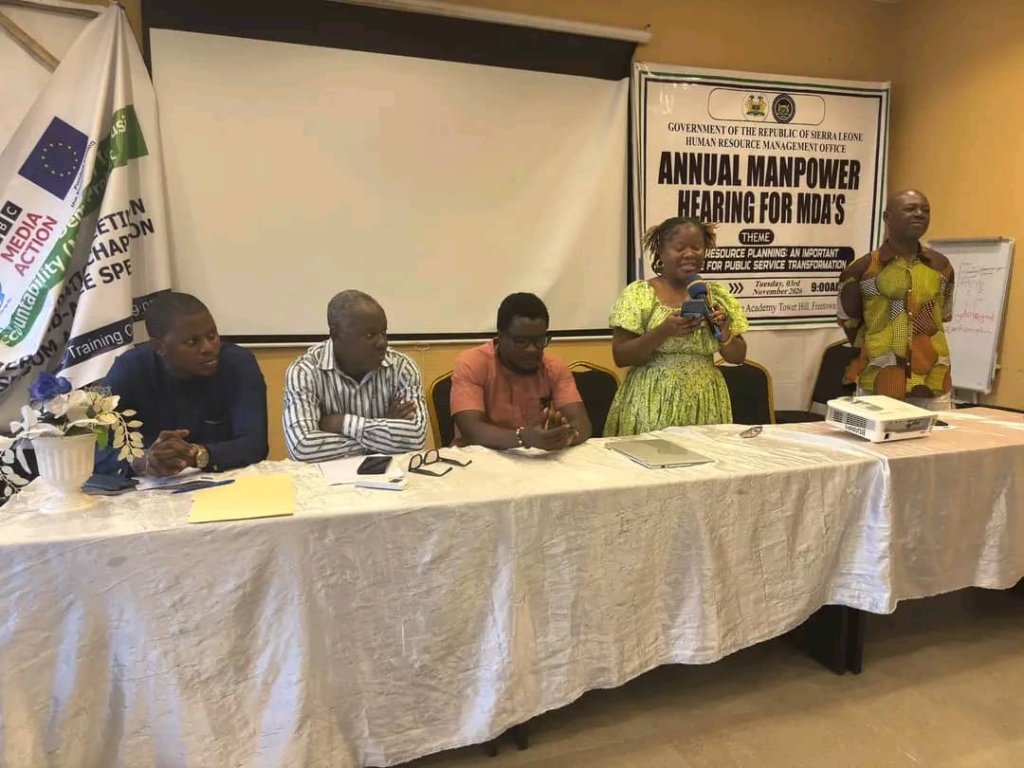
Alphaso S. Kamara, Project Manager at BBC Media Action, described the initiative as vital to strengthening democratic governance, transparency and accountability. He noted that although digital technology had expanded access to information and created new opportunities for public engagement, it had also intensified challenges such as misinformation, disinformation, online harassment, economic pressures on media institutions and threats to journalists’ safety.
He said the proposed constitutional safeguards were particularly important as Sierra Leone prepares for the 2028 electoral cycle, when access to reliable information and the protection of free expression will be essential to informed public participation.
Augustine James, Head of Programmes at the Media Reform Coordinating Group (MRCG), said the proposed framework would benefit both journalists and the wider public by strengthening protections for freedom of speech.
Meanwhile, Estina Taylor Tucker, President of Women in the Media Sierra Leone (WIMSAL), called for greater recognition of women’s participation in media governance. She highlighted the challenges faced by female journalists, including sexual harassment, online abuse, discrimination and limited representation in leadership positions.
Ransford S. C. Wright, National Coordinator of the Independent Radio Network (IRN), described the initiative as a lengthy process that would require stronger political commitment. He urged stakeholders to intensify public engagement to ensure that citizens understood the proposed reforms and supported efforts to strengthen constitutional protections.
As the document proceeds to further consultations, stakeholders are expected to examine its provisions to ensure that the proposed chapter provides effective safeguards for press freedom, access to information, journalistic independence and citizens’ constitutional rights.
The European Union was acknowledged for providing financial support for the media project under which the validation exercise was conducted.
The proposed chapter is expected to contribute to ongoing discussions about strengthening democratic institutions and ensuring that freedom of expression remains protected under Sierra Leone’s constitutional framework.