

By Lemuella Tarawallie
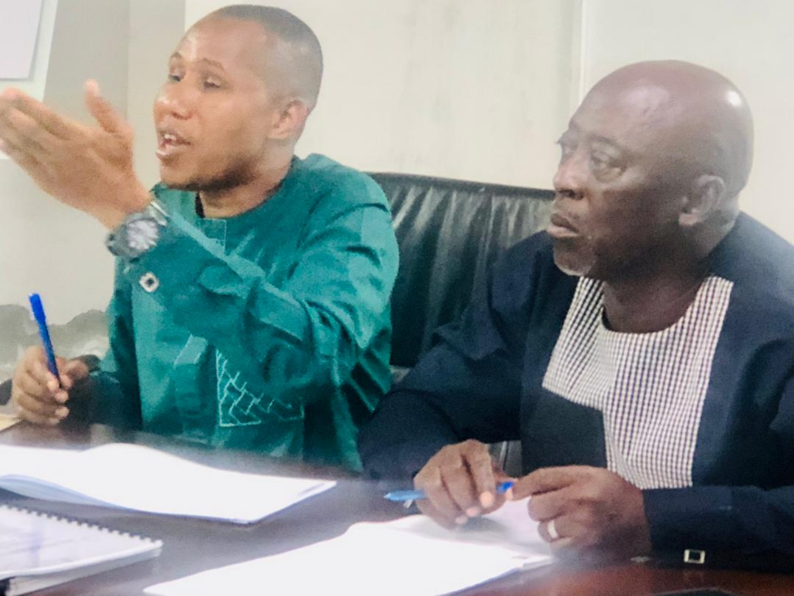
The Parliamentary Oversight Committee on Labour and Employment, chaired by Hon. Mohamed Billor Shaw, has engaged the Sierra Leone Labour Congress in a high-level meeting aimed at strengthening collaboration and addressing critical issues affecting workers across the country.
In his opening remarks, Hon. Billor Shaw emphasized the committee’s representative role in safeguarding the welfare of citizens, noting that Parliament acts on behalf of workers who are often unable to directly voice their concerns.
“We represent those who cannot be present here—the ordinary workers in markets, construction sites, and remote communities. That is why we have called on you to provide us with detailed insights into how you are addressing labour-related challenges,” he stated.
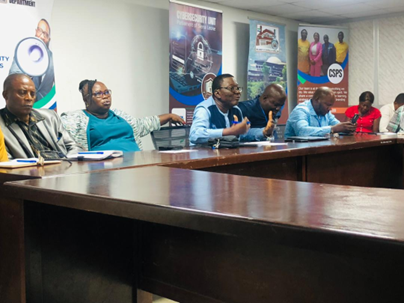
He urged the Labour Congress to provide clarity on its mediation efforts between employers and employees, the successes recorded, and the challenges faced in protecting workers’ rights. He also called for transparency in the management of union contributions, stressing that members deserve accountability.
Hon. Billor Shaw further assured the Labour Congress of the committee’s support, describing it as “a pillar and a hub” for addressing labour issues. He encouraged the organization to bring forward concerns, particularly those arising from workplace injustices that can be resolved through collective action.
Responding on behalf of the Labour Congress, President Mohamed Sallieu Bangura expressed appreciation to the committee for the engagement, describing it as an opportunity to highlight pressing challenges facing workers.
“We represent workers across Sierra Leone, and there are numerous issues affecting them. This platform allows us to share those concerns and work towards sustainable solutions,” he said.
Bangura subsequently invited his team to present on key operational and structural matters within the Congress.
Presentations from Labour Congress officials highlighted that the organization, which has operated for over four decades, serves as an umbrella body comprising 32 affiliate unions representing both formal and informal sector workers. Officials clarified that the Congress operates independently, with no political affiliations, and relies primarily on union dues for funding rather than government subventions.
They further explained that the Labour Congress intervenes in industrial disputes only upon invitation from affiliate unions but takes a leading role in addressing national labour issues such as minimum wage negotiations and economic policies affecting workers.
The Congress also noted its representation on several statutory boards, including the National Social Security and Insurance Trust, where it advocates for workers’ interests.
However, several challenges were outlined during the engagement, including inadequate worker education on labour laws, exploitation through third-party employment arrangements, delayed confirmation of employment status, and non-payment of end-of-service benefits.
Concerns were also raised about the increasing number of foreign nationals occupying senior positions in some institutions, often with significantly better conditions of service than local workers.
Labour Congress officials stressed the urgent need for government support in conducting nationwide worker education programmes, noting that a lack of awareness of labour laws contributes to workplace disputes and exploitation.
“We have progressive labour laws, but many workers and even employers are not aware of them. This gap creates unnecessary conflict and undermines compliance,” a representative stated.
In response, Hon. Billor Shaw acknowledged the concerns and reaffirmed Parliament’s commitment to addressing labour issues through legislative and oversight functions. He emphasized the importance of data sharing and collaboration among institutions to improve labour governance.
“We are working towards gathering credible data from all relevant institutions to ensure proper regulation of employment, including work permits and compliance with labour laws,” he noted.
The Chairman also raised concerns about the employment of foreign workers without proper documentation and the need to enforce local content policies to protect opportunities for Sierra Leoneans.
He called on the Labour Congress to document key issues and formally present them to the committee to facilitate targeted interventions and policy action.
The engagement forms part of the committee’s broader effort to interface with key stakeholders in the labour sector, including the Ministry of Labour and the National Social Security and Insurance Trust, to develop a comprehensive understanding of challenges and drive reforms.
Both parties agreed on the need for continuous dialogue and collaboration to improve working conditions and ensure that the rights and welfare of Sierra Leonean workers are effectively protected.