

By Mohamed Kamara
As darkness falls over Freetown each evening, thousands of families brace themselves for another long night without electricity.
In homes across the capital, rechargeable lamps, candles, and mobile phone torches have once again become essential survival tools as widespread blackouts continue to disrupt daily life.
For many residents, the situation feels like a painful return to the days when Sierra Leone’s capital was infamously described as “the darkest capital in the world.”
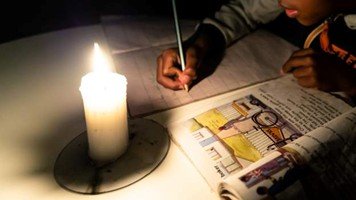
In the densely populated community of Kissy, 14-year-old Mariama Kamara bends over her schoolbooks under the faint glow of a small rechargeable light her mother bought at the market weeks ago.
“When the battery finishes, I stop studying. Sometimes I wake up very early to read before school because there is no light at night,” she said quietly.
Her mother, Hawa, says the family has not had stable electricity for months.
“We pay for electricity, but we hardly see light. The children suffer the most.”
Across the city, the impact of the blackouts stretches far beyond dark homes.
Small business owners say they are barely surviving as fuel prices continue to rise and generators consume what little profits remain.
At a small cold-room shop in Congo Market, owner Ibrahim Sesay says he spends almost all his earnings buying diesel just to keep his freezers running.
“If the generator stops, everything spoils. Fish, chicken, drinks; all gone. We are working but not progressing,” he explained.
For hairdressers, welders, tailors, internet café operators, and shopkeepers, the unstable electricity supply has become both an economic and emotional burden.
Many residents also fear for their safety at night as entire neighbourhoods are plunged into darkness.
Parents worry about children moving through poorly lit streets, while others speak of rising anxiety and sleepless nights caused by the heat and uncertainty.
On social media, frustration continues to grow, with citizens calling on authorities to urgently address the worsening electricity crisis before it further damages livelihoods, education, healthcare, and public welfare.
Community leaders say the situation is no longer simply an inconvenience but a humanitarian and economic issue affecting ordinary Sierra Leoneans already struggling with the rising cost of living.
For families like Mariama’s, however, the crisis is deeply personal.
“We are tired,” her mother said, staring into the darkness outside her doorway. “People just want to live normal lives again.”