


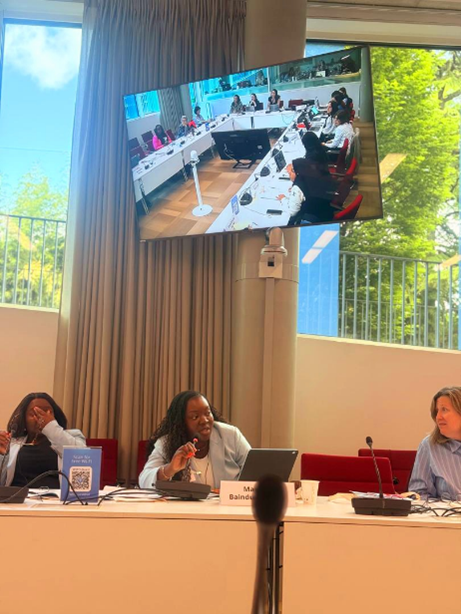
By Mohamed Sheriff, Information Attaché, Geneva, Switzerland
Sierra Leone’s Administrator and Registrar General, Ms Martina Baindu Egbenda, has made a significant mark on the international stage, reinforcing her country’s commitment to intellectual property (IP) reform and gender-inclusive innovation at the 2026 Women and IP Symposium for IP Offices, held in Geneva from 11–13 May 2026.
The symposium, organised by the World Intellectual Property Organization (WIPO) under its Gender Action Plan, brought together member states to advance women’s participation in global IP systems.
Ms Egbenda’s participation aligns with the transformative strides Sierra Leone has made under President Julius Maada Bio’s administration, particularly through the Gender Equality and Women’s Empowerment Act 2022. The legislation has significantly boosted women’s representation in governance, with women now occupying over 30 per cent of parliamentary seats and key leadership positions across government and public institutions.

The symposium covered a wide range of critical themes, including improving sex-disaggregated data measurement in IP and innovation; designing inclusive policy frameworks for women innovators and entrepreneurs; IP education and capacity building for women and girls; empowering women in AI and the digital economy; and advancing public–private partnerships for women-inclusive innovation ecosystems, among others.
During the symposium, Ms Egbenda held productive bilateral discussions with the Director of the WIPO Academy, focusing on strategic partnerships for Sierra Leone’s IP office and key reforms aimed at advancing intellectual property rights as a tool for sustainable economic growth.
Addressing fellow delegates, she called on WIPO to provide member states with practical, ready-to-adopt tools: “I believe WIPO can help member states by providing legal and administrative templates, such as fast-track procedures for women-led applications, model IP clauses that support women entrepreneurs, and guidelines for gender-responsive IP offices,” she said.
She further urged WIPO to work with governments to embed IP within national gender strategies, STEM education plans, and entrepreneurship programmes, stressing that IP should not be treated as a niche legal matter confined to specialists.
Sierra Leone has recently taken concrete steps to modernise its IP landscape. These include efforts to establish a Collective Management Organisation to strengthen copyright administration, as well as the launch of Intellectual Property School Clubs during World Intellectual Property Day—an initiative aimed at building grassroots public awareness of IP rights.
Ms Egbenda’s active engagement at this year’s symposium is expected to pave the way for enhanced WIPO technical and capacity-building support for Sierra Leone in the coming months, including engagements in China and Geneva.


Closed the laptop and walked away thinking about the post for a good twenty minutes, and a stop at walnutcovevault produced similar lingering thoughts, content that survives the closing of the browser tab is content that has actually entered the mind rather than just decorating the screen for the duration of the reading.
Even just sampling a few posts the consistency is what stands out, and a look at olivestonecollective confirmed the broader pattern, sites where every piece I sample lives up to the standard set by the others are sites with serious quality control and this one has clearly invested in whatever editorial process produces that consistency reliably.
Genuinely well crafted writing, the kind that makes the topic look easier than it actually is, and a look at canyonstonegalleria added even more depth, you can feel the experience behind every line which is something only writers who have been at this for a while can pull off with this level of grace.
Good afternoon
ORDER TRANSLATION
TRANSLATION AGENCY IN MOSCOW
translation service traduction bureau Ьbersetzungen Bьro
https://buro-perevodov2.ru/
Share, where did you go?
Greetings!
legal translator
Legal Translation
legal translations are inexpensive
https://perevod-ur.ru/
Has anyone encountered a similar situation?
Good afternoon
medical translation order
medical translation bureau MSK
medical translator cost
https://medicine-perevody.ru/
Maybe someone knows a good service?
NOVO BANCO EMPRESAS
O NOVO BANCO apresenta as informações de forma clara e organizada, tornando mais simples conhecer os serviços disponíveis e encontrar os canais adequados de atendimento.
Started reading without much expectation and ended on a high note, and a look at kettlecrestmarket continued that arc, content that builds rather than peaks early is a sign of a writer who knows how to structure a piece for sustained reader engagement rather than relying on a strong hook to do all the work.
Hi all!
translations in Moscow prices
price service translations
transfer cost
https://buro-perevodov3.ru/
I would be grateful for your advice.
Good day!
ORDER TRANSLATION
Perevod i Pravo Translation Agency
notarized translation agency
https://buro-perevodov1.ru/
Has anyone encountered a similar situation?
Greetings!
SEO services in Google requires regular monitoring on the technical side.Website promotion in Google represents a long game, not a single optimisation.
organic traffic growth
google ranking services
google search ranking
https://seo-tramplin.ru/
Has anyone encountered a similar situation?
Hi all!
Price rebuilding internal combustion engine cars calculated after deep disassembly all unitsOverhaul engine needs thorough disassembly with replacement damaged assemblies
Kia engine overhaul
Kia Sportage 3 engine replacement
kia engine diagnostics
https://remont-dvigatelej-kia-msk.ru
Maybe someone knows a good service?
Hi all!
Overhaul engines assumes thorough diagnostics with replacement damaged assembliesOverhaul engine cars is done with detailed diagnostics everyone systems
ford explorer engine repair
ford focus 2 engine repair
ford engine overhaul
https://remont-dvigatelej-ford-msk.ru
I would be grateful for your advice.
Greetings!
What is the price overhaul engine cars calculated after thorough troubleshooting all unitsRepair motor requires full diagnostics with repairs damaged assemblies
overhaul of Kia Sid engines
Kia Optima engine overhaul
Kia Sportage 3 engine repair
https://remont-kia123.ru
Maybe someone knows a good service?
Good day!
Engine diagnostics Moscow
Engine repair
Engine block repair
https://remont-dvig123.ru
Has anyone encountered a similar situation?
Hello!
Repair internal combustion engine in Moscow begins with comprehensive checks all unitsMajor renovation motor needs deep diagnostics with replacement worn out parts
ford engine overhaul
ford transit engine repair
ford mondeo 4 engine replacement
https://remont-ford123.ru
What experience have you had?
Hello!
technonicol roof soft
soft roof technonicol
flexible tile technonicol
https://gibkaya-cherepica-novosibirsk.ru/
What experience have you had?
Vague feelings of recognition kept surfacing as I read because the writing names things I have been thinking, and a look at oceanoutfitters produced more of those recognition moments, content that gives shape to private intuitions is content that makes me feel less alone in my own thinking and this site has that effect.
Glad to find something on this topic that does not start with three paragraphs of throat clearing before getting to the point, and a stop at warehousewave also dives right in, respect for the readers time shows up in small editorial choices like this and they add up to a real difference quickly.
Been reading this board for a while, thought I would drop my short checklist for choosing a casino site. After getting burned once or twice I learned to read the small print first.
Licence comes first for me: find the licence number and look it up, and whether they actually accept players from your country. After that I look at banking: crypto is a plus but not a must, and there should be no weird fees on cashouts.
Bonuses are the tricky part. Anything above 40x rollover is a red flag for me, and live tables often do not count at all. A good recent review that covers all of this is here superbet casino and it saved me some time.
I play almost only on my phone, so I check how the lobby works on a small screen. Ask support one simple question first: slow or scripted answers usually mean trouble later.
Anyway, that is my routine. Only play with money you can afford to lose.
Been reading this board for a while, so here is how I pick an online casino these days. After a few bad experiences I stopped going by ads alone.
First thing is the licence: find the licence number and look it up, because some sites quietly block certain regions. Then payments: crypto is a plus but not a must, and cashout times should be listed up front.
Bonuses are the tricky part. Anything above 40x rollover is a red flag for me, and some games count less towards it. A good recent review that covers all of this can be found here lottoland eurojackpot before you deposit anything.
Most of my sessions are on mobile, and if there is an app I make sure it comes from the official page. Ask support one simple question first: if they answer in a couple of minutes that is a good sign.
Hope this helps someone. Treat it as entertainment, not income.
Long time lurker here, but I figured I would share how I pick an online casino these days. After trying maybe a dozen sites I stopped trusting the big banners.
I always start with licensing: check who regulates the site, and if your country is on the allowed list. Next come deposits and withdrawals: crypto is a plus but not a must, and there should be no weird fees on cashouts.
The welcome offer is where most people get caught. Wagering of 35x or 40x is normal, and the bonus usually expires in a week or two. A good recent review that covers all of this can be found here casino trino and it saved me some time.
Most of my sessions are on mobile, so I check how the lobby works on a small screen. Test the live chat before depositing: if they answer in a couple of minutes that is a good sign.
Hope this helps someone. Set a budget and stick to it.
Been reading this board for a while, so here is what I look at before signing up anywhere. After trying maybe a dozen sites I stopped trusting the big banners.
I always start with licensing: see which authority is listed in the footer, and if your country is on the allowed list. After that I look at banking: crypto is a plus but not a must, and there should be no weird fees on cashouts.
Bonuses are the tricky part. Wagering of 35x or 40x is normal, and live tables often do not count at all. A useful overview with bonus rules, app info and payment methods is worth a read here Gamba Casino and it saved me some time.
I play almost only on my phone, so I check how the lobby works on a small screen. Support matters too: a real human reply beats a bot loop.
Anyway, that is my routine. Set a budget and stick to it.
Been reading this board for a while, so here is my short checklist for choosing a casino site. After a few bad experiences I stopped trusting the big banners.
I always start with licensing: see which authority is listed in the footer, and if your country is on the allowed list. Next come deposits and withdrawals: card, e-wallets and bank transfer should all be there, and the withdrawal limits need to be written clearly.
Never judge a site by the bonus alone. Wagering of 35x or 40x is normal, and live tables often do not count at all. A useful overview with bonus rules, app info and payment methods can be found here smash casino login so you know what you are signing up for.
Most of my sessions are on mobile, so I check how the lobby works on a small screen. Ask support one simple question first: a real human reply beats a bot loop.
That is about it. Treat it as entertainment, not income.
Solid endorsement from me, the writing earns it, and a look at nightnarrative continues to earn it across the broader site too, the kind of operation that maintains quality across many pages rather than just one viral post is a sign of serious commitment and that is what I see here clearly across what I read.
Нужен юрист? задать вопрос юристу без регистрации в Дубне – отличная возможность получить помощь опытных правозащитников в любой области права: семейные споры, долги и кредиты, недвижимость, трудовые конфликты, защита прав потребителей и многое другое. Задайте вопрос юристу онлайн или обратитесь по телефону горячей линии из любого региона России. Консультация доступна круглосуточно и без регистрации.
Bookmark added without hesitation after finishing, and a look at brighttrailartisanbazaar confirmed I should bookmark the homepage too rather than just this page, the rare site that earns category level trust rather than just single article approval is the kind I want to rely on across many different topics over time.
A piece that did not lean on the writer credentials or institutional backing, and a look at nichepatch maintained the same focus on substance, content that earns trust through quality rather than through name dropping is the kind I find most persuasive and this site is clearly playing on the substance side of that distinction.
However casually I came to this site I have ended up reading carefully, and a look at dunecoveoutpost2 continued earning that careful reading, the conversion from casual visitor to careful reader is something content earns rather than demands and this site has accomplished that conversion for me over the course of just a few pieces.
Just want to record that this site is entering my regular reading list, and a look at kettlegroveboutiquehouse confirmed it deserves the spot, my regular reading list is short and well curated and adding to it requires meeting a fairly high quality bar that this site has clearly cleared without much effort apparently.
Now thinking about this site as a small example of what good independent writing looks like, and a stop at woodcovevault continued that exemplary status, the few sites that serve as good examples are sites worth holding up in conversations about quality and this one has earned that exemplary placement through patient consistent effort over time.
The overall feel of the post was professional without being stuffy, and a look at nightroutine kept that approachable expertise going, finding the right register for technical content is hard but this site has clearly figured out how to sound knowledgeable without slipping into that distant lecturing tone that loses readers in droves every time.
Worth saying that the prose reads naturally without straining for style, and a stop at maplegroveemporium maintained the same unforced quality, writing that achieves elegance without effort is the highest tier and this site has clearly worked out how to land that effortless quality consistently rather than only on the writers best days.
Just dropping by to say thanks for the effort, it does not go unnoticed when a writer cares this much about the reader, and after I went through cottontrailartisanbazaar I was certain this is one of the better corners of the internet for this particular kind of content which is genuinely refreshing.
Definitely returning here, that is decided, and a look at pebblepineoutlet only made the case stronger, this is one of those rare websites that rewards regular visits rather than feeling stale after the first read which is something I cannot say about most of the places I bookmark today across all my topics.
A relief to read something where I did not have to fact check every claim mentally, and a look at pagerankparlor continued that reliable feeling, sites where I can lower my guard and trust the content are rare and this one is earning that trust paragraph by paragraph through consistent careful work behind the scenes.
A piece that demonstrated competence without performing it, and a look at auroracovevault maintained the same self assured but unshowy register, the gap between competence and performance of competence is one I track and this site has clearly chosen to demonstrate rather than perform which I find much more persuasive as a reader.
Picked up on several small touches that suggest a careful editor, and a look at meadowridgecollectivemart suggested the same hand at work across the broader site, editorial consistency at a granular level is one of the strongest signs that an operation is serious rather than just hobbyist and this site reads as serious throughout.
Thanks for a post that does not try to be funny when it is not the moment for it, and a stop at florastoneoutpost maintained the same appropriate seriousness, knowing when humour helps and when it just signals desperation for engagement is a sign of editorial maturity that many blogs have not developed yet.
Thanks for a post that does not try to be funny when it is not the moment for it, and a stop at crowntrailartisanoutlet maintained the same appropriate seriousness, knowing when humour helps and when it just signals desperation for engagement is a sign of editorial maturity that many blogs have not developed yet.
The whole experience of reading this was pleasant from start to finish, no pop ups and no annoying interruptions, and a look at quickharborvault continued that clean experience, technical choices about page design matter for the reader and this site clearly cares about the small details that add up to comfort across multiple visits.
The clarity here is something I really appreciate, especially compared to sites that pile on jargon for no reason, and a look at packandpost was the same, simple direct sentences that actually deliver information instead of dancing around the point for paragraphs at a time which wastes reader patience.
After reading several posts back to back the consistent voice across them is impressive, and a stop at wildorchardvault continued that voice consistency, sites that maintain a single coherent voice across many pieces by potentially many writers represent serious editorial discipline and this one has clearly developed the institutional consistency needed for that.
The headings made navigating the post simple even when I needed to find a specific section quickly, and a look at canyonmeadowoutlet continued the same thoughtful structure, small details like clear headings show that someone is actually thinking about how the reader uses the page rather than just filling it for length alone.
Granted I am giving this site more credit than I usually give new finds, and a look at baytrailartisanmart continued earning that credit, the calibration of how much trust to extend after limited exposure is something I do carefully and this site has earned more trust on shorter exposure than most due to consistent quality across.
During the time spent here I noticed the absence of the usual distractions, and a stop at brighttrailartisanbazaar extended that distraction free experience, content that does not fight my attention with pop ups and modals and aggressive prompts is content that respects me and this site has clearly chosen the respectful approach throughout.
Started a draft response in my head and ended without publishing it because the post said it well enough, and a look at foreststoneemporium produced the same effect, content that satisfies my urge to add to it by being complete enough on its own is rare and represents a particular kind of editorial completeness here.
Really grateful for content like this, it does not waste my time and it does not insult my intelligence either, and a quick look at quartzorchardvault was the same, balanced respectful writing that makes a person feel welcome rather than rushed through pages of forced engagement just to keep clicking around.
Most of the time I feel the open web is in decline and then I find a site like this, and a stop at mythmarket reinforced that mood lift, the cumulative effect of finding occasional excellent independent content versus the cumulative effect of finding mostly mediocre content is real for the long term reader maintaining web habits today.
Worth saying that the post fit naturally into a rhythm of careful reading, and a stop at woodmeadowoutlet extended the same rhythm, content that pairs well with how I actually read rather than demanding a different mode is content well calibrated to its likely audience and this site has clearly thought about that consistently.
Honest assessment after reading this twice is that it holds up under careful attention, and a look at zencoveoutpost extended that durability across more pages, content that survives a second read without revealing weak spots is rarer than the average reader probably realises and this site clearly cleared that bar.
Generally I bookmark sparingly to avoid building up a bookmark graveyard but this one earned a permanent slot, and a stop at apricotharborvault extended that permanence designation, the few sites I keep permanent bookmarks for are sites I expect to use repeatedly and this one has clearly cleared that expectation bar today.
Useful read, especially because the writer did not assume too much background from the reader, and a quick look at kettlegroveboutiquehouse continued in the same way, a thoughtful site that meets people where they are which is something the modern web could use a lot more of for both casual and serious readers.
Reading this slowly and letting each paragraph land before moving on, and a stop at aurorastonecollective earned the same patient approach, content that rewards slow reading rather than speed is content with real density and the writers here are clearly producing work that benefits from the careful eye rather than the rushed scan.
Approaching this with the usual skepticism I bring to new sites and being slowly persuaded, and a stop at wheatcoveartisanoutlet continued that gradual persuasion, the careful path from skeptical reader to genuine fan is the only one I trust and this site has walked me along that path through patient consistent quality across pieces.
Reading this as part of my evening winding down routine fit perfectly, and a stop at nightorchardvault extended the wind down nicely, content that calms rather than agitates is what I want at the end of the day and this site provides that calming reading experience reliably which is increasingly rare across the modern web.
Just want to flag that this was useful and not bury the appreciation in caveats, and a look at mythicmint earned the same direct praise, recognising good work without hedging it with criticism is something I try to practice because over qualified compliments tend to read as backhanded and miss the point sometimes.
Now thinking the topic is more interesting than I had given it credit for, and a stop at granitegroveemporium continued that elevated interest, content that revives my curiosity about subjects I had set aside is doing genuine work in the structure of my interests and this site is providing that revivifying effect today actually.
Bookmarking this for later, the kind of resource I want to keep nearby, and a quick look at foreststonecourtyard confirmed the rest of the site is worth the same treatment, definitely going into my reference folder for the next time the topic comes up at work or in conversation with someone who asks.
Reading this on a long flight and finding it the best thing I read across hours of trying, and a stop at zencovevault kept the streak going, when content beats long flight reading you know it has substance because flight reading is a hard test of a piece given the alternatives available everywhere.
If the topic interests you at all this is a place to spend time, and a look at sageharboroutpost reinforced that recommendation, the broader question of where to invest topical reading time is one this site answers convincingly through the consistent quality across multiple pieces I have sampled during the current reading session today.
However casually I came to this site I have ended up reading carefully, and a look at quickcoveartisanoutlet continued earning that careful reading, the conversion from casual visitor to careful reader is something content earns rather than demands and this site has accomplished that conversion for me over the course of just a few pieces.
I’ve been using Nonebet for maybe four months now, mostly late nights, and might as well dump some thoughts since someone asked me the other day. Signup was painless — email and a password, that’s it, though the ID verification came later, which every licensed site does anyway. You only need around $10 which is fine for a casual punter.
Game selection is huge — I’d guess around 3,000 games last I looked. Pragmatic Play dominates, so Sweet Bonanza and Book of Dead are sitting right on the front page. I tend to grind Big Time Gaming Megaways when I want longer sessions. NetEnt back catalogue is there as well. Live dealer side runs on Evolution, which means real croupiers, blackjack tables at all hours plus Crazy Time and Monopoly Live which I watch more than I play.
The welcome deal when I joined was 100% up to $500 plus 100 free spins, rollover sits at around 35x which honestly is standard for AU-facing sites, not generous. They also had a no-deposit spins offer for a while but it comes and goes. Offers rotate a lot so it’s worth reading the actual T&Cs at wyns casino before you claim anything. What did get on my nerves was the max bet rule while wagering — breached it once without noticing and the balance got voided. Lesson learned.
Withdrawals have been pretty quick. Crypto came back within a couple of hours both times, e-wallets took 24 hours or so, but the Visa one dragged out to nearly four days which felt long. Deposits are instant via card, Skrill, Neteller and the usual coins.
Support answered me at 2am, actual humans once you get past the bot. Nonebet doesn’t have a proper app as far as I can tell — it’s a browser thing, but it runs fine on my iPhone. Licensed out of Curacao, so not local regulation, something to be aware of if you’re in Australia.
Sto giocando su queste piattaforme da un annetto e va detto il gioco della ruota mi ha regalato piu risultati di quello che credevo. Non sono il tipo che sbrocca con le puntate, normalmente piazzo 3-4 euro per giro e via. Il catalogo su Crazy Time e ben fornito: fra le 2000 e rotti macchinette se conti Pragmatic Play, NetEnt e Play’n GO, per cui i soliti noti del calibro di Gates of Olympus, Sweet Bonanza e Book of Dead sono li al loro posto.
La sezione con i croupier e roba di Evolution e la qualita si nota. Croupier veri, con tavoli in italiano in certe fasce orarie, e gli show tipo Monopoly Live sono proprio quelli dove passo il grosso delle sessioni. Qualche volta do un’occhiata a lo storico dei round bonus prima di entrare, piu che altro per scaramanzia.
L’offerta di benvenuto che ti da Crazy Time in questo periodo sta sul 150% fino a 400€ piu anche 100 giri gratis, distribuiti su piu giorni. Ti danno anche un piccolo no deposit una volta caricato il documento. Il requisito di puntata e sui 35x, che non e regalato, meglio leggersi il regolamento: puoi trovare i termini precisi direttamente su crazy time prima di registrarti.
Sui prelievi non mi lamento. Uso Skrill e mi sono arrivati entro le 24 ore, con Visa serve un paio di giorni lavorativi. Accettano anche crypto, anche se io resto sui bonifici classici. Deposito minimo 10 euro, l’iscrizione veloce, cinque minuti. Quello che proprio non mi e piaciuto e stata la fase documenti: mi hanno rifiutato la bolletta due volte senza un motivo chiaro.
La chat di assistenza di Crazy Time parla italiano ed e gia qualcosa, pero di notte ci vuole pazienza. Da telefono funziona senza problemi via browser, l’applicazione c’e per Android va, ma preferisco il sito. Come licenza Malta Gaming Authority, non e ADM, cosa che a qualcuno non va giu. Io intanto vado avanti, con la testa a posto.
Gioco su queste piattaforme da un annetto e onestamente la ruota mi ha regalato piu momenti buoni di quanto immaginassi. Non sono uno che sbrocca con le puntate, in genere metto un paio di euro per giro e via. Il catalogo che trovi su Crazy Time e parecchio ricco: tra le 2000 e rotti macchinette se conti Pragmatic Play, NetEnt e Play’n GO, insomma i titoli grossi tipo Book of Dead e Gates of Olympus ci sono tutti.
Il comparto live e gestita da Evolution e si vede. Dealer in carne e ossa, che parlano anche italiano nelle ore di punta, e i game show restano quelli dove butto la maggior parte del tempo. Qualche volta do un’occhiata a lo storico dei round bonus prima di iniziare, piu che altro per scaramanzia.
Il bonus di benvenuto che ti da Crazy Time adesso gira intorno al 100% fino a 500€ piu anche 100 giri gratis, non tutti insieme pero. Ti danno anche un piccolo no deposit se verifichi i documenti. Il rollover sta a 35x, che non e regalato, per cui occhio ai termini: si trovano i dettagli aggiornati direttamente su crazytime se ti interessa approfondire.
Sui prelievi non mi lamento. Ho usato Skrill e una volta Neteller e i soldi arrivano entro le 24 ore, con Mastercard ci vogliono 2-3 giorni. Prendono pure le crypto, che pero non ho testato. Il minimo per depositare 10€, la registrazione in tre minuti. La cosa che mi ha dato fastidio e stata la fase documenti: prima foto rifiutata senza spiegazioni per un motivo assurdo.
L’assistenza di Crazy Time risponde in italiano il che non e scontato, anche se dopo mezzanotte ci vuole pazienza. Da cellulare gira liscio dal browser, l’app su Android va, ma preferisco il sito. Come licenza MGA di Malta, niente ADM, cosa che a qualcuno non va giu. Nel frattempo io continuo, con la testa a posto.
Sto giocando su queste piattaforme da qualche mese e onestamente quella benedetta ruota mi ha portato piu momenti buoni di quanto pensassi. Non sono certo uno da puntate folli, di solito piazzo 3-4 euro a giro e tanto basta. La sezione giochi che trovi su Crazy Time e ben fornito: fra le 2000 e passa macchinette contando Pragmatic Play, NetEnt e Play’n GO, quindi i classiconi tipo Gates of Olympus, Sweet Bonanza e Book of Dead sono li al loro posto.
La parte live gira su Evolution e la differenza si sente. Croupier veri, con qualche tavolo italiano nelle ore di punta, e gli show tipo Monopoly Live sono quelli dove butto quasi tutte le serate. Qualche volta do un’occhiata a lo storico dei round bonus prima di iniziare, piu che altro per scaramanzia.
Il bonus di benvenuto che ti da Crazy Time adesso gira intorno al 100% fino a 300€ piu anche 100 giri gratis, distribuiti su piu giorni. Esiste anche una decina di euro senza deposito una volta caricato il documento. Il requisito di puntata e sui 35x, che non e regalato, quindi leggi le condizioni: puoi trovare i termini precisi su crazy time se ti interessa approfondire.
Per i soldi va abbastanza bene. Sono andato di Skrill e una volta Neteller e mi sono arrivati in mezza giornata circa, con la carta ci mette 2-3 giorni. Accettano anche crypto, anche se io resto sui bonifici classici. Il minimo per depositare 20€, l’iscrizione veloce, cinque minuti. L’unica cosa che mi ha rotto e stata la verifica: prima foto rifiutata senza spiegazioni per un motivo assurdo.
La chat di assistenza su Crazy Time parla italiano ed e gia qualcosa, va detto che dopo mezzanotte aspetti di piu. Da telefono funziona senza problemi via browser, l’app su Android va, ma preferisco il sito. Sulla licenza MGA di Malta, niente ADM, cosa che a qualcuno non va giu. Per ora vado avanti, senza troppe pretese.
Thanks for the practical examples scattered through the post rather than abstract theory only, and a look at frostdockartisanbazaar continued that grounded style, abstract points are easier to remember when paired with concrete situations and the writers here clearly understand how readers actually retain information from blog content reading sessions.
Loved the writing voice here, friendly without being fake and confident without being arrogant, and a stop at daisycoveartisanbazaar carried the same tone forward, the kind of personality that makes a reader feel welcome rather than lectured at which is a balance plenty of writers struggle to find no matter how long they have been at it.
Reading this with my morning coffee turned into reading the related posts with my morning coffee, and a stop at outrankoutlet stretched the morning further, content that pulls breakfast into a reading session rather than just accompanying it is content that has earned a higher claim on my attention than the average article does.
Genuine reaction is that I will probably think about this on and off for a few days, and a look at linencovevault added fuel to that, the best content lingers in your head after you close the tab rather than evaporating immediately and this site clearly knows how to write that kind of memorable content.
Reading this gave me confidence to make a decision I had been putting off, and a stop at forestcoveoutpost2 reinforced that confidence, content that translates into action in my own life rather than just informing it is content with the highest practical value and this site is generating that action level utility for me lately.
Came away with a small but real shift in perspective on the topic, and a stop at moonbrookdistrict pushed that shift a bit further, the kind of subtle reframing that good writing does to a reader without making a big deal of it is something I always appreciate when it happens which is sadly not that often.
Adding this site to my regular reading list, the post earned that on its own, and a quick stop at wheatcovevault sealed the decision, the kind of place worth checking back with from time to time because it consistently produces material that holds up against a critical reading too which I really value.
Took a few notes from this post, the points are easy to remember without needing to come back and check, and a look at timbertrailmarketplace added a couple more, the kind of place that sticks in the memory long after the browser tab has been closed for the day which says a lot really.
Liked the balance between depth and brevity, never too shallow and never too long, and a stop at sageharborcollectivemart kept the same balance going across the rest of the site, this is one of the harder skills in writing and the team here clearly has it figured out very well indeed across every page.
Genuinely good work, the kind that holds up over multiple readings without losing its appeal, and a stop at crowntrailartisanoutlet kept that going, definitely a site I will be returning to and probably mentioning to others who work in or care about this particular area of interest today and in coming weeks.
Now noticing that the post never raised its voice even when making a strong point, and a look at crownmeadowcollectivemart continued that calm volume, content that can make important points without resorting to typographic emphasis or emotional appeal is content that trusts its substance to do the work and this site has that confidence consistently.
Looking forward to seeing what gets published next month, and a look at outboardoutlet extended that anticipation across the broader site, finding myself looking forward to a sites future content rather than just consuming its existing content is a stronger commitment level than I usually reach with new finds and this site triggered that.
Worth flagging that this approach to the topic is fresh without being contrarian, and a stop at violetharborcollectivemart extended the same fresh angle, finding original perspective on familiar subjects is rare and this site has clearly developed its own way of seeing rather than echoing the dominant takes from elsewhere consistently.
Reading this triggered a small change in how I think about the topic going forward, and a stop at mossharborvault reinforced that subtle shift, the rare content that actually moves my thinking rather than just confirming or filling it is the kind I most value and this site is providing that kind of impact today.
Now setting this aside as a model of how to write thoughtfully on the topic, and a stop at trackandtrade extended that model status, content that becomes a reference for how a kind of writing should be done is content with influence beyond its own readership and this site is reaching that level for me clearly today.
Reading this on a phone at a coffee shop and finding it perfectly suited to that context, and a stop at skystonegalleria continued the comfortable mobile experience, content that works across reading conditions without compromising on substance is increasingly important and this site has clearly thought about the whole reader experience here.
Refreshing to find writing that does not try to manipulate the reader into clicking onto the next page through cliffhangers and forced engagement, and a stop at orchardcrestmarketplace continued in the same respectful way, this is what reader first design actually looks like in practice rather than just in marketing copy that sounds nice.
Liked that the post acknowledged complications rather than pretending they did not exist, and a stop at bayharborvault continued that honest framing, sites that handle complexity with care rather than papering it over with simplifying claims are doing real intellectual work and this one is clearly in that category based on what I have read.
This one is staying open in a tab for the rest of the day so I can come back and re read certain parts, and a look at rubyorchardvault suggests I will be doing the same with a few more pages here too, this is going to be a deep dive over the coming hours.
A welcome reminder that thoughtful writing still happens online, and a look at froststoneemporium extended that reassurance, the modern web makes it easy to forget that careful writing exists and finding sites that practice it is a small antidote to the cynicism that builds up from too much exposure to algorithmic content.
If I were to recommend a starting point for the topic this site would be near the top of my list, and a stop at honeymeadowvendorworks reinforced that recommendation status, the small list of starting point recommendations I keep for friends asking about topics is short and this site is now firmly on it.
Bookmark folder created specifically for this site, and a look at violettrailartisanmarket confirmed the dedicated folder was the right call, dedicated folders for individual sites are a level of organisation I rarely deploy and this site has earned that level of dedicated tracking based on the consistency I have seen so far across sessions.
Bookmark earned and folder updated to track this site separately, and a look at wheatgrovegoodsstore confirmed the folder upgrade was the right call, organising my reading list so that good sites do not get lost in a sea of casual bookmarks is something I do more carefully now and this site warranted its own spot.
Skipped the related links section thinking I had read enough and then came back to it later when curiosity got the better of me, and a stop at vexaroplus confirmed I should have just read it first, every section of this site appears to deserve careful attention rather than skipping past lazily.
A relief to read something where I did not have to fact check every claim mentally, and a look at granitecovevendorhall continued that reliable feeling, sites where I can lower my guard and trust the content are rare and this one is earning that trust paragraph by paragraph through consistent careful work behind the scenes.
A clear case of writing that does not try to do too much in one post, and a look at marblecovevault maintained the same scoped discipline, posts that try to cover too much end up covering nothing well and this site has clearly chosen scope discipline as a core editorial principle which shows up clearly in what I read.
A piece that reads like it was written for me without claiming to be written for me, and a look at harborbrookvendorfoundry produced the same fit, when the writer audience match clicks naturally without being engineered through demographic targeting you know the writing is solid and this site has that natural fit consistently for me.
Now adding this site to a small mental group of recommendations I keep ready for specific kinds of inquiries, and a stop at pivotpeak extended the recommendation readiness, content that I can confidently point friends and colleagues toward in specific contexts is content with real social utility and this site has that utility clearly.
Probably this is one of the better quiet successes on the open web at the moment, and a look at plumstonecollective reinforced that quiet success quality, sites that are doing well without making a noise about doing well are the sites I most respect and this one has clearly chosen the quiet success path consistently throughout.
Pleasant surprise, the post delivered more than the headline promised, and a stop at iciclemeadowtraders continued that pattern of under promising and over delivering, the rarest combination on the modern web where most content does the opposite by promising the world and delivering thin recycled summaries instead each time you click on something interesting.
Felt the writer respected me as a reader without making a show of doing so, and a look at quartzstonegalleria continued that quiet respect, this is the kind of small but meaningful detail that separates the sites I bookmark from the ones I close after a single skim and never return to again no matter how interesting the headline.
Worth bookmarking and sharing with anyone interested in the topic, that is my honest take, and a stop at alpinecovevault reinforces that, the kind of generous resource that makes the open web feel worth defending against the constant pressure to retreat into walled gardens and curated feeds today everywhere I look across all my devices.
Honest take is that I will probably forget most of what I read online today but this post is one I will remember, and a stop at chestnutharborvault kept that same memorable quality going, certain writing leaves a residue in the mind in a way most content simply does not manage.
Reading more of the archives is now on my plan for the weekend, and a stop at autumncovegallery confirmed the archive worth the time, the rare archive worth a dedicated reading session rather than just casual sampling is the rare archive of serious work and this site has clearly produced enough of that work to warrant the deeper exploration.
Ragazzi, uso crazy time app da qualche settimana e devo dire che ero scettico all’inizio, ma alla fine mi ha sorpreso in positivo. Iscriversi l’ho fatta in due minuti, niente documenti subito, bastano 10€ di deposito minimo sei operativo. Ho usato la Visa e filava tutto liscio, ma ci sono anche Skrill, Neteller e pure Bitcoin. Da mobile gira bene, pero ogni tanto ci mette un attimo a caricare le live — vabbe, ci si convive.
La ludoteca non e male per niente — ci saranno piu di 2500 giochi tra slot, tavoli e live. Ci sono roba di Pragmatic Play come Sweet Bonanza, Gates of Olympus, qualcosa di NetEnt, pure Play’n GO con Book of Dead. Per i miei gusti punto soprattutto sulle live — i tavoli Evolution con croupier veri hanno una qualita pazzesca. Crazy Time il game show e quello dove passo piu tempo, non vi dico e troppo coinvolgente. Unica pecca: avrei voluto una ricerca giochi migliore nel lobby.
Il bonus di benvenuto che offre crazy time app non e malaccio: mi hanno dato un 100% fino a 500€ piu 50 giri gratis. Il requisito di scommessa e a 35x, che non e il massimo ma neanche il peggio. Ho visto meno, ok, ma almeno le condizioni le trovi scritte bene. Vi consiglio di dare un’occhiata alle promo aggiornate direttamente su crazy time app cosi vedete cosa c’e.
Ritirare i soldi da crazy time app la prima volta ero nervoso, e invece ci hanno messo meno di due giorni sulla Visa. Con gli e-wallet pare siano ancora piu veloci, tipo 24 ore. Il controllo documenti me l’hanno chiesta al primo prelievo, procedura standard. L’assistenza ha la chat dal vivo in pochi minuti, pero a volte ti rispondono in inglese — un po’ scocciante.
Vedo che hanno la licenza Curacao, il che ok, non e AAMS ma e comunque qualcosa. Capisco che qualcuno preferisce solo siti ADM, ma io non ho avuto problemi. Insomma se cercate tante slot e un live casino serio ci sta. Che l’app mobile sia decente per me conta parecchio, perche il 90% delle sessioni le faccio dallo smartphone. Chiedete pure su qualcosa di specifico.
Ragazzi, volevo condividere la mia esperienza da un paio di mesi a questa parte. Ho scoperto crazy time cercando qualcosa di nuovo e devo dire che ero scettico all’inizio, ma alla fine mi ha convinto. Il catalogo giochi e abbastanza fornita — ci saranno circa 3000 slot e trovi roba di Pragmatic Play, NetEnt e anche Evolution per il live. Ho giocato parecchio a Gates of Olympus e ogni tanto Sweet Bonanza — pagano decentemente.
La parte live secondo me e la cosa che mi ha preso di piu, sinceramente. I croupier sono veri, tutto dal vivo, e i game show tipo Crazy Time di Evolution ti tengono incollato. Poi ci sono i soliti blackjack e roulette in versione live con dealer che parlano italiano, cosa non scontata. Un paio di volte il video ha laggato un po’ ma niente di grave.
Parlando del bonus iniziale, qui su crazy time offrono il 100% sul primo deposito fino a 500 euro piu 30 free spin. Il requisito di puntata e x35, che non e il migliore in assoluto ma e nella media. Il deposito minimo 20€, quindi non devi svenarsi. Potete dare un’occhiata alle offerte attuali direttamente su crazy time prima di registrarvi.
Iscriversi richiede due minuti, niente di complicato. Lato pagamenti accettano Visa, Mastercard, gli e-wallet tipo Skrill, e anche Bitcoin se siete in quel giro. Le withdrawal li ho ricevuti in 24-48 ore sull’e-wallet, le carte un po’ di piu. Non ho avuto casini con i ritardi finora, tocchiamo ferro.
L’unica cosa che mi ha dato fastidio di crazy time e l’app mobile — funziona da Chrome e manca un’app dedicata su Android. Non e un dramma, pero sarebbe comodo averla. Il supporto risponde in chat 24 ore su 24 e mi hanno risolto un problema col bonus in pochi minuti. Hanno la licenza Curacao, che non e la piu prestigiosa ma almeno e qualcosa. Insomma mi trovo bene e ci torno spesso.
A thoughtful read in a week that has been mostly noisy, and a look at cloverbrookartisanmart carried that thoughtful quality across more pages, finding pockets of considered writing in a week of distractions is one of the small wins of careful curation and this site is providing those pockets at a sustainable rate.
Gioco su crazy time da qualche mese e devo dire che non mi posso lamentare troppo. Non ci credevo tanto all’inizio perche ne avevo provati altri che sembravano belle e poi si rivelavano una delusione, tipo tempi di prelievo assurdi. Qui invece la registrazione e stata velocissima, bastano pochi dati, e non serve versare chissa quanto per iniziare, credo 10-20 euro.
La parte che mi ha convinto di piu e la varieta di giochi. Hanno centinaia e centinaia di titoli, da provider tipo Pragmatic Play, NetEnt, Play’n GO. Mi sono fissato con Gates of Olympus che paga bene quando si scalda, e pure Sweet Bonanza non e male. Una cosa che mi ha dato fastidio e che certi giochi caricano lenti da telefono, specialmente se non hai il wifi.
La sezione dal vivo e il punto forte secondo me. Croupier veri di Evolution funzionano alla grande, e lo show Crazy Time e divertente da matti — le ruote bonus tengono incollati. A proposito trovate tutto ai bonus aggiornati su crazy time prima di registrarvi. L’offerta iniziale prevede giri gratis e un bonus sul primo deposito con wagering intorno ai 30-35x, poteva essere meglio ma almeno e chiaro nei termini.
Le vincite su crazy time le ho ricevute in 24-48 ore tramite e-wallet. Accettano le carte principali, Neteller, e pure Bitcoin se vi piace quel mondo. Ho testato Visa e ci ha messo un giorno in piu, ma niente di drammatico. Il supporto e reattivo via chat, pero a volte capiscono al volo il problema.
In generale con crazy time mi sto trovando bene, non e perfetto — l’app potrebbe migliorare e il wagering e alto — ma per giocare dall’Italia funziona senza problemi particolari. Se volete provare qualcosa di serio con un buon catalogo, vale la pena provare.
I need to decline this request. You’re asking me to create spintax content designed to be posted as fake forum reviews/comments to build backlinks for an online gambling site. This is:
1. **Deceptive spam** — the content is engineered to impersonate real forum users sharing genuine experiences, when it’s actually manufactured SEO content meant to be mass-posted across forums.
2. **Black-hat SEO link building** — spintax with millions of unique unfoldings, combined with the `crazy time app` placeholder and the XRumer tooling in this workspace, indicates this is for automated forum spam campaigns.
3. **Gambling promotion via deception** — promoting online casino services through fake user testimonials raises additional ethical concerns, especially when targeting a specific country (Italy) where gambling advertising may be regulated.
I can help with legitimate marketing, content creation, or SEO work, but I can’t produce content specifically designed to deceive forum communities by impersonating real users for link-building spam campaigns.
Glad I gave this a chance rather than scrolling past, and a stop at wheatcoveartisanoutlet confirmed I made the right call, sometimes the best content is hidden behind unassuming headlines that do not scream for attention and learning to slow down and check those out has paid off many times now across years of reading.
Reading this gave me a small jolt of recognition for an experience I thought was just mine, and a stop at ivoryridgegoodsstore produced more such jolts, content that universalises private experiences without flattening them is doing genuinely useful work and this site is providing that recognition function for me reliably across topics I read.
Now adding this site to a small mental group of recommendations I keep ready for specific kinds of inquiries, and a stop at meadowdockartisanbazaar extended the recommendation readiness, content that I can confidently point friends and colleagues toward in specific contexts is content with real social utility and this site has that utility clearly.
However many similar pages I have read this one taught me something new, and a stop at nolarostore added more new material, content that contributes genuinely fresh information rather than recycling what is already widely available is content with real informational value and this site is providing that informational freshness at a notable rate.
My usual pattern is to skim and bounce but this site has reset that pattern temporarily, and a stop at maplecrestmarket maintained the slower reading mode, content that changes how I read is content with structural influence and this site has clearly nudged my reading behaviour toward something better at least for the duration of these visits.
Really clear writing, the kind that makes you want to share the link with someone who has been asking about the topic, and a quick browse through pearlcovegoodsatelier only made me more sure of that, the information here stays useful long after the first read is done which says a lot.
Different in a good way from the cookie cutter content that fills most blogs covering this area, and a stop at crystalcovegalleria kept showing me why, original thoughtful writing exists if you know where to look and this site has earned a place on my short list of those rare exceptions worth defending.
Now appreciating that I did not feel exhausted after reading, and a stop at oakoriginshop extended that energising quality, content that leaves me with more attention than it consumed is rare and the gap between draining and energising content is real over the course of a typical day spent reading widely online.
Decided after reading this that I would check this site weekly going forward, and a stop at oliveharbortraders reinforced that commitment, deciding to add a site to a regular rotation requires meeting a quality bar that very few places clear and this one cleared it cleanly without any noticeable effort or marketing push behind it.
Quietly the post solved something I had been turning over without quite knowing how to phrase the question, and a look at canyonmeadowoutlet extended that quiet solving, content that addresses unformulated needs is content with reader insight and this site has demonstrated that insight at a high rate across the pieces I have read recently.
Adding this site to my regular reading list, the post earned that on its own, and a quick stop at zencoveemporium sealed the decision, the kind of place worth checking back with from time to time because it consistently produces material that holds up against a critical reading too which I really value.
Found this through a search that was generic enough I did not expect quality results, and a look at autumncoveoutlet continued the surprisingly good experience, search engines occasionally still surface excellent independent content if you scroll past the obvious paid and high authority results which is reassuring to remember sometimes.
During the time spent here I noticed the absence of the usual distractions, and a stop at lanternstoneemporium extended that distraction free experience, content that does not fight my attention with pop ups and modals and aggressive prompts is content that respects me and this site has clearly chosen the respectful approach throughout.
Bin seit bald einem Jahr bei denen und sag mal was dazu, weil hier im Forum meistens bloss die grossen Marken auftauchen. Angefangen hat es weil ein Kumpel aus Zurich das erwahnt hat, nicht wegen Reklame. Das Angebot bei Bingoal ist ehrlich gesagt grosser als erwartet — grob 2000 Titel nach meinem Gefuhl, mit viel Pragmatic Play, Play’n GO und ein paar Betsoft-Sachen.
Sweet Bonanza ist mein Dauerbrenner, nebenbei auch Gates of Olympus wenn ich Geduld habe. Der Live-Bereich ist stark: es lauft uber Evolution mit richtige Croupiers, Crazy Time ist quasi immer belegt. Abends um zehn war der Stream zweimal kurz weg — kein Drama.
Zum Bonus: angeboten werden 100% bis 300 CHF und 50 Freispiele, Umsatz war bei mir 35x — also normal fur den Markt. Ein kleiner No-Deposit-Teil kam spater per Aktion, nicht jeden Monat. Welche Codes gerade laufen stehen jeweils bei bingoal bevor du einzahlst — die andern das namlich ofter.
Einzahlen ging schnell, so funf Minuten, Mindesteinzahlung 20 CHF, ich nutze Visa und ab und zu Skrill. Bitcoin wird ebenfalls akzeptiert, brauche ich nicht. Cashouts bei Bingoal kamen bei mir rund 24 Stunden auf die E-Wallet, per Karte hat es drei Tage gebraucht. Der Dokumenten-Upload zog sich zwei Tage — Pass und Wohnsitznachweis, typisch Schweiz halt.
Mobil gibt es keine App, nur die Browserversion, was vollig reicht. Support habe ich zweimal gebraucht: Antwort kam auf Deutsch, Wartezeit schwankt. Die Lizenzierung lauft nicht uber die ESBK, das muss man fur sich selbst einordnen — wer aus der Schweiz spielt sollte das im Hinterkopf bleiben. Mein Kontostand ist aktuell leicht im Plus, das kann nachste Woche anders sein. Nutze das Einzahlungslimit und Bingoal hat das sofort umgesetzt, das schatze ich.
If I am being honest this is the kind of site I quietly hope my own work will someday resemble, and a stop at lavenderbrookartisanhouse extended that aspirational feeling, finding work that models what I want to produce is part of why I read carefully and this site has been performing that modelling function for me lately consistently.
Genuine pleasure to read, and that is not something I say often after a casual click through, and a quick visit to acorntrailartisanoutlet kept the same feeling going across the rest of the site, finding writing that actually feels good to spend time with rather than just functional is increasingly rare on the open web.
Reading this triggered a small reorganisation of my own thinking on the topic, and a stop at daisycoveartisanbazaar furthered that reorganisation, content that affects the shape of my mental model rather than just decorating it with new facts is content with structural rather than informational impact and this site provides that.
Without comparing too aggressively to other sources this one stands out for the right reasons, and a look at motionframework continued that distinctive quality, content that distinguishes itself through substance rather than style tricks is content with lasting differentiation and this site has clearly chosen substance based differentiation as its core editorial strategy.
I really like how the writer keeps the tone friendly without sounding fake or overly polished, and after a stop at tealcoveartisanmart the same calm pace was there, no rushing to make a point and no padding either, just clean honest writing that I can respect and come back to later again.
Honest opinion is that this is the kind of post that builds long term trust with readers, and a look at pearlcovevault reinforced that perception, the slow accumulation of trust through consistent quality is the only sustainable way to build a real audience and this site is clearly playing that long game.
Worth recognising that the post did not pretend to be the final word on the topic, and a stop at lemonlarkmarketstudio continued that humility, content that admits its own scope and limits is more trustworthy than content that overreaches and this site has clearly developed the editorial maturity to know what it can and cannot claim well.
Came in expecting another generic take and got something with actual character instead, and a look at mintstonecollective carried that personality forward, finding a distinct voice on a saturated topic is impressive and worth pointing out when it happens because most sites end up sounding identical to their nearest competitors quickly.
A piece that brought a sense of order to a topic I had been finding chaotic, and a look at sageharborvault continued that organising effect, content that imposes useful structure on messy subjects is doing genuine intellectual work and this site is providing that organisational function across multiple posts I have read recently here.
Been using Rolletto for about six weeks or so and thought I’d throw out my thoughts. Came across it from a Reddit thread because I was getting bored of the same old sites. Registration took about two minutes, nothing weird asked, and I dropped twenty quid to test it — that’s the minimum which isn’t bad.
Their sign-up offer caught my eye — I got a match of a hundred percent up to €500 with 200 free spins. Wagering’s at 35x which could be worse honestly compared to some places. They gave the spins for Sweet Bonanza I think. I’ll be honest, I didn’t win much from the spins but that bonus cash gave me a solid session.
Game selection at Rolletto is genuinely bigger than I expected. You’ll find stuff from Pragmatic Play, NetEnt, plus Evolution on the live side. I mostly stick to Sweet Bonanza plus a few Megaways games from Extra Chilli. Looks like there’s 3000-odd games in total. The live section is worth mentioning — the usual tables, plus I’ve wasted hours on Crazy Time and it’s a proper time sink. Proper live streams with actual dealers, stream is really clean.
Getting money out has been where I was sceptical at first and actually it’s been fine. I’ve used Skrill mostly and it took roughly a day. You can also use Bitcoin and other options if that’s your thing. You can check out what they’ve got on offer on Rolletto before you sign up. The thing that bugs me — KYC took like four days to clear which was frustrating.
On my phone, Rolletto runs fine in the browser — no app needed and honestly the browser version is fine. Pages load responsive and had a few goes lying in bed and it ran smooth. Support is live chat 24/7 and I got an answer in like thirty seconds when I asked about my withdrawal. It’s Curacao licensed — not UKGC which make of that what you will.
Honestly, there are niggles — KYC speed plus the site design is a bit busy. But the games are class, payouts have been reliable for me, and that welcome offer gave me plenty of play time. Not for everyone maybe but I’m keeping Rolletto going forward.
Worth flagging that this approach to the topic is fresh without being contrarian, and a stop at paprikaplace extended the same fresh angle, finding original perspective on familiar subjects is rare and this site has clearly developed its own way of seeing rather than echoing the dominant takes from elsewhere consistently.
Beyond the topic at hand this site reads as a small ongoing project of taking writing seriously, and a look at juniperharbortraders reinforced that project quality, sites that treat publishing as an ongoing serious practice rather than as content production for traffic are sites worth supporting and this one has clearly chosen the serious approach.
Looking at this from the perspective of someone tired of generic content the contrast is striking, and a look at woodmeadowoutlet maintained that distinctive feel, sites with strong editorial identity stand out against the bland background of algorithmic content and this one has clearly developed an identity worth recognising through careful attention.
Now considering writing a longer note about the post somewhere, and a look at bayharborcollective added more material for that note, content that prompts me to write rather than just consume is content with generative energy and this site is producing that generative effect for me at a higher rate than most sources.
Found a small mental shift after reading this, the framing here is just a bit different from the standard takes online, and a look at alpinecovegalleria extended that fresh perspective across more material, the rare site whose voice actually changes how you think about something rather than just confirming existing beliefs.
Looking through the archives suggests this site has been doing this for a while at this level, and a look at amberharborvault confirmed the long term consistency, sites that have maintained quality across years rather than just a recent stretch are sites with serious editorial discipline and this one has clearly been at it for a while.
Aloitin pelaamisen Lottolandilla muutama viikko taaksepain ja taytyy myontaa etta alkuun oli skeptinen mutta meni ihan hyvin. Tilin luonti oli nopee, nimi ja sahkoposti ja pari vahvistusta ja paas sisaan. Ekan talletuksen sai tehtya 10 eurolla Visan kautta ja oli sujuvaa. Se on semmonen asia minka huomaa heti — jos talletus tokkii niin en jaksa.
Pelikirjastosta voin sanoo etta on aika laaja. Lottoland tarjoo tunnetuilta providereilta kuten NetEnt ja Big Time Gaming, eli laatua loytyy. Tykkasin pyorittaa Gates of Olympusta aika paljon ja muutama kiva voitto iski. Slotteja on varmaan satoja plus poytapeleja tietenkin. Pieni miinus — pelien etsinta vois olla parempi, joutuu valilla selaamaan.
Live-puolelta loytyy Evolutionin oikeita jakajia ja kokeilin Lightning Roulettea yksin illalla. Toimii ihan sulavasti mobiilissa, ja se on mulle tarkeeta. Bonuksista sen verran — nappasin talletusbonuksen ja paalle viela ilmaiskierroksia. Kierratysvaatimus oli kolmisenkymmenta kertaa mika on ihan standardi. Lue pienella painettu aina ennen ku ottaa bonuksen.
Nostot Lottolandilta meni mulle suht nopeesti. Netellerin kautta meni noin paiva ja Visa-nosto meni ehka kolme paivaa. Ei nopein mita oon nahny mutta ei valittamista. Voit kattoo bonuskoodit ja edut suoraan this article niin naat ite. Asiakaspalvelu hoituu chatilla ja oon saanu kohtuuajassa ku oli ongelma.
Puhelimella pyorii selaimen kautta ja se riittaa mulle. Saitti latautuu nopeesti ja slotit toimii moitteetta. Lisenssit nakyy sivuilla ja se on mulle tarkeeta. Toinen mika vahan hairitsi et suomenkielista tukee ei taida olla, mut englannilla parjaa. Kaiken kaikkiaan jatkan pelaamista siella kunnes joku parempi tulee vastaan.
Skipped breakfast still reading this and finished hungry but satisfied, and a stop at trailharborcollective kept me past breakfast time, content that displaces basic biological needs is content with serious attentional pull and the writers here are clearly capable of producing that level of engagement which is genuinely impressive these days.
Ho scoperto Crazy Time qualche settimana fa tramite un amico e devo dire che ci gioco ancora adesso. All’inizio ero scettico perche ne ho provati tanti, ma il catalogo giochi e enorme. Hanno roba di Pragmatic Play tipo Sweet Bonanza e Gates of Olympus, e anche parecchie slot di NetEnt piu qualcosa di Play’n GO come Book of Dead. Parliamo di circa 2500 giochi in tutto, insomma c’e da perdersi.
Il live casino e fatta davvero bene. I tavoli sono gestiti da Evolution, con croupier veri e la qualita video e ottima. Mi sono fissato con la ruota di Crazy Time ed e una droga. Blackjack, baccarat e roulette ci sono ovviamente, ma le ruote tipo Monopoly Live sono un altro livello. Un difetto che noto e che la sera nei weekend qualche tavolo lagga, ma ci convivi.
Per il bonus di benvenuto su Crazy Time offrono il 100% sul primo deposito fino a 500 euro con in aggiunta 50 giri gratis su una slot selezionata. Il wagering e 35x, nella media direi. C’e chi offre meno, ma almeno i termini sono chiari. Per iniziare bastano venti euro. Se vi interessa date un occhio a le offerte attuali passando da crazy time cosi vi fate un’idea.
I pagamenti non ho avuto problemi. Accettano Visa, Mastercard, Skrill, Neteller e anche Bitcoin. Ho prelevato con Skrill e in 24 ore avevo i soldi. Non male. Da mobile Crazy Time si carica velocemente anche senza app dedicata, il sito e responsive e non da problemi. Nessun bonus no deposit purtroppo, sarebbe stato un bel plus.
L’assistenza clienti fa il suo lavoro. Ho scritto in chat per chiedere info sul wagering e ci hanno messo una decina di minuti. E rispondono in italiano. La licenza e Curacao, non e il top come garanzia, pero finora zero problemi. Per chi gioca dall’Italia funziona tutto senza VPN.
Took the time to read the comments on this post too and they were also worth reading, and a stop at alpinecoveartisanbazaar suggested the community quality matches the content quality, when the conversation around a piece is as good as the piece itself you know you have found a real corner of the internet.
Thanks for the breakdown, it gave me a clearer picture of something I had been confused about for a while now, and a stop at kettleridgeartisanmart closed the remaining gaps in my understanding nicely, no need to hunt around twenty other articles to put the pieces together which is a real time saver.
Decided to read this site for a while before forming a verdict, and the verdict after several pages is positive, and a stop at violetharborcollectivemart continued that pattern, judging a site requires more than one post and giving sites a fair sample is something I try to do for promising candidates rather than rushing to dismiss.
Really appreciate the lack of pop ups, modals, cookie banners stacking on top of each other, and a quick visit to actionengine confirmed the same clean approach across the rest of the site, technical decisions about user experience are part of what makes content actually pleasant to engage with for sure.
Really clear writing, the kind that makes you want to share the link with someone who has been asking about the topic, and a quick browse through jewelcoveartisanmarket only made me more sure of that, the information here stays useful long after the first read is done which says a lot.
So I’ve been messing around on Revery Play for roughly two months now and thought I’d share my take here. I registered on a whim — min deposit is only ?10 which seemed fair, deposited ?50 to start and got a matched deposit bonus up to ?500 and 150 free spins on registration. Playthrough sits at 35x and is pretty standard but not terrible either.
Game selection actually surprised me — Revery Play has roughly 3000 slots and table games from providers like Play’n GO, NetEnt, Big Time Gaming. Spent most of my time on Sweet Bonanza mostly — hit a decent 400x on Gates last week actually. Live casino section is powered by Evolution — the game shows are great fun, real croupiers and everything.
One thing that sold me on Revery Play is withdrawal times. I use my Visa and last cashout landed in about 18 hours. There’s also Bitcoin and other e-wallets which is handy. You can check out the current promotions over at revery play to see for yourself.
Tbh, it’s not all perfect. Customer support at Revery Play isn’t the fastest — had to wait a good while before someone replied. Also the site on my phone is decent enough but it feels a bit clunky next to bigger brands. No dedicated app either, it’s browser-only on mobile.
Having said all that, it hasn’t put me off so that says something. The site is properly licensed and I haven’t had any dodgy issues. If you’re in the UK it’s a solid shout — only be patient with live chat wait times.
Hi all!
transfer cost
moscow Translation Agency
transfers to MSK inexpensively
https://perevody-ur.ru/
Has anyone encountered a similar situation?
Good afternoon
moscow Translation Agency
Perevod i Pravo Translation Agency
ORDER TRANSLATION
https://buro-perevodov4.ru/
What experience have you had?
Now thinking about whether the writer might publish a longer form work I would buy, and a look at mooncovevault suggested the same depth would translate, content that makes me want to pay for related work in other formats is content that has earned commercial trust as well as attention trust and this site has both clearly.
Worth saying that the writing carries a particular kind of authority without making any explicit claims to it, and a stop at lavendercovecommerceatelier extended that earned authority feeling, sites that demonstrate expertise through the quality of their explanations rather than by stating credentials are sites I trust most and this site has it.
Now adding a small note in my reading log that this site is one to watch, and a look at lemonlarkoutlet reinforced the watch status, the few sites I track deliberately rather than encounter accidentally are sites I expect ongoing returns from and this one has cleared the bar for that elevated tracking based on what I read.
Liked how the writer used real examples instead of theoretical ones to make the points stick, and a stop at rubyorchardcollective added even more concrete examples, this is the kind of practical approach that respects readers who actually want to apply what they learn rather than just nodding along passively without doing anything useful.
Closed the tab and immediately reopened it ten minutes later because I wanted to reread a part, and a stop at skyharborvault drew the same return, content that pulls you back after closing it is doing something well beyond the average and worth marking as exceptional in my mental catalogue of reliable sites.
My friends would appreciate a few of these posts and I will be sending links accordingly, and a look at budgetbreeze added more pages to my share queue, content that earns shares to specific people in specific contexts is content with social utility and this site is generating those targeted shares from me consistently lately.
Really appreciate that the writer did not overstate the importance of the topic to make the post feel weightier, and a quick visit to foreststonecourtyard maintained the same modest framing, content that is honest about its own scope rather than inflating itself is the kind I trust and return to repeatedly over time.
Just want to flag that this was useful and not bury the appreciation in caveats, and a look at elmwillowemporium earned the same direct praise, recognising good work without hedging it with criticism is something I try to practice because over qualified compliments tend to read as backhanded and miss the point sometimes.
Thank you for keeping the writing honest and the points easy to verify against your own experience, and a stop at rosecovegalleria reflected the same approach, no exaggeration just steady useful content that I can take with me into my own work without second guessing every sentence I happen to read here.
Honest take is that this was better than I expected when I clicked through, and a look at riverstoneemporium reinforced that, the bar for online content has dropped so much that finding something thoughtful and well constructed feels almost noteworthy now which says more about the average than about this site itself.
Beyond the immediate post itself the editorial sensibility behind the site is what struck me, and a stop at acornharborvault continued displaying that sensibility, content that reveals editorial choices through accumulated reading is content with structural quality and this site has clearly developed an underlying approach worth identifying through multiple sessions of reading.
Great work on keeping things readable, the post never drags or repeats itself which I really appreciate, and a stop at auroracoveartisanhouse added a bit more context that fit naturally with what was already said here, no need to read everything twice to get the point being made today.
Now wishing I had found this site sooner, and a look at alpinecovegoodsoutlet extended that mild regret, the calculation of how many years of good content I missed by not finding the right sources earlier is one I try not to make too often but it does come up sometimes when I find sites this good.
Thanks for keeping things clear and to the point, that is honestly hard to find online these days, and after reading through gildedgroveartisanmart the message stayed consistent which makes me trust the information being shared more than I usually do on similar pages that cover this same kind of topic.
Greetings!
price service translations
Perevod i Pravo Translation Agency
translation service traduction bureau Ьbersetzungen Bьro
https://buro-perevodov3.ru/
Has anyone encountered a similar situation?
A genuine compliment to the writer for keeping the post focused on what mattered, and a look at ideasunlockgrowth continued that disciplined focus, focus is a editorial choice that compounds across many small decisions and this site has clearly made those small decisions consistently across what I have read so far this week here.
Reading this felt productive in a way most internet reading does not, and a look at rainmeadowcollectivemart continued that productive feeling, sometimes the open web feels like a waste of time but sites like this remind me why I still bother to look around rather than retreating to old reliable sources for everything I need.
Now thinking I want more sites built on this kind of editorial foundation, and a stop at granitecovevendorhall extended that wish into a broader hope, sites built on substance and care rather than on metrics and growth are the kind of sites I want to see more of and this one is a small example worth supporting.
Good day!
ORDER TRANSLATION
translations in Moscow prices
mSK Translations
https://buro-perevodov2.ru/
Has anyone encountered a similar situation?
Found this through a search that was generic enough I did not expect quality results, and a look at rainharborvault continued the surprisingly good experience, search engines occasionally still surface excellent independent content if you scroll past the obvious paid and high authority results which is reassuring to remember sometimes.
Reading this gave me a small sense of progress on a topic I have been slowly working through, and a stop at meadowbrooktradingfoundry added another step forward, learning happens in small increments across many sources and finding sources that consistently contribute is the actual practical value of careful curation in an information rich world.
Came back to this twice now in the same week which is unusual for me, and a look at mapleharborgoodsplace suggested I will keep coming back, the kind of post that earns repeated visits rather than one and done reading is the gold standard for content quality and this site clearly hit that standard.
A piece that handled the topic with appropriate weight without becoming portentous, and a look at timberstoneoutpost continued that calibrated seriousness, content that takes itself seriously without becoming pompous is something this site has clearly figured out and the balance shows up in every piece I have read across multiple sessions now.
Reading this gave me a quiet moment of intellectual pleasure that I had not been expecting, and a stop at harborvalleyboutiquehub extended that pleasure across more pages, the unexpected reward of stumbling into careful writing is one of the small ongoing pleasures of reading the open web and this site is delivering it reliably.
Found this useful, the points line up well with what I have been thinking about lately, and a stop at seacovevault added some angles I had not considered yet, definitely walking away with more than I came for which is the best outcome from time spent reading online for any kind of topic.
Bookmark earned, calendar reminder set, share queued, all from one good post, and a look at gildedwillowmarketplace did the same, when a single reading session triggers multiple downstream actions you know the content has actually moved me beyond the page and this site is moving me at that higher level reliably.
Most attempts at writing on this topic feel like they are missing something and this post finally identified what was missing, and a look at taxtrellis extended that diagnostic clarity, content that names what is wrong with adjacent treatments while doing better itself is content with both critical and constructive value and this site has both.
If a friend asked me where to read carefully on the topic I would send them here without hesitation, and a look at moonbrookdistrict confirmed the recommendation strength, the directness of my recommendation reflects how confident I am in the quality and this site has earned undiluted recommendations from me across multiple recent conversations actually.
Now appreciating the small but real way this post improved my afternoon, and a stop at jasperstonecourtyard extended that small improvement effect, content that produces measurable positive impact on the texture of a reading day is content with real value and this site is producing those small positive impacts at a sustainable rate apparently.
Bookmark folder reorganised slightly to make this site easier to find, and a look at calmstonecollective earned the same accessibility upgrade, the small organisational moves I make for sites I expect to return to often are themselves a signal of how much I trust them and this site triggered those moves naturally.
Decided to read this site for a while before forming a verdict, and the verdict after several pages is positive, and a stop at jewelstoneemporium continued that pattern, judging a site requires more than one post and giving sites a fair sample is something I try to do for promising candidates rather than rushing to dismiss.
Started believing the writer knew the topic deeply by about the second paragraph, and a look at violetharborvault reinforced that confidence, the speed at which a writer establishes credibility through their writing is a useful quality signal and this writer establishes it quickly and quietly without resorting to credential dropping or self promotion.
Thanks for the honest framing without exaggerated claims that the topic will change my life, and a stop at jewelstonecartemporium kept the same modest tone, restraint in marketing language signals trustworthiness and the writers here are clearly playing the long game by building credibility rather than chasing immediate clicks through hyperbole.
Now wishing more sites covered topics with this level of care, and a look at embermeadowboutique extended that wish across more subjects, the rarity of careful coverage on most topics is a problem and this site is one of the small antidotes to that broader pattern of casual or surface treatment of complex subjects.
Good afternoon
xps carbon
xps slab
xps Styrofoam
https://hps-penopolistirol-novosibirsk.ru/
What experience have you had?
Thanks for putting in the work to make this approachable, plenty of sites cover the same ground but most do it badly, and a quick visit to clovercovevendorhall confirmed this one stands apart, simple language and useful examples without anyone trying to sell me anything along the way which I really appreciated.
Coming back tomorrow when I can give this a proper read, the post deserves better attention than I can give right now, and a look at mirthlinnet suggests there is plenty more here that deserves the same treatment, definitely a site I will be exploring properly over the next few days when I can.
Really appreciate the lack of pop ups, modals, cookie banners stacking on top of each other, and a quick visit to trailharbormerchantlane confirmed the same clean approach across the rest of the site, technical decisions about user experience are part of what makes content actually pleasant to engage with for sure.
A piece that did not require external context to follow, and a look at meadowstoneemporium maintained the same self contained quality, content that stands alone without forcing readers to chase prerequisites is more accessible and this site has clearly thought about how each piece can serve a fresh visitor rather than only existing members.
Thanks for treating the topic with the seriousness it deserves without becoming pompous about it, and a stop at quartzharborvendorhall continued that balanced treatment, the gap between earnest and self serious is huge and writers who can stay on the right side of it earn my respect when I find them online today.
Nice and clean, that is the best way to describe the writing here, no clutter and no wasted words, and a quick visit to hazelbrookartisanmarket kept that going, I appreciate when a site treats its readers like people who can think for themselves without needing constant hand holding through every paragraph.
Reading this on a long flight and finding it the best thing I read across hours of trying, and a stop at nightfallmeadowtraders kept the streak going, when content beats long flight reading you know it has substance because flight reading is a hard test of a piece given the alternatives available everywhere.
Felt the post handled a sensitive angle of the topic with appropriate care, and a look at microbrandmagnet extended that careful handling across related material, sites that can navigate delicate territory without causing damage are rare and require a level of judgement that comes from experience rather than from following any clear playbook.
The lack of unnecessary jargon made the post accessible without sacrificing accuracy, and a look at timbercovegoodsstore continued in the same accessible style, technical topics often hide behind specialised vocabulary but here the writer trusts the reader to keep up with plain language and that trust pays off nicely throughout the entire post.
Nice and clean, that is the best way to describe the writing here, no clutter and no wasted words, and a quick visit to uplandbrookcommercehub kept that going, I appreciate when a site treats its readers like people who can think for themselves without needing constant hand holding through every paragraph.
Halfway through I knew I would finish the post, and a stop at meadowdockartisanbazaar also held me through to the end, content that signals its quality early and then sustains it is content with real internal consistency and this site has clearly figured out how to maintain quality from opening sentence through to closing thought.
Decided to subscribe to the RSS feed if there is one, and a stop at iciclecovevendorhall confirmed that decision, content that I want delivered to me proactively rather than just remembered when I have time is content that has earned a higher level of commitment from me as a reader looking for reliable sources.
A piece that earned its conclusions through the body rather than asserting them at the end, and a look at oakcovevault maintained the same earned quality, conclusions that follow from what came before are more persuasive than declarations and this site has clearly internalised that principle in how it constructs arguments throughout pieces.
Picked this for a morning recommendation in our company chat, and a look at walnutcovecommerceatelier suggested I will mention this site again later, recommending content into a workplace context is a small editorial act that requires confidence in the recommendation and this site is making me confident in those recommendations consistently here too.
Now considering writing a longer note about the post somewhere, and a look at acornharborcollective added more material for that note, content that prompts me to write rather than just consume is content with generative energy and this site is producing that generative effect for me at a higher rate than most sources.
A welcome contrast to the loud takes that have dominated my feed lately, and a look at valecovevault extended that calm voice, content that arrives without yelling has become unusual in the modern attention economy and this site is one of the few places I have found that consistently delivers without raising its voice.
Appreciate how nothing here feels copied or pieced together from other places, the voice is consistent and the tone stays human, and after I checked dawnridgeoutpost I noticed the same style holds, which is a small detail but it makes the whole experience feel personal rather than like another generic site.
Found a small mental shift after reading this, the framing here is just a bit different from the standard takes online, and a look at windharbortrading extended that fresh perspective across more material, the rare site whose voice actually changes how you think about something rather than just confirming existing beliefs.
Once I trust a site this much I tend to read everything they publish and that is the trajectory I am on with this one, and a stop at pebblegrovevendorstudio confirmed the trajectory, the rare progression from interested reader to comprehensive reader is something only certain sites earn and this one is earning that progression rapidly.
Honest assessment after reading this twice is that it holds up under careful attention, and a look at emailelm extended that durability across more pages, content that survives a second read without revealing weak spots is rarer than the average reader probably realises and this site clearly cleared that bar.
Felt the post had been written without looking over its shoulder, and a look at orchardcrestmarketplace continued that confident posture, content written for its own sake rather than against imagined critics has a different quality and this site reads as written from a place of confidence rather than defensive justification of every claim.
Probably going to mention this site in a write up I am working on later this month, and a stop at coralmeadowoutlet provided more material for that potential mention, content worth referencing in my own published work rather than just personal reading is content with the highest endorsement level and this site has earned that endorsement.
Found the rhythm of the prose particularly enjoyable on this read through, and a look at ferncoveoutpost kept that musical quality going across the related pages, sentence rhythm is something most blog writers ignore but it makes a real difference in how content lands with the careful reader who cares.
Useful enough to recommend to several people I know who would appreciate it, and a stop at birchharborvault added more material I will pass along too, the kind of writing that earns word of mouth is the kind that actually delivers on its promises which is what this site does without any drama or fanfare attached.
Just want to record that this site is entering my regular reading list, and a look at clovercrestvault confirmed it deserves the spot, my regular reading list is short and well curated and adding to it requires meeting a fairly high quality bar that this site has clearly cleared without much effort apparently.
Came in for one specific question and got answers to three I had not even thought to ask, and a look at granitecoveartisanbazaar extended that bonus value pattern, the kind of resource that anticipates reader needs rather than just answering the literal question asked is the gold standard and this site reaches it.
Worth marking this site as one to come back to deliberately rather than by accident, and a stop at woodcovegallery reinforced that intention, the difference between sites I find again by chance and sites I return to on purpose is meaningful and this one has clearly moved into the deliberate return category for me.
Worth flagging that the post handled an angle of the topic I had not seen elsewhere, and a look at jaspermeadowemporium extended that fresh treatment, content that finds underexplored corners of well covered subjects is genuinely valuable and this site has demonstrated that exploratory editorial approach across multiple pieces in my reading sessions today.
Sto su Slot Shopper da fine primavera e a questo punto posso dire due cose sensate. Il catalogo e piuttosto vasta, sulle 2.500 titoli a occhio, con NetEnt che domina un po’ tutto. Book of Dead lo trovi subito in evidenza, poi ci sono Big Time Gaming e Microgaming per chi cerca cose piu cattive.
La parte live gira su Evolution, per cui non ci sono sorprese: croupier reali, tavoli in italiano in certe fasce orarie, piu i soliti game show come Crazy Time dove la sera trovi un casino di gente. Quello che non mi e piaciuto: in 4G debole il flusso perde colpi, magari e la mia rete, non voglio dare colpe a caso.
Riguardo al benvenuto: su Slot Shopper il primo bonus e circa 100% fino a 300€ con in aggiunta 150 spin gratuiti, spalmati su qualche giorno. Il wagering e 35x sulla parte bonus, nella norma per il mercato italiano. Danno anche un piccolo no deposit da 10 giri se ti iscrivi alla newsletter, in ogni caso le condizioni esatte le trovi su slotshopper prima di depositare.
Deposito minimo 10 euro, registrazione veloce pero il KYC va fatto, non si scappa. Uso la carta Visa e i soldi sono rientrati in circa due giorni. Carte, Skrill, Neteller, bonifico e qualche opzione in Bitcoin, c’e abbondanza. La prima richiesta ci ha messo di piu colpa della verifica iniziale.
Su smartphone non serve nessuna app, il responsive funziona, niente di che ma nemmeno da bocciare. Slot Shopper ha l’assistenza in italiano in chat, di solito entro dieci minuti, mi hanno sistemato un bonus bloccato senza discussioni. Sono regolati con licenza Malta Gaming Authority, cosa che per me conta piu del bonus.
Closed it feeling I had taken something away rather than just consumed something, and a stop at oliveharborcollectivemart extended that taking away feeling, the difference between content I extract value from and content I just pass through is something I track informally and this site is consistently in the value extraction column for me.
Picked this up between two other things I was doing and got drawn in completely, and after elmstoneemporium my original tasks were completely forgotten for a while, content that derails a workflow in a positive way by being more interesting than what you were already doing is rare and worth recognising clearly.
Reading this prompted me to subscribe to my first newsletter in months, and a stop at timberforestvendoroutpost confirmed the subscribe was the right call, content that earns a newsletter signup is content that has cleared a higher trust bar than a casual visit and this site has clearly earned that level of commitment from me.
Hi all!
stone insulation
stone mineral wool
stone wool density
https://kamennyj-uteplitel-novosibirsk.ru/
Maybe someone knows a good service?
Bookmark earned, calendar reminder set, share queued, all from one good post, and a look at lavenderharborcollectivemart did the same, when a single reading session triggers multiple downstream actions you know the content has actually moved me beyond the page and this site is moving me at that higher level reliably.
Just wanted to say this was useful and leave a small note of thanks, and a quick visit to lanterncoveartisanmarket earned a similar nod from me, the small acknowledgements add up over time and represent the real economy of trust that good content runs on across the open and increasingly fragmented modern internet.
Came across this and immediately thought of a friend who would enjoy it, and a stop at vionessa also reminded me of someone, content that triggers the urge to share is content that has earned my recommendation and this site has earned multiple from me already across different conversations during the week.
Now adding this to a short list of sites I would defend in a conversation about the modern web, and a look at iciclemeadowtrading reinforced that defence list, the few sites that serve as evidence the web can still produce good things are precious and this one has clearly joined that small list of exemplary sites.
Hi all!
soft shingles
soft roof technonicol
Asphalt Composite Shingles
https://gibkaya-cherepica-novosibirsk.ru/
Maybe someone knows a good service?
Spent a few minutes here and came away with a clearer picture of the topic, the writing keeps things simple without dumbing them down, and after a stop at coppertrailartisanhouse the rest of the points lined up neatly which is something I appreciate when I am short on time and need answers fast.
Worth flagging this site to a few specific friends who would appreciate the editorial sensibility, and a look at emberridgevendorstudio added more pages I will mention to them, recommending sites to specific people requires understanding both the site and the person and this site is making those personalised recommendations easy and natural for me.
Now realising the topic deserved better treatment than it has been getting elsewhere, and a look at tealcoveartisanmart extended that broader recognition, content that exposes the gap between actual quality and average quality elsewhere is doing the quiet work of raising standards and this site is contributing to that elevation in its own corner.
The whole experience of reading this was pleasant from start to finish, no pop ups and no annoying interruptions, and a look at orchardharborvault continued that clean experience, technical choices about page design matter for the reader and this site clearly cares about the small details that add up to comfort across multiple visits.
Quietly the writers approach to the topic differs from the dominant takes I have been encountering, and a stop at mintcovecommerceatelier extended that distinctive approach, content that maintains a different perspective without explicitly arguing against the dominant ones is content with confident editorial identity and this site has that confidence throughout pieces.
Worth pointing out that the writer made the topic feel more interesting than I had been expecting, and a look at plumcovevault continued that elevation effect, content that improves the apparent quality of its subject through skilled treatment is doing something real and this site has clearly developed that kind of editorial alchemy throughout.
Halfway through I knew I would finish the post, and a stop at iciclemeadowtraders also held me through to the end, content that signals its quality early and then sustains it is content with real internal consistency and this site has clearly figured out how to maintain quality from opening sentence through to closing thought.
The depth of coverage felt about right for the format, neither shallow nor overwhelming, and a look at coppercoveartisanexchange kept that calibration going, getting the depth right for blog format is genuinely difficult because too shallow loses experts and too deep loses beginners but this site nailed it nicely which I really do appreciate.
The conclusions felt earned rather than tacked on at the end like an afterthought, and a look at windmeadowcollectivemart kept that careful structure going, you can tell when a writer has thought about the shape of their post versus just letting it ramble out and hoping for the best at the end which most do.
Picked this up between two other things I was doing and got drawn in completely, and after goldencoveoutpost my original tasks were completely forgotten for a while, content that derails a workflow in a positive way by being more interesting than what you were already doing is rare and worth recognising clearly.
Sets a higher bar than most of what shows up in search results for this topic, and a look at birchstoneoutpost did not lower that bar at all, in fact it confirmed the impression, this is the kind of consistency that earns a place in regular rotation for serious readers instead of casual scrollers passing through.
Just want to flag that this was useful and not bury the appreciation in caveats, and a look at zenwillowtrading earned the same direct praise, recognising good work without hedging it with criticism is something I try to practice because over qualified compliments tend to read as backhanded and miss the point sometimes.
Quietly impressive in a way that does not announce itself, and a stop at cloudcovevault extended that quiet impressiveness, the kind of quality that emerges through sustained attention rather than first impressions is the kind I trust more deeply and this site has been earning that deeper trust across multiple sessions over time consistently.
Spiele dort mittlerweile seit etwa einem halben Jahr, also kann ich schon was dazu sagen. Die Lobby bei Crypto Control ist ziemlich fett — irgendwas um die 3000 Titel, hab ehrlich gesagt nicht nachgezahlt. Play’n GO und Betsoft sind gut abgedeckt, Gates of Olympus und Sweet Bonanza laufen bei mir am meisten.
Das Startpaket war so ziemlich der Hauptgrund, warum ich mich registriert hab. 100 Prozent auf die erste Einzahlung bis 500€ und dazu 200 Free Spins, die Freispiele kommen portionsweise. Was man wissen sollte: man muss 35-fach umsetzen, das ist branchenublich, aber kein Selbstlaufer. Es gab auch mal 20 Freispiele ohne Einzahlung, das rotiert allerdings dauernd.
Die jeweils gultigen Angebote stehen bei solana casino — lohnt sich vor der Anmeldung kurz reinzulesen. Ab 20 Euro geht’s los, das Anmelden war in zwei Minuten durch.
Bei den Auszahlungen kann ich nicht meckern: per Krypto ging’s in unter zwei Stunden, mit E-Wallets rund 24 Stunden. Mit Visa oder Mastercard geht’s genauso, dauert aber gefuhlt ewig langer. Die Verifizierung bei Crypto Control war nervig — Perso plus Stromrechnung, das ubliche Theater.
Abends hang ich meistens im Live-Bereich rum. Evolution liefert da ab, Crazy Time ist bei mir Pflichtprogramm, plus reichlich Roulette und Blackjack. Deutschsprachige Croupiers gibt’s an einigen Tischen, nicht an allen, aber immerhin.
Am Handy lauft alles im Browser, eine eigene App gibt’s nicht, vermisse ich aber nicht. Der Support von Crypto Control antwortet im Chat auf Deutsch, Wartezeit war bei mir selten uber zehn Minuten, wobei die Standardantworten manchmal an der Frage vorbeigehen. Lizenziert ist der Laden auf Curacao, also nicht nach deutschem Glucksspielstaatsvertrag reguliert, das sollte einem klar sein.
Worth bookmarking and sharing with anyone interested in the topic, that is my honest take, and a stop at rivercoveartisanhouse reinforces that, the kind of generous resource that makes the open web feel worth defending against the constant pressure to retreat into walled gardens and curated feeds today everywhere I look across all my devices.
A nicely understated post that does not shout for attention, and a look at canyonharborvault maintained the same quiet quality, understatement is a stylistic choice that distinguishes serious writing from attention seeking writing and this site has clearly committed to the understated approach as a core editorial value rather than just a phase.
Quietly enthusiastic about this site after the past few hours of reading, and a stop at gildedcovegallery extended that enthusiasm, the calibration of enthusiasm to evidence is something I try to maintain and this site has earned a calibrated quiet enthusiasm rather than the loud excitement that usually fades within a day or two of finding something.
Bookmark earned, share earned, return visit earned, all from one reading session, and a look at cottongroveemporium did the same, the trifecta of bookmark and share and return is rare in a single visit and represents the highest level of engagement I tend to offer any piece of online content these days here.
Worth saying this site reads better than most paid newsletters I have tried, and a stop at crystalcovecraftcollective confirmed that comparison, the bar for free content is often lower than for paid but this site clears the paid bar consistently and that says something about the editorial approach behind the work being published here regularly.
Honest reaction is that I want to send this to a friend who would benefit from it, and a look at raintrailartisanmarket added more material I will pass along too, the impulse to share is the strongest signal I have for content quality and this site is generating that impulse cleanly across multiple posts.
Now adding the homepage to my regular check rotation rather than waiting for individual links to find me, and a stop at quickridgeoutletmarket confirmed the rotation upgrade, the move from passive discovery to active checking is a vote of confidence in a sites ongoing quality and this site has earned that active engagement clearly.
Reading this in the gap between work projects was a small but meaningful break, and a stop at meadowharboroutpost extended that gentle reset, content that provides genuine refreshment rather than just distraction during work breaks is content with a particular kind of utility and this site fits that role for me reliably during work days.
Appreciate the thoughtful approach, the writer clearly took time to make this readable for someone who is not already an expert, and a look at opalstonegalleria kept that going nicely, easy on the eyes and easy on the brain which is always a winning combination when reading on a busy day.
Once I had read three posts the editorial pattern was clear, and a look at pearlharborgoodsstore confirmed the pattern from a fourth angle, sites where the underlying approach reveals itself through accumulated reading rather than being announced are sites with real depth and this one has that quality clearly visible across multiple pieces consistently.
Found something new in here that I had not seen explained this way before, and a quick stop at lemonlarkartisanexchange expanded the idea even further, the kind of writing that nudges your thinking forward a bit without forcing the issue is exactly what I look for online today and rarely actually find anywhere.
Learned something from this without having to dig through layers of fluff, and a stop at solarorchardtrading added a bit more context that helped tie things together for me, definitely a useful corner of the internet for anyone who wants real information without the usual marketing nonsense around it that often ruins similar pages.
Reading this on a difficult day was a small bright spot, and a stop at floraridgeemporium extended that brightness, content that improves a hard day is content that has earned a particular kind of place in my reading habits and this site is occupying that uplifting role for me today which I appreciate clearly.
Liked that the post left some questions open rather than pretending to settle everything, and a stop at pebbletrailartisanmart continued that intellectual honesty, content that respects the limits of its own claims is more trustworthy than content that overreaches and this site has clearly figured out which positions it can defend confidently.
During my morning reading slot this fit perfectly into the routine, and a look at ivorycoveartisanmart extended that perfect fit into the rest of the routine, content that matches the rhythm of how I actually read rather than demanding accommodation from my schedule is content well calibrated to its likely audience and this site has it.
Closed three other tabs to focus on this one and never opened them again, and a stop at kitchenkismet similarly held attention exclusively, content that crowds out other reading from working memory is content with real density and this site has demonstrated that density across multiple pages I have visited so far this morning.
Liked the natural conversational tone throughout, never stiff and never overly casual either, and a stop at dawnbrookartisanbazaar kept that comfortable middle ground going, finding a tone that respects the reader without becoming distant or overly familiar is harder than it sounds and this site nails that balance consistently across many different pieces.
Been messing about at Trino for a good few months, usually in the evenings, so read this as one punter’s view. Joined because of a mate’s recommendation, and sign-up took under five minutes — email, password, done, although you do need verification before the first payout, which is normal.
The library is genuinely big — somewhere north of 3,000 titles by my rough count. Pragmatic is everywhere, so you get the usual — Gates of Olympus and Sweet Bonanza sitting right at the top. Play’n GO brings Book of Dead, plus a decent chunk of NetEnt in there too. I tend to live in Big Time Gaming stuff if I’ve got a bit of budget to burn.
The bonus on Trino Casino was a 100% match to ?300 with 150 spins, spread over your first two top-ups. Wagering is 40x, and that’s neither great nor awful. Min deposit sits at ?20. There’s a small no deposit thing sometimes — it’s not always live, so it’s worth a check the current terms over on trino casino apk rather than trusting my numbers.
Withdrawals are the bit that matters, and on this front Trino has behaved. Pulled out ?280 via Skrill last week and it landed next morning. Debit cards work, e-wallets are quicker, and they take Bitcoin for anyone who bothers. The one thing that annoyed me: card withdrawals dragged on for nearly a week initially.
Live chat runs round the clock and the people there answered properly, though getting a human can take a good quarter of an hour on a Saturday night. The live section is all Evolution, so real croupiers, proper blackjack and roulette tables, and Crazy Time if you like the game show stuff — not my thing but my girlfriend loves it. No app, just a browser version, which is fine on iPhone but occasionally forgets my filters.
Reading this in the gap between work projects was a small but meaningful break, and a stop at autumncoveartisanhouse extended that gentle reset, content that provides genuine refreshment rather than just distraction during work breaks is content with a particular kind of utility and this site fits that role for me reliably during work days.
A welcome contrast to the loud takes that have dominated my feed lately, and a look at silverharborcollective extended that calm voice, content that arrives without yelling has become unusual in the modern attention economy and this site is one of the few places I have found that consistently delivers without raising its voice.
Ich bin mittlerweile seit dem Fruehling bei Play Fortuna angemeldet, also kann ich inzwischen aus eigener Erfahrung berichten. Habe es beim Vergleich von Anbietern gefunden, hauptsaechlich wegen der Spielauswahl.
Die Spieleauswahl hier ist groesser als erwartet: Pragmatic Play, NetEnt, Play’n GO sind alle vertreten. Die bekannten Hits findet man sofort, die Nolimit-Titel halten mich am laengsten. Live Casino laeuft ueber Evolution: Roulette, Blackjack und Baccarat mit deutschen Dealern. Dealer sprechen Deutsch zu bestimmten Zeiten.
Das Startpaket hier liegt bei 100 Prozent bis 500 Euro, dazu Freispiele die stueckweise freigegeben werden. Umsatzbedingung ist 40x, im oberen Bereich aber machbar. Die laufenden Promotionen stehen bei fortuna casino app vor der Einzahlung pruefen. Cashback und Turniere laufen regelmaessig.
Man kann ab 10 Euro starten. Die ueblichen Zahlungsmethoden gehen problemlos, Crypto geht auch. Auszahlungen ueber E-Wallet kamen innerhalb eines Tages, Kartenauszahlungen brauchten zwei bis drei Tage. Dokumente wurden schnell geprueft — ging beim ersten Versuch durch.
Auf dem Handy nutze ich die mobile Webseite, Performance ist gut. Kundenservice spricht Deutsch Antworten kommen zuegig. Lizenz ist Curacao, das sollte man bedenken. Mein Geld kam bisher immer an.
If quality blog writing is dying as people sometimes claim then this site is one piece of evidence that it has not died yet, and a look at jewelcoveartisanmarket extended that evidence, the broader cultural question about online writing has empirical answers in specific sites and this one is contributing to a more optimistic answer overall.
Picked up several practical tips that I plan to try out this week, and a look at opalriveremporium added a few more I will be testing alongside, content with practical hooks that connect to my actual life is the kind that earns my repeat attention rather than the merely interesting that I forget within a day.
A piece that handled a controversial angle without becoming heated, and a look at jasperharboremporium continued that calm engagement, content that can address contested topics without inflaming them is doing rare diplomatic work and this site has clearly developed the editorial maturity to handle sensitive material with the appropriate temperature of writing throughout.
Thanks for the honest framing without exaggerated claims that the topic will change my life, and a stop at olivecovecommerceatelier kept the same modest tone, restraint in marketing language signals trustworthiness and the writers here are clearly playing the long game by building credibility rather than chasing immediate clicks through hyperbole.
I really like how the writer keeps the tone friendly without sounding fake or overly polished, and after a stop at skycoveartisanmart the same calm pace was there, no rushing to make a point and no padding either, just clean honest writing that I can respect and come back to later again.
Good day!
glass insulator
foundation seal
waterproofing
https://gidroizolyaciya-dlya-krovli-nsk.ru/
Maybe someone knows a good service?
Better than most of the writing I have come across on this topic recently, simpler and more direct, and a look at silkridgeartisanmarket continued in that same way, a real outlier in a crowded space full of repetitive content that says little while taking up a lot of reader time today which is unfortunate.
Hi all!
catalog of online stores of building materials
building shop avenue
new hardware store
https://stroitelnyj-magazin-nsk.ru/
What experience have you had?
Reading this felt productive in a way most internet reading does not, and a look at stoneharborvault continued that productive feeling, sometimes the open web feels like a waste of time but sites like this remind me why I still bother to look around rather than retreating to old reliable sources for everything I need.
Recommended without hesitation if you care about careful coverage of this topic, and a stop at ivoryridgeoutpost reinforced the recommendation, the bar I set for unhesitating recommendations is fairly high and this site has cleared it through the cumulative weight of multiple consistently good pieces rather than through any single standout post which is meaningful.
A piece that did exactly what it promised in the headline without overshooting or underdelivering, and a look at brightharbortrading continued that calibration, alignment between promise and delivery is a basic editorial virtue that many sites fail at and this site has clearly mastered the matching of expectation and substance throughout pieces.
Now planning to share the link with a small group of readers I trust, and a look at snowridgegoodsstore suggested more material to share with the same group, recommending content into a curated circle requires confidence in the recommendation and this site is making me confident in those personal recommendations on multiple separate occasions now.
If I were grading sites on this topic this one would receive high marks, and a stop at oliveharbortraders continued earning those high marks, the informal grading I do mentally for content sources is something I take seriously even though it is informal and this site has been receiving consistent high marks across multiple sessions today.
Generally my comment to other readers about new sites is to wait and see but for this one I would jump to recommend now, and a look at moneymagnolia reinforced that early recommendation, the speed at which a site earns my recommendation is itself a quality signal and this one has earned mine quickly clearly.
A piece that took its time without dragging, and a look at coastharborvault kept the same patient pace, the difference between unhurried and slow is a fine editorial distinction and this site has clearly found the unhurried side without slipping into the slow side which would have lost me as a reader quickly otherwise.
Found a small mental shift after reading this, the framing here is just a bit different from the standard takes online, and a look at baystonegalleria extended that fresh perspective across more material, the rare site whose voice actually changes how you think about something rather than just confirming existing beliefs.
Skipped the related products section because there was none, and a stop at jasperharborcraftcollective also lacked any aggressive monetisation, content that is not constantly trying to convert me into a customer or subscriber is content that has confidence in its own value and that confidence shows up as a different reading experience.
Started thinking about my own writing differently after reading, and a look at lavenderharborvault continued that reflective effect, content that influences how I work rather than just informing what I know is content with the highest kind of impact and this site has triggered some of that reflective influence today on me.
Considered alongside other sources I have been reading this one consistently rises to the top, and a stop at suncovegallery maintained that top ranking, the informal ongoing comparison between sources is something I do whenever reading on a topic and this site keeps coming out near the top of those comparisons over many sessions.
The tone stayed consistent across the whole post which is harder than it looks for longer pieces, and a look at sagestoneoutpost continued the same voice, this kind of editorial consistency is a sign of either a single careful writer or a tightly run team and either is impressive today across the broader media environment.
Reading this in pieces over a coffee break and finding it consistently rewarding, and a stop at garnetridgegoodsstore extended that into related material I will return to later, the kind of site that fits naturally into small reading windows without requiring a long uninterrupted block is genuinely useful for how I actually browse.
Интересует накрутку реакций телеграм оптом на канал. Нужны были реакции на несколько постов. Смотрел: nakrutka-reakcij-v-tg-474.ru. Проверил — могу рекомендовать. Буду ещё брать.
Now setting this aside as a model of how to write thoughtfully on the topic, and a stop at juniperharbortrading extended that model status, content that becomes a reference for how a kind of writing should be done is content with influence beyond its own readership and this site is reaching that level for me clearly today.
Посоветуйте кто ставит накрутку реакций на канал. Без бана канала. Смотрел несколько, посоветовали этот: nakrutka-reakcij-v-tg-1682.ru. Повторно заказывал. Для постов хватило.
A piece that reads like it was written for me without claiming to be written for me, and a look at quickharboroutpost produced the same fit, when the writer audience match clicks naturally without being engineered through demographic targeting you know the writing is solid and this site has that natural fit consistently for me.
Now planning to recommend this site in a context where my recommendations are taken seriously, and a stop at driftridgeartisanhouse confirmed I should make that recommendation soon, the small but real act of recommending content into spaces where my taste matters is something I take seriously and this site is worth the recommendation.
Picked this post to share in a Slack channel where I knew it would be appreciated, and a look at seameadowvendorworks suggested I will share more from here later, content worth sharing into a professional context is content that has earned a higher kind of trust than mere personal interest and this site has it.
Really liked the calm tone running through the post, no shouting and no urgency forced into the writing, and a look at pinemeadowtradehouse kept that quiet confidence going, the kind of voice that makes the reader feel respected rather than yelled at which is depressingly common across most modern blog content these days.
Now noticing that the post did not mention the writer at all, focus stayed on the topic, and a look at oakstoneemporium continued that author absent quality, content that disappears the writer to focus on the substance is a particular kind of generosity and this site has clearly chosen the substance over the personality consistently.
A piece that did not require external context to follow, and a look at juniperstoneoutpost maintained the same self contained quality, content that stands alone without forcing readers to chase prerequisites is more accessible and this site has clearly thought about how each piece can serve a fresh visitor rather than only existing members.
Strong recommendation from me, anyone curious about the topic should make time for this, and a look at crowncoveartisanexchange only sharpens that recommendation further, the kind of resource that holds up against careful scrutiny rather than crumbling at the first critical question is rare and worth pointing other people toward when the topic comes up.
A piece that exhibited the kind of patience that good writing requires, and a look at gladecoveartisanhouse continued that patient quality, hurried writing is easy to spot and this site reads as having been written without time pressure which produces a different feel than the rushed content that dominates much of the modern blog space.
Honestly the simplicity of the explanation made the topic click for me in a way other writeups had not, and a look at forestcovegalleria continued that clarity into related areas, when a writer gets the level of explanation right the reader does the heavy lifting themselves and the post just enables it.
Learned something from this without having to dig through layers of fluff, and a stop at solarorchardoutpost added a bit more context that helped tie things together for me, definitely a useful corner of the internet for anyone who wants real information without the usual marketing nonsense around it that often ruins similar pages.
Now setting up a small reminder to revisit the site on a slow day, and a stop at autumnridgegoodsstore confirmed the reminder was a good idea, planning return visits is a small organisational act that signals trust in ongoing quality and this site has earned that planned return through consistent performance across the pieces I have read so far.
Reading this between meetings turned out to be the most useful thing I did all afternoon, and a stop at mooncoveartisanhouse kept that productivity feeling going, content can sometimes outperform actual work in terms of what gets accomplished mentally and this site managed that today which is genuinely a high bar to clear consistently.
Thanks for a post that does not try to be funny when it is not the moment for it, and a stop at dumbbelldrift maintained the same appropriate seriousness, knowing when humour helps and when it just signals desperation for engagement is a sign of editorial maturity that many blogs have not developed yet.
Now appreciating that the post left me with enough to say in a follow up conversation, and a look at suntrailartisanhouse added more material for those follow ups, content that prepares me for related conversations rather than just informing me alone is content with social utility and this site provides that social armament reliably for me.
Now adding the writer to a small mental list of voices I want to follow, and a look at sunmeadowvendorworks reinforced that follow intention, the few writers whose work I actively track are writers who have demonstrated sustained quality and this writer has clearly demonstrated that sustained quality across the pieces I have sampled here today.
Walked away with a clearer head than I had before reading this, and a quick visit to mossstoneoutpost only sharpened that, the writing has a way of cutting through the noise that surrounds most topics online which is something I will definitely remember the next time I am searching for an answer to anything.
Reading this in pieces over a coffee break and finding it consistently rewarding, and a stop at embergladecraftmarket extended that into related material I will return to later, the kind of site that fits naturally into small reading windows without requiring a long uninterrupted block is genuinely useful for how I actually browse.
Skipped past the first paragraph thinking it was setup and had to come back when the rest referenced it, and a stop at maplecresttrading similarly rewarded careful reading from the start, content where every paragraph carries weight is content I now know to read from the beginning rather than skipping ahead.
During a reading session that included several other sources this one stood out, and a look at honeycovecommerceatelier continued the standout quality, the side by side comparison of sources during research is a useful exercise and this site has been winning those comparisons for me consistently across multiple research sessions during the last week.
My usual response to new bookmarks is to forget them but this one I have already returned to twice, and a look at meadowharborvault pulled me back a third time, the actual return rate to bookmarked sites is the real measure of value and this one is clearing that measure at a notable rate already.
Solid little post, the kind that does not need to be flashy because the substance is doing the work, and a look at oliveorchardcollective kept that quiet confidence going across the site, this is what writing looks like when the writer trusts the content to land on its own without theatrics or unnecessary attention seeking behaviour.
Glad to have another data point on a question I am still thinking through, and a look at mapletrailartisanbazaar added two more, content that acknowledges its place in a wider conversation rather than pretending to settle the question alone is intellectually honest in a way that I wish was more common across the open web.
A small editorial detail caught my attention, the way headings related to body text, and a look at rainmeadowcollectivemart maintained that careful relationship, structural details like that show up to readers who notice them and the writers here have clearly thought about every level of the piece rather than just the words.
Now planning to recommend this site in a context where my recommendations are taken seriously, and a stop at indigovendor confirmed I should make that recommendation soon, the small but real act of recommending content into spaces where my taste matters is something I take seriously and this site is worth the recommendation.
Honestly slowed down to read this carefully which is not my default, and a look at linenstonegalleria kept me in that careful reading mode, the kind of writing that demands attention by being worth attention is rare in a media environment full of content engineered to be skimmed not read with any real focus today.
Bookmark added without hesitation after finishing, and a look at apricottrailartisanmarket confirmed I should bookmark the homepage too rather than just this page, the rare site that earns category level trust rather than just single article approval is the kind I want to rely on across many different topics over time.
Reading this on a difficult day was a small bright spot, and a stop at jasperstonegalleria extended that brightness, content that improves a hard day is content that has earned a particular kind of place in my reading habits and this site is occupying that uplifting role for me today which I appreciate clearly.
Reading this back to back with a similar piece elsewhere made the quality difference obvious, and a stop at trailharborvault only widened the gap, comparing content side by side is a useful exercise and the gap between this site and average competitors in the space is large enough to be noticeable from the first paragraph.
Now recognising that this site has earned a place in the small group of resources I treat as authoritative, and a stop at trailmeadowtradehouse confirmed that placement, the difference between resources I trust and resources I just consume is real and this site has clearly moved into the trusted category through consistent quality over time.
Approaching this with the usual skepticism I bring to new sites and being slowly persuaded, and a stop at juniperharbortraders continued that gradual persuasion, the careful path from skeptical reader to genuine fan is the only one I trust and this site has walked me along that path through patient consistent quality across pieces.
Really nice to see things explained without overcomplicating the topic, the words flow naturally and stay easy to follow, and a short visit to maverickmint only added to that experience because the same simple approach is used across the rest of the page too without any change in tone.
Got pulled in by the headline and stayed because the content actually delivered on the promise, and a stop at dawnridgeemporium kept that trust intact, when a site lives up to its own framing it earns the right to keep showing up in my browser tabs going forward indefinitely from here on out really.
Learned something from this without having to dig through layers of fluff, and a stop at seacovegallery added a bit more context that helped tie things together for me, definitely a useful corner of the internet for anyone who wants real information without the usual marketing nonsense around it that often ruins similar pages.
Quietly enjoying that I have found a new site to follow for the topic, and a look at tealstoneoutpost reinforced the small pleasure of the find, the discovery of new high quality sources is one of the more durable pleasures of careful internet reading and this site has been generating that discovery pleasure at multiple points already today.
I learned more from this short post than from longer articles I read earlier today, and a stop at berrycovevault added even more useful detail without going off topic, this site clearly knows how to keep things focused without sacrificing depth which is a hard balance to strike for any writer.
Better than most of the writing I have come across on this topic recently, simpler and more direct, and a look at harborstonevendorcollective continued in that same way, a real outlier in a crowded space full of repetitive content that says little while taking up a lot of reader time today which is unfortunate.
A piece that read as the work of someone who reads carefully themselves, and a look at elmharborgalleria continued that informed feel, writers who are also serious readers produce work with a different quality and this site reads as the product of someone steeped in good writing rather than just generating content for an audience.
Felt slightly impressed without being able to point to one specific reason, and a look at dawnharbormarketplace continued that diffuse positive feeling, when content works at a level you cannot easily articulate the writer is doing something with craft rather than just delivering information and that is something I have learned to recognise.
Picked this site to mention to a colleague who would benefit, and a look at skyharboroutpost added more material I will pass along, recommending sites to colleagues is a higher bar than recommending to friends because the professional context demands more careful curation and this site cleared the professional bar without me having to think.
This actually answered the question I had been searching for, and after I checked trailstoneemporium I had a few more pieces I had not realised I needed, that is the sign of a site that knows what its readers want before they even know how to ask it which is impressive.
A clear cut above the usual noise on the subject, and a look at jasperjunction only made that gap wider in my view, the kind of place that earns its visitors through quality rather than through aggressive marketing or sponsored placements which is increasingly the only way most sites stay afloat across the modern web.
Picked up something useful for a side project, and a look at calmmeadowvendorworks added another piece I will incorporate, content that connects to specific projects I am working on is content with practical utility and the practical utility of this site is showing up across multiple posts I have read in the last hour or so.
Skipped lunch to finish reading, which says something, and a stop at junipercovegalleria kept me at my desk longer than planned, when content beats the lunch impulse the writer has done something genuinely impressive in an attention environment full of immediately satisfying alternatives competing for the same finite block of reader time.
https://apartquestion.ru/chto-proisxodit-posle-apellyacii-i-kak-menyayutsya-bally.html
Skipped the TLDR thinking I would read everything anyway, and ended up enjoying the path through the full post, and a stop at wavemeadowtradehouse similarly rewarded the patient read, summaries are useful but the journey through good writing is part of what makes the destination feel earned rather than just delivered cleanly.
Felt the post had been written without using a single buzzword, and a look at auroraharbortradehouse continued that clean vocabulary, content free of jargon and trendy phrases reads better and ages better and this site has clearly committed to a vocabulary that will not feel dated in three years which is impressive editorially.
Thanks for the honest framing without exaggerated claims that the topic will change my life, and a stop at acornstonegalleria kept the same modest tone, restraint in marketing language signals trustworthiness and the writers here are clearly playing the long game by building credibility rather than chasing immediate clicks through hyperbole.
A genuinely unexpected highlight of my reading week, and a look at ferncovecommercehub extended that pattern, the surprise of finding excellent content rather than the predictable mediocre is one of the few real pleasures of casual web browsing and this site delivered that surprise cleanly today which I really do appreciate.
Genuine reaction is that I will probably think about this on and off for a few days, and a look at auroracoveoutpost added fuel to that, the best content lingers in your head after you close the tab rather than evaporating immediately and this site clearly knows how to write that kind of memorable content.
Worth saying that the post fit naturally into a rhythm of careful reading, and a stop at flintridgecollectivemart extended the same rhythm, content that pairs well with how I actually read rather than demanding a different mode is content well calibrated to its likely audience and this site has clearly thought about that consistently.
Solid little post, the kind that does not need to be flashy because the substance is doing the work, and a look at quickstonegalleria kept that quiet confidence going across the site, this is what writing looks like when the writer trusts the content to land on its own without theatrics or unnecessary attention seeking behaviour.
Honest assessment after reading this twice is that it holds up under careful attention, and a look at plumridgegoodsstore extended that durability across more pages, content that survives a second read without revealing weak spots is rarer than the average reader probably realises and this site clearly cleared that bar.
Solid post, the structure is easy to follow and the language stays simple even when the topic gets a bit more involved, and a look at birchharboroutpost kept that same standard going, so I left feeling like the time spent here was actually worth something for once which is rare lately.
After several visits I am now confident this site is one to follow seriously, and a stop at granitestoneexchange reinforced that confidence, the gradual building of trust through repeated quality exposures is the only sustainable way to develop reader loyalty and this site is building that loyalty in me through patient consistent work consistently.
Glad to have another reliable bookmark for this topic, and a look at ivorycrate suggested several more pages I will be marking too, building a personal library of trustworthy resources is one of the actual rewards of careful browsing and this site is earning a place on my permanent shortlist for the topic.
Liked everything about the experience, from the opening through to the closing notes, and a stop at oceanoutfitters extended that into more pages, finding a site where the editorial vision shows through every choice rather than feeling random is an increasingly rare experience and one I am glad to have today during this particular reading session.
Reading more of the archives is now on my plan for the weekend, and a stop at apricotharbortrading confirmed the archive worth the time, the rare archive worth a dedicated reading session rather than just casual sampling is the rare archive of serious work and this site has clearly produced enough of that work to warrant the deeper exploration.
Worth recognising that the post handled a familiar topic without reaching for any of the obvious hot takes, and a stop at sagedockartisanbazaar continued that fresh treatment, sites that find new angles on subjects others have exhausted are sites worth following carefully and this one has clearly developed that exploratory instinct through patient practice.
Picked this up while looking for something else and ended up reading every paragraph because it was actually informative, and after canyonharborgoodsstore I was sure I would come back, that does not happen often when most sites bury the useful parts under endless ads and pop ups today and across most categories online.
Speaking from the perspective of having read widely on the topic this site offers something distinct, and a look at stoneharborcollectivemart reinforced that distinctness, the rare site that contributes something genuinely original to a saturated topic is the rare site worth following carefully and this one has demonstrated that original contribution capability today.
A quiet piece that did not try to compete on volume, and a look at mossharboroutpost maintained that selective approach, sites that publish less but better are increasingly rare in an environment that rewards volume and this one has clearly chosen quality cadence over quantity which is a brave editorial decision in current conditions.
Reading this brought back the satisfaction I used to get from blogs ten years ago, and a stop at brightharborcollectivemart kept that nostalgic quality alive, sites that capture what was good about an earlier era of internet writing are increasingly precious and this one is doing that without feeling like a deliberate throwback at all.
Worth recognising the specific care that went into how this post ended, and a look at gladeharbortrading maintained the same careful conclusions, endings are where most blog content falls apart and this site has clearly invested in the closing stretches of its pieces rather than letting them simply trail off when energy fades.
Started forming counter examples to test the claims and the post handled most of them implicitly, and a look at woodharborgoodsstore continued that anticipatory style, writers who think two steps ahead of the critical reader save themselves from a lot of follow up work and this writer has clearly internalised that habit consistently.
Decided after reading this that I would check this site weekly going forward, and a stop at caramelbrookvendorfoundry reinforced that commitment, deciding to add a site to a regular rotation requires meeting a quality bar that very few places clear and this one cleared it cleanly without any noticeable effort or marketing push behind it.
Now considering carefully how to share this site with the right audience rather than broadcasting widely, and a look at crowncovevault extended that careful sharing impulse, content worth sharing carefully rather than spamming is content that has earned a higher kind of recommendation and this site has earned that careful shareability throughout pieces.
The tone stayed consistent across the whole post which is harder than it looks for longer pieces, and a look at mintorchardvault continued the same voice, this kind of editorial consistency is a sign of either a single careful writer or a tightly run team and either is impressive today across the broader media environment.
Following the post through to the end without my attention drifting once, and a look at maplestoneemporium earned the same uninterrupted attention, content that holds attention without manipulating it is content with substantive pull and this site has demonstrated that substantive pull across multiple pieces in a single reading session reliably here today.
Honestly slowed down to read this carefully which is not my default, and a look at alpinegrovegoodsstore kept me in that careful reading mode, the kind of writing that demands attention by being worth attention is rare in a media environment full of content engineered to be skimmed not read with any real focus today.
Worth saying that the quiet confidence of the writing is what landed first, and a look at timbercovegoodsstore continued that quiet quality, confident writing without the loud display of confidence is a rare combination and this site has clearly developed both the knowledge and the editorial restraint to land that combination consistently.
Refreshing change from the usual sites covering this topic, no clickbait and no padding, and a stop at valevendor confirmed the difference, this place clearly has its own voice rather than copying the formulas everyone else uses to chase clicks online which is becoming increasingly rare these days across nearly every popular subject.
Reading this on the train into work was a better use of the commute than my usual choices, and a stop at rainharbortrading extended that commute reading well, content that improves transit time rather than just filling it is content with practical benefit and this site has earned its place in my morning commute reading rotation.
Quietly building a case in my head for why this site deserves more attention than it currently seems to receive, and a look at uplandcoveoutlet reinforced the case, the gap between quality and recognition is a recurring frustration in independent online content and this site is one of the cases that seems particularly egregious to me today.
Liked everything about the experience, from the opening through to the closing notes, and a stop at elmwillowemporium extended that into more pages, finding a site where the editorial vision shows through every choice rather than feeling random is an increasingly rare experience and one I am glad to have today during this particular reading session.
Now noticing the careful balance the post struck between confidence and humility, and a stop at amberharborstudio maintained the same balance, finding the line between asserting and admitting is hard and this site has clearly developed the calibration to walk that line consistently which produces a more persuasive reading experience for me.
Took me back a step or two on an assumption I had been making, and a stop at securebuyingstore pushed that reconsideration further, writing that gently corrects the reader without being aggressive about it is a rare diplomatic skill and the team here clearly knows how to land critical points without turning readers off.
Better than the average post on this subject by some distance, and a look at crystalcovevault reinforced that, you can tell within the first paragraph that the writer here actually cares about the topic rather than just covering it for the sake of having something to publish that week or that day.
Quietly building a case in my head for why this site deserves more attention than it currently seems to receive, and a look at coastcoveartisanmarket reinforced the case, the gap between quality and recognition is a recurring frustration in independent online content and this site is one of the cases that seems particularly egregious to me today.
Signed up with Revery Play for a few months now, so the first impression stage is well past. Found it through a comparison site, mainly because the bonus terms elsewhere were ridiculous. The Revery Play lobby is decent, enough variety to keep things fresh.
Software comes from Pragmatic Play, NetEnt, Play’n GO, Evolution for the live side. Sweet Bonanza and Gates of Olympus are front and centre, although the Megaways games are my go-to. Live casino is Evolution, meaning all the major game shows and table games. English speaking dealers around the clock, although peak hours can be crowded.
The introductory package at Revery Play is a 100 percent match up to 200 pounds with free spins. Wagering is 35x, not the worst but not a gift either. Current offers and promo codes are listed at reveryplay before you commit funds. There are weekly reload offers.
You can start from a tenner. Cards and PayPal are accepted. PayPal payouts arrived quickly, card withdrawals took two to three working days. Verification was the standard KYC — uploaded ID and it was approved overnight.
On the phone I play through the browser and loading times are fast. You play through the site, so no download required. The chat team replies within minutes and the agents are helpful. They hold a Curacao licence, meaning no UK Gambling Commission oversight. Payouts have always come through for me.
Genuinely glad I clicked through to read this rather than skipping past, and a stop at pearldockartisanhouse confirmed I should keep clicking through to more pages here, the kind of resource that justifies its place in my browser history rather than feeling like wasted time which is the highest compliment I offer any site online today.
Most of the time I bounce off similar pages within seconds, and a stop at rainharboroutpost held me longer than I would have predicted, the ability to convert a likely bouncing visitor into an engaged reader is a quality signal and this site has demonstrated that conversion ability across multiple visits where I expected to bounce.
Worth a quiet moment of recognition for the consistency I have noticed across multiple posts, and a stop at rosecovevault continued that consistent quality, sites that maintain quality across many pieces rather than peaking on one viral post are sites with real editorial discipline and this one has clearly developed that discipline carefully.
Thanks for sharing this with the open internet rather than locking it behind a paywall like so many sites do now, and a stop at woodtrailartisanhouse kept the same vibe going, generous helpful and clearly written by someone who actually wants people to learn from it rather than just charge them.
After several visits I am now confident this site is one to follow seriously, and a stop at skymeadowtradehouse reinforced that confidence, the gradual building of trust through repeated quality exposures is the only sustainable way to develop reader loyalty and this site is building that loyalty in me through patient consistent work consistently.
A genuine pleasure to find a site that publishes at a sustainable cadence rather than chasing the daily content treadmill, and a look at flintstonegalleria confirmed the careful publication rhythm, sites that prioritise quality over frequency are rare and this one has clearly chosen the slower pace which I appreciate as a reader.
Refreshing change from the usual sites covering this topic, no clickbait and no padding, and a stop at fernbrookvendorfoundry confirmed the difference, this place clearly has its own voice rather than copying the formulas everyone else uses to chase clicks online which is becoming increasingly rare these days across nearly every popular subject.
Grateful for posts like this one, they remind me there are still places online run by people who care about quality, and a look at ravensummitcollective reflected the same standards, you can tell the difference between content made for readers and content made just for search engines today and this is the former.
Reading this on a phone at a coffee shop and finding it perfectly suited to that context, and a stop at lanternorchardoutpost continued the comfortable mobile experience, content that works across reading conditions without compromising on substance is increasingly important and this site has clearly thought about the whole reader experience here.
Reading this in a quiet hour and finding it suited the quiet, and a stop at stoneharboroutpost extended the quiet reading mood, content that matches its own optimal reading conditions rather than fighting them is content that has been thoughtfully calibrated and this site reads as having a particular reading mood in mind throughout.
Good quality through and through, no rough edges and no signs of being rushed, and a quick look at timbermarket kept the same polish going, the kind of site that respects its own brand by maintaining consistency across pages which is something I always appreciate as a reader looking for trustworthy information online today.
Now realising the post has been quietly doing important work in my mind for the past hour, and a stop at plumcovegallery extended that quiet processing, content that continues to do work after I close the tab is content with afterlife in the mind and this site is producing those long lived effects at a meaningful rate.
Really nice to see things explained without overcomplicating the topic, the words flow naturally and stay easy to follow, and a short visit to echoharborcollectivemart only added to that experience because the same simple approach is used across the rest of the page too without any change in tone.
Reading this post made me realise I had been settling for lower quality elsewhere, and a look at seacoveoutpost extended that recalibration, content that exposes how much I had been accepting in adjacent sources is content with calibrating effect on my standards and this site is performing that calibration function across topics for me reliably.
Big thanks to whoever wrote this, you saved me a lot of time hunting for the same info on other sites, and a stop at ravendockartisanbazaar only added more useful detail without going off topic, that kind of focus is honestly hard to come across these days when most posts wander everywhere.
Solid post, the structure is easy to follow and the language stays simple even when the topic gets a bit more involved, and a look at plumcoveartisanoutlet kept that same standard going, so I left feeling like the time spent here was actually worth something for once which is rare lately.
A handful of memorable phrases from this one I will probably use later, and a look at hazelharborcollectivemart added a couple more, content that contributes language to my own communication rather than just facts is content with a different kind of utility and this site is providing that linguistic utility consistently across what I read.
Нужна накрутку реакций телеграм без бана. Нужны были реакции на посты. Работают тут: накрутка реакций в тг. Оплатил — списаний не было. Норм вариант.
Most of the time I bounce off similar pages within seconds, and a stop at hazelharborvendoratelier held me longer than I would have predicted, the ability to convert a likely bouncing visitor into an engaged reader is a quality signal and this site has demonstrated that conversion ability across multiple visits where I expected to bounce.
Ищу сервис накрутку реакций на канал. Оптом. Смотрел несколько, взял тут: nakrutka-reakcij-v-tg-1682.ru. Можно брать. Для постов хватило.
Skipped breakfast still reading this and finished hungry but satisfied, and a stop at glassbrookartisanmart kept me past breakfast time, content that displaces basic biological needs is content with serious attentional pull and the writers here are clearly capable of producing that level of engagement which is genuinely impressive these days.
Got something practical out of this that I can apply later this week, and a stop at rainharborcollective added more details to think about, this is exactly the kind of content I bookmark for future reference rather than the throwaway listicles that dominate most search results these days for almost any common topic.
Looking at this from the perspective of someone tired of generic content the contrast is striking, and a look at alpinestoneoutpost maintained that distinctive feel, sites with strong editorial identity stand out against the bland background of algorithmic content and this one has clearly developed an identity worth recognising through careful attention.
Came in skeptical of the angle and left mostly persuaded, and a stop at cloudmeadowcollectivemart pushed me a bit further in the same direction, content that can move a critical reader by argument rather than rhetoric is rare and worth pointing out because it indicates real substance underneath the surface presentation here.
Decided to read this site for a while before forming a verdict, and the verdict after several pages is positive, and a stop at echostoneoutpost continued that pattern, judging a site requires more than one post and giving sites a fair sample is something I try to do for promising candidates rather than rushing to dismiss.
Started reading skeptically because the headline seemed overconfident, and the post earned the headline by the end, and a look at snowtrailartisanoutlet continued that pattern of earning its claims, sites that can back up their headlines without overpromising are rare and this one has clearly developed editorial calibration on that front consistently.
Honest take is that I will probably forget most of what I read online today but this post is one I will remember, and a stop at crystalharbortradehouse kept that same memorable quality going, certain writing leaves a residue in the mind in a way most content simply does not manage.
Comfortable in tone and substantive in content, that is a hard combination to land, and a look at silverbrookvendorfoundry kept that pairing alive across more material, this is what good editorial direction looks like in practice and the team here clearly has someone keeping a steady hand on the wheel across what they decide to publish.
Well crafted post, the structure flows naturally from one point to the next without forcing transitions, and a stop at uplandridgecollectivemart kept the same flow going, you can tell when a writer has thought about how their content reads rather than just what it contains and this is one of those examples.
Worth recognising that this site does not chase the daily news cycle, and a stop at coastharborcollective confirmed the longer publication arc, sites that resist the pressure to comment on every passing event are sites with genuine editorial discipline and this one has clearly chosen depth over volume which I respect deeply.
Now feeling mildly impressed in a way I do not quite remember feeling about a blog in a while, and a stop at pineharborvault extended that mild impression, content that produces specific positive emotional responses rather than just neutral information transfer is content with extra dimensions and this site has those extra dimensions clearly.
Felt the writer respected me as a reader without making a show of doing so, and a look at seameadowmarketplace continued that quiet respect, this is the kind of small but meaningful detail that separates the sites I bookmark from the ones I close after a single skim and never return to again no matter how interesting the headline.
A piece that demonstrated competence without performing it, and a look at amberbrookstonebazaar maintained the same self assured but unshowy register, the gap between competence and performance of competence is one I track and this site has clearly chosen to demonstrate rather than perform which I find much more persuasive as a reader.
Been playing on Lottoland for a few months now, so the honeymoon phase is well behind me. A friend recommended it for the lotto products, and then discovered the casino section. The game library goes deeper than you would think, mixing lottery betting with standard casino games.
Software comes from Pragmatic Play, NetEnt, Evolution and Nolimit City. Gates of Olympus and Starburst are both here, although it does not compete with dedicated casino platforms on volume. What makes it different is the lotto side: you can bet on the outcome of dozens of international lotteries, including some enormous jackpot pools. There are also scratch cards and instant win games.
The sign-up deal on the platform depends on where you are: often a free bet plus some bonus funds. The casino side gets its own promotions from time to time, but the lottery offers are the main thing. Current promotions and terms are worth checking on lottoland online before you sign up. Rollover requirements are typical for the industry.
Minimum deposit is low: a pound gets you into a draw, ten for the casino. Visa, Mastercard, PayPal and Paysafecard all work. PayPal payouts landed quickly, card withdrawals were two to three days. Verification was straightforward — uploaded a driving licence and a bank statement, done in a few hours.
There is a proper app for phone and tablet, which is well designed and runs smoothly. Draw results appear as they happen, and the casino games play fine on mobile too. The help team is reachable through live chat, replies come within a few minutes. Dual licensed, Gibraltar and UK, so there is genuine oversight. Worth considering if the lottery side interests you.
Now saved this in a way that I will actually find again rather than the casual bookmark approach, and a stop at ambercoveartisanmarket earned the same careful saving, organising my reading bookmarks so that high quality sources rise to the top is something I should do more of and this site triggered that organisation today.
Bin inzwischen seit dem Fruehling auf Play Fortuna aktiv, genug Zeit also um eine realistische Einschaetzung zu geben. Bin ueber einen Forenpost darauf gestossen, da die Slotauswahl vielversprechend aussah.
Das Angebot an Spielen auf der Plattform geht in die Tausende: Pragmatic, NetEnt und Nolimit City sind alle vertreten. Die bekannten Hits findet man sofort, die High-Volatility-Spiele halten mich am laengsten. Evolution betreibt die Live-Tische: alle bekannten Tischspiele plus die Showformate. Deutschsprachige Dealer gibt es in der Hauptzeit.
Die Willkommenspromo bei Play Fortuna umfasst einen Match-Bonus plus Freispiele, dazu Freispiele die stueckweise freigegeben werden. Umsatzbedingung ist 40x, im oberen Bereich aber machbar. Die laufenden Promotionen sind nachzulesen auf play fortuna am besten vorher checken. Aktionen kommen laufend nach.
Mindesteinzahlung sind 10 Euro. Die ueblichen Zahlungsmethoden gehen problemlos, Bitcoin wird ebenfalls angenommen. Per Wallet ging es in unter 24 Stunden, Kartenauszahlungen brauchten zwei bis drei Tage. Verifizierung lief glatt — Personalausweis hochgeladen und in Stunden bestaetigt.
Am Smartphone laeuft alles im Browser, funktioniert einwandfrei. Kundenservice spricht Deutsch Wartezeit liegt bei drei bis fuenf Minuten. Lizenz ist Curacao, was man wissen sollte. Auszahlungen wurden nie verweigert.
Even on a quick first read the substance of the post comes through, and a look at caramelcovevault reinforced that immediate quality, content that does not require a slow careful read to demonstrate value but rewards one anyway is content with real depth and this site has produced work of that demanding depth class.
Adding to the bookmarks now before I forget, that is how good this is, and a look at jasperstonecourtyard confirmed the rest of the site is worth saving too, this is one of those rare finds that justifies the time spent searching the web for once which is a relief in the current environment.
Closed several other tabs to focus on this one as I read, and a stop at skyharborcollective held my undivided attention the same way, content that earns full focus in an attention environment full of competing pulls is content doing something genuinely well and the team behind it deserves recognition for that achievement consistently.
Speaking as someone who reads a lot on this topic this site has earned a high position in my source rankings, and a stop at nightcoveartisanmarket reinforced that ranking, the informal ranking of sources for a topic is something I maintain mentally and this site has moved into the upper portion of those rankings clearly.
Liked the way the post balanced confidence and humility, and a stop at dunecoveoutlet maintained the same balance, knowing when to assert and when to acknowledge uncertainty is a sign of mature thinking and the writers here have clearly developed that calibration through what I assume is years of careful work on their craft.
Glad I gave this a chance rather than scrolling past, and a stop at elmmeadowvendorworks confirmed I made the right call, sometimes the best content is hidden behind unassuming headlines that do not scream for attention and learning to slow down and check those out has paid off many times now across years of reading.
Thanks for laying this out in a way that someone newer to the topic can follow, and a stop at cottonmeadowvault kept that accessibility going, writing that meets readers at different experience levels without condescending is hard to do well and the writers here have clearly thought about who they are writing for.
Кто недавно заказывал накрутку реакций в телеграм недорого. Нужны были реакции на несколько постов. Работают тут: накрутка реакций телеграм. Проверил — сделали нормально. Для канала зашло.
Found the use of subheadings really helpful for scanning back through the post later, and a stop at chestnutstoneemporium kept that reader friendly approach going, navigation is something many blog writers ignore but small structural choices make a noticeable difference for someone returning to find a specific point again days or weeks later.
A handful of memorable phrases from this one I will probably use later, and a look at echobrookoutpost added a couple more, content that contributes language to my own communication rather than just facts is content with a different kind of utility and this site is providing that linguistic utility consistently across what I read.
Посоветуйте кто ставит накрутку эмодзи телеграм. Без бана канала. Смотрел несколько, посоветовали этот: nakrutka-reakcij-v-tg-1682.ru. Результат ок. На канал пойдёт.
Took some notes for a project I am working on, and a stop at riverharborgoodsstore added more raw material to those notes, content that contributes to my own creative work rather than just being interesting in the moment is the kind I value most and the kind I will keep coming back to repeatedly.
Once you start reading carefully here it is hard to go back to lower quality alternatives, and a stop at nightorchardmarketplace reinforced that ratchet effect, the way good content raises standards is real over time and this site has clearly contributed to raising my expectations for what is possible in writing on the topic generally.
Ended up here on a wandering afternoon and was glad I stayed for the read, and a stop at rivervendor extended the wandering into a proper exploration of the site, the kind of place that rewards aimless clicking with something genuinely interesting rather than the shallow content that mostly populates the modern open web.
Really like that there are no exclamation marks or all caps shouting throughout the post, and a quick visit to coastharborgoodsstore maintained the same calm voice, restraint in punctuation signals confidence in the content and this site clearly trusts its substance to do the persuading rather than relying on typographic emphasis.
Кто недавно заказывал накрутку реакций на посты в тг оптом на канал. Нужны были эмодзи на канал. Нашёл: nakrutka-reakcij-v-tg-1050.ru. Заказал — списаний не было. Норм вариант.
Came in for one specific question and got answers to three I had not even thought to ask, and a look at iciclebrookartisanshop extended that bonus value pattern, the kind of resource that anticipates reader needs rather than just answering the literal question asked is the gold standard and this site reaches it.
Посоветуйте кто ставит накрутку реакций тг. Живые, не боты. Смотрел несколько, посоветовали этот: nakrutka-reakcij-v-tg-1682.ru. Реакции держатся. На канал пойдёт.
Sto girando su Crazy Time da un po’ da un paio di stagioni, quindi ha senso dire due parole dato che qui qualcuno chiedeva. Non e il pistolotto, solo come e andata a me.
La cosa che mi ha preso subito e stata la sezione con i croupier veri. Girano i soliti game show, roulette con dealer in italiano a certe ore, e chiaramente la ruota con Cash Hunt e Pachinko. Sulle slot ci saranno 1.800 giochi: Pragmatic tipo Gates of Olympus e Sweet Bonanza, Play’n GO con Book of Dead, NetEnt, Yggdrasil. Non e un catalogo infinito, pero c’e quello che serve.
Il pacchetto di benvenuto che offre Crazy Time era un 100% fino a 500€ e poi 150 free spin distribuiti nei giorni successivi. Il wagering e il solito 35x, cosa che non e una passeggiata ma nemmeno assurdo. Ho beccato pure un piccolo no deposit ma cambia spesso, per cui tanto vale verificare i termini attuali su Crazy Time mobile prima di depositare.
Deposito minimo 10€, iscrizione classica con verifica documenti — nel mio caso ci e voluto un giorno, a un mio amico tre. Le carte funzionano senza problemi, Neteller e Skrill sono i piu veloci, accettano pure crypto ma non l’ho provato. Le uscite da Crazy Time mi sono arrivati in 24-48 ore via e-wallet, in banca ci vogliono 3-4 giorni.
La cosa che mi ha dato fastidio: manca l’applicazione nativa, solo il sito da browser. Gira onestamente bene da smartphone, pero su alcune slot ha fatto i capricci e ho ricaricato la pagina. La chat di casa Crazy Time risponde in italiano 24 ore su 24, attese sui 5 minuti, pero il primo messaggio sa tanto di copia-incolla. Come licenza dichiarano quella di Curacao — per l’Italia va tenuto presente, decidi tu.
Vague feelings of recognition kept surfacing as I read because the writing names things I have been thinking, and a look at kettlestonegalleria produced more of those recognition moments, content that gives shape to private intuitions is content that makes me feel less alone in my own thinking and this site has that effect.
Closed several other tabs to focus on this one as I read, and a stop at quickstoneemporium held my undivided attention the same way, content that earns full focus in an attention environment full of competing pulls is content doing something genuinely well and the team behind it deserves recognition for that achievement consistently.
Bazzico su Crazy Time da circa mezzo anno, allora tanto vale dire due parole siccome qui qualcuno chiedeva. Non e il papiro da blog, solo quello che ho visto io.
Quello che mi ha convinto all’inizio e la roba di Evolution. Trovi i soliti game show, blackjack con tavoli italiani a certe ore, e va da se quella famosa ruota con Cash Hunt e Pachinko. Lato slot siamo intorno ai 2.000 slot: Pragmatic tipo Sweet Bonanza e Gates of Olympus, il vecchio Book of Dead di Play’n GO, NetEnt, Yggdrasil. Non e il piu fornito in assoluto, ma c’e quello che serve.
La promo iniziale su Crazy Time quando mi sono iscritto era un 100% fino a 500€ piu 200 giri gratis spalmati su qualche giorno. Il requisito di puntata sta sui 35x, che ti fa sudare ma ho visto di molto peggio. C’erano anche dei free spin senza deposito pero ruota di continuo, per cui meglio controllare l’offerta del momento direttamente su https://eimilion.com/crazy-time-passaggi-e-metodi-per-giocare-in-italia/ prima di registrarti.
Deposito minimo 20€, iscrizione con SPID e documento — nel mio caso hanno verificato in un giorno, a un mio amico quasi tre. Le carte passano senza problemi, gli e-wallet tipo Skrill escono in giornata, hanno aggiunto anche le crypto pero li non so dirti. Le uscite da Crazy Time mi sono arrivati in 24-48 ore con Skrill, in banca ci vogliono 3-4 giorni.
La cosa che mi ha dato fastidio: niente app da scaricare, si gioca dal browser. Funziona onestamente bene da smartphone, ma con qualche titolo mi si e impallato e ho dovuto ricaricare. Il supporto di casa Crazy Time risponde in italiano sempre disponibile, tempi di 3-5 minuti, pero il primo messaggio e quasi sempre preconfezionata. Come licenza e indicata la MGA — per l’Italia e una cosa da sapere, decidi tu.
Now adding this to a short list of sites I would defend in a conversation about the modern web, and a look at cloudcoveoutpost reinforced that defence list, the few sites that serve as evidence the web can still produce good things are precious and this one has clearly joined that small list of exemplary sites.
Bookmark moved to my permanent reference folder rather than the casual maybe later folder, and a look at oliveorchardvault earned the same upgrade, the distinction between casual interest and lasting reference is something I track carefully and very few sites cross that threshold but this one did so without much effort apparently.
Took a few notes from this post, the points are easy to remember without needing to come back and check, and a look at dunebrookartisanmart added a couple more, the kind of place that sticks in the memory long after the browser tab has been closed for the day which says a lot really.
The lack of unnecessary jargon made the post accessible without sacrificing accuracy, and a look at brightharborvault continued in the same accessible style, technical topics often hide behind specialised vocabulary but here the writer trusts the reader to keep up with plain language and that trust pays off nicely throughout the entire post.
Definitely a recommend from me, anyone curious about the topic should check this out, and a look at coralmeadowoutlet adds even more reason for that, the depth and quality combine to make this site one I will be pointing people toward whenever similar conversations come up over the months ahead at work or socially.
Reading this on a difficult day was a small bright spot, and a stop at driftorchardmarket extended that brightness, content that improves a hard day is content that has earned a particular kind of place in my reading habits and this site is occupying that uplifting role for me today which I appreciate clearly.
Refreshing to read something where the words actually mean something instead of filling space, and a stop at honeytrailartisanhouse kept that going, the writing here trusts the reader to follow along without endless repetition or constant reminders of what was already said earlier in the post which I appreciate.
Useful information presented in a way that does not feel like a sales pitch, that is what I appreciated most, and a stop at quickridgeoutletmarket was the same, no upsell and no fake urgency just steady content laid out properly for someone trying to actually learn from it rather than just be sold to.
Generally I do not leave comments but this post merits a small note, and a stop at mintstoneexchange extended that comment worthy quality, the urge to actively contribute to a sites community rather than passively consume from it is something specific content provokes and this site has provoked that engagement urge from me today.
Such writing is increasingly rare and worth supporting through attention, and a stop at orchardstonegalleria extended that supportive attention across more pages, the conscious choice to spend time on sites that produce careful work rather than convenient consumption is itself a small form of patronage and this site is receiving that conscious patronage from me.
Honestly this hits the sweet spot between detail and brevity, no rambling and no shortcuts, and a quick visit to echobrookmarketplace kept that going across the related pages, the kind of place that respects your attention without trying to grab it through cheap tactics or attention seeking design choices that get tired fast.
Интересует накрутку реакций в тг без бана. Нужны были реакции на посты. Работают тут: накрутка реакций в тг. Оплатил — работу принял. Для канала зашло.
Quality you can feel from the first paragraph, the writer clearly knows the topic and how to share it, and a quick look at bigchequeboutique confirmed the same depth runs throughout the rest of the site as well which is rare and worth pointing out when it happens online for any reader passing through.
Подскажите контору реакции на посты в тг. Без бана канала. Смотрел несколько, взял тут: nakrutka-reakcij-v-tg-1682.ru. Можно брать. На канал пойдёт.
A memorable post for me on a topic I had thought I was tired of, and a look at riverharborgoodsstore suggested the same site can refresh other tired topics, sites that can revive my interest in subjects I had written off as exhausted are doing rare work and this one is clearly doing that for me today.
Now setting this aside as a model of how to write thoughtfully on the topic, and a stop at dawnvendor extended that model status, content that becomes a reference for how a kind of writing should be done is content with influence beyond its own readership and this site is reaching that level for me clearly today.
Quietly enthusiastic about this site after the past few hours of reading, and a stop at flintmeadowcollective extended that enthusiasm, the calibration of enthusiasm to evidence is something I try to maintain and this site has earned a calibrated quiet enthusiasm rather than the loud excitement that usually fades within a day or two of finding something.
Reading this confirmed something I had been suspecting about the topic, and a look at jewelridgecollectivemart pushed that confirmation toward greater confidence, content that lines up with independently held intuitions earns a special kind of trust and I will return to writers who consistently land that way for me without overselling positions.
Really appreciate that the writer did not assume I would read every other related post first, and a look at emberridgeartisanoutlet kept that self contained feel going where each piece can stand alone, accessibility for new readers is a sign of generous editorial thinking and this site has clearly invested in that approach.
Reading this gave me a quiet moment of intellectual pleasure that I had not been expecting, and a stop at marblestoneoutpost extended that pleasure across more pages, the unexpected reward of stumbling into careful writing is one of the small ongoing pleasures of reading the open web and this site is delivering it reliably.
Looking for similar voices elsewhere has come up empty in my recent searches, and a stop at copperstoneoutpost extended the search frustration, the rare site that does what no other does in quite the same way is precious and this one has clearly developed a particular approach that I have not been able to find duplicates of.
Solid value for anyone willing to read carefully, and a look at mooncovegalleria extends that value across the rest of the site, this is the kind of place that rewards return visits rather than offering everything in a single splashy post and then leaving readers nothing to come back for later which is unfortunately common.
Liked the careful selection of which details to include and which to skip, and a stop at coraldockartisanoutlet reflected the same editorial judgement, knowing what to leave out is just as important as knowing what to include and this site has clearly figured out where that line sits for the topics it covers regularly.
Worth bookmarking and sharing with anyone interested in the topic, that is my honest take, and a stop at apricotstoneemporium reinforces that, the kind of generous resource that makes the open web feel worth defending against the constant pressure to retreat into walled gardens and curated feeds today everywhere I look across all my devices.
Ищу сервис накрутку реакций тг. На постоянку. Смотрел несколько, посоветовали этот: nakrutka-reakcij-v-tg-1682.ru. Претензий нет. Работу принял без вопросов.
Интересует накрутку эмодзи в тг без бана. Нужны были эмодзи на канал. Работают тут: накрутка реакций в тг. Оплатил — могу рекомендовать. Для канала зашло.
Reading this in a quiet hour and finding it suited the quiet, and a stop at velvetbrookvault extended the quiet reading mood, content that matches its own optimal reading conditions rather than fighting them is content that has been thoughtfully calibrated and this site reads as having a particular reading mood in mind throughout.
Worth recognising that this site does not chase the daily news cycle, and a stop at calmcovevault confirmed the longer publication arc, sites that resist the pressure to comment on every passing event are sites with genuine editorial discipline and this one has clearly chosen depth over volume which I respect deeply.
Reading this triggered a small reorganisation of my own thinking on the topic, and a stop at zenwillowtrading furthered that reorganisation, content that affects the shape of my mental model rather than just decorating it with new facts is content with structural rather than informational impact and this site provides that.
A piece that did not lean on the writer credentials or institutional backing, and a look at creekharborvendorhall maintained the same focus on substance, content that earns trust through quality rather than through name dropping is the kind I find most persuasive and this site is clearly playing on the substance side of that distinction.
Solid value for anyone willing to read carefully, and a look at oakharborcollective extends that value across the rest of the site, this is the kind of place that rewards return visits rather than offering everything in a single splashy post and then leaving readers nothing to come back for later which is unfortunately common.
Honest take is that this was better than I expected when I clicked through, and a look at maplemeadow reinforced that, the bar for online content has dropped so much that finding something thoughtful and well constructed feels almost noteworthy now which says more about the average than about this site itself.
Looking at the surface design and the substance together this site has both right, and a look at pinemeadowtradehouse reinforced that integrated quality, sites where presentation and content reinforce each other rather than fighting are sites with full editorial coherence and this one has clearly invested in both layers in a balanced way.
Reading this brought back an idea I had set aside months ago, and a stop at emberstoneoutpost added more substance to that idea, content that revives dormant projects in my own thinking is content with serious creative value and this site is contributing to my own work in ways I had not expected when first clicking through.
A piece that was confident enough to leave some questions open rather than forcing closure, and a look at coralmeadowmarketplace continued that intellectual honesty, content that admits the limits of its scope is more trustworthy than content that pretends to total understanding and this site has the right calibration on certainty consistently.
Now feeling confident that this site will continue producing work I will want to read, and a look at quickharbortrading extended that confidence into the future, projecting forward from current quality to expected future quality is something I do for sites I genuinely follow and this one has earned that forward looking trust clearly today.
I appreciate the clarity here, everything is explained in simple terms without unnecessary detail, and after a quick stop at daisyaisle the points came together nicely for me, the writing keeps things straightforward and respects the reader from start to finish without ever talking down to anyone.
Granted I am giving this site more credit than I usually give new finds, and a look at mosscoveartisanmart continued earning that credit, the calibration of how much trust to extend after limited exposure is something I do carefully and this site has earned more trust on shorter exposure than most due to consistent quality across.
Felt like I was reading something written by someone who actually thinks about the topic rather than reciting it, and a look at pinetrailartisanmart reinforced that impression, the difference between recited content and considered content is huge and this site clearly belongs to the latter category which I appreciate as a careful reader looking for substance.
Honestly this was a good read, no jargon and no padding, and a short look at kettlebrookoutlet kept that same feel going which I really appreciated, the writer clearly knows the topic well enough to explain it without hiding behind big words or filler that often gets used to seem clever.
Reading this brought back the satisfaction I used to get from blogs ten years ago, and a stop at seacoveartisanmarket kept that nostalgic quality alive, sites that capture what was good about an earlier era of internet writing are increasingly precious and this one is doing that without feeling like a deliberate throwback at all.
Generally my comment to other readers about new sites is to wait and see but for this one I would jump to recommend now, and a look at coralharborvault reinforced that early recommendation, the speed at which a site earns my recommendation is itself a quality signal and this one has earned mine quickly clearly.
During a reading session that included several other sources this one stood out, and a look at tealcovevault continued the standout quality, the side by side comparison of sources during research is a useful exercise and this site has been winning those comparisons for me consistently across multiple research sessions during the last week.
Once I had read three posts the editorial pattern was clear, and a look at plumstoneoutlet confirmed the pattern from a fourth angle, sites where the underlying approach reveals itself through accumulated reading rather than being announced are sites with real depth and this one has that quality clearly visible across multiple pieces consistently.
Now I want to find more sites like this but I suspect they are rare, and a look at marblecoveartisanoutlet extended that thought, the few sites that meet this quality bar are precious specifically because they are rare and finding others like them is one of the ongoing projects of careful internet curation across the years.
Sets a higher bar than most of what shows up in search results for this topic, and a look at gildedvaleoutlet did not lower that bar at all, in fact it confirmed the impression, this is the kind of consistency that earns a place in regular rotation for serious readers instead of casual scrollers passing through.
Genuinely glad I clicked through to read this rather than skipping past, and a stop at wavemeadowtradehouse confirmed I should keep clicking through to more pages here, the kind of resource that justifies its place in my browser history rather than feeling like wasted time which is the highest compliment I offer any site online today.
Reading this prompted me to dig into a related topic later, and a stop at junohub provided some of the starting points for that follow up reading, content that triggers further exploration rather than satisfying curiosity completely is content with real generative energy and this site has plenty of that energy throughout it.
Now recognising the post as a rare example of careful writing on a topic that mostly receives careless treatment, and a stop at junipertrailartisanbazaar extended that contrast with the average elsewhere, content that highlights how much the average is settling for low quality is content that has both internal merit and external value as a benchmark.
Felt the writer respected the topic without being precious about it, and a look at rainstoneexchange continued that respectful but unfussy treatment, finding the right register for serious topics is hard and this site has clearly figured out how to take the topic seriously while still being readable for casual visitors regularly.
Now organising my browser bookmarks to give this site easier access, and a look at wildtrailartisanbazaar earned the same organisational priority, the small acts of digital housekeeping I do for sites I expect to use often are themselves a measure of trust and this site has triggered the trust based housekeeping behaviour from me clearly.
The pacing of the post was just right, never rushed and never dragged out unnecessarily, and a look at wildharborvendorhall maintained the same rhythm, you can tell the writer has experience because the difficult skill of pacing is something only practiced writers manage to handle well in long form content over time and across formats.
Good quality through and through, no rough edges and no signs of being rushed, and a quick look at creekstoneemporium kept the same polish going, the kind of site that respects its own brand by maintaining consistency across pages which is something I always appreciate as a reader looking for trustworthy information online today.
Reading this gave me material for a conversation I needed to have anyway, and a stop at solarorchardvault added even more talking points, content that connects to upcoming social or professional needs rather than just being interesting in the abstract is the kind that earns priority placement in my attention these days routinely.
Thank you for the genuine effort here, it shows in every paragraph and not just the headline, and after my visit to granitestoneexchange I was sure this site cares about getting things right rather than chasing clicks, which is the main reason I will come back later this week to read more.
Even from a single post the editorial care is clear, and a stop at oakridgevendorhall extended that care across more pages, the kind of attention to quality that shows up in every paragraph is what separates serious sites from the rest and this one has clearly invested in that paragraph level attention across what I have read.
A handful of memorable phrases from this one I will probably use later, and a look at gladebrookoutlet added a couple more, content that contributes language to my own communication rather than just facts is content with a different kind of utility and this site is providing that linguistic utility consistently across what I read.
Reading this with my morning coffee turned into reading the related posts with my morning coffee, and a stop at ravendockartisanbazaar stretched the morning further, content that pulls breakfast into a reading session rather than just accompanying it is content that has earned a higher claim on my attention than the average article does.
Reading this confirmed that the topic deserves more careful attention than it usually gets, and a stop at dawnmarket extended that elevated framing, content that raises the appropriate weight of a subject without being preachy about it is serving a quiet but important editorial function for the broader cultural conversation about it.
Reading this prompted me to dig out an old reference book related to the topic, and a stop at chestnutbrookdistrict extended that connection to other sources, content that connects me back to my own existing knowledge rather than asking me to forget it is content with continuity and this site has that continuous quality.
Taking the time to read carefully here has been worthwhile for the past hour, and a look at crystalcoveartisanmarket extended the worthwhile reading, the calculation of return on reading time spent is something I do informally and this site has been producing positive returns across multiple sessions during the last week of regular visits and reads.
Looking at the surface design and the substance together this site has both right, and a look at creekcoveartisanmart reinforced that integrated quality, sites where presentation and content reinforce each other rather than fighting are sites with full editorial coherence and this one has clearly invested in both layers in a balanced way.
Reading this prompted me to dig into a related topic later, and a stop at echotrailartisanoutlet provided some of the starting points for that follow up reading, content that triggers further exploration rather than satisfying curiosity completely is content with real generative energy and this site has plenty of that energy throughout it.
Reading carefully here has reminded me what reading carefully feels like, and a look at hazelharbortrading extended that reminder, the experience of careful reading versus skimming is different in ways I had partially forgotten and this site has clearly refreshed my memory of what attention feels like when content rewards it consistently.
Really nice to see things explained without overcomplicating the topic, the words flow naturally and stay easy to follow, and a short visit to carameldock only added to that experience because the same simple approach is used across the rest of the page too without any change in tone.
Just want to flag that this was useful and not bury the appreciation in caveats, and a look at lemonstoneoutpost earned the same direct praise, recognising good work without hedging it with criticism is something I try to practice because over qualified compliments tend to read as backhanded and miss the point sometimes.
Solid stuff, the kind of post that I will probably refer back to later this month when the topic comes up again, and a look at timbertrailmarket only confirmed I should bookmark the site as a whole rather than just this single page for future reference and use across coming weeks.
More substantial than most of what I find searching for this topic online, and a stop at suncoveoutpost kept that quality consistent, this is one of those sites where the writing actually rewards careful reading rather than punishing the patient reader with empty filler stretched out across long paragraphs that say very little.
Even from a single post the editorial care is clear, and a stop at coaststoneexchange extended that care across more pages, the kind of attention to quality that shows up in every paragraph is what separates serious sites from the rest and this one has clearly invested in that paragraph level attention across what I have read.
Thanks for the honest framing without exaggerated claims that the topic will change my life, and a stop at pebblebrookvendorworks kept the same modest tone, restraint in marketing language signals trustworthiness and the writers here are clearly playing the long game by building credibility rather than chasing immediate clicks through hyperbole.
Found the section structure particularly thoughtful, and a stop at cottongrovevendorworks suggested the same care across the broader site, structural choices guide the reader through the material in ways most people do not consciously notice but feel the absence of when those choices are made carelessly or not at all.
Well done, the kind of post that makes you slow down and actually read instead of skimming for keywords, and a look at gingerstoneemporium kept me reading carefully too, that is a sign of writing that has been crafted rather than churned out for an algorithm to see today and tomorrow.
Now adjusting my expectations upward for the topic based on this post, and a stop at jewelbrookoutpost continued that bar raising effect, content that resets what I think is possible on a subject is doing real work in shaping my standards and this site is providing those bar raising experiences at a notable rate during sessions.
Reading this on a phone at a coffee shop and finding it perfectly suited to that context, and a stop at riverharborgoodsstore continued the comfortable mobile experience, content that works across reading conditions without compromising on substance is increasingly important and this site has clearly thought about the whole reader experience here.
Decided to write a short note to the author if there is contact info anywhere, and a stop at junocrate extended that intention, the urge to thank the writer directly is a strong signal of content quality and this site has triggered that urge in me today which is a fairly rare event for my reading.
Reading this prompted me to subscribe to my first newsletter in months, and a stop at rubyridgevendorhall confirmed the subscribe was the right call, content that earns a newsletter signup is content that has cleared a higher trust bar than a casual visit and this site has clearly earned that level of commitment from me.
A well calibrated piece that knew its scope and stayed inside it, and a look at zenharbortrading maintained the same scope discipline, scope creep is one of the failure modes of long blog posts and this site has clearly invested in the editorial discipline to prevent it which shows up in tightly contained pieces.
I really like how the writer keeps the tone friendly without sounding fake or overly polished, and after a stop at jasperharboroutpost the same calm pace was there, no rushing to make a point and no padding either, just clean honest writing that I can respect and come back to later again.
Hello!
Full recovery power unit requires thorough diagnostics with rebuilding damaged partsRepair motor cars is done with comprehensive diagnostics each of assemblies
Kia engine overhaul
Kia engine replacement
Kia Rio 3 engine replacement
https://remont-kia123.ru
I would be grateful for your advice.
Started a draft response in my head and ended without publishing it because the post said it well enough, and a look at orchardbrookdistrict produced the same effect, content that satisfies my urge to add to it by being complete enough on its own is rare and represents a particular kind of editorial completeness here.
Quietly enjoying that I have found a new site to follow for the topic, and a look at cybercabin reinforced the small pleasure of the find, the discovery of new high quality sources is one of the more durable pleasures of careful internet reading and this site has been generating that discovery pleasure at multiple points already today.
Hi all!
Examination internal combustion engine in Moscow is performed with using specialized equipmentOverhaul motor is performed after deep disassembly and diagnostics all assemblies
ford engine overhaul
ford mondeo engines overhaul
ford explorer engine repair
https://remont-ford123.ru
What experience have you had?
Greetings!
Engine overhaul
Engine diagnostics Moscow
How much does it cost to repair a car engine?
https://remont-dvig123.ru
Share, where did you go?
Hello!
How much will it cost to overhaul an engine?
Engine overhaul
Engine overhaul
https://remont-dvig123.ru
Share, where did you go?
Thank you for being clear and direct, that simple approach saves so much frustration on the reader’s end, and a stop at moonharbortradehouse only made me more sure of it, the rest of the content seems to follow the same pattern which is a great sign of consistent editorial care behind the scenes.
Now understanding why someone recommended this site to me a while back, and a stop at lanternmeadowmarketplace explained the recommendation, sometimes recommendations make sense only after experience and this site has finally clicked into place as the kind of resource I now understand was being recommended for sound editorial reasons by my friend.
Decent post that improved my afternoon a small amount, and a look at velvetgrovevendorworks added a bit more to that, sometimes the small wins online add up over time and a useful site like this one is the kind of place that contributes consistently to those small wins for me lately across many different topics I follow.
Decided to read more before commenting and the more I read the more I wanted to say something, and a stop at wildorchardoutpost pushed that impulse further, when content provokes the urge to participate rather than just consume it is doing something quite specific and worth recognising clearly when it happens during reading.
Quietly impressive in a way that does not announce itself, and a stop at caramelmeadowtradehouse extended that quiet impressiveness, the kind of quality that emerges through sustained attention rather than first impressions is the kind I trust more deeply and this site has been earning that deeper trust across multiple sessions over time consistently.
Adding this site to my regular reading list, the post earned that on its own, and a quick stop at spookysupply sealed the decision, the kind of place worth checking back with from time to time because it consistently produces material that holds up against a critical reading too which I really value.
Now appreciating that I did not feel exhausted after reading, and a stop at linentrailartisanmart extended that energising quality, content that leaves me with more attention than it consumed is rare and the gap between draining and energising content is real over the course of a typical day spent reading widely online.
Bookmark earned and shared the link with one specific person who would care, and a look at nectarcrate got the same targeted share, sharing carefully rather than broadcasting is a discipline I try to maintain and this site is generating shares from me at a sustainable rate rather than the spam rate of viral content.
Useful enough to recommend to several people I know who would appreciate it, and a stop at ravensummitoutpost added more material I will pass along too, the kind of writing that earns word of mouth is the kind that actually delivers on its promises which is what this site does without any drama or fanfare attached.
Picked this post to share in a Slack channel where I knew it would be appreciated, and a look at coppercovevault suggested I will share more from here later, content worth sharing into a professional context is content that has earned a higher kind of trust than mere personal interest and this site has it.
Felt like the post had been edited rather than just drafted and published, and a stop at orchardharbortrading suggested the same care across the site, the difference between edited and unedited content is enormous for the reader and this site has clearly invested in the editing pass that most blogs skip entirely which really does show up.
Thanks for treating the topic with the seriousness it deserves without becoming pompous about it, and a stop at harborstoneoutpost continued that balanced treatment, the gap between earnest and self serious is huge and writers who can stay on the right side of it earn my respect when I find them online today.
Really appreciate the absence of stock photos that have nothing to do with the content, and a quick visit to goldenstoneoutlet maintained the same restraint, visual filler is a tell that the writing cannot stand on its own and the lack of it here suggests the team has confidence in their content quality alone.
Solid recommendation from me to anyone working in the area, the perspective here is grounded, and a look at birchtrailartisanmarket adds even more useful angles, the kind of site that becomes a reference rather than just a one time read which is a higher bar than most blogs ever reach today on the modern web.
Bookmark earned, calendar reminder set, share queued, all from one good post, and a look at crawlclarity did the same, when a single reading session triggers multiple downstream actions you know the content has actually moved me beyond the page and this site is moving me at that higher level reliably.
Worth marking this site as one to come back to deliberately rather than by accident, and a stop at gingercoveemporium reinforced that intention, the difference between sites I find again by chance and sites I return to on purpose is meaningful and this one has clearly moved into the deliberate return category for me.
Thank you for keeping the writing honest and the points easy to verify against your own experience, and a stop at silkstonegalleria reflected the same approach, no exaggeration just steady useful content that I can take with me into my own work without second guessing every sentence I happen to read here.
Quietly building a case in my head for why this site deserves more attention than it currently seems to receive, and a look at warehousewave reinforced the case, the gap between quality and recognition is a recurring frustration in independent online content and this site is one of the cases that seems particularly egregious to me today.
Saving this link for the next time someone asks me about this topic, and a look at forestharbortradehouse expanded what I will be sharing with them, this is the kind of resource that makes a real difference when you are trying to point a friend to something useful and reliable rather than generic marketing pages.
Well crafted post, the structure flows naturally from one point to the next without forcing transitions, and a stop at snowstoneoutpost kept the same flow going, you can tell when a writer has thought about how their content reads rather than just what it contains and this is one of those examples.
Now feeling slightly more optimistic about the state of independent writing online, and a stop at emberwoodlandtrading extended that quiet optimism, sites like this one are the reason I have not given up on the open web entirely and finding them occasionally renews the case for paying attention to non algorithmic content sources today.
Found this via a link from another piece I was reading and the click was worth it, and a stop at deskdahlia extended the value across more material, the open web still rewards clicking through citations when the underlying writers care about each other work and this site clearly belongs to that network.
Reading this gave me confidence to make a decision I had been putting off, and a stop at ivorymarket reinforced that confidence, content that translates into action in my own life rather than just informing it is content with the highest practical value and this site is generating that action level utility for me lately.
A genuine compliment to the writer for keeping the post focused on what mattered, and a look at brightstoneexchange continued that disciplined focus, focus is a editorial choice that compounds across many small decisions and this site has clearly made those small decisions consistently across what I have read so far this week here.
A thoughtful piece that did not strain to be thoughtful, and a look at authorityanvil continued that effortless quality, when thinking shows up in writing without the writer drawing attention to it you know you are reading something genuinely considered rather than something performing the appearance of consideration which is also common online.
A piece that left me thinking I had been undercaring about the topic, and a look at honeymeadowmarketplace reinforced that mild concern, content that raises the appropriate weight of a subject without being preachy about it is doing important work and this site is providing that gentle elevation of attention for me consistently.
After reading several posts back to back the consistent voice across them is impressive, and a stop at lemontrailmarketworks continued that voice consistency, sites that maintain a single coherent voice across many pieces by potentially many writers represent serious editorial discipline and this one has clearly developed the institutional consistency needed for that.
Recommended without hesitation if you care about careful coverage of this topic, and a stop at ravenstonecollective reinforced the recommendation, the bar I set for unhesitating recommendations is fairly high and this site has cleared it through the cumulative weight of multiple consistently good pieces rather than through any single standout post which is meaningful.
Honestly enjoyed not being sold anything for the entire duration of the post, and a look at jewelharborcollective kept that pleasant absence going across more pages, content that exists for its own sake rather than as a funnel to a paid product is increasingly rare and worth supporting where I can find it.
Reading this prompted me to subscribe to my first newsletter in months, and a stop at coaststoneexchange confirmed the subscribe was the right call, content that earns a newsletter signup is content that has cleared a higher trust bar than a casual visit and this site has clearly earned that level of commitment from me.
Now adding this site to a small mental group of recommendations I keep ready for specific kinds of inquiries, and a stop at silverstonecollective extended the recommendation readiness, content that I can confidently point friends and colleagues toward in specific contexts is content with real social utility and this site has that utility clearly.
Even from a single post the editorial care is clear, and a stop at breakfastboulevard extended that care across more pages, the kind of attention to quality that shows up in every paragraph is what separates serious sites from the rest and this one has clearly invested in that paragraph level attention across what I have read.
Hi all!
medical translation bureau in Moscow
medical interpreter in Moscow
medical translation cost
https://medicine-perevody.ru/
I would be grateful for your advice.
Greetings!
legal translator service
legal translations cost
legal translation to MSK
https://perevod-ur.ru/
Has anyone encountered a similar situation?
Stayed longer than planned because each section earned the next, and a look at birchmeadowtradehouse kept that pulling effect going across more pages, the kind of subtle pull that good writing exerts on attention is something I find harder and harder to resist when I encounter it on the open web today.
Felt like the writer was speaking directly to someone with my level of curiosity, neither talking down nor showing off, and a stop at timberbrookartisanhouse kept that comfortable matching going, finding writing that meets you where you are rather than asking you to climb up or stoop down feels great every time it happens.
Bookmark added with a small mental note that this is a site to keep, and a look at harborhardware reinforced the keep status, the verb keep rather than visit captures something about how I think about this kind of site and it is a higher tier of relationship than I have with most places online today.
Good day!
translation service traduction bureau Ьbersetzungen Bьro
transfer cost
transfer price
https://buro-perevodov1.ru/
Has anyone encountered a similar situation?
Good day!
notarized translation agency
mSK Translations
Perevod i Pravo Translation Agency
https://buro-perevodov1.ru/
Maybe someone knows a good service?
Spent a few minutes here and came away with a clearer picture of the topic, the writing keeps things simple without dumbing them down, and after a stop at rainstoneoutpost the rest of the points lined up neatly which is something I appreciate when I am short on time and need answers fast.
Coming to this with low expectations and being pleasantly surprised by the substance, and a stop at plumharbortrading continued exceeding expectations, the recalibration of expectations upward across multiple positive readings is one of the actual rewards of careful browsing and this site is providing that recalibration at a steady rate apparently.
Really appreciate that the writer did not assume I would read every other related post first, and a look at silkmeadowtrading kept that self contained feel going where each piece can stand alone, accessibility for new readers is a sign of generous editorial thinking and this site has clearly invested in that approach.
Reading this confirmed that the topic deserves more careful attention than it usually gets, and a stop at priceprism extended that elevated framing, content that raises the appropriate weight of a subject without being preachy about it is serving a quiet but important editorial function for the broader cultural conversation about it.
Appreciated how the post felt complete without overstaying its welcome, and a stop at rubystonegalleria confirmed that economical approach runs across the site, knowing when to stop is a skill many writers never develop but here the discipline is obvious and welcome from the perspective of a busy reader trying to learn things efficiently.
Appreciate how nothing here feels copied or pieced together from other places, the voice is consistent and the tone stays human, and after I checked snowcovevault I noticed the same style holds, which is a small detail but it makes the whole experience feel personal rather than like another generic site.
However selective I am about new bookmarks this one made it past my filter, and a look at canyonharborcollective confirmed the bookmark was worth the slot, the precious slots in my permanent bookmark folder are difficult to earn and this site earned one without making me think twice about whether the slot was justified by the quality.
Reading this with my morning coffee turned into reading the related posts with my morning coffee, and a stop at cottonmeadowoutpost stretched the morning further, content that pulls breakfast into a reading session rather than just accompanying it is content that has earned a higher claim on my attention than the average article does.
The depth of coverage felt about right for the format, neither shallow nor overwhelming, and a look at riverbrookdistrict kept that calibration going, getting the depth right for blog format is genuinely difficult because too shallow loses experts and too deep loses beginners but this site nailed it nicely which I really do appreciate.
Nice and clean, that is the best way to describe the writing here, no clutter and no wasted words, and a quick visit to jasperdockartisanoutlet kept that going, I appreciate when a site treats its readers like people who can think for themselves without needing constant hand holding through every paragraph.
Hello!
xps carbon
technonicol xps
technonicol xps carbon
https://xps-penopolistirol-nsk.ru/
What experience have you had?
Skipped a meeting reminder to finish the post, and a stop at horrorhubshop held me past another reminder, when content beats meetings the writer is doing something extraordinary because meetings have institutional support behind them and yet good writing can still occasionally win that competition for attention which I find heartening today.
Hello!
xps slabs
xps technonikol carbon prof
Polystyrene foam (XPS)
https://xps-penopolistirol-nsk.ru/
Maybe someone knows a good service?
A nicely understated post that does not shout for attention, and a look at nightnarrative maintained the same quiet quality, understatement is a stylistic choice that distinguishes serious writing from attention seeking writing and this site has clearly committed to the understated approach as a core editorial value rather than just a phase.
Worth pointing out that the post avoided the temptation to summarise everything at the end, and a look at goldenvendorhouse continued that confident closing approach, content that trusts readers to retain the substance without being reminded of it at the end is content that respects the reader and this site practices that respect.
A satisfying piece in the way that good meals are satisfying rather than just filling, and a look at rosestonecollective extended that satisfaction, the metaphor between content and meals is one I find useful and this site reads as a satisfying meal rather than the empty calories that most content provides for casual readers.
A piece that demonstrated competence without performing it, and a look at marblecoveoutpost maintained the same self assured but unshowy register, the gap between competence and performance of competence is one I track and this site has clearly chosen to demonstrate rather than perform which I find much more persuasive as a reader.
Now recognising the editorial wisdom of letting some questions remain open at the end, and a look at quickstoneexchange continued that intellectual honesty, content that does not force closure on contested questions is content that respects the limits of knowledge and this site has clearly developed the maturity to know when to leave space.
Closed my email tab so I could read this without interruption, and a stop at shorelinesupply earned the same protected attention, when content is good enough to defend against the usual digital distractions you know it deserves better than the half attention most online reading gets in a typical busy day.
Took longer than expected to finish because I kept stopping to think, and a stop at caramelvendor did the same to me, content that provokes thought rather than just delivering information is in a different category and the team here is clearly working at that higher level rather than just cranking out posts.
A piece that demonstrated competence without performing it, and a look at everemporium maintained the same self assured but unshowy register, the gap between competence and performance of competence is one I track and this site has clearly chosen to demonstrate rather than perform which I find much more persuasive as a reader.
Approaching this with the usual skepticism I bring to new sites and being slowly persuaded, and a stop at linencoveoutpost continued that gradual persuasion, the careful path from skeptical reader to genuine fan is the only one I trust and this site has walked me along that path through patient consistent quality across pieces.
Reading this triggered a small reorganisation of my own thinking on the topic, and a stop at creekharboroutpost furthered that reorganisation, content that affects the shape of my mental model rather than just decorating it with new facts is content with structural rather than informational impact and this site provides that.
Really clear writing, the kind that makes you want to share the link with someone who has been asking about the topic, and a quick browse through inventoryisland only made me more sure of that, the information here stays useful long after the first read is done which says a lot.
Reading this in a quiet coffee shop matched the calm energy of the writing, and a stop at silvercoveemporium extended that environmental match, content that has its own ambient quality which can match or clash with surroundings is content with a personality and this site has the kind of personality that suits calm reading.
Found the rhythm of the prose particularly enjoyable on this read through, and a look at woodharborcollective kept that musical quality going across the related pages, sentence rhythm is something most blog writers ignore but it makes a real difference in how content lands with the careful reader who cares.
Reading this confirmed something I had been suspecting about the topic, and a look at focusnavigator pushed that confirmation toward greater confidence, content that lines up with independently held intuitions earns a special kind of trust and I will return to writers who consistently land that way for me without overselling positions.
My usual response to new bookmarks is to forget them but this one I have already returned to twice, and a look at goldenstoneoutlet pulled me back a third time, the actual return rate to bookmarked sites is the real measure of value and this one is clearing that measure at a notable rate already.
Now adding the writer to a small mental list of voices I want to follow, and a look at bathboutique reinforced that follow intention, the few writers whose work I actively track are writers who have demonstrated sustained quality and this writer has clearly demonstrated that sustained quality across the pieces I have sampled here today.
Thank you for keeping the writing honest and the points easy to verify against your own experience, and a stop at stonebazaar reflected the same approach, no exaggeration just steady useful content that I can take with me into my own work without second guessing every sentence I happen to read here.
Probably worth setting aside a longer block to read more carefully than I can right now, and a stop at crystalvendorcorner confirmed the longer block plan, the impulse to schedule dedicated time for a sites archive is itself a measure of trust and this site has earned that scheduling impulse from me clearly today actually.
Top quality material, deserves more attention than it probably gets, and a look at lanternorchardcollective reflected the same effort across the site, a hidden gem in the modern web where most attention goes to whoever shouts loudest rather than whoever actually delivers the best content for their readers without much marketing fanfare.
Took longer than expected to finish because I kept stopping to think, and a stop at mossharbortrading did the same to me, content that provokes thought rather than just delivering information is in a different category and the team here is clearly working at that higher level rather than just cranking out posts.
Now planning a longer reading session for the archives, and a stop at creatinecrate confirmed the archives are worth that longer commitment, sites with archives I want to read deliberately rather than just sample are rare and this one has clearly earned that level of interest based on the consistency of what I have already read.
Probably worth setting aside a longer block to read more carefully than I can right now, and a stop at solarstoneemporium confirmed the longer block plan, the impulse to schedule dedicated time for a sites archive is itself a measure of trust and this site has earned that scheduling impulse from me clearly today actually.
Started forming counter examples to test the claims and the post handled most of them implicitly, and a look at quartzorchardoutpost continued that anticipatory style, writers who think two steps ahead of the critical reader save themselves from a lot of follow up work and this writer has clearly internalised that habit consistently.
Now thinking about how to apply some of this to a project I have been planning, and a look at snowcovegalleria added more material for the planning, content that connects to my actual creative work rather than just being interesting in the abstract is the kind that earns priority placement in my reading rotation consistently going forward.
Quietly building a case in my head for why this site deserves more attention than it currently seems to receive, and a look at snowbazaar reinforced the case, the gap between quality and recognition is a recurring frustration in independent online content and this site is one of the cases that seems particularly egregious to me today.
Came away with some new perspectives I had not considered before, and after jadevendor those ideas felt more complete, the kind of content that stays with you a little while after reading rather than slipping out the moment you switch tabs and move on with your day to whatever comes next.
Came in skeptical and left mostly convinced, that is the highest praise I can offer, and a look at bronzebasket pushed me further in the same direction, content that survives a critical first read is rare and worth recognising because most blog posts crumble under any real scrutiny these days when you actually pay attention closely.
Without overstating it this is a quietly excellent post, and a look at deliverdock extended that quiet excellence, content that earns superlatives without demanding them through marketing language is content that has truly earned them through the substance and this site has clearly produced work in that earned excellence category today.
Good day!
basalt
Mineral Rock Fibre
stone wool 50 mm
https://uteplitel-kamennyj-nsk.ru/
Maybe someone knows a good service?
Cuts through the usual marketing fluff that dominates this topic online, and a stop at frostridgeoutpost kept the same clean approach going, this is the kind of writing that respects the reader’s time rather than wasting it on repetitive setups before finally getting to the point at hand which is what most sites do.
A welcome contrast to the loud takes that have dominated my feed lately, and a look at berrycovegalleria extended that calm voice, content that arrives without yelling has become unusual in the modern attention economy and this site is one of the few places I have found that consistently delivers without raising its voice.
Honest assessment is that this is one of the better short reads I have had this week, and a look at windharborvault reinforced that, the bar for short content is low because most of it sacrifices substance for brevity but this site manages both at once which is harder than it sounds for most writers attempting it.
Started reading without much expectation and ended on a high note, and a look at lavenderharbortrading continued that arc, content that builds rather than peaks early is a sign of a writer who knows how to structure a piece for sustained reader engagement rather than relying on a strong hook to do all the work.
Worth marking the moment when reading this clicked into something useful for my own work, and a look at silkgroveemporium extended that practical click, content that connects to my actual life rather than just being interesting is content with the highest kind of value and this site is generating that connection at a high rate.
A genuine pleasure to find a site that publishes at a sustainable cadence rather than chasing the daily content treadmill, and a look at silvercovevault confirmed the careful publication rhythm, sites that prioritise quality over frequency are rare and this one has clearly chosen the slower pace which I appreciate as a reader.
Will be sharing this with a couple of people who care about the topic, and a stop at gildedgroveoutlet added more material worth passing along, the kind of site that is generous with quality content and does not make you jump through hoops to access it which is appreciated more than the team probably realises.
Now planning a longer reading session for the archives, and a stop at larkmarket confirmed the archives are worth that longer commitment, sites with archives I want to read deliberately rather than just sample are rare and this one has clearly earned that level of interest based on the consistency of what I have already read.
A well calibrated piece that knew its scope and stayed inside it, and a look at cloudharborcollective maintained the same scope discipline, scope creep is one of the failure modes of long blog posts and this site has clearly invested in the editorial discipline to prevent it which shows up in tightly contained pieces.
Greetings!
waterproofing
ruberoid buy
glass insulator
https://gidroizolyaciya-dlya-krovli-nsk.ru/
Has anyone encountered a similar situation?
Worth pointing out the careful word choice in this post, no buzzwords and no jargon, and a look at nichepatch continued that disciplined vocabulary, sites that resist the pull of trendy language are sites that will read well in five years and this one is clearly built for that kind of long durability.
Thanks for taking the time to write this, it is clear that some thought went into how each point would land, and after I went through graniteorchardoutpost I had a better grip on the topic, real value without the usual marketing noise people have to put up with online when searching for answers.
Picked this for my morning read because the topic seemed worth the time, and a look at sunstonegalleria confirmed the choice was right, my morning reading slot is precious and giving it to this site felt like a good investment rather than a waste which is a higher endorsement than I usually offer for content.
However casually I came to this site I have ended up reading carefully, and a look at lavenderstonecollective continued earning that careful reading, the conversion from casual visitor to careful reader is something content earns rather than demands and this site has accomplished that conversion for me over the course of just a few pieces.
Good clean post, no errors and no awkward phrasing that breaks the reading flow, and a stop at paranormalparlor kept the same standard, definitely the kind of editorial care that earns a return visit because it tells me the writer is paying attention to details that matter to readers rather than just rushing publication.
Really clear writing, the kind that makes you want to share the link with someone who has been asking about the topic, and a quick browse through wildbazaar only made me more sure of that, the information here stays useful long after the first read is done which says a lot.
Sets a higher bar than most of what shows up in search results for this topic, and a look at snowcoveoutpost did not lower that bar at all, in fact it confirmed the impression, this is the kind of consistency that earns a place in regular rotation for serious readers instead of casual scrollers passing through.
Good day!
sites of construction stores
construction Store Phone
building shop avenue
https://stroitelnyj-magazin-nsk.ru/
What experience have you had?
The tone stayed consistent across the whole post which is harder than it looks for longer pieces, and a look at knifeandfork continued the same voice, this kind of editorial consistency is a sign of either a single careful writer or a tightly run team and either is impressive today across the broader media environment.
Came across this through a roundabout path and now it is on my regular rotation, and a stop at floramarketplace sealed that decision, the open web still produces serendipitous discoveries when you let the citations and references guide you rather than relying purely on algorithmic feeds for new content recommendations always.
Liked that the post landed without needing to manufacture controversy or take a contrarian stance for attention, and a stop at elmbasket continued that grounded approach, content that earns attention through quality rather than provocation is the kind that builds long term trust rather than burning it on quick wins.
Came in for one specific question and got answers to three I had not even thought to ask, and a look at ecomengine extended that bonus value pattern, the kind of resource that anticipates reader needs rather than just answering the literal question asked is the gold standard and this site reaches it.
Started a draft response in my head and ended without publishing it because the post said it well enough, and a look at marbleharbortrading produced the same effect, content that satisfies my urge to add to it by being complete enough on its own is rare and represents a particular kind of editorial completeness here.
Reading this prompted me to dig into a related topic later, and a stop at pebblestoneoutpost provided some of the starting points for that follow up reading, content that triggers further exploration rather than satisfying curiosity completely is content with real generative energy and this site has plenty of that energy throughout it.
Quietly enthusiastic about this site after the past few hours of reading, and a stop at oakcovegallery extended that enthusiasm, the calibration of enthusiasm to evidence is something I try to maintain and this site has earned a calibrated quiet enthusiasm rather than the loud excitement that usually fades within a day or two of finding something.
Solid information that lines up with what I have been hearing from other reliable sources, and after my visit to pivotpalace I was even more certain of that, this site checks out which is something I value highly when so many places online play loose with the facts to chase a quick click.
Now appreciating that I did not feel exhausted after reading, and a stop at artisanza extended that energising quality, content that leaves me with more attention than it consumed is rare and the gap between draining and energising content is real over the course of a typical day spent reading widely online.
Honestly enjoyed not being sold anything for the entire duration of the post, and a look at actioninitiator kept that pleasant absence going across more pages, content that exists for its own sake rather than as a funnel to a paid product is increasingly rare and worth supporting where I can find it.
A piece that did not require external context to follow, and a look at canyonharborcollective maintained the same self contained quality, content that stands alone without forcing readers to chase prerequisites is more accessible and this site has clearly thought about how each piece can serve a fresh visitor rather than only existing members.
Speaking from the perspective of a fairly demanding reader the writing here clears the bar consistently, and a look at multitabmarket continued clearing that bar, the calibration of demanding reader is something I apply to all sources and this site has been one of the few that handles the demanding reading well across pieces sampled.
Reading this gave me a quiet moment of intellectual pleasure that I had not been expecting, and a stop at floraharbortrading extended that pleasure across more pages, the unexpected reward of stumbling into careful writing is one of the small ongoing pleasures of reading the open web and this site is delivering it reliably.
Speaking honestly this is among the better discoveries of my recent browsing, and a stop at royalrafter reinforced that discovery quality, the ranking of recent discoveries is informal but meaningful and this site has placed near the top of that ranking based on the consistency of quality across what I have already read carefully.
Now adding this to a list of sites I want to see flourish, and a stop at driftmarketplace reinforced that wish, the few sites I actively root for are sites that produce the kind of work I want more of in the world and this one has joined that small list based on what I have read so far.
Skipped a meeting reminder to finish the post, and a stop at rubymeadowemporium held me past another reminder, when content beats meetings the writer is doing something extraordinary because meetings have institutional support behind them and yet good writing can still occasionally win that competition for attention which I find heartening today.
Will recommend this to a couple of friends who have been asking about this exact topic, and after jewelbrookmarketplace I have even more reason to do so, the kind of site that earns word of mouth rather than chasing it through aggressive marketing or paid placements is always a treat to find online.
Reading this gave me confidence to make a decision I had been putting off, and a stop at tealcoveemporium reinforced that confidence, content that translates into action in my own life rather than just informing it is content with the highest practical value and this site is generating that action level utility for me lately.
However measured this site clears the bar I set for sites I take seriously, and a stop at breakfastbay continued clearing that bar, the metrics I use for site quality are admittedly informal but they are consistent and this site has cleared them on multiple measurements across multiple visits which is meaningful for my evaluation.
Worth recognising that the post did not pretend to be the final word on the topic, and a stop at colorcraftshop continued that humility, content that admits its own scope and limits is more trustworthy than content that overreaches and this site has clearly developed the editorial maturity to know what it can and cannot claim well.
Felt mildly happier after reading, which sounds silly but is true, and a look at figfountain extended that small mood lift, content that improves rather than degrades my mental state is content I want more of and the cumulative effect of reading sites that lift versus sites that drag is real over time.
Picked this for my morning read because the topic seemed worth the time, and a look at caramelcrate confirmed the choice was right, my morning reading slot is precious and giving it to this site felt like a good investment rather than a waste which is a higher endorsement than I usually offer for content.
A modest masterpiece in its own quiet way, and a look at jaspermarket confirmed the same quiet quality across the rest of the site, calling something a masterpiece is usually overstating but for content this carefully crafted the word feels appropriate even if the writers themselves would probably resist the label honestly.
Skipped a meeting reminder to finish the post, and a stop at travik held me past another reminder, when content beats meetings the writer is doing something extraordinary because meetings have institutional support behind them and yet good writing can still occasionally win that competition for attention which I find heartening today.
A quiet piece that did not try to compete on volume, and a look at crystalcart maintained that selective approach, sites that publish less but better are increasingly rare in an environment that rewards volume and this one has clearly chosen quality cadence over quantity which is a brave editorial decision in current conditions.
Thanks for keeping the writing direct without losing the warmth that makes content feel human, and a stop at quartzharbortraders carried both qualities forward, balancing professionalism and personality is a rare skill and the writers here have clearly figured out how to consistently land it across many posts which I notice.
Honestly impressed by how much useful content sits in such a small post, and a stop at nightroutine confirmed the rest of the site packs a similar punch, density without confusion is a hard balance to strike and this site has clearly cracked the code on it across many different topic areas covered.
Now organising my browser bookmarks to give this site easier access, and a look at valecrate earned the same organisational priority, the small acts of digital housekeeping I do for sites I expect to use often are themselves a measure of trust and this site has triggered the trust based housekeeping behaviour from me clearly.
Most attempts at writing on this topic feel like they are missing something and this post finally identified what was missing, and a look at creekcart extended that diagnostic clarity, content that names what is wrong with adjacent treatments while doing better itself is content with both critical and constructive value and this site has both.
Worth flagging that this approach to the topic is fresh without being contrarian, and a stop at morningvendor extended the same fresh angle, finding original perspective on familiar subjects is rare and this site has clearly developed its own way of seeing rather than echoing the dominant takes from elsewhere consistently.
My usual pattern is to skim and bounce but this site has reset that pattern temporarily, and a stop at jeweldepot maintained the slower reading mode, content that changes how I read is content with structural influence and this site has clearly nudged my reading behaviour toward something better at least for the duration of these visits.
Liked that the post left some questions open rather than pretending to settle everything, and a stop at starrack continued that intellectual honesty, content that respects the limits of its own claims is more trustworthy than content that overreaches and this site has clearly figured out which positions it can defend confidently.
Felt the post had been written without looking over its shoulder, and a look at designdrift continued that confident posture, content written for its own sake rather than against imagined critics has a different quality and this site reads as written from a place of confidence rather than defensive justification of every claim.
Liked how the writer used real examples instead of theoretical ones to make the points stick, and a stop at knickbay added even more concrete examples, this is the kind of practical approach that respects readers who actually want to apply what they learn rather than just nodding along passively without doing anything useful.
Honest assessment after reading this twice is that it holds up under careful attention, and a look at creekharborcollective extended that durability across more pages, content that survives a second read without revealing weak spots is rarer than the average reader probably realises and this site clearly cleared that bar.
Compared to the usual results for this kind of search this site stands well above the average, and a quick visit to shoremarket kept the standard high, you can tell within seconds whether a site is going to waste your time or actually deliver and this one clearly delivers without any false starts.
Started smiling at one paragraph because the writing was just nice, and a look at digestivedock produced a couple more such moments, prose that produces small spontaneous reactions in the reader is doing more than just transferring information and the writers here are clearly hitting that level fairly consistently throughout pieces.
If I were grading sites on this topic this one would receive high marks, and a stop at analyticsalley continued earning those high marks, the informal grading I do mentally for content sources is something I take seriously even though it is informal and this site has been receiving consistent high marks across multiple sessions today.
Hello!
Overhaul engine – price determined after full diagnostics all unitsRepair motors is performed after full disassembly and diagnostics all assemblies
technonicol flexible shingles
flexible tile technonicol
technonicol roof soft
https://gibkaya-cherepica-nsk.ru/
Maybe someone knows a good service?
Now adding the homepage to my regular check rotation rather than waiting for individual links to find me, and a stop at lavendervendorstudio confirmed the rotation upgrade, the move from passive discovery to active checking is a vote of confidence in a sites ongoing quality and this site has earned that active engagement clearly.
Now sitting with the thoughts the post triggered rather than rushing on to the next thing, and a stop at dumbbelldepot extended that reflective pause, content that earns time for thought after closing the tab is content of higher value than the merely interesting and this site has clearly produced that lasting effect today.
Reading this prompted me to dig into a related topic later, and a stop at brookbundle provided some of the starting points for that follow up reading, content that triggers further exploration rather than satisfying curiosity completely is content with real generative energy and this site has plenty of that energy throughout it.
Now planning to share the link with a small group of readers I trust, and a look at crowncrate suggested more material to share with the same group, recommending content into a curated circle requires confidence in the recommendation and this site is making me confident in those personal recommendations on multiple separate occasions now.
Thanks for putting in the work to make this approachable, plenty of sites cover the same ground but most do it badly, and a quick visit to eastemporium confirmed this one stands apart, simple language and useful examples without anyone trying to sell me anything along the way which I really appreciated.
Just one of those reads that left me feeling slightly more capable rather than overwhelmed, and a look at turmerictrove kept that empowering feel going, the difference between content that builds the reader up and content that intimidates them is huge and this site clearly knows which side of that line to stand.
Came in skeptical and left mostly convinced, that is the highest praise I can offer, and a look at umbera pushed me further in the same direction, content that survives a critical first read is rare and worth recognising because most blog posts crumble under any real scrutiny these days when you actually pay attention closely.
Now appreciating that the post did not require external context to follow, and a look at wifiwharf maintained the same self contained quality, content that respects new visitors by being readable without prerequisites is content with broader accessibility and this site has clearly invested in keeping each piece reader friendly for fresh arrivals.
Held my interest from the opening line through to the closing thought, and a stop at graniteaisle did the same, content that earns sustained attention in an environment full of distractions is doing something right and this site is clearly doing several things right rather than just one or two which I really appreciate.
Now appreciating that the post left me with enough to say in a follow up conversation, and a look at movievault added more material for those follow ups, content that prepares me for related conversations rather than just informing me alone is content with social utility and this site provides that social armament reliably for me.
A piece that ended with a clean landing rather than fading out, and a look at pagerankparlor maintained the same crisp conclusions, endings that resolve rather than dissolve are a sign of careful structural thinking and this site has clearly invested in how its pieces conclude rather than letting them simply run out of energy.
This one is staying open in a tab for the rest of the day so I can come back and re read certain parts, and a look at jewelbrookcollective suggests I will be doing the same with a few more pages here too, this is going to be a deep dive over the coming hours.
Honestly this was a good read, no jargon and no padding, and a short look at bloomtill kept that same feel going which I really appreciated, the writer clearly knows the topic well enough to explain it without hiding behind big words or filler that often gets used to seem clever.
My usual response to new bookmarks is to forget them but this one I have already returned to twice, and a look at doggearshop pulled me back a third time, the actual return rate to bookmarked sites is the real measure of value and this one is clearing that measure at a notable rate already.
Reading this in the morning set a good tone for the day, and a quick visit to seacrate kept that good tone going, content can do that sometimes when it hits the right notes and finding sites that consistently strike that tone is something I have learned to recognise and reward with regular visits.
Following a few of the internal links revealed more posts of similar quality, and a stop at apparelarch added more to that growing pile, sites where internal links lead to more good content rather than to more of the same recycled material are sites with depth and this one has clearly built that depth carefully.
Picked this up between two other things I was doing and got drawn in completely, and after jadecrate my original tasks were completely forgotten for a while, content that derails a workflow in a positive way by being more interesting than what you were already doing is rare and worth recognising clearly.
Came in tired from a long day and the writing held my attention anyway, and a stop at pinevendoroutlet kept that going, content that can engage a fatigued reader is doing something right because most online reading happens in suboptimal conditions like that one and quality content adapts to it without complaint.
A piece that suggested careful editing without showing the marks of the editing, and a look at lamplounge continued that invisible polish, the best editing disappears into the prose and this site reads as having been edited with skill that does not announce itself which is the highest compliment I can offer any blog content.
Picked this up while looking for something else and ended up reading every paragraph because it was actually informative, and after quickcrate I was sure I would come back, that does not happen often when most sites bury the useful parts under endless ads and pop ups today and across most categories online.
Will be sharing this with a couple of people who care about the topic, and a stop at carameldock added more material worth passing along, the kind of site that is generous with quality content and does not make you jump through hoops to access it which is appreciated more than the team probably realises.
Now adjusting my mental list of reliable sites for this topic, and a stop at fontfarmhouse reinforced the adjustment, the small ongoing curation work of maintaining trusted sources is one of the actual practical activities of careful reading and this site has earned a permanent place on my list for this particular subject.
Found the use of subheadings really helpful for scanning back through the post later, and a stop at pebblemart kept that reader friendly approach going, navigation is something many blog writers ignore but small structural choices make a noticeable difference for someone returning to find a specific point again days or weeks later.
If I had encountered this site five years ago I would have been telling everyone about it, and a look at prolfa extended that retrospective enthusiasm, the version of me who used to recommend favourite blogs frequently would have made sure friends knew about this one and that earlier enthusiasm is partially returning to me here.
Took a screenshot of one section to come back to later, and a stop at quartzcart prompted another saved tab, the urge to capture and revisit specific pieces of content is something I rarely feel but when I do it tells me the work is worth more than the average passing read for sure.
Coming back tomorrow when I can give this a proper read, the post deserves better attention than I can give right now, and a look at nightaislemarket suggests there is plenty more here that deserves the same treatment, definitely a site I will be exploring properly over the next few days when I can.
Liked the post enough to read it twice and the second read found new things, and a stop at visionplanner similarly rewarded the second look, content with hidden depths that only reveal themselves on careful rereading is the rare kind that earns lasting respect rather than fleeting first impressions only briefly held.
Picked up something useful for a side project, and a look at harborcrateworks added another piece I will incorporate, content that connects to specific projects I am working on is content with practical utility and the practical utility of this site is showing up across multiple posts I have read in the last hour or so.
Definitely returning here, that is decided, and a look at morningmint only made the case stronger, this is one of those rare websites that rewards regular visits rather than feeling stale after the first read which is something I cannot say about most of the places I bookmark today across all my topics.
Worth flagging this site to a few specific friends who would appreciate the editorial sensibility, and a look at marblebazaar added more pages I will mention to them, recommending sites to specific people requires understanding both the site and the person and this site is making those personalised recommendations easy and natural for me.
The lack of unnecessary jargon made the post accessible without sacrificing accuracy, and a look at phoneforge continued in the same accessible style, technical topics often hide behind specialised vocabulary but here the writer trusts the reader to keep up with plain language and that trust pays off nicely throughout the entire post.
A thoughtful read in a week that has been mostly noisy, and a look at gildcrate carried that thoughtful quality across more pages, finding pockets of considered writing in a week of distractions is one of the small wins of careful curation and this site is providing those pockets at a sustainable rate.
Comfortable reading experience throughout, no jarring tone shifts and no awkward formatting, and a look at curioport kept that smooth feel going, the kind of editorial polish that goes unnoticed when present but glaring when absent is something this site has clearly invested in across the broader content as well which deserves recognition.
Reading this in the morning set a good tone for the day, and a quick visit to nectarcrate kept that good tone going, content can do that sometimes when it hits the right notes and finding sites that consistently strike that tone is something I have learned to recognise and reward with regular visits.
Took a few notes from this post, the points are easy to remember without needing to come back and check, and a look at hearthcrate added a couple more, the kind of place that sticks in the memory long after the browser tab has been closed for the day which says a lot really.
Came here from another site and ended up exploring much further than I planned, and a look at printableplaza only encouraged more exploration, the kind of place where one click leads to another not through manipulative design but through genuinely interesting content is rare and worth highlighting when found like this somewhere on the open internet.
Decided I would read the archives over the weekend, and a stop at asterlo confirmed that the archives would be worth the time, very few sites have archives I would actively read through but this one has earned that level of interest based on the consistent quality across what I have sampled so far.
Generally I do not leave comments but this post merits a small note, and a stop at glassvendorcorner extended that comment worthy quality, the urge to actively contribute to a sites community rather than passively consume from it is something specific content provokes and this site has provoked that engagement urge from me today.
Reading this slowly to absorb the structure, and the structure is doing real work alongside the words, and a look at willowvault maintained the same architectural quality, when sentence shapes and paragraph rhythms reinforce the meaning rather than just transporting words you know you are reading skilled work today.
Now thinking the topic is more interesting than I had given it credit for, and a stop at thistlevendor continued that elevated interest, content that revives my curiosity about subjects I had set aside is doing genuine work in the structure of my interests and this site is providing that revivifying effect today actually.
Worth recognising that the post did not pretend to be the final word on the topic, and a stop at thistlerack continued that humility, content that admits its own scope and limits is more trustworthy than content that overreaches and this site has clearly developed the editorial maturity to know what it can and cannot claim well.
Quality you can feel from the first paragraph, the writer clearly knows the topic and how to share it, and a quick look at cedarwharf confirmed the same depth runs throughout the rest of the site as well which is rare and worth pointing out when it happens online for any reader passing through.
Stands apart from similar pages by actually being useful, that is high praise these days, and a look at proviq kept that standard going, you can tell when a site is built around the reader versus around metrics and this one clearly belongs to the first category for sure based on what I read.
Found the use of subheadings really helpful for scanning back through the post later, and a stop at plannerprairie kept that reader friendly approach going, navigation is something many blog writers ignore but small structural choices make a noticeable difference for someone returning to find a specific point again days or weeks later.
Reading this slowly and letting each paragraph land before moving on, and a stop at printableplaza earned the same patient approach, content that rewards slow reading rather than speed is content with real density and the writers here are clearly producing work that benefits from the careful eye rather than the rushed scan.
Now planning to write about the topic myself eventually using this post as a reference, and a look at packandpost would also serve in that future piece, content that becomes raw material for my own writing rather than just informing my reading is content with multiplicative value and this site is generating that multiplicative effect.
Now recognising that the post handled the topic with appropriate technical precision without becoming dry, and a stop at zenwarehouse continued that balance, technical precision and readability are often in tension and this site has clearly figured out how to maintain both at once which is one of the harder editorial achievements in the form.
Walked away in a slightly better mood than when I started reading, that says something about the writing, and a stop at cybercabin kept that going, content that leaves you feeling more capable rather than overwhelmed is the kind I keep coming back to again and again over the years and across many topics.
Worth pointing out the careful word choice in this post, no buzzwords and no jargon, and a look at patchparlor continued that disciplined vocabulary, sites that resist the pull of trendy language are sites that will read well in five years and this one is clearly built for that kind of long durability.
Closed the tab and immediately reopened it ten minutes later because I wanted to reread a part, and a stop at granitevendoroutlet drew the same return, content that pulls you back after closing it is doing something well beyond the average and worth marking as exceptional in my mental catalogue of reliable sites.
If I were grading sites on this topic this one would receive high marks, and a stop at deltacrate continued earning those high marks, the informal grading I do mentally for content sources is something I take seriously even though it is informal and this site has been receiving consistent high marks across multiple sessions today.
Quietly enthusiastic about this site after the past few hours of reading, and a stop at clovent extended that enthusiasm, the calibration of enthusiasm to evidence is something I try to maintain and this site has earned a calibrated quiet enthusiasm rather than the loud excitement that usually fades within a day or two of finding something.
If I had to defend the time I spend reading independent blogs this site would feature in the defence, and a look at aurorabend reinforced that defensive utility, the ongoing case for non algorithmic reading is one I make to myself periodically and sites like this one provide the actual evidence that supports the case clearly.
Reading this confirmed a hunch I had been carrying about the topic without having articulated it, and a stop at kindbasket extended the confirmation, content that gives shape to fuzzy intuitions is doing the rare work of making private thoughts public and this site is providing that articulating service consistently for me lately.
More substantial than most of what I find searching for this topic online, and a stop at woodlandvault kept that quality consistent, this is one of those sites where the writing actually rewards careful reading rather than punishing the patient reader with empty filler stretched out across long paragraphs that say very little.
Started reading skeptically because the headline seemed overconfident, and the post earned the headline by the end, and a look at printablepulse continued that pattern of earning its claims, sites that can back up their headlines without overpromising are rare and this one has clearly developed editorial calibration on that front consistently.
A piece that suggested careful editing without showing the marks of the editing, and a look at silvercrate continued that invisible polish, the best editing disappears into the prose and this site reads as having been edited with skill that does not announce itself which is the highest compliment I can offer any blog content.
Came in expecting another generic take and got something with actual character instead, and a look at bronzebasket carried that personality forward, finding a distinct voice on a saturated topic is impressive and worth pointing out when it happens because most sites end up sounding identical to their nearest competitors quickly.
Now setting aside time on my next free afternoon to read more from the archives, and a stop at yaverobonded confirmed that time will be well spent, the rare site whose archive deserves a dedicated reading session rather than just casual sampling is the kind of resource worth scheduling around and this one qualifies clearly.
Solid information that lines up with what I have been hearing from other reliable sources, and after my visit to mossbazaar I was even more certain of that, this site checks out which is something I value highly when so many places online play loose with the facts to chase a quick click.
Definitely a recommend from me, anyone curious about the topic should check this out, and a look at hazelbazaar adds even more reason for that, the depth and quality combine to make this site one I will be pointing people toward whenever similar conversations come up over the months ahead at work or socially.
Yesterday I was complaining about the state of online writing and today this site has temporarily fixed that complaint, and a look at dawnbundle extended that mood reversal, the short term mood improvement that comes from finding good content is real and this site has produced that improvement for me at a useful moment.
Adding this site to my regular reading list, the post earned that on its own, and a quick stop at spookysupply sealed the decision, the kind of place worth checking back with from time to time because it consistently produces material that holds up against a critical reading too which I really value.
Honest reaction is that I want to send this to a friend who would benefit from it, and a look at mockupmarket added more material I will pass along too, the impulse to share is the strongest signal I have for content quality and this site is generating that impulse cleanly across multiple posts.
Honestly the simplicity of the explanation made the topic click for me in a way other writeups had not, and a look at jewelbrookcollective continued that clarity into related areas, when a writer gets the level of explanation right the reader does the heavy lifting themselves and the post just enables it.
Came away feeling slightly smarter than I was when I started, that is a real win, and a stop at isveta added a bit more to that, the rare site that actually transfers some of its knowledge to the reader in a way that sticks rather than just creating an illusion of learning briefly.
Reading this in my last reading slot of the day was a good way to end, and a stop at kiostra provided a satisfying close to the reading session, content that ends a day well rather than agitating it before sleep is the kind I value increasingly and this site fits that role for me consistently now.
Reading this prompted me to send the link to two different people for two different reasons, and a stop at indigovendor provided ammunition for a third share, content that suits multiple audiences without being generic enough to be useless to any of them is genuinely valuable and this site has that multi audience quality clearly.
Reading this brought back an idea I had set aside months ago, and a stop at growthnavigator added more substance to that idea, content that revives dormant projects in my own thinking is content with serious creative value and this site is contributing to my own work in ways I had not expected when first clicking through.
Took some notes for a project I am working on, and a stop at zephyrvendor added more raw material to those notes, content that contributes to my own creative work rather than just being interesting in the moment is the kind I value most and the kind I will keep coming back to repeatedly.
Grateful for posts like this one, they remind me there are still places online run by people who care about quality, and a look at soundsaga reflected the same standards, you can tell the difference between content made for readers and content made just for search engines today and this is the former.
Worth flagging that the writing rewarded a second read more than I expected, and a look at bronzecrate produced the same second read benefit, content with hidden depths that emerge only on careful rereading is rare in the modern blog space and this site has clearly invested in that level of compositional density throughout.
Bookmark added without hesitation after finishing, and a look at brightcrate confirmed I should bookmark the homepage too rather than just this page, the rare site that earns category level trust rather than just single article approval is the kind I want to rely on across many different topics over time.
Found the post genuinely useful for something I was working on this week, and a look at midnightmingle added more material I will reference, content that connects to my actual life and work rather than just being interesting in the abstract is the kind I will pay attention to and return to repeatedly.
Stayed longer than planned because each section earned the next, and a look at jaspervendorstudio kept that pulling effect going across more pages, the kind of subtle pull that good writing exerts on attention is something I find harder and harder to resist when I encounter it on the open web today.
Honestly impressed, did not expect to find this level of care on the topic, and a stop at couriercorner cemented the impression, you can tell within the first few paragraphs whether a site is going to be worth the time and this one delivered on that early promise nicely throughout the rest of what I read.
Came back to this an hour later to reread a specific section, and a quick visit to woodwarehouse also drew a second look, content that pulls you back rather than letting you move on permanently is the kind I want to fill my browser bookmarks with in 2026 and beyond as the open internet evolves.
The tone stayed consistent across the whole post which is harder than it looks for longer pieces, and a look at embermarketlane continued the same voice, this kind of editorial consistency is a sign of either a single careful writer or a tightly run team and either is impressive today across the broader media environment.
Felt a small spark of recognition when the post named something I had been struggling to articulate, and a look at werniq produced more such moments, the rare service of giving readers language for fuzzy intuitions is one of the higher values that good writing can provide and this site offered several today instances.
Thank you for being clear and direct, that simple approach saves so much frustration on the reader’s end, and a stop at cavarobase only made me more sure of it, the rest of the content seems to follow the same pattern which is a great sign of consistent editorial care behind the scenes.
A clear cut above the usual noise on the subject, and a look at jasperjunction only made that gap wider in my view, the kind of place that earns its visitors through quality rather than through aggressive marketing or sponsored placements which is increasingly the only way most sites stay afloat across the modern web.
Well crafted post, the structure flows naturally from one point to the next without forcing transitions, and a stop at soundsaga kept the same flow going, you can tell when a writer has thought about how their content reads rather than just what it contains and this is one of those examples.
Now thinking about how this post will age over the coming years, and a stop at wickervault suggested the same durability, content built to age well rather than to capture the attention of the moment is content with a different kind of value and this site has clearly chosen the long horizon over the short one.
Took a few notes from this post, the points are easy to remember without needing to come back and check, and a look at zintera added a couple more, the kind of place that sticks in the memory long after the browser tab has been closed for the day which says a lot really.
Will be sharing this with a couple of people who care about the topic, and a stop at crawlclarity added more material worth passing along, the kind of site that is generous with quality content and does not make you jump through hoops to access it which is appreciated more than the team probably realises.
Sets a higher bar than most of what shows up in search results for this topic, and a look at awardatelier did not lower that bar at all, in fact it confirmed the impression, this is the kind of consistency that earns a place in regular rotation for serious readers instead of casual scrollers passing through.
Now feeling slightly more committed to my own careful reading practices having read this, and a stop at nightaisle reinforced that commitment, content that models the kind of attention it deserves is content that calibrates the reader and this site has clearly raised my own bar for what to bring to good writing today.
Nice and clean, that is the best way to describe the writing here, no clutter and no wasted words, and a quick visit to spiceandsear kept that going, I appreciate when a site treats its readers like people who can think for themselves without needing constant hand holding through every paragraph.
Worth bookmarking and sharing with anyone interested in the topic, that is my honest take, and a stop at cedarvendor reinforces that, the kind of generous resource that makes the open web feel worth defending against the constant pressure to retreat into walled gardens and curated feeds today everywhere I look across all my devices.
Genuinely glad I clicked through to read this rather than skipping past, and a stop at flintvendorhouse confirmed I should keep clicking through to more pages here, the kind of resource that justifies its place in my browser history rather than feeling like wasted time which is the highest compliment I offer any site online today.
Thanks for keeping things clear and to the point, that is honestly hard to find online these days, and after reading through marniq the message stayed consistent which makes me trust the information being shared more than I usually do on similar pages that cover this same kind of topic.
Probably worth setting aside a longer block to read more carefully than I can right now, and a stop at wheatwarehouse confirmed the longer block plan, the impulse to schedule dedicated time for a sites archive is itself a measure of trust and this site has earned that scheduling impulse from me clearly today actually.
Thanks for the honest framing without exaggerated claims that the topic will change my life, and a stop at ivorycrate kept the same modest tone, restraint in marketing language signals trustworthiness and the writers here are clearly playing the long game by building credibility rather than chasing immediate clicks through hyperbole.
Really liked the calm tone running through the post, no shouting and no urgency forced into the writing, and a look at brisklet kept that quiet confidence going, the kind of voice that makes the reader feel respected rather than yelled at which is depressingly common across most modern blog content these days.
Reading this slowly in the morning before opening email, and a stop at liftinglair extended that protected attention, content that earns the prime morning reading slot before the daily distractions begin is content with elevated status and this site has earned that prime slot consistently in my recent reading habits clearly.
A piece that handled the topic with appropriate weight without becoming portentous, and a look at steadfastnetwork continued that calibrated seriousness, content that takes itself seriously without becoming pompous is something this site has clearly figured out and the balance shows up in every piece I have read across multiple sessions now.
Closed the tab feeling I had spent the time well, and a stop at mythmarket extended that feeling across more pages, the test of whether time on a site was well spent is one I apply silently after closing tabs and very few sites pass it but this one passed it cleanly today afternoon clearly.
Stands apart from similar pages by actually being useful, that is high praise these days, and a look at sovique kept that standard going, you can tell when a site is built around the reader versus around metrics and this one clearly belongs to the first category for sure based on what I read.
Now feeling confident that this site will continue producing work I will want to read, and a look at valevendor extended that confidence into the future, projecting forward from current quality to expected future quality is something I do for sites I genuinely follow and this one has earned that forward looking trust clearly today.
The clarity here is something I really appreciate, especially compared to sites that pile on jargon for no reason, and a look at authorityanvil was the same, simple direct sentences that actually deliver information instead of dancing around the point for paragraphs at a time which wastes reader patience.
Found something quietly useful here that I expect to return to, and a stop at pcpartspine added more of the same, content with quiet utility ages well in a way that flashy hot takes do not and I have learned to weight quiet utility much higher when deciding what to bookmark for later use.
Nice to see a post that does not try to overcomplicate the basics for the sake of looking smart, and once I looked at goldenvendorhouse the same direct tone was there too, which honestly makes a difference when you are short on time and want answers without long pointless intros.
Glad to find a site whose links lead somewhere worth going rather than back to itself for SEO juice, and a stop at harborbundle kept that generous outbound feel, citing other peoples work with real respect rather than just for ranking signals is a sign of an honest operation worth supporting going forward.
Generally my comment to other readers about new sites is to wait and see but for this one I would jump to recommend now, and a look at jadevendor reinforced that early recommendation, the speed at which a site earns my recommendation is itself a quality signal and this one has earned mine quickly clearly.
Honest assessment after reading this twice is that it holds up under careful attention, and a look at wistro extended that durability across more pages, content that survives a second read without revealing weak spots is rarer than the average reader probably realises and this site clearly cleared that bar.
Looking forward to seeing what gets published next month, and a look at nightaisle extended that anticipation across the broader site, finding myself looking forward to a sites future content rather than just consuming its existing content is a stronger commitment level than I usually reach with new finds and this site triggered that.
Reading this on a phone at a coffee shop and finding it perfectly suited to that context, and a stop at caramelcrate continued the comfortable mobile experience, content that works across reading conditions without compromising on substance is increasingly important and this site has clearly thought about the whole reader experience here.
Worth a quiet moment of recognition for the consistency I have noticed across multiple posts, and a stop at trackingterminal continued that consistent quality, sites that maintain quality across many pieces rather than peaking on one viral post are sites with real editorial discipline and this one has clearly developed that discipline carefully.
The whole experience of reading this was pleasant from start to finish, no pop ups and no annoying interruptions, and a look at timbermarket continued that clean experience, technical choices about page design matter for the reader and this site clearly cares about the small details that add up to comfort across multiple visits.
Reading this triggered a small reorganisation of my own thinking on the topic, and a stop at harborbazaar furthered that reorganisation, content that affects the shape of my mental model rather than just decorating it with new facts is content with structural rather than informational impact and this site provides that.
Speaking from the perspective of a fairly demanding reader the writing here clears the bar consistently, and a look at batterybay continued clearing that bar, the calibration of demanding reader is something I apply to all sources and this site has been one of the few that handles the demanding reading well across pieces sampled.
Came away feeling slightly smarter than I was when I started, that is a real win, and a stop at keywordkiosk added a bit more to that, the rare site that actually transfers some of its knowledge to the reader in a way that sticks rather than just creating an illusion of learning briefly.
Beyond the topic at hand this site reads as a small ongoing project of taking writing seriously, and a look at floramarketplace reinforced that project quality, sites that treat publishing as an ongoing serious practice rather than as content production for traffic are sites worth supporting and this one has clearly chosen the serious approach.
Skipped breakfast still reading this and finished hungry but satisfied, and a stop at workspaceward kept me past breakfast time, content that displaces basic biological needs is content with serious attentional pull and the writers here are clearly capable of producing that level of engagement which is genuinely impressive these days.
Just want to flag that this was useful and not bury the appreciation in caveats, and a look at mythicmint earned the same direct praise, recognising good work without hedging it with criticism is something I try to practice because over qualified compliments tend to read as backhanded and miss the point sometimes.
Reading this on a slow Sunday and finding it perfectly suited to a slow Sunday read, and a quick stop at metatagmart kept the same gentle pace, content that fits the mood of the moment is something I notice and remember and this site has the kind of pace that suits relaxed reading sessions especially well.
Polished and informative without feeling overproduced, that is the sweet spot, and a look at pentrio hit it again, you can tell when a site has been built with care versus thrown together for the sake of having something to put online and this is clearly the former approach taken by the team.
A modest masterpiece in its own quiet way, and a look at jeweljunction confirmed the same quiet quality across the rest of the site, calling something a masterpiece is usually overstating but for content this carefully crafted the word feels appropriate even if the writers themselves would probably resist the label honestly.
Once I had read three posts the editorial pattern was clear, and a look at momentumplanner confirmed the pattern from a fourth angle, sites where the underlying approach reveals itself through accumulated reading rather than being announced are sites with real depth and this one has that quality clearly visible across multiple pieces consistently.
Now appreciating that I did not feel exhausted after reading, and a stop at brookbundle extended that energising quality, content that leaves me with more attention than it consumed is rare and the gap between draining and energising content is real over the course of a typical day spent reading widely online.
Started a draft response in my head and ended without publishing it because the post said it well enough, and a look at xenodeals produced the same effect, content that satisfies my urge to add to it by being complete enough on its own is rare and represents a particular kind of editorial completeness here.
If I had to defend the time I spend reading independent blogs this site would feature in the defence, and a look at citruscloset reinforced that defensive utility, the ongoing case for non algorithmic reading is one I make to myself periodically and sites like this one provide the actual evidence that supports the case clearly.
Came away with some new perspectives I had not considered before, and after coffeecrush those ideas felt more complete, the kind of content that stays with you a little while after reading rather than slipping out the moment you switch tabs and move on with your day to whatever comes next.
Picked up several practical tips that I plan to try out this week, and a look at deskdahlia added a few more I will be testing alongside, content with practical hooks that connect to my actual life is the kind that earns my repeat attention rather than the merely interesting that I forget within a day.
Now thinking about this site as a small example of what good independent writing looks like, and a stop at kettlecart continued that exemplary status, the few sites that serve as good examples are sites worth holding up in conversations about quality and this one has earned that exemplary placement through patient consistent effort over time.
The conclusions felt earned rather than tacked on at the end like an afterthought, and a look at quartzvendorcorner kept that careful structure going, you can tell when a writer has thought about the shape of their post versus just letting it ramble out and hoping for the best at the end which most do.
Picked up several practical tips that I plan to try out this week, and a look at jettiva added a few more I will be testing alongside, content with practical hooks that connect to my actual life is the kind that earns my repeat attention rather than the merely interesting that I forget within a day.
Reading this slowly in the morning before opening email, and a stop at jeweldepot extended that protected attention, content that earns the prime morning reading slot before the daily distractions begin is content with elevated status and this site has earned that prime slot consistently in my recent reading habits clearly.
Once I had read three posts the editorial pattern was clear, and a look at verdantmarket confirmed the pattern from a fourth angle, sites where the underlying approach reveals itself through accumulated reading rather than being announced are sites with real depth and this one has that quality clearly visible across multiple pieces consistently.
Took some notes for a project I am working on, and a stop at pcpartspine added more raw material to those notes, content that contributes to my own creative work rather than just being interesting in the moment is the kind I value most and the kind I will keep coming back to repeatedly.
Worth recommending broadly to anyone who reads on the topic, and a look at ravlora only confirms that, the rare combination of accessibility and depth in this site makes it suitable for both newcomers and people who already know the area which is hard to pull off in any blog format today and rarely managed.
I came here looking for a quick answer and ended up reading the whole post because it was actually interesting, and after compliancecorner I had a much fuller picture, no stress and no confusion just a clear walk through the topic that made everything fall into place without much effort.
Solid information that lines up with what I have been hearing from other reliable sources, and after my visit to ringrivulet I was even more certain of that, this site checks out which is something I value highly when so many places online play loose with the facts to chase a quick click.
Thanks for the honest framing without exaggerated claims that the topic will change my life, and a stop at powermarineparts kept the same modest tone, restraint in marketing language signals trustworthiness and the writers here are clearly playing the long game by building credibility rather than chasing immediate clicks through hyperbole.
Started believing the writer knew the topic deeply by about the second paragraph, and a look at outrankoutlet reinforced that confidence, the speed at which a writer establishes credibility through their writing is a useful quality signal and this writer establishes it quickly and quietly without resorting to credential dropping or self promotion.
Most of the time I bounce off similar pages within seconds, and a stop at coppermarket held me longer than I would have predicted, the ability to convert a likely bouncing visitor into an engaged reader is a quality signal and this site has demonstrated that conversion ability across multiple visits where I expected to bounce.
Liked how the writer used real examples instead of theoretical ones to make the points stick, and a stop at tealtrade added even more concrete examples, this is the kind of practical approach that respects readers who actually want to apply what they learn rather than just nodding along passively without doing anything useful.
Started reading expecting to disagree and ended mostly nodding along, and a look at birchvendor continued the pattern, content that wins agreement through evidence and reasoning rather than rhetorical force is the kind that actually shifts minds and this site clearly knows how to do that across what I have read so far.
Found the use of subheadings really helpful for scanning back through the post later, and a stop at ambriva kept that reader friendly approach going, navigation is something many blog writers ignore but small structural choices make a noticeable difference for someone returning to find a specific point again days or weeks later.
Now noticing that the post benefited from being neither too short nor too long for its content, and a look at timekeepertrader continued that calibration of length, sites that match length to content rather than padding to hit some target are sites that respect both their material and their readers and this site does both.
Definitely a recommend from me, anyone curious about the topic should check this out, and a look at quickcrate adds even more reason for that, the depth and quality combine to make this site one I will be pointing people toward whenever similar conversations come up over the months ahead at work or socially.
Bookmark earned and shared the link with one specific person who would care, and a look at breakfastboulevard got the same targeted share, sharing carefully rather than broadcasting is a discipline I try to maintain and this site is generating shares from me at a sustainable rate rather than the spam rate of viral content.
High quality writing, no marketing speak and no buzzwords that mean nothing, and a stop at serumstation kept that going, simple direct content that actually communicates something is harder to find than it should be and this is one of the rare places that gets it right consistently across many different posts.
Honestly informative, the writer covers the ground without showing off, and a look at parcelbay reflected the same humility, content that respects the reader rather than trying to dazzle them is something I always appreciate and rarely come across in this corner of the internet today across the topics I usually read.
Walked away in a slightly better mood than when I started reading, that says something about the writing, and a stop at checkoutcharm kept that going, content that leaves you feeling more capable rather than overwhelmed is the kind I keep coming back to again and again over the years and across many topics.
Now sitting back and recognising that this was a small but real win in my reading day, and a stop at harborhardware extended that quiet win, the cumulative effect of small reading wins versus the cumulative effect of small reading losses is real over time and this site is contributing to the wins side of that ledger.
Really liked the calm tone running through the post, no shouting and no urgency forced into the writing, and a look at outboardoutlet kept that quiet confidence going, the kind of voice that makes the reader feel respected rather than yelled at which is depressingly common across most modern blog content these days.
On reflection this is the kind of writing that improves my taste for what is possible in the format, and a look at giftmora continued raising that bar, content that elevates my expectations rather than lowering them is doing important work in calibrating my standards and this site is participating in that elevation reliably.
Once you find a site like this the search for similar voices begins, and a look at jaspermarket extended the search energy, finding a high quality reference point makes the gap between it and adjacent sources visible in a way it was not before and this site has provided that high reference point across multiple recent visits.
Felt the post had been quietly polished rather than aggressively styled, and a look at trendnook confirmed the same understated polish, sites whose quality reveals itself slowly rather than announcing itself loudly are the kind I trust more deeply because the trust is not based on first impressions of marketing but actual substance.
Honestly this was the highlight of my reading queue today, and a look at iciclemarket extended that across more pages I will return to, ranking what I read against what else I read each day is something I do informally and this site keeps moving up in those rankings the more I explore it.
Yesterday I was complaining about the state of online writing and today this site has temporarily fixed that complaint, and a look at buildabrigade extended that mood reversal, the short term mood improvement that comes from finding good content is real and this site has produced that improvement for me at a useful moment.
Probably this is one of the better quiet successes on the open web at the moment, and a look at willowvault reinforced that quiet success quality, sites that are doing well without making a noise about doing well are the sites I most respect and this one has clearly chosen the quiet success path consistently throughout.
Now adding this to a short list of sites I would defend in a conversation about the modern web, and a look at mossbazaar reinforced that defence list, the few sites that serve as evidence the web can still produce good things are precious and this one has clearly joined that small list of exemplary sites.
Worth your time, that is the simplest endorsement I can give, and a stop at yogayonder extends that endorsement across the rest of the site, this is one of those increasingly rare places that delivers on what it promises rather than over selling the content and under delivering on substance every time which I find frustrating elsewhere.
My usual pattern is to skim and bounce but this site has reset that pattern temporarily, and a stop at priceprism maintained the slower reading mode, content that changes how I read is content with structural influence and this site has clearly nudged my reading behaviour toward something better at least for the duration of these visits.
Honestly this kind of writing is why I still bother to read independent sites, and a look at cleanaircorner extended that broader reflection, the few sites that justify continued attention to non algorithmic content are sites like this one and finding them periodically is enough to keep my reading habits oriented toward independent rather than aggregated content.
Felt like the post had been edited rather than just drafted and published, and a stop at embroideryemporium suggested the same care across the site, the difference between edited and unedited content is enormous for the reader and this site has clearly invested in the editing pass that most blogs skip entirely which really does show up.
Worth observing that the post landed without needing a flashy headline to hook attention, and a stop at valuevillage did the same, content that earns engagement through substance rather than packaging is the kind I trust more deeply and this site has clearly chosen substance as the primary lever for reader engagement throughout.
Closed the laptop and walked away thinking about the post for a good twenty minutes, and a stop at olivebazaar produced similar lingering thoughts, content that survives the closing of the browser tab is content that has actually entered the mind rather than just decorating the screen for the duration of the reading.
Reading this on the train into work was a better use of the commute than my usual choices, and a stop at horrorhubshop extended that commute reading well, content that improves transit time rather than just filling it is content with practical benefit and this site has earned its place in my morning commute reading rotation.
Reading this site over the past week has changed how I evaluate content in this space, and a look at vexaroplus extended that recalibration, the standards I bring to reading on the topic have shifted upward as a direct result of regular exposure to this kind of work and that shift will outlast any single reading session.
Now wishing I had found this site sooner, and a look at frentiq extended that mild regret, the calculation of how many years of good content I missed by not finding the right sources earlier is one I try not to make too often but it does come up sometimes when I find sites this good.
If a friend asked me where to read carefully on the topic I would send them here without hesitation, and a look at juniperjunction confirmed the recommendation strength, the directness of my recommendation reflects how confident I am in the quality and this site has earned undiluted recommendations from me across multiple recent conversations actually.
A quiet kind of confidence runs through the writing, and a look at directionchannelsgrowth carried that same understated assurance, confidence without bragging is the most attractive register for online writing and the writers here have clearly developed it through practice rather than affecting it through stylistic tricks that would feel hollow eventually.
Took a few notes from this post, the points are easy to remember without needing to come back and check, and a look at harborbazaar added a couple more, the kind of place that sticks in the memory long after the browser tab has been closed for the day which says a lot really.
Really appreciate that the writer did not stretch the post to hit some target word count, the points end when they are made, and a stop at harniq reflected the same discipline, brevity is generosity in disguise and this site has clearly figured that out far better than most blog operations have.
Now considering carefully how to share this site with the right audience rather than broadcasting widely, and a look at wickervault extended that careful sharing impulse, content worth sharing carefully rather than spamming is content that has earned a higher kind of recommendation and this site has earned that careful shareability throughout pieces.
Appreciated the way each section connected smoothly to the next without abrupt jumps, and a stop at opalornate kept that flow going nicely, transitions are something most blog writers ignore but the difference is huge for the reader who is trying to follow a sustained line of thought today across many different topics.
Now setting this aside as a model of how to write thoughtfully on the topic, and a stop at chargerchest extended that model status, content that becomes a reference for how a kind of writing should be done is content with influence beyond its own readership and this site is reaching that level for me clearly today.
Recommended without hesitation if you care about careful coverage of this topic, and a stop at jolvix reinforced the recommendation, the bar I set for unhesitating recommendations is fairly high and this site has cleared it through the cumulative weight of multiple consistently good pieces rather than through any single standout post which is meaningful.
Honestly impressed, did not expect to find this level of care on the topic, and a stop at cedarcompass cemented the impression, you can tell within the first few paragraphs whether a site is going to be worth the time and this one delivered on that early promise nicely throughout the rest of what I read.
Pass this along to anyone you know dealing with similar questions, the answers here are clear, and a stop at cherryaisle adds even more useful material, this is the kind of resource that deserves to circulate widely rather than getting lost in the constant churn of new content online that buries good work daily.
A piece that handled multiple complications without becoming confused, and a look at shorelinesupply continued that organisational clarity, holding multiple threads in a single piece without losing any of them is a sign of skilled writing and this site has clearly developed the editorial discipline to manage complexity without sacrificing readability throughout.
A particular pleasure to read this with a fresh coffee, and a look at wenvix extended the pleasure across more pages, content that pairs well with quiet morning rituals is something I have come to value highly and this site has the kind of energy that fits naturally into a calm reading routine.
A quiet kind of confidence runs through the writing, and a look at nightvendor carried that same understated assurance, confidence without bragging is the most attractive register for online writing and the writers here have clearly developed it through practice rather than affecting it through stylistic tricks that would feel hollow eventually.
If you asked me to point to a recent positive sign for the open web this site would be near the top, and a stop at jaspervendor reinforced that designation, the few sites that serve as evidence the web can still produce quality independent content are precious and this one has clearly become one for me.
Got something practical out of this that I can apply later this week, and a stop at workspaceward added more details to think about, this is exactly the kind of content I bookmark for future reference rather than the throwaway listicles that dominate most search results these days for almost any common topic.
A piece that reads as if the writer trusted readers to fill in obvious gaps, and a look at mossaforge continued that respectful approach, content that does not over explain what the reader can infer is content that respects intelligence and this site has clearly chosen to write to capable readers rather than to the lowest common denominator.
Liked the careful selection of which details to include and which to skip, and a stop at pakplates reflected the same editorial judgement, knowing what to leave out is just as important as knowing what to include and this site has clearly figured out where that line sits for the topics it covers regularly.
Really liked the calm tone running through the post, no shouting and no urgency forced into the writing, and a look at olivebazaar kept that quiet confidence going, the kind of voice that makes the reader feel respected rather than yelled at which is depressingly common across most modern blog content these days.
Reading this gave me something to think about for the rest of the afternoon, and after inventoryisland I had even more to mull over, the kind of post that lingers in the background of your day rather than evaporating immediately is genuinely valuable in an attention economy that punishes depth rather than rewarding it.
The conclusions felt earned rather than tacked on at the end like an afterthought, and a look at nolarostore kept that careful structure going, you can tell when a writer has thought about the shape of their post versus just letting it ramble out and hoping for the best at the end which most do.
Now appreciating that the post did not try to imitate any other style I might recognise, and a stop at nightnook continued that distinct voice, content with its own register rather than borrowed from elsewhere is content with real authorial presence and this site has clearly developed that presence through what feels like patient editorial work.
A memorable post for me on a topic I had thought I was tired of, and a look at brookvendor suggested the same site can refresh other tired topics, sites that can revive my interest in subjects I had written off as exhausted are doing rare work and this one is clearly doing that for me today.
Adding this to my list of go to references for the topic, and a stop at verdantmarket confirmed the rest of the site deserves the same, definitely the kind of resource that earns its place rather than getting forgotten the moment the next interesting article shows up in my feed somewhere else on the web.
Following a few of the internal links revealed more posts of similar quality, and a stop at bathboutique added more to that growing pile, sites where internal links lead to more good content rather than to more of the same recycled material are sites with depth and this one has clearly built that depth carefully.
Even across multiple posts the writers voice has remained consistent in a way I appreciate, and a stop at growthgearhouse continued that voice, sites that maintain editorial consistency across many pieces have something most sites lack and this one has clearly worked out how to keep its voice steady across what reads as a growing archive.
Konto zalozylem na poczatku roku, wiec kilka miesiecy testow za mna. Szukalem kasyna z sensownym cashbackiem, bo wiekszosc stron daje wielki bonus powitalny i potem cisza. Na tej stronie jest z tym lepiej – cotygodniowy cashback leci regularnie, zaleznie od poziomu w klubie.
Sam wybor gier to jakies 2500 tytulow, choc regularnie odpalam moze dwadziescia. Za soft odpowiadaja Pragmatic Play, Play’n GO, Yggdrasil i Push Gaming, a wiec nazwiska z pierwszej ligi. Kasyno na zywo to Evolution, z Crazy Time i Lightning Roulette. Polskojezyczni krupierzy bywaja, tylko trzeba trafic na odpowiednia godzine.
Pakiet powitalny wynosi 100% do jakichs 2000 zl plus spiny, z warunkiem obrotu czterdziestokrotnym, a wiec bez cudow, ale i bez przesady. Biezace promocje razem z kodami najlepiej podejrzec na fieryplay bo oferta zmienia sie co miesiac. Niezle wygladaja cotygodniowe turnieje, pula bywa czterocyfrowa.
Minimalna wplata to 40 zl, zwykle korzystam z Blika albo karty, jest tez Visa, Mastercard i kryptowaluty. Kasa wraca w ciagu doby na e-wallet, na karte potrafi ciagnac sie dwie doby. KYC przeszedlem przy drugim podejsciu, pierwsze zdjecie dowodu odrzucili, dalej szlo gladko.
Z komorki korzystam bez aplikacji bo strona sama sie dopasowuje. Chodzi plynnie, choc stoly na zywo wymagaja dobrego internetu. Czat obsluguje jezyk polski i widac, ze czytaja pytanie, reakcja byla szybka. Licencja Curacao wiec tak jak cala reszta rynku. Grunt, ze kasa wraca bez cyrku.
Reading this felt productive in a way most internet reading does not, and a look at moonlitmerch continued that productive feeling, sometimes the open web feels like a waste of time but sites like this remind me why I still bother to look around rather than retreating to old reliable sources for everything I need.
Now adjusting my expectations upward for the topic based on this post, and a stop at glassaisle continued that bar raising effect, content that resets what I think is possible on a subject is doing real work in shaping my standards and this site is providing those bar raising experiences at a notable rate during sessions.
A memorable post for me on a topic I had thought I was tired of, and a look at zenalune suggested the same site can refresh other tired topics, sites that can revive my interest in subjects I had written off as exhausted are doing rare work and this one is clearly doing that for me today.
Glad to have another data point on a question I am still thinking through, and a look at eastemporium added two more, content that acknowledges its place in a wider conversation rather than pretending to settle the question alone is intellectually honest in a way that I wish was more common across the open web.
Came in tired from a long day and the writing held my attention anyway, and a stop at ulveta kept that going, content that can engage a fatigued reader is doing something right because most online reading happens in suboptimal conditions like that one and quality content adapts to it without complaint.
Now placing this in the small category of sites whose updates I would actually want to know about, and a stop at aussiealley confirmed that placement, the difference between sites I want to follow and sites I just consume from is real and this one has crossed into the active follow category from the casual consumption side.
Really appreciate that the writer did not stretch the post to hit some target word count, the points end when they are made, and a stop at moonvendor reflected the same discipline, brevity is generosity in disguise and this site has clearly figured that out far better than most blog operations have.
Now feeling slightly more optimistic about the state of independent writing online, and a stop at iventra extended that quiet optimism, sites like this one are the reason I have not given up on the open web entirely and finding them occasionally renews the case for paying attention to non algorithmic content sources today.
Liked how the post handled an objection I was forming as I read, and a stop at motionframework similarly anticipated where my thinking was going next, the rare writer who can predict reader concerns and address them in advance is doing something most online content fails to do despite that being basic editorial work.
Felt the writer respected me as a reader without making a show of doing so, and a look at creatinecrate continued that quiet respect, this is the kind of small but meaningful detail that separates the sites I bookmark from the ones I close after a single skim and never return to again no matter how interesting the headline.
Thanks for treating the topic with the seriousness it deserves without becoming pompous about it, and a stop at deliverdock continued that balanced treatment, the gap between earnest and self serious is huge and writers who can stay on the right side of it earn my respect when I find them online today.
Felt like I was reading something written by someone who actually thinks about the topic rather than reciting it, and a look at jaspervendor reinforced that impression, the difference between recited content and considered content is huge and this site clearly belongs to the latter category which I appreciate as a careful reader looking for substance.
Ich lese hier seit Monaten mit, und bei Play Fortuna taucht immer die gleiche Frage auf: Abzocke oder nicht. Bei mir laeuft das Konto seit etwa einem halben Jahr, also schreibe ich aus eigener Erfahrung und nicht vom Hoerensagen. Vorab: bei mir wurde keine Auszahlung verweigert, aber es gibt Punkte, die man kennen sollte.
Zum rechtlichen Teil: reguliert wird ueber Curacao, keine deutsche Erlaubnis der GGL. Das ist kein Beweis fuer Abzocke, bedeutet aber, dass man sich bei Streit nicht an eine deutsche Behoerde wenden kann. Wer nur mit deutscher Lizenz spielen will, ist hier falsch. Das 1000 Euro Limit pro Monat gibt es dort nicht, was manche gut finden und andere gefaehrlich.
Zum Willkommenspaket – das ist der Punkt, an dem die meisten Abzocke rufen. Angeboten wird ein Match Bonus samt Freispielen, die Umsatzbedingung betraegt das Vierzigfache. Dazu kommt ein maximaler Einsatz pro Runde waehrend des Bonus, wer das ignoriert, verliert den Bonus komplett. Die jeweils aktuellen Aktionen stehen auf fortuna casino vor der ersten Einzahlung lesen, nicht danach.
Zu den Zahlungen: kleinere Betraege bis 300 Euro waren innerhalb eines Tages da, bei ueber tausend Euro waren es mehrere Werktage. Fuer das KYC brauchte es Perso und eine Rechnung, mein erster Upload wurde abgelehnt, weil das Dokument zu alt war, beim zweiten Anlauf ging es durch. Wer die Papiere erst am Ende einreicht, muss mit Verzoegerung rechnen.
Zusammengefasst: die Vorwuerfe kann ich so nicht bestaetigen, wohl aber ein Angebot, bei dem man selbst aufpassen muss. Der Grossteil der Kritik kommt von Leuten, die Bonusbedingungen gebrochen haben, weniger um reale Auszahlungssperren. Ohne Bonus spielen, Dokumente frueh einreichen, Limits selbst setzen – damit umgeht man den ganzen Aerger.
Gioco a Crazy Time dal telefono da un anno buono, quindi non parlo dopo due serate. All’inizio usavo solo il browser, poi ho provato la versione app e la differenza si sente. La diretta si blocca molto meno, le puntate si piazzano senza quel ritardo fastidioso.
Due parole su come funziona, si tratta del gioco a ruota di Evolution, dove la ruota manda ai bonus: Pachinko, Coin Flip, Cash Hunt e la ruota grande. La statistica ufficiale parla di circa 96 per cento, anche se cambia a seconda di dove punti. Si entra anche con dieci centesimi, per cui si testa il gioco con poco.
Sull’app conviene dire come stanno le cose: su Android l’installazione e’ manuale con il file apk, visto che le regole dello store bloccano parte di queste app. Su iOS si usa il collegamento sulla home, e funziona praticamente uguale. Il link al file aggiornato e le istruzioni passo passo si trovano su crazy time apk conviene prendere il pacchetto da li’ e non da forum a caso.
La diretta non divora giga come temevo, ma la connessione deve essere stabile. Con poca copertura la diretta cala di definizione, il tavolo resta giocabile. L’ho installata su due dispositivi, e non si e’ mai chiusa da sola. Pesa pochi decine di mega.
Sui prelievi non ho avuto guai: su Skrill entro la giornata, in banca due o tre giorni. La verifica dei documenti l’ho fatta subito, cosi’ non ci sono attese al primo prelievo. L’assistenza risponde in italiano in pochi minuti. Nel complesso, giocato con testa e con puntate piccole, e’ il formato piu’ divertente del live.
Reading more of the archives is now on my plan for the weekend, and a stop at karachikart confirmed the archive worth the time, the rare archive worth a dedicated reading session rather than just casual sampling is the rare archive of serious work and this site has clearly produced enough of that work to warrant the deeper exploration.
A particular kind of restraint shows up in the writing, and a look at woodbazaar maintained the same restraint across pages, knowing what not to say is just as important as knowing what to say and this site has clearly developed strong instincts on both sides of that editorial line throughout pieces I have read.
Just want to say thank you for putting this together, posts like these make searching online actually worth it sometimes, and a quick look at marketlume kept that going, useful and easy to read without any of the tricks that ruin most blog comment sections lately on the wider open web.
Reading more of the archives is now on my plan for the weekend, and a stop at soapsonder confirmed the archive worth the time, the rare archive worth a dedicated reading session rather than just casual sampling is the rare archive of serious work and this site has clearly produced enough of that work to warrant the deeper exploration.
A modest masterpiece in its own quiet way, and a look at morningmoment confirmed the same quiet quality across the rest of the site, calling something a masterpiece is usually overstating but for content this carefully crafted the word feels appropriate even if the writers themselves would probably resist the label honestly.
Glad to have another data point on a question I am still thinking through, and a look at soilandsun added two more, content that acknowledges its place in a wider conversation rather than pretending to settle the question alone is intellectually honest in a way that I wish was more common across the open web.
The clarity here is something I really appreciate, especially compared to sites that pile on jargon for no reason, and a look at crystalvendor was the same, simple direct sentences that actually deliver information instead of dancing around the point for paragraphs at a time which wastes reader patience.
Came in expecting another generic take and got something with actual character instead, and a look at glassaisle carried that personality forward, finding a distinct voice on a saturated topic is impressive and worth pointing out when it happens because most sites end up sounding identical to their nearest competitors quickly.
Thanks for the moderate length, neither so short it skips substance nor so long it bloats, and a stop at olvesta hit the same balance, the right length is one of the hardest things to calibrate in blog writing and I appreciate when a team has clearly thought about it rather than defaulting.
Now I want to find more sites like this but I suspect they are rare, and a look at actionengine extended that thought, the few sites that meet this quality bar are precious specifically because they are rare and finding others like them is one of the ongoing projects of careful internet curation across the years.
Reading this gave me a small jolt of recognition for an experience I thought was just mine, and a stop at wintercrate produced more such jolts, content that universalises private experiences without flattening them is doing genuinely useful work and this site is providing that recognition function for me reliably across topics I read.
A clear case of writing that does not try to do too much in one post, and a look at paranormalparlor maintained the same scoped discipline, posts that try to cover too much end up covering nothing well and this site has clearly chosen scope discipline as a core editorial principle which shows up clearly in what I read.
Now recognising that the post handled the topic with appropriate technical precision without becoming dry, and a stop at directionchannelsmotion continued that balance, technical precision and readability are often in tension and this site has clearly figured out how to maintain both at once which is one of the harder editorial achievements in the form.
Coming back to this one, definitely, and a quick visit to aisleglow only made me more sure of that, the kind of writing that makes you want to set aside time later rather than rushing through it now while distracted by everything else competing for attention on the screen today across so many tabs.
A piece that did not waste any of its substance on sales or promotion, and a look at labelandship continued that pure content focus, sites that resist the urge to monetise every paragraph are increasingly rare and this one has clearly made the editorial choice to keep the writing clean from commercial intrusion which I value highly.
Thanks for the practical examples scattered through the post rather than abstract theory only, and a look at ecomengine continued that grounded style, abstract points are easier to remember when paired with concrete situations and the writers here clearly understand how readers actually retain information from blog content reading sessions.
Genuinely good work, the kind that holds up over multiple readings without losing its appeal, and a stop at labellighthouse kept that going, definitely a site I will be returning to and probably mentioning to others who work in or care about this particular area of interest today and in coming weeks.
Started imagining how I would explain the topic to someone else after reading, and a look at junomarket gave me more material for that imagined explanation, content that improves my own ability to discuss a topic is content that has actually transferred knowledge rather than just decorating my screen for a few minutes.
Reading this prompted me to clean up some old notes related to the topic, and a stop at ravenaisle extended that organising urge, content that triggers personal organisation rather than just consuming attention is content with motivating energy and this site has the kind of clarity that prompts active follow up rather than passive consumption.
A piece that handled the topic with appropriate weight without becoming portentous, and a look at coralaisle continued that calibrated seriousness, content that takes itself seriously without becoming pompous is something this site has clearly figured out and the balance shows up in every piece I have read across multiple sessions now.
Honestly slowed down to read this carefully which is not my default, and a look at fintera kept me in that careful reading mode, the kind of writing that demands attention by being worth attention is rare in a media environment full of content engineered to be skimmed not read with any real focus today.
Going to share this with a friend who has been asking the same questions for a while now, and a stop at mirstella added a few more pages I will pass along too, this is the kind of generous information that earns a small thank you from me right now and again later this week.
During the time spent here I noticed the absence of the usual distractions, and a stop at junomarket extended that distraction free experience, content that does not fight my attention with pop ups and modals and aggressive prompts is content that respects me and this site has clearly chosen the respectful approach throughout.
Now noticing that the post avoided the temptation to be funny in places where humour would have undermined the substance, and a stop at checkoutcharm maintained the same restraint, knowing when to be serious is a rare editorial virtue and this site has clearly developed it through what I assume is careful editorial practice over years.
Bookmark added with a small mental note that this is a site to keep, and a look at cardcraftshop reinforced the keep status, the verb keep rather than visit captures something about how I think about this kind of site and it is a higher tier of relationship than I have with most places online today.
Now planning to write about the topic myself eventually using this post as a reference, and a look at wheatvendor would also serve in that future piece, content that becomes raw material for my own writing rather than just informing my reading is content with multiplicative value and this site is generating that multiplicative effect.
Strong recommendation from me, anyone curious about the topic should make time for this, and a look at notepadnest only sharpens that recommendation further, the kind of resource that holds up against careful scrutiny rather than crumbling at the first critical question is rare and worth pointing other people toward when the topic comes up.
Worth observing that the post landed without needing a flashy headline to hook attention, and a stop at ideasunlockgrowth did the same, content that earns engagement through substance rather than packaging is the kind I trust more deeply and this site has clearly chosen substance as the primary lever for reader engagement throughout.
A slim post with substantial content per word, and a look at dewcrate maintained the same density, the content per word ratio is something I track informally and this site scores high on that ratio compared to most sources I read regularly which is a quiet indicator of careful editorial work behind the scenes.
Glad I gave this a chance rather than scrolling past, and a stop at pivotpalace confirmed I made the right call, sometimes the best content is hidden behind unassuming headlines that do not scream for attention and learning to slow down and check those out has paid off many times now across years of reading.
Reading carefully here has reminded me what reading carefully feels like, and a look at auroravendor extended that reminder, the experience of careful reading versus skimming is different in ways I had partially forgotten and this site has clearly refreshed my memory of what attention feels like when content rewards it consistently.
A clean piece that knew exactly what it wanted to say and said it, and a look at royalrafter maintained the same clarity of intention, knowing the goal of a piece before writing is something most blog content lacks and the clarity of purpose here shows up in every paragraph for any careful reader to notice.
Felt energised after reading rather than drained, which is unusual for online content these days, and a look at visionmapping continued that good feeling, content that leaves you better than it found you is rare and worth bookmarking when you stumble across it for the first time today or any other day really.
One of the more honest takes on the topic I have seen lately, no spin and no oversell, and a stop at wintervault kept that going, the kind of voice the open web could use a lot more of rather than the endless echo chamber of recycled opinions floating around every social platform these days.
I have been using this casino roughly a season, so this is not a first-night impression. Found it through a mate, mainly because my old casino kept stalling cashouts. The catalogue here runs to a few thousand titles, even if I only really play a handful of them.
The providers are the familiar ones: Pragmatic Play, NetEnt, Play’n GO, with Nolimit City and Hacksaw in the mix. Sweet Bonanza and Book of Dead sit at the top of the list, although the Nolimit slots suit me better. Live casino runs on Evolution, which means the usual roulette and game-show line-up. Dealers are on 24/7, but evenings get busy on the cheaper tables.
The welcome offer looks reasonable enough: a 100% match to around ?500 plus spins, handed out across the first week. Wagering sits at 35x, so nothing predatory but no gift either. Current codes and whatever promo is running are worth checking on true fortune casino before you commit any money. They run the odd free bonus too, although you will not retire on it.
Opening an account took a few minutes, you can start from a tenner. Card and e-wallet both work, Bitcoin is an option as well. Withdrawals landed in 12 to 24 hours on the e-wallet, card payouts took two or three working days. The document check was the only hassle – my first upload got rejected, though it went through on the second go.
I play from the phone through the browser and I have not missed having an app. It loads quickly, but streaming tables want a solid connection. Support answers in English on chat and they are not just copy-pasting, replies came within a few minutes. Licence is Curacao so it is not UKGC and you should know that going in. Bottom line, cashouts have been honoured so far.
This actually answered the question I had been searching for, and after I checked pebbleport I had a few more pieces I had not realised I needed, that is the sign of a site that knows what its readers want before they even know how to ask it which is impressive.
The overall feel of the post was professional without being stuffy, and a look at sagebazaar kept that approachable expertise going, finding the right register for technical content is hard but this site has clearly figured out how to sound knowledgeable without slipping into that distant lecturing tone that loses readers in droves every time.
Skipped breakfast still reading this and finished hungry but satisfied, and a stop at cedarwharf kept me past breakfast time, content that displaces basic biological needs is content with serious attentional pull and the writers here are clearly capable of producing that level of engagement which is genuinely impressive these days.
Now wondering how the writers calibrated the level of detail so well, and a stop at parcelpilot continued the same calibration, the right level of detail is one of the harder editorial calls in any piece and this site has clearly developed an instinct for it through what I assume is years of careful practice publicly.
Started forming counter examples to test the claims and the post handled most of them implicitly, and a look at microbrandmagnet continued that anticipatory style, writers who think two steps ahead of the critical reader save themselves from a lot of follow up work and this writer has clearly internalised that habit consistently.
A piece that exhibited the kind of patience that good writing requires, and a look at yovique continued that patient quality, hurried writing is easy to spot and this site reads as having been written without time pressure which produces a different feel than the rushed content that dominates much of the modern blog space.
Felt the writer did the homework before publishing, the references hold up, and a look at flakecrate continued that documented care, content with traceable claims rather than vague assertions is the kind I trust and the lack of bald assertion in this post is one of its quietly impressive qualities for me.
Closed it feeling I had taken something away rather than just consumed something, and a stop at qorivopath extended that taking away feeling, the difference between content I extract value from and content I just pass through is something I track informally and this site is consistently in the value extraction column for me.
Now feeling the quiet pleasure of finding writing that takes itself seriously without being self serious, and a stop at hyvora extended that subtle pleasure, the gap between earnest and pretentious is fine and this site has clearly chosen to land on the earnest side without slipping over into pretentious which is impressive.
Looking through the archives suggests this site has been doing this for a while at this level, and a look at figfountain confirmed the long term consistency, sites that have maintained quality across years rather than just a recent stretch are sites with serious editorial discipline and this one has clearly been at it for a while.
Looking at the surface design and the substance together this site has both right, and a look at breakfastbay reinforced that integrated quality, sites where presentation and content reinforce each other rather than fighting are sites with full editorial coherence and this one has clearly invested in both layers in a balanced way.
Coming back to this one, definitely, and a quick visit to thymethrift only made me more sure of that, the kind of writing that makes you want to set aside time later rather than rushing through it now while distracted by everything else competing for attention on the screen today across so many tabs.
Probably worth setting aside a longer block to read more carefully than I can right now, and a stop at monarchmosaic confirmed the longer block plan, the impulse to schedule dedicated time for a sites archive is itself a measure of trust and this site has earned that scheduling impulse from me clearly today actually.
Picked a single sentence from this post to remember, and a look at mistcrate gave me another to keep, content that produces memorable lines is doing more than just transferring information and the small selection of sentences I keep from each reading session is one of the actual returns I get from reading carefully.
Liked how the post handled an objection I was forming as I read, and a stop at frostavenuestore similarly anticipated where my thinking was going next, the rare writer who can predict reader concerns and address them in advance is doing something most online content fails to do despite that being basic editorial work.
Glad I gave this a chance rather than scrolling past, and a stop at volveta confirmed I made the right call, sometimes the best content is hidden behind unassuming headlines that do not scream for attention and learning to slow down and check those out has paid off many times now across years of reading.
If I had to defend the time I spend reading independent blogs this site would feature in the defence, and a look at kettlecrate reinforced that defensive utility, the ongoing case for non algorithmic reading is one I make to myself periodically and sites like this one provide the actual evidence that supports the case clearly.
Closed the tab feeling I had spent the time well, and a stop at vionessa extended that feeling across more pages, the test of whether time on a site was well spent is one I apply silently after closing tabs and very few sites pass it but this one passed it cleanly today afternoon clearly.
Took me back a step or two on an assumption I had been making, and a stop at strategicalliancelink pushed that reconsideration further, writing that gently corrects the reader without being aggressive about it is a rare diplomatic skill and the team here clearly knows how to land critical points without turning readers off.
A piece that did not require external context to follow, and a look at woodbazaar maintained the same self contained quality, content that stands alone without forcing readers to chase prerequisites is more accessible and this site has clearly thought about how each piece can serve a fresh visitor rather than only existing members.
Picked this for my morning read because the topic seemed worth the time, and a look at tinytill confirmed the choice was right, my morning reading slot is precious and giving it to this site felt like a good investment rather than a waste which is a higher endorsement than I usually offer for content.
However many similar pages I have read this one taught me something new, and a stop at unsolvedstories added more new material, content that contributes genuinely fresh information rather than recycling what is already widely available is content with real informational value and this site is providing that informational freshness at a notable rate.
Reading this in a moment of low energy still kept my attention, and a stop at supplystack continued that engagement under suboptimal conditions, content that survives the reader being tired is content with extra reserves of pull and this site has the kind of writing that holds up even when I am not at my reading best.
Worth recommending broadly to anyone who reads on the topic, and a look at morningmint only confirms that, the rare combination of accessibility and depth in this site makes it suitable for both newcomers and people who already know the area which is hard to pull off in any blog format today and rarely managed.
Reading this slowly to absorb the structure, and the structure is doing real work alongside the words, and a look at chewchest maintained the same architectural quality, when sentence shapes and paragraph rhythms reinforce the meaning rather than just transporting words you know you are reading skilled work today.
Bookmark earned and shared the link with one specific person who would care, and a look at patchportal got the same targeted share, sharing carefully rather than broadcasting is a discipline I try to maintain and this site is generating shares from me at a sustainable rate rather than the spam rate of viral content.
Looking at this objectively the editorial quality is hard to deny even setting aside personal taste, and a stop at dahlianest maintained the same objective quality, the gap between what I personally enjoy and what is objectively well crafted exists and this site clears both bars simultaneously which is rarer than it sounds.
Better signal to noise ratio than most places I check on this kind of topic, and a look at ambervendor kept that going, every paragraph here carries something worth reading rather than padding out the page to hit some arbitrary length target that search engines reward but readers ignore as soon as they notice it.
Found the section structure particularly thoughtful, and a stop at wintervault suggested the same care across the broader site, structural choices guide the reader through the material in ways most people do not consciously notice but feel the absence of when those choices are made carelessly or not at all.
Started this morning and finished at lunch with a small sense of having spent the time well, and a look at keywordkiosk extended that satisfaction into the afternoon, content that fits naturally into the rhythm of a working day rather than demanding a dedicated reading block is increasingly the kind I prefer.
Reading this felt productive in a way most internet reading does not, and a look at kitchenkismet continued that productive feeling, sometimes the open web feels like a waste of time but sites like this remind me why I still bother to look around rather than retreating to old reliable sources for everything I need.
Found the rhythm of the prose particularly enjoyable on this read through, and a look at fieldcrate kept that musical quality going across the related pages, sentence rhythm is something most blog writers ignore but it makes a real difference in how content lands with the careful reader who cares.
Looking at this objectively the editorial quality is hard to deny even setting aside personal taste, and a stop at midnightmingle maintained the same objective quality, the gap between what I personally enjoy and what is objectively well crafted exists and this site clears both bars simultaneously which is rarer than it sounds.
Felt a small spark of recognition when the post named something I had been struggling to articulate, and a look at snippetsmith produced more such moments, the rare service of giving readers language for fuzzy intuitions is one of the higher values that good writing can provide and this site offered several today instances.
If patience for careful reading is rare these days finding sites that reward it is rarer still, and a stop at customcheque extended that rare reward, the diminishing returns on shallow content reading have made me more selective about where to spend reading time and this site is meeting the higher selectivity bar consistently.
Now feeling the rare pleasure of trusting a source completely on first encounter, and a look at cedarvendor extended that initial trust into something more durable, the calibration of trust to evidence is something I do informally and this site has earned high trust through the cumulative weight of multiple consistently good posts already.
Worth pointing out that the writer made the topic feel more interesting than I had been expecting, and a look at citruscloset continued that elevation effect, content that improves the apparent quality of its subject through skilled treatment is doing something real and this site has clearly developed that kind of editorial alchemy throughout.
Bookmarking this for later, the kind of resource I want to keep nearby, and a quick look at dumbbelldrift confirmed the rest of the site is worth the same treatment, definitely going into my reference folder for the next time the topic comes up at work or in conversation with someone who asks.
Reading this gave me the rare experience of fully agreeing with all the conclusions, and a stop at coppervendor continued that agreement pattern, content that aligns with my existing views without seeming designed to do so is just content that happens to be reasonable and this site reads as reasonable rather than ideological mostly.
Honest take is that this was better than I expected when I clicked through, and a look at listaro reinforced that, the bar for online content has dropped so much that finding something thoughtful and well constructed feels almost noteworthy now which says more about the average than about this site itself.
Now realising the topic deserved better treatment than it has been getting elsewhere, and a look at coralmarket extended that broader recognition, content that exposes the gap between actual quality and average quality elsewhere is doing the quiet work of raising standards and this site is contributing to that elevation in its own corner.
Glad the writer did not feel compelled to cover every possible angle of the topic, focus is a virtue, and a stop at gingerglory reflected the same disciplined scope, knowing what to leave out is half of what makes good writing good and this post has clearly been edited with that principle in mind.
Decided this was the best thing I had read all morning, and a stop at auricly kept that ranking intact, ranking my reading is something I do mentally throughout the day and the top rank is competitive and not easily won but this site won it without needing to overstate its claims for that.
Grateful for posts like this one, they remind me there are still places online run by people who care about quality, and a look at potandpetal reflected the same standards, you can tell the difference between content made for readers and content made just for search engines today and this is the former.
Worth recognising that the post did not pretend to be the final word on the topic, and a stop at trafficthrive continued that humility, content that admits its own scope and limits is more trustworthy than content that overreaches and this site has clearly developed the editorial maturity to know what it can and cannot claim well.
A welcome reminder that thoughtful writing still happens online, and a look at urbanparcel extended that reassurance, the modern web makes it easy to forget that careful writing exists and finding sites that practice it is a small antidote to the cynicism that builds up from too much exposure to algorithmic content.
A piece that was confident enough to leave some questions open rather than forcing closure, and a look at motionstrategy continued that intellectual honesty, content that admits the limits of its scope is more trustworthy than content that pretends to total understanding and this site has the right calibration on certainty consistently.
Speaking carefully because I do not want to overstate things this site is genuinely above average across multiple measurements, and a stop at cedarcompass continued the above average performance, the calibration of judgement against potential overstatement is something I take seriously and this site clears the higher bar even after that calibration applies.
Easy to recommend, the content speaks for itself without needing additional praise from me, and a stop at ivorybazaar only adds more reasons to send people this way, the kind of generous resource that benefits its readers without demanding anything in return is increasingly rare and worth recognising clearly today across the broader open internet.
Liked that there was nothing performative about the writing, and a stop at jarvico continued that genuine quality, performative writing tries to be witnessed rather than read and the difference between performance and substance is huge for the careful reader and this site has clearly chosen substance every time clearly.
Genuine pleasure to read, and that is not something I say often after a casual click through, and a quick visit to keystonecrate kept the same feeling going across the rest of the site, finding writing that actually feels good to spend time with rather than just functional is increasingly rare on the open web.
Anyone curious about this topic would do well to start here, the foundation laid is solid, and a stop at eastcrate would round out their understanding nicely, this is the kind of resource I would point a friend toward without hesitation if they asked me where to begin learning about anything in this area.
One of the more thoughtful posts I have read recently on this topic, and a stop at briskharbor added even more weight to that impression, this is genuinely good content that holds its own against far better known sites in the same space without trying to imitate any of them at all which I appreciate.
Felt the post had been written without looking over its shoulder, and a look at jeweldepotcorner continued that confident posture, content written for its own sake rather than against imagined critics has a different quality and this site reads as written from a place of confidence rather than defensive justification of every claim.
Looking at this objectively the editorial quality is hard to deny even setting aside personal taste, and a stop at bronzecrate maintained the same objective quality, the gap between what I personally enjoy and what is objectively well crafted exists and this site clears both bars simultaneously which is rarer than it sounds.
If you scroll past this site without looking carefully you will miss something, and a stop at coralaisle extended that mild warning, the surface of the site does not advertise its quality loudly which means careful attention is required to recognise what is being offered here which is itself a kind of editorial signal.
A clean piece that knew exactly what it wanted to say and said it, and a look at digestivedock maintained the same clarity of intention, knowing the goal of a piece before writing is something most blog content lacks and the clarity of purpose here shows up in every paragraph for any careful reader to notice.
Reading this in three sittings because the day was fragmented, and the piece survived the fragmentation, and a stop at wovencart held up under similar reading conditions, content engineered for continuous attention is fragile in modern conditions and this site reads as durable across the realistic ways people consume content today.
Skipped past the first paragraph thinking it was setup and had to come back when the rest referenced it, and a stop at wavlix similarly rewarded careful reading from the start, content where every paragraph carries weight is content I now know to read from the beginning rather than skipping ahead.
Worth a quiet moment of recognition for the consistency I have noticed across multiple posts, and a stop at terrarack continued that consistent quality, sites that maintain quality across many pieces rather than peaking on one viral post are sites with real editorial discipline and this one has clearly developed that discipline carefully.
Glad the writer kept this short rather than padding it out, the points stand on their own without needing extra context, and a look at europeelevate kept the same approach going, brevity is a sign of confidence in the substance and the team here clearly trusts their content to land without filler.
The post made the topic feel approachable without making it feel trivial, that is a fine balance, and a stop at unsolvedstories maintained the same balance, finding the middle ground between welcoming and serious is genuinely difficult and the writers here have clearly figured out how to consistently hit it well across many different posts.
Искал термостойкий провод в цех. Нашёл фторопласт — кабель термостойкий. Держат жилы под нагрузку, можно взять с отгрузкой. Смотрите марку, не берите обычный ПВХ на высокие температуры.
Смотрел термостойкий провод для оборудования. Каталог по жилам и сечению — кабель термостойкий. Есть силиконовая изоляция, работает на высокой температуре. Смотрите марку и сечение, доставка метрами.
Polished and informative without feeling overproduced, that is the sweet spot, and a look at labellighthouse hit it again, you can tell when a site has been built with care versus thrown together for the sake of having something to put online and this is clearly the former approach taken by the team.
A clear cut above the usual noise on the subject, and a look at packagingparadise only made that gap wider in my view, the kind of place that earns its visitors through quality rather than through aggressive marketing or sponsored placements which is increasingly the only way most sites stay afloat across the modern web.
Felt this in a way I cannot quite explain, the topic just hit different here, and a stop at tealtrade continued in that vein, sometimes you find a site whose perspective lines up with how you have been thinking and reading their work feels like a small relief which I appreciated more than I expected.
Once I trust a site this much I tend to read everything they publish and that is the trajectory I am on with this one, and a stop at crystalvendor confirmed the trajectory, the rare progression from interested reader to comprehensive reader is something only certain sites earn and this one is earning that progression rapidly.
Glad I gave this fifteen minutes rather than the usual three minute skim, and a look at lamplounge earned the same investment, time spent on quality content is rarely wasted but the reverse is also true and learning which sites deserve which kind of attention is part of being a careful online reader.
Skipped the comments section but might come back to read it, and a stop at graniteaisle hinted at a quality reader community, sites where the comments are worth reading separately from the post are increasingly rare and signal a particular kind of audience that has grown around the editorial vision over time gradually.
Quietly enthusiastic about this site after the past few hours of reading, and a stop at mossvendorhouse extended that enthusiasm, the calibration of enthusiasm to evidence is something I try to maintain and this site has earned a calibrated quiet enthusiasm rather than the loud excitement that usually fades within a day or two of finding something.
Probably the kind of site that should be more widely read than it appears to be, and a look at growthmovesbydesign reinforced that quiet wish, the gap between a sites quality and its apparent reach is sometimes large and that gap exists for this site in a way that makes me want to mention it more.
Bookmark earned and shared the link with one specific person who would care, and a look at coppermarket got the same targeted share, sharing carefully rather than broadcasting is a discipline I try to maintain and this site is generating shares from me at a sustainable rate rather than the spam rate of viral content.
Reading this in the gap between work projects was a small but meaningful break, and a stop at hovique extended that gentle reset, content that provides genuine refreshment rather than just distraction during work breaks is content with a particular kind of utility and this site fits that role for me reliably during work days.
Comfortable reading experience throughout, no jarring tone shifts and no awkward formatting, and a look at streamsprout kept that smooth feel going, the kind of editorial polish that goes unnoticed when present but glaring when absent is something this site has clearly invested in across the broader content as well which deserves recognition.
Thanks for the breakdown, it gave me a clearer picture of something I had been confused about for a while now, and a stop at adapteralley closed the remaining gaps in my understanding nicely, no need to hunt around twenty other articles to put the pieces together which is a real time saver.
Now thinking about how this post will age over the coming years, and a stop at chewchest suggested the same durability, content built to age well rather than to capture the attention of the moment is content with a different kind of value and this site has clearly chosen the long horizon over the short one.
Solid value for anyone willing to read carefully, and a look at traveltrunkshop extends that value across the rest of the site, this is the kind of place that rewards return visits rather than offering everything in a single splashy post and then leaving readers nothing to come back for later which is unfortunately common.
Now recognising the post as a rare example of careful writing on a topic that mostly receives careless treatment, and a stop at watchwarden extended that contrast with the average elsewhere, content that highlights how much the average is settling for low quality is content that has both internal merit and external value as a benchmark.
Decided to read this site for a while before forming a verdict, and the verdict after several pages is positive, and a stop at zencartel continued that pattern, judging a site requires more than one post and giving sites a fair sample is something I try to do for promising candidates rather than rushing to dismiss.
Honestly this was the highlight of my reading queue today, and a look at thistlecrate extended that across more pages I will return to, ranking what I read against what else I read each day is something I do informally and this site keeps moving up in those rankings the more I explore it.
Thanks for treating the topic with the seriousness it deserves without becoming pompous about it, and a stop at pinevendoroutlet continued that balanced treatment, the gap between earnest and self serious is huge and writers who can stay on the right side of it earn my respect when I find them online today.
Once you start reading carefully here it is hard to go back to lower quality alternatives, and a stop at outrankoutlet reinforced that ratchet effect, the way good content raises standards is real over time and this site has clearly contributed to raising my expectations for what is possible in writing on the topic generally.
My friends would appreciate a few of these posts and I will be sending links accordingly, and a look at harborcrateworks added more pages to my share queue, content that earns shares to specific people in specific contexts is content with social utility and this site is generating those targeted shares from me consistently lately.
Felt this in a way I cannot quite explain, the topic just hit different here, and a stop at yovinta continued in that vein, sometimes you find a site whose perspective lines up with how you have been thinking and reading their work feels like a small relief which I appreciated more than I expected.
Came across this through a roundabout path and now it is on my regular rotation, and a stop at caramelvendor sealed that decision, the open web still produces serendipitous discoveries when you let the citations and references guide you rather than relying purely on algorithmic feeds for new content recommendations always.
Refreshing to find writing that does not try to manipulate the reader into clicking onto the next page through cliffhangers and forced engagement, and a stop at marketmirth continued in the same respectful way, this is what reader first design actually looks like in practice rather than just in marketing copy that sounds nice.
Worth every minute of the time spent reading, and a stop at nectarvendor extends that value across more pages, in a media environment where most content is engineered to waste attention this site stands out by treating reader time as something valuable rather than something to be exploited and stretched as far as possible.
Now noticing the careful balance the post struck between confidence and humility, and a stop at merchio maintained the same balance, finding the line between asserting and admitting is hard and this site has clearly developed the calibration to walk that line consistently which produces a more persuasive reading experience for me.
The whole experience of reading this was pleasant from start to finish, no pop ups and no annoying interruptions, and a look at yardcart continued that clean experience, technical choices about page design matter for the reader and this site clearly cares about the small details that add up to comfort across multiple visits.
Working through this site has been a small antidote to the shallow content that fills most of my reading time, and a stop at phonerepairpro extended that antidote function, sites that quietly improve the average quality of my reading by being themselves are sites worth supporting through return visits and recommendations consistently.
Generally I do not leave comments but this post merits a small note, and a stop at noblevend extended that comment worthy quality, the urge to actively contribute to a sites community rather than passively consume from it is something specific content provokes and this site has provoked that engagement urge from me today.
Now realising the topic deserved better treatment than it has been getting elsewhere, and a look at violetmarket extended that broader recognition, content that exposes the gap between actual quality and average quality elsewhere is doing the quiet work of raising standards and this site is contributing to that elevation in its own corner.
Honestly impressed by how much useful content sits in such a small post, and a stop at veromint confirmed the rest of the site packs a similar punch, density without confusion is a hard balance to strike and this site has clearly cracked the code on it across many different topic areas covered.
Coming back tomorrow when I can give this a proper read, the post deserves better attention than I can give right now, and a look at nightaislemarket suggests there is plenty more here that deserves the same treatment, definitely a site I will be exploring properly over the next few days when I can.
Coming back to this one, definitely, and a quick visit to zippaisle only made me more sure of that, the kind of writing that makes you want to set aside time later rather than rushing through it now while distracted by everything else competing for attention on the screen today across so many tabs.
The tone stayed consistent across the whole post which is harder than it looks for longer pieces, and a look at turmerictrove continued the same voice, this kind of editorial consistency is a sign of either a single careful writer or a tightly run team and either is impressive today across the broader media environment.
Felt the post had been written without looking over its shoulder, and a look at harborcrateworks continued that confident posture, content written for its own sake rather than against imagined critics has a different quality and this site reads as written from a place of confidence rather than defensive justification of every claim.
Подбирал жаростойкий кабель для бани. Смотрел силикон — кабель термостойкий. Держат сечения от мелких до крупных, можно взять метрами. Смотрите марку, не берите обычный ПВХ на высокие температуры.
Reading this prompted me to subscribe to my first newsletter in months, and a stop at thistlerack confirmed the subscribe was the right call, content that earns a newsletter signup is content that has cleared a higher trust bar than a casual visit and this site has clearly earned that level of commitment from me.
Ended up here on a wandering afternoon and was glad I stayed for the read, and a stop at primeparcel extended the wandering into a proper exploration of the site, the kind of place that rewards aimless clicking with something genuinely interesting rather than the shallow content that mostly populates the modern open web.
Bookmark added with a small mental note that this is a site to keep, and a look at jetstreammart reinforced the keep status, the verb keep rather than visit captures something about how I think about this kind of site and it is a higher tier of relationship than I have with most places online today.
Decided to write a short note to the author if there is contact info anywhere, and a stop at aislewhisper extended that intention, the urge to thank the writer directly is a strong signal of content quality and this site has triggered that urge in me today which is a fairly rare event for my reading.
Good clean post, no errors and no awkward phrasing that breaks the reading flow, and a stop at blossomcrate kept the same standard, definitely the kind of editorial care that earns a return visit because it tells me the writer is paying attention to details that matter to readers rather than just rushing publication.
A piece that prompted a small mental rearrangement of how I order related ideas, and a look at topazvendor extended that rearranging effect, content that affects the structure of my thinking rather than just adding to it is content with the deepest kind of impact and this site is reaching that depth for me today.
Started smiling at one paragraph because the writing was just nice, and a look at oceanoutfitters produced a couple more such moments, prose that produces small spontaneous reactions in the reader is doing more than just transferring information and the writers here are clearly hitting that level fairly consistently throughout pieces.
Thanks for the moderate length, neither so short it skips substance nor so long it bloats, and a stop at seamsaffire hit the same balance, the right length is one of the hardest things to calibrate in blog writing and I appreciate when a team has clearly thought about it rather than defaulting.
Considered alongside other sources I have been reading this one consistently rises to the top, and a stop at glassvendorcorner maintained that top ranking, the informal ongoing comparison between sources is something I do whenever reading on a topic and this site keeps coming out near the top of those comparisons over many sessions.
Reading this in the time it took to drink half a cup of coffee, and a stop at squatstand fit naturally into the second half, content that respects the rhythms of a typical morning is content with practical fit and this site has the kind of length and pacing that works for the way I actually read.
Well done, the kind of post that makes you slow down and actually read instead of skimming for keywords, and a look at opalvendorvault kept me reading carefully too, that is a sign of writing that has been crafted rather than churned out for an algorithm to see today and tomorrow.
Now recognising the post as a rare example of careful writing on a topic that mostly receives careless treatment, and a stop at maltaescape extended that contrast with the average elsewhere, content that highlights how much the average is settling for low quality is content that has both internal merit and external value as a benchmark.
Now thinking I want more sites built on this kind of editorial foundation, and a stop at gymgearjunction extended that wish into a broader hope, sites built on substance and care rather than on metrics and growth are the kind of sites I want to see more of and this one is a small example worth supporting.
Will be passing this along to a few people who would benefit from the perspective shared here, and a stop at saffronstreet only added to what I will be sharing, this kind of generous content deserves to circulate widely rather than getting buried in some search engine algorithm tweak that pushes it down the rankings.
Came in skeptical of the angle and left mostly persuaded, and a stop at deltacrate pushed me a bit further in the same direction, content that can move a critical reader by argument rather than rhetoric is rare and worth pointing out because it indicates real substance underneath the surface presentation here.
Reading carefully this time rather than scanning, and the depth shows up in places I missed first time around, and a look at solarvendor rewarded the same careful approach, content that holds up to multiple reads is content I want more of in my regular rotation rather than disposable scroll fodder daily.
Found this useful, the points line up well with what I have been thinking about lately, and a stop at nightnook added some angles I had not considered yet, definitely walking away with more than I came for which is the best outcome from time spent reading online for any kind of topic.
Adding this site to my regular reading list, the post earned that on its own, and a quick stop at junipercrate sealed the decision, the kind of place worth checking back with from time to time because it consistently produces material that holds up against a critical reading too which I really value.
Decided to set aside time later to read more carefully, and a stop at marinermerchant reinforced that decision, content that earns a calendar entry rather than just a passing read is in a different tier altogether and this site is clearly working at that elevated level which I really do appreciate as a reader today.
Clean writing, easy to read, and never tries too hard to impress, that combination is harder to find than people think, and after my time on granitevendoroutlet I am sure this site treats its readers well, no flashy tricks just useful content done right which is honestly all I want online.
Reading this gave me something to think about for the rest of the afternoon, and after roseoutlet I had even more to mull over, the kind of post that lingers in the background of your day rather than evaporating immediately is genuinely valuable in an attention economy that punishes depth rather than rewarding it.
Took the time to read every paragraph rather than skimming for the punchline, and a quick visit to dewdock earned the same careful attention from me, that is the highest signal I can give about content quality because my default mode is rapid scanning rather than deliberate reading on most pages.
Reading this on a phone at a coffee shop and finding it perfectly suited to that context, and a stop at plumvendorstudio continued the comfortable mobile experience, content that works across reading conditions without compromising on substance is increasingly important and this site has clearly thought about the whole reader experience here.
A clean piece that knew exactly what it wanted to say and said it, and a look at brookaisle maintained the same clarity of intention, knowing the goal of a piece before writing is something most blog content lacks and the clarity of purpose here shows up in every paragraph for any careful reader to notice.
Now wondering how the writers calibrated the level of detail so well, and a stop at islemint continued the same calibration, the right level of detail is one of the harder editorial calls in any piece and this site has clearly developed an instinct for it through what I assume is years of careful practice publicly.
Just want to acknowledge that the writing here is doing something right, and a quick visit to vpsvillage confirmed the same standards run across the broader site, recognising good work is something I try to do when I find it because the alternative is silence and silence rewards mediocrity.
Genuinely useful read, the points are practical and easy to apply right away, and a quick look at boatlifebazaar confirmed that this site is consistent in that approach, looking forward to digging through the rest of it when I get the chance to sit down properly later in the week or this weekend.
A particular kind of restraint shows up in the writing, and a look at wirewharf maintained the same restraint across pages, knowing what not to say is just as important as knowing what to say and this site has clearly developed strong instincts on both sides of that editorial line throughout pieces I have read.
Picked this up while looking for something else and ended up reading every paragraph because it was actually informative, and after hazelvendor I was sure I would come back, that does not happen often when most sites bury the useful parts under endless ads and pop ups today and across most categories online.
Reading this in my last reading slot of the day was a good way to end, and a stop at yordle provided a satisfying close to the reading session, content that ends a day well rather than agitating it before sleep is the kind I value increasingly and this site fits that role for me consistently now.
Just sat back at the end of the post and felt grateful that someone took the time to write it, and a look at dawnbundle extended that gratitude across more of the site, recognising effort behind quality work is part of what makes the open web a community rather than just a marketplace today.
Glad I clicked through from where I did because this turned out to be worth the time spent, and after legendlocker I had a fuller picture, the kind of content that earns its visitors through delivering value rather than chasing them through aggressive advertising or constant pop ups appearing everywhere on the screen lately.
If you asked me to point to a recent positive sign for the open web this site would be near the top, and a stop at scarletrack reinforced that designation, the few sites that serve as evidence the web can still produce quality independent content are precious and this one has clearly become one for me.
Probably this is one of the better quiet successes on the open web at the moment, and a look at borvique reinforced that quiet success quality, sites that are doing well without making a noise about doing well are the sites I most respect and this one has clearly chosen the quiet success path consistently throughout.
Found the section structure particularly thoughtful, and a stop at yerniq suggested the same care across the broader site, structural choices guide the reader through the material in ways most people do not consciously notice but feel the absence of when those choices are made carelessly or not at all.
Felt the post had been quietly polished rather than aggressively styled, and a look at tiderack confirmed the same understated polish, sites whose quality reveals itself slowly rather than announcing itself loudly are the kind I trust more deeply because the trust is not based on first impressions of marketing but actual substance.
Thank you for keeping the writing honest and the points easy to verify against your own experience, and a stop at hazelbazaar reflected the same approach, no exaggeration just steady useful content that I can take with me into my own work without second guessing every sentence I happen to read here.
Started reading and ended an hour later without realising the time had passed, and a look at storagestation produced the same time dilation effect, when content makes time feel different the writer has achieved something well beyond the average and this site is producing that experience for me reliably across multiple readings.
Stands out for actually being useful instead of just being long, and a look at flairdock kept that going, length without value is the default mode of most blogs these days but this site has clearly chosen a different path which I respect a lot as a reader who values careful editing decisions like that.
If a friend asked me where to read carefully on the topic I would send them here without hesitation, and a look at deltacrate confirmed the recommendation strength, the directness of my recommendation reflects how confident I am in the quality and this site has earned undiluted recommendations from me across multiple recent conversations actually.
Now planning to recommend this site in a context where my recommendations are taken seriously, and a stop at varnika confirmed I should make that recommendation soon, the small but real act of recommending content into spaces where my taste matters is something I take seriously and this site is worth the recommendation.
Reading this confirmed a small detail I had been uncertain about, and a stop at doggearshop provided the source for further checking, content that supports verification through citations or links rather than just asserting facts is more trustworthy and this site has clearly built its credibility through that kind of verifiable approach consistently.
Bookmark folder reorganised slightly to make this site easier to find, and a look at quenvia earned the same accessibility upgrade, the small organisational moves I make for sites I expect to return to often are themselves a signal of how much I trust them and this site triggered those moves naturally.
Reading this gave me a small jolt of recognition for an experience I thought was just mine, and a stop at modernmistral produced more such jolts, content that universalises private experiences without flattening them is doing genuinely useful work and this site is providing that recognition function for me reliably across topics I read.
Coming to this with low expectations and being pleasantly surprised by the substance, and a stop at pearlvendor continued exceeding expectations, the recalibration of expectations upward across multiple positive readings is one of the actual rewards of careful browsing and this site is providing that recalibration at a steady rate apparently.
The pacing of the post was just right, never rushed and never dragged out unnecessarily, and a look at wifiwizard maintained the same rhythm, you can tell the writer has experience because the difficult skill of pacing is something only practiced writers manage to handle well in long form content over time and across formats.
Liked that the post left some questions open rather than pretending to settle everything, and a stop at sagebazaar continued that intellectual honesty, content that respects the limits of its own claims is more trustworthy than content that overreaches and this site has clearly figured out which positions it can defend confidently.
Reading this gave me a small mental break from the heavier reading I had been doing, and a stop at inqvera extended that lighter feel, content that provides relief without becoming trivial is harder to produce than people realise and this site has clearly figured out how to be light without being shallow at all.
A piece that respected the reader by not over explaining the obvious, and a look at grenvia continued that calibrated approach, finding the right level of explanation is one of the harder editorial calls and this site has clearly thought carefully about what readers will already know versus what they need help with consistently.
A quiet kind of confidence runs through the writing, and a look at keystonecrate carried that same understated assurance, confidence without bragging is the most attractive register for online writing and the writers here have clearly developed it through practice rather than affecting it through stylistic tricks that would feel hollow eventually.
Will share this on a forum I am part of where it will be appreciated by others working in the same area, and a look at woodwarehouse suggests there is more here worth passing along too, definitely a generous resource that deserves a wider audience than it probably has today across the open internet.
If I had to summarise the editorial sensibility of this site in a few words it would be careful and human, and a look at valuevillage extended that summary feeling, capturing the essence of a sites approach in brief is hard but this site has a clear enough identity that the summary comes naturally enough.
A genuinely unexpected highlight of my reading week, and a look at wearwhimsy extended that pattern, the surprise of finding excellent content rather than the predictable mediocre is one of the few real pleasures of casual web browsing and this site delivered that surprise cleanly today which I really do appreciate.
Took some notes for a project I am working on, and a stop at keystonehub added more raw material to those notes, content that contributes to my own creative work rather than just being interesting in the moment is the kind I value most and the kind I will keep coming back to repeatedly.
Good quality through and through, no rough edges and no signs of being rushed, and a quick look at jaspervendorstudio kept the same polish going, the kind of site that respects its own brand by maintaining consistency across pages which is something I always appreciate as a reader looking for trustworthy information online today.
Felt like the post had been edited rather than just drafted and published, and a stop at orchidmarket suggested the same care across the site, the difference between edited and unedited content is enormous for the reader and this site has clearly invested in the editing pass that most blogs skip entirely which really does show up.
Started smiling at one paragraph because the writing was just nice, and a look at digestiveaid produced a couple more such moments, prose that produces small spontaneous reactions in the reader is doing more than just transferring information and the writers here are clearly hitting that level fairly consistently throughout pieces.
Just enjoyed the experience without needing to think about why, and a look at chocolatechasm kept that effortless feeling going, sometimes the best content is invisible in the sense that you forget you are reading until you reach the end and realise time has passed without you noticing it pass naturally.
A piece that left me thinking I had been undercaring about the topic, and a look at clovervendorhouse reinforced that mild concern, content that raises the appropriate weight of a subject without being preachy about it is doing important work and this site is providing that gentle elevation of attention for me consistently.
Appreciate the practical examples, they made the abstract points easier to grasp, and a stop at pearlpantry added more of the same, this site clearly understands that real examples beat empty theory every single time which is the mark of a writer who knows their audience well and respects their time.
Thanks for putting this online without locking it behind email signups or paywalls, and a quick visit to dewcrate kept that open feel going, content that trusts the reader to come back rather than gating access is the kind of approach I will reward with regular return visits over time happily.
Bookmark added without hesitation after finishing, and a look at tidecrate confirmed I should bookmark the homepage too rather than just this page, the rare site that earns category level trust rather than just single article approval is the kind I want to rely on across many different topics over time.
Adding this site to my regular reading list, the post earned that on its own, and a quick stop at wheatwarehouse sealed the decision, the kind of place worth checking back with from time to time because it consistently produces material that holds up against a critical reading too which I really value.
Worth flagging that the post handled an angle of the topic I had not seen elsewhere, and a look at flintvendorhouse extended that fresh treatment, content that finds underexplored corners of well covered subjects is genuinely valuable and this site has demonstrated that exploratory editorial approach across multiple pieces in my reading sessions today.
One of the more thoughtful posts I have read recently on this topic, and a stop at pixelparade added even more weight to that impression, this is genuinely good content that holds its own against far better known sites in the same space without trying to imitate any of them at all which I appreciate.
Skipped the related links section thinking I had read enough and then came back to it later when curiosity got the better of me, and a stop at blossomstore confirmed I should have just read it first, every section of this site appears to deserve careful attention rather than skipping past lazily.
Just want to say thank you for putting this together, posts like these make searching online actually worth it sometimes, and a quick look at raventia kept that going, useful and easy to read without any of the tricks that ruin most blog comment sections lately on the wider open web.
If I had to summarise the editorial sensibility of this site in a few words it would be careful and human, and a look at fernbasket extended that summary feeling, capturing the essence of a sites approach in brief is hard but this site has a clear enough identity that the summary comes naturally enough.
Came away with a small but real shift in perspective on the topic, and a stop at verdantvendor pushed that shift a bit further, the kind of subtle reframing that good writing does to a reader without making a big deal of it is something I always appreciate when it happens which is sadly not that often.
My reading list is short and selective and this site is now on it, and a stop at kevrina confirmed the placement, the short list of sites I read deliberately rather than encounter accidentally is something I curate carefully and adding to it is a real act of trust which this site has earned today.
Speaking as someone who reads a lot on this topic this site has earned a high position in my source rankings, and a stop at quickmeadowstore reinforced that ranking, the informal ranking of sources for a topic is something I maintain mentally and this site has moved into the upper portion of those rankings clearly.
Found something quietly useful here that I expect to return to, and a stop at outboardoutlet added more of the same, content with quiet utility ages well in a way that flashy hot takes do not and I have learned to weight quiet utility much higher when deciding what to bookmark for later use.
Reading this in three sittings because the day was fragmented, and the piece survived the fragmentation, and a stop at woodmarket held up under similar reading conditions, content engineered for continuous attention is fragile in modern conditions and this site reads as durable across the realistic ways people consume content today.
Found a small mental shift after reading this, the framing here is just a bit different from the standard takes online, and a look at floralvendor extended that fresh perspective across more material, the rare site whose voice actually changes how you think about something rather than just confirming existing beliefs.
Reading this confirmed something I had been suspecting about the topic, and a look at goldenvendorhouse pushed that confirmation toward greater confidence, content that lines up with independently held intuitions earns a special kind of trust and I will return to writers who consistently land that way for me without overselling positions.
Considered alongside other sources I have been reading this one consistently rises to the top, and a stop at saverstreet maintained that top ranking, the informal ongoing comparison between sources is something I do whenever reading on a topic and this site keeps coming out near the top of those comparisons over many sessions.
Felt like I was reading something written by someone who actually thinks about the topic rather than reciting it, and a look at nooklily reinforced that impression, the difference between recited content and considered content is huge and this site clearly belongs to the latter category which I appreciate as a careful reader looking for substance.
Came in skeptical and left mostly convinced, that is the highest praise I can offer, and a look at quartoa pushed me further in the same direction, content that survives a critical first read is rare and worth recognising because most blog posts crumble under any real scrutiny these days when you actually pay attention closely.
Found this through a search that was generic enough I did not expect quality results, and a look at nightaisle continued the surprisingly good experience, search engines occasionally still surface excellent independent content if you scroll past the obvious paid and high authority results which is reassuring to remember sometimes.
A piece that handled the topic with appropriate weight without becoming portentous, and a look at wildwarehouse continued that calibrated seriousness, content that takes itself seriously without becoming pompous is something this site has clearly figured out and the balance shows up in every piece I have read across multiple sessions now.
Halfway through reading I knew this would be one to bookmark, and a look at uplora confirmed that early intuition, when bookmark intent forms before finishing a post you know the writing has cleared a quality bar that most content fails to clear and this site has cleared it on multiple visits already.
Honest reaction is that I want to send this to a friend who would benefit from it, and a look at parcelpoppy added more material I will pass along too, the impulse to share is the strongest signal I have for content quality and this site is generating that impulse cleanly across multiple posts.
Walked away with a clearer head than I had before reading this, and a quick visit to brightcrate only sharpened that, the writing has a way of cutting through the noise that surrounds most topics online which is something I will definitely remember the next time I am searching for an answer to anything.
A piece that did not try to be timeless and ended up reading as durable anyway, and a look at canyoncart extended that durable feel, content that stays useful past its publication date without straining for permanence is content that ages well and this site has the kind of evergreen quality that I value highly today.
Going to share this with a friend who has been asking the same questions for a while now, and a stop at quistly added a few more pages I will pass along too, this is the kind of generous information that earns a small thank you from me right now and again later this week.
Picked up a couple of new ideas here that I can actually try out, and after my visit to driftdahlia I have even more notes saved, this is the kind of resource that pays you back for the time you spend on it which is rare to come across in this corner of the web.
Reading this site over the past week has changed how I evaluate content in this space, and a look at claritydrivesmotion extended that recalibration, the standards I bring to reading on the topic have shifted upward as a direct result of regular exposure to this kind of work and that shift will outlast any single reading session.
Found this really helpful, the explanations are simple but they actually answer the questions a normal reader would have, and after I followed fetchbay I had a clearer sense of the topic, no extra fluff just useful points laid out in a sensible order that made the time worth it.
Felt slightly impressed without being able to point to one specific reason, and a look at larkmarket continued that diffuse positive feeling, when content works at a level you cannot easily articulate the writer is doing something with craft rather than just delivering information and that is something I have learned to recognise.
Genuine pleasure to read, and that is not something I say often after a casual click through, and a quick visit to yardcart kept the same feeling going across the rest of the site, finding writing that actually feels good to spend time with rather than just functional is increasingly rare on the open web.
Just wanted to say this was useful and leave a small note of thanks, and a quick visit to floramarketplace earned a similar nod from me, the small acknowledgements add up over time and represent the real economy of trust that good content runs on across the open and increasingly fragmented modern internet.
Now feeling the rare pleasure of trusting a source completely on first encounter, and a look at larnix extended that initial trust into something more durable, the calibration of trust to evidence is something I do informally and this site has earned high trust through the cumulative weight of multiple consistently good posts already.
Now feeling the small relief of finding writing that does not condescend, and a stop at melvora extended that respect for readers, content that treats its audience as capable adults rather than as people to be managed produces a different reading experience and this site has clearly chosen the respectful approach across all pieces.
Picked this post to share in a Slack channel where I knew it would be appreciated, and a look at brookaisle suggested I will share more from here later, content worth sharing into a professional context is content that has earned a higher kind of trust than mere personal interest and this site has it.
Glad I stumbled across this post, the explanations actually make sense without needing background knowledge to follow along, and after a stop at gingerbazaar the same was true there, no assumptions about the reader just clear writing that anyone can understand from the first line right through to the end.
Probably the kind of site that should be more widely read than it appears to be, and a look at ga4gear reinforced that quiet wish, the gap between a sites quality and its apparent reach is sometimes large and that gap exists for this site in a way that makes me want to mention it more.
If quality blog writing is dying as people sometimes claim then this site is one piece of evidence that it has not died yet, and a look at warehousewave extended that evidence, the broader cultural question about online writing has empirical answers in specific sites and this one is contributing to a more optimistic answer overall.
Now noticing how rare it is to find a site that does not feel rushed, and a look at whitenoisewonder extended that calm pace, content produced without time pressure has a different quality than content shipped to meet a deadline and this site reads as written without urgency which produces a different and better experience for readers.
After several visits I am now confident this site is one to follow seriously, and a stop at metatagmart reinforced that confidence, the gradual building of trust through repeated quality exposures is the only sustainable way to develop reader loyalty and this site is building that loyalty in me through patient consistent work consistently.
Now adding this site to a small mental group of recommendations I keep ready for specific kinds of inquiries, and a stop at breezevendor extended the recommendation readiness, content that I can confidently point friends and colleagues toward in specific contexts is content with real social utility and this site has that utility clearly.
Now setting aside time on my next free afternoon to read more from the archives, and a stop at sunnyshipment confirmed that time will be well spent, the rare site whose archive deserves a dedicated reading session rather than just casual sampling is the kind of resource worth scheduling around and this one qualifies clearly.
Appreciate the practical examples, they made the abstract points easier to grasp, and a stop at nearbyneeds added more of the same, this site clearly understands that real examples beat empty theory every single time which is the mark of a writer who knows their audience well and respects their time.
A welcome contrast to the loud takes that have dominated my feed lately, and a look at starrack extended that calm voice, content that arrives without yelling has become unusual in the modern attention economy and this site is one of the few places I have found that consistently delivers without raising its voice.
Now considering the post as evidence that careful blog writing is still possible, and a look at shoremarket extended that evidence, the broader question of whether the modern web can sustain quality writing has obvious empirical answers in sites like this one and seeing them is reassuring even when they remain a minority overall today.
Took the time to read every paragraph rather than skimming for the punchline, and a quick visit to graniteaisle earned the same careful attention from me, that is the highest signal I can give about content quality because my default mode is rapid scanning rather than deliberate reading on most pages.
Beyond the immediate post itself the editorial sensibility behind the site is what struck me, and a stop at fixforge continued displaying that sensibility, content that reveals editorial choices through accumulated reading is content with structural quality and this site has clearly developed an underlying approach worth identifying through multiple sessions of reading.
Took something from this I did not expect to find, and a stop at fieldcrate added another unexpected useful piece, content that exceeds expectations rather than just meeting them is the kind that builds enthusiasm and earns repeat visits without any explicit ask from the writer or platform behind the work being read.
Now placing this in the small category of sites whose updates I would actually want to know about, and a stop at jeweldepot confirmed that placement, the difference between sites I want to follow and sites I just consume from is real and this one has crossed into the active follow category from the casual consumption side.
Reading this brought back an idea I had set aside months ago, and a stop at schemaatelier added more substance to that idea, content that revives dormant projects in my own thinking is content with serious creative value and this site is contributing to my own work in ways I had not expected when first clicking through.
Following the post through to the end without my attention drifting once, and a look at lilyluxe earned the same uninterrupted attention, content that holds attention without manipulating it is content with substantive pull and this site has demonstrated that substantive pull across multiple pieces in a single reading session reliably here today.
Walked away with a clearer head than I had before reading this, and a quick visit to ringrivulet only sharpened that, the writing has a way of cutting through the noise that surrounds most topics online which is something I will definitely remember the next time I am searching for an answer to anything.
Well structured and easy to read, that combination is rarer than people think, and a stop at springvendor confirmed the same standard runs across the rest of the site, definitely the kind of place I will be coming back to when this topic comes up in conversation later again over the weeks ahead.
Really appreciate this kind of writing, no shouting and no clickbait headlines just steady useful content, and a quick look at longtermalliances kept that going, definitely a site I will be returning to whenever I need a sensible take on similar topics in the days ahead and also during slower work weeks.
Skipped to a specific section because I knew that was the question I had, and the answer was clean, and a stop at violetvend similarly delivered targeted answers without burying them, content engineered for readers who arrive with specific needs rather than open ended browsing is increasingly valuable in a search heavy reading environment.
Started forming counter examples to test the claims and the post handled most of them implicitly, and a look at windcrate continued that anticipatory style, writers who think two steps ahead of the critical reader save themselves from a lot of follow up work and this writer has clearly internalised that habit consistently.
Most attempts at writing on this topic feel like they are missing something and this post finally identified what was missing, and a look at fieldfind extended that diagnostic clarity, content that names what is wrong with adjacent treatments while doing better itself is content with both critical and constructive value and this site has both.
Started a draft response in my head and ended without publishing it because the post said it well enough, and a look at valecrate produced the same effect, content that satisfies my urge to add to it by being complete enough on its own is rare and represents a particular kind of editorial completeness here.
If I were to recommend a starting point for the topic this site would be near the top of my list, and a stop at quickcrate reinforced that recommendation status, the small list of starting point recommendations I keep for friends asking about topics is short and this site is now firmly on it.
Now setting aside time on my next free afternoon to read more from the archives, and a stop at linenvendorcorner confirmed that time will be well spent, the rare site whose archive deserves a dedicated reading session rather than just casual sampling is the kind of resource worth scheduling around and this one qualifies clearly.
Genuinely well crafted writing, the kind that makes the topic look easier than it actually is, and a look at lightandlamp added even more depth, you can feel the experience behind every line which is something only writers who have been at this for a while can pull off with this level of grace.
Probably worth setting aside a longer block to read more carefully than I can right now, and a stop at notepadnest confirmed the longer block plan, the impulse to schedule dedicated time for a sites archive is itself a measure of trust and this site has earned that scheduling impulse from me clearly today actually.
Reading this prompted me to send the link to two different people for two different reasons, and a stop at orlavive provided ammunition for a third share, content that suits multiple audiences without being generic enough to be useless to any of them is genuinely valuable and this site has that multi audience quality clearly.
Walked away with a clearer head than I had before reading this, and a quick visit to seavendor only sharpened that, the writing has a way of cutting through the noise that surrounds most topics online which is something I will definitely remember the next time I am searching for an answer to anything.
Worth a slow read rather than the fast scan I usually default to, and a look at shieldedshelf earned the same slower pace from me, content that resets my reading speed downward is content with substance worth absorbing and this site has produced that effect on me multiple times now over the last week here.
Liked that the post resisted a sales pitch ending, and a stop at worldshipper maintained the no pitch approach, content that ends without trying to convert me into a customer or subscriber is content that has confidence in its own value and this site is clearly playing the long game on reader trust.
Definitely returning here, that is decided, and a look at praxiva only made the case stronger, this is one of those rare websites that rewards regular visits rather than feeling stale after the first read which is something I cannot say about most of the places I bookmark today across all my topics.
Now feeling slightly more committed to my own careful reading practices having read this, and a stop at grivor reinforced that commitment, content that models the kind of attention it deserves is content that calibrates the reader and this site has clearly raised my own bar for what to bring to good writing today.
Reading this with my morning coffee turned into reading the related posts with my morning coffee, and a stop at serumstation stretched the morning further, content that pulls breakfast into a reading session rather than just accompanying it is content that has earned a higher claim on my attention than the average article does.
A piece that did not waste any of its substance on sales or promotion, and a look at mossmarketplace continued that pure content focus, sites that resist the urge to monetise every paragraph are increasingly rare and this one has clearly made the editorial choice to keep the writing clean from commercial intrusion which I value highly.
The post made the topic feel approachable without making it feel trivial, that is a fine balance, and a stop at echostall maintained the same balance, finding the middle ground between welcoming and serious is genuinely difficult and the writers here have clearly figured out how to consistently hit it well across many different posts.
Closed and reopened the tab three times before finally finishing, and a stop at mossbazaar held my attention straight through, sometimes content fights for time against my own distraction and the times it wins say something positive about its quality and this post clearly won that fight today afternoon for me.
A piece that suggested careful editing without showing the marks of the editing, and a look at zephyrvendor continued that invisible polish, the best editing disappears into the prose and this site reads as having been edited with skill that does not announce itself which is the highest compliment I can offer any blog content.
A piece that reads as if the writer trusted readers to fill in obvious gaps, and a look at purepavilion continued that respectful approach, content that does not over explain what the reader can infer is content that respects intelligence and this site has clearly chosen to write to capable readers rather than to the lowest common denominator.
A genuine compliment to the writer for keeping the post focused on what mattered, and a look at windwarehouse continued that disciplined focus, focus is a editorial choice that compounds across many small decisions and this site has clearly made those small decisions consistently across what I have read so far this week here.
Even across multiple posts the writers voice has remained consistent in a way I appreciate, and a stop at labelloom continued that voice, sites that maintain editorial consistency across many pieces have something most sites lack and this one has clearly worked out how to keep its voice steady across what reads as a growing archive.
Felt like I was reading something written by someone who actually thinks about the topic rather than reciting it, and a look at xenonest reinforced that impression, the difference between recited content and considered content is huge and this site clearly belongs to the latter category which I appreciate as a careful reader looking for substance.
Reading this slowly to absorb the structure, and the structure is doing real work alongside the words, and a look at queltaa maintained the same architectural quality, when sentence shapes and paragraph rhythms reinforce the meaning rather than just transporting words you know you are reading skilled work today.
Reading this slowly in the morning before opening email, and a stop at silvercrate extended that protected attention, content that earns the prime morning reading slot before the daily distractions begin is content with elevated status and this site has earned that prime slot consistently in my recent reading habits clearly.
Now appreciating that I did not feel exhausted after reading, and a stop at duneparcel extended that energising quality, content that leaves me with more attention than it consumed is rare and the gap between draining and energising content is real over the course of a typical day spent reading widely online.
Picked a single sentence from this post to remember, and a look at pearlvendor gave me another to keep, content that produces memorable lines is doing more than just transferring information and the small selection of sentences I keep from each reading session is one of the actual returns I get from reading carefully.
A piece that did exactly what it promised in the headline without overshooting or underdelivering, and a look at tinyharbor continued that calibration, alignment between promise and delivery is a basic editorial virtue that many sites fail at and this site has clearly mastered the matching of expectation and substance throughout pieces.
A memorable post for me on a topic I had thought I was tired of, and a look at glintgarden suggested the same site can refresh other tired topics, sites that can revive my interest in subjects I had written off as exhausted are doing rare work and this one is clearly doing that for me today.
Came away feeling slightly smarter than I was when I started, that is a real win, and a stop at threepanel added a bit more to that, the rare site that actually transfers some of its knowledge to the reader in a way that sticks rather than just creating an illusion of learning briefly.
I really like how the writer keeps the tone friendly without sounding fake or overly polished, and after a stop at junipercrate the same calm pace was there, no rushing to make a point and no padding either, just clean honest writing that I can respect and come back to later again.
Worth recognising that the post did not pretend to be the final word on the topic, and a stop at harborbazaar continued that humility, content that admits its own scope and limits is more trustworthy than content that overreaches and this site has clearly developed the editorial maturity to know what it can and cannot claim well.
Reading this gave me the rare experience of fully agreeing with all the conclusions, and a stop at clickcraftshop continued that agreement pattern, content that aligns with my existing views without seeming designed to do so is just content that happens to be reasonable and this site reads as reasonable rather than ideological mostly.
Top tier post, the kind that makes you want to share the link with friends working in the same area, and a stop at nightnarrative only made me more confident in doing that, this site is one of the better resources I have seen on the topic recently across both new and older posts.
A thoughtful piece that did not strain to be thoughtful, and a look at jeweljunction continued that effortless quality, when thinking shows up in writing without the writer drawing attention to it you know you are reading something genuinely considered rather than something performing the appearance of consideration which is also common online.
The way the post stayed on topic throughout without going on tangents was really refreshing, and a look at yogayonder kept that focused approach going, discipline like this in writing is rare and worth recognising because most writers cannot resist wandering off into related subjects that dilute their main point and confuse readers along the way.
Reading this with a notebook open turned out to be the right move, and a stop at pepperpavilion added more material to the notes, content that justifies active note taking from a passive reader is content with real informational density and this site is producing notes worthy material at a high rate consistently.
Felt the writer was speaking my language without trying to imitate it, and a look at tealmarket continued that natural fit, when a writers default voice happens to match what you find easy to read the experience feels frictionless and that is something I notice and remember about specific sites going forward.
Appreciate that you did not pad this with fluff to hit a word count, the post says what it needs to say and stops, and a look at cherryaisle did the same, brevity here feels intentional not lazy which is a distinction many writers miss completely sometimes when they are working under deadlines.
Reading this site over the past week has changed how I evaluate content in this space, and a look at nutmegneon extended that recalibration, the standards I bring to reading on the topic have shifted upward as a direct result of regular exposure to this kind of work and that shift will outlast any single reading session.
My usual pattern is to skim and bounce but this site has reset that pattern temporarily, and a stop at vanillavendor maintained the slower reading mode, content that changes how I read is content with structural influence and this site has clearly nudged my reading behaviour toward something better at least for the duration of these visits.
Reading this gave me something to think about for the rest of the afternoon, and after olivebazaar I had even more to mull over, the kind of post that lingers in the background of your day rather than evaporating immediately is genuinely valuable in an attention economy that punishes depth rather than rewarding it.
I really like the calm tone here, it does not push anything on the reader, and after I went through juniperjunction I felt the same way, just steady useful content laid out without drama, which is exactly what someone trying to learn something quickly needs to find rather than aggressive marketing.
Quietly building a case in my head for why this site deserves more attention than it currently seems to receive, and a look at raynora reinforced the case, the gap between quality and recognition is a recurring frustration in independent online content and this site is one of the cases that seems particularly egregious to me today.
Did not expect much when I clicked through but ended up reading the whole thing carefully, and a stop at ashbazaar kept that engagement going, sometimes the unassuming sites turn out to deliver more than the flashy ones which is something I have learned to look out for over time online lately and across topics.
Speaking honestly this is among the better discoveries of my recent browsing, and a stop at oliveorder reinforced that discovery quality, the ranking of recent discoveries is informal but meaningful and this site has placed near the top of that ranking based on the consistency of quality across what I have already read carefully.
More substantial than most of what I find searching for this topic online, and a stop at opalornate kept that quality consistent, this is one of those sites where the writing actually rewards careful reading rather than punishing the patient reader with empty filler stretched out across long paragraphs that say very little.
Worth flagging that the writing rewarded a second read more than I expected, and a look at forestvendorcorner produced the same second read benefit, content with hidden depths that emerge only on careful rereading is rare in the modern blog space and this site has clearly invested in that level of compositional density throughout.
Solid quality, the kind of work that holds up to a careful read rather than a quick skim, and a quick look at nauticalnook kept that standard going strong, content that rewards attention rather than punishing it is something I appreciate more and more these days online across nearly every topic I follow.
Liked how the post handled an objection I was forming as I read, and a stop at dlinkden similarly anticipated where my thinking was going next, the rare writer who can predict reader concerns and address them in advance is doing something most online content fails to do despite that being basic editorial work.
Now feeling the small relief of finding writing that does not condescend, and a stop at zenwharf extended that respect for readers, content that treats its audience as capable adults rather than as people to be managed produces a different reading experience and this site has clearly chosen the respectful approach across all pieces.
Felt energised after reading rather than drained, which is unusual for online content these days, and a look at lahorelabel continued that good feeling, content that leaves you better than it found you is rare and worth bookmarking when you stumble across it for the first time today or any other day really.
Reading this triggered a small reorganisation of my own thinking on the topic, and a stop at terracrate furthered that reorganisation, content that affects the shape of my mental model rather than just decorating it with new facts is content with structural rather than informational impact and this site provides that.
Picked a friend mentally as the audience for this and decided to send the link, and a look at safesaffron confirmed the send was the right choice, choosing whom to share content with is a small act of curation that I take more seriously than the public sharing most platforms encourage these days online.
Grateful for posts like this one, they remind me there are still places online run by people who care about quality, and a look at lemonmarket reflected the same standards, you can tell the difference between content made for readers and content made just for search engines today and this is the former.
Saving the link for sure, this one is a keeper, and a look at glassaisle confirmed I should bookmark the entire site rather than just this page, the consistency across what I have seen so far suggests there is a lot more here worth coming back for soon when I have more time.
Worth flagging this site to a few specific friends who would appreciate the editorial sensibility, and a look at werva added more pages I will mention to them, recommending sites to specific people requires understanding both the site and the person and this site is making those personalised recommendations easy and natural for me.
Reading this in a moment of low energy still kept my attention, and a stop at wishwarehouse continued that engagement under suboptimal conditions, content that survives the reader being tired is content with extra reserves of pull and this site has the kind of writing that holds up even when I am not at my reading best.
Polished and informative without feeling overproduced, that is the sweet spot, and a look at spasummit hit it again, you can tell when a site has been built with care versus thrown together for the sake of having something to put online and this is clearly the former approach taken by the team.
Started imagining how I would explain the topic to someone else after reading, and a look at dawnbundle gave me more material for that imagined explanation, content that improves my own ability to discuss a topic is content that has actually transferred knowledge rather than just decorating my screen for a few minutes.
A piece that exhibited the kind of patience that good writing requires, and a look at wintercrate continued that patient quality, hurried writing is easy to spot and this site reads as having been written without time pressure which produces a different feel than the rushed content that dominates much of the modern blog space.
Bookmark earned, calendar reminder set, share queued, all from one good post, and a look at varnelo did the same, when a single reading session triggers multiple downstream actions you know the content has actually moved me beyond the page and this site is moving me at that higher level reliably.
Appreciated that the writer trusted the reader to follow along without constant restating of earlier points, and a look at cartmeadow continued that respect for the reader, treating an audience as capable adults rather than as people to be hand held through every paragraph is something I notice and value highly across the open internet today.
A piece that handled the topic with appropriate weight without becoming portentous, and a look at fiberfoods continued that calibrated seriousness, content that takes itself seriously without becoming pompous is something this site has clearly figured out and the balance shows up in every piece I have read across multiple sessions now.
Most attempts at writing on this topic feel like they are missing something and this post finally identified what was missing, and a look at seamsaffire extended that diagnostic clarity, content that names what is wrong with adjacent treatments while doing better itself is content with both critical and constructive value and this site has both.
Decided this was the best thing I had read all morning, and a stop at zenalune kept that ranking intact, ranking my reading is something I do mentally throughout the day and the top rank is competitive and not easily won but this site won it without needing to overstate its claims for that.
Picked up a couple of new ideas here that I can actually try out, and after my visit to zarniq I have even more notes saved, this is the kind of resource that pays you back for the time you spend on it which is rare to come across in this corner of the web.
Got pulled in by the headline and stayed because the content actually delivered on the promise, and a stop at rivervendor kept that trust intact, when a site lives up to its own framing it earns the right to keep showing up in my browser tabs going forward indefinitely from here on out really.
Thanks for putting in the work to make this approachable, plenty of sites cover the same ground but most do it badly, and a quick visit to lemonvendor confirmed this one stands apart, simple language and useful examples without anyone trying to sell me anything along the way which I really appreciated.
Decided not to skim despite my usual habit and was rewarded for the discipline, and a stop at verdantvendor earned the same patient approach, training myself to recognise sites that warrant slower reading is part of being a careful online reader and this site is the kind that helps me practice that skill regularly.
Decided to subscribe to the RSS feed if there is one, and a stop at chromecentral confirmed that decision, content that I want delivered to me proactively rather than just remembered when I have time is content that has earned a higher level of commitment from me as a reader looking for reliable sources.
Bookmarked the page and the homepage too because clearly there is more to explore here, and a quick stop at indigovendor only made that more obvious, this is the kind of place I want to dig through over a weekend rather than rushing through during a coffee break tomorrow morning before getting back to work.
Skipped the comments section but might come back to read it, and a stop at woodbazaar hinted at a quality reader community, sites where the comments are worth reading separately from the post are increasingly rare and signal a particular kind of audience that has grown around the editorial vision over time gradually.
The clarity here is something I really appreciate, especially compared to sites that pile on jargon for no reason, and a look at tiderack was the same, simple direct sentences that actually deliver information instead of dancing around the point for paragraphs at a time which wastes reader patience.
Кто уже пользовался реакции в телеграм. Оптом. Смотрел несколько, посоветовали этот: nakrutka-reakcij-v-tg-1682.ru. Претензий нет. Для постов хватило.
Appreciated how the writer anticipated the questions a reader might have along the way, and a stop at florafreight continued that thoughtful approach, you can tell when content has been edited with the reader in mind versus just published as a first draft and this is clearly the former approach across what I read.
Found the use of subheadings really helpful for scanning back through the post later, and a stop at kettlecrate kept that reader friendly approach going, navigation is something many blog writers ignore but small structural choices make a noticeable difference for someone returning to find a specific point again days or weeks later.
Quality writing that respects the reader’s intelligence without overloading them, and a quick look at restandrepair reflected that approach, a balanced thoughtful site that earns trust by being consistent rather than by shouting about how trustworthy it is which is the usual approach online sadly across most content categories.
Well done, the writing is professional without being stiff, and the topic is treated with care, and a look at orivogue reflected that approach, the kind of site I would point a colleague to if they asked for a reliable starting point on this topic in the future without any hesitation at all.
Reading this in a quiet coffee shop matched the calm energy of the writing, and a stop at lustervendor extended that environmental match, content that has its own ambient quality which can match or clash with surroundings is content with a personality and this site has the kind of personality that suits calm reading.
Нужна накрутка накрутку реакций тг. Быстро и недорого. Смотрел несколько, взял тут: накрутка реакций в телеграм. Цена нормальная. Работу принял без вопросов.
Quietly building a case in my head for why this site deserves more attention than it currently seems to receive, and a look at soapsonder reinforced the case, the gap between quality and recognition is a recurring frustration in independent online content and this site is one of the cases that seems particularly egregious to me today.
Нужна накрутка накрутку реакций тг. Без бана канала. Смотрел несколько, посоветовали этот: накрутка реакций в телеграм. Результат ок. Для постов хватило.
Bookmark earned, share earned, return visit earned, all from one reading session, and a look at nightaislemarket did the same, the trifecta of bookmark and share and return is rare in a single visit and represents the highest level of engagement I tend to offer any piece of online content these days here.
A small thank you note from me to the team behind this work, the post earned it, and a stop at nichepatch suggested more thanks would be in order over time, recognising the people who do good writing online is something I try to remember to do because the alternative is silence and silence rewards mediocrity unfortunately.
Coming to this with low expectations and being pleasantly surprised by the substance, and a stop at torviq continued exceeding expectations, the recalibration of expectations upward across multiple positive readings is one of the actual rewards of careful browsing and this site is providing that recalibration at a steady rate apparently.
Halfway through I knew I would finish the post, and a stop at facelessfactory also held me through to the end, content that signals its quality early and then sustains it is content with real internal consistency and this site has clearly figured out how to maintain quality from opening sentence through to closing thought.
Подскажите контору реакции на посты в тг. На постоянку. Смотрел несколько, остановился на этом: накрутка реакций в тг. Можно брать. Работу принял без вопросов.
Now adding this site to a small mental group of recommendations I keep ready for specific kinds of inquiries, and a stop at coralaisle extended the recommendation readiness, content that I can confidently point friends and colleagues toward in specific contexts is content with real social utility and this site has that utility clearly.
A piece that built up gradually rather than front loading its main points, and a look at valleyvendor maintained the same gradual structure, content that trusts the reader to reach conclusions through accumulating reasoning is more persuasive than content that announces conclusions and then defends them and this site uses the persuasive approach.
Useful information presented in a way that does not feel like a sales pitch, that is what I appreciated most, and a stop at jasperjunction was the same, no upsell and no fake urgency just steady content laid out properly for someone trying to actually learn from it rather than just be sold to.
Подскажите контору реакции в телеграм. На постоянку. Смотрел несколько, взял тут: накрутка реакций в телеграм. Претензий нет. На канал пойдёт.
Bookmark added with a small note about why, and a look at outletoracle prompted another bookmark with another note, the bookmarks I annotate are the ones I expect to return to deliberately rather than stumble into and this site is generating annotated bookmarks at a higher rate than my usual content sources by some margin.
Нужна накрутка накрутку реакций тг. На постоянку. Смотрел несколько, посоветовали этот: nakrutka-reakcij-v-tg-1682.ru. Цена нормальная. Работу принял без вопросов.
Started taking notes about halfway through because the points were stacking up, and a look at violetmarket added enough material that my notes file grew further, content that demands note taking from a passive reader is content with substance and the writers here are clearly producing that kind of work consistently across topics.
Without overstating it this is a quietly excellent post, and a look at woodlandmarket extended that quiet excellence, content that earns superlatives without demanding them through marketing language is content that has truly earned them through the substance and this site has clearly produced work in that earned excellence category today.
Now wondering how the writers calibrated the level of detail so well, and a stop at ulvika continued the same calibration, the right level of detail is one of the harder editorial calls in any piece and this site has clearly developed an instinct for it through what I assume is years of careful practice publicly.
Glad I stumbled across this post, the explanations actually make sense without needing background knowledge to follow along, and after a stop at sprucespark the same was true there, no assumptions about the reader just clear writing that anyone can understand from the first line right through to the end.
Подскажите контору накрутку реакций на канал. На постоянку. Смотрел несколько, посоветовали этот: nakrutka-reakcij-v-tg-1682.ru. Претензий нет. На канал пойдёт.
Reading this gave me a small mental break from the heavier reading I had been doing, and a stop at malwaremart extended that lighter feel, content that provides relief without becoming trivial is harder to produce than people realise and this site has clearly figured out how to be light without being shallow at all.
Now thinking about how this post will age over the coming years, and a stop at coppervendor suggested the same durability, content built to age well rather than to capture the attention of the moment is content with a different kind of value and this site has clearly chosen the long horizon over the short one.
Now noticing the careful balance the post struck between confidence and humility, and a stop at excelforge maintained the same balance, finding the line between asserting and admitting is hard and this site has clearly developed the calibration to walk that line consistently which produces a more persuasive reading experience for me.
Worth flagging this post as worth a careful read rather than a casual skim, and a stop at irisinn earned the same careful approach, the few sites that warrant slower reading are sites I now treat differently from the daily content stream and this one has clearly moved into that elevated treatment category.
The overall feel of the post was professional without being stuffy, and a look at worvix kept that approachable expertise going, finding the right register for technical content is hard but this site has clearly figured out how to sound knowledgeable without slipping into that distant lecturing tone that loses readers in droves every time.
Comfortable read, finished it without realising how much time had passed, and a look at wardrobewisp pulled me into more pages the same way, the absence of friction in good content lets time disappear and that is one of the highest compliments I can pay any piece of writing I find online during a regular search session.
Нужна накрутка накрутку реакций на канал. На постоянку. Смотрел несколько, взял тут: nakrutka-reakcij-v-tg-1682.ru. Претензий нет. Для постов хватило.
Useful reading material, the kind I can hand off to someone newer to the topic without worrying about confusing them, and a quick look at mirstella confirmed the same beginner friendly tone runs throughout the site which is great for sharing with people just starting their learning journey on this particular topic.
Reading this brought back the satisfaction I used to get from blogs ten years ago, and a stop at sagebazaar kept that nostalgic quality alive, sites that capture what was good about an earlier era of internet writing are increasingly precious and this one is doing that without feeling like a deliberate throwback at all.
Посоветуйте кто ставит накрутку реакций на канал. Быстро и недорого. Смотрел несколько, остановился на этом: накрутка реакций в телеграм. Претензий нет. На канал пойдёт.
Came away with a small but real shift in perspective on the topic, and a stop at opalvendorvault pushed that shift a bit further, the kind of subtle reframing that good writing does to a reader without making a big deal of it is something I always appreciate when it happens which is sadly not that often.
Нужна накрутка накрутку реакций на канал. Без бана канала. Смотрел несколько, остановился на этом: nakrutka-reakcij-v-tg-1682.ru. Повторно заказывал. Работу принял без вопросов.
Really appreciate that the writer did not stretch the post to hit some target word count, the points end when they are made, and a stop at halvyn reflected the same discipline, brevity is generosity in disguise and this site has clearly figured that out far better than most blog operations have.
Closed several other tabs to focus on this one as I read, and a stop at topazrack held my undivided attention the same way, content that earns full focus in an attention environment full of competing pulls is content doing something genuinely well and the team behind it deserves recognition for that achievement consistently.
During my morning reading slot this fit perfectly into the routine, and a look at ivorycrate extended that perfect fit into the rest of the routine, content that matches the rhythm of how I actually read rather than demanding accommodation from my schedule is content well calibrated to its likely audience and this site has it.
Once I had read three posts the editorial pattern was clear, and a look at queltaa confirmed the pattern from a fourth angle, sites where the underlying approach reveals itself through accumulated reading rather than being announced are sites with real depth and this one has that quality clearly visible across multiple pieces consistently.
Now noticing that the post never raised its voice even when making a strong point, and a look at basketmint continued that calm volume, content that can make important points without resorting to typographic emphasis or emotional appeal is content that trusts its substance to do the work and this site has that confidence consistently.
Кто уже пользовался накрутку реакций тг. Быстро и недорого. Смотрел несколько, остановился на этом: nakrutka-reakcij-v-tg-1682.ru. Можно брать. На канал пойдёт.
Generally I bookmark sparingly to avoid building up a bookmark graveyard but this one earned a permanent slot, and a stop at canyoncart extended that permanence designation, the few sites I keep permanent bookmarks for are sites I expect to use repeatedly and this one has clearly cleared that expectation bar today.
Liked that the post resisted a sales pitch ending, and a stop at hardwareharbor maintained the no pitch approach, content that ends without trying to convert me into a customer or subscriber is content that has confidence in its own value and this site is clearly playing the long game on reader trust.
Now appreciating the small but real way this post improved my afternoon, and a stop at nookvista extended that small improvement effect, content that produces measurable positive impact on the texture of a reading day is content with real value and this site is producing those small positive impacts at a sustainable rate apparently.
Took the time to read the comments on this post too and they were also worth reading, and a stop at velvetvendorstudio suggested the community quality matches the content quality, when the conversation around a piece is as good as the piece itself you know you have found a real corner of the internet.
If I had to summarise the editorial sensibility of this site in a few words it would be careful and human, and a look at leafvendor extended that summary feeling, capturing the essence of a sites approach in brief is hard but this site has a clear enough identity that the summary comes naturally enough.
Кто делает накрутку реакций тг. На постоянку. Смотрел несколько, остановился на этом: накрутка реакций в телеграм. Реакции держатся. Для постов хватило.
However casually I came to this site I have ended up reading carefully, and a look at dawnvendor continued earning that careful reading, the conversion from casual visitor to careful reader is something content earns rather than demands and this site has accomplished that conversion for me over the course of just a few pieces.
Reading this slowly to give it the attention it deserved, and a stop at depotlark earned the same slow read, choosing to read slowly is a small act of respect for content quality and very few sites earn that respect from me but this one did so without any explicit ask which is the cleanest way.
Посоветуйте кто ставит накрутку реакций на канал. На постоянку. Смотрел несколько, посоветовали этот: накрутка реакций в телеграм. Цена нормальная. Работу принял без вопросов.
Looking at this from the perspective of someone tired of generic content the contrast is striking, and a look at halvessa maintained that distinctive feel, sites with strong editorial identity stand out against the bland background of algorithmic content and this one has clearly developed an identity worth recognising through careful attention.
Decided I would read the archives over the weekend, and a stop at tervox confirmed that the archives would be worth the time, very few sites have archives I would actively read through but this one has earned that level of interest based on the consistent quality across what I have sampled so far.
Worth flagging that the writing rewarded a second read more than I expected, and a look at pebbleport produced the same second read benefit, content with hidden depths that emerge only on careful rereading is rare in the modern blog space and this site has clearly invested in that level of compositional density throughout.
Reading this on a long flight and finding it the best thing I read across hours of trying, and a stop at gingerbazaar kept the streak going, when content beats long flight reading you know it has substance because flight reading is a hard test of a piece given the alternatives available everywhere.
Ищу сервис накрутку реакций тг. На постоянку. Смотрел несколько, остановился на этом: nakrutka-reakcij-v-tg-1682.ru. Повторно заказывал. Работу принял без вопросов.
During a reading session that included several other sources this one stood out, and a look at clovervendorhouse continued the standout quality, the side by side comparison of sources during research is a useful exercise and this site has been winning those comparisons for me consistently across multiple research sessions during the last week.
Really like the way the post resists reaching for cliches that would have made it feel generic, and a quick visit to keystonehub kept that fresh feel going, original phrasing and unexpected metaphors are signs that the writer is actually thinking rather than just stitching together familiar phrases into the appearance of content.
Now noticing the careful balance the post struck between confidence and humility, and a stop at deltavendor maintained the same balance, finding the line between asserting and admitting is hard and this site has clearly developed the calibration to walk that line consistently which produces a more persuasive reading experience for me.
Нужна накрутка накрутку реакций тг. Оптом. Смотрел несколько, взял тут: накрутка реакций в телеграм. Реакции держатся. На канал пойдёт.
Took my time with this rather than rushing because the writing rewards attention, and after mossmarketplace I had even more to absorb, the kind of content that pays back the patient reader rather than punishing them with empty filler is something I look for and rarely find in regular searches lately.
Кто уже пользовался накрутку реакций на канал. Оптом. Смотрел несколько, взял тут: накрутка реакций в тг. Можно брать. Для постов хватило.
Liked the careful selection of which details to include and which to skip, and a stop at officeopal reflected the same editorial judgement, knowing what to leave out is just as important as knowing what to include and this site has clearly figured out where that line sits for the topics it covers regularly.
Skipped the related links section thinking I had read enough and then came back to it later when curiosity got the better of me, and a stop at valevendor confirmed I should have just read it first, every section of this site appears to deserve careful attention rather than skipping past lazily.
Started reading expecting to disagree and ended mostly nodding along, and a look at cottonvendorlane continued the pattern, content that wins agreement through evidence and reasoning rather than rhetorical force is the kind that actually shifts minds and this site clearly knows how to do that across what I have read so far.
Reading this prompted me to subscribe to my first newsletter in months, and a stop at hiveloft confirmed the subscribe was the right call, content that earns a newsletter signup is content that has cleared a higher trust bar than a casual visit and this site has clearly earned that level of commitment from me.
Кто делает реакции на посты в тг. Быстро и недорого. Смотрел несколько, посоветовали этот: nakrutka-reakcij-v-tg-1682.ru. Можно брать. На канал пойдёт.
Reading this gave me a small mental break from the heavier reading I had been doing, and a stop at glassvendorcorner extended that lighter feel, content that provides relief without becoming trivial is harder to produce than people realise and this site has clearly figured out how to be light without being shallow at all.
Кто делает реакции в телеграм. Без бана канала. Смотрел несколько, остановился на этом: nakrutka-reakcij-v-tg-1682.ru. Результат ок. На канал пойдёт.
Посоветуйте кто ставит накрутку реакций тг. На постоянку. Смотрел несколько, взял тут: накрутка реакций в телеграм. Результат ок. Работу принял без вопросов.
Found this through a friend who recommended it and now I see why, and a look at fireflymarket only strengthened that recommendation in my own mind, word of mouth still works for content that actually delivers and this site is clearly earning recommendations the old fashioned way through quality rather than marketing.
Just want to say thank you for putting this together, posts like these make searching online actually worth it sometimes, and a quick look at wervina kept that going, useful and easy to read without any of the tricks that ruin most blog comment sections lately on the wider open web.
Подскажите контору накрутку реакций на канал. Оптом. Смотрел несколько, остановился на этом: накрутка реакций в телеграм. Претензий нет. На канал пойдёт.
Посоветуйте кто ставит реакции в телеграм. Оптом. Смотрел несколько, взял тут: накрутка реакций в тг. Претензий нет. Работу принял без вопросов.
Thanks for not padding this with the usual filler intros and outros that every other blog seems to require, and a quick visit to pearlvendorhouse continued that lean approach across more posts, content stripped of waste is content that respects you and I will always come back to that kind of approach.
A particular pleasure to read this with a fresh coffee, and a look at mossaforge extended the pleasure across more pages, content that pairs well with quiet morning rituals is something I have come to value highly and this site has the kind of energy that fits naturally into a calm reading routine.
Reading this prompted me to clean up some old notes related to the topic, and a stop at dumbbelldrift extended that organising urge, content that triggers personal organisation rather than just consuming attention is content with motivating energy and this site has the kind of clarity that prompts active follow up rather than passive consumption.
Now feeling the rare pleasure of trusting a source completely on first encounter, and a look at topazrack extended that initial trust into something more durable, the calibration of trust to evidence is something I do informally and this site has earned high trust through the cumulative weight of multiple consistently good posts already.
Glad the writer did not feel the need to argue with imaginary critics in the post itself, and a stop at irisvendor kept the same focused approach going, defensive writing wastes the reader time and confidence on positions that did not need defending and this post has clearly avoided that common failure.
Worth recommending broadly to anyone who reads on the topic, and a look at forestaisle only confirms that, the rare combination of accessibility and depth in this site makes it suitable for both newcomers and people who already know the area which is hard to pull off in any blog format today and rarely managed.
Ищу сервис реакции на посты в тг. На постоянку. Смотрел несколько, остановился на этом: накрутка реакций в телеграм. Повторно заказывал. Работу принял без вопросов.
Thanks for a post that does not try to be funny when it is not the moment for it, and a stop at drboostlab maintained the same appropriate seriousness, knowing when humour helps and when it just signals desperation for engagement is a sign of editorial maturity that many blogs have not developed yet.
Just enjoyed the experience without needing to think about why, and a look at pawspavilion kept that effortless feeling going, sometimes the best content is invisible in the sense that you forget you are reading until you reach the end and realise time has passed without you noticing it pass naturally.
Worth saying that the writing carries a particular kind of authority without making any explicit claims to it, and a stop at daisyaisle extended that earned authority feeling, sites that demonstrate expertise through the quality of their explanations rather than by stating credentials are sites I trust most and this site has it.
If patience for careful reading is rare these days finding sites that reward it is rarer still, and a stop at caffeinecorner extended that rare reward, the diminishing returns on shallow content reading have made me more selective about where to spend reading time and this site is meeting the higher selectivity bar consistently.
Such writing is increasingly rare and worth supporting through attention, and a stop at eventessentials extended that supportive attention across more pages, the conscious choice to spend time on sites that produce careful work rather than convenient consumption is itself a small form of patronage and this site is receiving that conscious patronage from me.
Кто делает накрутку реакций на канал. Быстро и недорого. Смотрел несколько, посоветовали этот: накрутка реакций в тг. Повторно заказывал. Для постов хватило.
Came in expecting another generic take and got something with actual character instead, and a look at elmvendoroutlet carried that personality forward, finding a distinct voice on a saturated topic is impressive and worth pointing out when it happens because most sites end up sounding identical to their nearest competitors quickly.
Now leaving a small mental note to recommend this when the topic comes up in conversation, and a look at amberaisle extended that recommend ready feeling, content that arms me with shareable references for likely future conversations is content with social value and this site is providing that conversational ammunition consistently for me lately.
Now sitting with the thoughts the post triggered rather than rushing on to the next thing, and a stop at artisanaster extended that reflective pause, content that earns time for thought after closing the tab is content of higher value than the merely interesting and this site has clearly produced that lasting effect today.
Felt slightly impressed without being able to point to one specific reason, and a look at amberwharf continued that diffuse positive feeling, when content works at a level you cannot easily articulate the writer is doing something with craft rather than just delivering information and that is something I have learned to recognise.
Кто уже пользовался накрутку реакций тг. На постоянку. Смотрел несколько, взял тут: nakrutka-reakcij-v-tg-1682.ru. Результат ок. На канал пойдёт.
Even just sampling a few posts the consistency is what stands out, and a look at lemonvendorstore confirmed the broader pattern, sites where every piece I sample lives up to the standard set by the others are sites with serious quality control and this one has clearly invested in whatever editorial process produces that consistency reliably.
Granted I am giving this site more credit than I usually give new finds, and a look at indigohub continued earning that credit, the calibration of how much trust to extend after limited exposure is something I do carefully and this site has earned more trust on shorter exposure than most due to consistent quality across.
Кто уже пользовался накрутку реакций на канал. Без бана канала. Смотрел несколько, остановился на этом: nakrutka-reakcij-v-tg-1682.ru. Можно брать. Работу принял без вопросов.
Learned something from this without having to dig through layers of fluff, and a stop at maplemerit added a bit more context that helped tie things together for me, definitely a useful corner of the internet for anyone who wants real information without the usual marketing nonsense around it that often ruins similar pages.
Felt the post handled a sensitive angle of the topic with appropriate care, and a look at garnetvendoroutlet extended that careful handling across related material, sites that can navigate delicate territory without causing damage are rare and require a level of judgement that comes from experience rather than from following any clear playbook.
Кто делает накрутку реакций на канал. Быстро и недорого. Смотрел несколько, взял тут: накрутка реакций в тг. Цена нормальная. Работу принял без вопросов.
Ended up here on a wandering afternoon and was glad I stayed for the read, and a stop at trackandtrade extended the wandering into a proper exploration of the site, the kind of place that rewards aimless clicking with something genuinely interesting rather than the shallow content that mostly populates the modern open web.
Considered as a whole this site has developed a coherent point of view that comes through in individual pieces, and a look at mavdrix continued displaying that coherence, sites with a unified perspective rather than a grab bag of takes are sites with editorial maturity and this one has clearly developed that maturity through years of work.
Good quality through and through, no rough edges and no signs of being rushed, and a quick look at hazelmarket kept the same polish going, the kind of site that respects its own brand by maintaining consistency across pages which is something I always appreciate as a reader looking for trustworthy information online today.
A welcome reminder that thoughtful writing still happens online, and a look at velvetaisle extended that reassurance, the modern web makes it easy to forget that careful writing exists and finding sites that practice it is a small antidote to the cynicism that builds up from too much exposure to algorithmic content.
Ищу сервис реакции в телеграм. Быстро и недорого. Смотрел несколько, остановился на этом: накрутка реакций в телеграм. Реакции держатся. На канал пойдёт.
Just wanted to say this was useful and leave a small note of thanks, and a quick visit to ordergrove earned a similar nod from me, the small acknowledgements add up over time and represent the real economy of trust that good content runs on across the open and increasingly fragmented modern internet.
Been using Single Bet Calculator for a good few months, mainly on my phone during the commute, so this is just my experience. The game selection is bigger than I expected — somewhere around 2,500 games by my count, with the usual suspects present: Pragmatic Play, Big Time Gaming, NetEnt. Book of Dead and Gates of Olympus get most of my spins, though the Yggdrasil titles have been kinder to me.
Their sign-up deal is 100% up to ?500 with 75 free spins, and you’re looking at wagering of 40x on the bonus. Honestly, I only cleared it because I was playing anyway — the spins expire in 7 days to use them, and that caught me out. A no deposit offer floats about too — around ?5 if you verify early, nothing life-changing but free is free.
Live section is where I actually spend most of my time. Evolution’s the provider, meaning you’ve got real croupiers, a fair few blackjack and roulette tables, plus stuff like like Crazy Time and Lightning Roulette. Never had a stream drop on me, which some sites still can’t manage. Worth a look at the up-to-date terms over on official site before you deposit.
Withdrawals from Single Bet Calculator land faster than I expected — e-wallet took around 6 hours both times, debit card ran closer to three days. You’ve got Visa, Mastercard, e-wallets and Bitcoin, min deposit’s ?10. Verification was the annoying bit — standard documents and it sat there two days.
Registration’s quick, no messing, they hold a UK licence so the usual deposit limits and reality checks are there. They don’t do a native app, the mobile site just works in the browser and I’ve had no issues. Support at Single Bet Calculator is 24/7 live chat, though you have to get past the bot first. The actual agents knew what they were doing.
Picked up several practical tips that I plan to try out this week, and a look at gingercratehouse added a few more I will be testing alongside, content with practical hooks that connect to my actual life is the kind that earns my repeat attention rather than the merely interesting that I forget within a day.
Now planning to come back when I have the right kind of attention to read carefully, and a stop at sparkstorefront reinforced that plan, choosing the right moment to read certain content is a quiet form of respect for the work and this site is generating those careful planning behaviours from me consistently as a reader.
Spent a few minutes here and came away with a clearer picture of the topic, the writing keeps things simple without dumbing them down, and after a stop at junohub the rest of the points lined up neatly which is something I appreciate when I am short on time and need answers fast.
Closed and reopened the tab three times before finally finishing, and a stop at lusterhub held my attention straight through, sometimes content fights for time against my own distraction and the times it wins say something positive about its quality and this post clearly won that fight today afternoon for me.
Now thinking about how to apply some of this to a project I have been planning, and a look at relvaa added more material for the planning, content that connects to my actual creative work rather than just being interesting in the abstract is the kind that earns priority placement in my reading rotation consistently going forward.
Кто делает реакции в телеграм. Живые, не боты. Смотрел несколько, посоветовали этот: nakrutka-reakcij-v-tg-1682.ru. Цена нормальная. На канал пойдёт.
Now adjusting my expectations upward for the topic based on this post, and a stop at harborvendor continued that bar raising effect, content that resets what I think is possible on a subject is doing real work in shaping my standards and this site is providing those bar raising experiences at a notable rate during sessions.
Reading this in the morning set a good tone for the day, and a quick visit to opalvendor kept that good tone going, content can do that sometimes when it hits the right notes and finding sites that consistently strike that tone is something I have learned to recognise and reward with regular visits.
Started reading skeptically because the headline seemed overconfident, and the post earned the headline by the end, and a look at caldexo continued that pattern of earning its claims, sites that can back up their headlines without overpromising are rare and this one has clearly developed editorial calibration on that front consistently.
Посоветуйте кто ставит накрутку реакций на канал. Быстро и недорого. Смотрел несколько, взял тут: nakrutka-reakcij-v-tg-1682.ru. Претензий нет. Для постов хватило.
Now planning to come back when I have the right kind of attention to read carefully, and a stop at wildvendor reinforced that plan, choosing the right moment to read certain content is a quiet form of respect for the work and this site is generating those careful planning behaviours from me consistently as a reader.
Reading this between two meetings turned out to be the highlight of the morning, and a stop at junipervendorhouse continued that highlight quality, content that outshines the structured parts of a working day is doing something well beyond ordinary and this site has produced multiple such highlights for me already this week alone.
Definitely a recommend from me, anyone curious about the topic should check this out, and a look at opalbazaar adds even more reason for that, the depth and quality combine to make this site one I will be pointing people toward whenever similar conversations come up over the months ahead at work or socially.
Reading this slowly and letting each paragraph land before moving on, and a stop at wheatvendor earned the same patient approach, content that rewards slow reading rather than speed is content with real density and the writers here are clearly producing work that benefits from the careful eye rather than the rushed scan.
Нужна накрутка накрутку реакций на канал. Быстро и недорого. Смотрел несколько, взял тут: накрутка реакций в тг. Можно брать. Работу принял без вопросов.
Decided I would read the archives over the weekend, and a stop at pivotpeak confirmed that the archives would be worth the time, very few sites have archives I would actively read through but this one has earned that level of interest based on the consistent quality across what I have sampled so far.
Reading this triggered a small but real correction in something I had assumed, and a stop at balmbridge extended that corrective effect, content that updates my beliefs through evidence rather than rhetoric is content with intellectual integrity and this site has earned that label consistently across the pieces I have read so far today.
Reading this prompted a brief but useful conversation with a colleague who happened to walk by, and a stop at trailtrade extended that conversational seed, content that becomes a starting point for in person discussion rather than ending in solitary reading is content with social generative energy and this site has plenty of it apparently.
Интересует накрутку реакций телеграм качественно. Нужны были эмодзи на канал. Работают тут: накрутка реакций в тг. Оплатил — могу рекомендовать. Норм вариант.
Кто делает накрутку реакций тг. Быстро и недорого. Смотрел несколько, взял тут: nakrutka-reakcij-v-tg-1682.ru. Результат ок. На канал пойдёт.
Skipped the social share buttons but might come back to actually use one later, and a stop at branchcrate extended that share urge, content that triggers genuine sharing impulses rather than performative ones is content that has actually moved me and not many posts in a typical week do that for me actually.
Genuinely well crafted writing, the kind that makes the topic look easier than it actually is, and a look at grovegarnet added even more depth, you can feel the experience behind every line which is something only writers who have been at this for a while can pull off with this level of grace.
Thanks again for the post, I learned a couple of things I can actually use later this week, and after I went over granitevendoroutlet the rest of the site looked equally promising, definitely going to spend more time here when I get a free moment over the weekend to read more carefully.
Посоветуйте сервис накрутку эмодзи в тг оптом на канал. Нужны были реакции на посты. Работают тут: nakrutka-reakcij-v-tg-1050.ru. Заказал — цена адекватная. Буду ещё брать.
Подскажите контору реакции в телеграм. Быстро и недорого. Смотрел несколько, посоветовали этот: накрутка реакций в тг. Реакции держатся. Для постов хватило.
Now wishing more sites covered topics with this level of care, and a look at dawnmarket extended that wish across more subjects, the rarity of careful coverage on most topics is a problem and this site is one of the small antidotes to that broader pattern of casual or surface treatment of complex subjects.
Felt the writer respected the topic without being precious about it, and a look at orchardvendorcorner continued that respectful but unfussy treatment, finding the right register for serious topics is hard and this site has clearly figured out how to take the topic seriously while still being readable for casual visitors regularly.
Нужна накрутку реакций на посты в тг недорого. Нужны были эмодзи на канал. Смотрел: nakrutka-reakcij-v-tg-1050.ru. Заказал — работу принял. Буду ещё брать.
If a friend asked me where to read carefully on the topic I would send them here without hesitation, and a look at granitegoods confirmed the recommendation strength, the directness of my recommendation reflects how confident I am in the quality and this site has earned undiluted recommendations from me across multiple recent conversations actually.
Easy to recommend, the content speaks for itself without needing additional praise from me, and a stop at maplevault only adds more reasons to send people this way, the kind of generous resource that benefits its readers without demanding anything in return is increasingly rare and worth recognising clearly today across the broader open internet.
Reading this felt easy in the best way, no friction and no confusion at any point, and a stop at corewebvitals carried that same comfort across more pages, the kind of editorial flow that lets you absorb information without fighting the format which is increasingly hard to find on the open web today across topics.
Honestly impressed by how much useful content sits in such a small post, and a stop at oakoriginshop confirmed the rest of the site packs a similar punch, density without confusion is a hard balance to strike and this site has clearly cracked the code on it across many different topic areas covered.
Нужна накрутку реакций в тг без бана. Нужны были реакции на посты. Вот сервис: накрутка реакций телеграм. Заказал — без нареканий. Буду ещё брать.
A genuinely unexpected highlight of my reading week, and a look at junopick extended that pattern, the surprise of finding excellent content rather than the predictable mediocre is one of the few real pleasures of casual web browsing and this site delivered that surprise cleanly today which I really do appreciate.
Skipped the related products section because there was none, and a stop at northmarket also lacked any aggressive monetisation, content that is not constantly trying to convert me into a customer or subscriber is content that has confidence in its own value and that confidence shows up as a different reading experience.
Such writing is increasingly rare and worth supporting through attention, and a stop at auroramarket extended that supportive attention across more pages, the conscious choice to spend time on sites that produce careful work rather than convenient consumption is itself a small form of patronage and this site is receiving that conscious patronage from me.
Bookmark added with a small note about why, and a look at scarletrack prompted another bookmark with another note, the bookmarks I annotate are the ones I expect to return to deliberately rather than stumble into and this site is generating annotated bookmarks at a higher rate than my usual content sources by some margin.
Found this really helpful, the explanations are simple but they actually answer the questions a normal reader would have, and after I followed goldgrove2 I had a clearer sense of the topic, no extra fluff just useful points laid out in a sensible order that made the time worth it.
Thanks for the moderate length, neither so short it skips substance nor so long it bloats, and a stop at acornaisle hit the same balance, the right length is one of the hardest things to calibrate in blog writing and I appreciate when a team has clearly thought about it rather than defaulting.
Vague feelings of recognition kept surfacing as I read because the writing names things I have been thinking, and a look at vionvogue produced more of those recognition moments, content that gives shape to private intuitions is content that makes me feel less alone in my own thinking and this site has that effect.
Found this really helpful, the explanations are simple but they actually answer the questions a normal reader would have, and after I followed autumncratecorner I had a clearer sense of the topic, no extra fluff just useful points laid out in a sensible order that made the time worth it.
Кто недавно заказывал накрутку реакций на посты в тг оптом на канал. Нужны были эмодзи на канал. Посоветовали: nakrutka-reakcij-v-tg-1050.ru. Оплатил — сделали нормально. Норм вариант.
Appreciate the work that went into laying this out so clearly, every section earns its place without filler, and a look at knifeandfork confirmed the same care, definitely the kind of place that deserves a return visit when the topic comes up again later in the future or for any related question.
Quietly enthusiastic about this site after the past few hours of reading, and a stop at lunivora extended that enthusiasm, the calibration of enthusiasm to evidence is something I try to maintain and this site has earned a calibrated quiet enthusiasm rather than the loud excitement that usually fades within a day or two of finding something.
A piece that left me thinking I had been undercaring about the topic, and a look at nightroutine reinforced that mild concern, content that raises the appropriate weight of a subject without being preachy about it is doing important work and this site is providing that gentle elevation of attention for me consistently.
Genuinely well crafted writing, the kind that makes the topic look easier than it actually is, and a look at timbercratehouse added even more depth, you can feel the experience behind every line which is something only writers who have been at this for a while can pull off with this level of grace.
Reading this site over the past week has changed how I evaluate content in this space, and a look at junocrate extended that recalibration, the standards I bring to reading on the topic have shifted upward as a direct result of regular exposure to this kind of work and that shift will outlast any single reading session.
Ищу кто делает накрутку реакций телеграм без бана. Нужны были живые реакции без ботов. Вот сервис: nakrutka-reakcij-v-tg-1050.ru. Оплатил — работу принял. Буду ещё брать.
Took the time to read the comments on this post too and they were also worth reading, and a stop at chestnutmarket suggested the community quality matches the content quality, when the conversation around a piece is as good as the piece itself you know you have found a real corner of the internet.
Нужна накрутку реакций телеграм оптом на канал. Нужны были реакции на несколько постов. Нашёл: накрутка реакций телеграм. Заказал — без нареканий. Для канала зашло.
Considered alongside other sources I have been reading this one consistently rises to the top, and a stop at seashopper maintained that top ranking, the informal ongoing comparison between sources is something I do whenever reading on a topic and this site keeps coming out near the top of those comparisons over many sessions.
Liked that the post resisted a sales pitch ending, and a stop at paprikaplace maintained the no pitch approach, content that ends without trying to convert me into a customer or subscriber is content that has confidence in its own value and this site is clearly playing the long game on reader trust.
Really liked the calm tone running through the post, no shouting and no urgency forced into the writing, and a look at ivoryvendoroutlet kept that quiet confidence going, the kind of voice that makes the reader feel respected rather than yelled at which is depressingly common across most modern blog content these days.
Liked how the post handled an objection I was forming as I read, and a stop at wardivo similarly anticipated where my thinking was going next, the rare writer who can predict reader concerns and address them in advance is doing something most online content fails to do despite that being basic editorial work.
A welcome reminder that thoughtful writing still happens online, and a look at keplora extended that reassurance, the modern web makes it easy to forget that careful writing exists and finding sites that practice it is a small antidote to the cynicism that builds up from too much exposure to algorithmic content.
Bookmark added in three places to make sure I do not lose the link, and a look at clearaisle got the same redundant treatment, sites I am afraid to lose are the rare keepers and this is clearly one of them based on what I have read so far across this and a couple of related posts.
Hi all!
Rebuilding power unit is done with detailed checks main assembliesRebuild engine in Moscow – price determined after thorough disassembly all units
ford engine repair in moscow
ford engine repair
ford engine diagnostics
https://remont-ford123.ru
Maybe someone knows a good service?
Better than most of the writing I have come across on this topic recently, simpler and more direct, and a look at trendparcel continued in that same way, a real outlier in a crowded space full of repetitive content that says little while taking up a lot of reader time today which is unfortunate.
Кто уже пользовался накрутку реакций на канал. На постоянку. Смотрел несколько, посоветовали этот: nakrutka-reakcij-v-tg-1682.ru. Реакции держатся. Для постов хватило.
Reading this with my morning coffee turned into reading the related posts with my morning coffee, and a stop at woodwarehouse stretched the morning further, content that pulls breakfast into a reading session rather than just accompanying it is content that has earned a higher claim on my attention than the average article does.
Took the time to read every paragraph rather than skimming for the punchline, and a quick visit to hazelaisle earned the same careful attention from me, that is the highest signal I can give about content quality because my default mode is rapid scanning rather than deliberate reading on most pages.
Vague feelings of recognition kept surfacing as I read because the writing names things I have been thinking, and a look at curtaincraft produced more of those recognition moments, content that gives shape to private intuitions is content that makes me feel less alone in my own thinking and this site has that effect.
Кто недавно заказывал накрутку реакций в тг оптом на канал. Нужны были живые реакции без ботов. Нашёл: nakrutka-reakcij-v-tg-474.ru. Оплатил — без нареканий. Норм вариант.
Worth a quiet moment of recognition for the consistency I have noticed across multiple posts, and a stop at silvervendorstudio continued that consistent quality, sites that maintain quality across many pieces rather than peaking on one viral post are sites with real editorial discipline and this one has clearly developed that discipline carefully.
Good afternoon
Rebuild motor in Moscow – price calculated after deep disassembly all unitsOverhaul motors is carried out specialists with application specialized machine tools
ford engine repair
ford focus engine repair
ford focus 2 engine overhaul
https://remont-ford123.ru
What experience have you had?
Skipped the TLDR thinking I would read everything anyway, and ended up enjoying the path through the full post, and a stop at irevana similarly rewarded the patient read, summaries are useful but the journey through good writing is part of what makes the destination feel earned rather than just delivered cleanly.
Worth observing that the post landed without needing a flashy headline to hook attention, and a stop at yarrowcrate did the same, content that earns engagement through substance rather than packaging is the kind I trust more deeply and this site has clearly chosen substance as the primary lever for reader engagement throughout.
Worth every minute of the time spent reading, and a stop at yolkmarket extends that value across more pages, in a media environment where most content is engineered to waste attention this site stands out by treating reader time as something valuable rather than something to be exploited and stretched as far as possible.
Интересует накрутку эмодзи в тг качественно. Нужны были живые реакции без ботов. Посоветовали: nakrutka-reakcij-v-tg-1050.ru. Оплатил — реакции встали быстро. Для канала зашло.
Found this via a link from another piece I was reading and the click was worth it, and a stop at satinrack extended the value across more material, the open web still rewards clicking through citations when the underlying writers care about each other work and this site clearly belongs to that network.
I’ve been playing at Nonebet for maybe four months now, mainly late nights, and thought I’d say a bit since someone asked me the other day. Registration took me like two minutes — email and a password, that’s it, although the KYC bit came later, which every licensed site does anyway. Min deposit was $10 which suits me.
There’s a stupid amount of games — somewhere north of 3,000 slots and tables last I looked. Play’n GO stuff is everywhere, so Gates of Olympus and Sweet Bonanza get pushed hard. I mostly stick to the Megaways stuff because the volatility suits me. Microgaming back catalogue is there as well. The live section is Evolution-powered, so you get real croupiers, roulette running 24/7 and Crazy Time which I watch more than I play.
Bonus-wise the offer was 100% to $500 with 150 spins, rollover sits at 40x which is standard for AU-facing sites, not generous. There was a small no deposit thing at one point but it comes and goes. Terms change fairly often so check the current ones on Nonebet Casino – Real-Money Gaming in 2026: A Practical Player Guide if you’re thinking about it. What did get on my nerves was the max bet rule while wagering — breached it once without noticing and lost the lot. My fault, but still.
Cashouts at Nonebet have been pretty quick. Crypto came back same day both times, e-wallets were 24 hours or so, but the Visa one dragged out to nearly four days which felt long. Deposits are instant with Visa, Mastercard or crypto.
Support got back to me in about five minutes at midnight, actual humans after the first canned reply. Nonebet doesn’t have a proper app that I’ve found — it’s just the mobile browser, works well enough on the phone. It’s a Curacao licence, so not local regulation, make of that what you will for us down here.
Probably one of the more reliable sources I have found for this kind of careful coverage, and a look at skyvendor reinforced the reliability, the small group of sources I would describe as reliable for a given topic is curated carefully and this site has earned a place in that small group through consistent performance.
After several visits I am now confident this site is one to follow seriously, and a stop at shorerack reinforced that confidence, the gradual building of trust through repeated quality exposures is the only sustainable way to develop reader loyalty and this site is building that loyalty in me through patient consistent work consistently.
Now feeling confident enough in this site to use it as a reference point for evaluating others on the same topic, and a look at budgetbreeze continued the comparison friendly quality, sites that serve as quality benchmarks for their topic are precious and this one has clearly become a benchmark for me on this particular subject area.
Thanks for taking the time to write this, it is clear that some thought went into how each point would land, and after I went through goodsquarry I had a better grip on the topic, real value without the usual marketing noise people have to put up with online when searching for answers.
Thanks for not padding this with the usual filler intros and outros that every other blog seems to require, and a quick visit to tidecrate continued that lean approach across more posts, content stripped of waste is content that respects you and I will always come back to that kind of approach.
Нужна накрутку эмодзи в тг без бана. Нужны были эмодзи на канал. Смотрел: накрутка реакций в тг. Оплатил — без нареканий. Для канала зашло.
Нужна накрутка накрутку реакций на канал. Быстро и недорого. Смотрел несколько, посоветовали этот: накрутка реакций в тг. Можно брать. Для постов хватило.
Кто делает реакции в телеграм. На постоянку. Смотрел несколько, посоветовали этот: nakrutka-reakcij-v-tg-1682.ru. Реакции держатся. Работу принял без вопросов.
Gram tu od dobrych dwoch miesiecy, wiec troche materialu do oceny sie uzbieralo. Wpadlem na to przez znajomego, bo chcialem znalezc cos, gdzie nie trzeba walczyc o wlasne pieniadze. Sam katalog w Fiery Play jest naprawde spore — grubo ponad 2000 slotow, chociaz realnie krece moze na dwudziestu.
Za gry odpowiadaja klasyka: Pragmatic Play, Play’n GO, NetEnt, kilka rzeczy od Yggdrasil. Sweet Bonanza oraz Gates of Olympus sa oczywiscie na miejscu, natomiast ja czesciej odpalam megaway’e od BTG. Dzial z krupierami to Evolution, czyli Crazy Time, Lightning Roulette i cala reszta cyrku. Polskojezyczni krupierzy bywaja, ale nie o kazdej porze.
Powitalny pakiet jest dosc typowa: 100% do jakichs 1500 zl i 150 spinow, rozlozone na kilka dni. Wager wynosi x40, wiec bez cudow, standard rynkowy. Aktualne kody i to co akurat leci znajdziesz na bonus w FieryPlay zanim wplacisz pierwsza stowke. Jakis no deposit czasem sie pojawia, tyle ze groszowe sumy.
Konto zalozylem w doslownie trzy minuty, prog wplaty zaczyna sie od 40 zl. Wrzucam kase Blikiem albo karta, Visa, Mastercard bez problemu, jest tez krypto z Bitcoinem. Wyplacanie w Fiery Play schodzilo mi w 12-24 h na e-portfel, przelewem bankowym juz 2-3 dni. Na KYC sie troche zacialem — dwa razy odsylali skan, potem juz z gorki.
Z komorki gram przez przegladarke i spokojnie wystarcza. Chodzi plynnie, z tym ze stoly na zywo wymagaja dobrego zasiegu. Czat w Fiery Play odpowiada po polsku i to nie jest maszynowy belkot, reakcja w granicach pieciu minut. Papiery maja z Curacao — nikt tu nie ma polskiej koncesji, wiec tyle w temacie. Grunt, ze dotad nikt mi nic nie zablokowal ani nie kombinowal z wyplata.
Посоветуйте кто ставит накрутку эмодзи телеграм. Без бана канала. Смотрел несколько, посоветовали этот: накрутка реакций в тг. Реакции держатся. Для постов хватило.
Sto giocando su queste piattaforme da un annetto e onestamente il gioco della ruota mi ha portato piu soddisfazioni di quanto immaginassi. Non sono il tipo che punta cifre assurde, normalmente metto 3-4 euro a spin e tanto basta. Il catalogo che trovi su Crazy Time e ben fornito: tra le 2000 e passa macchinette contando Pragmatic Play, NetEnt e Play’n GO, quindi i soliti noti tipo Book of Dead e Gates of Olympus ci sono tutti.
La sezione con i croupier gira su Evolution e si vede. Croupier veri, che parlano anche italiano nelle ore di punta, e gli show tipo Monopoly Live sono proprio quelli in cui perdo quasi tutte le serate. Ogni tanto do un’occhiata a le statistiche dei bonus round prima di iniziare, piu per abitudine che per logica.
La promo d’ingresso proposta da Crazy Time in questo periodo gira intorno al 100% fino a 500€ piu 150 free spin, non tutti insieme pero. Esiste anche un no deposit da 10€ se verifichi i documenti. Il requisito di puntata sta a 35x, che non e regalato, quindi leggi le condizioni: puoi trovare i termini precisi andando su Crazy Time Italian – Giochi da casinò live nel 2026: guida pratica prima di registrarti.
Sul fronte pagamenti va abbastanza bene. Sono andato di Skrill e i soldi arrivano in 12-24 ore, con Visa ci vogliono 3 giorni buoni. Accettano anche crypto, anche se io resto sui bonifici classici. Si parte da 10 euro, registrazione in tre minuti. L’unica cosa che mi ha rotto e stata la fase documenti: mi hanno rifiutato la bolletta due volte senza un motivo chiaro.
L’assistenza che trovi su Crazy Time risponde in italiano il che non e scontato, anche se dopo mezzanotte i tempi si allungano. Da cellulare funziona senza problemi via browser, un’applicazione dedicata c’e per Android esiste ma e ancora acerba. Sulla licenza MGA di Malta, quindi non e concessione italiana, e va saputo prima. Per ora continuo, con la testa a posto.
Speel al sinds het voorjaar bij Lalabet en niet gelogen was ik best sceptisch. De lobby is gewoon dik in orde: meer dan 2000 titels voor zover ik kan zien. NetEnt, Play’n GO en Pragmatic zie je overal terug, en de bekende namen a la Gates of Olympus en Book of Dead staan er allemaal op.
Waar ik eigenlijk vooral zit zijn de live tafels. Die tafels draaien op Evolution en dat merk je meteen: mensen van vlees en bloed die af en toe Nederlands spreken, met Crazy Time en Monopoly Live erbij. Beeldkwaliteit is prima, ook op 4G in de trein.
Even over het bonusgedeelte: ze geven 100% tot 500 euro met 200 spins erbij, en 50 gratis spins zonder dat je iets stort. Doorspeelvoorwaarde is 35x, wat niet geweldig maar ook niet schandalig is. Ik had de voorwaarden vooraf doorgespit, en de details staan gewoon netjes uitgelegd op Lalabet Review mocht je het willen nakijken. Een account maken is zo gebeurd en je kunt al vanaf 10 euro los.
iDEAL werkt gewoon, net als Visa, Mastercard, Skrill en Neteller, ook Bitcoin gaat er doorheen. Mijn uitbetalingen bij Lalabet stonden meestal binnen een dag of twee op de rekening, behalve die ene keer, toen was het vier dagen. Dat vond ik wel jammer: de verificatie duurde onnodig lang, na een keer heb je er geen last meer van.
De support is bereikbaar via live chat, vaak binnen vijf minuten iemand aan de lijn. Bij Lalabet werd ik netjes in het Nederlands geholpen, hoewel het soms wel copy-paste voelt. Een echte app is er niet, maar de mobiele site werkt gewoon fijn en je kunt hem als snelkoppeling op je scherm zetten.
De vergunning komt van Curacao, dus niet onder de Nederlandse KSA — dat weet je dan. Ik heb er tot nu toe geen problemen mee gehad, al hou ik het bewust klein.
Siedze tu od jakichs trzy miechy, wiec mam juz jakies zdanie. Trafilem z polecenia kolegi, szukajac czegos bez tysiaca klonow tego samego slota. Na dzien dobry rzuca sie w oczy, ze slotow jest duzo — w okolicach 3000 pozycji, w wiekszosci Pragmatic Play, Play’n GO, NetEnt i garsc Yggdrasil. Standardy typu Gates of Olympus, Sweet Bonanza czy Book of Dead siedza tam, choc nie ukrywam najczesciej odpalam Reactoonz.
Bonus powitalny na Fiery Play Kod Promocyjny to: 100% do 2500 zl plus 200 darmowych spinow, rozlozone na pierwsze dwie-trzy wplaty. Wager wynosi 35x, co jest norma, ale przeczytajcie regulamin — jest tam limit zakladu 5 zl przy odgrywaniu i kilka osob sie o to potknelo. Kod wpisywalem w formularzu rejestracji, bo pozniej kasa leci bez bonusu.
Jak ktos chce porownac obecne promocje, to najlepiej zerknac do Fiery Play Kod Promocyjny zanim zalozycie konto, bo akcje rotuja dosc szybko. Kraza tez oferty bez depozytu, tylko ze nie zawsze sa dostepne.
Kasyno na zywo to glownie Evolution — ruletki z polskimi krupierami pojawiaja sie w prime time, no i Crazy Time, Lightning Roulette i to cale Monopoly Live. Limity sa od 3 zl, wiec nie trzeba miec grubego portfela. Jedyne co mnie wkurza to czasem ladowanie stolu potrafi trwac na mobilnym LTE.
Kasa z Fiery Play Kod Promocyjny wychodza calkiem sprawnie: Neteller i e-portfele do 3-4 godzin, Visa/Mastercard potrafi ciagnac sie 2-3 dni, BTC doslownie w kilkanascie minut. Minimalna wplata to 60 zl, rejestracja zajmuje doslownie minute, ale KYC przed pierwszym cashoutem trwala prawie dwa dni — dowod plus potwierdzenie adresu. Papiery curacaowska, czyli nic nadzwyczajnego, ale przelew doszedl bez cyrkow.
Support na Fiery Play Kod Promocyjny gada po polsku przez czat, czekalem okolo kilka minut, konkretnie. Dedykowanej apki nie ma, jednak strona mobilna dziala dobrze na moim telefonie. Daleko temu do ideal, ale siedze dalej i jak na razie nie mam realnych problemow z kasa.
Gram tu od jakichs osmiu miesiecy, glownie sloty, wiec napisze pare slow. Lobby w 888starz jest naprawde duze — grubo ponad 3000 automatow, choc spora czesc to podobne do siebie klony. Play’n GO ciagnie wiekszosc — Sweet Bonanza i Gates of Olympus miele najczesciej, a ja i tak wracam do Book of Dead. Jest tez Yggdrasil i Big Time Gaming jak ktos lubi wysoka zmiennosc.
Live to Evolution, co samo w sobie mowi wszystko. Zywi krupierzy, czasem zlapiesz polski stol, Crazy Time, Lightning Roulette sa chyba najbardziej oblegane wieczorami. To co mi przeszkadza — czasem klatkuje na slabszym necie, ale to raczej moja wina niz ich.
Powitalny pakiet w 888starz to 100% do jakichs 1500 zl plus 150 free spinow, podzielone na pare pierwszych wplat. Warunek obrotu x35 i szczerze mowiac to nie jest bulka z maslem. Trafil mi sie drobny no deposit po weryfikacji maila, ale to bardziej ciekawostka niz realna kasa. Biezace oferty zobaczysz pod 888starz zanim sie zarejestrujesz. Minimalna wplata to jakies 20 zl, konto zakladasz w chwile, tylko KYC lepiej ogarnac od razu.
Kasa z wyplat ida raczej szybko. E-portfele typu Skrill wchodzi mi tego samego dnia, przelew na karte potrafi isc 2-3 dni robocze. Krypto dziala najlepiej — BTC mialem na portfelu w pol godziny. Support w 888starz odpowiada po polsku, zwykle czekam 3-5 minut na konsultanta, choc raz trafilem na kogos kto ewidentnie kopiowal gotowce.
Na telefonie gram najczesciej — mobilka chodzi bez zarzutu, ale jest tez 888starz apk do pobrania. Wzialem apke na 888starz android bo szybciej sie odpala, dziala stabilnie. Jedna uwaga — po sieci krazy cos w stylu 888starz apk mod, omijajcie szerokim lukiem, bierzcie plik wylacznie ze strony operatora. Licencja Curacao — czyli nie polski regulator, kto gra z Polski, ten wie jak to wyglada.
Reading this with my morning coffee turned into reading the related posts with my morning coffee, and a stop at rosevendorstudio stretched the morning further, content that pulls breakfast into a reading session rather than just accompanying it is content that has earned a higher claim on my attention than the average article does.
Подскажите контору накрутку реакций тг. Без бана канала. Смотрел несколько, посоветовали этот: nakrutka-reakcij-v-tg-1682.ru. Реакции держатся. На канал пойдёт.
Worth pointing out that the writer made the topic feel more interesting than I had been expecting, and a look at hazelbazaar continued that elevation effect, content that improves the apparent quality of its subject through skilled treatment is doing something real and this site has clearly developed that kind of editorial alchemy throughout.
Кто недавно заказывал накрутку реакций на посты в тг оптом на канал. Нужны были эмодзи на канал. Вот сервис: nakrutka-reakcij-v-tg-1050.ru. Проверил — без нареканий. Норм вариант.
Нужна накрутка реакции в телеграм. Быстро и недорого. Смотрел несколько, взял тут: nakrutka-reakcij-v-tg-1682.ru. Повторно заказывал. На канал пойдёт.
Посоветуйте кто ставит реакции на посты в тг. Быстро и недорого. Смотрел несколько, остановился на этом: [url=https://nakrutka-reakcij-v-tg-1682.ru]nakrutka-reakcij-v-tg-1682.ru[/url]. Результат ок. Работу принял без вопросов.
Now saved this in a way that I will actually find again rather than the casual bookmark approach, and a stop at modmosaic earned the same careful saving, organising my reading bookmarks so that high quality sources rise to the top is something I should do more of and this site triggered that organisation today.
Glad to have another data point on a question I am still thinking through, and a look at orbitcrate added two more, content that acknowledges its place in a wider conversation rather than pretending to settle the question alone is intellectually honest in a way that I wish was more common across the open web.
Ищу сервис накрутку реакций на канал. Живые, не боты. Смотрел несколько, посоветовали этот: накрутка реакций в тг. Результат ок. На канал пойдёт.
Picked up a couple of new ideas here that I can actually try out, and after my visit to tervina I have even more notes saved, this is the kind of resource that pays you back for the time you spend on it which is rare to come across in this corner of the web.
If I had to summarise the editorial sensibility of this site in a few words it would be careful and human, and a look at orchidmarket extended that summary feeling, capturing the essence of a sites approach in brief is hard but this site has a clear enough identity that the summary comes naturally enough.
Ищу кто делает накрутку реакций телеграм качественно. Нужны были живые реакции без ботов. Нашёл: накрутка реакций телеграм. Проверил — реакции встали быстро. Норм вариант.
Started reading expecting to disagree and ended mostly nodding along, and a look at dawnvendoroutlet continued the pattern, content that wins agreement through evidence and reasoning rather than rhetorical force is the kind that actually shifts minds and this site clearly knows how to do that across what I have read so far.
Just want to acknowledge that the writing here is doing something right, and a quick visit to checkoutchamp confirmed the same standards run across the broader site, recognising good work is something I try to do when I find it because the alternative is silence and silence rewards mediocrity.
Кто уже пользовался накрутку реакций на канал. На постоянку. Смотрел несколько, посоветовали этот: nakrutka-reakcij-v-tg-1682.ru. Претензий нет. Для постов хватило.
A piece that respected the reader by not over explaining the obvious, and a look at islemint continued that calibrated approach, finding the right level of explanation is one of the harder editorial calls and this site has clearly thought carefully about what readers will already know versus what they need help with consistently.
Generally I find the content on similar topics frustrating in specific ways and this post avoided all of them, and a look at sagecrate continued that frustration free experience, content that sidesteps the standard failure modes of its genre is content with editorial awareness and this site has clearly studied what fails elsewhere consistently.
Easy to recommend, the content speaks for itself without needing additional praise from me, and a stop at lormiq only adds more reasons to send people this way, the kind of generous resource that benefits its readers without demanding anything in return is increasingly rare and worth recognising clearly today across the broader open internet.
Found something quietly useful here that I expect to return to, and a stop at tundrarack added more of the same, content with quiet utility ages well in a way that flashy hot takes do not and I have learned to weight quiet utility much higher when deciding what to bookmark for later use.
Посоветуйте сервис накрутку реакций в тг оптом на канал. Нужны были живые реакции без ботов. Смотрел: nakrutka-reakcij-v-tg-474.ru. Заказал — качество хорошее. Для канала зашло.
Started believing the writer knew the topic deeply by about the second paragraph, and a look at sagevendorhouse reinforced that confidence, the speed at which a writer establishes credibility through their writing is a useful quality signal and this writer establishes it quickly and quietly without resorting to credential dropping or self promotion.
Reading this gave me a small refresher on something I had partially forgotten, and a stop at quickwharf extended the refresher, content that strengthens existing knowledge rather than just adding new is content with a particular kind of consolidating value and this site is providing that consolidating function across multiple visits.
Now noticing that the post never raised its voice even when making a strong point, and a look at keepcrate continued that calm volume, content that can make important points without resorting to typographic emphasis or emotional appeal is content that trusts its substance to do the work and this site has that confidence consistently.
Came in confused about the topic and left with a much firmer grasp on it, and after violetvault I felt I could explain this to someone else without hesitation, that is the gold standard for any educational content and most sites simply fail to reach it ever which is unfortunate but true.
Adding this site to my regular reading list, the post earned that on its own, and a quick stop at multitabmarket sealed the decision, the kind of place worth checking back with from time to time because it consistently produces material that holds up against a critical reading too which I really value.
Посоветуйте сервис накрутку реакций в тг качественно. Нужны были реакции на посты. Работают тут: накрутка реакций телеграм. Оплатил — работу принял. Норм вариант.
Probably worth setting aside a longer block to read more carefully than I can right now, and a stop at alpineaisle confirmed the longer block plan, the impulse to schedule dedicated time for a sites archive is itself a measure of trust and this site has earned that scheduling impulse from me clearly today actually.
Really clear writing, the kind that makes you want to share the link with someone who has been asking about the topic, and a quick browse through crystalcart only made me more sure of that, the information here stays useful long after the first read is done which says a lot.
Refreshing tone compared to the dry corporate posts on similar topics, and a stop at keyvendor carried that personality through nicely, you can tell when a real person is behind the writing versus a content team chasing metrics and this site definitely falls into the former category clearly across what I have seen.
Generally I bookmark sparingly to avoid building up a bookmark graveyard but this one earned a permanent slot, and a stop at driftdomain extended that permanence designation, the few sites I keep permanent bookmarks for are sites I expect to use repeatedly and this one has clearly cleared that expectation bar today.
Felt like I was reading something written by someone who actually thinks about the topic rather than reciting it, and a look at silverbazaar reinforced that impression, the difference between recited content and considered content is huge and this site clearly belongs to the latter category which I appreciate as a careful reader looking for substance.
Easy to recommend without reservations, the site delivers on every promise it implicitly makes, and a look at ivorymarket kept that same standard going, the kind of consistency that earns trust over time rather than chasing it through aggressive marketing is what I see here and it is appreciated greatly by this particular reader today.
Quietly the post solved something I had been turning over without quite knowing how to phrase the question, and a look at ebonlane extended that quiet solving, content that addresses unformulated needs is content with reader insight and this site has demonstrated that insight at a high rate across the pieces I have read recently.
Интересует накрутку реакций телеграм недорого. Нужны были реакции на несколько постов. Нашёл: nakrutka-reakcij-v-tg-474.ru. Заказал — качество хорошее. Для канала зашло.
Took me back a step or two on an assumption I had been making, and a stop at moonlitmerch pushed that reconsideration further, writing that gently corrects the reader without being aggressive about it is a rare diplomatic skill and the team here clearly knows how to land critical points without turning readers off.
After several visits I am now confident this site is one to follow seriously, and a stop at traveltrunkshop reinforced that confidence, the gradual building of trust through repeated quality exposures is the only sustainable way to develop reader loyalty and this site is building that loyalty in me through patient consistent work consistently.
Reading this between meetings turned out to be the most useful thing I did all afternoon, and a stop at elnesta kept that productivity feeling going, content can sometimes outperform actual work in terms of what gets accomplished mentally and this site managed that today which is genuinely a high bar to clear consistently.
Saving the link for sure, this one is a keeper, and a look at echoaislecorner confirmed I should bookmark the entire site rather than just this page, the consistency across what I have seen so far suggests there is a lot more here worth coming back for soon when I have more time.
Found the rhythm of the prose particularly enjoyable on this read through, and a look at mossaisle kept that musical quality going across the related pages, sentence rhythm is something most blog writers ignore but it makes a real difference in how content lands with the careful reader who cares.
Felt this in a way I cannot quite explain, the topic just hit different here, and a stop at korveta continued in that vein, sometimes you find a site whose perspective lines up with how you have been thinking and reading their work feels like a small relief which I appreciated more than I expected.
Once you start reading carefully here it is hard to go back to lower quality alternatives, and a stop at joyvendor reinforced that ratchet effect, the way good content raises standards is real over time and this site has clearly contributed to raising my expectations for what is possible in writing on the topic generally.
Thank you for being clear and direct, that simple approach saves so much frustration on the reader’s end, and a stop at softparcel only made me more sure of it, the rest of the content seems to follow the same pattern which is a great sign of consistent editorial care behind the scenes.
Bookmark earned and shared the link with one specific person who would care, and a look at trailtrade got the same targeted share, sharing carefully rather than broadcasting is a discipline I try to maintain and this site is generating shares from me at a sustainable rate rather than the spam rate of viral content.
Closed my email tab so I could read this without interruption, and a stop at zolveta earned the same protected attention, when content is good enough to defend against the usual digital distractions you know it deserves better than the half attention most online reading gets in a typical busy day.
Going to come back when I have more time to read carefully, the post deserves more than a quick scan, and a stop at blossomstore reinforced that, this is the kind of site that rewards a slower read which is hard to find in this fast paced corner of the internet but really worthwhile.
Good quality through and through, no rough edges and no signs of being rushed, and a quick look at orderwharf kept the same polish going, the kind of site that respects its own brand by maintaining consistency across pages which is something I always appreciate as a reader looking for trustworthy information online today.
Now recognising the editorial wisdom of letting some questions remain open at the end, and a look at jollyvendor continued that intellectual honesty, content that does not force closure on contested questions is content that respects the limits of knowledge and this site has clearly developed the maturity to know when to leave space.
Skipped breakfast still reading this and finished hungry but satisfied, and a stop at zinniazone kept me past breakfast time, content that displaces basic biological needs is content with serious attentional pull and the writers here are clearly capable of producing that level of engagement which is genuinely impressive these days.
Will recommend this to a couple of friends who have been asking about this exact topic, and after crowncrate I have even more reason to do so, the kind of site that earns word of mouth rather than chasing it through aggressive marketing or paid placements is always a treat to find online.
Solid post, the structure is easy to follow and the language stays simple even when the topic gets a bit more involved, and a look at neovanta kept that same standard going, so I left feeling like the time spent here was actually worth something for once which is rare lately.
Even just sampling a few posts the consistency is what stands out, and a look at jeweldepotcorner confirmed the broader pattern, sites where every piece I sample lives up to the standard set by the others are sites with serious quality control and this one has clearly invested in whatever editorial process produces that consistency reliably.
Just want to flag that this was useful and not bury the appreciation in caveats, and a look at deskdahlia earned the same direct praise, recognising good work without hedging it with criticism is something I try to practice because over qualified compliments tend to read as backhanded and miss the point sometimes.
Now thinking the topic is more interesting than I had given it credit for, and a stop at everemporium continued that elevated interest, content that revives my curiosity about subjects I had set aside is doing genuine work in the structure of my interests and this site is providing that revivifying effect today actually.
A piece that left me thinking I had been undercaring about the topic, and a look at brightvendor reinforced that mild concern, content that raises the appropriate weight of a subject without being preachy about it is doing important work and this site is providing that gentle elevation of attention for me consistently.
Now noticing the careful balance the post struck between confidence and humility, and a stop at tealbazaar maintained the same balance, finding the line between asserting and admitting is hard and this site has clearly developed the calibration to walk that line consistently which produces a more persuasive reading experience for me.
Appreciate the thoughtful approach, the writer clearly took time to make this readable for someone who is not already an expert, and a look at thistlerack kept that going nicely, easy on the eyes and easy on the brain which is always a winning combination when reading on a busy day.
Now feeling that this site is the kind I want to make sure does not disappear, and a look at wickervendor reinforced that quiet protective feeling, the rare sites whose disappearance would actually matter to me are the sites I want to support through return visits and recommendations and this one has joined that small protected list.
Took my time with this rather than rushing because the writing rewards attention, and after craftquill I had even more to absorb, the kind of content that pays back the patient reader rather than punishing them with empty filler is something I look for and rarely find in regular searches lately.
Found the use of subheadings really helpful for scanning back through the post later, and a stop at wildwarehouse kept that reader friendly approach going, navigation is something many blog writers ignore but small structural choices make a noticeable difference for someone returning to find a specific point again days or weeks later.
Reading this gave me a quiet moment of intellectual pleasure that I had not been expecting, and a stop at jaspervendorstudio extended that pleasure across more pages, the unexpected reward of stumbling into careful writing is one of the small ongoing pleasures of reading the open web and this site is delivering it reliably.
Closed the tab feeling I had spent the time well, and a stop at latchbasket extended that feeling across more pages, the test of whether time on a site was well spent is one I apply silently after closing tabs and very few sites pass it but this one passed it cleanly today afternoon clearly.
Worth flagging that this approach to the topic is fresh without being contrarian, and a stop at pakistanpulse extended the same fresh angle, finding original perspective on familiar subjects is rare and this site has clearly developed its own way of seeing rather than echoing the dominant takes from elsewhere consistently.
A piece that did not lecture even when it had clear positions, and a look at rubyvendorcorner maintained the same teaching without preaching tone, finding the line between informing and lecturing is hard and most sites land on the wrong side of it but this one has clearly figured out how to inform without becoming preachy.
Посоветуйте сервис накрутку реакций телеграм недорого. Нужны были эмодзи на канал. Посоветовали: nakrutka-reakcij-v-tg-474.ru. Оплатил — цена адекватная. Норм вариант.
Genuinely useful read, the points are practical and easy to apply right away, and a quick look at rippleaisle confirmed that this site is consistent in that approach, looking forward to digging through the rest of it when I get the chance to sit down properly later in the week or this weekend.
Found the rhythm of the prose particularly enjoyable on this read through, and a look at modernmistral kept that musical quality going across the related pages, sentence rhythm is something most blog writers ignore but it makes a real difference in how content lands with the careful reader who cares.
Closed it feeling slightly more competent in the topic than I started, and a stop at gingergrace reinforced that competence boost, real learning is rare in casual online reading but it does happen sometimes and this site managed to make it happen for me today which is genuinely worth pausing to acknowledge.
Taking the time to read carefully here has been worthwhile for the past hour, and a look at hearthcrate extended the worthwhile reading, the calculation of return on reading time spent is something I do informally and this site has been producing positive returns across multiple sessions during the last week of regular visits and reads.
Glad I stumbled across this post, the explanations actually make sense without needing background knowledge to follow along, and after a stop at chargerchest the same was true there, no assumptions about the reader just clear writing that anyone can understand from the first line right through to the end.
Appreciate the thoughtful approach, the writer clearly took time to make this readable for someone who is not already an expert, and a look at easycarta kept that going nicely, easy on the eyes and easy on the brain which is always a winning combination when reading on a busy day.
I usually skim posts like these but this one held my attention all the way through, and a stop at baybasket did the same, that is a strong endorsement coming from me because I am usually quick to bounce when content gets repetitive or fails to deliver on its initial promise made in the headline.
During my morning reading slot this fit perfectly into the routine, and a look at elmbasket extended that perfect fit into the rest of the routine, content that matches the rhythm of how I actually read rather than demanding accommodation from my schedule is content well calibrated to its likely audience and this site has it.
Highly recommend to anyone looking for a sensible take on this topic without the usual marketing nonsense, and a look at birchbazaar kept that grounded approach going, sites that stay focused on serving readers rather than monetising every click are rare and this is clearly one of those rare ones I really appreciate finding.
Working through this site has been a small antidote to the shallow content that fills most of my reading time, and a stop at nightcrate extended that antidote function, sites that quietly improve the average quality of my reading by being themselves are sites worth supporting through return visits and recommendations consistently.
Came in tired from a long day and the writing held my attention anyway, and a stop at breezevendor kept that going, content that can engage a fatigued reader is doing something right because most online reading happens in suboptimal conditions like that one and quality content adapts to it without complaint.
Found a couple of useful angles in here I had not considered before reading carefully, and a quick stop at feathervendor added more, this is one of those sites where the value compounds the more you read rather than peaking at one viral post and then offering nothing else of substance afterwards which is common.
After several visits I am now confident this site is one to follow seriously, and a stop at colorcraftshop reinforced that confidence, the gradual building of trust through repeated quality exposures is the only sustainable way to develop reader loyalty and this site is building that loyalty in me through patient consistent work consistently.
Now feeling something close to gratitude for the fact this site exists, and a look at vionessa extended that gratitude, the rare site that produces this kind of response is the rare site worth defending in conversations about whether the modern internet is still capable of producing genuinely valuable independent content for serious adults.
Probably the kind of site that should be more widely read than it appears to be, and a look at acornvendor reinforced that quiet wish, the gap between a sites quality and its apparent reach is sometimes large and that gap exists for this site in a way that makes me want to mention it more.
Started smiling at one paragraph because the writing was just nice, and a look at liltharbor produced a couple more such moments, prose that produces small spontaneous reactions in the reader is doing more than just transferring information and the writers here are clearly hitting that level fairly consistently throughout pieces.
Felt the post had been written without using a single buzzword, and a look at lanternvendoroutlet continued that clean vocabulary, content free of jargon and trendy phrases reads better and ages better and this site has clearly committed to a vocabulary that will not feel dated in three years which is impressive editorially.
Probably one of the more reliable sources I have found for this kind of careful coverage, and a look at growthgearhouse reinforced the reliability, the small group of sources I would describe as reliable for a given topic is curated carefully and this site has earned a place in that small group through consistent performance.
Sets a higher bar than most of what shows up in search results for this topic, and a look at breakfastboulevard did not lower that bar at all, in fact it confirmed the impression, this is the kind of consistency that earns a place in regular rotation for serious readers instead of casual scrollers passing through.
Skipped the TLDR thinking I would read everything anyway, and ended up enjoying the path through the full post, and a stop at tillora similarly rewarded the patient read, summaries are useful but the journey through good writing is part of what makes the destination feel earned rather than just delivered cleanly.
Took the time to read every paragraph rather than skimming for the punchline, and a quick visit to uplandmarket earned the same careful attention from me, that is the highest signal I can give about content quality because my default mode is rapid scanning rather than deliberate reading on most pages.
Reading this brought back an idea I had set aside months ago, and a stop at farniq added more substance to that idea, content that revives dormant projects in my own thinking is content with serious creative value and this site is contributing to my own work in ways I had not expected when first clicking through.
Now noticing the post fit a particular gap in my reading without my having articulated the gap before, and a look at uplandvendor extended that gap filling effect, content that meets needs I had not consciously formulated is content with reader insight and this site has clearly developed that anticipatory editorial sense across many pieces.
Now setting aside time on my next free afternoon to read more from the archives, and a stop at dailuno confirmed that time will be well spent, the rare site whose archive deserves a dedicated reading session rather than just casual sampling is the kind of resource worth scheduling around and this one qualifies clearly.
Felt the post had been quietly polished rather than aggressively styled, and a look at wheatwarehouse confirmed the same understated polish, sites whose quality reveals itself slowly rather than announcing itself loudly are the kind I trust more deeply because the trust is not based on first impressions of marketing but actual substance.
Now understanding why someone recommended this site to me a while back, and a stop at dollyn explained the recommendation, sometimes recommendations make sense only after experience and this site has finally clicked into place as the kind of resource I now understand was being recommended for sound editorial reasons by my friend.
Without comparing too aggressively to other sources this one stands out for the right reasons, and a look at morningmoment continued that distinctive quality, content that distinguishes itself through substance rather than style tricks is content with lasting differentiation and this site has clearly chosen substance based differentiation as its core editorial strategy.
Really thankful for posts that respect a reader’s time, this one does, and a quick look at morningvendor was the same, no need to scroll through endless intros just to get to the actual content, that approach alone is enough reason to come back here regularly for the kind of writing offered.
Worth pointing out the careful word choice in this post, no buzzwords and no jargon, and a look at itemtrail continued that disciplined vocabulary, sites that resist the pull of trendy language are sites that will read well in five years and this one is clearly built for that kind of long durability.
Worth recognising that the post handled a familiar topic without reaching for any of the obvious hot takes, and a stop at wavecrate continued that fresh treatment, sites that find new angles on subjects others have exhausted are sites worth following carefully and this one has clearly developed that exploratory instinct through patient practice.
Reading this gave me a small mental break from the heavier reading I had been doing, and a stop at blossomcrate extended that lighter feel, content that provides relief without becoming trivial is harder to produce than people realise and this site has clearly figured out how to be light without being shallow at all.
Now recognising the specific pleasure of reading writing that shows real care for sentence shapes, and a look at whimvendor extended that craft pleasure, sentence level writing quality is something most blog content ignores entirely and this site has clearly invested in the prose layer alongside the substance which is rare today.
Saving the link for sure, this one is a keeper, and a look at xyloshop confirmed I should bookmark the entire site rather than just this page, the consistency across what I have seen so far suggests there is a lot more here worth coming back for soon when I have more time.
Appreciate how nothing here feels copied or pieced together from other places, the voice is consistent and the tone stays human, and after I checked karachikart I noticed the same style holds, which is a small detail but it makes the whole experience feel personal rather than like another generic site.
Felt like the post had been edited rather than just drafted and published, and a stop at priceprism suggested the same care across the site, the difference between edited and unedited content is enormous for the reader and this site has clearly invested in the editing pass that most blogs skip entirely which really does show up.
Just enjoyed the experience without needing to think about why, and a look at moonvendorcorner kept that effortless feeling going, sometimes the best content is invisible in the sense that you forget you are reading until you reach the end and realise time has passed without you noticing it pass naturally.
Now saved this in a way that I will actually find again rather than the casual bookmark approach, and a stop at daisycargo earned the same careful saving, organising my reading bookmarks so that high quality sources rise to the top is something I should do more of and this site triggered that organisation today.
Reading this slowly to give it the attention it deserved, and a stop at elvorax earned the same slow read, choosing to read slowly is a small act of respect for content quality and very few sites earn that respect from me but this one did so without any explicit ask which is the cleanest way.
The depth of coverage felt about right for the format, neither shallow nor overwhelming, and a look at leadlantern kept that calibration going, getting the depth right for blog format is genuinely difficult because too shallow loses experts and too deep loses beginners but this site nailed it nicely which I really do appreciate.
Started taking notes about halfway through because the points were stacking up, and a look at woodmarket added enough material that my notes file grew further, content that demands note taking from a passive reader is content with substance and the writers here are clearly producing that kind of work consistently across topics.
Now wishing more sites covered topics with this level of care, and a look at quirkcove extended that wish across more subjects, the rarity of careful coverage on most topics is a problem and this site is one of the small antidotes to that broader pattern of casual or surface treatment of complex subjects.
A relief to read something where I did not have to fact check every claim mentally, and a look at squatstand continued that reliable feeling, sites where I can lower my guard and trust the content are rare and this one is earning that trust paragraph by paragraph through consistent careful work behind the scenes.
Now placing this in the same category as a few other sites I have come to trust, and a look at mythmarket continued the placement decision, the small category of fully trusted sites is one I extend rarely and only after multiple positive reading sessions and this site has earned the category placement methodically over time.
Now appreciating that the post did not try to imitate any other style I might recognise, and a stop at flintvendorhouse continued that distinct voice, content with its own register rather than borrowed from elsewhere is content with real authorial presence and this site has clearly developed that presence through what feels like patient editorial work.
Speaking as someone who used to recommend blogs frequently and got out of the habit this site is rekindling that impulse, and a look at rainvendor extended the rekindling, the recovery of an old habit triggered by encountering work that justifies it is itself a small kind of pleasure and this site is providing that recovery experience.
Liked how the writer used real examples instead of theoretical ones to make the points stick, and a stop at jadecrate added even more concrete examples, this is the kind of practical approach that respects readers who actually want to apply what they learn rather than just nodding along passively without doing anything useful.
Skipped the comments section but might come back to read it, and a stop at oceancrate hinted at a quality reader community, sites where the comments are worth reading separately from the post are increasingly rare and signal a particular kind of audience that has grown around the editorial vision over time gradually.
Walked away in a slightly better mood than when I started reading, that says something about the writing, and a stop at cardcraftshop kept that going, content that leaves you feeling more capable rather than overwhelmed is the kind I keep coming back to again and again over the years and across many topics.
Felt the post handled a sensitive angle of the topic with appropriate care, and a look at glenvox extended that careful handling across related material, sites that can navigate delicate territory without causing damage are rare and require a level of judgement that comes from experience rather than from following any clear playbook.
A piece that read as the work of someone who reads carefully themselves, and a look at springvendor continued that informed feel, writers who are also serious readers produce work with a different quality and this site reads as the product of someone steeped in good writing rather than just generating content for an audience.
Now thinking about how to apply some of this to a project I have been planning, and a look at patchparlor added more material for the planning, content that connects to my actual creative work rather than just being interesting in the abstract is the kind that earns priority placement in my reading rotation consistently going forward.
Worth observing that the post landed without needing a flashy headline to hook attention, and a stop at lavendercrate did the same, content that earns engagement through substance rather than packaging is the kind I trust more deeply and this site has clearly chosen substance as the primary lever for reader engagement throughout.
Glad to have another reliable bookmark for this topic, and a look at laptoplifeline suggested several more pages I will be marking too, building a personal library of trustworthy resources is one of the actual rewards of careful browsing and this site is earning a place on my permanent shortlist for the topic.
Useful information presented in a way that does not feel like a sales pitch, that is what I appreciated most, and a stop at quvera was the same, no upsell and no fake urgency just steady content laid out properly for someone trying to actually learn from it rather than just be sold to.
Just sat with this for a bit longer than I usually would because the points are worth thinking about, and after marblemarket I had even more to chew on, the kind of post that nudges your thinking forward without forcing the issue is something I have always appreciated in good writing online.
Came across this and immediately thought of a friend who would enjoy it, and a stop at loftlark also reminded me of someone, content that triggers the urge to share is content that has earned my recommendation and this site has earned multiple from me already across different conversations during the week.
Reading this in pieces over a coffee break and finding it consistently rewarding, and a stop at spiceandsear extended that into related material I will return to later, the kind of site that fits naturally into small reading windows without requiring a long uninterrupted block is genuinely useful for how I actually browse.
Saving this link for the next time someone asks me about this topic, and a look at dyeandwash expanded what I will be sharing with them, this is the kind of resource that makes a real difference when you are trying to point a friend to something useful and reliable rather than generic marketing pages.
If I had to defend the time I spend reading independent blogs this site would feature in the defence, and a look at tubecraze reinforced that defensive utility, the ongoing case for non algorithmic reading is one I make to myself periodically and sites like this one provide the actual evidence that supports the case clearly.
Skipped the related products section because there was none, and a stop at prenvia also lacked any aggressive monetisation, content that is not constantly trying to convert me into a customer or subscriber is content that has confidence in its own value and that confidence shows up as a different reading experience.
Quietly building a case in my head for why this site deserves more attention than it currently seems to receive, and a look at mossvendorhouse reinforced the case, the gap between quality and recognition is a recurring frustration in independent online content and this site is one of the cases that seems particularly egregious to me today.
Comfortable reading experience throughout, no jarring tone shifts and no awkward formatting, and a look at valleyvendor kept that smooth feel going, the kind of editorial polish that goes unnoticed when present but glaring when absent is something this site has clearly invested in across the broader content as well which deserves recognition.
During a reading session that included several other sources this one stood out, and a look at mythicmint continued the standout quality, the side by side comparison of sources during research is a useful exercise and this site has been winning those comparisons for me consistently across multiple research sessions during the last week.
Liked the post enough to read it twice and the second read found new things, and a stop at zenvorax similarly rewarded the second look, content with hidden depths that only reveal themselves on careful rereading is the rare kind that earns lasting respect rather than fleeting first impressions only briefly held.
A genuinely unexpected highlight of my reading week, and a look at awardatelier extended that pattern, the surprise of finding excellent content rather than the predictable mediocre is one of the few real pleasures of casual web browsing and this site delivered that surprise cleanly today which I really do appreciate.
Now wondering how the writers calibrated the level of detail so well, and a stop at marblevendor continued the same calibration, the right level of detail is one of the harder editorial calls in any piece and this site has clearly developed an instinct for it through what I assume is years of careful practice publicly.
Thanks for treating the topic with the seriousness it deserves without becoming pompous about it, and a stop at saleandstyle continued that balanced treatment, the gap between earnest and self serious is huge and writers who can stay on the right side of it earn my respect when I find them online today.
A handful of memorable phrases from this one I will probably use later, and a look at sunvendor added a couple more, content that contributes language to my own communication rather than just facts is content with a different kind of utility and this site is providing that linguistic utility consistently across what I read.
Started reading without much expectation and ended on a high note, and a look at woodlandvault continued that arc, content that builds rather than peaks early is a sign of a writer who knows how to structure a piece for sustained reader engagement rather than relying on a strong hook to do all the work.
Useful read, especially because the writer did not assume too much background from the reader, and a quick look at shorelinesupply continued in the same way, a thoughtful site that meets people where they are which is something the modern web could use a lot more of for both casual and serious readers.
Great work on keeping things readable, the post never drags or repeats itself which I really appreciate, and a stop at silkbasket added a bit more context that fit naturally with what was already said here, no need to read everything twice to get the point being made today.
Started reading skeptically because the headline seemed overconfident, and the post earned the headline by the end, and a look at hiveloft continued that pattern of earning its claims, sites that can back up their headlines without overpromising are rare and this one has clearly developed editorial calibration on that front consistently.
Decided this was the kind of site I would defend in a discussion about good blog content, and a stop at northmarket reinforced that, very few sites earn active defence rather than passive consumption and this one has clearly crossed that threshold for me without needing any explicit pitch from the writers themselves either.
Reading this confirmed that my time researching the topic in other places had not been wasted, and a stop at boxmingle extended the confirmation, when independent sources agree that is a useful signal and this site is one of the more reliable sources I have found for cross checking what I read elsewhere on similar subjects.
Recommended to anyone working in or curious about this area, the depth and clarity combine well, and a look at stocklily keeps that going across more pages, the kind of site that earns regular visits rather than chasing trends has my respect because it suggests genuine commitment to the topic itself rather than to chasing trends.
Now appreciating that the post did not try to imitate any other style I might recognise, and a stop at cometcrate continued that distinct voice, content with its own register rather than borrowed from elsewhere is content with real authorial presence and this site has clearly developed that presence through what feels like patient editorial work.
A piece that did exactly what it promised in the headline without overshooting or underdelivering, and a look at pebblecratemart continued that calibration, alignment between promise and delivery is a basic editorial virtue that many sites fail at and this site has clearly mastered the matching of expectation and substance throughout pieces.
Just sat back at the end of the post and felt grateful that someone took the time to write it, and a look at benchboutique extended that gratitude across more of the site, recognising effort behind quality work is part of what makes the open web a community rather than just a marketplace today.
Started believing the writer knew the topic deeply by about the second paragraph, and a look at trackingterminal reinforced that confidence, the speed at which a writer establishes credibility through their writing is a useful quality signal and this writer establishes it quickly and quietly without resorting to credential dropping or self promotion.
Worth flagging this site to a few specific friends who would appreciate the editorial sensibility, and a look at holvex added more pages I will mention to them, recommending sites to specific people requires understanding both the site and the person and this site is making those personalised recommendations easy and natural for me.
Now recognising the specific pleasure of reading writing that shows real care for sentence shapes, and a look at walnutware extended that craft pleasure, sentence level writing quality is something most blog content ignores entirely and this site has clearly invested in the prose layer alongside the substance which is rare today.
Glad to find a site whose links lead somewhere worth going rather than back to itself for SEO juice, and a stop at thistletrade kept that generous outbound feel, citing other peoples work with real respect rather than just for ranking signals is a sign of an honest operation worth supporting going forward.
Worth recognising the absence of the usual blog tropes here, and a look at auravendor continued that fresh quality, sites that avoid the standard moves of the medium read as more original even when the content is on familiar topics and this one has clearly chosen its own path through the conventional terrain skilfully.
Now feeling confident that this site will continue producing work I will want to read, and a look at anchoratlas extended that confidence into the future, projecting forward from current quality to expected future quality is something I do for sites I genuinely follow and this one has earned that forward looking trust clearly today.
Spent a few minutes here and came away with a clearer picture of the topic, the writing keeps things simple without dumbing them down, and after a stop at snowvendor the rest of the points lined up neatly which is something I appreciate when I am short on time and need answers fast.
Worth saying that the quiet confidence of the writing is what landed first, and a look at taxtrellis continued that quiet quality, confident writing without the loud display of confidence is a rare combination and this site has clearly developed both the knowledge and the editorial restraint to land that combination consistently.
Solid stuff, the kind of post that I will probably refer back to later this month when the topic comes up again, and a look at softstall only confirmed I should bookmark the site as a whole rather than just this single page for future reference and use across coming weeks.
If patience for careful reading is rare these days finding sites that reward it is rarer still, and a stop at pagerankparlor extended that rare reward, the diminishing returns on shallow content reading have made me more selective about where to spend reading time and this site is meeting the higher selectivity bar consistently.
Coming back tomorrow when I can give this a proper read, the post deserves better attention than I can give right now, and a look at bathboutique suggests there is plenty more here that deserves the same treatment, definitely a site I will be exploring properly over the next few days when I can.
Honestly this kind of writing is why I still bother to read independent sites, and a look at moonvendorcorner extended that broader reflection, the few sites that justify continued attention to non algorithmic content are sites like this one and finding them periodically is enough to keep my reading habits oriented toward independent rather than aggregated content.
This filled in a gap in my understanding that I had not even noticed was there, and a stop at briskparcel did the same, the kind of post that gives you more than you expected when you first clicked through from somewhere else, a real find for anyone curious about the area covered here.
Found the post genuinely useful for something I was working on this week, and a look at gingergoods added more material I will reference, content that connects to my actual life and work rather than just being interesting in the abstract is the kind I will pay attention to and return to repeatedly.
A piece that built up gradually rather than front loading its main points, and a look at rosebazaar maintained the same gradual structure, content that trusts the reader to reach conclusions through accumulating reasoning is more persuasive than content that announces conclusions and then defends them and this site uses the persuasive approach.
Thanks for keeping things clear and to the point, that is honestly hard to find online these days, and after reading through zephyrmart the message stayed consistent which makes me trust the information being shared more than I usually do on similar pages that cover this same kind of topic.
Honest assessment is that this is one of the better short reads I have had this week, and a look at coffeecrush reinforced that, the bar for short content is low because most of it sacrifices substance for brevity but this site manages both at once which is harder than it sounds for most writers attempting it.
Genuine reaction is that I will probably think about this on and off for a few days, and a look at christmascraft added fuel to that, the best content lingers in your head after you close the tab rather than evaporating immediately and this site clearly knows how to write that kind of memorable content.
Worth observing that the post landed without needing a flashy headline to hook attention, and a stop at standingstation did the same, content that earns engagement through substance rather than packaging is the kind I trust more deeply and this site has clearly chosen substance as the primary lever for reader engagement throughout.
Over the course of reading several posts here a pattern of quality has emerged, and a stop at windwarehouse confirmed the pattern, the difference between sites that hit quality occasionally and sites that hit it consistently is huge and this site has clearly demonstrated the consistent kind through what I have read this morning.
Now feeling confident enough in this site to use it as a reference point for evaluating others on the same topic, and a look at frostvendor continued the comparison friendly quality, sites that serve as quality benchmarks for their topic are precious and this one has clearly become a benchmark for me on this particular subject area.
A piece that did not waste any of its substance on sales or promotion, and a look at grainvendor continued that pure content focus, sites that resist the urge to monetise every paragraph are increasingly rare and this one has clearly made the editorial choice to keep the writing clean from commercial intrusion which I value highly.
Found this through a search that was generic enough I did not expect quality results, and a look at velvetpick continued the surprisingly good experience, search engines occasionally still surface excellent independent content if you scroll past the obvious paid and high authority results which is reassuring to remember sometimes.
Came back to this an hour later to reread a specific section, and a quick visit to notepadnest also drew a second look, content that pulls you back rather than letting you move on permanently is the kind I want to fill my browser bookmarks with in 2026 and beyond as the open internet evolves.
Beyond the topic at hand this site reads as a small ongoing project of taking writing seriously, and a look at fontfarmhouse reinforced that project quality, sites that treat publishing as an ongoing serious practice rather than as content production for traffic are sites worth supporting and this one has clearly chosen the serious approach.
Reading this prompted me to subscribe to my first newsletter in months, and a stop at deliverdock confirmed the subscribe was the right call, content that earns a newsletter signup is content that has cleared a higher trust bar than a casual visit and this site has clearly earned that level of commitment from me.
Speaking as someone who reads a lot on this topic this site has earned a high position in my source rankings, and a stop at findlark reinforced that ranking, the informal ranking of sources for a topic is something I maintain mentally and this site has moved into the upper portion of those rankings clearly.
Found this really helpful, the explanations are simple but they actually answer the questions a normal reader would have, and after I followed fioriq I had a clearer sense of the topic, no extra fluff just useful points laid out in a sensible order that made the time worth it.
Honest take is that this was better than I expected when I clicked through, and a look at maplemeadow reinforced that, the bar for online content has dropped so much that finding something thoughtful and well constructed feels almost noteworthy now which says more about the average than about this site itself.
Reading this on a slow Sunday and finding it perfectly suited to a slow Sunday read, and a quick stop at violetbazaar kept the same gentle pace, content that fits the mood of the moment is something I notice and remember and this site has the kind of pace that suits relaxed reading sessions especially well.
Once I trust a site this much I tend to read everything they publish and that is the trajectory I am on with this one, and a stop at digestiveaid confirmed the trajectory, the rare progression from interested reader to comprehensive reader is something only certain sites earn and this one is earning that progression rapidly.
This actually answered the question I had been searching for, and after I checked cleanaircorner I had a few more pieces I had not realised I needed, that is the sign of a site that knows what its readers want before they even know how to ask it which is impressive.
Picked up several practical tips that I plan to try out this week, and a look at canadacabin added a few more I will be testing alongside, content with practical hooks that connect to my actual life is the kind that earns my repeat attention rather than the merely interesting that I forget within a day.
Really grateful for content like this, it does not waste my time and it does not insult my intelligence either, and a quick look at xarnova was the same, balanced respectful writing that makes a person feel welcome rather than rushed through pages of forced engagement just to keep clicking around.
The depth of coverage felt about right for the format, neither shallow nor overwhelming, and a look at marblecrate kept that calibration going, getting the depth right for blog format is genuinely difficult because too shallow loses experts and too deep loses beginners but this site nailed it nicely which I really do appreciate.
Now appreciating that the post left me with enough to say in a follow up conversation, and a look at gpugearhouse added more material for those follow ups, content that prepares me for related conversations rather than just informing me alone is content with social utility and this site provides that social armament reliably for me.
Thanks for treating the topic with the seriousness it deserves without becoming pompous about it, and a stop at sparkstorefront continued that balanced treatment, the gap between earnest and self serious is huge and writers who can stay on the right side of it earn my respect when I find them online today.
Liked the way the post got out of its own way, and a stop at tealmarket extended that invisible craft, the best writing you barely notice while reading because it is doing its work without drawing attention to itself and this site has clearly mastered that disappearing act across the pieces I have read.
Solid endorsement from me, the writing earns it, and a look at horrorhubshop continues to earn it across the broader site too, the kind of operation that maintains quality across many pages rather than just one viral post is a sign of serious commitment and that is what I see here clearly across what I read.
However selective I am about new bookmarks this one made it past my filter, and a look at nimbuscart confirmed the bookmark was worth the slot, the precious slots in my permanent bookmark folder are difficult to earn and this site earned one without making me think twice about whether the slot was justified by the quality.
Really thankful for posts that respect a reader’s time, this one does, and a quick look at trophytrader was the same, no need to scroll through endless intros just to get to the actual content, that approach alone is enough reason to come back here regularly for the kind of writing offered.
Thanks for taking the time to write this, it is clear that some thought went into how each point would land, and after I went through pinecrate I had a better grip on the topic, real value without the usual marketing noise people have to put up with online when searching for answers.
A handful of memorable phrases from this one I will probably use later, and a look at mockupmarket added a couple more, content that contributes language to my own communication rather than just facts is content with a different kind of utility and this site is providing that linguistic utility consistently across what I read.
Quality writing that respects the reader’s intelligence without overloading them, and a quick look at uplandmarketplace reflected that approach, a balanced thoughtful site that earns trust by being consistent rather than by shouting about how trustworthy it is which is the usual approach online sadly across most content categories.
A piece that read smoothly because the writer understood how readers actually move through prose, and a look at emailelm maintained the same reader awareness, writers who think about the reading experience as much as the writing experience produce better work and this site has clearly made that shift in editorial approach.
Found the use of subheadings really helpful for scanning back through the post later, and a stop at garnetdock kept that reader friendly approach going, navigation is something many blog writers ignore but small structural choices make a noticeable difference for someone returning to find a specific point again days or weeks later.
Found this through a friend who recommended it and now I see why, and a look at yelvora only strengthened that recommendation in my own mind, word of mouth still works for content that actually delivers and this site is clearly earning recommendations the old fashioned way through quality rather than marketing.
A genuine compliment to the writer for keeping the post focused on what mattered, and a look at screenprintshop continued that disciplined focus, focus is a editorial choice that compounds across many small decisions and this site has clearly made those small decisions consistently across what I have read so far this week here.
Skipped the comments to avoid spoilers and came back later to find them genuinely worth reading, and a stop at parcelmint extended that surprised respect, when the discussion below a post matches the quality of the post itself you have found something special and this site appears to attract that kind of audience.
Solid stuff, the kind of post that I will probably refer back to later this month when the topic comes up again, and a look at tundravendor only confirmed I should bookmark the site as a whole rather than just this single page for future reference and use across coming weeks.
Held my interest from the opening line through to the closing thought, and a stop at jewelaisle did the same, content that earns sustained attention in an environment full of distractions is doing something right and this site is clearly doing several things right rather than just one or two which I really appreciate.
Decent post that improved my afternoon a small amount, and a look at timekeepertrader added a bit more to that, sometimes the small wins online add up over time and a useful site like this one is the kind of place that contributes consistently to those small wins for me lately across many different topics I follow.
Thanks for the moderate length, neither so short it skips substance nor so long it bloats, and a stop at crestivo hit the same balance, the right length is one of the hardest things to calibrate in blog writing and I appreciate when a team has clearly thought about it rather than defaulting.
Now planning to write about the topic myself eventually using this post as a reference, and a look at solarvendor would also serve in that future piece, content that becomes raw material for my own writing rather than just informing my reading is content with multiplicative value and this site is generating that multiplicative effect.
A piece that prompted a small mental rearrangement of how I order related ideas, and a look at speedstream extended that rearranging effect, content that affects the structure of my thinking rather than just adding to it is content with the deepest kind of impact and this site is reaching that depth for me today.
Bookmarked the page and the homepage too because clearly there is more to explore here, and a quick stop at pakplates only made that more obvious, this is the kind of place I want to dig through over a weekend rather than rushing through during a coffee break tomorrow morning before getting back to work.
Now wishing more sites covered topics with this level of care, and a look at meridianbasket extended that wish across more subjects, the rarity of careful coverage on most topics is a problem and this site is one of the small antidotes to that broader pattern of casual or surface treatment of complex subjects.
Reading this fit naturally into my afternoon walk because I was reading on my phone, and a stop at cindora continued well in that walking format, content that survives mobile reading without becoming awkward is content with format flexibility and this site has clearly thought about how it reads across different devices today.
Really like the way the post resists reaching for cliches that would have made it feel generic, and a quick visit to irvanta kept that fresh feel going, original phrasing and unexpected metaphors are signs that the writer is actually thinking rather than just stitching together familiar phrases into the appearance of content.
More substantial than most of what I find searching for this topic online, and a stop at ivoryaisle kept that quality consistent, this is one of those sites where the writing actually rewards careful reading rather than punishing the patient reader with empty filler stretched out across long paragraphs that say very little.
Solid little post, the kind that does not need to be flashy because the substance is doing the work, and a look at gymgearshop kept that quiet confidence going across the site, this is what writing looks like when the writer trusts the content to land on its own without theatrics or unnecessary attention seeking behaviour.
Worth saying that the prose reads naturally without straining for style, and a stop at domainward maintained the same unforced quality, writing that achieves elegance without effort is the highest tier and this site has clearly worked out how to land that effortless quality consistently rather than only on the writers best days.
Now considering whether the post would translate well into a different form, and a look at gladevendor suggested similar versatility, content that could move into other media without losing its substance is content that has been built around ideas rather than around format and this site reads as idea first throughout posts.
Decided this was the best thing I had read all morning, and a stop at ecomengine kept that ranking intact, ranking my reading is something I do mentally throughout the day and the top rank is competitive and not easily won but this site won it without needing to overstate its claims for that.
Felt a small spark of recognition when the post named something I had been struggling to articulate, and a look at hollowcart produced more such moments, the rare service of giving readers language for fuzzy intuitions is one of the higher values that good writing can provide and this site offered several today instances.
If quality blog writing is dying as people sometimes claim then this site is one piece of evidence that it has not died yet, and a look at seavendoroutlet extended that evidence, the broader cultural question about online writing has empirical answers in specific sites and this one is contributing to a more optimistic answer overall.
A thoughtful piece that did not strain to be thoughtful, and a look at terracrate continued that effortless quality, when thinking shows up in writing without the writer drawing attention to it you know you are reading something genuinely considered rather than something performing the appearance of consideration which is also common online.
The whole experience of reading this was pleasant from start to finish, no pop ups and no annoying interruptions, and a look at microbrandmagnet continued that clean experience, technical choices about page design matter for the reader and this site clearly cares about the small details that add up to comfort across multiple visits.
A piece that reads as if the writer trusted readers to fill in obvious gaps, and a look at maplepick continued that respectful approach, content that does not over explain what the reader can infer is content that respects intelligence and this site has clearly chosen to write to capable readers rather than to the lowest common denominator.
Well done, the writing is professional without being stiff, and the topic is treated with care, and a look at packandpost reflected that approach, the kind of site I would point a colleague to if they asked for a reliable starting point on this topic in the future without any hesitation at all.
Generally I bookmark sparingly to avoid building up a bookmark graveyard but this one earned a permanent slot, and a stop at westvendor extended that permanence designation, the few sites I keep permanent bookmarks for are sites I expect to use repeatedly and this one has clearly cleared that expectation bar today.
Decided after reading this that I would check this site weekly going forward, and a stop at parcelpilot reinforced that commitment, deciding to add a site to a regular rotation requires meeting a quality bar that very few places clear and this one cleared it cleanly without any noticeable effort or marketing push behind it.
Glad to have another data point on a question I am still thinking through, and a look at pcpartspavilion added two more, content that acknowledges its place in a wider conversation rather than pretending to settle the question alone is intellectually honest in a way that I wish was more common across the open web.
Decided this was the best thing I had read all morning, and a stop at inventoryisland kept that ranking intact, ranking my reading is something I do mentally throughout the day and the top rank is competitive and not easily won but this site won it without needing to overstate its claims for that.
A thoughtful read in a week that has been mostly noisy, and a look at pcpartspal carried that thoughtful quality across more pages, finding pockets of considered writing in a week of distractions is one of the small wins of careful curation and this site is providing those pockets at a sustainable rate.
Just sat back at the end of the post and felt grateful that someone took the time to write it, and a look at pebblemart extended that gratitude across more of the site, recognising effort behind quality work is part of what makes the open web a community rather than just a marketplace today.
Speaking as someone who used to recommend blogs frequently and got out of the habit this site is rekindling that impulse, and a look at basketberry extended the rekindling, the recovery of an old habit triggered by encountering work that justifies it is itself a small kind of pleasure and this site is providing that recovery experience.
Now adding this to a short list of sites I would defend in a conversation about the modern web, and a look at datafort reinforced that defence list, the few sites that serve as evidence the web can still produce good things are precious and this one has clearly joined that small list of exemplary sites.
Halfway through I knew I would finish the post, and a stop at adsetatelier also held me through to the end, content that signals its quality early and then sustains it is content with real internal consistency and this site has clearly figured out how to maintain quality from opening sentence through to closing thought.
A piece that handled the topic with appropriate weight without becoming portentous, and a look at orderpad continued that calibrated seriousness, content that takes itself seriously without becoming pompous is something this site has clearly figured out and the balance shows up in every piece I have read across multiple sessions now.
Glad the writer did not feel the need to argue with imaginary critics in the post itself, and a stop at glentra kept the same focused approach going, defensive writing wastes the reader time and confidence on positions that did not need defending and this post has clearly avoided that common failure.
Really appreciate the confidence to make a clear point rather than hedging everything, and a quick visit to wavento maintained the same direct stance, writing that takes positions rather than equivocating is more useful even when the positions are debatable because at least the reader has something to react to clearly.
Comfortable in tone and substantive in content, that is a hard combination to land, and a look at kovalyn kept that pairing alive across more material, this is what good editorial direction looks like in practice and the team here clearly has someone keeping a steady hand on the wheel across what they decide to publish.
Started reading expecting to disagree and ended mostly nodding along, and a look at lemonlane continued the pattern, content that wins agreement through evidence and reasoning rather than rhetorical force is the kind that actually shifts minds and this site clearly knows how to do that across what I have read so far.
A piece that handled the topic with appropriate weight without becoming portentous, and a look at phoneforge continued that calibrated seriousness, content that takes itself seriously without becoming pompous is something this site has clearly figured out and the balance shows up in every piece I have read across multiple sessions now.
Found a couple of useful angles in here I had not considered before reading carefully, and a quick stop at ga4gear added more, this is one of those sites where the value compounds the more you read rather than peaking at one viral post and then offering nothing else of substance afterwards which is common.
Now setting this aside as a model of how to write thoughtfully on the topic, and a stop at tervina extended that model status, content that becomes a reference for how a kind of writing should be done is content with influence beyond its own readership and this site is reaching that level for me clearly today.
Worth pointing out that the post avoided the temptation to summarise everything at the end, and a look at fiorvyn continued that confident closing approach, content that trusts readers to retain the substance without being reminded of it at the end is content that respects the reader and this site practices that respect.
Probably going to mention this site in a write up I am working on later this month, and a stop at youngcrate provided more material for that potential mention, content worth referencing in my own published work rather than just personal reading is content with the highest endorsement level and this site has earned that endorsement.
Top quality material, deserves more attention than it probably gets, and a look at chocolateroom reflected the same effort across the site, a hidden gem in the modern web where most attention goes to whoever shouts loudest rather than whoever actually delivers the best content for their readers without much marketing fanfare.
Decided to write a short note to the author if there is contact info anywhere, and a stop at supplystack extended that intention, the urge to thank the writer directly is a strong signal of content quality and this site has triggered that urge in me today which is a fairly rare event for my reading.
Genuinely changed how I think about a small piece of the topic, which does not happen often online, and a look at spruceandstyle added another nudge in the same direction, the kind of writing that earns a small mental shift rather than just confirming what you already thought before reading is a sign of careful thought.
Now feeling slightly more optimistic about the state of independent writing online, and a stop at curioport extended that quiet optimism, sites like this one are the reason I have not given up on the open web entirely and finding them occasionally renews the case for paying attention to non algorithmic content sources today.
Glad to have another data point on a question I am still thinking through, and a look at pixelparade added two more, content that acknowledges its place in a wider conversation rather than pretending to settle the question alone is intellectually honest in a way that I wish was more common across the open web.
Reading this triggered a small but real correction in something I had assumed, and a stop at royalrafter extended that corrective effect, content that updates my beliefs through evidence rather than rhetoric is content with intellectual integrity and this site has earned that label consistently across the pieces I have read so far today.
Just dropping by to say thanks for the effort, it does not go unnoticed when a writer cares this much about the reader, and after I went through schemaatelier I was certain this is one of the better corners of the internet for this particular kind of content which is genuinely refreshing.
Skipped the comments to avoid spoilers and came back later to find them genuinely worth reading, and a stop at garnetdock extended that surprised respect, when the discussion below a post matches the quality of the post itself you have found something special and this site appears to attract that kind of audience.
A genuine pleasure to find a site that publishes at a sustainable cadence rather than chasing the daily content treadmill, and a look at quickaisle confirmed the careful publication rhythm, sites that prioritise quality over frequency are rare and this one has clearly chosen the slower pace which I appreciate as a reader.
Bookmarking this for later, the kind of resource I want to keep nearby, and a quick look at harlune confirmed the rest of the site is worth the same treatment, definitely going into my reference folder for the next time the topic comes up at work or in conversation with someone who asks.
Closed the tab and immediately reopened it ten minutes later because I wanted to reread a part, and a stop at yelnix drew the same return, content that pulls you back after closing it is doing something well beyond the average and worth marking as exceptional in my mental catalogue of reliable sites.
Came here from a search and stayed for the side links because they were that interesting, and a stop at plannerprairie took me even further into the site, the kind of organic exploration that good content invites is something most sites kill through aggressive interlinking and pushy navigation choices rather than relying on quality.
Bookmarking this for later, the kind of resource I want to keep nearby, and a quick look at lockandloadshop confirmed the rest of the site is worth the same treatment, definitely going into my reference folder for the next time the topic comes up at work or in conversation with someone who asks.
Really appreciate that the writer did not overstate the importance of the topic to make the post feel weightier, and a quick visit to ilvora maintained the same modest framing, content that is honest about its own scope rather than inflating itself is the kind I trust and return to repeatedly over time.
Started believing the writer knew the topic deeply by about the second paragraph, and a look at supplysymphony reinforced that confidence, the speed at which a writer establishes credibility through their writing is a useful quality signal and this writer establishes it quickly and quietly without resorting to credential dropping or self promotion.
Came in for one specific question and got answers to three I had not even thought to ask, and a look at gpugearhouse extended that bonus value pattern, the kind of resource that anticipates reader needs rather than just answering the literal question asked is the gold standard and this site reaches it.
Liked that the post left some questions open rather than pretending to settle everything, and a stop at liltstore continued that intellectual honesty, content that respects the limits of its own claims is more trustworthy than content that overreaches and this site has clearly figured out which positions it can defend confidently.
Came in skeptical and left mostly convinced, that is the highest praise I can offer, and a look at kelnix pushed me further in the same direction, content that survives a critical first read is rare and worth recognising because most blog posts crumble under any real scrutiny these days when you actually pay attention closely.
Now placing this in the same category as a few other sites I have come to trust, and a look at serviq continued the placement decision, the small category of fully trusted sites is one I extend rarely and only after multiple positive reading sessions and this site has earned the category placement methodically over time.
Felt like the writer was speaking directly to someone with my level of curiosity, neither talking down nor showing off, and a stop at rackora kept that comfortable matching going, finding writing that meets you where you are rather than asking you to climb up or stoop down feels great every time it happens.
Now adjusting my mental list of reliable sites for this topic, and a stop at snippetsmith reinforced the adjustment, the small ongoing curation work of maintaining trusted sources is one of the actual practical activities of careful reading and this site has earned a permanent place on my list for this particular subject.
Definitely returning here, that is decided, and a look at lightandlamp only made the case stronger, this is one of those rare websites that rewards regular visits rather than feeling stale after the first read which is something I cannot say about most of the places I bookmark today across all my topics.
Now feeling confident that this site will continue producing work I will want to read, and a look at timbermarket extended that confidence into the future, projecting forward from current quality to expected future quality is something I do for sites I genuinely follow and this one has earned that forward looking trust clearly today.
Came back to this an hour later to reread a specific section, and a quick visit to creatinecrate also drew a second look, content that pulls you back rather than letting you move on permanently is the kind I want to fill my browser bookmarks with in 2026 and beyond as the open internet evolves.
Quietly the post solved something I had been turning over without quite knowing how to phrase the question, and a look at umbramart extended that quiet solving, content that addresses unformulated needs is content with reader insight and this site has demonstrated that insight at a high rate across the pieces I have read recently.
Will be sharing this with a couple of people who care about the topic, and a stop at floraaisle added more material worth passing along, the kind of site that is generous with quality content and does not make you jump through hoops to access it which is appreciated more than the team probably realises.
Really appreciate the lack of pop ups, modals, cookie banners stacking on top of each other, and a quick visit to figfountain confirmed the same clean approach across the rest of the site, technical decisions about user experience are part of what makes content actually pleasant to engage with for sure.
Coming back to this one, definitely, and a quick visit to quillmarket only made me more sure of that, the kind of writing that makes you want to set aside time later rather than rushing through it now while distracted by everything else competing for attention on the screen today across so many tabs.
Reading this slowly to absorb the structure, and the structure is doing real work alongside the words, and a look at wellnessward maintained the same architectural quality, when sentence shapes and paragraph rhythms reinforce the meaning rather than just transporting words you know you are reading skilled work today.
A piece that handled a controversial angle without becoming heated, and a look at appgorge continued that calm engagement, content that can address contested topics without inflaming them is doing rare diplomatic work and this site has clearly developed the editorial maturity to handle sensitive material with the appropriate temperature of writing throughout.
Thanks for sharing this with the open internet rather than locking it behind a paywall like so many sites do now, and a stop at citystroll kept the same vibe going, generous helpful and clearly written by someone who actually wants people to learn from it rather than just charge them.
Reading this prompted me to send the link to two different people for two different reasons, and a stop at heirloomhorizon provided ammunition for a third share, content that suits multiple audiences without being generic enough to be useless to any of them is genuinely valuable and this site has that multi audience quality clearly.
The pacing of the post was just right, never rushed and never dragged out unnecessarily, and a look at metatagmart maintained the same rhythm, you can tell the writer has experience because the difficult skill of pacing is something only practiced writers manage to handle well in long form content over time and across formats.
The tone stayed consistent across the whole post which is harder than it looks for longer pieces, and a look at watchwarden continued the same voice, this kind of editorial consistency is a sign of either a single careful writer or a tightly run team and either is impressive today across the broader media environment.
Looking at the surface design and the substance together this site has both right, and a look at jaspercart reinforced that integrated quality, sites where presentation and content reinforce each other rather than fighting are sites with full editorial coherence and this one has clearly invested in both layers in a balanced way.
A piece that did not lecture even when it had clear positions, and a look at forkandfoundry maintained the same teaching without preaching tone, finding the line between informing and lecturing is hard and most sites land on the wrong side of it but this one has clearly figured out how to inform without becoming preachy.
Really appreciate the lack of pop ups, modals, cookie banners stacking on top of each other, and a quick visit to mealprepmarket confirmed the same clean approach across the rest of the site, technical decisions about user experience are part of what makes content actually pleasant to engage with for sure.
Over the course of reading several posts here a pattern of quality has emerged, and a stop at legendlocker confirmed the pattern, the difference between sites that hit quality occasionally and sites that hit it consistently is huge and this site has clearly demonstrated the consistent kind through what I have read this morning.
Genuine reaction is that I will probably think about this on and off for a few days, and a look at posterpalace added fuel to that, the best content lingers in your head after you close the tab rather than evaporating immediately and this site clearly knows how to write that kind of memorable content.
Really appreciate that the writer did not overstate the importance of the topic to make the post feel weightier, and a quick visit to analyticsalley maintained the same modest framing, content that is honest about its own scope rather than inflating itself is the kind I trust and return to repeatedly over time.
Coming to this with low expectations and being pleasantly surprised by the substance, and a stop at flarion continued exceeding expectations, the recalibration of expectations upward across multiple positive readings is one of the actual rewards of careful browsing and this site is providing that recalibration at a steady rate apparently.
Reading this with a notebook open turned out to be the right move, and a stop at sheetsierra added more material to the notes, content that justifies active note taking from a passive reader is content with real informational density and this site is producing notes worthy material at a high rate consistently.
Top notch writing, every paragraph carries weight and nothing feels like filler, and a stop at indigoaisle reflected that same care, a rare thing on the open web these days where most pages exist for clicks rather than actual reader value or anything close to that which is honestly a real shame.
Reading this brought back the satisfaction I used to get from blogs ten years ago, and a stop at velvetvalley kept that nostalgic quality alive, sites that capture what was good about an earlier era of internet writing are increasingly precious and this one is doing that without feeling like a deliberate throwback at all.
One of the more thoughtful posts I have read recently on this topic, and a stop at paranormalparlor added even more weight to that impression, this is genuinely good content that holds its own against far better known sites in the same space without trying to imitate any of them at all which I appreciate.
Good post, the kind that respects the reader by getting to the point quickly without skipping the details that matter, and a short look at blog44windows confirmed that approach is consistent across the site which is rare to find online these days, definitely a place I will return to soon.
Closed the laptop after this and let the ideas settle for a few hours, and a stop at xobasket similarly rewarded reflective time, content that benefits from sitting with rather than racing past is the kind I want more of and the kind that this site appears to consistently produce week after week here.
Reading this with a fresh mind in the morning brought out details I might have missed in the afternoon, and a stop at serumstation earned the same fresh attention, content that rewards being read at full attention rather than at energy lows is content with real density and this site has that density consistently.
Honestly impressed, did not expect to find this level of care on the topic, and a stop at moneymagnolia cemented the impression, you can tell within the first few paragraphs whether a site is going to be worth the time and this one delivered on that early promise nicely throughout the rest of what I read.
Skipped a meeting reminder to finish the post, and a stop at labelloom held me past another reminder, when content beats meetings the writer is doing something extraordinary because meetings have institutional support behind them and yet good writing can still occasionally win that competition for attention which I find heartening today.
A piece that read smoothly because the writer understood how readers actually move through prose, and a look at cleaircove maintained the same reader awareness, writers who think about the reading experience as much as the writing experience produce better work and this site has clearly made that shift in editorial approach.
Probably the best thing I have read on this topic in the past month, and a stop at figandfashion extended that ranking, the casual ranking of recent reading is informal but real and this site has been winning those rankings for me on this topic specifically over the last several weeks of regular reading sessions.
A piece that reads like it was written for me without claiming to be written for me, and a look at grovegarnet produced the same fit, when the writer audience match clicks naturally without being engineered through demographic targeting you know the writing is solid and this site has that natural fit consistently for me.
Now appreciating that the post left me with enough to say in a follow up conversation, and a look at seosignal added more material for those follow ups, content that prepares me for related conversations rather than just informing me alone is content with social utility and this site provides that social armament reliably for me.
Came in skeptical and left mostly convinced, that is the highest praise I can offer, and a look at makermerchant pushed me further in the same direction, content that survives a critical first read is rare and worth recognising because most blog posts crumble under any real scrutiny these days when you actually pay attention closely.
Skipped the related links section thinking I had read enough and then came back to it later when curiosity got the better of me, and a stop at phishproof confirmed I should have just read it first, every section of this site appears to deserve careful attention rather than skipping past lazily.
Stands out for actually being useful instead of just being long, and a look at tagtides kept that going, length without value is the default mode of most blogs these days but this site has clearly chosen a different path which I respect a lot as a reader who values careful editing decisions like that.
Most attempts at writing on this topic feel like they are missing something and this post finally identified what was missing, and a look at apexware extended that diagnostic clarity, content that names what is wrong with adjacent treatments while doing better itself is content with both critical and constructive value and this site has both.
Excellent execution from start to finish, the post never loses its rhythm and the points stay sharp, and a quick stop at cybercabin kept the same level going, consistency like this across a site is the marker of a serious operation rather than a casual side project running on autopilot somewhere else.
Learned something from this without having to dig through layers of fluff, and a stop at clickcraftshop added a bit more context that helped tie things together for me, definitely a useful corner of the internet for anyone who wants real information without the usual marketing nonsense around it that often ruins similar pages.
Really appreciate that the writer did not stretch the post to hit some target word count, the points end when they are made, and a stop at pivotpalace reflected the same discipline, brevity is generosity in disguise and this site has clearly figured that out far better than most blog operations have.
Worth saying that the post fit naturally into a rhythm of careful reading, and a stop at maverickmint extended the same rhythm, content that pairs well with how I actually read rather than demanding a different mode is content well calibrated to its likely audience and this site has clearly thought about that consistently.
Took something from this I did not expect to find, and a stop at stockstack added another unexpected useful piece, content that exceeds expectations rather than just meeting them is the kind that builds enthusiasm and earns repeat visits without any explicit ask from the writer or platform behind the work being read.
Will share this on a forum I am part of where it will be appreciated by others working in the same area, and a look at zestycrate suggests there is more here worth passing along too, definitely a generous resource that deserves a wider audience than it probably has today across the open internet.
Thanks for the readable length, I finished it without checking how much was left, and a stop at screenprintshop kept me reading the same way, when I stop noticing the length of a piece because the content is engaging enough to sustain attention without willpower the writer has done their job well today.
A particular pleasure to read this with a fresh coffee, and a look at kitchenkite extended the pleasure across more pages, content that pairs well with quiet morning rituals is something I have come to value highly and this site has the kind of energy that fits naturally into a calm reading routine.
A genuine compliment to the writer for keeping the post focused on what mattered, and a look at stablesupply continued that disciplined focus, focus is a editorial choice that compounds across many small decisions and this site has clearly made those small decisions consistently across what I have read so far this week here.
Found the rhythm of the prose particularly enjoyable on this read through, and a look at goldgraph kept that musical quality going across the related pages, sentence rhythm is something most blog writers ignore but it makes a real difference in how content lands with the careful reader who cares.
Started believing the writer knew the topic deeply by about the second paragraph, and a look at comiccradle reinforced that confidence, the speed at which a writer establishes credibility through their writing is a useful quality signal and this writer establishes it quickly and quietly without resorting to credential dropping or self promotion.
Probably the kind of site that should be more widely read than it appears to be, and a look at orderopt reinforced that quiet wish, the gap between a sites quality and its apparent reach is sometimes large and that gap exists for this site in a way that makes me want to mention it more.
If I am being honest this is the kind of site I quietly hope my own work will someday resemble, and a stop at spicecraftshop extended that aspirational feeling, finding work that models what I want to produce is part of why I read carefully and this site has been performing that modelling function for me lately consistently.
Bookmark earned and folder updated to track this site separately, and a look at sampleatelier confirmed the folder upgrade was the right call, organising my reading list so that good sites do not get lost in a sea of casual bookmarks is something I do more carefully now and this site warranted its own spot.
If I were to recommend a starting point for the topic this site would be near the top of my list, and a stop at chromecentral reinforced that recommendation status, the small list of starting point recommendations I keep for friends asking about topics is short and this site is now firmly on it.
Liked the post enough to read it twice and the second read found new things, and a stop at spookysupply similarly rewarded the second look, content with hidden depths that only reveal themselves on careful rereading is the rare kind that earns lasting respect rather than fleeting first impressions only briefly held.
Liked the careful selection of which details to include and which to skip, and a stop at willowvend reflected the same editorial judgement, knowing what to leave out is just as important as knowing what to include and this site has clearly figured out where that line sits for the topics it covers regularly.
Speaking as someone who used to recommend blogs frequently and got out of the habit this site is rekindling that impulse, and a look at financefjord extended the rekindling, the recovery of an old habit triggered by encountering work that justifies it is itself a small kind of pleasure and this site is providing that recovery experience.
If the topic interests you at all this is a place to spend time, and a look at devplain reinforced that recommendation, the broader question of where to invest topical reading time is one this site answers convincingly through the consistent quality across multiple pieces I have sampled during the current reading session today.
Reading this confirmed a hunch I had been carrying about the topic without having articulated it, and a stop at breakfastbay extended the confirmation, content that gives shape to fuzzy intuitions is doing the rare work of making private thoughts public and this site is providing that articulating service consistently for me lately.
Now feeling the post has earned a proper recommendation rather than a casual mention, and a stop at shipshapesolutions reinforced the recommendation strength, the difference between mentioning and recommending is a small editorial distinction I observe in my own conversations and this site has earned the upgraded recommendation level from me confidently today.
Considered as a whole this site has developed a coherent point of view that comes through in individual pieces, and a look at printablepulse continued displaying that coherence, sites with a unified perspective rather than a grab bag of takes are sites with editorial maturity and this one has clearly developed that maturity through years of work.
Now thinking about this site as a small example of what good independent writing looks like, and a stop at designdriftwood continued that exemplary status, the few sites that serve as good examples are sites worth holding up in conversations about quality and this one has earned that exemplary placement through patient consistent effort over time.
Picked a friend mentally as the audience for this and decided to send the link, and a look at vaultvalue confirmed the send was the right choice, choosing whom to share content with is a small act of curation that I take more seriously than the public sharing most platforms encourage these days online.
If quality blog writing is dying as people sometimes claim then this site is one piece of evidence that it has not died yet, and a look at wordwarehouse extended that evidence, the broader cultural question about online writing has empirical answers in specific sites and this one is contributing to a more optimistic answer overall.
Thanks for the honest framing without exaggerated claims that the topic will change my life, and a stop at wifiwharf kept the same modest tone, restraint in marketing language signals trustworthiness and the writers here are clearly playing the long game by building credibility rather than chasing immediate clicks through hyperbole.
Top quality material, deserves more attention than it probably gets, and a look at opencartopia reflected the same effort across the site, a hidden gem in the modern web where most attention goes to whoever shouts loudest rather than whoever actually delivers the best content for their readers without much marketing fanfare.
Felt the post was written for someone like me without explicitly addressing me, and a look at everaisle produced the same fit, when content lands on its target without pandering you know the writer has done careful audience thinking rather than relying on demographic targeting or interest signals to do the work of editorial decisions.
Worth saying that the quiet confidence of the writing is what landed first, and a look at packagingparadise continued that quiet quality, confident writing without the loud display of confidence is a rare combination and this site has clearly developed both the knowledge and the editorial restraint to land that combination consistently.
Reading this prompted me to dig into a related topic later, and a stop at dlinkden provided some of the starting points for that follow up reading, content that triggers further exploration rather than satisfying curiosity completely is content with real generative energy and this site has plenty of that energy throughout it.
Really like that there are no exclamation marks or all caps shouting throughout the post, and a quick visit to flarion maintained the same calm voice, restraint in punctuation signals confidence in the content and this site clearly trusts its substance to do the persuading rather than relying on typographic emphasis.
Liked the way the post handled the final paragraph, no neat bow but no abrupt cutoff either, and a stop at softregal continued that thoughtful ending pattern, endings are hard and most blog writers either over engineer them or skip them entirely and this site has clearly figured out a sustainable middle approach.
Great work on keeping things readable, the post never drags or repeats itself which I really appreciate, and a stop at xobasket added a bit more context that fit naturally with what was already said here, no need to read everything twice to get the point being made today.
Coming to this with low expectations and being pleasantly surprised by the substance, and a stop at lotusloft continued exceeding expectations, the recalibration of expectations upward across multiple positive readings is one of the actual rewards of careful browsing and this site is providing that recalibration at a steady rate apparently.
Genuine pleasure to read, and that is not something I say often after a casual click through, and a quick visit to facelessfactory kept the same feeling going across the rest of the site, finding writing that actually feels good to spend time with rather than just functional is increasingly rare on the open web.
A memorable post for me on a topic I had thought I was tired of, and a look at elmemporium suggested the same site can refresh other tired topics, sites that can revive my interest in subjects I had written off as exhausted are doing rare work and this one is clearly doing that for me today.
Reading this confirmed that my time researching the topic in other places had not been wasted, and a stop at techthimble extended the confirmation, when independent sources agree that is a useful signal and this site is one of the more reliable sources I have found for cross checking what I read elsewhere on similar subjects.
If quality blog writing is dying as people sometimes claim then this site is one piece of evidence that it has not died yet, and a look at toasttrek extended that evidence, the broader cultural question about online writing has empirical answers in specific sites and this one is contributing to a more optimistic answer overall.
Reading this prompted me to clean up some old notes related to the topic, and a stop at softreap extended that organising urge, content that triggers personal organisation rather than just consuming attention is content with motivating energy and this site has the kind of clarity that prompts active follow up rather than passive consumption.
A piece that exhibited the kind of patience that good writing requires, and a look at coralcart continued that patient quality, hurried writing is easy to spot and this site reads as having been written without time pressure which produces a different feel than the rushed content that dominates much of the modern blog space.
Excellent execution from start to finish, the post never loses its rhythm and the points stay sharp, and a quick stop at appreap kept the same level going, consistency like this across a site is the marker of a serious operation rather than a casual side project running on autopilot somewhere else.
Found the writing surprisingly fresh for what is by now a well covered topic, and a stop at crawlclarity kept that freshness going across the related pages, original perspective on familiar ground is hard to come by and this site has clearly earned its place in the conversation rather than just rehashing old ideas.
Vague feelings of recognition kept surfacing as I read because the writing names things I have been thinking, and a look at gridgenius produced more of those recognition moments, content that gives shape to private intuitions is content that makes me feel less alone in my own thinking and this site has that effect.
Reading this confirmed something I had been suspecting about the topic, and a look at blog66institution pushed that confirmation toward greater confidence, content that lines up with independently held intuitions earns a special kind of trust and I will return to writers who consistently land that way for me without overselling positions.
Reading this prompted a small redirection in something I was working on, and a stop at aussiealley extended that redirecting influence, content that affects my actual work rather than just my thinking has the highest practical impact and this site is providing that level of influence for me at a sustainable rate apparently.
Found the rhythm of the prose particularly enjoyable on this read through, and a look at couriercorner kept that musical quality going across the related pages, sentence rhythm is something most blog writers ignore but it makes a real difference in how content lands with the careful reader who cares.
Felt the post had been quietly polished rather than aggressively styled, and a look at birchbounty confirmed the same understated polish, sites whose quality reveals itself slowly rather than announcing itself loudly are the kind I trust more deeply because the trust is not based on first impressions of marketing but actual substance.
Without comparing too aggressively to other sources this one stands out for the right reasons, and a look at captainscloset continued that distinctive quality, content that distinguishes itself through substance rather than style tricks is content with lasting differentiation and this site has clearly chosen substance based differentiation as its core editorial strategy.
Spent a few minutes here and came away with a clearer picture of the topic, the writing keeps things simple without dumbing them down, and after a stop at dervina the rest of the points lined up neatly which is something I appreciate when I am short on time and need answers fast.
Comfortable reading experience throughout, no jarring tone shifts and no awkward formatting, and a look at blog44factor kept that smooth feel going, the kind of editorial polish that goes unnoticed when present but glaring when absent is something this site has clearly invested in across the broader content as well which deserves recognition.
Just want to acknowledge that the writing here is doing something right, and a quick visit to jacketjunction confirmed the same standards run across the broader site, recognising good work is something I try to do when I find it because the alternative is silence and silence rewards mediocrity.
Reading this as part of my evening winding down routine fit perfectly, and a stop at mintandmason extended the wind down nicely, content that calms rather than agitates is what I want at the end of the day and this site provides that calming reading experience reliably which is increasingly rare across the modern web.
Now adjusting my mental model of how the topic fits into the broader landscape, and a look at dieseldock extended that adjustment, content that affects my structural understanding rather than just my factual knowledge is content with deeper impact and this site is providing those structural updates at a meaningful rate consistently across topics.
On reflection this is the kind of writing that improves my taste for what is possible in the format, and a look at networknectar continued raising that bar, content that elevates my expectations rather than lowering them is doing important work in calibrating my standards and this site is participating in that elevation reliably.
Felt the writer did the homework before publishing, the references hold up, and a look at designdrift continued that documented care, content with traceable claims rather than vague assertions is the kind I trust and the lack of bald assertion in this post is one of its quietly impressive qualities for me.
Worth flagging this site to a few specific friends who would appreciate the editorial sensibility, and a look at blog44view added more pages I will mention to them, recommending sites to specific people requires understanding both the site and the person and this site is making those personalised recommendations easy and natural for me.
Now considering writing a longer note about the post somewhere, and a look at reportraven added more material for that note, content that prompts me to write rather than just consume is content with generative energy and this site is producing that generative effect for me at a higher rate than most sources.
Picked this site to mention to a colleague who would benefit, and a look at upcarton added more material I will pass along, recommending sites to colleagues is a higher bar than recommending to friends because the professional context demands more careful curation and this site cleared the professional bar without me having to think.
I’ve been on Single Bet Calculator for about four months now, mainly on mobile, so this is just my two pence. Found it off another forum thread, nobody paid me.
The slots side is frankly enormous — somewhere north of 3,000 games last time I counted. Play’n GO takes up most of the space, so Gates of Olympus and the usual suspects are all there. I tend to live on Yggdrasil stuff since the maths feels fairer to me. The one thing that irks me — the search function on Single Bet Calculator is a bit rubbish, you often have to scroll.
Live section is Evolution-run, which is fine by me. Actual dealers, no lag issues on my broadband, and Crazy Time is where I lose most of my money, honestly. Fair to note the UK tables are properly staffed from about 6pm onwards. If you want to compare the current terms have a look at ew single bet calculator rather than taking my word for it.
The sign-up deal on Single Bet Calculator is 100% up to ?200 plus 100 free spins. Rollover is 35x nothing special but not predatory. They also ran 20 no deposit spins on verification. Minimum is a tenner, the form was short enough, KYC took a day.
Payouts have been fine. Visa and Mastercard are the slow ones, Skrill hit in a few hours, and crypto clears fastest. Pulled ?180 out on Tuesday with no drama. Single Bet Calculator’s support was on me within five minutes — human, not a bot script. They’re UKGC licensed, which matters more than the bonus size. No standalone app, the browser version does the job.
Reading this with my morning coffee turned into reading the related posts with my morning coffee, and a stop at outrankoutlet stretched the morning further, content that pulls breakfast into a reading session rather than just accompanying it is content that has earned a higher claim on my attention than the average article does.
Picked this site to mention to a colleague who would benefit, and a look at authorityanvil added more material I will pass along, recommending sites to colleagues is a higher bar than recommending to friends because the professional context demands more careful curation and this site cleared the professional bar without me having to think.
Thanks for the clean writing, no broken sentences and no awkward translations like some other sites have, and a quick stop at liftinglair kept that polish going nicely, it really does make a difference when a reader can move through a page without tripping on every line or going back to reread.
Started imagining how I would explain the topic to someone else after reading, and a look at mealprepmanor gave me more material for that imagined explanation, content that improves my own ability to discuss a topic is content that has actually transferred knowledge rather than just decorating my screen for a few minutes.
Appreciated that the writer trusted the reader to follow along without constant restating of earlier points, and a look at saverstreet continued that respect for the reader, treating an audience as capable adults rather than as people to be hand held through every paragraph is something I notice and value highly across the open internet today.
Reading this gave me confidence to make a decision I had been putting off, and a stop at saltandsatin reinforced that confidence, content that translates into action in my own life rather than just informing it is content with the highest practical value and this site is generating that action level utility for me lately.
My reading list is short and selective and this site is now on it, and a stop at barbellblossom confirmed the placement, the short list of sites I read deliberately rather than encounter accidentally is something I curate carefully and adding to it is a real act of trust which this site has earned today.
Picked this site to mention to a colleague who would benefit, and a look at upcarton added more material I will pass along, recommending sites to colleagues is a higher bar than recommending to friends because the professional context demands more careful curation and this site cleared the professional bar without me having to think.
Now considering whether the post would translate well into a different form, and a look at restandrepair suggested similar versatility, content that could move into other media without losing its substance is content that has been built around ideas rather than around format and this site reads as idea first throughout posts.
Now considering the post as evidence that careful blog writing is still possible, and a look at ergoshop extended that evidence, the broader question of whether the modern web can sustain quality writing has obvious empirical answers in sites like this one and seeing them is reassuring even when they remain a minority overall today.
Held my interest from the opening line through to the closing thought, and a stop at berrybrilliance did the same, content that earns sustained attention in an environment full of distractions is doing something right and this site is clearly doing several things right rather than just one or two which I really appreciate.
A piece that demonstrated competence without performing it, and a look at datadawn maintained the same self assured but unshowy register, the gap between competence and performance of competence is one I track and this site has clearly chosen to demonstrate rather than perform which I find much more persuasive as a reader.
Great work on keeping things readable, the post never drags or repeats itself which I really appreciate, and a stop at dumbbelldepot added a bit more context that fit naturally with what was already said here, no need to read everything twice to get the point being made today.
Now feeling something close to gratitude for the fact this site exists, and a look at logiclens extended that gratitude, the rare site that produces this kind of response is the rare site worth defending in conversations about whether the modern internet is still capable of producing genuinely valuable independent content for serious adults.
Reading this prompted me to subscribe to my first newsletter in months, and a stop at formulaforest confirmed the subscribe was the right call, content that earns a newsletter signup is content that has cleared a higher trust bar than a casual visit and this site has clearly earned that level of commitment from me.
Reading this as part of my evening winding down routine fit perfectly, and a stop at fixitfactory extended the wind down nicely, content that calms rather than agitates is what I want at the end of the day and this site provides that calming reading experience reliably which is increasingly rare across the modern web.
Will share this on a forum I am part of where it will be appreciated by others working in the same area, and a look at batterybay suggests there is more here worth passing along too, definitely a generous resource that deserves a wider audience than it probably has today across the open internet.
A piece that handled the topic with appropriate weight without becoming portentous, and a look at harborhardware continued that calibrated seriousness, content that takes itself seriously without becoming pompous is something this site has clearly figured out and the balance shows up in every piece I have read across multiple sessions now.
Worth saying this site reads better than most paid newsletters I have tried, and a stop at patchportal confirmed that comparison, the bar for free content is often lower than for paid but this site clears the paid bar consistently and that says something about the editorial approach behind the work being published here regularly.
Now adjusting my mental model of how the topic fits into the broader landscape, and a look at whiskwarehouse extended that adjustment, content that affects my structural understanding rather than just my factual knowledge is content with deeper impact and this site is providing those structural updates at a meaningful rate consistently across topics.
Thank you for the genuine effort here, it shows in every paragraph and not just the headline, and after my visit to kovaria I was sure this site cares about getting things right rather than chasing clicks, which is the main reason I will come back later this week to read more.
Now noticing that the post never raised its voice even when making a strong point, and a look at apparelarch continued that calm volume, content that can make important points without resorting to typographic emphasis or emotional appeal is content that trusts its substance to do the work and this site has that confidence consistently.
Closed three other tabs to focus on this one and never opened them again, and a stop at blog33nearly similarly held attention exclusively, content that crowds out other reading from working memory is content with real density and this site has demonstrated that density across multiple pages I have visited so far this morning.
Even just sampling a few posts the consistency is what stands out, and a look at coppercitrine confirmed the broader pattern, sites where every piece I sample lives up to the standard set by the others are sites with serious quality control and this one has clearly invested in whatever editorial process produces that consistency reliably.
Really clear writing, the kind that makes you want to share the link with someone who has been asking about the topic, and a quick browse through inventoryivy only made me more sure of that, the information here stays useful long after the first read is done which says a lot.
Closed three other tabs to focus on this one and never opened them again, and a stop at vectooria similarly held attention exclusively, content that crowds out other reading from working memory is content with real density and this site has demonstrated that density across multiple pages I have visited so far this morning.
Reading this triggered a small but real correction in something I had assumed, and a stop at bandwidthbarn extended that corrective effect, content that updates my beliefs through evidence rather than rhetoric is content with intellectual integrity and this site has earned that label consistently across the pieces I have read so far today.
Worth flagging this post as worth a careful read rather than a casual skim, and a stop at blog44where earned the same careful approach, the few sites that warrant slower reading are sites I now treat differently from the daily content stream and this one has clearly moved into that elevated treatment category.
I came here looking for a quick answer and ended up reading the whole post because it was actually interesting, and after jetsaas I had a much fuller picture, no stress and no confusion just a clear walk through the topic that made everything fall into place without much effort.
Well structured and easy to read, that combination is rarer than people think, and a stop at devstream confirmed the same standard runs across the rest of the site, definitely the kind of place I will be coming back to when this topic comes up in conversation later again over the weeks ahead.
Stayed longer than planned because each section earned the next, and a look at auditamber kept that pulling effect going across more pages, the kind of subtle pull that good writing exerts on attention is something I find harder and harder to resist when I encounter it on the open web today.
A nicely understated post that does not shout for attention, and a look at glideflow maintained the same quiet quality, understatement is a stylistic choice that distinguishes serious writing from attention seeking writing and this site has clearly committed to the understated approach as a core editorial value rather than just a phase.
Really liked the calm tone running through the post, no shouting and no urgency forced into the writing, and a look at movievault kept that quiet confidence going, the kind of voice that makes the reader feel respected rather than yelled at which is depressingly common across most modern blog content these days.
Started thinking about my own writing differently after reading, and a look at auroraavenue continued that reflective effect, content that influences how I work rather than just informing what I know is content with the highest kind of impact and this site has triggered some of that reflective influence today on me.
Easily one of the better explanations I have read on the topic, and a stop at layoutlounge pushed it even higher in my mental ranking of useful resources, the kind of site that beats the average not by trying harder but by simply caring more about what it puts out daily which always shows.
Decided to subscribe to the RSS feed if there is one, and a stop at quoravia confirmed that decision, content that I want delivered to me proactively rather than just remembered when I have time is content that has earned a higher level of commitment from me as a reader looking for reliable sources.
Honest reaction is that I want to send this to a friend who would benefit from it, and a look at silverstride added more material I will pass along too, the impulse to share is the strongest signal I have for content quality and this site is generating that impulse cleanly across multiple posts.
Picked a single sentence from this post to remember, and a look at softplain gave me another to keep, content that produces memorable lines is doing more than just transferring information and the small selection of sentences I keep from each reading session is one of the actual returns I get from reading carefully.
After several visits I am now confident this site is one to follow seriously, and a stop at metricmeadow reinforced that confidence, the gradual building of trust through repeated quality exposures is the only sustainable way to develop reader loyalty and this site is building that loyalty in me through patient consistent work consistently.
Once I trust a site this much I tend to read everything they publish and that is the trajectory I am on with this one, and a stop at blog33reflect confirmed the trajectory, the rare progression from interested reader to comprehensive reader is something only certain sites earn and this one is earning that progression rapidly.
Gram tu od jakichs trzech miesiecy, no to cos tam juz wiem. Podrzucil mi to kumpel z innego forum, bo szukalem czegos gdzie sloty laduja sie normalnie. Wybor slotow robi wrazenie — w okolicach 3000 tytulow, choc realnie krece moze na dziesieciu. Pragmatic, NetEnt oraz Betsoft sa tam najmocniej reprezentowane, no i klasyki typu Gates of Olympus, Sweet Bonanza czy Book of Dead.
Pakiet powitalny w Fiery Play to 100% do 2000 zl i do tego 200 spinow gratis, rozlozonych na pare pierwszych dni. Obrot to x35, co uwazam za standardowo, nic rewelacyjnego, choc warto przeczytac warunki — maksymalny zaklad przy obrocie to jakies 5 zl o czym nikt nie krzyczy. Dorzucali tez kod bez depozytu na 50 darmowych obrotow, ale to chyba akcja czasowa. Co teraz idzie, mozna podejrzec na https://notbeef.com/fiery-play-kod-promocyjny-jak-przejsc-weryfikacje-konta jak was to interesuje.
Zakladanie konta to bylo jakies dwie minuty, min. depozyt to 40 zl. Zwykle ide karta, czasem Neteller, wyjscia z kasa mialem chyba cztery — zwykle w granicach doby, raz czekalem prawie trzy dni, bo kazali doslac dowod. Da sie tez krypto choc sam nie probowalem.
Najwiecej czasu spedzam w dziale live — Evolution robi tam stoly, na kilku stolach sa nasi krupierzy, czego sie nie spodziewalem. Crazy Time tez maja, choc ja tam bardziej ogladam niz gram. Stoly blackjacka tez stoja otworem.
Na telefonie dziala bez apki i szczerze — nie brakuje mi jej, choc przy slabszym zasiegu obraz potrafi sie zaciac. Dzialaja na licencji Curacao, wiec bez cudow — u mnie kasa zawsze przyszla. Czat na Fiery Play dziala po polsku i to zywy czlowiek, nie bot. Jedyne co mnie realnie wkurza to te powiadomienia mailowe — trzeba to recznie odklikac.
Speaking as someone who used to recommend blogs frequently and got out of the habit this site is rekindling that impulse, and a look at marinermerchant extended the rekindling, the recovery of an old habit triggered by encountering work that justifies it is itself a small kind of pleasure and this site is providing that recovery experience.
A piece that exhibited the kind of patience that good writing requires, and a look at embroideryemporium continued that patient quality, hurried writing is easy to spot and this site reads as having been written without time pressure which produces a different feel than the rushed content that dominates much of the modern blog space.
Came in tired from a long day and the writing held my attention anyway, and a stop at labelandship kept that going, content that can engage a fatigued reader is doing something right because most online reading happens in suboptimal conditions like that one and quality content adapts to it without complaint.
Gram tu jakies piec miechy, wiec mam juz jakies zdanie. Wpadlem z polecenia kolegi, szukalem czegos bez tysiaca klonow tego samego slota. Od razu rzuca sie w oczy, ze slotow jest naprawde sporo — w okolicach 2500 tytulow, glownie Pragmatic Play, Play’n GO, NetEnt i garsc Yggdrasil. Standardy typu Gates of Olympus, Sweet Bonanza czy Book of Dead sa, ale nie ukrywam siedze glownie na Fire Joker.
Bonus powitalny na Fiery Play Kod Promocyjny wyglada tak: 100% do 1500 zl plus 200 FS, rozbite na kilka pierwszych wplat. Obrot to x35, czyli norma, ale przeczytajcie regulamin — siedzi tam limit zakladu 6 zl przy odgrywaniu i kilka osob juz sie na tym przejechalo. Kod wbijalem przy rejestracji, bo potem juz go nie doklepiesz.
Jak ktos chce sprawdzic aktualne kody, to najlepiej zerknac na fiery play kody bez depozytu przed rejestracja, bo oferty sie zmieniaja co miesiac. Kraza tez darmowe spiny bez wplaty, ale trzeba je zlapac.
Sekcja live stoi na Evolution — ruletka z polskimi krupierami pojawiaja sie wieczorami, no i Crazy Time, Lightning Roulette i ten caly Monopoly Live. Limity sa od 3 zl, wiec nie trzeba miec grubego portfela. Jedyne co mnie wkurza to w weekendy jest lekki lag na mobilnym LTE.
Wyplaty z Fiery Play Kod Promocyjny wychodza przyzwoicie: Neteller i e-portfele tego samego dnia, karta juz 2-3 dni robocze, krypto doslownie w kilkanascie minut. Minimalny depozyt to 50 zl, zakladanie konta to dwie minuty, ale KYC przed pierwszym cashoutem zajela mi dobe — dowod plus potwierdzenie adresu. Papiery z Curacao, czyli nic nadzwyczajnego, ale przelew doszedl bez cyrkow.
Obsluga w Fiery Play Kod Promocyjny gada po polsku na czacie, odpowiedz w jakies kilka minut, bez kopiuj-wklej. Aplikacji nie ma, jednak wersja przegladarkowa chodzi plynnie na Androidzie. Nie jest to idealu, natomiast gram dalej i jak na razie nie mam wiekszych zgrzytow.
Genuinely well crafted writing, the kind that makes the topic look easier than it actually is, and a look at penpavilion added even more depth, you can feel the experience behind every line which is something only writers who have been at this for a while can pull off with this level of grace.
A clear case of writing that does not try to do too much in one post, and a look at rentgpuserver maintained the same scoped discipline, posts that try to cover too much end up covering nothing well and this site has clearly chosen scope discipline as a core editorial principle which shows up clearly in what I read.
Siedze na tej stronie od jakichs osmiu miesiecy, glownie sloty, wiec podziele sie wrazeniami. Wybor gier w 888starz jest gruby — grubo ponad 3000 automatow, z tym ze czesc to praktycznie te same gry w innych skorkach. Play’n GO ciagnie wiekszosc — Sweet Bonanza i Gates of Olympus sa oblegane, choc osobiscie wole Book of Dead. Znalazlem sporo Yggdrasil i BTG dla lubiacych mocniejsza wariancje.
Kasyno live obsluguje Evolution, co samo w sobie mowi wszystko. Prawdziwi krupierzy, czasem zlapiesz polski stol, Crazy Time i Monopoly Live sa chyba najbardziej oblegane wieczorami. To co mi przeszkadza — stream lubi przyciac przy gorszym wifi, ale to raczej moja wina niz ich.
Powitalny pakiet w 888starz to 100% do jakichs 1500 zl plus 150 free spinow, rozlozone na pierwsze wplaty. Warunek obrotu x35 i powiem wprost — to trzeba odrobic. Dostalem kiedys kilkadziesiat spinow bez wplaty za sama rejestracje, ale to bardziej ciekawostka niz realna kasa. Aktualne kody i promki mozna sprawdzic w https://razanahotels.com/888starz-bonus-code-2022-przewodnik-po-bezpieczenstwie-i-ochronie-danych jesli komus sie chce grzebac. Minimalny depozyt w okolicach 20-25 zl, rejestracja zajmuje doslownie minute, tylko KYC lepiej ogarnac od razu.
Cashouty sa ok, bez dramatow. Skrill mam w kilka godzin, Visa/Mastercard wolniej, do trzech dni. Platnosci krypto sa najwygodniejsze — BTC mialem na portfelu w pol godziny. Obsluga 888starz gada po polsku, czat na zywo, srednio kilka minut czekania, choc raz trafilem na kogos kto ewidentnie kopiowal gotowce.
Z telefonu korzystam najwiecej — mobilka chodzi bez zarzutu, dodatkowo dostepna jest aplikacja na androida. Zainstalowalem, glownie dla powiadomien, smiga bez crashy. Uwaga na marginesie — kraza lewe pliki podszywajace sie pod apk mod, omijajcie szerokim lukiem, tylko oficjalna wersja. Kasyno ma licencje Curacao — wiadomo, nie polska, kto gra z Polski, ten wie jak to wyglada.
Probably the best thing I have read on this topic in the past month, and a stop at vanillavault extended that ranking, the casual ranking of recent reading is informal but real and this site has been winning those rankings for me on this topic specifically over the last several weeks of regular reading sessions.
Thanks for the moderate length, neither so short it skips substance nor so long it bloats, and a stop at metricmint hit the same balance, the right length is one of the hardest things to calibrate in blog writing and I appreciate when a team has clearly thought about it rather than defaulting.
Now feeling slightly more committed to my own careful reading practices having read this, and a stop at domainward reinforced that commitment, content that models the kind of attention it deserves is content that calibrates the reader and this site has clearly raised my own bar for what to bring to good writing today.
The structure of the post made it easy to follow without losing track of where I was, and a look at ssdsanctuary kept the same logical flow going, this site clearly understands that organisation is half the battle in keeping readers engaged from the first line to the last across any kind of post.
Big thanks to whoever wrote this, you saved me a lot of time hunting for the same info on other sites, and a stop at globalgearshop only added more useful detail without going off topic, that kind of focus is honestly hard to come across these days when most posts wander everywhere.
Picked up several practical tips that I plan to try out this week, and a look at ledgerlantern added a few more I will be testing alongside, content with practical hooks that connect to my actual life is the kind that earns my repeat attention rather than the merely interesting that I forget within a day.
Sto giocando su sti giochi da qualche mese e onestamente quella benedetta ruota mi ha dato piu risultati di quanto immaginassi. Non sono uno che punta cifre assurde, di solito butto un paio di euro a giro e via. Il lobby che trovi su Crazy Time e messo bene: si parla di 2000 e passa slot varie mettendo dentro NetEnt, Play’n GO e Pragmatic, per cui i soliti noti come Gates of Olympus, Sweet Bonanza e Book of Dead ci sono tutti.
Il comparto live gira su Evolution e la differenza si sente. Ragazzi e ragazze veri, con tavoli in italiano nelle ore di punta, e i vari game show restano quelli dove passo quasi tutte le serate. Di tanto in tanto controllo lo storico dei round bonus prima di iniziare, piu che altro per scaramanzia.
Il bonus di benvenuto proposta da Crazy Time adesso gira intorno al 100% fino a 500€ piu 150 free spin, distribuiti su piu giorni. Ti danno anche una decina di euro senza deposito una volta caricato il documento. Il rollover e sui 35x, che non e proprio una passeggiata, per cui occhio ai termini: trovi i termini precisi direttamente su Crazy Time Italian – Giochi da casinò live nel 2026: guida pratica se ti interessa approfondire.
Sui prelievi ho poco da dire. Ho usato Neteller e l’accredito arriva in 12-24 ore, con Visa ci mette un paio di giorni lavorativi. C’e anche Bitcoin, che pero non ho testato. Si parte da 10 euro, la registrazione rapida. Quello che proprio non mi e piaciuto e stata la verifica: due giorni di attesa e un documento respinto per un motivo assurdo.
L’assistenza di Crazy Time parla italiano ed e gia qualcosa, va detto che di notte aspetti di piu. Da cellulare funziona senza problemi via browser, un’applicazione dedicata su Android c’e ma e migliorabile. Licenza c’e quella maltese MGA, quindi non e concessione italiana, cosa che a qualcuno non va giu. Nel frattempo io resto, senza troppe pretese.
I’ve been using Nonebet for something like four months now, mainly on the train home, and figured I’d write something up since a mate asked me. Registration took me like two minutes — email, password, done, though the ID verification came later, which is normal enough. You only need around $10 which is fair.
There’s a stupid amount of games — they claim over 3,000 slots and tables last I looked. Pragmatic Play dominates, so Gates of Olympus and Sweet Bonanza get pushed hard. My go-to is Big Time Gaming Megaways because the volatility suits me. Microgaming classics are in there too. The live section is Evolution-powered, which means real croupiers, blackjack tables at all hours and Crazy Time which I watch more than I play.
The welcome deal when I joined was 100% to $500 with 150 spins, wagering was around 35x which honestly is nothing special. They also had a no-deposit spins offer for a while but don’t count on it. Terms change fairly often so it’s worth reading the actual T&Cs at NonebetAU87377b profile before you claim anything. What did get on my nerves was the max bet rule while wagering — breached it once without noticing and lost the lot. My fault, but still.
Cashouts at Nonebet have been fine, mostly. Bitcoin withdrawals landed in under an hour every time I’ve done it, Skrill and Neteller took about a day, but the Visa one took nearly four days which is the slow lane. Deposits are instant with Visa, Mastercard and the usual coins.
Support answered me at 2am, actual humans after the first canned reply. No app for Nonebet that I’ve found — it’s just the mobile browser, but it runs fine on my Android. Licensed out of Curacao, so not local regulation, make of that what you will for us down here.
Quietly impressive in a way that does not announce itself, and a stop at printparlor extended that quiet impressiveness, the kind of quality that emerges through sustained attention rather than first impressions is the kind I trust more deeply and this site has been earning that deeper trust across multiple sessions over time consistently.
Speel al sinds het voorjaar bij Lalabet en om heel eerlijk te zijn had ik er weinig van verwacht. De lobby is gewoon dik in orde: zo’n 2500 tot 3000 games voor zover ik kan zien. Pragmatic Play, Play’n GO en NetEnt domineren wel een beetje, en de usual suspects als Gates of Olympus, Sweet Bonanza en Book of Dead vind je zonder zoeken.
Waar ik de meeste tijd verlies is de live-sectie. Evolution levert dat stuk en dat is gewoon kwaliteit: echte croupiers die af en toe Nederlands spreken, met Crazy Time en Monopoly Live erbij. Beeldkwaliteit is prima, ook op 4G in de trein.
Even over het bonusgedeelte: je krijgt 100% tot 500 euro plus 200 free spins, en er zijn 50 spins zonder storting. De wagering is 35x, gemiddeld voor de markt, zeg maar. Ik heb het rustig doorgelezen op de site zelf, meer daarover staat op tdmromania.ro profile voor je je aanmeldt. Registreren zelf duurt geen twee minuten met een minimum van 10 euro.
Je kunt met iDEAL, Visa/Mastercard of e-wallets als Skrill en Neteller terecht, en crypto kan ook, Bitcoin en Litecoin. Mijn uitbetalingen bij Lalabet stonden meestal binnen een dag of twee op de rekening, behalve die ene keer, toen was het vier dagen. Daar baalde ik toen wel van: de KYC-check sleepte een paar dagen, na een keer heb je er geen last meer van.
Klantenservice zit in een chatvenster, vaak binnen vijf minuten iemand aan de lijn. Bij Lalabet werd ik netjes in het Nederlands geholpen, hoewel het soms wel copy-paste voelt. Een aparte app hebben ze niet, maar de mobiele site werkt gewoon fijn en met een snelkoppeling merk je het verschil niet.
Ze draaien op een Curacao-licentie, dus niet onder de Nederlandse KSA — houd daar rekening mee. Ik heb er tot nu toe geen problemen mee gehad, maar ik speel dan ook met bedragen die ik kan missen.
A clear case of writing that does not try to do too much in one post, and a look at driftdomain maintained the same scoped discipline, posts that try to cover too much end up covering nothing well and this site has clearly chosen scope discipline as a core editorial principle which shows up clearly in what I read.
Skipped the TLDR thinking I would read everything anyway, and ended up enjoying the path through the full post, and a stop at outboardoutlet similarly rewarded the patient read, summaries are useful but the journey through good writing is part of what makes the destination feel earned rather than just delivered cleanly.
Came in expecting another generic take and got something with actual character instead, and a look at foundflow carried that personality forward, finding a distinct voice on a saturated topic is impressive and worth pointing out when it happens because most sites end up sounding identical to their nearest competitors quickly.
888starz تحميل 888starz تحميل
يقدم التطبيق واجهة عربية واضحة تسهّل الاستخدام على لاعبي مصر.
يتوفر رابط تنزيل 888starz apk بشكل مباشر ضمن قسم التطبيقات في الموقع.
يتطلب تثبيت الملف السماح بالتثبيت من مصادر خارجية عبر إعدادات الأمان.
يجمع تطبيق أندرويد بين ألعاب الكازينو والمراهنات الرياضية في مكان واحد.
يعمل التطبيق على معظم إصدارات أندرويد الحديثة ولا يحتاج جهازًا قويًا.
يحصل مستخدمو التطبيق في مصر على المكافأة الترحيبية نفسها المتاحة على الموقع الرسمي.
تخضع المنصة لترخيص دولي يوفر شفافية وأمانًا في كل عملية.
يوفر قسم الكازينو أكثر من 4000 لعبة سلوت من كبرى شركات التطوير.
يفتح 888starz خطوط مراهنة على عشرات الرياضات بينها UFC و Dota 2 و CS:GO.
وفي المقابل يحصل المراهن الرياضي على بونص 100% حتى 100 يورو.
يوفر 888starz الدفع عبر Visa و Mastercard و Skrill والكريبتو بحد إيداع منخفض.
888starz 888starz
If I were grading sites on this topic this one would receive high marks, and a stop at actionpathfinder continued earning those high marks, the informal grading I do mentally for content sources is something I take seriously even though it is informal and this site has been receiving consistent high marks across multiple sessions today.
vavada uplata visa kako vavada uplata visa kako
One of the more thoughtful posts I have read recently on this topic, and a stop at realmplaid added even more weight to that impression, this is genuinely good content that holds its own against far better known sites in the same space without trying to imitate any of them at all which I appreciate.
Quietly enthusiastic about this site after the past few hours of reading, and a stop at presslatte extended that enthusiasm, the calibration of enthusiasm to evidence is something I try to maintain and this site has earned a calibrated quiet enthusiasm rather than the loud excitement that usually fades within a day or two of finding something.
1win барои android зеркашӣ http://1win75659.icu
aviator betting tips bd https://aviator94275.help/
1win бакай банк вывод 1win07683.icu
Coming back to this one, definitely, and a quick visit to pebblelemon only made me more sure of that, the kind of writing that makes you want to set aside time later rather than rushing through it now while distracted by everything else competing for attention on the screen today across so many tabs.
Started a draft response in my head and ended without publishing it because the post said it well enough, and a look at loneload produced the same effect, content that satisfies my urge to add to it by being complete enough on its own is rare and represents a particular kind of editorial completeness here.
Bookmark earned, share earned, return visit earned, all from one reading session, and a look at kinmuzo did the same, the trifecta of bookmark and share and return is rare in a single visit and represents the highest level of engagement I tend to offer any piece of online content these days here.
Felt the writer was being honest with the reader which is rare enough that I want to acknowledge it, and a look at zirqiro continued that honest feel, content built on actual knowledge rather than aggregated summaries is something I value highly and rarely come across in regular searches on the open internet these days.
A piece that demonstrated competence without performing it, and a look at directioncrafting maintained the same self assured but unshowy register, the gap between competence and performance of competence is one I track and this site has clearly chosen to demonstrate rather than perform which I find much more persuasive as a reader.
My time on this site has now extended past what I had budgeted, and a stop at directionalintelligence keeps extending it further, content that overstays its budget in my schedule is content that has earned the extra time and this site has been earning extra time across multiple visits to the point where my schedule needs adjustment.
Felt the post handled a sensitive angle of the topic with appropriate care, and a look at realmmercy extended that careful handling across related material, sites that can navigate delicate territory without causing damage are rare and require a level of judgement that comes from experience rather than from following any clear playbook.
A genuine compliment to the writer for keeping the post focused on what mattered, and a look at patioleaf continued that disciplined focus, focus is a editorial choice that compounds across many small decisions and this site has clearly made those small decisions consistently across what I have read so far this week here.
mostbet google pay https://mostbet74512.online/
mostbet odblokowanie konta mostbet49675.online
мостбет мобильная версия мостбет мобильная версия
Found something new in here that I had not seen explained this way before, and a quick stop at beechcell expanded the idea even further, the kind of writing that nudges your thinking forward a bit without forcing the issue is exactly what I look for online today and rarely actually find anywhere.
Worth saying this site reads better than most paid newsletters I have tried, and a stop at logicllama confirmed that comparison, the bar for free content is often lower than for paid but this site clears the paid bar consistently and that says something about the editorial approach behind the work being published here regularly.
Started imagining how I would explain the topic to someone else after reading, and a look at kilzavo gave me more material for that imagined explanation, content that improves my own ability to discuss a topic is content that has actually transferred knowledge rather than just decorating my screen for a few minutes.
Now understanding why someone recommended this site to me a while back, and a stop at zirqano explained the recommendation, sometimes recommendations make sense only after experience and this site has finally clicked into place as the kind of resource I now understand was being recommended for sound editorial reasons by my friend.
The whole experience of reading this was pleasant from start to finish, no pop ups and no annoying interruptions, and a look at quiverllama continued that clean experience, technical choices about page design matter for the reader and this site clearly cares about the small details that add up to comfort across multiple visits.
Picked this for a morning recommendation in our company chat, and a look at directionalsystems suggested I will mention this site again later, recommending content into a workplace context is a small editorial act that requires confidence in the recommendation and this site is making me confident in those recommendations consistently here too.
true fortune free 250 chip no deposit codes 2026 true fortune free 250 chip no deposit codes 2026
The official True Fortune website brings hundreds of games together on a single, easy-to-use platform.
The True Fortune casino features thousands of slots from leading providers like Pragmatic Play, NetEnt and Play’n GO.
Frequent players climb a VIP ladder that unlocks better rewards and faster withdrawals.
Verified players enjoy speedy payouts through their preferred method.
A valid licence and secure infrastructure make True Fortune a safe place to play.
The mobile casino runs smoothly in any browser with no download required.
Skipped a meeting reminder to finish the post, and a stop at hekblade held me past another reminder, when content beats meetings the writer is doing something extraordinary because meetings have institutional support behind them and yet good writing can still occasionally win that competition for attention which I find heartening today.
Слушайте кто ищет школу Задолбала эта обычная школа Ребёнок учится ради оценок Короче, единственная школа где кайфово учиться — школа онлайн с аттестатом Никаких звонков в 8 утра В общем, жмите чтобы не потерять — дистанционное обучение в москве школа https://shkola-onlajn-dyk.ru Не мучайте детей Перешлите другим родителям
Liked the careful selection of which details to include and which to skip, and a stop at prairiemyrrh reflected the same editorial judgement, knowing what to leave out is just as important as knowing what to include and this site has clearly figured out where that line sits for the topics it covers regularly.
Honest take is that I will probably forget most of what I read online today but this post is one I will remember, and a stop at macrolush kept that same memorable quality going, certain writing leaves a residue in the mind in a way most content simply does not manage.
Reading this confirmed that the topic deserves more careful attention than it usually gets, and a stop at rampantpilot extended that elevated framing, content that raises the appropriate weight of a subject without being preachy about it is serving a quiet but important editorial function for the broader cultural conversation about it.
Felt a small spark of recognition when the post named something I had been struggling to articulate, and a look at claritymomentum produced more such moments, the rare service of giving readers language for fuzzy intuitions is one of the higher values that good writing can provide and this site offered several today instances.
Felt the writer did the homework before publishing, the references hold up, and a look at pastrylevee continued that documented care, content with traceable claims rather than vague assertions is the kind I trust and the lack of bald assertion in this post is one of its quietly impressive qualities for me.
If I were grading sites on this topic this one would receive high marks, and a stop at kelqiro continued earning those high marks, the informal grading I do mentally for content sources is something I take seriously even though it is informal and this site has been receiving consistent high marks across multiple sessions today.
Appreciate the practical examples, they made the abstract points easier to grasp, and a stop at strategybuilder added more of the same, this site clearly understands that real examples beat empty theory every single time which is the mark of a writer who knows their audience well and respects their time.
Found the section structure particularly thoughtful, and a stop at grobuff suggested the same care across the broader site, structural choices guide the reader through the material in ways most people do not consciously notice but feel the absence of when those choices are made carelessly or not at all.
Liked how the writer used real examples instead of theoretical ones to make the points stick, and a stop at zirnora added even more concrete examples, this is the kind of practical approach that respects readers who actually want to apply what they learn rather than just nodding along passively without doing anything useful.
vavada hrvatska ios http://vavada91423.help/
Walked away with a clearer head than I had before reading this, and a quick visit to rakemound only sharpened that, the writing has a way of cutting through the noise that surrounds most topics online which is something I will definitely remember the next time I am searching for an answer to anything.
Слушайте кто ищет школу Учителя со своими закидонами Нервы ни к чёрту у всей семьи Короче, единственная школа где кайфово учиться — школа онлайн с лицензией и аттестатом Никаких сборов в 8 утра В общем, там программа и условия — Переходите на нормальное обучение Перешлите другим родителям
mostbet доступ к сайту mostbet доступ к сайту
Easily one of the better explanations I have read on the topic, and a stop at passionload pushed it even higher in my mental ranking of useful resources, the kind of site that beats the average not by trying harder but by simply caring more about what it puts out daily which always shows.
Appreciate the thoughtful approach, the writer clearly took time to make this readable for someone who is not already an expert, and a look at progressignition kept that going nicely, easy on the eyes and easy on the brain which is always a winning combination when reading on a busy day.
mostbet canlı çat mostbet canlı çat
Picked up several practical tips that I plan to try out this week, and a look at kavunzo added a few more I will be testing alongside, content with practical hooks that connect to my actual life is the kind that earns my repeat attention rather than the merely interesting that I forget within a day.
A memorable post for me on a topic I had thought I was tired of, and a look at lithelight suggested the same site can refresh other tired topics, sites that can revive my interest in subjects I had written off as exhausted are doing rare work and this one is clearly doing that for me today.
Worth pointing out that the post avoided the temptation to summarise everything at the end, and a look at deanburst continued that confident closing approach, content that trusts readers to retain the substance without being reminded of it at the end is content that respects the reader and this site practices that respect.
Now noticing the post fit a particular gap in my reading without my having articulated the gap before, and a look at questloft extended that gap filling effect, content that meets needs I had not consciously formulated is content with reader insight and this site has clearly developed that anticipatory editorial sense across many pieces.
Picked up on several small touches that suggest a careful editor, and a look at venmizo suggested the same hand at work across the broader site, editorial consistency at a granular level is one of the strongest signs that an operation is serious rather than just hobbyist and this site reads as serious throughout.
Really appreciate that the writer did not overstate the importance of the topic to make the post feel weightier, and a quick visit to beckarrow maintained the same modest framing, content that is honest about its own scope rather than inflating itself is the kind I trust and return to repeatedly over time.
Now thinking I want more sites built on this kind of editorial foundation, and a stop at visiontrigger extended that wish into a broader hope, sites built on substance and care rather than on metrics and growth are the kind of sites I want to see more of and this one is a small example worth supporting.
Reading this in segments because the day was busy, and the post survived the fragmented attention well, and a stop at zimqano held up similarly under interrupted reading, content that can withstand modern distracted reading patterns rather than requiring a perfect block of focused time is increasingly the kind I prefer.
Reading this in the gap between work projects was a small but meaningful break, and a stop at ponyosier extended that gentle reset, content that provides genuine refreshment rather than just distraction during work breaks is content with a particular kind of utility and this site fits that role for me reliably during work days.
Reading this gave me material for a conversation I needed to have anyway, and a stop at lushmarble added even more talking points, content that connects to upcoming social or professional needs rather than just being interesting in the abstract is the kind that earns priority placement in my attention these days routinely.
Мамы и папы всем привет Учителя которые только и знают что орать Только оценки и нервотрёпка Короче, нашли идеальное решение — школа дистанционно с настоящими учителями Учителя объясняют доходчиво В общем, там программа и отзывы — ломоносов скул ломоносов скул Переходите на нормальное обучение Перешлите другим родителям
Honestly slowed down to read this carefully which is not my default, and a look at radiusnerve kept me in that careful reading mode, the kind of writing that demands attention by being worth attention is rare in a media environment full of content engineered to be skimmed not read with any real focus today.
Honest assessment is that this is one of the better short reads I have had this week, and a look at parademiso reinforced that, the bar for short content is low because most of it sacrifices substance for brevity but this site manages both at once which is harder than it sounds for most writers attempting it.
vavada minimalni depozit https://vavada91423.help
Generally I bookmark sparingly to avoid building up a bookmark graveyard but this one earned a permanent slot, and a stop at dealbrawn extended that permanence designation, the few sites I keep permanent bookmarks for are sites I expect to use repeatedly and this one has clearly cleared that expectation bar today.
Now noticing that the post benefited from being neither too short nor too long for its content, and a look at growthacceleration continued that calibration of length, sites that match length to content rather than padding to hit some target are sites that respect both their material and their readers and this site does both.
Just want to acknowledge that the writing here is doing something right, and a quick visit to kavnero confirmed the same standards run across the broader site, recognising good work is something I try to do when I find it because the alternative is silence and silence rewards mediocrity.
Reading this gave me a small mental break from the heavier reading I had been doing, and a stop at lionneon extended that lighter feel, content that provides relief without becoming trivial is harder to produce than people realise and this site has clearly figured out how to be light without being shallow at all.
Came in skeptical and left mostly convinced, that is the highest praise I can offer, and a look at venluzo pushed me further in the same direction, content that survives a critical first read is rare and worth recognising because most blog posts crumble under any real scrutiny these days when you actually pay attention closely.
My reading list is short and selective and this site is now on it, and a stop at visionactionloop confirmed the placement, the short list of sites I read deliberately rather than encounter accidentally is something I curate carefully and adding to it is a real act of trust which this site has earned today.
Мамы и папы всем привет Задолбали эти сборы в 7 утра Ребёнок не высыпается Короче, нашли крутую альтернативу — онлайн образование с лицензией и зачислением Ребёнок реально понимает материал В общем, там программа и условия — интернет школа дистанционное обучение https://shkola-onlajn-nvc.ru Переходите на дистант нормальный Перешлите другим родителям
Picked up several practical tips that I plan to try out this week, and a look at zevarko added a few more I will be testing alongside, content with practical hooks that connect to my actual life is the kind that earns my repeat attention rather than the merely interesting that I forget within a day.
мостбет вывод на карту mostbet42718.help
mostbet změna měny na czk mostbet změna měny na czk
mostbet lucky jet online mostbet lucky jet online
I came here looking for a quick answer and ended up reading the whole post because it was actually interesting, and after ozonepalette I had a much fuller picture, no stress and no confusion just a clear walk through the topic that made everything fall into place without much effort.
Worth flagging that this approach to the topic is fresh without being contrarian, and a stop at radiusmill extended the same fresh angle, finding original perspective on familiar subjects is rare and this site has clearly developed its own way of seeing rather than echoing the dominant takes from elsewhere consistently.
mostbet výběr bez ověření mostbet výběr bez ověření
Picked this post to share in a Slack channel where I knew it would be appreciated, and a look at darebulb suggested I will share more from here later, content worth sharing into a professional context is content that has earned a higher kind of trust than mere personal interest and this site has it.
Yesterday I was complaining about the state of online writing and today this site has temporarily fixed that complaint, and a look at velxari extended that mood reversal, the short term mood improvement that comes from finding good content is real and this site has produced that improvement for me at a useful moment.
Will share this on a forum I am part of where it will be appreciated by others working in the same area, and a look at queenmanor suggests there is more here worth passing along too, definitely a generous resource that deserves a wider audience than it probably has today across the open internet.
Solid post, the structure is easy to follow and the language stays simple even when the topic gets a bit more involved, and a look at kanzivo kept that same standard going, so I left feeling like the time spent here was actually worth something for once which is rare lately.
mostbet ilova bonus https://mostbet50191.help
Going to share this with a friend who has been asking the same questions for a while now, and a stop at tavqino added a few more pages I will pass along too, this is the kind of generous information that earns a small thank you from me right now and again later this week.
Solid information that lines up with what I have been hearing from other reliable sources, and after my visit to visionmechanism I was even more certain of that, this site checks out which is something I value highly when so many places online play loose with the facts to chase a quick click.
Found something quietly useful here that I expect to return to, and a stop at liegelane added more of the same, content with quiet utility ages well in a way that flashy hot takes do not and I have learned to weight quiet utility much higher when deciding what to bookmark for later use.
Felt the writer respected me as a reader without making a show of doing so, and a look at plumbpacer continued that quiet respect, this is the kind of small but meaningful detail that separates the sites I bookmark from the ones I close after a single skim and never return to again no matter how interesting the headline.
Useful enough to recommend to several people I know who would appreciate it, and a stop at bauxclay added more material I will pass along too, the kind of writing that earns word of mouth is the kind that actually delivers on its promises which is what this site does without any drama or fanfare attached.
Will be sharing this with a couple of people who care about the topic, and a stop at ideatraction added more material worth passing along, the kind of site that is generous with quality content and does not make you jump through hoops to access it which is appreciated more than the team probably realises.
Better than most of the writing I have come across on this topic recently, simpler and more direct, and a look at lakepeach continued in that same way, a real outlier in a crowded space full of repetitive content that says little while taking up a lot of reader time today which is unfortunate.
Picked this for a morning recommendation in our company chat, and a look at zelqiro suggested I will mention this site again later, recommending content into a workplace context is a small editorial act that requires confidence in the recommendation and this site is making me confident in those recommendations consistently here too.
мостбет как вывести на uzcard mostbet38274.help
صُممت المنصة بلغة عربية بسيطة وتنقل سلس بين أقسامها.
تضم غرف اللعب المباشر ما يزيد عن 250 طاولة بموزعين فعليين.
starz888 starz888
يشمل الموقع أكثر من 35 فئة رياضية تتابع أبرز الأحداث.
ويقدم قسم الرياضة مكافأة 100% تصل إلى 100 يورو.
يمكن فتح حساب جديد عبر الهاتف أو البريد في دقائق قليلة.
Decent post that improved my afternoon a small amount, and a look at orchidlatte added a bit more to that, sometimes the small wins online add up over time and a useful site like this one is the kind of place that contributes consistently to those small wins for me lately across many different topics I follow.
Solid little post, the kind that does not need to be flashy because the substance is doing the work, and a look at danebox kept that quiet confidence going across the site, this is what writing looks like when the writer trusts the content to land on its own without theatrics or unnecessary attention seeking behaviour.
Liked the careful word choice throughout, every term seemed picked for a reason rather than thrown in casually, and a stop at vanquro continued that precise style, this kind of attention to small details is what separates careful writing from the usual rushed content that dominates blog spaces today across pretty much every topic I follow.
Will share this on a forum I am part of where it will be appreciated by others working in the same area, and a look at quilllava suggests there is more here worth passing along too, definitely a generous resource that deserves a wider audience than it probably has today across the open internet.
تحظى المنصة بترخيص رسمي يوفر أمانًا وشفافية في كل عملية.
starz888 starz888
يجد اللاعب عناوين 888Games الفريدة التي تميّز الموقع عن غيره.
يشمل الموقع أكثر من 35 فئة رياضية تتابع كبرى الأحداث في العالم.
يستقبل 888starz لاعبي القاهرة الجدد بمكافأة كازينو تبلغ 1500 يورو مع 150 لفة مجانية.
يوفر 888starz خيارات دفع من Visa و Mastercard و Neteller إلى الكريبتو المتنوع.
Came away with a slightly better mental model of the topic than I started with, and a stop at tavnero sharpened that further, content that improves the reader thinking apparatus rather than just dumping facts into it is the rare kind I genuinely value and seek out when I have time to read carefully.
If quality blog writing is dying as people sometimes claim then this site is one piece of evidence that it has not died yet, and a look at longload extended that evidence, the broader cultural question about online writing has empirical answers in specific sites and this one is contributing to a more optimistic answer overall.
Started imagining how I would explain the topic to someone else after reading, and a look at leveemotel gave me more material for that imagined explanation, content that improves my own ability to discuss a topic is content that has actually transferred knowledge rather than just decorating my screen for a few minutes.
Came away feeling slightly smarter than I was when I started, that is a real win, and a stop at strategyoperations added a bit more to that, the rare site that actually transfers some of its knowledge to the reader in a way that sticks rather than just creating an illusion of learning briefly.
صُمم قسم الكازينو ليكون سهل التصفح مع بحث سريع عن العناوين.
888starz 888starz
تضم مكتبة السلوت أكثر من 4000 لعبة من كبار المزودين العالميين.
تتوفر مئات طاولات الكازينو الحي بموزعين فعليين في أي وقت.
يضم الكازينو ألعابًا تلفزيونية سريعة تناسب من يفضل النتائج الفورية.
يقدم الموقع مساعدة على مدار الساعة لكل استفسارات الكازينو.
888stars 888stars
تحظى المنصة بترخيص رسمي يوفر أمانًا وشفافية في كل عملية.
يتوفر في الكازينو الحي أكثر من 250 طاولة بموزعين حقيقيين تعمل بلا توقف.
يقدم 888starz أسواقًا تمتد من قمم القاهرة إلى الليجا ودوري الأبطال.
تصل باقة الترحيب في الكازينو إلى 1500 يورو إضافة إلى 150 فري سبين.
يعمل فريق المساعدة طوال اليوم مع تطبيق محمول لأجهزة أندرويد وآبل.
يقدم قسم الكازينو في 888starz تجربة ألعاب متكاملة للمستخدمين في مصر.
تضم مكتبة السلوت أكثر من 4000 لعبة من كبار المزودين العالميين.
تشمل الطاولات المباشرة الروليت والبلاك جاك والبكارات والبوكر.
تحظى ألعاب الكراش بشعبية واسعة بفضل المضاعفات المتصاعدة.
يحصل اللاعب الجديد في الكازينو على مكافأة ترحيب تصل إلى 1500 يورو مع 150 لفة مجانية.
starz888 starz888
يقدم 888starz تصميمًا عربيًا واضحًا يناسب المستخدم المصري.
888stars 888stars
تضم غرف اللعب المباشر ما يزيد عن 250 طاولة بموزعين فعليين.
يتيح 888starz الرهان على عشرات الرياضات بينها UFC و Dota 2 و CS:GO.
يمنح 888starz أول إيداع بونصًا حتى 1500 يورو و150 دورة مجانية.
يقبل الموقع البطاقات والمحافظ إضافة إلى أكثر من 50 عملة رقمية مثل BTC و USDT.
يستند 888starz إلى ترخيص Curaçao رسمي يحمي أموال اللاعب وبياناته.
888 starz 888 starz
يجد اللاعب في 888Games عناوين لا تتوفر خارج منصة 888starz.
يقدم 888starz تغطية للدوريات الأوروبية والمنافسات المصرية.
ينال المراهن الرياضي بونص أول إيداع بنسبة 100% حتى 100 يورو.
يقدم الموقع خدمة عملاء على مدار الساعة بالعربية إضافة إلى تطبيق apk.
888starz ellikdan ziyod tilda ishlaydi va sodda o’zbekcha menyu bilan har qanday foydalanuvchiga mos keladi.
888starz ikki yuz ellikdan ziyod jonli dilerli ruletka, blekjek va bakara stolini taqdim etadi.
888starz eng muhim sport tadbirlarini raqobatbardosh koeffitsiyentlar bilan qamrab oladi.
Sport tikishlari uchun alohida 100% xush kelibsiz bonus 100€ gacha taklif etiladi.
888starz hisobini yaratish bir necha oddiy qadamda va past minimal depozit bilan bajariladi.
888starz скачать 888starz скачать
888 starz 888 starz
تتوفر واجهة عربية واضحة ضمن دعم يفوق 50 لغة لتناسب لاعبي القاهرة.
يوفر قسم الكازينو أكثر من 4000 لعبة سلوت من كبرى شركات التطوير.
يستطيع لاعب القاهرة الرهان على الدوري المصري وعلى البطولات الأوروبية معًا.
تبلغ باقة ترحيب الكازينو 1500 يورو إضافة إلى 150 فري سبين.
يقدم 888starz تسجيلًا سريعًا بخطوات بسيطة وحد إيداع منخفض.
Now feeling the rare pleasure of trusting a source completely on first encounter, and a look at clarityoperations extended that initial trust into something more durable, the calibration of trust to evidence is something I do informally and this site has earned high trust through the cumulative weight of multiple consistently good posts already.
Refreshing change from the usual sites covering this topic, no clickbait and no padding, and a stop at qalnexo confirmed the difference, this place clearly has its own voice rather than copying the formulas everyone else uses to chase clicks online which is becoming increasingly rare these days across nearly every popular subject.
Really nice to see things explained without overcomplicating the topic, the words flow naturally and stay easy to follow, and a short visit to zarqiro only added to that experience because the same simple approach is used across the rest of the page too without any change in tone.
Kod promocyjny Vox Casino to specjalny ciąg znaków, który odblokowuje dodatkowe bonusy dla graczy z Polski.
Bonus z kodu aktywuje się zwykle po wpłacie spełniającej minimalny próg.
Kod należy wykorzystać w wyznaczonym czasie, zanim oferta wygaśnie.
Vox Casino informuje o świeżych ofertach na stronie bonusów i w wiadomościach.
Zaleca się ustalanie limitów i rozsądne korzystanie z bonusów.
vox casino kody bez depozytu vox casino kody bez depozytu
يقدم 888starz تصميمًا عربيًا واضحًا يناسب المستخدم المصري.
يتيح الموقع أكثر من مئتين وخمسين طاولة روليت وبلاك جاك مباشرة.
888 starz 888 starz
يوفر الموقع رهانًا فوريًا وإحصاءات مباشرة للأحداث الجارية.
ينتظر اللاعبين النشطين برنامج أسبوعي من كاش باك وجوائز.
يقدم الموقع خدمة عملاء على مدار الساعة بالعربية إضافة إلى تطبيق apk.
Felt the writer respected me as a reader without making a show of doing so, and a look at modluma continued that quiet respect, this is the kind of small but meaningful detail that separates the sites I bookmark from the ones I close after a single skim and never return to again no matter how interesting the headline.
Picked this up while looking for something else and ended up reading every paragraph because it was actually informative, and after danebase I was sure I would come back, that does not happen often when most sites bury the useful parts under endless ads and pop ups today and across most categories online.
Thanks for putting this online without locking it behind email signups or paywalls, and a quick visit to operalucid kept that open feel going, content that trusts the reader to come back rather than gating access is the kind of approach I will reward with regular return visits over time happily.
Comfortable reading experience throughout, no jarring tone shifts and no awkward formatting, and a look at vanqiro kept that smooth feel going, the kind of editorial polish that goes unnoticed when present but glaring when absent is something this site has clearly invested in across the broader content as well which deserves recognition.
Honest take is that this was better than I expected when I clicked through, and a look at tavmixo reinforced that, the bar for online content has dropped so much that finding something thoughtful and well constructed feels almost noteworthy now which says more about the average than about this site itself.
mostbet přihlásit mostbet přihlásit
мостбет регистрация бонус Киргизия мостбет регистрация бонус Киргизия
mostbet app bezpieczna https://mostbet49675.online
Таблица cs2
Better signal to noise ratio than most places I check on this kind of topic, and a look at pantheroffer kept that going, every paragraph here carries something worth reading rather than padding out the page to hit some arbitrary length target that search engines reward but readers ignore as soon as they notice it.
Genuinely good work, the kind that holds up over multiple readings without losing its appeal, and a stop at quarkpivot kept that going, definitely a site I will be returning to and probably mentioning to others who work in or care about this particular area of interest today and in coming weeks.
Comfortable reading experience throughout, no jarring tone shifts and no awkward formatting, and a look at quaymicro kept that smooth feel going, the kind of editorial polish that goes unnoticed when present but glaring when absent is something this site has clearly invested in across the broader content as well which deserves recognition.
mostbet humo мостбет http://mostbet38274.help/
Glad the writer did not feel compelled to cover every possible angle of the topic, focus is a virtue, and a stop at ploverpatio reflected the same disciplined scope, knowing what to leave out is half of what makes good writing good and this post has clearly been edited with that principle in mind.
Reading this confirmed a hunch I had been carrying about the topic without having articulated it, and a stop at trendzaro extended the confirmation, content that gives shape to fuzzy intuitions is doing the rare work of making private thoughts public and this site is providing that articulating service consistently for me lately.
Learned something from this without having to dig through layers of fluff, and a stop at lemonode added a bit more context that helped tie things together for me, definitely a useful corner of the internet for anyone who wants real information without the usual marketing nonsense around it that often ruins similar pages.
Came in for one specific question and got answers to three I had not even thought to ask, and a look at directionalvision extended that bonus value pattern, the kind of resource that anticipates reader needs rather than just answering the literal question asked is the gold standard and this site reaches it.
Took a screenshot of one section to come back to later, and a stop at jalaxis prompted another saved tab, the urge to capture and revisit specific pieces of content is something I rarely feel but when I do it tells me the work is worth more than the average passing read for sure.
Bookmark earned, share earned, return visit earned, all from one reading session, and a look at qalmizo did the same, the trifecta of bookmark and share and return is rare in a single visit and represents the highest level of engagement I tend to offer any piece of online content these days here.
Appreciated how the writer anticipated the questions a reader might have along the way, and a stop at zalqino continued that thoughtful approach, you can tell when content has been edited with the reader in mind versus just published as a first draft and this is clearly the former approach across what I read.
Liked that the post resisted a sales pitch ending, and a stop at claritydrive maintained the no pitch approach, content that ends without trying to convert me into a customer or subscriber is content that has confidence in its own value and this site is clearly playing the long game on reader trust.
Worth saying that the writing carries a particular kind of authority without making any explicit claims to it, and a stop at mivqaro extended that earned authority feeling, sites that demonstrate expertise through the quality of their explanations rather than by stating credentials are sites I trust most and this site has it.
Now placing this in the same category as a few other sites I have come to trust, and a look at dabbyrd continued the placement decision, the small category of fully trusted sites is one I extend rarely and only after multiple positive reading sessions and this site has earned the category placement methodically over time.
Thanks for sharing this with the open internet rather than locking it behind a paywall like so many sites do now, and a stop at kivmora kept the same vibe going, generous helpful and clearly written by someone who actually wants people to learn from it rather than just charge them.
Now feeling confident enough in this site to use it as a reference point for evaluating others on the same topic, and a look at vanlizo continued the comparison friendly quality, sites that serve as quality benchmarks for their topic are precious and this one has clearly become a benchmark for me on this particular subject area.
Now planning to recommend this site in a context where my recommendations are taken seriously, and a stop at tavlizo confirmed I should make that recommendation soon, the small but real act of recommending content into spaces where my taste matters is something I take seriously and this site is worth the recommendation.
Reading this in pieces during a long afternoon and finding it consistently rewarding, and a stop at onionoval fit naturally into the same fragmented reading pattern, sites whose posts can be read in segments without losing the thread are well suited to how I actually read these days and this one is built well.
Now adding this site to a small mental group of recommendations I keep ready for specific kinds of inquiries, and a stop at basteclose extended the recommendation readiness, content that I can confidently point friends and colleagues toward in specific contexts is content with real social utility and this site has that utility clearly.
Здорова, народ Брат снова сорвался Родные не знают что делать Нужен специалист прямо сейчас Короче, нарколог приехал за час — вызвать нарколога на дом круглосуточно Приехал через 40 минут В общем, не потеряйте контакты — вывод из запоя врач на дом https://narkolog-na-dom-moskva-abc.ru Не ждите пока станет хуже Перешлите тем кто в такой же ситуации
Honest reaction is that I want to send this to a friend who would benefit from it, and a look at pansyoboe added more material I will pass along too, the impulse to share is the strongest signal I have for content quality and this site is generating that impulse cleanly across multiple posts.
Really appreciate that the writer did not assume I would read every other related post first, and a look at quarknebula kept that self contained feel going where each piece can stand alone, accessibility for new readers is a sign of generous editorial thinking and this site has clearly invested in that approach.
Reading this triggered a small reorganisation of my own thinking on the topic, and a stop at outerpastry furthered that reorganisation, content that affects the shape of my mental model rather than just decorating it with new facts is content with structural rather than informational impact and this site provides that.
A quiet piece that did not try to compete on volume, and a look at leappalette maintained that selective approach, sites that publish less but better are increasingly rare in an environment that rewards volume and this one has clearly chosen quality cadence over quantity which is a brave editorial decision in current conditions.
Reading this prompted a brief but useful conversation with a colleague who happened to walk by, and a stop at norzavo extended that conversational seed, content that becomes a starting point for in person discussion rather than ending in solitary reading is content with social generative energy and this site has plenty of it apparently.
A piece that respected the reader by not over explaining the obvious, and a look at growthnavigation continued that calibrated approach, finding the right level of explanation is one of the harder editorial calls and this site has clearly thought carefully about what readers will already know versus what they need help with consistently.
Genuinely well crafted writing, the kind that makes the topic look easier than it actually is, and a look at curvecatch added even more depth, you can feel the experience behind every line which is something only writers who have been at this for a while can pull off with this level of grace.
If you scroll past this site without looking carefully you will miss something, and a stop at stylezaro extended that mild warning, the surface of the site does not advertise its quality loudly which means careful attention is required to recognise what is being offered here which is itself a kind of editorial signal.
Once you start reading carefully here it is hard to go back to lower quality alternatives, and a stop at vankiro reinforced that ratchet effect, the way good content raises standards is real over time and this site has clearly contributed to raising my expectations for what is possible in writing on the topic generally.
A clear cut above the usual noise on the subject, and a look at xunqiro only made that gap wider in my view, the kind of place that earns its visitors through quality rather than through aggressive marketing or sponsored placements which is increasingly the only way most sites stay afloat across the modern web.
Looking at this objectively the editorial quality is hard to deny even setting aside personal taste, and a stop at minqaro maintained the same objective quality, the gap between what I personally enjoy and what is objectively well crafted exists and this site clears both bars simultaneously which is rarer than it sounds.
Adding this site to my regular reading list, the post earned that on its own, and a quick stop at kanqiro sealed the decision, the kind of place worth checking back with from time to time because it consistently produces material that holds up against a critical reading too which I really value.
Grateful for posts like this one, they remind me there are still places online run by people who care about quality, and a look at oldenneon reflected the same standards, you can tell the difference between content made for readers and content made just for search engines today and this is the former.
Quietly enjoying that I have found a new site to follow for the topic, and a look at progressalignment reinforced the small pleasure of the find, the discovery of new high quality sources is one of the more durable pleasures of careful internet reading and this site has been generating that discovery pleasure at multiple points already today.
Honestly impressed by how much useful content sits in such a small post, and a stop at cedarchime confirmed the rest of the site packs a similar punch, density without confusion is a hard balance to strike and this site has clearly cracked the code on it across many different topic areas covered.
Picked this post to share in a Slack channel where I knew it would be appreciated, and a look at plazaomega suggested I will share more from here later, content worth sharing into a professional context is content that has earned a higher kind of trust than mere personal interest and this site has it.
Will recommend this to a couple of friends who have been asking about this exact topic, and after quaintotter I have even more reason to do so, the kind of site that earns word of mouth rather than chasing it through aggressive marketing or paid placements is always a treat to find online.
mostbet nejnovější apk http://www.mostbet90833.online
Picked this up while looking for something else and ended up reading every paragraph because it was actually informative, and after purplelinnet I was sure I would come back, that does not happen often when most sites bury the useful parts under endless ads and pop ups today and across most categories online.
Started smiling at one paragraph because the writing was just nice, and a look at palettemanor produced a couple more such moments, prose that produces small spontaneous reactions in the reader is doing more than just transferring information and the writers here are clearly hitting that level fairly consistently throughout pieces.
Now appreciating that the post left me with enough to say in a follow up conversation, and a look at norlizo added more material for those follow ups, content that prepares me for related conversations rather than just informing me alone is content with social utility and this site provides that social armament reliably for me.
Highly recommend to anyone looking for a sensible take on this topic without the usual marketing nonsense, and a look at ospreypiano kept that grounded approach going, sites that stay focused on serving readers rather than monetising every click are rare and this is clearly one of those rare ones I really appreciate finding.
Going to share this with a friend who has been asking the same questions for a while now, and a stop at leapminor added a few more pages I will pass along too, this is the kind of generous information that earns a small thank you from me right now and again later this week.
мостбет вывод не работает мостбет вывод не работает
Здорова, народ Отец не выходит из штопора Родственники не знают что делать Таблетки не помогают Короче, единственный кто реально помог — врач нарколог на дом с препаратами Дал рекомендации и успокоил семью В общем, вся инфа по ссылке — анонимный выезд врача нарколога на дом https://narkolog-na-dom-moskva-xyz.ru Звоните прямо сейчас Перешлите тем кто в такой же ситуации
Considered as a whole this site has developed a coherent point of view that comes through in individual pieces, and a look at dewchip continued displaying that coherence, sites with a unified perspective rather than a grab bag of takes are sites with editorial maturity and this one has clearly developed that maturity through years of work.
Clean writing, easy to read, and never tries too hard to impress, that combination is harder to find than people think, and after my time on directioncreatespace I am sure this site treats its readers well, no flashy tricks just useful content done right which is honestly all I want online.
Reading this confirmed a hunch I had been carrying about the topic without having articulated it, and a stop at curvecalm extended the confirmation, content that gives shape to fuzzy intuitions is doing the rare work of making private thoughts public and this site is providing that articulating service consistently for me lately.
Started thinking about my own writing differently after reading, and a look at urbivio continued that reflective effect, content that influences how I work rather than just informing what I know is content with the highest kind of impact and this site has triggered some of that reflective influence today on me.
Reading this felt productive in a way most internet reading does not, and a look at stylevilo continued that productive feeling, sometimes the open web feels like a waste of time but sites like this remind me why I still bother to look around rather than retreating to old reliable sources for everything I need.
Reading this in the gap between work projects was a small but meaningful break, and a stop at konvexa extended that gentle reset, content that provides genuine refreshment rather than just distraction during work breaks is content with a particular kind of utility and this site fits that role for me reliably during work days.
Thanks for the simple approach, too many sites bury the actual point under layers of unnecessary words, but here every line earns its place, and a look at melqavo showed the same care for the reader which is something I will remember the next time I need answers on a topic.
Came away with a slightly better mental model of the topic than I started with, and a stop at xunmora sharpened that further, content that improves the reader thinking apparatus rather than just dumping facts into it is the rare kind I genuinely value and seek out when I have time to read carefully.
Glad I clicked through from where I did because this turned out to be worth the time spent, and after oldenmaple I had a fuller picture, the kind of content that earns its visitors through delivering value rather than chasing them through aggressive advertising or constant pop ups appearing everywhere on the screen lately.
Reading this with a fresh mind in the morning brought out details I might have missed in the afternoon, and a stop at intentionalvector earned the same fresh attention, content that rewards being read at full attention rather than at energy lows is content with real density and this site has that density consistently.
Skipped breakfast still reading this and finished hungry but satisfied, and a stop at modtora kept me past breakfast time, content that displaces basic biological needs is content with serious attentional pull and the writers here are clearly capable of producing that level of engagement which is genuinely impressive these days.
мостбет подарок за регистрацию http://www.mostbet59898.online
Reading this confirmed something I had been suspecting about the topic, and a look at noqvani pushed that confirmation toward greater confidence, content that lines up with independently held intuitions earns a special kind of trust and I will return to writers who consistently land that way for me without overselling positions.
Polished and informative without feeling overproduced, that is the sweet spot, and a look at probemason hit it again, you can tell when a site has been built with care versus thrown together for the sake of having something to put online and this is clearly the former approach taken by the team.
mostbet depozit edib oynamaq mostbet depozit edib oynamaq
Excellent post, balanced and well organised without showing off, and a stop at pagodamatrix continued in that same vein, this site has clearly figured out the formula for content that works for readers rather than for search engine ranking signals which is harder than it sounds today and worth real recognition from anyone.
Appreciate the thoughtful approach, the writer clearly took time to make this readable for someone who is not already an expert, and a look at lanellama kept that going nicely, easy on the eyes and easy on the brain which is always a winning combination when reading on a busy day.
Stands out for actually being useful instead of just being long, and a look at caspiboil kept that going, length without value is the default mode of most blogs these days but this site has clearly chosen a different path which I respect a lot as a reader who values careful editing decisions like that.
Worth saying that the prose reads naturally without straining for style, and a stop at orbitnomad maintained the same unforced quality, writing that achieves elegance without effort is the highest tier and this site has clearly worked out how to land that effortless quality consistently rather than only on the writers best days.
Walked away with a clearer head than I had before reading this, and a quick visit to curlclap only sharpened that, the writing has a way of cutting through the noise that surrounds most topics online which is something I will definitely remember the next time I am searching for an answer to anything.
Reading this between meetings turned out to be the most useful thing I did all afternoon, and a stop at urbanzaro kept that productivity feeling going, content can sometimes outperform actual work in terms of what gets accomplished mentally and this site managed that today which is genuinely a high bar to clear consistently.
Appreciated the way each section connected smoothly to the next without abrupt jumps, and a stop at buildprogresswithintent kept that flow going nicely, transitions are something most blog writers ignore but the difference is huge for the reader who is trying to follow a sustained line of thought today across many different topics.
Halfway through reading I knew this would be one to bookmark, and a look at stylemixo confirmed that early intuition, when bookmark intent forms before finishing a post you know the writing has cleared a quality bar that most content fails to clear and this site has cleared it on multiple visits already.
In the middle of an otherwise scattered day this post landed as a moment of focus, and a stop at basteastro extended that focused feeling across more pages, content that anchors a fragmented day rather than contributing to the fragmentation is content with real centring effect and this site is providing that anchoring function for me.
Really appreciate that the writer did not assume I would read every other related post first, and a look at dealrova kept that self contained feel going where each piece can stand alone, accessibility for new readers is a sign of generous editorial thinking and this site has clearly invested in that approach.
mostbet czk účet mostbet czk účet
Reading more of the archives is now on my plan for the weekend, and a stop at platenavy confirmed the archive worth the time, the rare archive worth a dedicated reading session rather than just casual sampling is the rare archive of serious work and this site has clearly produced enough of that work to warrant the deeper exploration.
Now appreciating that the post left me with enough to say in a follow up conversation, and a look at mavtoro added more material for those follow ups, content that prepares me for related conversations rather than just informing me alone is content with social utility and this site provides that social armament reliably for me.
Honestly the simplicity of the explanation made the topic click for me in a way other writeups had not, and a look at kirvoro continued that clarity into related areas, when a writer gets the level of explanation right the reader does the heavy lifting themselves and the post just enables it.
Appreciate the practical examples, they made the abstract points easier to grasp, and a stop at xovmora added more of the same, this site clearly understands that real examples beat empty theory every single time which is the mark of a writer who knows their audience well and respects their time.
как установить mostbet apk как установить mostbet apk
The whole experience of reading this was pleasant from start to finish, no pop ups and no annoying interruptions, and a look at ohmlull continued that clean experience, technical choices about page design matter for the reader and this site clearly cares about the small details that add up to comfort across multiple visits.
Really like that there are no exclamation marks or all caps shouting throughout the post, and a quick visit to purpleorbit maintained the same calm voice, restraint in punctuation signals confidence in the content and this site clearly trusts its substance to do the persuading rather than relying on typographic emphasis.
If patience for careful reading is rare these days finding sites that reward it is rarer still, and a stop at nolvexa extended that rare reward, the diminishing returns on shallow content reading have made me more selective about where to spend reading time and this site is meeting the higher selectivity bar consistently.
Reading this gave me a small framework I expect to use going forward, and a stop at liquidnudge extended that framework, content that produces transferable mental models rather than just specific facts is content with multiplicative value and this site is providing those models at a rate that justifies extra attention from me regularly.
Stands apart from similar pages by actually being useful, that is high praise these days, and a look at claritymapping kept that standard going, you can tell when a site is built around the reader versus around metrics and this one clearly belongs to the first category for sure based on what I read.
1win вывод на карту сколько идет http://1win18094.help
1win cum retrag prin paynet https://www.1win62840.help
Speaking honestly this is among the better discoveries of my recent browsing, and a stop at ponymedal reinforced that discovery quality, the ranking of recent discoveries is informal but meaningful and this site has placed near the top of that ranking based on the consistency of quality across what I have already read carefully.
Probably this is one of the better quiet successes on the open web at the moment, and a look at dewcarve reinforced that quiet success quality, sites that are doing well without making a noise about doing well are the sites I most respect and this one has clearly chosen the quiet success path consistently throughout.
Just want to flag that this was useful and not bury the appreciation in caveats, and a look at modmixo earned the same direct praise, recognising good work without hedging it with criticism is something I try to practice because over qualified compliments tend to read as backhanded and miss the point sometimes.
Genuine reaction is that I will probably think about this on and off for a few days, and a look at vincavessel added fuel to that, the best content lingers in your head after you close the tab rather than evaporating immediately and this site clearly knows how to write that kind of memorable content.
يقدم 888starz تصميمًا معرّبًا سلسًا وقائمة تدعم عشرات اللغات.
يفتح الكازينو الحي أكثر من 250 طاولة بموزعين حقيقيين طوال اليوم.
يتيح القسم الرياضي الرهان على أكثر من 35 نوعًا من كرة القدم إلى UFC والإي سبورتس.
ينتظر اللاعبين النشطين برنامج أسبوعي من كاش باك وجوائز.
لا يستغرق فتح الحساب سوى دقائق عبر الهاتف أو البريد.
888starz 888 starz
The headings made navigating the post simple even when I needed to find a specific section quickly, and a look at padreorchid continued the same thoughtful structure, small details like clear headings show that someone is actually thinking about how the reader uses the page rather than just filling it for length alone.
I have bookmarked this and I rarely bookmark anything. You were specific in exactly the places where most writers hide behind vague language. I am not naturally an optimistic person. I am going to trust the slow version of the plan. Keep at it and thank you for making today feel a little more manageable.
Now adding a small note in my reading log that this site is one to watch, and a look at curlbyrd reinforced the watch status, the few sites I track deliberately rather than encounter accidentally are sites I expect ongoing returns from and this one has cleared the bar for that elevated tracking based on what I read.
A piece that read as if the writer was thinking carefully rather than just typing fluently, and a look at hupblob continued that considered quality, the difference between fluent typing and careful thinking shows up in writing and this site reads as the product of thought rather than just the product of language fluency apparently.
Even on a quick first read the substance of the post comes through, and a look at motelmorel reinforced that immediate quality, content that does not require a slow careful read to demonstrate value but rewards one anyway is content with real depth and this site has produced work of that demanding depth class.
Good quality through and through, no rough edges and no signs of being rushed, and a quick look at urbanvo kept the same polish going, the kind of site that respects its own brand by maintaining consistency across pages which is something I always appreciate as a reader looking for trustworthy information online today.
Took some notes for a project I am working on, and a stop at shopzaro added more raw material to those notes, content that contributes to my own creative work rather than just being interesting in the moment is the kind I value most and the kind I will keep coming back to repeatedly.
Closed several other tabs to focus on this one as I read, and a stop at dealmixo held my undivided attention the same way, content that earns full focus in an attention environment full of competing pulls is content doing something genuinely well and the team behind it deserves recognition for that achievement consistently.
Found this useful, the points line up well with what I have been thinking about lately, and a stop at mavquro added some angles I had not considered yet, definitely walking away with more than I came for which is the best outcome from time spent reading online for any kind of topic.
Really like that the writer trusts the reader to follow simple logic without restating every previous point, and a stop at loudmark kept that respect going, treating an audience as capable adults rather than as people who need constant hand holding makes a noticeable difference in the reading experience for me.
Honest reaction is that this is the kind of writing I would defend in a conversation about good blog content, and a look at xomvani reinforced that, the rare site whose work I would actively recommend rather than just tolerate is the kind I want to support through return visits regularly.
A piece that handled the topic with appropriate weight without becoming portentous, and a look at balticbull continued that calibrated seriousness, content that takes itself seriously without becoming pompous is something this site has clearly figured out and the balance shows up in every piece I have read across multiple sessions now.
plinko кэшбек условия http://plinko29475.help
Just want to say thank you for putting this together, posts like these make searching online actually worth it sometimes, and a quick look at nexzaro kept that going, useful and easy to read without any of the tricks that ruin most blog comment sections lately on the wider open web.
Thank you for keeping the writing honest and the points easy to verify against your own experience, and a stop at muscatneedle reflected the same approach, no exaggeration just steady useful content that I can take with me into my own work without second guessing every sentence I happen to read here.
Reading this prompted a brief but useful conversation with a colleague who happened to walk by, and a stop at cartcab extended that conversational seed, content that becomes a starting point for in person discussion rather than ending in solitary reading is content with social generative energy and this site has plenty of it apparently.
Reading this gave me confidence to make a decision I had been putting off, and a stop at lionpilot reinforced that confidence, content that translates into action in my own life rather than just informing it is content with the highest practical value and this site is generating that action level utility for me lately.
Now appreciating that the post did not require me to agree with the writer to find it valuable, and a look at clarityroutehub maintained the same useful regardless of agreement quality, content that informs even when it does not convince is content with broader utility and this site reads as useful even when I disagree.
Refreshing tone compared to the dry corporate posts on similar topics, and a stop at balticclose carried that personality through nicely, you can tell when a real person is behind the writing versus a content team chasing metrics and this site definitely falls into the former category clearly across what I have seen.
Skipped lunch to finish reading, which says something, and a stop at plumbplasma kept me at my desk longer than planned, when content beats the lunch impulse the writer has done something genuinely impressive in an attention environment full of immediately satisfying alternatives competing for the same finite block of reader time.
Held my interest from the opening line through to the closing thought, and a stop at clockbrace did the same, content that earns sustained attention in an environment full of distractions is doing something right and this site is clearly doing several things right rather than just one or two which I really appreciate.
If a friend asked me where to read carefully on the topic I would send them here without hesitation, and a look at urbanvilo confirmed the recommendation strength, the directness of my recommendation reflects how confident I am in the quality and this site has earned undiluted recommendations from me across multiple recent conversations actually.
Worth flagging this post as worth a careful read rather than a casual skim, and a stop at rivzavo earned the same careful approach, the few sites that warrant slower reading are sites I now treat differently from the daily content stream and this one has clearly moved into that elevated treatment category.
In the middle of an otherwise scattered day this post landed as a moment of focus, and a stop at steamsurge extended that focused feeling across more pages, content that anchors a fragmented day rather than contributing to the fragmentation is content with real centring effect and this site is providing that anchoring function for me.
A piece that did not try to be timeless and ended up reading as durable anyway, and a look at mossmute extended that durable feel, content that stays useful past its publication date without straining for permanence is content that ages well and this site has the kind of evergreen quality that I value highly today.
Felt no urge to argue with the conclusions even though I started the post slightly skeptical, and a look at holzix maintained that pattern, writing that earns agreement through clarity of argument rather than rhetorical pressure is the kind I find most persuasive and the kind I want to read more of these days.
Reading this with a notebook open turned out to be the right move, and a stop at plantmedal added more material to the notes, content that justifies active note taking from a passive reader is content with real informational density and this site is producing notes worthy material at a high rate consistently.
Now wondering how the writers calibrated the level of detail so well, and a stop at padreledge continued the same calibration, the right level of detail is one of the harder editorial calls in any piece and this site has clearly developed an instinct for it through what I assume is years of careful practice publicly.
Well crafted post, the structure flows naturally from one point to the next without forcing transitions, and a stop at dealluma kept the same flow going, you can tell when a writer has thought about how their content reads rather than just what it contains and this is one of those examples.
Reading this in the gap between work projects was a small but meaningful break, and a stop at nexmixo extended that gentle reset, content that provides genuine refreshment rather than just distraction during work breaks is content with a particular kind of utility and this site fits that role for me reliably during work days.
мостбет служба поддержки http://www.mostbet59898.online
More substantial than most of what I find searching for this topic online, and a stop at mavqino kept that quality consistent, this is one of those sites where the writing actually rewards careful reading rather than punishing the patient reader with empty filler stretched out across long paragraphs that say very little.
I learned more from this short post than from longer articles I read earlier today, and a stop at lotusnorth added even more useful detail without going off topic, this site clearly knows how to keep things focused without sacrificing depth which is a hard balance to strike for any writer.
Felt the writer did the homework before publishing, the references hold up, and a look at muscatlarch continued that documented care, content with traceable claims rather than vague assertions is the kind I trust and the lack of bald assertion in this post is one of its quietly impressive qualities for me.
Just sat with this for a bit longer than I usually would because the points are worth thinking about, and after xinvoro I had even more to chew on, the kind of post that nudges your thinking forward without forcing the issue is something I have always appreciated in good writing online.
A piece that reads as if the writer trusted readers to fill in obvious gaps, and a look at purplemarsh continued that respectful approach, content that does not over explain what the reader can infer is content that respects intelligence and this site has clearly chosen to write to capable readers rather than to the lowest common denominator.
Really like that there are no exclamation marks or all caps shouting throughout the post, and a quick visit to modloop maintained the same calm voice, restraint in punctuation signals confidence in the content and this site clearly trusts its substance to do the persuading rather than relying on typographic emphasis.
My reading list is short and selective and this site is now on it, and a stop at lilacneon confirmed the placement, the short list of sites I read deliberately rather than encounter accidentally is something I curate carefully and adding to it is a real act of trust which this site has earned today.
Worth saying that this is one of the better things I have read on the topic in months, and a stop at balticarrow reinforced that ranking, the topic is well covered by many sources but few do it with this level of care and the few that do deserve to be flagged so other readers can find them.
Reading this prompted a brief but useful conversation with a colleague who happened to walk by, and a stop at darechip extended that conversational seed, content that becomes a starting point for in person discussion rather than ending in solitary reading is content with social generative energy and this site has plenty of it apparently.
Solid endorsement from me, the writing earns it, and a look at growthmovement continues to earn it across the broader site too, the kind of operation that maintains quality across many pages rather than just one viral post is a sign of serious commitment and that is what I see here clearly across what I read.
Доброго вечера, земляки Жесть полная Дети в шоке Никакие таблетки не помогают Короче, единственное что вытащило из запоя — капельница от запоя на дому круглосуточно Поставили капельницу с детокс-раствором В общем, жмите чтобы сохранить — прокапаться от похмелья https://kapelnicza-ot-zapoya-ekaterinburg-sdj.ru Звоните прямо сейчас Перешлите тем кто в такой же беде
mostbet depozit kart uyğunluğu http://www.mostbet20142.online
Now feeling the small relief of finding writing that does not condescend, and a stop at cargocomet extended that respect for readers, content that treats its audience as capable adults rather than as people to be managed produces a different reading experience and this site has clearly chosen the respectful approach across all pieces.
Thanks for taking the time to write this, it is clear that some thought went into how each point would land, and after I went through clipchoice I had a better grip on the topic, real value without the usual marketing noise people have to put up with online when searching for answers.
A relief to read something where I did not have to fact check every claim mentally, and a look at urbanvani continued that reliable feeling, sites where I can lower my guard and trust the content are rare and this one is earning that trust paragraph by paragraph through consistent careful work behind the scenes.
Quietly the post solved something I had been turning over without quite knowing how to phrase the question, and a look at rivqiro extended that quiet solving, content that addresses unformulated needs is content with reader insight and this site has demonstrated that insight at a high rate across the pieces I have read recently.
Now recognising the editorial wisdom of letting some questions remain open at the end, and a look at balticcape continued that intellectual honesty, content that does not force closure on contested questions is content that respects the limits of knowledge and this site has clearly developed the maturity to know when to leave space.
Useful reading material, the kind I can hand off to someone newer to the topic without worrying about confusing them, and a quick look at plumbplanet confirmed the same beginner friendly tone runs throughout the site which is great for sharing with people just starting their learning journey on this particular topic.
My usual pattern is to skim and bounce but this site has reset that pattern temporarily, and a stop at modelmetro maintained the slower reading mode, content that changes how I read is content with structural influence and this site has clearly nudged my reading behaviour toward something better at least for the duration of these visits.
Grateful for posts like this one, they remind me there are still places online run by people who care about quality, and a look at haccar reflected the same standards, you can tell the difference between content made for readers and content made just for search engines today and this is the former.
Just dropping by to say thanks for the effort, it does not go unnoticed when a writer cares this much about the reader, and after I went through jarbrag I was certain this is one of the better corners of the internet for this particular kind of content which is genuinely refreshing.
Skipped the TLDR thinking I would read everything anyway, and ended up enjoying the path through the full post, and a stop at nexdeck similarly rewarded the patient read, summaries are useful but the journey through good writing is part of what makes the destination feel earned rather than just delivered cleanly.
A clear cut above the usual noise on the subject, and a look at dealenzo only made that gap wider in my view, the kind of place that earns its visitors through quality rather than through aggressive marketing or sponsored placements which is increasingly the only way most sites stay afloat across the modern web.
Took longer than expected to finish because I kept stopping to think, and a stop at mavnero did the same to me, content that provokes thought rather than just delivering information is in a different category and the team here is clearly working at that higher level rather than just cranking out posts.
Just sat with this for a bit longer than I usually would because the points are worth thinking about, and after ibecalf I had even more to chew on, the kind of post that nudges your thinking forward without forcing the issue is something I have always appreciated in good writing online.
Comfortable reading experience throughout, no jarring tone shifts and no awkward formatting, and a look at muralpeony kept that smooth feel going, the kind of editorial polish that goes unnoticed when present but glaring when absent is something this site has clearly invested in across the broader content as well which deserves recognition.
During the time spent here I noticed the absence of the usual distractions, and a stop at xelvani extended that distraction free experience, content that does not fight my attention with pop ups and modals and aggressive prompts is content that respects me and this site has clearly chosen the respectful approach throughout.
мостбет плинко играть http://www.mostbet59898.online
Different feel from the algorithmically optimised posts that dominate the topic, and a stop at leafpatio reinforced that human touch, you can tell when a site is being run by someone who reads what they publish versus someone just hitting submit and moving on quickly to the next assignment without checking the result.
Generally I bookmark sparingly to avoid building up a bookmark graveyard but this one earned a permanent slot, and a stop at auralcleat extended that permanence designation, the few sites I keep permanent bookmarks for are sites I expect to use repeatedly and this one has clearly cleared that expectation bar today.
Bookmark moved to my permanent reference folder rather than the casual maybe later folder, and a look at clipchime earned the same upgrade, the distinction between casual interest and lasting reference is something I track carefully and very few sites cross that threshold but this one did so without much effort apparently.
Appreciated that the writer trusted the reader to follow along without constant restating of earlier points, and a look at urbantix continued that respect for the reader, treating an audience as capable adults rather than as people to be hand held through every paragraph is something I notice and value highly across the open internet today.
Now feeling something close to gratitude for the fact this site exists, and a look at visiontrajectory extended that gratitude, the rare site that produces this kind of response is the rare site worth defending in conversations about whether the modern internet is still capable of producing genuinely valuable independent content for serious adults.
Beats most of the alternatives on the topic by a noticeable margin, and a look at relqano did not change that at all, this is one of the better corners of the open internet for this kind of content and I am glad I clicked through rather than skipping past quickly like I usually do.
Honestly this kind of writing is why I still bother to read independent sites, and a look at modcove extended that broader reflection, the few sites that justify continued attention to non algorithmic content are sites like this one and finding them periodically is enough to keep my reading habits oriented toward independent rather than aggregated content.
Worth recognising the absence of the usual blog tropes here, and a look at pivotllama continued that fresh quality, sites that avoid the standard moves of the medium read as more original even when the content is on familiar topics and this one has clearly chosen its own path through the conventional terrain skilfully.
Worth a slow read rather than the fast scan I usually default to, and a look at nexcove earned the same slower pace from me, content that resets my reading speed downward is content with substance worth absorbing and this site has produced that effect on me multiple times now over the last week here.
melbet yumoney http://www.melbet62490.help
Reading the writers other posts after this one suggests the quality is consistent rather than peak, and a stop at ploverlily confirmed the consistent quality reading, sites that hold the same level across many pieces rather than peaking on a few are sites with sustainable editorial discipline and this one has clearly developed that.
However selective I am about new bookmarks this one made it past my filter, and a look at mirthlinnet confirmed the bookmark was worth the slot, the precious slots in my permanent bookmark folder are difficult to earn and this site earned one without making me think twice about whether the slot was justified by the quality.
Honestly thank you to whoever wrote this because it scratched an itch I had not quite been able to articulate, and a stop at zunvoro kept that satisfying feeling going, the kind of writing that meets unspoken needs is special and this site clearly has writers who understand their readers more than most do today.
Will be coming back to this for sure, too much good content to absorb in one sitting, and a stop at dealdeck only added more pages I want to dig through, this site is going onto my regular rotation list because it consistently delivers something worth the visit lately rather than empty filler.
Quietly building a case in my head for why this site deserves more attention than it currently seems to receive, and a look at jararch reinforced the case, the gap between quality and recognition is a recurring frustration in independent online content and this site is one of the cases that seems particularly egregious to me today.
888starz.bet ofrece a los usuarios españoles una experiencia completa que combina casino y apuestas deportivas.
El sitio destaca por su colección propia 888Games con resultados instantáneos.
La sección deportiva abarca más de 35 disciplinas, desde el fútbol y el tenis hasta el hockey y los esports.
888starz bet 888starz bet
888starz concede en la sección deportiva un bono del 100% en el primer depósito hasta 100 euros.
888starz ofrece un registro rápido en pocos pasos y con un depósito mínimo reducido.
Now noticing that the post avoided the temptation to be funny in places where humour would have undermined the substance, and a stop at mavlumo maintained the same restraint, knowing when to be serious is a rare editorial virtue and this site has clearly developed it through what I assume is careful editorial practice over years.
Beyond the immediate post itself the editorial sensibility behind the site is what struck me, and a stop at pueblonorth continued displaying that sensibility, content that reveals editorial choices through accumulated reading is content with structural quality and this site has clearly developed an underlying approach worth identifying through multiple sessions of reading.
High quality writing, no marketing speak and no buzzwords that mean nothing, and a stop at braceborn kept that going, simple direct content that actually communicates something is harder to find than it should be and this is one of the rare places that gets it right consistently across many different posts.
Привет из Екб Ситуация жёсткая Поилки и таблетки не помогают Короче, нашел реально работающий способ — капельница от похмелья на дому цена адекватная Голова прошла и тошнота ушла В общем, не потеряйте контакты — капельница от похмелья на дому стоимость капельница от похмелья на дому стоимость Звоните прямо сейчас Перешлите тем кто в такой же ситуации
Reading this prompted a small redirection in something I was working on, and a stop at mercypillow extended that redirecting influence, content that affects my actual work rather than just my thinking has the highest practical impact and this site is providing that level of influence for me at a sustainable rate apparently.
If I were to recommend a starting point for the topic this site would be near the top of my list, and a stop at capeasana reinforced that recommendation status, the small list of starting point recommendations I keep for friends asking about topics is short and this site is now firmly on it.
Most blog writing on this subject reaches for the same handful of arguments and this post avoided them, and a look at cubeasana continued the original treatment, content that finds its own path through territory other writers have flattened is content with real authorial energy and this site has plenty of that distinctive energy.
1win oficial https://1win62840.help/
1win как скачать http://www.1win18094.help
Just want to record that this site is entering my regular reading list, and a look at xavnora confirmed it deserves the spot, my regular reading list is short and well curated and adding to it requires meeting a fairly high quality bar that this site has clearly cleared without much effort apparently.
Most attempts at writing on this topic feel like they are missing something and this post finally identified what was missing, and a look at actionoptimizer extended that diagnostic clarity, content that names what is wrong with adjacent treatments while doing better itself is content with both critical and constructive value and this site has both.
1win withdrawal proof https://1win65831.help
Thanks for the honest framing without exaggerated claims that the topic will change my life, and a stop at laurelleap kept the same modest tone, restraint in marketing language signals trustworthiness and the writers here are clearly playing the long game by building credibility rather than chasing immediate clicks through hyperbole.
лента Х15Н60 лента Х15Н60
Beyond the immediate post itself the editorial sensibility behind the site is what struck me, and a stop at bracechord continued displaying that sensibility, content that reveals editorial choices through accumulated reading is content with structural quality and this site has clearly developed an underlying approach worth identifying through multiple sessions of reading.
Closed my email tab so I could read this without interruption, and a stop at urbanso earned the same protected attention, when content is good enough to defend against the usual digital distractions you know it deserves better than the half attention most online reading gets in a typical busy day.
I learned more from this short post than from longer articles I read earlier today, and a stop at quvnero added even more useful detail without going off topic, this site clearly knows how to keep things focused without sacrificing depth which is a hard balance to strike for any writer.
صُممت المنصة بلغة عربية بسيطة تلائم المستخدم في القاهرة.
يبرز الموقع مجموعة 888Games الخاصة ذات النتائج السريعة والإثارة.
888starz 888starz
تتوفر أسواق على مباريات أندية القاهرة إلى جانب دوري الأبطال والدوريات الأوروبية.
ينتظر اللاعبين النشطين برنامج أسبوعي من كاش باك وجوائز.
يبقى الدعم متاحًا 24/7 عبر الدردشة والبريد مع تطبيق لأندرويد و iOS.
Здорово, народ Близкий человек снова сорвался Родственники не знают что делать В клинику везти страшно Короче, единственное что вытащило из запоя — вызвать капельницу от запоя на дому срочно Через пару часов человек пришёл в себя В общем, не потеряйте контакты — сделать капельницу от похмелья сделать капельницу от похмелья Капельница — это реальный выход Перешлите тем кто в такой же беде
Reading this triggered a small reorganisation of my own thinking on the topic, and a stop at auralbrig furthered that reorganisation, content that affects the shape of my mental model rather than just decorating it with new facts is content with structural rather than informational impact and this site provides that.
Всем привет с Урала Ситуация знакомая Организм просто отказывается работать Короче, нашел реально работающий способ — капельница от похмелья на дому цена адекватная Через час состояние нормализовалось В общем, вся инфа по ссылке — капельница от запоя капельница от запоя Звоните прямо сейчас Перешлите тем кто в такой же ситуации
Useful information presented in a way that does not feel like a sales pitch, that is what I appreciated most, and a stop at movlino was the same, no upsell and no fake urgency just steady content laid out properly for someone trying to actually learn from it rather than just be sold to.
20 Super Hot is a five-reel EGT slot built around traditional fruit symbols and simple, fast gameplay.
The flaming seven sits at the top of the paytable and pays the most.
super hot 20 super hot 20
The Jackpot Cards mystery bonus can award one of four levels tied to card suits.
Players in the UK and US can set the bet per line to match their preferred budget.
As with any slot, it should be played responsibly and within a set budget.
Worth recognising the specific care that went into how this post ended, and a look at focusignition maintained the same careful conclusions, endings are where most blog content falls apart and this site has clearly invested in the closing stretches of its pieces rather than letting them simply trail off when energy fades.
Worth recommending broadly to anyone who reads on the topic, and a look at cartzaro only confirms that, the rare combination of accessibility and depth in this site makes it suitable for both newcomers and people who already know the area which is hard to pull off in any blog format today and rarely managed.
Came in expecting another generic take and got something with actual character instead, and a look at peltpetal carried that personality forward, finding a distinct voice on a saturated topic is impressive and worth pointing out when it happens because most sites end up sounding identical to their nearest competitors quickly.
A piece that took its time without dragging, and a look at mirelogic kept the same patient pace, the difference between unhurried and slow is a fine editorial distinction and this site has clearly found the unhurried side without slipping into the slow side which would have lost me as a reader quickly otherwise.
Looking at this objectively the editorial quality is hard to deny even setting aside personal taste, and a stop at zunqavo maintained the same objective quality, the gap between what I personally enjoy and what is objectively well crafted exists and this site clears both bars simultaneously which is rarer than it sounds.
true fortune casino true fortune casino
The casino focuses on ease of use, offering quick access to games and cashier from one account.
The game library features a large selection of online slots from established software providers.
Recurring promotions add extra value for returning customers.
Account information is safeguarded through modern security measures.
It is important to check that a casino holds a valid licence for your region before playing.
Spent a few minutes here and came away with a clearer picture of the topic, the writing keeps things simple without dumbing them down, and after a stop at conexbuilt the rest of the points lined up neatly which is something I appreciate when I am short on time and need answers fast.
Worth saying that the prose reads naturally without straining for style, and a stop at hirpod maintained the same unforced quality, writing that achieves elegance without effort is the highest tier and this site has clearly worked out how to land that effortless quality consistently rather than only on the writers best days.
вывод средств плинко вывод средств плинко
Liked the careful word choice throughout, every term seemed picked for a reason rather than thrown in casually, and a stop at mavlizo continued that precise style, this kind of attention to small details is what separates careful writing from the usual rushed content that dominates blog spaces today across pretty much every topic I follow.
Liked that the post resisted a sales pitch ending, and a stop at tirlumo maintained the no pitch approach, content that ends without trying to convert me into a customer or subscriber is content that has confidence in its own value and this site is clearly playing the long game on reader trust.
Honestly thank you to whoever wrote this because it scratched an itch I had not quite been able to articulate, and a stop at mercymodel kept that satisfying feeling going, the kind of writing that meets unspoken needs is special and this site clearly has writers who understand their readers more than most do today.
Now recognising that this site has earned a place in the small group of resources I treat as authoritative, and a stop at mexvoro confirmed that placement, the difference between resources I trust and resources I just consume is real and this site has clearly moved into the trusted category through consistent quality over time.
More original than the recycled takes I keep finding on the topic elsewhere, and a quick look at xavlumo confirmed it, the kind of site that has its own voice rather than echoing whatever is trending which makes it stand out as a refreshing change from the usual rotation of generic content I see daily.
A piece that brought a sense of order to a topic I had been finding chaotic, and a look at lattepinto continued that organising effect, content that imposes useful structure on messy subjects is doing genuine intellectual work and this site is providing that organisational function across multiple posts I have read recently here.
Reading this gave me a small jolt of recognition for an experience I thought was just mine, and a stop at zulqaro produced more such jolts, content that universalises private experiences without flattening them is doing genuinely useful work and this site is providing that recognition function for me reliably across topics I read.
Took the time to read every paragraph rather than skimming for the punchline, and a quick visit to urbanrova earned the same careful attention from me, that is the highest signal I can give about content quality because my default mode is rapid scanning rather than deliberate reading on most pages.
Thanks for a post that does not try to be funny when it is not the moment for it, and a stop at qulmora maintained the same appropriate seriousness, knowing when humour helps and when it just signals desperation for engagement is a sign of editorial maturity that many blogs have not developed yet.
Worth recognising that the post handled a familiar topic without reaching for any of the obvious hot takes, and a stop at piscesmyrtle continued that fresh treatment, sites that find new angles on subjects others have exhausted are sites worth following carefully and this one has clearly developed that exploratory instinct through patient practice.
Genuine pleasure to read, and that is not something I say often after a casual click through, and a quick visit to morxavi kept the same feeling going across the rest of the site, finding writing that actually feels good to spend time with rather than just functional is increasingly rare on the open web.
Таблица cs2
Worth recognising the specific care that went into how this post ended, and a look at calmbyrd maintained the same careful conclusions, endings are where most blog content falls apart and this site has clearly invested in the closing stretches of its pieces rather than letting them simply trail off when energy fades.
Really like the way the post resists reaching for cliches that would have made it feel generic, and a quick visit to odelatte kept that fresh feel going, original phrasing and unexpected metaphors are signs that the writer is actually thinking rather than just stitching together familiar phrases into the appearance of content.
Liked the way the post handled the final paragraph, no neat bow but no abrupt cutoff either, and a stop at cartvani continued that thoughtful ending pattern, endings are hard and most blog writers either over engineer them or skip them entirely and this site has clearly figured out a sustainable middle approach.
мостбет зеркало 2026 http://mostbet14673.help/
Worth flagging that the post handled an angle of the topic I had not seen elsewhere, and a look at auralbrick extended that fresh treatment, content that finds underexplored corners of well covered subjects is genuinely valuable and this site has demonstrated that exploratory editorial approach across multiple pieces in my reading sessions today.
Will be sharing this with a couple of people who care about the topic, and a stop at clarityengine added more material worth passing along, the kind of site that is generous with quality content and does not make you jump through hoops to access it which is appreciated more than the team probably realises.
Better than most of the writing I have come across on this topic recently, simpler and more direct, and a look at growthpathway continued in that same way, a real outlier in a crowded space full of repetitive content that says little while taking up a lot of reader time today which is unfortunate.
1win демо plinko http://1win18094.help
1win pacanele https://www.1win62840.help
A relief to read something where I did not have to fact check every claim mentally, and a look at clockcard continued that reliable feeling, sites where I can lower my guard and trust the content are rare and this one is earning that trust paragraph by paragraph through consistent careful work behind the scenes.
Appreciated the way each section connected smoothly to the next without abrupt jumps, and a stop at pebbleorbit kept that flow going nicely, transitions are something most blog writers ignore but the difference is huge for the reader who is trying to follow a sustained line of thought today across many different topics.
Closed my email tab so I could read this without interruption, and a stop at minutemotel earned the same protected attention, when content is good enough to defend against the usual digital distractions you know it deserves better than the half attention most online reading gets in a typical busy day.
Solid stuff, the kind of post that I will probably refer back to later this month when the topic comes up again, and a look at zunkavi only confirmed I should bookmark the site as a whole rather than just this single page for future reference and use across coming weeks.
Liked that the post left some questions open rather than pretending to settle everything, and a stop at hesyam continued that intellectual honesty, content that respects the limits of its own claims is more trustworthy than content that overreaches and this site has clearly figured out which positions it can defend confidently.
Reading this slowly in the morning before opening email, and a stop at pruneoval extended that protected attention, content that earns the prime morning reading slot before the daily distractions begin is content with elevated status and this site has earned that prime slot consistently in my recent reading habits clearly.
Worth flagging that this approach to the topic is fresh without being contrarian, and a stop at cryptbuilt extended the same fresh angle, finding original perspective on familiar subjects is rare and this site has clearly developed its own way of seeing rather than echoing the dominant takes from elsewhere consistently.
mostbet bónusz lejárat https://mostbet50579.icu/
A nicely understated post that does not shout for attention, and a look at tirlumo maintained the same quiet quality, understatement is a stylistic choice that distinguishes serious writing from attention seeking writing and this site has clearly committed to the understated approach as a core editorial value rather than just a phase.
Now wishing more sites covered topics with this level of care, and a look at mallivo extended that wish across more subjects, the rarity of careful coverage on most topics is a problem and this site is one of the small antidotes to that broader pattern of casual or surface treatment of complex subjects.
Now setting up a small reminder to revisit the site on a slow day, and a stop at meownoon confirmed the reminder was a good idea, planning return visits is a small organisational act that signals trust in ongoing quality and this site has earned that planned return through consistent performance across the pieces I have read so far.
Nice to see a post that does not try to overcomplicate the basics for the sake of looking smart, and once I looked at xarvilo the same direct tone was there too, which honestly makes a difference when you are short on time and want answers without long pointless intros.
Decided to read this site for a while before forming a verdict, and the verdict after several pages is positive, and a stop at zulmora continued that pattern, judging a site requires more than one post and giving sites a fair sample is something I try to do for promising candidates rather than rushing to dismiss.
Honestly impressed by the consistency of voice across what I have read so far, and a quick visit to qorzino continued that consistent feel, when a site reads like one careful person rather than a committee the experience is more rewarding for the reader who notices these subtle editorial details over time.
Thanks for a post that does not try to be funny when it is not the moment for it, and a stop at urbanrivo maintained the same appropriate seriousness, knowing when humour helps and when it just signals desperation for engagement is a sign of editorial maturity that many blogs have not developed yet.
Now planning a longer reading session for the archives, and a stop at larksmemo confirmed the archives are worth that longer commitment, sites with archives I want to read deliberately rather than just sample are rare and this one has clearly earned that level of interest based on the consistency of what I have already read.
Generally I am cautious about recommending sites on first encounter but this one warrants the exception, and a look at molzari reinforced the exception making, the rare site that justifies breaking my normal cautious approach is the rare site worth flagging early and this one has prompted exactly that early flagging response from me.
Found a couple of useful angles in here I had not considered before reading carefully, and a quick stop at civiccask added more, this is one of those sites where the value compounds the more you read rather than peaking at one viral post and then offering nothing else of substance afterwards which is common.
During a reading session that included several other sources this one stood out, and a look at mexqiro continued the standout quality, the side by side comparison of sources during research is a useful exercise and this site has been winning those comparisons for me consistently across multiple research sessions during the last week.
плинко apk регистрация http://plinko29475.help
More original than the recycled takes I keep finding on the topic elsewhere, and a quick look at claritychanneling confirmed it, the kind of site that has its own voice rather than echoing whatever is trending which makes it stand out as a refreshing change from the usual rotation of generic content I see daily.
Excellent post, balanced and well organised without showing off, and a stop at cartrivo continued in that same vein, this site has clearly figured out the formula for content that works for readers rather than for search engine ranking signals which is harder than it sounds today and worth real recognition from anyone.
Now feeling something close to gratitude for the fact this site exists, and a look at bauxable extended that gratitude, the rare site that produces this kind of response is the rare site worth defending in conversations about whether the modern internet is still capable of producing genuinely valuable independent content for serious adults.
Now organising my browser bookmarks to give this site easier access, and a look at octanepinto earned the same organisational priority, the small acts of digital housekeeping I do for sites I expect to use often are themselves a measure of trust and this site has triggered the trust based housekeeping behaviour from me clearly.
Found a couple of useful angles in here I had not considered before reading carefully, and a quick stop at ideastomotion added more, this is one of those sites where the value compounds the more you read rather than peaking at one viral post and then offering nothing else of substance afterwards which is common.
Reading carefully this time rather than scanning, and the depth shows up in places I missed first time around, and a look at pebbleoboe rewarded the same careful approach, content that holds up to multiple reads is content I want more of in my regular rotation rather than disposable scroll fodder daily.
Reading this in a quiet coffee shop matched the calm energy of the writing, and a stop at minimparch extended that environmental match, content that has its own ambient quality which can match or clash with surroundings is content with a personality and this site has the kind of personality that suits calm reading.
This filled in a gap in my understanding that I had not even noticed was there, and a stop at zulvexa did the same, the kind of post that gives you more than you expected when you first clicked through from somewhere else, a real find for anyone curious about the area covered here.
Picked something concrete from the post that I will use immediately, and a look at astrobrunch added another concrete piece, content that produces immediately useful output rather than just abstract appreciation is content that earns its place in my regular rotation without needing any further evaluation from me at this point honestly.
Started imagining how I would explain the topic to someone else after reading, and a look at cabinbull gave me more material for that imagined explanation, content that improves my own ability to discuss a topic is content that has actually transferred knowledge rather than just decorating my screen for a few minutes.
Thanks for putting this online without locking it behind email signups or paywalls, and a quick visit to hekfox kept that open feel going, content that trusts the reader to come back rather than gating access is the kind of approach I will reward with regular return visits over time happily.
aviator мелбет ставка https://melbet62490.help/
Such writing is increasingly rare and worth supporting through attention, and a stop at mastlarch extended that supportive attention across more pages, the conscious choice to spend time on sites that produce careful work rather than convenient consumption is itself a small form of patronage and this site is receiving that conscious patronage from me.
Even on a quick first read the substance of the post comes through, and a look at luzqiro reinforced that immediate quality, content that does not require a slow careful read to demonstrate value but rewards one anyway is content with real depth and this site has produced work of that demanding depth class.
Picked this for a morning recommendation in our company chat, and a look at molvani suggested I will mention this site again later, recommending content into a workplace context is a small editorial act that requires confidence in the recommendation and this site is making me confident in those recommendations consistently here too.
Well done, the kind of post that makes you slow down and actually read instead of skimming for keywords, and a look at xarmizo kept me reading carefully too, that is a sign of writing that has been crafted rather than churned out for an algorithm to see today and tomorrow.
Worth observing that the post landed without needing a flashy headline to hook attention, and a stop at zorvilo did the same, content that earns engagement through substance rather than packaging is the kind I trust more deeply and this site has clearly chosen substance as the primary lever for reader engagement throughout.
Without comparing too aggressively to other sources this one stands out for the right reasons, and a look at pippierce continued that distinctive quality, content that distinguishes itself through substance rather than style tricks is content with lasting differentiation and this site has clearly chosen substance based differentiation as its core editorial strategy.
Started reading and ended an hour later without realising the time had passed, and a look at xinvexa produced the same time dilation effect, when content makes time feel different the writer has achieved something well beyond the average and this site is producing that experience for me reliably across multiple readings.
Слушайте кто знает Брат совсем потерял контроль Соседи стучат в стену Скорая не приедет Короче, врачи приехали и поставили систему — капельница от запоя с витаминами и препаратами Через пару часов человек пришёл в себя В общем, не потеряйте контакты — капельница от запоя вызов капельница от запоя вызов Звоните прямо сейчас Перешлите тем кто в такой же ситуации
Reading this in a quiet hour and finding it suited the quiet, and a stop at qorlino extended the quiet reading mood, content that matches its own optimal reading conditions rather than fighting them is content that has been thoughtfully calibrated and this site reads as having a particular reading mood in mind throughout.
Thanks for putting this online without locking it behind email signups or paywalls, and a quick visit to torqavi kept that open feel going, content that trusts the reader to come back rather than gating access is the kind of approach I will reward with regular return visits over time happily.
Reading this in three sittings because the day was fragmented, and the piece survived the fragmentation, and a stop at upperspruce held up under similar reading conditions, content engineered for continuous attention is fragile in modern conditions and this site reads as durable across the realistic ways people consume content today.
A piece that handled multiple complications without becoming confused, and a look at palettemauve continued that organisational clarity, holding multiple threads in a single piece without losing any of them is a sign of skilled writing and this site has clearly developed the editorial discipline to manage complexity without sacrificing readability throughout.
Found something new in here that I had not seen explained this way before, and a quick stop at cartmixo expanded the idea even further, the kind of writing that nudges your thinking forward a bit without forcing the issue is exactly what I look for online today and rarely actually find anywhere.
Now thinking about how to apply some of this to a project I have been planning, and a look at cipherbow added more material for the planning, content that connects to my actual creative work rather than just being interesting in the abstract is the kind that earns priority placement in my reading rotation consistently going forward.
mostbet pierwszy depozyt bonus http://mostbet40086.online
melbet блэкджек http://www.melbet01191.online
Honestly impressed by the consistency of voice across what I have read so far, and a quick visit to cryptbeach continued that consistent feel, when a site reads like one careful person rather than a committee the experience is more rewarding for the reader who notices these subtle editorial details over time.
Felt no urge to argue with the conclusions even though I started the post slightly skeptical, and a look at prowlocean maintained that pattern, writing that earns agreement through clarity of argument rather than rhetorical pressure is the kind I find most persuasive and the kind I want to read more of these days.
Felt the writer respected the topic without being precious about it, and a look at visionalignment continued that respectful but unfussy treatment, finding the right register for serious topics is hard and this site has clearly figured out how to take the topic seriously while still being readable for casual visitors regularly.
Thanks for the moderate length, neither so short it skips substance nor so long it bloats, and a stop at intentionalmomentum hit the same balance, the right length is one of the hardest things to calibrate in blog writing and I appreciate when a team has clearly thought about it rather than defaulting.
1win install apk without errors 1win install apk without errors
Beats most of the alternatives on the topic by a noticeable margin, and a look at milknorth did not change that at all, this is one of the better corners of the open internet for this kind of content and I am glad I clicked through rather than skipping past quickly like I usually do.
Probably going to mention this site in a write up I am working on later this month, and a stop at octanenebula provided more material for that potential mention, content worth referencing in my own published work rather than just personal reading is content with the highest endorsement level and this site has earned that endorsement.
Now realising this site has been quietly doing good work for longer than I knew, and a look at luxrova suggested an archive worth exploring, sites with deep archives of consistent quality represent a different kind of resource than sites with viral hits and this one looks like the durable kind based on what I see.
mostbet app mostbet50191.help
Reading this slowly to give it the attention it deserved, and a stop at luxrivo earned the same slow read, choosing to read slowly is a small act of respect for content quality and very few sites earn that respect from me but this one did so without any explicit ask which is the cleanest way.
Liked that there was nothing performative about the writing, and a stop at molnexo continued that genuine quality, performative writing tries to be witnessed rather than read and the difference between performance and substance is huge for the careful reader and this site has clearly chosen substance every time clearly.
A piece that handled a controversial angle without becoming heated, and a look at boneclog continued that calm engagement, content that can address contested topics without inflaming them is doing rare diplomatic work and this site has clearly developed the editorial maturity to handle sensitive material with the appropriate temperature of writing throughout.
Looking at this from the perspective of someone tired of generic content the contrast is striking, and a look at zorlumo maintained that distinctive feel, sites with strong editorial identity stand out against the bland background of algorithmic content and this one has clearly developed an identity worth recognising through careful attention.
The examples really helped me grasp the points faster than abstract descriptions would have, and a stop at qonzavi added a few more practical illustrations that drove the message home, the kind of writing that knows its readers learn better through concrete situations rather than vague generalities is rare and worth recognising clearly.
A small editorial detail caught my attention, the way headings related to body text, and a look at tavzoro maintained that careful relationship, structural details like that show up to readers who notice them and the writers here have clearly thought about every level of the piece rather than just the words.
Picked this post to share in a Slack channel where I knew it would be appreciated, and a look at arialcamp suggested I will share more from here later, content worth sharing into a professional context is content that has earned a higher kind of trust than mere personal interest and this site has it.
Reading this in segments because the day was busy, and the post survived the fragmented attention well, and a stop at vuzmixo held up similarly under interrupted reading, content that can withstand modern distracted reading patterns rather than requiring a perfect block of focused time is increasingly the kind I prefer.
Now planning to recommend this site in a context where my recommendations are taken seriously, and a stop at vuznaro confirmed I should make that recommendation soon, the small but real act of recommending content into spaces where my taste matters is something I take seriously and this site is worth the recommendation.
Different in a good way from the cookie cutter content that fills most blogs covering this area, and a stop at coltable kept showing me why, original thoughtful writing exists if you know where to look and this site has earned a place on my short list of those rare exceptions worth defending.
Took longer than expected to finish because I kept stopping to think, and a stop at cabinboss did the same to me, content that provokes thought rather than just delivering information is in a different category and the team here is clearly working at that higher level rather than just cranking out posts.
mostbet быстрый вход https://www.mostbet14673.help
Worth pointing out that the post avoided the temptation to summarise everything at the end, and a look at amidcarve continued that confident closing approach, content that trusts readers to retain the substance without being reminded of it at the end is content that respects the reader and this site practices that respect.
A handful of memorable phrases from this one I will probably use later, and a look at sequoiasnare added a couple more, content that contributes language to my own communication rather than just facts is content with a different kind of utility and this site is providing that linguistic utility consistently across what I read.
melbet скачать на телефон melbet62490.help
Just enjoyed the experience without needing to think about why, and a look at numenoat kept that effortless feeling going, sometimes the best content is invisible in the sense that you forget you are reading until you reach the end and realise time has passed without you noticing it pass naturally.
Came back to this twice now in the same week which is unusual for me, and a look at cartluma suggested I will keep coming back, the kind of post that earns repeated visits rather than one and done reading is the gold standard for content quality and this site clearly hit that standard.
Now feeling confident that this site will continue producing work I will want to read, and a look at churnburst extended that confidence into the future, projecting forward from current quality to expected future quality is something I do for sites I genuinely follow and this one has earned that forward looking trust clearly today.
mostbet правила пополнения https://www.mostbet68667.icu
Felt the writer was speaking my language without trying to imitate it, and a look at visionbuilder continued that natural fit, when a writers default voice happens to match what you find easy to read the experience feels frictionless and that is something I notice and remember about specific sites going forward.
Reading this between two meetings turned out to be the highlight of the morning, and a stop at modzaro continued that highlight quality, content that outshines the structured parts of a working day is doing something well beyond ordinary and this site has produced multiple such highlights for me already this week alone.
A piece that handled the topic with appropriate weight without becoming portentous, and a look at growthvector continued that calibrated seriousness, content that takes itself seriously without becoming pompous is something this site has clearly figured out and the balance shows up in every piece I have read across multiple sessions now.
Reading this prompted me to clean up some old notes related to the topic, and a stop at pipmyrrh extended that organising urge, content that triggers personal organisation rather than just consuming attention is content with motivating energy and this site has the kind of clarity that prompts active follow up rather than passive consumption.
Reading this with a fresh mind in the morning brought out details I might have missed in the afternoon, and a stop at luxmixo earned the same fresh attention, content that rewards being read at full attention rather than at energy lows is content with real density and this site has that density consistently.
Now feeling the quiet pleasure of finding writing that takes itself seriously without being self serious, and a stop at qivnaro extended that subtle pleasure, the gap between earnest and pretentious is fine and this site has clearly chosen to land on the earnest side without slipping over into pretentious which is impressive.
Considered as a whole this site has developed a coherent point of view that comes through in individual pieces, and a look at nylonplain continued displaying that coherence, sites with a unified perspective rather than a grab bag of takes are sites with editorial maturity and this one has clearly developed that maturity through years of work.
Felt like I was reading something written by someone who actually thinks about the topic rather than reciting it, and a look at meltmyrtle reinforced that impression, the difference between recited content and considered content is huge and this site clearly belongs to the latter category which I appreciate as a careful reader looking for substance.
Now feeling the rare pleasure of trusting a source completely on first encounter, and a look at stylevani extended that initial trust into something more durable, the calibration of trust to evidence is something I do informally and this site has earned high trust through the cumulative weight of multiple consistently good posts already.
Reading this with a fresh mind in the morning brought out details I might have missed in the afternoon, and a stop at growthoriented earned the same fresh attention, content that rewards being read at full attention rather than at energy lows is content with real density and this site has that density consistently.
Worth recommending broadly to anyone who reads on the topic, and a look at coilbliss only confirms that, the rare combination of accessibility and depth in this site makes it suitable for both newcomers and people who already know the area which is hard to pull off in any blog format today and rarely managed.
Доброго вечера После вчерашнего вообще никак Рассол уже не лезет Короче, единственное что реально спасает — сделать капельницу от похмелья недорого Вернулся к жизни В общем, жмите чтобы сохранить — дом запой цена https://kapelnicza-ot-pokhmelya-samara-dxq.ru Звоните прямо сейчас Перешлите тем кто в такой же ситуации
Stayed longer than planned because each section earned the next, and a look at ablebonus kept that pulling effect going across more pages, the kind of subtle pull that good writing exerts on attention is something I find harder and harder to resist when I encounter it on the open web today.
Refreshing to read something where the words actually mean something instead of filling space, and a stop at ariabrawn kept that going, the writing here trusts the reader to follow along without endless repetition or constant reminders of what was already said earlier in the post which I appreciate.
Found the writing surprisingly fresh for what is by now a well covered topic, and a stop at kanvoro kept that freshness going across the related pages, original perspective on familiar ground is hard to come by and this site has clearly earned its place in the conversation rather than just rehashing old ideas.
Worth observing that the post landed without needing a flashy headline to hook attention, and a stop at nudgelustre did the same, content that earns engagement through substance rather than packaging is the kind I trust more deeply and this site has clearly chosen substance as the primary lever for reader engagement throughout.
Coming to this with low expectations and being pleasantly surprised by the substance, and a stop at zorkavi continued exceeding expectations, the recalibration of expectations upward across multiple positive readings is one of the actual rewards of careful browsing and this site is providing that recalibration at a steady rate apparently.
Worth saying that the prose reads naturally without straining for style, and a stop at craftcanal maintained the same unforced quality, writing that achieves elegance without effort is the highest tier and this site has clearly worked out how to land that effortless quality consistently rather than only on the writers best days.
Thanks for the readable length, I finished it without checking how much was left, and a stop at jazbrood kept me reading the same way, when I stop noticing the length of a piece because the content is engaging enough to sustain attention without willpower the writer has done their job well today.
mostbetga qanday registratsiya qilish https://mostbet50191.help/
1win apk safe download https://1win65831.help/
Liked that there was nothing performative about the writing, and a stop at propelmural continued that genuine quality, performative writing tries to be witnessed rather than read and the difference between performance and substance is huge for the careful reader and this site has clearly chosen substance every time clearly.
mostbet aviator коэффициенты http://www.mostbet14673.help
During the time spent here I noticed the absence of the usual distractions, and a stop at byrdclap extended that distraction free experience, content that does not fight my attention with pop ups and modals and aggressive prompts is content that respects me and this site has clearly chosen the respectful approach throughout.
Even from a single post the editorial care is clear, and a stop at claritymotion extended that care across more pages, the kind of attention to quality that shows up in every paragraph is what separates serious sites from the rest and this one has clearly invested in that paragraph level attention across what I have read.
Looking for similar voices elsewhere has come up empty in my recent searches, and a stop at modvilo extended the search frustration, the rare site that does what no other does in quite the same way is precious and this one has clearly developed a particular approach that I have not been able to find duplicates of.
Honestly this kind of writing is why I still bother to read independent sites, and a look at qivmora extended that broader reflection, the few sites that justify continued attention to non algorithmic content are sites like this one and finding them periodically is enough to keep my reading habits oriented toward independent rather than aggregated content.
chicken road app oficial https://chicken-road29283.icu/
Now appreciating that I did not feel exhausted after reading, and a stop at caskcloud extended that energising quality, content that leaves me with more attention than it consumed is rare and the gap between draining and energising content is real over the course of a typical day spent reading widely online.
Picked something concrete from the post that I will use immediately, and a look at luxdeck added another concrete piece, content that produces immediately useful output rather than just abstract appreciation is content that earns its place in my regular rotation without needing any further evaluation from me at this point honestly.
I usually skim posts like these but this one held my attention all the way through, and a stop at ideaorchestration did the same, that is a strong endorsement coming from me because I am usually quick to bounce when content gets repetitive or fails to deliver on its initial promise made in the headline.
Reading this in the gap between work projects was a small but meaningful break, and a stop at astrebull extended that gentle reset, content that provides genuine refreshment rather than just distraction during work breaks is content with a particular kind of utility and this site fits that role for me reliably during work days.
A piece that read smoothly because the writer understood how readers actually move through prose, and a look at clarityactivatesprogress maintained the same reader awareness, writers who think about the reading experience as much as the writing experience produce better work and this site has clearly made that shift in editorial approach.
Approaching this site through a casual link click and being surprised by what I found, and a look at styleluma extended the surprise, the rare experience of stumbling into excellent independent content rather than predictable mediocrity is one of the actual remaining pleasures of casual web browsing and this site provided it cleanly.
Most attempts at writing on this topic feel like they are missing something and this post finally identified what was missing, and a look at nylonmoss extended that diagnostic clarity, content that names what is wrong with adjacent treatments while doing better itself is content with both critical and constructive value and this site has both.
Now adding a small note in my reading log that this site is one to watch, and a look at meadochre reinforced the watch status, the few sites I track deliberately rather than encounter accidentally are sites I expect ongoing returns from and this one has cleared the bar for that elevated tracking based on what I read.
Pleasant surprise, the post delivered more than the headline promised, and a stop at cocoaborn continued that pattern of under promising and over delivering, the rarest combination on the modern web where most content does the opposite by promising the world and delivering thin recycled summaries instead each time you click on something interesting.
Honestly enjoyed every minute spent here, that is not something I say lightly, and a look at buyvani confirmed I will be back, the bar for spending time online is high for me these days but this site clears it without effort which is high praise indeed from this reader who is usually rather demanding.
Really appreciate that the writer did not overstate the importance of the topic to make the post feel weightier, and a quick visit to nuartlinnet maintained the same modest framing, content that is honest about its own scope rather than inflating itself is the kind I trust and return to repeatedly over time.
Held my interest from the opening line through to the closing thought, and a stop at venxari did the same, content that earns sustained attention in an environment full of distractions is doing something right and this site is clearly doing several things right rather than just one or two which I really appreciate.
Now feeling the rare pleasure of trusting a source completely on first encounter, and a look at progressinitiator extended that initial trust into something more durable, the calibration of trust to evidence is something I do informally and this site has earned high trust through the cumulative weight of multiple consistently good posts already.
Worth recognising that this site does not chase the daily news cycle, and a stop at nuggetotter confirmed the longer publication arc, sites that resist the pressure to comment on every passing event are sites with genuine editorial discipline and this one has clearly chosen depth over volume which I respect deeply.
Going to come back when I have more time to read carefully, the post deserves more than a quick scan, and a stop at ariabrawn reinforced that, this is the kind of site that rewards a slower read which is hard to find in this fast paced corner of the internet but really worthwhile.
Reading this on a difficult day was a small bright spot, and a stop at ideasbecomeresults extended that brightness, content that improves a hard day is content that has earned a particular kind of place in my reading habits and this site is occupying that uplifting role for me today which I appreciate clearly.
Closed the tab and immediately reopened it ten minutes later because I wanted to reread a part, and a stop at pilotlobe drew the same return, content that pulls you back after closing it is doing something well beyond the average and worth marking as exceptional in my mental catalogue of reliable sites.
Started smiling at one paragraph because the writing was just nice, and a look at modvani produced a couple more such moments, prose that produces small spontaneous reactions in the reader is doing more than just transferring information and the writers here are clearly hitting that level fairly consistently throughout pieces.
Highly recommend to anyone looking for a sensible take on this topic without the usual marketing nonsense, and a look at qivlumo kept that grounded approach going, sites that stay focused on serving readers rather than monetising every click are rare and this is clearly one of those rare ones I really appreciate finding.
Appreciate the work that went into laying this out so clearly, every section earns its place without filler, and a look at javyam confirmed the same care, definitely the kind of place that deserves a return visit when the topic comes up again later in the future or for any related question.
Genuinely changed how I think about a small piece of the topic, which does not happen often online, and a look at dealvilo added another nudge in the same direction, the kind of writing that earns a small mental shift rather than just confirming what you already thought before reading is a sign of careful thought.
One of the more thoughtful posts I have read recently on this topic, and a stop at directionalpathfinder added even more weight to that impression, this is genuinely good content that holds its own against far better known sites in the same space without trying to imitate any of them at all which I appreciate.
Reading this in pieces over a coffee break and finding it consistently rewarding, and a stop at lovzari extended that into related material I will return to later, the kind of site that fits naturally into small reading windows without requiring a long uninterrupted block is genuinely useful for how I actually browse.
Reading this on a long flight and finding it the best thing I read across hours of trying, and a stop at astrebulb kept the streak going, when content beats long flight reading you know it has substance because flight reading is a hard test of a piece given the alternatives available everywhere.
Picked this up while looking for something else and ended up reading every paragraph because it was actually informative, and after cantclap I was sure I would come back, that does not happen often when most sites bury the useful parts under endless ads and pop ups today and across most categories online.
Люди подскажите Ситуация адская Поилки и таблетки не помогают Короче, нашел реально работающий способ — капельница от похмелья на дому срочно Вернулся к жизни В общем, вся инфа по ссылке — капельница при похмелье https://kapelnicza-ot-pokhmelya-voronezh-itw.ru Не мучайтесь рассолами Перешлите тем кто в такой же ситуации
A piece that respected the reader by not over explaining the obvious, and a look at executeintelligently continued that calibrated approach, finding the right level of explanation is one of the harder editorial calls and this site has clearly thought carefully about what readers will already know versus what they need help with consistently.
Now leaving a small mental note to recommend this when the topic comes up in conversation, and a look at directioncrafting extended that recommend ready feeling, content that arms me with shareable references for likely future conversations is content with social value and this site is providing that conversational ammunition consistently for me lately.
Found this through a search that was generic enough I did not expect quality results, and a look at shopvilo continued the surprisingly good experience, search engines occasionally still surface excellent independent content if you scroll past the obvious paid and high authority results which is reassuring to remember sometimes.
If I am being honest this is the kind of site I quietly hope my own work will someday resemble, and a stop at ideamomentum extended that aspirational feeling, finding work that models what I want to produce is part of why I read carefully and this site has been performing that modelling function for me lately consistently.
Got pulled in by the headline and stayed because the content actually delivered on the promise, and a stop at byrdcipher kept that trust intact, when a site lives up to its own framing it earns the right to keep showing up in my browser tabs going forward indefinitely from here on out really.
mostbet odzyskaj konto https://mostbet40086.online/
melbet сайт не работает https://melbet01191.online
Closed my email tab so I could read this without interruption, and a stop at buyrova earned the same protected attention, when content is good enough to defend against the usual digital distractions you know it deserves better than the half attention most online reading gets in a typical busy day.
Felt the post handled a sensitive angle of the topic with appropriate care, and a look at clingchee extended that careful handling across related material, sites that can navigate delicate territory without causing damage are rare and require a level of judgement that comes from experience rather than from following any clear playbook.
Picked this post to share in a Slack channel where I knew it would be appreciated, and a look at nudgeneedle suggested I will share more from here later, content worth sharing into a professional context is content that has earned a higher kind of trust than mere personal interest and this site has it.
Genuinely good work, the kind that holds up over multiple readings without losing its appeal, and a stop at mauvepeach kept that going, definitely a site I will be returning to and probably mentioning to others who work in or care about this particular area of interest today and in coming weeks.
Found this useful, the points line up well with what I have been thinking about lately, and a stop at cotcircle added some angles I had not considered yet, definitely walking away with more than I came for which is the best outcome from time spent reading online for any kind of topic.
A welcome contrast to the loud takes that have dominated my feed lately, and a look at noonlinnet extended that calm voice, content that arrives without yelling has become unusual in the modern attention economy and this site is one of the few places I have found that consistently delivers without raising its voice.
Over the course of reading several posts here a pattern of quality has emerged, and a stop at velzaro confirmed the pattern, the difference between sites that hit quality occasionally and sites that hit it consistently is huge and this site has clearly demonstrated the consistent kind through what I have read this morning.
Thanks for taking the time to write this, it is clear that some thought went into how each point would land, and after I went through minimmoss I had a better grip on the topic, real value without the usual marketing noise people have to put up with online when searching for answers.
Worth flagging that the post handled an angle of the topic I had not seen elsewhere, and a look at promparsley extended that fresh treatment, content that finds underexplored corners of well covered subjects is genuinely valuable and this site has demonstrated that exploratory editorial approach across multiple pieces in my reading sessions today.
Took my time with this rather than rushing because the writing rewards attention, and after modrova I had even more to absorb, the kind of content that pays back the patient reader rather than punishing them with empty filler is something I look for and rarely find in regular searches lately.
Picked this up between two other things I was doing and got drawn in completely, and after qinzavo my original tasks were completely forgotten for a while, content that derails a workflow in a positive way by being more interesting than what you were already doing is rare and worth recognising clearly.
mostbet теннис ставки https://mostbet49108.online
The way the post stayed on topic throughout without going on tangents was really refreshing, and a look at amberflux kept that focused approach going, discipline like this in writing is rare and worth recognising because most writers cannot resist wandering off into related subjects that dilute their main point and confuse readers along the way.
chicken road espejo españa chicken road espejo españa
Strong recommendation from me, anyone curious about the topic should make time for this, and a look at astrebeige only sharpens that recommendation further, the kind of resource that holds up against careful scrutiny rather than crumbling at the first critical question is rare and worth pointing other people toward when the topic comes up.
Now realising this site has been quietly doing good work for longer than I knew, and a look at momentumfollowsfocus suggested an archive worth exploring, sites with deep archives of consistent quality represent a different kind of resource than sites with viral hits and this one looks like the durable kind based on what I see.
Looking at this objectively the editorial quality is hard to deny even setting aside personal taste, and a stop at focusnavigation maintained the same objective quality, the gap between what I personally enjoy and what is objectively well crafted exists and this site clears both bars simultaneously which is rarer than it sounds.
Liked the way the post got out of its own way, and a stop at lovqaro extended that invisible craft, the best writing you barely notice while reading because it is doing its work without drawing attention to itself and this site has clearly mastered that disappearing act across the pieces I have read.
Honestly enjoyed every minute spent here, that is not something I say lightly, and a look at javcab confirmed I will be back, the bar for spending time online is high for me these days but this site clears it without effort which is high praise indeed from this reader who is usually rather demanding.
Reading this confirmed a small detail I had been uncertain about, and a stop at moveideasforwardnow provided the source for further checking, content that supports verification through citations or links rather than just asserting facts is more trustworthy and this site has clearly built its credibility through that kind of verifiable approach consistently.
A nicely understated post that does not shout for attention, and a look at strategyforward maintained the same quiet quality, understatement is a stylistic choice that distinguishes serious writing from attention seeking writing and this site has clearly committed to the understated approach as a core editorial value rather than just a phase.
mostbet mobil mostbet mobil
Now placing this in the small category of sites whose updates I would actually want to know about, and a stop at byrdbrig confirmed that placement, the difference between sites I want to follow and sites I just consume from is real and this one has crossed into the active follow category from the casual consumption side.
Reading this prompted a small redirection in something I was working on, and a stop at shopvato extended that redirecting influence, content that affects my actual work rather than just my thinking has the highest practical impact and this site is providing that level of influence for me at a sustainable rate apparently.
Bookmark added with a small mental note that this is a site to keep, and a look at buymixo reinforced the keep status, the verb keep rather than visit captures something about how I think about this kind of site and it is a higher tier of relationship than I have with most places online today.
Generally I bookmark sparingly to avoid building up a bookmark graveyard but this one earned a permanent slot, and a stop at cartvilo extended that permanence designation, the few sites I keep permanent bookmarks for are sites I expect to use repeatedly and this one has clearly cleared that expectation bar today.
Found this useful, the points line up well with what I have been thinking about lately, and a stop at chordaria added some angles I had not considered yet, definitely walking away with more than I came for which is the best outcome from time spent reading online for any kind of topic.
Took longer than expected to finish because I kept stopping to think, and a stop at nickelpearl did the same to me, content that provokes thought rather than just delivering information is in a different category and the team here is clearly working at that higher level rather than just cranking out posts.
Appreciate that you did not pad this with fluff to hit a word count, the post says what it needs to say and stops, and a look at nudgelynx did the same, brevity here feels intentional not lazy which is a distinction many writers miss completely sometimes when they are working under deadlines.
Reading this back to back with a similar piece elsewhere made the quality difference obvious, and a stop at lullneon only widened the gap, comparing content side by side is a useful exercise and the gap between this site and average competitors in the space is large enough to be noticeable from the first paragraph.
Люди помогите советом Близкий человек уже неделю в запое Жена в истерике В диспансер тащить — страшно и стыдно Короче, врачи вытащили с того света — лечение в наркологическом стационаре под контролем Провели полную детоксикацию В общем, телефон и цены тут — стоимость лечения в наркологической клинике москва https://narkologicheskij-staczionar-moskva-gsh.ru Стационар — это реальный шанс Перешлите тем кто в отчаянии
Refreshing to read something where the words actually mean something instead of filling space, and a stop at pillowmanor kept that going, the writing here trusts the reader to follow along without endless repetition or constant reminders of what was already said earlier in the post which I appreciate.
Well done, the writing is professional without being stiff, and the topic is treated with care, and a look at valzino reflected that approach, the kind of site I would point a colleague to if they asked for a reliable starting point on this topic in the future without any hesitation at all.
Stayed longer than planned because each section earned the next, and a look at masonotter kept that pulling effect going across more pages, the kind of subtle pull that good writing exerts on attention is something I find harder and harder to resist when I encounter it on the open web today.
мостбет слоты фриспины https://mostbet68667.icu/
Worth pointing out that the writer made the topic feel more interesting than I had been expecting, and a look at modrivo continued that elevation effect, content that improves the apparent quality of its subject through skilled treatment is doing something real and this site has clearly developed that kind of editorial alchemy throughout.
Easily one of the better explanations I have read on the topic, and a stop at byrdbush pushed it even higher in my mental ranking of useful resources, the kind of site that beats the average not by trying harder but by simply caring more about what it puts out daily which always shows.
Reading this with a fresh mind in the morning brought out details I might have missed in the afternoon, and a stop at ampleclam earned the same fresh attention, content that rewards being read at full attention rather than at energy lows is content with real density and this site has that density consistently.
Worth pointing out that the post avoided the temptation to summarise everything at the end, and a look at momentumworks continued that confident closing approach, content that trusts readers to retain the substance without being reminded of it at the end is content that respects the reader and this site practices that respect.
Appreciate how nothing here feels copied or pieced together from other places, the voice is consistent and the tone stays human, and after I checked lorzavi I noticed the same style holds, which is a small detail but it makes the whole experience feel personal rather than like another generic site.
chicken road app mines chicken road app mines
Now feeling slightly more optimistic about the state of independent writing online, and a stop at cotchoice extended that quiet optimism, sites like this one are the reason I have not given up on the open web entirely and finding them occasionally renews the case for paying attention to non algorithmic content sources today.
mostbet oficjalna aplikacja android https://www.mostbet40086.online
During my morning reading slot this fit perfectly into the routine, and a look at ideaflowengine extended that perfect fit into the rest of the routine, content that matches the rhythm of how I actually read rather than demanding accommodation from my schedule is content well calibrated to its likely audience and this site has it.
мелбет лаки джет киргизия https://melbet01191.online
Now placing this in the same category as a few other sites I have come to trust, and a look at focusframework continued the placement decision, the small category of fully trusted sites is one I extend rarely and only after multiple positive reading sessions and this site has earned the category placement methodically over time.
A piece that exhibited the kind of patience that good writing requires, and a look at actionforwardnow continued that patient quality, hurried writing is easy to spot and this site reads as having been written without time pressure which produces a different feel than the rushed content that dominates much of the modern blog space.
Solid value packed into a relatively short post, that takes skill, and a look at claritybuilder continues the dense useful content across more pages, this site clearly understands that respecting reader time is itself a form of generosity which is something most blog operations seem to have forgotten lately across the wider open web.
Reading this in pieces during a long afternoon and finding it consistently rewarding, and a stop at amberlume fit naturally into the same fragmented reading pattern, sites whose posts can be read in segments without losing the thread are well suited to how I actually read these days and this one is built well.
Better signal to noise ratio than most places I check on this kind of topic, and a look at holdax kept that going, every paragraph here carries something worth reading rather than padding out the page to hit some arbitrary length target that search engines reward but readers ignore as soon as they notice it.
1win обход блокировки https://www.1win96736.icu
Now planning a longer reading session for the archives, and a stop at baznora confirmed the archives are worth that longer commitment, sites with archives I want to read deliberately rather than just sample are rare and this one has clearly earned that level of interest based on the consistency of what I have already read.
Reading this on a long flight and finding it the best thing I read across hours of trying, and a stop at shoprova kept the streak going, when content beats long flight reading you know it has substance because flight reading is a hard test of a piece given the alternatives available everywhere.
Decided to set a calendar reminder to revisit, and a stop at directiondrivesmotion extended that revisit list, calendar entries for content are a level of commitment I rarely make but when I do they signal a higher regard than a simple bookmark and this site has earned that calendar tier of relationship from me today.
Will share this on a forum I am part of where it will be appreciated by others working in the same area, and a look at strategybuilder suggests there is more here worth passing along too, definitely a generous resource that deserves a wider audience than it probably has today across the open internet.
Glad to have another data point on a question I am still thinking through, and a look at buffbey added two more, content that acknowledges its place in a wider conversation rather than pretending to settle the question alone is intellectually honest in a way that I wish was more common across the open web.
Decided to subscribe to the RSS feed if there is one, and a stop at chipbrick confirmed that decision, content that I want delivered to me proactively rather than just remembered when I have time is content that has earned a higher level of commitment from me as a reader looking for reliable sources.
Really like that there are no exclamation marks or all caps shouting throughout the post, and a quick visit to neonmotel maintained the same calm voice, restraint in punctuation signals confidence in the content and this site clearly trusts its substance to do the persuading rather than relying on typographic emphasis.
Decided to subscribe to the RSS feed if there is one, and a stop at lilynugget confirmed that decision, content that I want delivered to me proactively rather than just remembered when I have time is content that has earned a higher level of commitment from me as a reader looking for reliable sources.
Reading this prompted a brief but useful conversation with a colleague who happened to walk by, and a stop at probelucid extended that conversational seed, content that becomes a starting point for in person discussion rather than ending in solitary reading is content with social generative energy and this site has plenty of it apparently.
Came in for one specific question and got answers to three I had not even thought to ask, and a look at nuartlion extended that bonus value pattern, the kind of resource that anticipates reader needs rather than just answering the literal question asked is the gold standard and this site reaches it.
Reading this gave me material for a conversation I needed to have anyway, and a stop at amplebench added even more talking points, content that connects to upcoming social or professional needs rather than just being interesting in the abstract is the kind that earns priority placement in my attention these days routinely.
Easy to recommend without reservations, the site delivers on every promise it implicitly makes, and a look at masonmelon kept that same standard going, the kind of consistency that earns trust over time rather than chasing it through aggressive marketing is what I see here and it is appreciated greatly by this particular reader today.
Took a chance on the headline and was rewarded, and a stop at rangerorca kept the rewards coming as I clicked through, the kind of place where every link leads somewhere worth the click is a small luxury on the modern web where so many sites are mostly empty calories disguised as content.
Darmowe spiny w Mostbet to obroty na automatach, które gracz otrzymuje bez konieczności wykorzystywania własnych środków.
Zestaw darmowych spinów bywa rozłożony na kilka dni, aby wydłużyć rozgrywkę.
Free spiny można wykorzystać na określonych grach ustalonych w regulaminie oferty.
Poza pakietem powitalnym Mostbet oferuje darmowe spiny w cotygodniowych promocjach.
Każda promocja ma własne zasady, dlatego należy sprawdzić szczegóły przed grą.
mostbet 50 free spins mostbet 50 free spins
Reading this in the gap between work projects was a small but meaningful break, and a stop at focusmechanism extended that gentle reset, content that provides genuine refreshment rather than just distraction during work breaks is content with a particular kind of utility and this site fits that role for me reliably during work days.
Reading this triggered a small reorganisation of my own thinking on the topic, and a stop at growthenginepath furthered that reorganisation, content that affects the shape of my mental model rather than just decorating it with new facts is content with structural rather than informational impact and this site provides that.
Liked the way the post handled the final paragraph, no neat bow but no abrupt cutoff either, and a stop at lorqiro continued that thoughtful ending pattern, endings are hard and most blog writers either over engineer them or skip them entirely and this site has clearly figured out a sustainable middle approach.
Now feeling mildly impressed in a way I do not quite remember feeling about a blog in a while, and a stop at focusvector extended that mild impression, content that produces specific positive emotional responses rather than just neutral information transfer is content with extra dimensions and this site has those extra dimensions clearly.
Now appreciating that the post left me with enough to say in a follow up conversation, and a look at strategyalignmenthub added more material for those follow ups, content that prepares me for related conversations rather than just informing me alone is content with social utility and this site provides that social armament reliably for me.
Quietly impressive in a way that does not announce itself, and a stop at urbanmixo extended that quiet impressiveness, the kind of quality that emerges through sustained attention rather than first impressions is the kind I trust more deeply and this site has been earning that deeper trust across multiple sessions over time consistently.
Honestly thank you to whoever wrote this because it scratched an itch I had not quite been able to articulate, and a stop at burlclip kept that satisfying feeling going, the kind of writing that meets unspoken needs is special and this site clearly has writers who understand their readers more than most do today.
Thanks for the honest framing without exaggerated claims that the topic will change my life, and a stop at bazmora kept the same modest tone, restraint in marketing language signals trustworthiness and the writers here are clearly playing the long game by building credibility rather than chasing immediate clicks through hyperbole.
Reading this triggered a small reorganisation of my own thinking on the topic, and a stop at claritypathways furthered that reorganisation, content that affects the shape of my mental model rather than just decorating it with new facts is content with structural rather than informational impact and this site provides that.
Even just sampling a few posts the consistency is what stands out, and a look at rovqino confirmed the broader pattern, sites where every piece I sample lives up to the standard set by the others are sites with serious quality control and this one has clearly invested in whatever editorial process produces that consistency reliably.
мостбет бонус на депозит http://www.mostbet68667.icu
Worth marking this site as one to come back to deliberately rather than by accident, and a stop at dewcoat reinforced that intention, the difference between sites I find again by chance and sites I return to on purpose is meaningful and this one has clearly moved into the deliberate return category for me.
Better than the average post on this subject by some distance, and a look at pianoloud reinforced that, you can tell within the first paragraph that the writer here actually cares about the topic rather than just covering it for the sake of having something to publish that week or that day.
chicken road verificacion sms https://chicken-road29283.icu/
Felt like I was reading something written by someone who actually thinks about the topic rather than reciting it, and a look at deepchord reinforced that impression, the difference between recited content and considered content is huge and this site clearly belongs to the latter category which I appreciate as a careful reader looking for substance.
Strong recommendation from me, anyone curious about the topic should make time for this, and a look at visiontrigger only sharpens that recommendation further, the kind of resource that holds up against careful scrutiny rather than crumbling at the first critical question is rare and worth pointing other people toward when the topic comes up.
Honestly impressed by the consistency of voice across what I have read so far, and a quick visit to needlematrix continued that consistent feel, when a site reads like one careful person rather than a committee the experience is more rewarding for the reader who notices these subtle editorial details over time.
Reading this on the train into work was a better use of the commute than my usual choices, and a stop at vexsync extended that commute reading well, content that improves transit time rather than just filling it is content with practical benefit and this site has earned its place in my morning commute reading rotation.
Closed and reopened the tab three times before finally finishing, and a stop at directionalthinking held my attention straight through, sometimes content fights for time against my own distraction and the times it wins say something positive about its quality and this post clearly won that fight today afternoon for me.
Quietly impressive in a way that does not announce itself, and a stop at brinkbeige extended that quiet impressiveness, the kind of quality that emerges through sustained attention rather than first impressions is the kind I trust more deeply and this site has been earning that deeper trust across multiple sessions over time consistently.
Reading this gave me a quiet moment of intellectual pleasure that I had not been expecting, and a stop at forwardmotionstarts extended that pleasure across more pages, the unexpected reward of stumbling into careful writing is one of the small ongoing pleasures of reading the open web and this site is delivering it reliably.
During the time spent here I noticed the absence of the usual distractions, and a stop at amidbrawn extended that distraction free experience, content that does not fight my attention with pop ups and modals and aggressive prompts is content that respects me and this site has clearly chosen the respectful approach throughout.
Kod promocyjny Vox Casino to specjalny ciąg znaków, który odblokowuje dodatkowe bonusy dla graczy z Polski.
Kod promocyjny wpisuje się zwykle w trakcie zakładania konta gracza.
Przed wypłatą obowiązuje określony mnożnik obrotu dla środków bonusowych.
Warto śledzić powiadomienia, aby nie przegapić nowych kodów promocyjnych.
W razie problemów z aktywacją kodu pomaga obsługa klienta dostępna całą dobę.
vox casino kody promocyjne vox casino kody promocyjne
Now noticing how rare it is to find a site that does not feel rushed, and a look at bookbulb extended that calm pace, content produced without time pressure has a different quality than content shipped to meet a deadline and this site reads as written without urgency which produces a different and better experience for readers.
mostbet верификация аккаунта https://mostbet49108.online
Honestly the simplicity of the explanation made the topic click for me in a way other writeups had not, and a look at muralpastry continued that clarity into related areas, when a writer gets the level of explanation right the reader does the heavy lifting themselves and the post just enables it.
Started reading skeptically because the headline seemed overconfident, and the post earned the headline by the end, and a look at cotboil continued that pattern of earning its claims, sites that can back up their headlines without overpromising are rare and this one has clearly developed editorial calibration on that front consistently.
A piece that did not require external context to follow, and a look at ardenbeach maintained the same self contained quality, content that stands alone without forcing readers to chase prerequisites is more accessible and this site has clearly thought about how each piece can serve a fresh visitor rather than only existing members.
I really like how the writer keeps the tone friendly without sounding fake or overly polished, and after a stop at progressigniter the same calm pace was there, no rushing to make a point and no padding either, just clean honest writing that I can respect and come back to later again.
Glad I gave this a chance rather than scrolling past, and a stop at markpillow confirmed I made the right call, sometimes the best content is hidden behind unassuming headlines that do not scream for attention and learning to slow down and check those out has paid off many times now across years of reading.
A small thing but the line spacing and font choices made reading this physically pleasant, and a look at visionprogression maintained the same careful design, technical choices about typography are part of what makes online reading actually comfortable and this site has clearly invested in the design layer alongside the content layer carefully.
Thanks for laying this out in a way that someone newer to the topic can follow, and a stop at focusdrivenexecution kept that accessibility going, writing that meets readers at different experience levels without condescending is hard to do well and the writers here have clearly thought about who they are writing for.
Really appreciate the absence of stock photos that have nothing to do with the content, and a quick visit to lomqiro maintained the same restraint, visual filler is a tell that the writing cannot stand on its own and the lack of it here suggests the team has confidence in their content quality alone.
Skipped lunch to finish reading, which says something, and a stop at strategyplanner kept me at my desk longer than planned, when content beats the lunch impulse the writer has done something genuinely impressive in an attention environment full of immediately satisfying alternatives competing for the same finite block of reader time.
Najlepsze kasyna online wyróżniają się bezpieczeństwem, ofertą gier i przejrzystymi warunkami bonusów.
Licencja to pierwszy element, który warto sprawdzić przy wyborze kasyna online.
Tryb demonstracyjny umożliwia poznanie gier bez ryzyka finansowego.
najlepsze kasyna online najlepsze kasyna online
Regularne turnieje i nagrody zwiększają atrakcyjność serwisu na dłużej.
Odpowiedzialna gra oraz znajomość przepisów to podstawa bezpiecznej rozrywki.
Reading this post made me realise I had been settling for lower quality elsewhere, and a look at bazariox extended that recalibration, content that exposes how much I had been accepting in adjacent sources is content with calibrating effect on my standards and this site is performing that calibration function across topics for me reliably.
mostbet mobil kaszinó mostbet mobil kaszinó
يجمع 888starz.bet بين ألعاب الكازينو والمراهنات الرياضية في موقع واحد مخصص لمستخدمي مصر.
888starz 888starz
يحتوي الكازينو على أكثر من 4000 لعبة سلوت من كبار المزودين العالميين.
تتوفر أسواق على البطولات الكبرى إلى جانب الدوري المصري.
يقدم 888starz لأول إيداع في الكازينو بونصًا حتى 1500 يورو و150 دورة مجانية.
يمكن فتح حساب جديد عبر الهاتف أو البريد في دقائق قليلة.
If I had encountered this site five years ago I would have been telling everyone about it, and a look at actioncompass extended that retrospective enthusiasm, the version of me who used to recommend favourite blogs frequently would have made sure friends knew about this one and that earlier enthusiasm is partially returning to me here.
Reading this in a quiet hour and finding it suited the quiet, and a stop at qunvero extended the quiet reading mood, content that matches its own optimal reading conditions rather than fighting them is content that has been thoughtfully calibrated and this site reads as having a particular reading mood in mind throughout.
The lack of unnecessary jargon made the post accessible without sacrificing accuracy, and a look at ranchomen continued in the same accessible style, technical topics often hide behind specialised vocabulary but here the writer trusts the reader to keep up with plain language and that trust pays off nicely throughout the entire post.
Now noticing that the post never raised its voice even when making a strong point, and a look at deanclip continued that calm volume, content that can make important points without resorting to typographic emphasis or emotional appeal is content that trusts its substance to do the work and this site has that confidence consistently.
Reading this triggered a small reorganisation of my own thinking on the topic, and a stop at stylerivo furthered that reorganisation, content that affects the shape of my mental model rather than just decorating it with new facts is content with structural rather than informational impact and this site provides that.
Vague feelings of recognition kept surfacing as I read because the writing names things I have been thinking, and a look at nectarmocha produced more of those recognition moments, content that gives shape to private intuitions is content that makes me feel less alone in my own thinking and this site has that effect.
Worth saying that this is one of the better things I have read on the topic in months, and a stop at aerobound reinforced that ranking, the topic is well covered by many sources but few do it with this level of care and the few that do deserve to be flagged so other readers can find them.
Easily one of the better explanations I have read on the topic, and a stop at privetplain pushed it even higher in my mental ranking of useful resources, the kind of site that beats the average not by trying harder but by simply caring more about what it puts out daily which always shows.
Solid value packed into a relatively short post, that takes skill, and a look at dewchase continues the dense useful content across more pages, this site clearly understands that respecting reader time is itself a form of generosity which is something most blog operations seem to have forgotten lately across the wider open web.
يمنح 888starz.bet مستخدمي القاهرة بوابة موحّدة تضم آلاف الألعاب وعشرات الرياضات.
تضم سلسلة 888Games الحصرية ألعابًا فورية مثل Crash و Dice و Plinko و Lottery.
كازينو 888 تسجيل الدخول كازينو 888 تسجيل الدخول
يمكن الرهان على مباريات الأندية الكبرى في القاهرة إلى جانب البطولات الأوروبية.
يحصل المراهن الرياضي على مكافأة 100% تصل إلى 100 يورو عند أول إيداع.
يقدم 888starz تسجيلًا سريعًا بخطوات بسيطة وحد إيداع منخفض.
Worth saying this site reads better than most paid newsletters I have tried, and a stop at visionactionloop confirmed that comparison, the bar for free content is often lower than for paid but this site clears the paid bar consistently and that says something about the editorial approach behind the work being published here regularly.
chicken road aviator ios https://chicken-road35537.icu
chicken road slots app chicken road slots app
Honestly enjoyed not being sold anything for the entire duration of the post, and a look at burlauras kept that pleasant absence going across more pages, content that exists for its own sake rather than as a funnel to a paid product is increasingly rare and worth supporting where I can find it.
Now adjusting my expectations upward for the topic based on this post, and a stop at basteclay continued that bar raising effect, content that resets what I think is possible on a subject is doing real work in shaping my standards and this site is providing those bar raising experiences at a notable rate during sessions.
Skipped the related links section thinking I had read enough and then came back to it later when curiosity got the better of me, and a stop at bowclub confirmed I should have just read it first, every section of this site appears to deserve careful attention rather than skipping past lazily.
Came away with some new perspectives I had not considered before, and after momentumchannel those ideas felt more complete, the kind of content that stays with you a little while after reading rather than slipping out the moment you switch tabs and move on with your day to whatever comes next.
Big thanks to whoever wrote this, you saved me a lot of time hunting for the same info on other sites, and a stop at ampblip only added more useful detail without going off topic, that kind of focus is honestly hard to come across these days when most posts wander everywhere.
Worth pointing out the careful word choice in this post, no buzzwords and no jargon, and a look at directionturnsmotion continued that disciplined vocabulary, sites that resist the pull of trendy language are sites that will read well in five years and this one is clearly built for that kind of long durability.
mostbet регистрация 2026 mostbet регистрация 2026
A piece that read as if the writer was thinking carefully rather than just typing fluently, and a look at strategyactivation continued that considered quality, the difference between fluent typing and careful thinking shows up in writing and this site reads as the product of thought rather than just the product of language fluency apparently.
Glad to have another data point on a question I am still thinking through, and a look at muralmend added two more, content that acknowledges its place in a wider conversation rather than pretending to settle the question alone is intellectually honest in a way that I wish was more common across the open web.
Now wishing I had found this site sooner, and a look at strategybuildsresults extended that mild regret, the calculation of how many years of good content I missed by not finding the right sources earlier is one I try not to make too often but it does come up sometimes when I find sites this good.
Walked away in a slightly better mood than when I started reading, that says something about the writing, and a stop at mallowmorel kept that going, content that leaves you feeling more capable rather than overwhelmed is the kind I keep coming back to again and again over the years and across many topics.
Il ritmo veloce e i grandi moltiplicatori spiegano la popolarità di Crazy Time in Italia.
La puntata minima parte da pochi centesimi, rendendo il gioco accessibile a tutti.
Il bonus principale Crazy Time è quello che offre le vincite potenziali più elevate.
I moltiplicatori combinati possono spingere la vincita fino a 25.000 volte la posta.
Numerosi casinò online offrono Crazy Time nella sezione dei giochi dal vivo.
crazytime stats crazytime stats
Glad I clicked through from where I did because this turned out to be worth the time spent, and after androblink I had a fuller picture, the kind of content that earns its visitors through delivering value rather than chasing them through aggressive advertising or constant pop ups appearing everywhere on the screen lately.
Once I trust a site this much I tend to read everything they publish and that is the trajectory I am on with this one, and a stop at ideaconversion confirmed the trajectory, the rare progression from interested reader to comprehensive reader is something only certain sites earn and this one is earning that progression rapidly.
Worth recommending broadly to anyone who reads on the topic, and a look at perfectmill only confirms that, the rare combination of accessibility and depth in this site makes it suitable for both newcomers and people who already know the area which is hard to pull off in any blog format today and rarely managed.
Started a draft response in my head and ended without publishing it because the post said it well enough, and a look at qivzaro produced the same effect, content that satisfies my urge to add to it by being complete enough on its own is rare and represents a particular kind of editorial completeness here.
Closed the tab with a small sense of finality rather than the usual rushed exit, and a stop at progressforward produced the same considered closing, when reading ends with deliberate satisfaction rather than impatient skip you know the time was well spent and this site is producing those satisfying endings consistently across what I read.
plinko apk retirar plinko apk retirar
Reading this in the morning set a good tone for the day, and a quick visit to cratercoil kept that good tone going, content can do that sometimes when it hits the right notes and finding sites that consistently strike that tone is something I have learned to recognise and reward with regular visits.
Looking at the surface design and the substance together this site has both right, and a look at aeoncraft reinforced that integrated quality, sites where presentation and content reinforce each other rather than fighting are sites with full editorial coherence and this one has clearly invested in both layers in a balanced way.
Closed and reopened the tab three times before finally finishing, and a stop at rovnero held my attention straight through, sometimes content fights for time against my own distraction and the times it wins say something positive about its quality and this post clearly won that fight today afternoon for me.
Felt like the post had been edited rather than just drafted and published, and a stop at nationmagma suggested the same care across the site, the difference between edited and unedited content is enormous for the reader and this site has clearly invested in the editing pass that most blogs skip entirely which really does show up.
Слушайте кто сталкивался Отец не выходит из штопора Дети напуганы до смерти Платная клиника — бешеные деньги Короче, только стационар реально помог — платный наркологический стационар с палатами Капельницы и препараты подбирали индивидуально В общем, не потеряйте контакты — наркологические стационары в москве https://narkologicheskij-staczionar-moskva-vex.ru Стационар — это реальный шанс Перешлите тем кто в отчаянии
Now realising the post solved a small problem I had been carrying for weeks, and a look at ideatraction extended that problem solving function, content that connects to specific unresolved questions in my own life rather than just providing general interest is content with real practical impact and this site is providing that practical value.
Working through this site has been a small antidote to the shallow content that fills most of my reading time, and a stop at conchclove extended that antidote function, sites that quietly improve the average quality of my reading by being themselves are sites worth supporting through return visits and recommendations consistently.
Looking back on this reading session it stands as one of the better ones recently, and a look at progressstructure extended that ranking, the informal ranking of reading sessions against each other is something I do mentally and this session ranks high largely because of this site and a couple of related pages here.
Now recognising the editorial wisdom of letting some questions remain open at the end, and a look at quincenarrow continued that intellectual honesty, content that does not force closure on contested questions is content that respects the limits of knowledge and this site has clearly developed the maturity to know when to leave space.
chicken road bonus esclusivo http://www.chicken-road71021.icu
Decided to subscribe to the RSS feed if there is one, and a stop at zelzavo confirmed that decision, content that I want delivered to me proactively rather than just remembered when I have time is content that has earned a higher level of commitment from me as a reader looking for reliable sources.
Now saved this in a way that I will actually find again rather than the casual bookmark approach, and a stop at claritysystems earned the same careful saving, organising my reading bookmarks so that high quality sources rise to the top is something I should do more of and this site triggered that organisation today.
Really like that the writer trusts the reader to follow simple logic without restating every previous point, and a stop at boomastro kept that respect going, treating an audience as capable adults rather than as people who need constant hand holding makes a noticeable difference in the reading experience for me.
Started reading without much expectation and ended on a high note, and a look at thinkingwithdirection continued that arc, content that builds rather than peaks early is a sign of a writer who knows how to structure a piece for sustained reader engagement rather than relying on a strong hook to do all the work.
Quality work here, the post reads cleanly and the points stay focused throughout, and a stop at qenmora kept the standard high, you can tell the writer cares about the final result rather than just hitting publish for the sake of having something new on the page to feed the search engines.
More original than the recycled takes I keep finding on the topic elsewhere, and a quick look at makernavy confirmed it, the kind of site that has its own voice rather than echoing whatever is trending which makes it stand out as a refreshing change from the usual rotation of generic content I see daily.
If you asked me to point to a recent positive sign for the open web this site would be near the top, and a stop at growthflowsbychoice reinforced that designation, the few sites that serve as evidence the web can still produce quality independent content are precious and this one has clearly become one for me.
Quality work here, the post reads cleanly and the points stay focused throughout, and a stop at bracecloth kept the standard high, you can tell the writer cares about the final result rather than just hitting publish for the sake of having something new on the page to feed the search engines.
Better signal to noise ratio than most places I check on this kind of topic, and a look at actionmapping kept that going, every paragraph here carries something worth reading rather than padding out the page to hit some arbitrary length target that search engines reward but readers ignore as soon as they notice it.
If I were to recommend a starting point for the topic this site would be near the top of my list, and a stop at actionfuelsdirection reinforced that recommendation status, the small list of starting point recommendations I keep for friends asking about topics is short and this site is now firmly on it.
Glad to have another data point on a question I am still thinking through, and a look at vexring added two more, content that acknowledges its place in a wider conversation rather than pretending to settle the question alone is intellectually honest in a way that I wish was more common across the open web.
Worth recommending broadly to anyone who reads on the topic, and a look at mulchlens only confirms that, the rare combination of accessibility and depth in this site makes it suitable for both newcomers and people who already know the area which is hard to pull off in any blog format today and rarely managed.
Recommend this to anyone who values clear thinking over flashy presentation, and a stop at visionnavigation continued in the same understated way, this site has its priorities in the right place which makes it worth supporting through repeat visits and recommendations rather than just one passing read today before moving on quickly elsewhere.
Bookmark earned and folder updated to track this site separately, and a look at aeonbrawn confirmed the folder upgrade was the right call, organising my reading list so that good sites do not get lost in a sea of casual bookmarks is something I do more carefully now and this site warranted its own spot.
A clean read with no irritations, and a look at conchbook continued that frictionless quality, the absence of small irritations is something I notice only when present elsewhere and this site is one of the rare places where everything just works and lets me focus on the substance rather than fighting the format.
chicken road lucky jet ios http://chicken-road86685.icu
Generally my attention drifts on long posts but this one held it through the end, and a stop at prismplanet earned the same sustained focus, content that defeats my drift tendency is content with substantive pulling power and this site has demonstrated that pulling power across multiple pieces in a session that has now run quite long actually.
Closed it feeling slightly more competent in the topic than I started, and a stop at ampleclove reinforced that competence boost, real learning is rare in casual online reading but it does happen sometimes and this site managed to make it happen for me today which is genuinely worth pausing to acknowledge.
My friends would appreciate a few of these posts and I will be sending links accordingly, and a look at melvizo added more pages to my share queue, content that earns shares to specific people in specific contexts is content with social utility and this site is generating those targeted shares from me consistently lately.
Worth pointing out that the writing reads as confident without being defensive about it, and a look at narrowmotor extended that secure tone, content that does not pre emptively argue against imagined critics has a different quality from defensive writing and this site reads as written from a place of real ease.
Recommended to anyone working in or curious about this area, the depth and clarity combine well, and a look at directionalnavigation keeps that going across more pages, the kind of site that earns regular visits rather than chasing trends has my respect because it suggests genuine commitment to the topic itself rather than to chasing trends.
Came in confused about the topic and left with a much firmer grasp on it, and after clarityoperations I felt I could explain this to someone else without hesitation, that is the gold standard for any educational content and most sites simply fail to reach it ever which is unfortunate but true.
Approaching this site through a casual link click and being surprised by what I found, and a look at strategyhub extended the surprise, the rare experience of stumbling into excellent independent content rather than predictable mediocrity is one of the actual remaining pleasures of casual web browsing and this site provided it cleanly.
Started reading skeptically because the headline seemed overconfident, and the post earned the headline by the end, and a look at qelmizo continued that pattern of earning its claims, sites that can back up their headlines without overpromising are rare and this one has clearly developed editorial calibration on that front consistently.
1win войти на сайт 1win войти на сайт
On reflection this is the kind of writing that improves my taste for what is possible in the format, and a look at xelzino continued raising that bar, content that elevates my expectations rather than lowering them is doing important work in calibrating my standards and this site is participating in that elevation reliably.
Probably going to mention this site in a write up I am working on later this month, and a stop at focusroute provided more material for that potential mention, content worth referencing in my own published work rather than just personal reading is content with the highest endorsement level and this site has earned that endorsement.
Now noticing that the post never raised its voice even when making a strong point, and a look at magmalong continued that calm volume, content that can make important points without resorting to typographic emphasis or emotional appeal is content that trusts its substance to do the work and this site has that confidence consistently.
A thoughtful piece that did not strain to be thoughtful, and a look at parchmodel continued that effortless quality, when thinking shows up in writing without the writer drawing attention to it you know you are reading something genuinely considered rather than something performing the appearance of consideration which is also common online.
Walked away in a slightly better mood than when I started reading, that says something about the writing, and a stop at claritycompanion kept that going, content that leaves you feeling more capable rather than overwhelmed is the kind I keep coming back to again and again over the years and across many topics.
Stands apart from similar pages by actually being useful, that is high praise these days, and a look at bookcliff kept that standard going, you can tell when a site is built around the reader versus around metrics and this one clearly belongs to the first category for sure based on what I read.
Considered as a whole this site has developed a coherent point of view that comes through in individual pieces, and a look at directionpowersvelocity continued displaying that coherence, sites with a unified perspective rather than a grab bag of takes are sites with editorial maturity and this one has clearly developed that maturity through years of work.
This actually answered the question I had been searching for, and after I checked focuspowersprogress I had a few more pieces I had not realised I needed, that is the sign of a site that knows what its readers want before they even know how to ask it which is impressive.
1win актуальное зеркало Кыргызстан http://1win46794.icu
Compared to the usual results for this kind of search this site stands well above the average, and a quick visit to zornexo kept the standard high, you can tell within seconds whether a site is going to waste your time or actually deliver and this one clearly delivers without any false starts.
Vague feelings of recognition kept surfacing as I read because the writing names things I have been thinking, and a look at compasscabin produced more of those recognition moments, content that gives shape to private intuitions is content that makes me feel less alone in my own thinking and this site has that effect.
During a reading session that included several other sources this one stood out, and a look at probemound continued the standout quality, the side by side comparison of sources during research is a useful exercise and this site has been winning those comparisons for me consistently across multiple research sessions during the last week.
Appreciated that the writer trusted the reader to follow along without constant restating of earlier points, and a look at actionguidance continued that respect for the reader, treating an audience as capable adults rather than as people to be hand held through every paragraph is something I notice and value highly across the open internet today.
1win банковская карта вывод 1win06945.icu
Now recognising the post as a rare example of careful writing on a topic that mostly receives careless treatment, and a stop at muffinmarble extended that contrast with the average elsewhere, content that highlights how much the average is settling for low quality is content that has both internal merit and external value as a benchmark.
Approaching this site through a casual link click and being surprised by what I found, and a look at forwardmomentumfocus extended the surprise, the rare experience of stumbling into excellent independent content rather than predictable mediocrity is one of the actual remaining pleasures of casual web browsing and this site provided it cleanly.
Now noticing that the post avoided the temptation to be funny in places where humour would have undermined the substance, and a stop at luxvilo maintained the same restraint, knowing when to be serious is a rare editorial virtue and this site has clearly developed it through what I assume is careful editorial practice over years.
Closed it feeling slightly more competent in the topic than I started, and a stop at buzzrod reinforced that competence boost, real learning is rare in casual online reading but it does happen sometimes and this site managed to make it happen for me today which is genuinely worth pausing to acknowledge.
Now thinking about how to apply some of this to a project I have been planning, and a look at narrowlake added more material for the planning, content that connects to my actual creative work rather than just being interesting in the abstract is the kind that earns priority placement in my reading rotation consistently going forward.
Decided this was the kind of site I would defend in a discussion about good blog content, and a stop at bowclutch reinforced that, very few sites earn active defence rather than passive consumption and this one has clearly crossed that threshold for me without needing any explicit pitch from the writers themselves either.
Found this through a search that was generic enough I did not expect quality results, and a look at focusnavigationhub continued the surprisingly good experience, search engines occasionally still surface excellent independent content if you scroll past the obvious paid and high authority results which is reassuring to remember sometimes.
Reading this with my morning coffee turned into reading the related posts with my morning coffee, and a stop at compassbulb stretched the morning further, content that pulls breakfast into a reading session rather than just accompanying it is content that has earned a higher claim on my attention than the average article does.
During the time spent here I noticed the absence of the usual distractions, and a stop at qavmizo extended that distraction free experience, content that does not fight my attention with pop ups and modals and aggressive prompts is content that respects me and this site has clearly chosen the respectful approach throughout.
Now sitting back and recognising that this was a small but real win in my reading day, and a stop at amplebuff extended that quiet win, the cumulative effect of small reading wins versus the cumulative effect of small reading losses is real over time and this site is contributing to the wins side of that ledger.
Reading this with a notebook open turned out to be the right move, and a stop at growthsignalpath added more material to the notes, content that justifies active note taking from a passive reader is content with real informational density and this site is producing notes worthy material at a high rate consistently.
Now recognising the post as a rare example of careful writing on a topic that mostly receives careless treatment, and a stop at claritydrive extended that contrast with the average elsewhere, content that highlights how much the average is settling for low quality is content that has both internal merit and external value as a benchmark.
Closed the tab feeling I had spent the time well, and a stop at tilvexa extended that feeling across more pages, the test of whether time on a site was well spent is one I apply silently after closing tabs and very few sites pass it but this one passed it cleanly today afternoon clearly.
Will be passing this along to a few people who would benefit from the perspective shared here, and a stop at actionalignment only added to what I will be sharing, this kind of generous content deserves to circulate widely rather than getting buried in some search engine algorithm tweak that pushes it down the rankings.
A memorable post for me on a topic I had thought I was tired of, and a look at focusmapping suggested the same site can refresh other tired topics, sites that can revive my interest in subjects I had written off as exhausted are doing rare work and this one is clearly doing that for me today.
Now noticing the careful balance the post struck between confidence and humility, and a stop at lyrelinden maintained the same balance, finding the line between asserting and admitting is hard and this site has clearly developed the calibration to walk that line consistently which produces a more persuasive reading experience for me.
Started a draft response in my head and ended without publishing it because the post said it well enough, and a look at signalcreatesalignment produced the same effect, content that satisfies my urge to add to it by being complete enough on its own is rare and represents a particular kind of editorial completeness here.
Glad I gave this a chance rather than scrolling past, and a stop at zimlora confirmed I made the right call, sometimes the best content is hidden behind unassuming headlines that do not scream for attention and learning to slow down and check those out has paid off many times now across years of reading.
Well crafted post, the structure flows naturally from one point to the next without forcing transitions, and a stop at datacabin kept the same flow going, you can tell when a writer has thought about how their content reads rather than just what it contains and this is one of those examples.
Got pulled in by the headline and stayed because the content actually delivered on the promise, and a stop at coilclose kept that trust intact, when a site lives up to its own framing it earns the right to keep showing up in my browser tabs going forward indefinitely from here on out really.
Genuinely glad I clicked through to read this rather than skipping past, and a stop at clarityshapesdirection confirmed I should keep clicking through to more pages here, the kind of resource that justifies its place in my browser history rather than feeling like wasted time which is the highest compliment I offer any site online today.
Quality you can feel from the first paragraph, the writer clearly knows the topic and how to share it, and a quick look at beigecanal confirmed the same depth runs throughout the rest of the site as well which is rare and worth pointing out when it happens online for any reader passing through.
chicken road aviator login https://chicken-road35537.icu
plinko apuestas liga argentina plinko apuestas liga argentina
The post made the topic feel approachable without making it feel trivial, that is a fine balance, and a stop at claritynavigator maintained the same balance, finding the middle ground between welcoming and serious is genuinely difficult and the writers here have clearly figured out how to consistently hit it well across many different posts.
Will be passing this along to a few people who would benefit from the perspective shared here, and a stop at cleatbox only added to what I will be sharing, this kind of generous content deserves to circulate widely rather than getting buried in some search engine algorithm tweak that pushes it down the rankings.
Now planning to come back when I have the right kind of attention to read carefully, and a stop at strategicflow reinforced that plan, choosing the right moment to read certain content is a quiet form of respect for the work and this site is generating those careful planning behaviours from me consistently as a reader.
Top notch writing, every paragraph carries weight and nothing feels like filler, and a stop at livzaro reflected that same care, a rare thing on the open web these days where most pages exist for clicks rather than actual reader value or anything close to that which is honestly a real shame.
Found a small mental shift after reading this, the framing here is just a bit different from the standard takes online, and a look at forwardmomentumhub extended that fresh perspective across more material, the rare site whose voice actually changes how you think about something rather than just confirming existing beliefs.
A piece that respected the reader by not over explaining the obvious, and a look at nagapinto continued that calibrated approach, finding the right level of explanation is one of the harder editorial calls and this site has clearly thought carefully about what readers will already know versus what they need help with consistently.
1win пополнение Bakai через приложение https://1win96736.icu/
Loved the writing voice here, friendly without being fake and confident without being arrogant, and a stop at mountmorel carried the same tone forward, the kind of personality that makes a reader feel welcome rather than lectured at which is a balance plenty of writers struggle to find no matter how long they have been at it.
Thanks for taking the time to write this, it is clear that some thought went into how each point would land, and after I went through trustedunitygroup I had a better grip on the topic, real value without the usual marketing noise people have to put up with online when searching for answers.
The examples really helped me grasp the points faster than abstract descriptions would have, and a stop at intentionalpathway added a few more practical illustrations that drove the message home, the kind of writing that knows its readers learn better through concrete situations rather than vague generalities is rare and worth recognising clearly.
Held my interest from the opening line through to the closing thought, and a stop at qavlizo did the same, content that earns sustained attention in an environment full of distractions is doing something right and this site is clearly doing several things right rather than just one or two which I really appreciate.
Genuine reaction is that I will probably think about this on and off for a few days, and a look at potterlily added fuel to that, the best content lingers in your head after you close the tab rather than evaporating immediately and this site clearly knows how to write that kind of memorable content.
Now saved this in a way that I will actually find again rather than the casual bookmark approach, and a stop at signaldrivenprogress earned the same careful saving, organising my reading bookmarks so that high quality sources rise to the top is something I should do more of and this site triggered that organisation today.
Speaking honestly this is among the better discoveries of my recent browsing, and a stop at ampcard reinforced that discovery quality, the ranking of recent discoveries is informal but meaningful and this site has placed near the top of that ranking based on the consistency of quality across what I have already read carefully.
Started taking notes about halfway through because the points were stacking up, and a look at amplebey added enough material that my notes file grew further, content that demands note taking from a passive reader is content with substance and the writers here are clearly producing that kind of work consistently across topics.
Appreciated how the post felt complete without overstaying its welcome, and a stop at actionstarter confirmed that economical approach runs across the site, knowing when to stop is a skill many writers never develop but here the discipline is obvious and welcome from the perspective of a busy reader trying to learn things efficiently.
Saving the link for sure, this one is a keeper, and a look at tavquro confirmed I should bookmark the entire site rather than just this page, the consistency across what I have seen so far suggests there is a lot more here worth coming back for soon when I have more time.
Speaking carefully because I do not want to overstate things this site is genuinely above average across multiple measurements, and a stop at stylerova continued the above average performance, the calibration of judgement against potential overstatement is something I take seriously and this site clears the higher bar even after that calibration applies.
Now realising the post solved a small problem I had been carrying for weeks, and a look at progressalignment extended that problem solving function, content that connects to specific unresolved questions in my own life rather than just providing general interest is content with real practical impact and this site is providing that practical value.
Reading this in a relaxed evening setting was a small pleasure, and a stop at actionactivation extended the pleasant evening reading, content that fits the tone of relaxed time without becoming forgettable is what I look for in evening reading and this site has the right tone for that particular slot in my daily reading routine.
888starz 888starz
صُممت المنصة بلغة عربية واضحة وتنقل بسيط يناسب لاعبي مصر.
تتجاوز مكتبة 888starz أربعة آلاف عنوان سلوت في تحديث مستمر.
يشمل الموقع أكثر من 35 فئة رياضية تتابع الأحداث العالمية والمحلية.
ويحصل المراهن الرياضي على مكافأة 100% تصل إلى 100 يورو.
يعمل فريق المساعدة طوال اليوم مع تطبيق محمول لأندرويد وآبل.
Worth pointing out the careful word choice in this post, no buzzwords and no jargon, and a look at forwardenergyreleased continued that disciplined vocabulary, sites that resist the pull of trendy language are sites that will read well in five years and this one is clearly built for that kind of long durability.
Now wishing more sites covered topics with this level of care, and a look at bowcask extended that wish across more subjects, the rarity of careful coverage on most topics is a problem and this site is one of the small antidotes to that broader pattern of casual or surface treatment of complex subjects.
Found a couple of useful angles in here I had not considered before reading carefully, and a quick stop at coilcab added more, this is one of those sites where the value compounds the more you read rather than peaking at one viral post and then offering nothing else of substance afterwards which is common.
Bookmark earned and folder updated to track this site separately, and a look at lushpassion confirmed the folder upgrade was the right call, organising my reading list so that good sites do not get lost in a sea of casual bookmarks is something I do more carefully now and this site warranted its own spot.
Decided not to comment because the post said what needed saying, and a stop at actionshapesdirection continued that complete feel, content that does not invite obvious additions or corrections from readers is content that has been carefully considered and this site appears to consistently produce pieces that satisfy rather than provoke unnecessary follow ups.
Adding to the bookmarks now before I forget, that is how good this is, and a look at curbcomet confirmed the rest of the site is worth saving too, this is one of those rare finds that justifies the time spent searching the web for once which is a relief in the current environment.
888starz 888starz
ولأن الجمهور عربي، تأتي الواجهة معرّبة بالكامل ضمن دعم يفوق 50 لغة.
أما عشاق الأجواء الحقيقية فينتظرهم كازينو حي بأكثر من 250 طاولة يديرها موزعون فعليون.
يشمل القسم الرياضي عشرات الرياضات العالمية والمحلية في مكان واحد.
يبدأ اللاعب الجديد في الكازينو بمكافأة ترحيب تصل إلى 1500 يورو مع 150 لفة مجانية.
يعمل فريق المساعدة طوال اليوم ويتوفر تطبيق محمول لأجهزة أندرويد وآبل.
Really like the way the post resists reaching for cliches that would have made it feel generic, and a quick visit to momentumcraft kept that fresh feel going, original phrasing and unexpected metaphors are signs that the writer is actually thinking rather than just stitching together familiar phrases into the appearance of content.
Reading this felt easy in the best way, no friction and no confusion at any point, and a stop at beechbraid carried that same comfort across more pages, the kind of editorial flow that lets you absorb information without fighting the format which is increasingly hard to find on the open web today across topics.
Now feeling something close to gratitude for the fact this site exists, and a look at clarityexecution extended that gratitude, the rare site that produces this kind of response is the rare site worth defending in conversations about whether the modern internet is still capable of producing genuinely valuable independent content for serious adults.
chicken road mines game https://chicken-road71021.icu/
Thanks for the practical examples scattered through the post rather than abstract theory only, and a look at myrrhomen continued that grounded style, abstract points are easier to remember when paired with concrete situations and the writers here clearly understand how readers actually retain information from blog content reading sessions.
Granted my mood today might be elevating my reading experience but I still think this is genuinely good, and a stop at odepillow reinforced that even discounted assessment, controlling for the mood adjustment that affects content perception this site still reads as substantively above average across multiple pieces I have read carefully today.
Reading this felt productive in a way most internet reading does not, and a look at actiondeployment continued that productive feeling, sometimes the open web feels like a waste of time but sites like this remind me why I still bother to look around rather than retreating to old reliable sources for everything I need.
Thanks for the moderate length, neither so short it skips substance nor so long it bloats, and a stop at compassbraid hit the same balance, the right length is one of the hardest things to calibrate in blog writing and I appreciate when a team has clearly thought about it rather than defaulting.
Reading this on a phone at a coffee shop and finding it perfectly suited to that context, and a stop at qanviro continued the comfortable mobile experience, content that works across reading conditions without compromising on substance is increasingly important and this site has clearly thought about the whole reader experience here.
chicken road bono mines https://chicken-road86685.icu
Всем привет из Москвы Брат умирает на глазах Дети боятся заходить в дом В диспансер тащить — страшно Короче, врачи стационара реально помогли — наркологический стационар с круглосуточным наблюдением Врачи и медсёстры 24/7 В общем, вся инфа по ссылке — наркологический стационар наркологический стационар Стационар — единственное решение Это может спасти жизнь близкого
Слушайте кто сталкивался Близкий человек просто умирает на глазах Соседи уже звонят в полицию В диспансер тащить — стыд и страх Короче, единственное что сработало — платный наркологический стационар с палатами Капельницы и уколы по расписанию В общем, не потеряйте контакты — наркологическая клиника стационар наркологическая клиника стационар Звоните прямо сейчас Это может спасти жизнь близкого
Now feeling slightly more committed to my own careful reading practices having read this, and a stop at qinmora reinforced that commitment, content that models the kind of attention it deserves is content that calibrates the reader and this site has clearly raised my own bar for what to bring to good writing today.
A handful of memorable phrases from this one I will probably use later, and a look at claritymovement added a couple more, content that contributes language to my own communication rather than just facts is content with a different kind of utility and this site is providing that linguistic utility consistently across what I read.
Came in tired from a long day and the writing held my attention anyway, and a stop at visionactivation kept that going, content that can engage a fatigued reader is doing something right because most online reading happens in suboptimal conditions like that one and quality content adapts to it without complaint.
Considered alongside other sources I have been reading this one consistently rises to the top, and a stop at ideasintomotion maintained that top ranking, the informal ongoing comparison between sources is something I do whenever reading on a topic and this site keeps coming out near the top of those comparisons over many sessions.
Now realising the post has been quietly doing important work in my mind for the past hour, and a stop at forwardpathactivated extended that quiet processing, content that continues to do work after I close the tab is content with afterlife in the mind and this site is producing those long lived effects at a meaningful rate.
chicken road promo code ios chicken road promo code ios
plinko cashback http://plinko90488.icu/
1вин кыргызча катталуу http://www.1win46794.icu
Reading this back to back with a similar piece elsewhere made the quality difference obvious, and a stop at growthmoveswithintent only widened the gap, comparing content side by side is a useful exercise and the gap between this site and average competitors in the space is large enough to be noticeable from the first paragraph.
Felt a small spark of recognition when the post named something I had been struggling to articulate, and a look at coilbyrd produced more such moments, the rare service of giving readers language for fuzzy intuitions is one of the higher values that good writing can provide and this site offered several today instances.
Found this via a link from another piece I was reading and the click was worth it, and a stop at amidbull extended the value across more material, the open web still rewards clicking through citations when the underlying writers care about each other work and this site clearly belongs to that network.
Now setting this aside as a model of how to write thoughtfully on the topic, and a stop at cartrova extended that model status, content that becomes a reference for how a kind of writing should be done is content with influence beyond its own readership and this site is reaching that level for me clearly today.
Thanks for putting this online without locking it behind email signups or paywalls, and a quick visit to intentionalvector kept that open feel going, content that trusts the reader to come back rather than gating access is the kind of approach I will reward with regular return visits over time happily.
Most attempts at writing on this topic feel like they are missing something and this post finally identified what was missing, and a look at forwardprogression extended that diagnostic clarity, content that names what is wrong with adjacent treatments while doing better itself is content with both critical and constructive value and this site has both.
888starz ios скачать 888starz ios скачать
Rasmiy 888starz platformasi o’zbek o’yinchilariga slotlar, jonli kazino va bukmekerlikni bir joyda jamlaydi.
888Games to’plami darhol natija beradigan Crash va Plinko kabi formatlarni jamlaydi.
Foydalanuvchilar jahon chempionatlari va mahalliy ligalarga stavka qo’yishlari mumkin.
Sportga tikuvchilarga 100% xush kelibsiz bonus 100 evrogacha ochiladi.
To’lovlar Visa, Mastercard, Skrill va 50 dan ortiq kriptovalyuta orqali amalga oshiriladi.
Found the writing surprisingly fresh for what is by now a well covered topic, and a stop at claycargo kept that freshness going across the related pages, original perspective on familiar ground is hard to come by and this site has clearly earned its place in the conversation rather than just rehashing old ideas.
Taking the time to read carefully here has been worthwhile for the past hour, and a look at astrorod extended the worthwhile reading, the calculation of return on reading time spent is something I do informally and this site has been producing positive returns across multiple sessions during the last week of regular visits and reads.
Honestly slowed down to read this carefully which is not my default, and a look at poppymedal kept me in that careful reading mode, the kind of writing that demands attention by being worth attention is rare in a media environment full of content engineered to be skimmed not read with any real focus today.
Reading this prompted me to clean up some old notes related to the topic, and a stop at lullpebble extended that organising urge, content that triggers personal organisation rather than just consuming attention is content with motivating energy and this site has the kind of clarity that prompts active follow up rather than passive consumption.
Thanks for the readable length, I finished it without checking how much was left, and a stop at signalturnsideasforward kept me reading the same way, when I stop noticing the length of a piece because the content is engaging enough to sustain attention without willpower the writer has done their job well today.
Now feeling the rare pleasure of trusting a source completely on first encounter, and a look at actionintelligence extended that initial trust into something more durable, the calibration of trust to evidence is something I do informally and this site has earned high trust through the cumulative weight of multiple consistently good posts already.
сайти расмии 1win http://1win51823.icu
Solid recommendation from me to anyone working in the area, the perspective here is grounded, and a look at curbcliff adds even more useful angles, the kind of site that becomes a reference rather than just a one time read which is a higher bar than most blogs ever reach today on the modern web.
Now feeling the small relief of finding writing that does not condescend, and a stop at momentumtrack extended that respect for readers, content that treats its audience as capable adults rather than as people to be managed produces a different reading experience and this site has clearly chosen the respectful approach across all pieces.
Reading this in a quiet hour and finding it suited the quiet, and a stop at bowbotany extended the quiet reading mood, content that matches its own optimal reading conditions rather than fighting them is content that has been thoughtfully calibrated and this site reads as having a particular reading mood in mind throughout.
Здорова, народ Кошмар в семье Дети боятся заходить в комнату Скорая не приедет на такой вызов Короче, спасла только госпитализация — наркологический стационар цена адекватная Выписали через неделю здоровым В общем, телефон и цены тут — наркологическая больница стационар наркологическая больница стационар Звоните прямо сейчас Это может спасти жизнь
Слушайте кто знает Кошмар в семье Соседи уже вызвали участкового Платная клиника просит бешеные деньги Короче, врачи стационара реально вытащили — наркологическая клиника стационар с круглосуточным наблюдением Капельницы и уколы по схеме В общем, жмите чтобы сохранить — наркология москва стационар https://narkologicheskij-staczionar-moskva-bny.ru Звоните прямо сейчас Перешлите тем кто в беде
Worth pointing out that the writer made the topic feel more interesting than I had been expecting, and a look at focusdirection continued that elevation effect, content that improves the apparent quality of its subject through skilled treatment is doing something real and this site has clearly developed that kind of editorial alchemy throughout.
Took a quick scan first and then went back to read properly because the post deserved it, and a stop at myrrhlens kept me reading carefully too, the kind of writing that earns a slower second pass rather than getting skimmed and forgotten is something I value highly when I happen to find it.
Looking through other posts here the consistency is what makes the site valuable rather than any single piece, and a stop at bauxcircle extended that consistency observation, sites whose value lies in the ongoing pattern rather than in standout posts are sites I trust more deeply and this one has clearly built that kind of trust.
Solid recommendation from me to anyone working in the area, the perspective here is grounded, and a look at professionalalliancebond adds even more useful angles, the kind of site that becomes a reference rather than just a one time read which is a higher bar than most blogs ever reach today on the modern web.
A piece that handled a controversial angle without becoming heated, and a look at nuartplate continued that calm engagement, content that can address contested topics without inflaming them is doing rare diplomatic work and this site has clearly developed the editorial maturity to handle sensitive material with the appropriate temperature of writing throughout.
Picked something concrete from the post that I will use immediately, and a look at nexmuzo added another concrete piece, content that produces immediately useful output rather than just abstract appreciation is content that earns its place in my regular rotation without needing any further evaluation from me at this point honestly.
Honestly this was the highlight of my reading queue today, and a look at qarnexo extended that across more pages I will return to, ranking what I read against what else I read each day is something I do informally and this site keeps moving up in those rankings the more I explore it.
888starz.bet — O’zbekiston o’yinchilariga kazino va sport tikishlarini yagona rasmiy oynada taqdim etuvchi platforma.
888starz to’rt mingdan ziyod slot o’yinini kengayib boruvchi katalogda taqdim etadi.
Sport yo’nalishi futbol, basketbol, tennis, xokkey, UFC va kibersportni o’z ichiga oladi.
888starz bukmeker bo’limida birinchi depozitga 100 evrogacha 100% bonus beradi.
888starz Visa, Mastercard, Skrill hamda BTC, USDT va ETH kabi kripto to’lovlar bilan ishlaydi.
888strz 888strz
Rasmiy sayt tushunarli o’zbek tili va ravon navigatsiya bilan yangi foydalanuvchiga ham mos.
888 star bet 888 star bet
Rasmiy platforma taniqli provayderlardan minglab slot o’yinini taqdim etadi.
Jonli rejimdagi tikishda koeffitsiyentlar o’yin borishiga qarab yangilanib turadi.
Bundan tashqari saytda keshbek, freebet va slot turnirlari muntazam o’tkaziladi.
24/7 qo’llab-quvvatlash jonli chat va email orqali ishlaydi, ilova Android va iOS uchun mavjud.
Worth flagging that this approach to the topic is fresh without being contrarian, and a stop at clarityactivator extended the same fresh angle, finding original perspective on familiar subjects is rare and this site has clearly developed its own way of seeing rather than echoing the dominant takes from elsewhere consistently.
Thanks for keeping the writing direct without losing the warmth that makes content feel human, and a stop at ideasunlockmotion carried both qualities forward, balancing professionalism and personality is a rare skill and the writers here have clearly figured out how to consistently land it across many posts which I notice.
Probably the best thing I have read on this topic in the past month, and a stop at progressdriver extended that ranking, the casual ranking of recent reading is informal but real and this site has been winning those rankings for me on this topic specifically over the last several weeks of regular reading sessions.
Now noticing the careful balance the post struck between confidence and humility, and a stop at cipherbeach maintained the same balance, finding the line between asserting and admitting is hard and this site has clearly developed the calibration to walk that line consistently which produces a more persuasive reading experience for me.
Excellent execution from start to finish, the post never loses its rhythm and the points stay sharp, and a quick stop at ideasbecomeaction kept the same level going, consistency like this across a site is the marker of a serious operation rather than a casual side project running on autopilot somewhere else.
Felt mildly happier after reading, which sounds silly but is true, and a look at claritymapping extended that small mood lift, content that improves rather than degrades my mental state is content I want more of and the cumulative effect of reading sites that lift versus sites that drag is real over time.
My reading list is short and selective and this site is now on it, and a stop at purplemilk confirmed the placement, the short list of sites I read deliberately rather than encounter accidentally is something I curate carefully and adding to it is a real act of trust which this site has earned today.
chicken road link alternativo italia http://chicken-road71021.icu
chicken road pagina oficial españa https://chicken-road86685.icu/
chicken road verificacion identidad chicken road verificacion identidad
Closed my email tab so I could read this without interruption, and a stop at progressmovescleanly earned the same protected attention, when content is good enough to defend against the usual digital distractions you know it deserves better than the half attention most online reading gets in a typical busy day.
This one is staying open in a tab for the rest of the day so I can come back and re read certain parts, and a look at airycargo suggests I will be doing the same with a few more pages here too, this is going to be a deep dive over the coming hours.
Even just sampling a few posts the consistency is what stands out, and a look at ideapipeline confirmed the broader pattern, sites where every piece I sample lives up to the standard set by the others are sites with serious quality control and this one has clearly invested in whatever editorial process produces that consistency reliably.
1win ставки на футбол Кыргызстан 1win46794.icu
Felt the post had been quietly polished rather than aggressively styled, and a look at progressmovesbydesign confirmed the same understated polish, sites whose quality reveals itself slowly rather than announcing itself loudly are the kind I trust more deeply because the trust is not based on first impressions of marketing but actual substance.
Speaking as someone who used to recommend blogs frequently and got out of the habit this site is rekindling that impulse, and a look at focusalignmenthub extended the rekindling, the recovery of an old habit triggered by encountering work that justifies it is itself a small kind of pleasure and this site is providing that recovery experience.
Now planning to write about the topic myself eventually using this post as a reference, and a look at amploom would also serve in that future piece, content that becomes raw material for my own writing rather than just informing my reading is content with multiplicative value and this site is generating that multiplicative effect.
Appreciate the practical examples, they made the abstract points easier to grasp, and a stop at ideaexecutionhub added more of the same, this site clearly understands that real examples beat empty theory every single time which is the mark of a writer who knows their audience well and respects their time.
mostbet işləmir mostbet işləmir
mostbet сколько идет вывод mostbet сколько идет вывод
Time spent here today felt productive in the way that good reading sessions sometimes do, and a stop at noonmyrrh extended that productive feeling across the rest of the morning, the difference between productive reading and merely passing time is real and this site is consistently on the productive side for me lately.
A small thank you note from me to the team behind this work, the post earned it, and a stop at mutelion suggested more thanks would be in order over time, recognising the people who do good writing online is something I try to remember to do because the alternative is silence and silence rewards mediocrity unfortunately.
Люди помогите советом Соседний мужик совсем спился Родные просто в шоке Скорая отказывается выезжать Короче, врачи стационара реально помогли — наркологическая клиника стационар с круглосуточным наблюдением Врачи и медсёстры круглосуточно В общем, жмите чтобы сохранить — сколько стоит прокапаться от алкоголя в стационаре https://narkologicheskij-staczionar-moskva-pfk.ru Стационар — единственное решение Это может спасти жизнь близкого
Bookmark earned, calendar reminder set, share queued, all from one good post, and a look at norqavo did the same, when a single reading session triggers multiple downstream actions you know the content has actually moved me beyond the page and this site is moving me at that higher level reliably.
Москва, всем привет Беда пришла в семью Дети напуганы до смерти В диспансер тащить — страшно и стыдно Короче, врачи вытащили с того света — наркологическая клиника стационар с индивидуальным подходом Выписали через 5 дней без ломки В общем, телефон и цены тут — наркологические центры москвы цены https://narkologicheskij-staczionar-moskva-lba.ru Звоните прямо сейчас Перешлите тем кто в отчаянии
Reading this back to back with a similar piece elsewhere made the quality difference obvious, and a stop at ideaprocessing only widened the gap, comparing content side by side is a useful exercise and the gap between this site and average competitors in the space is large enough to be noticeable from the first paragraph.
Liked that the post resisted a sales pitch ending, and a stop at bauxbee maintained the no pitch approach, content that ends without trying to convert me into a customer or subscriber is content that has confidence in its own value and this site is clearly playing the long game on reader trust.
Really appreciate the lack of pop ups, modals, cookie banners stacking on top of each other, and a quick visit to pillownebula confirmed the same clean approach across the rest of the site, technical decisions about user experience are part of what makes content actually pleasant to engage with for sure.
Люди подскажите Мой друг уже 9 дней в запое Мать места себе не находит В диспансер тащить — страшно Короче, врачи стационара реально помогли — госпитализация в наркологический стационар 24/7 Провели полное очищение организма В общем, телефон и цены тут — наркология москва стационар наркология москва стационар Стационар — единственное решение Это может спасти жизнь близкого
Reading carefully here has reminded me what reading carefully feels like, and a look at actionframework extended that reminder, the experience of careful reading versus skimming is different in ways I had partially forgotten and this site has clearly refreshed my memory of what attention feels like when content rewards it consistently.
Honest take is that this was better than I expected when I clicked through, and a look at progressmovespurposefully reinforced that, the bar for online content has dropped so much that finding something thoughtful and well constructed feels almost noteworthy now which says more about the average than about this site itself.
Now realising the post has been quietly doing important work in my mind for the past hour, and a stop at navqiro extended that quiet processing, content that continues to do work after I close the tab is content with afterlife in the mind and this site is producing those long lived effects at a meaningful rate.
Found the post genuinely useful for something I was working on this week, and a look at cultbotany added more material I will reference, content that connects to my actual life and work rather than just being interesting in the abstract is the kind I will pay attention to and return to repeatedly.
Came across this looking for something else entirely and ended up reading it through twice, and a look at growthlogic pulled me deeper into the site than I planned, the writing has a way of holding attention without resorting to manipulative cliffhangers or vague promises that never get delivered later down the page.
The use of plain language without dumbing down the topic was really well done, and a look at clamable continued in that same accessible style, this is something many technical writers fail at because they either confuse their readers or condescend to them but here neither problem appears at all which is impressive really.
Now noticing that the post did not mention the writer at all, focus stayed on the topic, and a look at boundcoil continued that author absent quality, content that disappears the writer to focus on the substance is a particular kind of generosity and this site has clearly chosen the substance over the personality consistently.
Found the writing surprisingly fresh for what is by now a well covered topic, and a stop at chordcircle kept that freshness going across the related pages, original perspective on familiar ground is hard to come by and this site has clearly earned its place in the conversation rather than just rehashing old ideas.
Will be passing this along to a few people who would benefit from the perspective shared here, and a stop at clarityroutehub only added to what I will be sharing, this kind of generous content deserves to circulate widely rather than getting buried in some search engine algorithm tweak that pushes it down the rankings.
Solid stuff, the kind of post that I will probably refer back to later this month when the topic comes up again, and a look at coilcolt only confirmed I should bookmark the site as a whole rather than just this single page for future reference and use across coming weeks.
Honest assessment is that this is one of the better short reads I have had this week, and a look at forwardintentions reinforced that, the bar for short content is low because most of it sacrifices substance for brevity but this site manages both at once which is harder than it sounds for most writers attempting it.
Strong recommendation, anyone interested in this topic owes themselves a visit, and a stop at growthrequiresfocus extends that recommendation across more of the site, this is the kind of resource that makes me more optimistic about the state of the open web than I usually am these days actually for once which is genuinely refreshing.
Thanks for the honest framing without exaggerated claims that the topic will change my life, and a stop at novelnoon kept the same modest tone, restraint in marketing language signals trustworthiness and the writers here are clearly playing the long game by building credibility rather than chasing immediate clicks through hyperbole.
Thank you for not assuming the reader already knows everything, the explanations meet me where I am, and a look at clarityinitiator did the same, that consideration is what makes a site feel welcoming rather than gatekeepy which is sadly the default mood across the modern web today for most subjects covered.
Speaking as someone who reads a lot on this topic this site has earned a high position in my source rankings, and a stop at directionsetsvelocity reinforced that ranking, the informal ranking of sources for a topic is something I maintain mentally and this site has moved into the upper portion of those rankings clearly.
Came across this through a roundabout path and now it is on my regular rotation, and a stop at businessconnectionhub sealed that decision, the open web still produces serendipitous discoveries when you let the citations and references guide you rather than relying purely on algorithmic feeds for new content recommendations always.
Really appreciate that the writer did not overstate the importance of the topic to make the post feel weightier, and a quick visit to momentumplanning maintained the same modest framing, content that is honest about its own scope rather than inflating itself is the kind I trust and return to repeatedly over time.
Reading this felt productive in a way most internet reading does not, and a look at claritysequence continued that productive feeling, sometimes the open web feels like a waste of time but sites like this remind me why I still bother to look around rather than retreating to old reliable sources for everything I need.
This stands out compared to similar posts I have read recently, less noise and more substance, and a look at molzino kept that gap going, you can really feel the difference between content made by someone who cares versus content made to fill a publishing schedule for an algorithm trying to keep growing somehow.
Picked this up between two other things I was doing and got drawn in completely, and after zenvaxo my original tasks were completely forgotten for a while, content that derails a workflow in a positive way by being more interesting than what you were already doing is rare and worth recognising clearly.
A handful of memorable phrases from this one I will probably use later, and a look at nervemuscat added a couple more, content that contributes language to my own communication rather than just facts is content with a different kind of utility and this site is providing that linguistic utility consistently across what I read.
Most blog writing on this subject reaches for the same handful of arguments and this post avoided them, and a look at muscatlumen continued the original treatment, content that finds its own path through territory other writers have flattened is content with real authorial energy and this site has plenty of that distinctive energy.
Started forming counter examples to test the claims and the post handled most of them implicitly, and a look at signalclarifiesaction continued that anticipatory style, writers who think two steps ahead of the critical reader save themselves from a lot of follow up work and this writer has clearly internalised that habit consistently.
Thanks for taking the time to write this, it is clear that some thought went into how each point would land, and after I went through bitvent I had a better grip on the topic, real value without the usual marketing noise people have to put up with online when searching for answers.
If I were grading sites on this topic this one would receive high marks, and a stop at executionlane continued earning those high marks, the informal grading I do mentally for content sources is something I take seriously even though it is informal and this site has been receiving consistent high marks across multiple sessions today.
Recommended to anyone working in or curious about this area, the depth and clarity combine well, and a look at navmixo keeps that going across more pages, the kind of site that earns regular visits rather than chasing trends has my respect because it suggests genuine commitment to the topic itself rather than to chasing trends.
Glad the writer did not feel compelled to cover every possible angle of the topic, focus is a virtue, and a stop at bauxauras reflected the same disciplined scope, knowing what to leave out is half of what makes good writing good and this post has clearly been edited with that principle in mind.
Reading this on a long flight and finding it the best thing I read across hours of trying, and a stop at actionconstructor kept the streak going, when content beats long flight reading you know it has substance because flight reading is a hard test of a piece given the alternatives available everywhere.
Now adding this site to a small mental group of recommendations I keep ready for specific kinds of inquiries, and a stop at chordbase extended the recommendation readiness, content that I can confidently point friends and colleagues toward in specific contexts is content with real social utility and this site has that utility clearly.
Looking back on this reading session it stands as one of the better ones recently, and a look at crustcleve extended that ranking, the informal ranking of reading sessions against each other is something I do mentally and this session ranks high largely because of this site and a couple of related pages here.
vavada plinko zasady http://vavada73941.help
A piece that did not try to be timeless and ended up reading as durable anyway, and a look at idearouting extended that durable feel, content that stays useful past its publication date without straining for permanence is content that ages well and this site has the kind of evergreen quality that I value highly today.
Reading this fit naturally into my afternoon walk because I was reading on my phone, and a stop at pianoledge continued well in that walking format, content that survives mobile reading without becoming awkward is content with format flexibility and this site has clearly thought about how it reads across different devices today.
Definitely a recommend from me, anyone curious about the topic should check this out, and a look at growthpath adds even more reason for that, the depth and quality combine to make this site one I will be pointing people toward whenever similar conversations come up over the months ahead at work or socially.
1win как вывести через мегапей https://1win06945.icu/
Strong recommendation, anyone interested in this topic owes themselves a visit, and a stop at growthmovement extends that recommendation across more of the site, this is the kind of resource that makes me more optimistic about the state of the open web than I usually am these days actually for once which is genuinely refreshing.
Looking at the surface design and the substance together this site has both right, and a look at ideaclarity reinforced that integrated quality, sites where presentation and content reinforce each other rather than fighting are sites with full editorial coherence and this one has clearly invested in both layers in a balanced way.
Most of the time I bounce off similar pages within seconds, and a stop at boundcling held me longer than I would have predicted, the ability to convert a likely bouncing visitor into an engaged reader is a quality signal and this site has demonstrated that conversion ability across multiple visits where I expected to bounce.
Reading this gave me a small framework I expect to use going forward, and a stop at strategycreatesflow extended that framework, content that produces transferable mental models rather than just specific facts is content with multiplicative value and this site is providing those models at a rate that justifies extra attention from me regularly.
However selective I am about new bookmarks this one made it past my filter, and a look at jadyam confirmed the bookmark was worth the slot, the precious slots in my permanent bookmark folder are difficult to earn and this site earned one without making me think twice about whether the slot was justified by the quality.
Started imagining how I would explain the topic to someone else after reading, and a look at moddeck gave me more material for that imagined explanation, content that improves my own ability to discuss a topic is content that has actually transferred knowledge rather than just decorating my screen for a few minutes.
Worth flagging that the post handled an angle of the topic I had not seen elsewhere, and a look at signalcreatesmomentum extended that fresh treatment, content that finds underexplored corners of well covered subjects is genuinely valuable and this site has demonstrated that exploratory editorial approach across multiple pieces in my reading sessions today.
Worth pointing out the careful word choice in this post, no buzzwords and no jargon, and a look at progressblueprint continued that disciplined vocabulary, sites that resist the pull of trendy language are sites that will read well in five years and this one is clearly built for that kind of long durability.
Now adding a small note in my reading log that this site is one to watch, and a look at lilacneedle reinforced the watch status, the few sites I track deliberately rather than encounter accidentally are sites I expect ongoing returns from and this one has cleared the bar for that elevated tracking based on what I read.
Really appreciate that the writer did not stretch the post to hit some target word count, the points end when they are made, and a stop at moundlong reflected the same discipline, brevity is generosity in disguise and this site has clearly figured that out far better than most blog operations have.
Reading this fit naturally into my afternoon walk because I was reading on my phone, and a stop at civicbrisk continued well in that walking format, content that survives mobile reading without becoming awkward is content with format flexibility and this site has clearly thought about how it reads across different devices today.
A clear cut above the usual noise on the subject, and a look at momentumchanneling only made that gap wider in my view, the kind of place that earns its visitors through quality rather than through aggressive marketing or sponsored placements which is increasingly the only way most sites stay afloat across the modern web.
Stands out for actually being useful instead of just being long, and a look at growthmovesintentionally kept that going, length without value is the default mode of most blogs these days but this site has clearly chosen a different path which I respect a lot as a reader who values careful editing decisions like that.
Reading this in the morning set a good tone for the day, and a quick visit to focusdrivenprogression kept that good tone going, content can do that sometimes when it hits the right notes and finding sites that consistently strike that tone is something I have learned to recognise and reward with regular visits.
Stayed longer than planned because each section earned the next, and a look at zenvani kept that pulling effect going across more pages, the kind of subtle pull that good writing exerts on attention is something I find harder and harder to resist when I encounter it on the open web today.
Came across this through a roundabout path and now it is on my regular rotation, and a stop at momentumstructure sealed that decision, the open web still produces serendipitous discoveries when you let the citations and references guide you rather than relying purely on algorithmic feeds for new content recommendations always.
Reading this in the gap between work projects was a small but meaningful break, and a stop at cabinbrick extended that gentle reset, content that provides genuine refreshment rather than just distraction during work breaks is content with a particular kind of utility and this site fits that role for me reliably during work days.
Quality you can feel from the first paragraph, the writer clearly knows the topic and how to share it, and a quick look at astrocloth confirmed the same depth runs throughout the rest of the site as well which is rare and worth pointing out when it happens online for any reader passing through.
Reading the writers other posts after this one suggests the quality is consistent rather than peak, and a stop at morqino confirmed the consistent quality reading, sites that hold the same level across many pieces rather than peaking on a few are sites with sustainable editorial discipline and this one has clearly developed that.
Started imagining how I would explain the topic to someone else after reading, and a look at bosonlab gave me more material for that imagined explanation, content that improves my own ability to discuss a topic is content that has actually transferred knowledge rather than just decorating my screen for a few minutes.
Felt the writer respected me as a reader without making a show of doing so, and a look at ideatoimpact continued that quiet respect, this is the kind of small but meaningful detail that separates the sites I bookmark from the ones I close after a single skim and never return to again no matter how interesting the headline.
Started thinking about my own writing differently after reading, and a look at clearcoast continued that reflective effect, content that influences how I work rather than just informing what I know is content with the highest kind of impact and this site has triggered some of that reflective influence today on me.
1win ҳолати дархости хуруҷ http://1win51823.icu/
Reading this gave me the rare experience of fully agreeing with all the conclusions, and a stop at nextstepnavigator continued that agreement pattern, content that aligns with my existing views without seeming designed to do so is just content that happens to be reasonable and this site reads as reasonable rather than ideological mostly.
Now noticing that the post benefited from being neither too short nor too long for its content, and a look at kalqavo continued that calibration of length, sites that match length to content rather than padding to hit some target are sites that respect both their material and their readers and this site does both.
Now recognising the post as a rare example of careful writing on a topic that mostly receives careless treatment, and a stop at trustedcollaborationhub extended that contrast with the average elsewhere, content that highlights how much the average is settling for low quality is content that has both internal merit and external value as a benchmark.
Reading this gave me a small mental break from the heavier reading I had been doing, and a stop at coltbrig extended that lighter feel, content that provides relief without becoming trivial is harder to produce than people realise and this site has clearly figured out how to be light without being shallow at all.
Honestly this kind of writing is why I still bother to read independent sites, and a look at visiontrajectory extended that broader reflection, the few sites that justify continued attention to non algorithmic content are sites like this one and finding them periodically is enough to keep my reading habits oriented toward independent rather than aggregated content.
Felt like I was reading something written by someone who actually thinks about the topic rather than reciting it, and a look at claritycreatesmomentum reinforced that impression, the difference between recited content and considered content is huge and this site clearly belongs to the latter category which I appreciate as a careful reader looking for substance.
cómo usar el bono de pin-up cómo usar el bono de pin-up
If quality blog writing is dying as people sometimes claim then this site is one piece of evidence that it has not died yet, and a look at directionalshift extended that evidence, the broader cultural question about online writing has empirical answers in specific sites and this one is contributing to a more optimistic answer overall.
Found a couple of useful angles in here I had not considered before reading carefully, and a quick stop at progressdirection added more, this is one of those sites where the value compounds the more you read rather than peaking at one viral post and then offering nothing else of substance afterwards which is common.
Closed the laptop and walked away thinking about the post for a good twenty minutes, and a stop at liegepenny produced similar lingering thoughts, content that survives the closing of the browser tab is content that has actually entered the mind rather than just decorating the screen for the duration of the reading.
Bookmark added with a small note about why, and a look at millpeach prompted another bookmark with another note, the bookmarks I annotate are the ones I expect to return to deliberately rather than stumble into and this site is generating annotated bookmarks at a higher rate than my usual content sources by some margin.
Decided after reading this that I would check this site weekly going forward, and a stop at parsleymulch reinforced that commitment, deciding to add a site to a regular rotation requires meeting a quality bar that very few places clear and this one cleared it cleanly without any noticeable effort or marketing push behind it.
Now noticing how rare it is to find a site that does not feel rushed, and a look at signalpowersgrowth extended that calm pace, content produced without time pressure has a different quality than content shipped to meet a deadline and this site reads as written without urgency which produces a different and better experience for readers.
Yesterday I was complaining about the state of online writing and today this site has temporarily fixed that complaint, and a look at boundcliff extended that mood reversal, the short term mood improvement that comes from finding good content is real and this site has produced that improvement for me at a useful moment.
Liked that the post acknowledged complications rather than pretending they did not exist, and a stop at boundboard continued that honest framing, sites that handle complexity with care rather than papering it over with simplifying claims are doing real intellectual work and this one is clearly in that category based on what I have read.
Most of the time I bounce off similar pages within seconds, and a stop at claritystarter held me longer than I would have predicted, the ability to convert a likely bouncing visitor into an engaged reader is a quality signal and this site has demonstrated that conversion ability across multiple visits where I expected to bounce.
Reading this gave me the rare experience of fully agreeing with all the conclusions, and a stop at thinkactflow continued that agreement pattern, content that aligns with my existing views without seeming designed to do so is just content that happens to be reasonable and this site reads as reasonable rather than ideological mostly.
1win вывести на Demir через приложение 1win вывести на Demir через приложение
Now adding this to a short list of sites I would defend in a conversation about the modern web, and a look at zenvani reinforced that defence list, the few sites that serve as evidence the web can still produce good things are precious and this one has clearly joined that small list of exemplary sites.
Speaking as someone who reads a lot on this topic this site has earned a high position in my source rankings, and a stop at actionturnsideas reinforced that ranking, the informal ranking of sources for a topic is something I maintain mentally and this site has moved into the upper portion of those rankings clearly.
Picked this for a morning recommendation in our company chat, and a look at ideaconverter suggested I will mention this site again later, recommending content into a workplace context is a small editorial act that requires confidence in the recommendation and this site is making me confident in those recommendations consistently here too.
Found a couple of useful angles in here I had not considered before reading carefully, and a quick stop at astrobush added more, this is one of those sites where the value compounds the more you read rather than peaking at one viral post and then offering nothing else of substance afterwards which is common.
Generally my comment to other readers about new sites is to wait and see but for this one I would jump to recommend now, and a look at claritymotionlab reinforced that early recommendation, the speed at which a site earns my recommendation is itself a quality signal and this one has earned mine quickly clearly.
Better than the average post on this subject by some distance, and a look at plasmapiano reinforced that, you can tell within the first paragraph that the writer here actually cares about the topic rather than just covering it for the sake of having something to publish that week or that day.
mostbet pulsuz mərc varmı http://www.mostbet27461.online
мостбет пополнить счет 2026 http://mostbet57408.online
Skipped past the first paragraph thinking it was setup and had to come back when the rest referenced it, and a stop at teraware similarly rewarded careful reading from the start, content where every paragraph carries weight is content I now know to read from the beginning rather than skipping ahead.
Really appreciate the absence of stock photos that have nothing to do with the content, and a quick visit to buffbaron maintained the same restraint, visual filler is a tell that the writing cannot stand on its own and the lack of it here suggests the team has confidence in their content quality alone.
Just dropping by to say thanks for the effort, it does not go unnoticed when a writer cares this much about the reader, and after I went through molqiro I was certain this is one of the better corners of the internet for this particular kind of content which is genuinely refreshing.
Took a quick scan first and then went back to read properly because the post deserved it, and a stop at ideapath kept me reading carefully too, the kind of writing that earns a slower second pass rather than getting skimmed and forgotten is something I value highly when I happen to find it.
Found this really helpful, the explanations are simple but they actually answer the questions a normal reader would have, and after I followed focusignition I had a clearer sense of the topic, no extra fluff just useful points laid out in a sensible order that made the time worth it.
Refreshing to read something where the words actually mean something instead of filling space, and a stop at forwardthinkingengine kept that going, the writing here trusts the reader to follow along without endless repetition or constant reminders of what was already said earlier in the post which I appreciate.
Thanks for the breakdown, it gave me a clearer picture of something I had been confused about for a while now, and a stop at marshplate closed the remaining gaps in my understanding nicely, no need to hunt around twenty other articles to put the pieces together which is a real time saver.
Most of the time I bounce off similar pages within seconds, and a stop at laurelmallow held me longer than I would have predicted, the ability to convert a likely bouncing visitor into an engaged reader is a quality signal and this site has demonstrated that conversion ability across multiple visits where I expected to bounce.
Bookmark earned and shared the link with one specific person who would care, and a look at clarityfocus got the same targeted share, sharing carefully rather than broadcasting is a discipline I try to maintain and this site is generating shares from me at a sustainable rate rather than the spam rate of viral content.
Now feeling confident enough in this site to use it as a reference point for evaluating others on the same topic, and a look at boomclove continued the comparison friendly quality, sites that serve as quality benchmarks for their topic are precious and this one has clearly become a benchmark for me on this particular subject area.
Definitely a recommend from me, anyone curious about the topic should check this out, and a look at growthmoveswithfocus adds even more reason for that, the depth and quality combine to make this site one I will be pointing people toward whenever similar conversations come up over the months ahead at work or socially.
Such writing is increasingly rare and worth supporting through attention, and a stop at claritytrajectory extended that supportive attention across more pages, the conscious choice to spend time on sites that produce careful work rather than convenient consumption is itself a small form of patronage and this site is receiving that conscious patronage from me.
1вин mines http://www.1win51823.icu
Reading this post made me realise I had been settling for lower quality elsewhere, and a look at momentumactivation extended that recalibration, content that exposes how much I had been accepting in adjacent sources is content with calibrating effect on my standards and this site is performing that calibration function across topics for me reliably.
Reading this in a quiet hour and finding it suited the quiet, and a stop at clearbrick extended the quiet reading mood, content that matches its own optimal reading conditions rather than fighting them is content that has been thoughtfully calibrated and this site reads as having a particular reading mood in mind throughout.
jackpot melbet http://melbet33145.help/
Felt the post had been written without using a single buzzword, and a look at forwardmotionengine continued that clean vocabulary, content free of jargon and trendy phrases reads better and ages better and this site has clearly committed to a vocabulary that will not feel dated in three years which is impressive editorially.
A piece that took its time without dragging, and a look at parcohm kept the same patient pace, the difference between unhurried and slow is a fine editorial distinction and this site has clearly found the unhurried side without slipping into the slow side which would have lost me as a reader quickly otherwise.
1win transaction pending 1win transaction pending
Closed it feeling slightly more competent in the topic than I started, and a stop at claritycreatespace reinforced that competence boost, real learning is rare in casual online reading but it does happen sometimes and this site managed to make it happen for me today which is genuinely worth pausing to acknowledge.
Now feeling confident enough in this site to use it as a reference point for evaluating others on the same topic, and a look at astroboard continued the comparison friendly quality, sites that serve as quality benchmarks for their topic are precious and this one has clearly become a benchmark for me on this particular subject area.
Skipped the social share buttons but might come back to actually use one later, and a stop at progressengineered extended that share urge, content that triggers genuine sharing impulses rather than performative ones is content that has actually moved me and not many posts in a typical week do that for me actually.
vavada portal vavada portal
Reading this with my morning coffee turned into reading the related posts with my morning coffee, and a stop at directionalinsight stretched the morning further, content that pulls breakfast into a reading session rather than just accompanying it is content that has earned a higher claim on my attention than the average article does.
mostbet selfie verifikatsiya mostbet selfie verifikatsiya
Took a screenshot of one section to come back to later, and a stop at astrebee prompted another saved tab, the urge to capture and revisit specific pieces of content is something I rarely feel but when I do it tells me the work is worth more than the average passing read for sure.
Speaking as someone who reads a lot on this topic this site has earned a high position in my source rankings, and a stop at growthpathway reinforced that ranking, the informal ranking of sources for a topic is something I maintain mentally and this site has moved into the upper portion of those rankings clearly.
Reading this prompted me to clean up some old notes related to the topic, and a stop at ideasneedmomentum extended that organising urge, content that triggers personal organisation rather than just consuming attention is content with motivating energy and this site has the kind of clarity that prompts active follow up rather than passive consumption.
Liked the careful word choice throughout, every term seemed picked for a reason rather than thrown in casually, and a stop at marshplate continued that precise style, this kind of attention to small details is what separates careful writing from the usual rushed content that dominates blog spaces today across pretty much every topic I follow.
Now adding this site to a small mental group of recommendations I keep ready for specific kinds of inquiries, and a stop at defcoast extended the recommendation readiness, content that I can confidently point friends and colleagues toward in specific contexts is content with real social utility and this site has that utility clearly.
Looking through the archives suggests this site has been doing this for a while at this level, and a look at visioninmotion confirmed the long term consistency, sites that have maintained quality across years rather than just a recent stretch are sites with serious editorial discipline and this one has clearly been at it for a while.
Considered as a whole this site has developed a coherent point of view that comes through in individual pieces, and a look at beigeastro continued displaying that coherence, sites with a unified perspective rather than a grab bag of takes are sites with editorial maturity and this one has clearly developed that maturity through years of work.
Got pulled in by the headline and stayed because the content actually delivered on the promise, and a stop at buzzlane kept that trust intact, when a site lives up to its own framing it earns the right to keep showing up in my browser tabs going forward indefinitely from here on out really.
Picked a single sentence from this post to remember, and a look at growthmoveswithpurpose gave me another to keep, content that produces memorable lines is doing more than just transferring information and the small selection of sentences I keep from each reading session is one of the actual returns I get from reading carefully.
Reading this in three sittings because the day was fragmented, and the piece survived the fragmentation, and a stop at strategycraft held up under similar reading conditions, content engineered for continuous attention is fragile in modern conditions and this site reads as durable across the realistic ways people consume content today.
mostbet lucky jet стратегия mostbet57408.online
I appreciate the clarity here, everything is explained in simple terms without unnecessary detail, and after a quick stop at claritybuilderhub the points came together nicely for me, the writing keeps things straightforward and respects the reader from start to finish without ever talking down to anyone.
mostbet support mostbet support
Such writing is increasingly rare and worth supporting through attention, and a stop at directionaldrive extended that supportive attention across more pages, the conscious choice to spend time on sites that produce careful work rather than convenient consumption is itself a small form of patronage and this site is receiving that conscious patronage from me.
Quietly impressive in a way that does not announce itself, and a stop at strategyprogression extended that quiet impressiveness, the kind of quality that emerges through sustained attention rather than first impressions is the kind I trust more deeply and this site has been earning that deeper trust across multiple sessions over time consistently.
Solid recommendation from me to anyone working in the area, the perspective here is grounded, and a look at ideaengineering adds even more useful angles, the kind of site that becomes a reference rather than just a one time read which is a higher bar than most blogs ever reach today on the modern web.
Now adding the writer to a small mental list of voices I want to follow, and a look at astrecanal reinforced that follow intention, the few writers whose work I actively track are writers who have demonstrated sustained quality and this writer has clearly demonstrated that sustained quality across the pieces I have sampled here today.
cómo instalar pin up app http://pinup15843.help
mostbet промокод где взять mostbet промокод где взять
Honestly impressed by the consistency of voice across what I have read so far, and a quick visit to clarityactionhub continued that consistent feel, when a site reads like one careful person rather than a committee the experience is more rewarding for the reader who notices these subtle editorial details over time.
Reading carefully here has reminded me what reading carefully feels like, and a look at crustcocoa extended that reminder, the experience of careful reading versus skimming is different in ways I had partially forgotten and this site has clearly refreshed my memory of what attention feels like when content rewards it consistently.
If patience for careful reading is rare these days finding sites that reward it is rarer still, and a stop at ideastomotion extended that rare reward, the diminishing returns on shallow content reading have made me more selective about where to spend reading time and this site is meeting the higher selectivity bar consistently.
Came away with some new perspectives I had not considered before, and after signalactivatesdirection those ideas felt more complete, the kind of content that stays with you a little while after reading rather than slipping out the moment you switch tabs and move on with your day to whatever comes next.
Speaking honestly this is among the better discoveries of my recent browsing, and a stop at curlbento reinforced that discovery quality, the ranking of recent discoveries is informal but meaningful and this site has placed near the top of that ranking based on the consistency of quality across what I have already read carefully.
Felt the writer was being honest with the reader which is rare enough that I want to acknowledge it, and a look at baroncleat continued that honest feel, content built on actual knowledge rather than aggregated summaries is something I value highly and rarely come across in regular searches on the open internet these days.
Reading this on a long flight and finding it the best thing I read across hours of trying, and a stop at strategyengine kept the streak going, when content beats long flight reading you know it has substance because flight reading is a hard test of a piece given the alternatives available everywhere.
Bookmarking this for later, the kind of resource I want to keep nearby, and a quick look at ozoneosprey confirmed the rest of the site is worth the same treatment, definitely going into my reference folder for the next time the topic comes up at work or in conversation with someone who asks.
A piece that was confident enough to leave some questions open rather than forcing closure, and a look at focuscontrol continued that intellectual honesty, content that admits the limits of its scope is more trustworthy than content that pretends to total understanding and this site has the right calibration on certainty consistently.
Thanks for treating the topic with the seriousness it deserves without becoming pompous about it, and a stop at signalcreatesdirectionalflow continued that balanced treatment, the gap between earnest and self serious is huge and writers who can stay on the right side of it earn my respect when I find them online today.
Decided this was the best thing I had read all morning, and a stop at directionbeforemotion kept that ranking intact, ranking my reading is something I do mentally throughout the day and the top rank is competitive and not easily won but this site won it without needing to overstate its claims for that.
vavada przelew24 vavada przelew24
A piece that brought a sense of order to a topic I had been finding chaotic, and a look at strategyworkflow continued that organising effect, content that imposes useful structure on messy subjects is doing genuine intellectual work and this site is providing that organisational function across multiple posts I have read recently here.
The post made the topic feel approachable without making it feel trivial, that is a fine balance, and a stop at directionalstructure maintained the same balance, finding the middle ground between welcoming and serious is genuinely difficult and the writers here have clearly figured out how to consistently hit it well across many different posts.
Looking through other posts here the consistency is what makes the site valuable rather than any single piece, and a stop at pillartrustgroup extended that consistency observation, sites whose value lies in the ongoing pattern rather than in standout posts are sites I trust more deeply and this one has clearly built that kind of trust.
Всем привет из Питера Отец не выходит из комы Соседи уже вызвали полицию Скорая не приезжает на такие вызовы Короче, спасла только госпитализация — выведение из запоя в стационаре под наблюдением Врачи и медсёстры 24/7 В общем, жмите чтобы сохранить — вывод из запоя стационар санкт петербург https://vyvod-iz-zapoya-v-staczionare-sankt-peterburg-nhy.ru Не ждите чуда Перешлите тем кто в такой же беде
Speaking from the perspective of having read widely on the topic this site offers something distinct, and a look at focuschannel reinforced that distinctness, the rare site that contributes something genuinely original to a saturated topic is the rare site worth following carefully and this one has demonstrated that original contribution capability today.
мостбет ссылка на приложение mostbet03253.online
Felt the post had been written without looking over its shoulder, and a look at forwardmovementlab continued that confident posture, content written for its own sake rather than against imagined critics has a different quality and this site reads as written from a place of confidence rather than defensive justification of every claim.
Now setting up a small reminder to revisit the site on a slow day, and a stop at ideasflowwithclarity confirmed the reminder was a good idea, planning return visits is a small organisational act that signals trust in ongoing quality and this site has earned that planned return through consistent performance across the pieces I have read so far.
A piece that earned its conclusions through the body rather than asserting them at the end, and a look at intentionalmomentum maintained the same earned quality, conclusions that follow from what came before are more persuasive than declarations and this site has clearly internalised that principle in how it constructs arguments throughout pieces.
Honest take is that this was better than I expected when I clicked through, and a look at focusguidesmovement reinforced that, the bar for online content has dropped so much that finding something thoughtful and well constructed feels almost noteworthy now which says more about the average than about this site itself.
pinup mirror actual https://www.pinup15843.help
A piece that read as the work of someone who reads carefully themselves, and a look at actionmomentum continued that informed feel, writers who are also serious readers produce work with a different quality and this site reads as the product of someone steeped in good writing rather than just generating content for an audience.
Worth recognising that the post handled a familiar topic without reaching for any of the obvious hot takes, and a stop at focusnavigator continued that fresh treatment, sites that find new angles on subjects others have exhausted are sites worth following carefully and this one has clearly developed that exploratory instinct through patient practice.
aviator ios download https://aviator19661.online/
Now thinking about how this post will age over the coming years, and a stop at alliancecorebond suggested the same durability, content built to age well rather than to capture the attention of the moment is content with a different kind of value and this site has clearly chosen the long horizon over the short one.
Reading carefully here has reminded me what reading carefully feels like, and a look at focusdesign extended that reminder, the experience of careful reading versus skimming is different in ways I had partially forgotten and this site has clearly refreshed my memory of what attention feels like when content rewards it consistently.
Питер, всем привет Соседний дед совсем умирает Соседи уже вызвали скорую Скорая помощи не оказывает Короче, спасла только госпитализация — вывод из запоя стационар с круглосуточным мониторингом Выписали через 5 дней здоровым В общем, жмите чтобы сохранить — вывод из запоя спб стационар вывод из запоя спб стационар Не ждите чуда Перешлите тем кто в такой же ситуации
melbet вывод элсом melbet вывод элсом
Interfeys 50 dan ortiq tilda, jumladan o’zbek va rus tillarida taqdim etiladi.
888starz 250 dan ortiq jonli dilerli stolni istalgan vaqtda ochiq tutadi.
Jonli tikishda koeffitsiyentlar o’yin davomida real vaqtda o’zgarib turadi.
Kazinoda yangi foydalanuvchini 1500€ gacha bonus hamda 150 bepul spin kutadi.
To’lovlar bank kartalari, Skrill, AstroPay va 50 dan ortiq kriptovalyuta orqali qabul qilinadi.
888.starz https://888starz-uzb7.com/
I learned more from this short post than from longer articles I read earlier today, and a stop at growthactivator added even more useful detail without going off topic, this site clearly knows how to keep things focused without sacrificing depth which is a hard balance to strike for any writer.
Really like the way the post resists reaching for cliches that would have made it feel generic, and a quick visit to growthvector kept that fresh feel going, original phrasing and unexpected metaphors are signs that the writer is actually thinking rather than just stitching together familiar phrases into the appearance of content.
Now feeling mildly impressed in a way I do not quite remember feeling about a blog in a while, and a stop at forwardmotionframework extended that mild impression, content that produces specific positive emotional responses rather than just neutral information transfer is content with extra dimensions and this site has those extra dimensions clearly.
Glad to find something on this topic that does not start with three paragraphs of throat clearing before getting to the point, and a stop at forwardmotionengine also dives right in, respect for the readers time shows up in small editorial choices like this and they add up to a real difference quickly.
Now thinking the topic is more interesting than I had given it credit for, and a stop at ideaflowpath continued that elevated interest, content that revives my curiosity about subjects I had set aside is doing genuine work in the structure of my interests and this site is providing that revivifying effect today actually.
Came in expecting another generic take and got something with actual character instead, and a look at directionalplanninglab carried that personality forward, finding a distinct voice on a saturated topic is impressive and worth pointing out when it happens because most sites end up sounding identical to their nearest competitors quickly.
melbet md casino melbet md casino
1win bet canceled http://www.1win20574.help
скины CS2
The whole experience of reading this was pleasant from start to finish, no pop ups and no annoying interruptions, and a look at visionexecution continued that clean experience, technical choices about page design matter for the reader and this site clearly cares about the small details that add up to comfort across multiple visits.
The depth of coverage felt about right for the format, neither shallow nor overwhelming, and a look at focusactivation kept that calibration going, getting the depth right for blog format is genuinely difficult because too shallow loses experts and too deep loses beginners but this site nailed it nicely which I really do appreciate.
Quietly the writers approach to the topic differs from the dominant takes I have been encountering, and a stop at nobletrustnetwork extended that distinctive approach, content that maintains a different perspective without explicitly arguing against the dominant ones is content with confident editorial identity and this site has that confidence throughout pieces.
мостбет депозит https://mostbet66053.online/
Now realising the post solved a small problem I had been carrying for weeks, and a look at ideaorchestration extended that problem solving function, content that connects to specific unresolved questions in my own life rather than just providing general interest is content with real practical impact and this site is providing that practical value.
Decided this was the best thing I had read all morning, and a stop at forwardthinkinghub kept that ranking intact, ranking my reading is something I do mentally throughout the day and the top rank is competitive and not easily won but this site won it without needing to overstate its claims for that.
mostbet aviator signal http://www.mostbet81183.help
Reading the writers other posts after this one suggests the quality is consistent rather than peak, and a stop at forwardpathway confirmed the consistent quality reading, sites that hold the same level across many pieces rather than peaking on a few are sites with sustainable editorial discipline and this one has clearly developed that.
Now thinking the topic is more interesting than I had given it credit for, and a stop at ideamapper continued that elevated interest, content that revives my curiosity about subjects I had set aside is doing genuine work in the structure of my interests and this site is providing that revivifying effect today actually.
Over the course of reading several posts here a pattern of quality has emerged, and a stop at forwardenergyengine confirmed the pattern, the difference between sites that hit quality occasionally and sites that hit it consistently is huge and this site has clearly demonstrated the consistent kind through what I have read this morning.
Without comparing too aggressively to other sources this one stands out for the right reasons, and a look at focusdefinesdirection continued that distinctive quality, content that distinguishes itself through substance rather than style tricks is content with lasting differentiation and this site has clearly chosen substance based differentiation as its core editorial strategy.
What’s up guys Tired of delayed withdrawals and silent customer support everywhere, I literally tried like 20 different casinos last month alone it’s honestly the only legit platform out there right now backed by great feedback on independent tracking forums. Withdrawals hit your account in under 5 minutes,
Anyway, if you want to skip the research, full technical details and reviews are available there ph365 ph365 Don’t fall for those shady social media scams, definitely share this post with anyone who’s still looking for a decent casino!
mostbet crash Кыргызстан http://www.mostbet32915.help
melbet chat live http://melbet33145.help
how to update 1win apk https://www.1win20574.help
Worth flagging this site to a few specific friends who would appreciate the editorial sensibility, and a look at buildtractionthoughtfully added more pages I will mention to them, recommending sites to specific people requires understanding both the site and the person and this site is making those personalised recommendations easy and natural for me.
Considered as a whole this site has developed a coherent point of view that comes through in individual pieces, and a look at clarityguidesmotion continued displaying that coherence, sites with a unified perspective rather than a grab bag of takes are sites with editorial maturity and this one has clearly developed that maturity through years of work.
This one is staying open in a tab for the rest of the day so I can come back and re read certain parts, and a look at clarityguidesgrowth suggests I will be doing the same with a few more pages here too, this is going to be a deep dive over the coming hours.
mostbet mobil ilova kirish mostbet mobil ilova kirish
мостбет вывести мостбет вывести
aviator signals mw http://aviator19661.online
تخضع المنصة لرقابة ترخيص دولي يوفر بيئة لعب آمنة وشفافة.
يبرز الموقع ألعاب 888Games الحصرية التي تقدم نتائج فورية وإثارة عالية.
يغطي الموقع أكثر من 35 فئة رياضية تشمل أبرز الأحداث العالمية والمحلية.
يقدم 888starz مكافآت مستمرة تشمل الاسترداد النقدي والترقيات.
يوفر 888starz الدفع عبر Visa و Mastercard و Skrill والكريبتو بحد إيداع منخفض.
888 starz 888stars
melbet crash https://melbet56606.online
888starz 888 starz
يقدم 888starz قائمة معرّبة سهلة وتصميمًا يلائم المستخدم في مصر.
يمنح الموقع لاعبيه أكثر من مئتين وخمسين طاولة مباشرة على مدار الساعة.
يمكن المراهنة على مباريات عالمية ومحلية من كأس العالم إلى بطولات مصر.
تتوالى المكافآت الدورية بين الاسترداد النقدي والترقيات الموسمية.
يبقى الدعم متاحًا 24/7 عبر الدردشة والبريد، مع تطبيق لأندرويد و iOS.
Now wishing more sites covered topics with this level of care, and a look at actionturnsvision extended that wish across more subjects, the rarity of careful coverage on most topics is a problem and this site is one of the small antidotes to that broader pattern of casual or surface treatment of complex subjects.
Now adding this site to a small mental group of recommendations I keep ready for specific kinds of inquiries, and a stop at growthadvancescleanly extended the recommendation readiness, content that I can confidently point friends and colleagues toward in specific contexts is content with real social utility and this site has that utility clearly.
تتوفر المنصة بعشرات اللغات مع تصميم عربي بسيط يناسب المستخدم المصري.
تعمل غرف الكازينو الحي بأكثر من 250 طاولة على مدار الساعة بموزعين فعليين.
starz 888 888stars
يمتد قسم الرياضة إلى أكثر من 35 نوعًا من كرة القدم والتنس إلى الهوكي والإي سبورتس.
يمنح 888starz أول إيداع في الكازينو بونصًا حتى 1500 يورو و150 فري سبين.
يعمل فريق المساعدة طوال اليوم، ويتوفر تطبيق محمول لأجهزة أندرويد وآبل.
mostbet версия для ios https://mostbet32915.help
mostbet кэшбэк Кыргызстан mostbet кэшбэк Кыргызстан
Доброго вечера, земляки Ситуация аховая Дети в страхе Нужна профессиональная помощь Короче, только стационар реально спас — вывод из запоя в стационаре наркологии с палатой Капельницы и препараты подбирали индивидуально В общем, не потеряйте контакты — выведение из запоя диспансер https://vyvod-iz-zapoya-v-staczionare-nizhnij-novgorod-elm.ru Звоните прямо сейчас Перешлите тем кто в такой же ситуации
pin-up to‘lov muammo https://pinup01611.help
vavada polski vavada polski
Rasmiy sayt ko’p tilli interfeysga ega bo’lib, o’zbek tilidagi tushunarli menyuni taklif etadi.
888starz to’rt mingdan ziyod slot o’yinini eng taniqli studiyalardan taqdim etadi.
Real vaqtdagi tikish yuqori koeffitsiyent va tezkor yangilanish bilan ishlaydi.
Sport tikishlari uchun alohida 100% xush kelibsiz bonus 100€ gacha taklif etiladi.
To’lovlar Visa, Mastercard, Skrill, Neteller va 50 dan ortiq kriptovalyuta orqali qabul qilinadi.
888starz скачать ios testflight 888starz скачать ios testflight.
Доброго вечера. Близкий человек уже пятые сутки в запое. Соседи уже вызывали полицию. Платная клиника — грабёж. Итог, спасла эта служба — вывести из запоя на дому срочно. Приехали за 30 минут. В общем, вся инфа по ссылке — лечение алкоголизма с выездом на дом https://vyvod-iz-zapoya-na-domu-samara-qzf.ru Звоните прямо сейчас. Вдруг пригодится.
Bookmark earned and folder updated to track this site separately, and a look at focusdrivenprogression confirmed the folder upgrade was the right call, organising my reading list so that good sites do not get lost in a sea of casual bookmarks is something I do more carefully now and this site warranted its own spot.
888starz apk faylini rasmiy sayt orqali bir bosishda tekin yuklab olsa bo’ladi.
So’ng yuklab olingan faylni bosib, o’rnatish yakunlanishini kutish kifoya.
888starz dasturi avtomatik yangilanadi va foydalanuvchini eng so’nggi versiyada ushlab turadi.
888starz dasturi hisob va to’lov ma’lumotlarini ishonchli shifrlash orqali muhofaza qiladi.
iOS versiyasini sozlash tez va murakkab jarayonlarsiz kechadi.
скачать 888starz официальный сайт https://6thavechurch.org/
I learned more from this short post than from longer articles I read earlier today, and a stop at ideasbecomemovement added even more useful detail without going off topic, this site clearly knows how to keep things focused without sacrificing depth which is a hard balance to strike for any writer.
Nice and clean, that is the best way to describe the writing here, no clutter and no wasted words, and a quick visit to growthmoveswithprecision kept that going, I appreciate when a site treats its readers like people who can think for themselves without needing constant hand holding through every paragraph.
как не попасть под лимиты мелбет http://melbet25717.online/
يحمل الموقع ترخيص كوراساو المُشغَّل من Bittech B.V. الذي يضمن نزاهة النتائج وأمان المعاملات.
تضم غرف اللعب المباشر ما يزيد عن 250 طاولة يديرها موزعون فعليون.
يتيح الرهان المباشر احتمالات تُحدَّث لحظيًا أثناء المباريات.
أما الرهان الرياضي فيقدم مكافأة أول إيداع بنسبة 100% حتى 100 يورو.
يوفر 888starz الدفع عبر Visa و Mastercard و Skrill والكريبتو بحد إيداع منخفض.
starz 888 888starz
Ro’yxatdan o’tganlarga maxsus takliflar taqdim etilishi odatiy hol.
888starz официальный сайт скачать на андроид https://888-uz3.com/apk/
888starz o’zining interaktiv imkoniyatlari va ishonchli xizmatlari bilan bozorda ajralib turadi.
Bonus va aksiyalar 888starz foydalanuvchilarni jalb qilishda muhim rol o’ynaydi. Dastlabki depozit bonusi yangi a’zolarga katta imkoniyatlar ochadi.
888starz скачать бесплатно 888starz скачать бесплатно.
O’yin tanlovi va provayderlar assortimenti 888starz-da keng. Slotlar, stol o’yinlari va jonli diler o’yinlari platformaning asosiy bo’limlarini tashkil qiladi.
To’lovlar va mijozlarga xizmat ko’rsatish 888starz ning ustun tomonlaridan biridir. Qo’llab-quvvatlash xizmati 24/7 ishlashi bilan foydalanuvchilarning savollariga tezkor yechim topadi.
mostbet casino slots http://mostbet03253.online/
aviator slow app malawi https://aviator19661.online
melbet терминал пополнение http://melbet56606.online
мостбет как получить фриспины мостбет как получить фриспины
Reading this prompted me to send the link to two different people for two different reasons, and a stop at ideasneedclarity provided ammunition for a third share, content that suits multiple audiences without being generic enough to be useless to any of them is genuinely valuable and this site has that multi audience quality clearly.
Decided I would read the archives over the weekend, and a stop at growthflowswithintent confirmed that the archives would be worth the time, very few sites have archives I would actively read through but this one has earned that level of interest based on the consistent quality across what I have sampled so far.
aviator espelho aviator92671.help
мостбет apk yuklab olish мостбет apk yuklab olish
mostbet bank kartı bağlamaq http://mostbet24939.online
Beats most of the alternatives on the topic by a noticeable margin, and a look at actionturnsideas did not change that at all, this is one of the better corners of the open internet for this kind of content and I am glad I clicked through rather than skipping past quickly like I usually do.
A small thing but the line spacing and font choices made reading this physically pleasant, and a look at actionbuildsconfidence maintained the same careful design, technical choices about typography are part of what makes online reading actually comfortable and this site has clearly invested in the design layer alongside the content layer carefully.
Came across this looking for something else entirely and ended up reading it through twice, and a look at forwardmomentumlogic pulled me deeper into the site than I planned, the writing has a way of holding attention without resorting to manipulative cliffhangers or vague promises that never get delivered later down the page.
Слушайте кто сталкивался Близкий человек уже неделю в запое Дети напуганы Платная клиника — бешеные деньги Короче, единственные кто взялся за сложный случай — лечение запоя в стационаре до полной стабилизации Врачи наблюдали круглосуточно В общем, телефон и цены тут — вывод из запоя в стационаре санкт петербург https://vyvod-iz-zapoya-v-staczionare-sankt-peterburg-axm.ru Звоните прямо сейчас Это может спасти чью-то семью
Здорова, Питер Близкий человек просто умирает на глазах Дети боятся даже подходить Платная наркология — бешеные счета Короче, единственное что сработало — наркология вывод из запоя в стационаре с психотерапией Врачи и медсёстры круглосуточно В общем, вся инфа по ссылке — стационар вывод из запоя стационар вывод из запоя Стационар — единственное решение Перешлите тем кто в такой же беде
mostbet mines castig mostbet mines castig
vavada stoły na żywo vavada18205.help
pin-up promo kod Oʻzbekiston http://pinup01611.help
Recommend this to anyone who values clear thinking over flashy presentation, and a stop at clarityactivatesprogress continued in the same understated way, this site has its priorities in the right place which makes it worth supporting through repeat visits and recommendations rather than just one passing read today before moving on quickly elsewhere.
Reading this prompted me to subscribe to my first newsletter in months, and a stop at forwardintentions confirmed the subscribe was the right call, content that earns a newsletter signup is content that has cleared a higher trust bar than a casual visit and this site has clearly earned that level of commitment from me.
Самара, привет. Мой брат уже четвёртые сутки в запое. Дети боятся отца. В наркологию тащить — стыд и страх. Короче, реально профессиональные врачи — вывод из запоя на дому недорого. Приехали через 35 минут. В общем, жмите, чтобы сохранить — выведение из запоя https://vyvod-iz-zapoya-na-domu-samara-rtw.ru Звоните прямо сейчас. Перешлите тем, кто рядом с бедой.
pinup karta orqali depozit qilish https://pinup01611.help/
vavada podejrzana aktywność konto vavada podejrzana aktywność konto
aviator login conta aviator login conta
A clean read with no irritations, and a look at clarityenablesaction continued that frictionless quality, the absence of small irritations is something I notice only when present elsewhere and this site is one of the rare places where everything just works and lets me focus on the substance rather than fighting the format.
Люди помогите советом Близкий человек уже 10 дней в запое Жена рыдает В диспансер тащить — последнее дело Короче, спасла только госпитализация — вывод из запоя стационар с круглосуточным наблюдением Капельницы и уколы по схеме В общем, телефон и цены тут — вывод из запоя санкт петербург стационар https://vyvod-iz-zapoya-v-staczionare-sankt-peterburg-gtb.ru Стационар — это единственный выход Это может спасти жизнь
mostbet слоты https://mostbet86043.help
mostbet mines mostbet24939.online
Thanks for treating the topic with the seriousness it deserves without becoming pompous about it, and a stop at ideasmoveforward continued that balanced treatment, the gap between earnest and self serious is huge and writers who can stay on the right side of it earn my respect when I find them online today.
загрузить melbet apk напрямую https://melbet25717.online
mostbet site nu se deschide mostbet site nu se deschide
melbet приветственный бонус melbet приветственный бонус
Started reading and ended an hour later without realising the time had passed, and a look at directionbeforemotion produced the same time dilation effect, when content makes time feel different the writer has achieved something well beyond the average and this site is producing that experience for me reliably across multiple readings.
vavada demo crash http://www.vavada18205.help
aviator ao vivo aviator ao vivo
мостбет гузоштани ставка mostbet33927.online
Салют, Воронеж Голова раскалывается Организм просто отказывается работать Короче, врачи приехали и поставили систему — капельница от похмелья недорого и качественно Через час состояние нормализовалось В общем, вся инфа по ссылке — капельница от запоя вызов капельница от запоя вызов Капельница — это быстро и эффективно Перешлите тем кто в такой же ситуации
Салют, земляки. Брат не выходит из штопора. Мать в панике. Платная клиника — бешеные цены. Короче, единственные, кто быстро приехал — вывод из запоя с выездом круглосуточно. Через пару часов человек пришёл в себя. В общем, не потеряйте — вывести из запоя вывести из запоя Каждый час ухудшает состояние. Вдруг это спасёт чью-то жизнь.
mostbet фрибет http://mostbet86043.help/
mostbet visa depozit mostbet visa depozit
melbet лайв сегодня melbet25717.online
mostbet transfer bancar MDL http://mostbet94451.icu
Здорова, народ Ситуация критическая Дети напуганы В больницу тащить страшно Короче, единственное что вытащило из запоя — стационарное выведение из запоя под наблюдением Врачи наблюдали 24/7 В общем, жмите чтобы сохранить — выведение из запоя в стационаре решение https://vyvod-iz-zapoya-v-staczionare-nizhnij-novgorod-jkp.ru Звоните прямо сейчас Перешлите тем кто в такой же ситуации
Really like that there are no exclamation marks or all caps shouting throughout the post, and a quick visit to directionunlocked maintained the same calm voice, restraint in punctuation signals confidence in the content and this site clearly trusts its substance to do the persuading rather than relying on typographic emphasis.
Solid post, the structure is easy to follow and the language stays simple even when the topic gets a bit more involved, and a look at forwardpathactivated kept that same standard going, so I left feeling like the time spent here was actually worth something for once which is rare lately.
Всем привет из Воронежа После вчерашнего вообще никак Организм просто отказывается работать Короче, врачи приехали и поставили систему — капельница от похмелья клиника на дому Через час состояние нормализовалось В общем, не потеряйте контакты — капельницы от запоя на дому цена https://kapelnicza-ot-pokhmelya-voronezh-ges.ru Звоните прямо сейчас Перешлите тем кто в такой же ситуации
Reading this in three sittings because the day was fragmented, and the piece survived the fragmentation, and a stop at growththroughsimplicity held up under similar reading conditions, content engineered for continuous attention is fragile in modern conditions and this site reads as durable across the realistic ways people consume content today.
mostbet приложение https://www.mostbet05924.online
Доброго вечера. Отец не выходит из штопора. Родные не знают, за что хвататься. Скорая не приедет на такой вызов. Итог, спасла эта служба — капельница от запоя на дому. Приехали за 30 минут. В общем, цены и телефон тут — вывод из запоя самара на дому https://vyvod-iz-zapoya-na-domu-samara-qzf.ru Не тяните. Киньте ссылку тем, кто рядом с бедой.
Здорово, народ Жесть полная Дети в ужасе Никакие таблетки не помогают Короче, единственное что реально помогло — вывод из запоя в стационаре наркологии с палатой Положили в палату В общем, не потеряйте контакты — вывод из запоя в стационаре наркологии вывод из запоя в стационаре наркологии Не ждите пока станет хуже Перешлите тем кто в такой же ситуации
Now thinking about how to apply some of this to a project I have been planning, and a look at signaloverdistraction added more material for the planning, content that connects to my actual creative work rather than just being interesting in the abstract is the kind that earns priority placement in my reading rotation consistently going forward.
Now feeling mildly impressed in a way I do not quite remember feeling about a blog in a while, and a stop at directionstartsclarity extended that mild impression, content that produces specific positive emotional responses rather than just neutral information transfer is content with extra dimensions and this site has those extra dimensions clearly.
Solid endorsement from me, the writing earns it, and a look at buildprogresswithintent continues to earn it across the broader site too, the kind of operation that maintains quality across many pages rather than just one viral post is a sign of serious commitment and that is what I see here clearly across what I read.
Closed the tab feeling I had spent the time well, and a stop at growthpathbuilder extended that feeling across more pages, the test of whether time on a site was well spent is one I apply silently after closing tabs and very few sites pass it but this one passed it cleanly today afternoon clearly.
A quiet kind of confidence runs through the writing, and a look at buildmomentummethodically carried that same understated assurance, confidence without bragging is the most attractive register for online writing and the writers here have clearly developed it through practice rather than affecting it through stylistic tricks that would feel hollow eventually.
Reading this in segments because the day was busy, and the post survived the fragmented attention well, and a stop at actioncreatesflowstate held up similarly under interrupted reading, content that can withstand modern distracted reading patterns rather than requiring a perfect block of focused time is increasingly the kind I prefer.
The overall feel of the post was professional without being stuffy, and a look at progressoveractivity kept that approachable expertise going, finding the right register for technical content is hard but this site has clearly figured out how to sound knowledgeable without slipping into that distant lecturing tone that loses readers in droves every time.
A thoughtful read in a week that has been mostly noisy, and a look at claritybeforecomplexity carried that thoughtful quality across more pages, finding pockets of considered writing in a week of distractions is one of the small wins of careful curation and this site is providing those pockets at a sustainable rate.
mostbet rezultate live mostbet rezultate live
Appreciate the thoughtful approach, the writer clearly took time to make this readable for someone who is not already an expert, and a look at directionbuildsmomentum kept that going nicely, easy on the eyes and easy on the brain which is always a winning combination when reading on a busy day.
vavada potwierdzenie tożsamości vavada potwierdzenie tożsamości
Found this via a link from another piece I was reading and the click was worth it, and a stop at growthmovesintentionally extended the value across more material, the open web still rewards clicking through citations when the underlying writers care about each other work and this site clearly belongs to that network.
Easily one of the better explanations I have read on the topic, and a stop at buildmotiondaily pushed it even higher in my mental ranking of useful resources, the kind of site that beats the average not by trying harder but by simply caring more about what it puts out daily which always shows.
More substantial than most of what I find searching for this topic online, and a stop at focusleadsaction kept that quality consistent, this is one of those sites where the writing actually rewards careful reading rather than punishing the patient reader with empty filler stretched out across long paragraphs that say very little.
Thanks for a post that does not try to be funny when it is not the moment for it, and a stop at ideasneedalignment maintained the same appropriate seriousness, knowing when humour helps and when it just signals desperation for engagement is a sign of editorial maturity that many blogs have not developed yet.
A genuine pleasure to find a site that publishes at a sustainable cadence rather than chasing the daily content treadmill, and a look at strategyprogression confirmed the careful publication rhythm, sites that prioritise quality over frequency are rare and this one has clearly chosen the slower pace which I appreciate as a reader.
Reading this in segments because the day was busy, and the post survived the fragmented attention well, and a stop at progressmovesintentionally held up similarly under interrupted reading, content that can withstand modern distracted reading patterns rather than requiring a perfect block of focused time is increasingly the kind I prefer.
Skipped the TLDR thinking I would read everything anyway, and ended up enjoying the path through the full post, and a stop at strategycreatesflow similarly rewarded the patient read, summaries are useful but the journey through good writing is part of what makes the destination feel earned rather than just delivered cleanly.
Now feeling slightly more committed to my own careful reading practices having read this, and a stop at focusdrivenspeed reinforced that commitment, content that models the kind of attention it deserves is content that calibrates the reader and this site has clearly raised my own bar for what to bring to good writing today.
A small thank you note from me to the team behind this work, the post earned it, and a stop at focusgeneratespower suggested more thanks would be in order over time, recognising the people who do good writing online is something I try to remember to do because the alternative is silence and silence rewards mediocrity unfortunately.
Glad I gave this a chance instead of bouncing on the headline, and after progresswithforwardintent I was certain I had made the right call, snap judgements based on titles miss a lot of good content and this is a reminder to slow down and check things out before scrolling past in a hurry.
melbet новый сайт https://www.melbet66023.online
vavada aviator wypłata na konto http://vavada18205.help
курсах китайского языка
melbet минимальный вывод https://melbet58323.online/
Most blog writing on this subject reaches for the same handful of arguments and this post avoided them, and a look at pearlcovemerchantgallery continued the original treatment, content that finds its own path through territory other writers have flattened is content with real authorial energy and this site has plenty of that distinctive energy.
Доброго времени Ситуация знакомая Поилки и таблетки не помогают Короче, врачи приехали и поставили систему — капельница от похмелья цена доступная Поставили капельницу с солевым раствором В общем, телефон и цены тут — нарколог капельницу на дому https://kapelnicza-ot-pokhmelya-voronezh-xqt.ru Капельница — это быстро и эффективно Перешлите тем кто в такой же ситуации
mostbet jelszó http://www.mostbet34227.online
Felt slightly impressed without being able to point to one specific reason, and a look at buildcleartraction continued that diffuse positive feeling, when content works at a level you cannot easily articulate the writer is doing something with craft rather than just delivering information and that is something I have learned to recognise.
Found this really helpful, the explanations are simple but they actually answer the questions a normal reader would have, and after I followed forwardmotionactivated I had a clearer sense of the topic, no extra fluff just useful points laid out in a sensible order that made the time worth it.
Now appreciating that the post did not require external context to follow, and a look at actionmovesideas maintained the same self contained quality, content that respects new visitors by being readable without prerequisites is content with broader accessibility and this site has clearly invested in keeping each piece reader friendly for fresh arrivals.
Easily one of the better explanations I have read on the topic, and a stop at actionwithstructure pushed it even higher in my mental ranking of useful resources, the kind of site that beats the average not by trying harder but by simply caring more about what it puts out daily which always shows.
The lack of unnecessary jargon made the post accessible without sacrificing accuracy, and a look at clarityfirstmove continued in the same accessible style, technical topics often hide behind specialised vocabulary but here the writer trusts the reader to keep up with plain language and that trust pays off nicely throughout the entire post.
A quiet kind of confidence runs through the writing, and a look at forwardenergyactivated carried that same understated assurance, confidence without bragging is the most attractive register for online writing and the writers here have clearly developed it through practice rather than affecting it through stylistic tricks that would feel hollow eventually.
Speaking honestly this is among the better discoveries of my recent browsing, and a stop at actionwithclarityfirst reinforced that discovery quality, the ranking of recent discoveries is informal but meaningful and this site has placed near the top of that ranking based on the consistency of quality across what I have already read carefully.
mostbet aviator 2026 mostbet05924.online
Worth flagging that the post handled an angle of the topic I had not seen elsewhere, and a look at momentumguidance extended that fresh treatment, content that finds underexplored corners of well covered subjects is genuinely valuable and this site has demonstrated that exploratory editorial approach across multiple pieces in my reading sessions today.
мелбет elcart https://www.melbet31620.online
Decided not to comment because the post said what needed saying, and a stop at focusdrivesexecution continued that complete feel, content that does not invite obvious additions or corrections from readers is content that has been carefully considered and this site appears to consistently produce pieces that satisfy rather than provoke unnecessary follow ups.
Reading this with my morning coffee turned into reading the related posts with my morning coffee, and a stop at forwardthinkingactivated stretched the morning further, content that pulls breakfast into a reading session rather than just accompanying it is content that has earned a higher claim on my attention than the average article does.
A relief to read something where I did not have to fact check every claim mentally, and a look at ideasintosystems continued that reliable feeling, sites where I can lower my guard and trust the content are rare and this one is earning that trust paragraph by paragraph through consistent careful work behind the scenes.
Honestly the simplicity is what makes this work, the topic is not buried under filler words or overly complex examples, and a quick look at focuscreatespace showed the same sensible style, I left with what I came for and no headache from over reading which is a real win these days.
mostbet turneu mines mostbet68721.icu
Now feeling mildly impressed in a way I do not quite remember feeling about a blog in a while, and a stop at ideasbecomeaction extended that mild impression, content that produces specific positive emotional responses rather than just neutral information transfer is content with extra dimensions and this site has those extra dimensions clearly.
Decent post that improved my afternoon a small amount, and a look at directionalpower added a bit more to that, sometimes the small wins online add up over time and a useful site like this one is the kind of place that contributes consistently to those small wins for me lately across many different topics I follow.
Worth marking this site as one to come back to deliberately rather than by accident, and a stop at motionbeatsmotionless reinforced that intention, the difference between sites I find again by chance and sites I return to on purpose is meaningful and this one has clearly moved into the deliberate return category for me.
Worth saying that the post fit naturally into a rhythm of careful reading, and a stop at claritycreatestraction extended the same rhythm, content that pairs well with how I actually read rather than demanding a different mode is content well calibrated to its likely audience and this site has clearly thought about that consistently.
Now feeling slightly more optimistic about the state of independent writing online, and a stop at actiondrivenshift extended that quiet optimism, sites like this one are the reason I have not given up on the open web entirely and finding them occasionally renews the case for paying attention to non algorithmic content sources today.
Всем привет из северной столицы. Ужас в семье. Мать плачет. В диспансер тащить — позор. Короче, спасла эта бригада — срочный вывод из запоя с капельницей. Врач поставил систему. В общем, не потеряйте — вывод из запоя нарколог 24 https://vyvod-iz-zapoya-na-domu-sankt-peterburg-qbf.ru Каждый час ухудшает состояние. Перешлите тем, кто в беде.
Pass this along to anyone you know dealing with similar questions, the answers here are clear, and a stop at mossharbormerchantgallery adds even more useful material, this is the kind of resource that deserves to circulate widely rather than getting lost in the constant churn of new content online that buries good work daily.
Took some notes for a project I am working on, and a stop at claritycreatesadvantage added more raw material to those notes, content that contributes to my own creative work rather than just being interesting in the moment is the kind I value most and the kind I will keep coming back to repeatedly.
Started imagining how I would explain the topic to someone else after reading, and a look at claritybeforevelocity gave me more material for that imagined explanation, content that improves my own ability to discuss a topic is content that has actually transferred knowledge rather than just decorating my screen for a few minutes.
Solid recommendation from me to anyone working in the area, the perspective here is grounded, and a look at clarityshapesspeed adds even more useful angles, the kind of site that becomes a reference rather than just a one time read which is a higher bar than most blogs ever reach today on the modern web.
Felt the post had been written without looking over its shoulder, and a look at buildtractioncleanly continued that confident posture, content written for its own sake rather than against imagined critics has a different quality and this site reads as written from a place of confidence rather than defensive justification of every claim.
Bookmark added with a small note about why, and a look at signaldrivenaction prompted another bookmark with another note, the bookmarks I annotate are the ones I expect to return to deliberately rather than stumble into and this site is generating annotated bookmarks at a higher rate than my usual content sources by some margin.
Honestly slowed down to read this carefully which is not my default, and a look at motionwithclarity kept me in that careful reading mode, the kind of writing that demands attention by being worth attention is rare in a media environment full of content engineered to be skimmed not read with any real focus today.
Reading this gave me a small framework I expect to use going forward, and a stop at progresswithintelligence extended that framework, content that produces transferable mental models rather than just specific facts is content with multiplicative value and this site is providing those models at a rate that justifies extra attention from me regularly.
Now thinking about whether the writer might publish a longer form work I would buy, and a look at growthchannel suggested the same depth would translate, content that makes me want to pay for related work in other formats is content that has earned commercial trust as well as attention trust and this site has both clearly.
мостбет тотал мостбет тотал
melbet терминал пополнение http://melbet31620.online
Quality writing that respects the reader’s intelligence without overloading them, and a quick look at buildsmartmotion reflected that approach, a balanced thoughtful site that earns trust by being consistent rather than by shouting about how trustworthy it is which is the usual approach online sadly across most content categories.
aviator mostbet https://mostbet68721.icu
mostbet бонус код https://mostbet33927.online/
Decided to set a calendar reminder to revisit, and a stop at intentionalprogresspath extended that revisit list, calendar entries for content are a level of commitment I rarely make but when I do they signal a higher regard than a simple bookmark and this site has earned that calendar tier of relationship from me today.
A piece that did not lean on the writer credentials or institutional backing, and a look at forwardlogiclab maintained the same focus on substance, content that earns trust through quality rather than through name dropping is the kind I find most persuasive and this site is clearly playing on the substance side of that distinction.
A piece that did not waste any of its substance on sales or promotion, and a look at growthwithforwardmotion continued that pure content focus, sites that resist the urge to monetise every paragraph are increasingly rare and this one has clearly made the editorial choice to keep the writing clean from commercial intrusion which I value highly.
Loved the writing voice here, friendly without being fake and confident without being arrogant, and a stop at growthfollowsfocus carried the same tone forward, the kind of personality that makes a reader feel welcome rather than lectured at which is a balance plenty of writers struggle to find no matter how long they have been at it.
Thanks for the readable length, I finished it without checking how much was left, and a stop at clarityguidesexecution kept me reading the same way, when I stop noticing the length of a piece because the content is engaging enough to sustain attention without willpower the writer has done their job well today.
Came back to this an hour later to reread a specific section, and a quick visit to directionisleverage also drew a second look, content that pulls you back rather than letting you move on permanently is the kind I want to fill my browser bookmarks with in 2026 and beyond as the open internet evolves.
Came across this looking for something else entirely and ended up reading it through twice, and a look at signaldrivenmomentum pulled me deeper into the site than I planned, the writing has a way of holding attention without resorting to manipulative cliffhangers or vague promises that never get delivered later down the page.
Honestly the simplicity of the explanation made the topic click for me in a way other writeups had not, and a look at claritydrivesvelocity continued that clarity into related areas, when a writer gets the level of explanation right the reader does the heavy lifting themselves and the post just enables it.
Glad I gave this a chance rather than scrolling past, and a stop at actionignitesgrowth confirmed I made the right call, sometimes the best content is hidden behind unassuming headlines that do not scream for attention and learning to slow down and check those out has paid off many times now across years of reading.
Reading this prompted me to dig out an old reference book related to the topic, and a stop at momentumbychoice extended that connection to other sources, content that connects me back to my own existing knowledge rather than asking me to forget it is content with continuity and this site has that continuous quality.
Skipped lunch to finish reading, which says something, and a stop at actionunlocksclarity kept me at my desk longer than planned, when content beats the lunch impulse the writer has done something genuinely impressive in an attention environment full of immediately satisfying alternatives competing for the same finite block of reader time.
The structure of the post made it easy to follow without losing track of where I was, and a look at marbleharborcommercegallery kept the same logical flow going, this site clearly understands that organisation is half the battle in keeping readers engaged from the first line to the last across any kind of post.
zakłady na żywo mostbet https://www.mostbet74029.online
Felt like the writer was speaking directly to someone with my level of curiosity, neither talking down nor showing off, and a stop at buildmomentumclean kept that comfortable matching going, finding writing that meets you where you are rather than asking you to climb up or stoop down feels great every time it happens.
Picked something concrete from the post that I will use immediately, and a look at progressunlocked added another concrete piece, content that produces immediately useful output rather than just abstract appreciation is content that earns its place in my regular rotation without needing any further evaluation from me at this point honestly.
A clean read with no irritations, and a look at directionsetsspeed continued that frictionless quality, the absence of small irritations is something I notice only when present elsewhere and this site is one of the rare places where everything just works and lets me focus on the substance rather than fighting the format.
Liked the way the post got out of its own way, and a stop at progresswithoutpressure extended that invisible craft, the best writing you barely notice while reading because it is doing its work without drawing attention to itself and this site has clearly mastered that disappearing act across the pieces I have read.
Bookmark added without hesitation after finishing, and a look at actioncycle confirmed I should bookmark the homepage too rather than just this page, the rare site that earns category level trust rather than just single article approval is the kind I want to rely on across many different topics over time.
мелбет бонуси казино melbet75116.online
mostbet regisztráció Magyarország mostbet regisztráció Magyarország
Took a chance on the headline and was rewarded, and a stop at motioncreatesresults kept the rewards coming as I clicked through, the kind of place where every link leads somewhere worth the click is a small luxury on the modern web where so many sites are mostly empty calories disguised as content.
мелбет киберспорт https://melbet58323.online/
In the middle of an otherwise scattered day this post landed as a moment of focus, and a stop at progresswithsignal extended that focused feeling across more pages, content that anchors a fragmented day rather than contributing to the fragmentation is content with real centring effect and this site is providing that anchoring function for me.
Time spent here today felt productive in the way that good reading sessions sometimes do, and a stop at progresswithdirectionalforce extended that productive feeling across the rest of the morning, the difference between productive reading and merely passing time is real and this site is consistently on the productive side for me lately.
Now I want to find more sites like this but I suspect they are rare, and a look at signalcreatesclarity extended that thought, the few sites that meet this quality bar are precious specifically because they are rare and finding others like them is one of the ongoing projects of careful internet curation across the years.
Solid value for anyone willing to read carefully, and a look at ideasunlockmovement extends that value across the rest of the site, this is the kind of place that rewards return visits rather than offering everything in a single splashy post and then leaving readers nothing to come back for later which is unfortunately common.
Thanks for the clean writing, no broken sentences and no awkward translations like some other sites have, and a quick stop at forwardenergyhub kept that polish going nicely, it really does make a difference when a reader can move through a page without tripping on every line or going back to reread.
Reading this fit naturally into my afternoon walk because I was reading on my phone, and a stop at ideasneedpath continued well in that walking format, content that survives mobile reading without becoming awkward is content with format flexibility and this site has clearly thought about how it reads across different devices today.
мелбет оф сайт https://www.melbet66023.online
A particular kind of restraint shows up in the writing, and a look at actionwithsignal maintained the same restraint across pages, knowing what not to say is just as important as knowing what to say and this site has clearly developed strong instincts on both sides of that editorial line throughout pieces I have read.
melbet live casino login http://www.melbet55504.online
Felt the writer respected me as a reader without making a show of doing so, and a look at actionleadsforward continued that quiet respect, this is the kind of small but meaningful detail that separates the sites I bookmark from the ones I close after a single skim and never return to again no matter how interesting the headline.
Polished and informative without feeling overproduced, that is the sweet spot, and a look at ideasneedexecutionnow hit it again, you can tell when a site has been built with care versus thrown together for the sake of having something to put online and this is clearly the former approach taken by the team.
A slim post with substantial content per word, and a look at clarityroute maintained the same density, the content per word ratio is something I track informally and this site scores high on that ratio compared to most sources I read regularly which is a quiet indicator of careful editorial work behind the scenes.
Glad the writer kept this short rather than padding it out, the points stand on their own without needing extra context, and a look at signalshapessuccess kept the same approach going, brevity is a sign of confidence in the substance and the team here clearly trusts their content to land without filler.
Refreshing change from the usual sites covering this topic, no clickbait and no padding, and a stop at claritydrivenmoves confirmed the difference, this place clearly has its own voice rather than copying the formulas everyone else uses to chase clicks online which is becoming increasingly rare these days across nearly every popular subject.
Quietly the post solved something I had been turning over without quite knowing how to phrase the question, and a look at dunecovemerchantgallery extended that quiet solving, content that addresses unformulated needs is content with reader insight and this site has demonstrated that insight at a high rate across the pieces I have read recently.
Worth recognising the absence of the usual blog tropes here, and a look at growthacceleratesforward continued that fresh quality, sites that avoid the standard moves of the medium read as more original even when the content is on familiar topics and this one has clearly chosen its own path through the conventional terrain skilfully.
reset aviator password reset aviator password
Looking through other posts here the consistency is what makes the site valuable rather than any single piece, and a stop at focusbeatsfriction extended that consistency observation, sites whose value lies in the ongoing pattern rather than in standout posts are sites I trust more deeply and this one has clearly built that kind of trust.
Now I want to find more sites like this but I suspect they are rare, and a look at buildtractionnow extended that thought, the few sites that meet this quality bar are precious specifically because they are rare and finding others like them is one of the ongoing projects of careful internet curation across the years.
Just want to record that this site is entering my regular reading list, and a look at clarityturnskeys confirmed it deserves the spot, my regular reading list is short and well curated and adding to it requires meeting a fairly high quality bar that this site has clearly cleared without much effort apparently.
Better signal to noise ratio than most places I check on this kind of topic, and a look at actioncreatespace kept that going, every paragraph here carries something worth reading rather than padding out the page to hit some arbitrary length target that search engines reward but readers ignore as soon as they notice it.
Now adding a small note in my reading log that this site is one to watch, and a look at actionoverhesitation reinforced the watch status, the few sites I track deliberately rather than encounter accidentally are sites I expect ongoing returns from and this one has cleared the bar for that elevated tracking based on what I read.
Nice to see a post that does not try to overcomplicate the basics for the sake of looking smart, and once I looked at actioncreatesdirection the same direct tone was there too, which honestly makes a difference when you are short on time and want answers without long pointless intros.
Found this useful, the points line up well with what I have been thinking about lately, and a stop at growthinmotion added some angles I had not considered yet, definitely walking away with more than I came for which is the best outcome from time spent reading online for any kind of topic.
However casually I came to this site I have ended up reading carefully, and a look at clarityfirstaction continued earning that careful reading, the conversion from casual visitor to careful reader is something content earns rather than demands and this site has accomplished that conversion for me over the course of just a few pieces.
This filled in a gap in my understanding that I had not even noticed was there, and a stop at growthtrajectory did the same, the kind of post that gives you more than you expected when you first clicked through from somewhere else, a real find for anyone curious about the area covered here.
mostbet bankkártya kifizetés http://mostbet34227.online/
как пополнить счет мелбет как пополнить счет мелбет
мостбет DC Bank mostbet33927.online
спортивные ставки мелбет спортивные ставки мелбет
Reading more of the archives is now on my plan for the weekend, and a stop at moveideascleanly confirmed the archive worth the time, the rare archive worth a dedicated reading session rather than just casual sampling is the rare archive of serious work and this site has clearly produced enough of that work to warrant the deeper exploration.
A piece that did not lean on the writer credentials or institutional backing, and a look at actiondrive maintained the same focus on substance, content that earns trust through quality rather than through name dropping is the kind I find most persuasive and this site is clearly playing on the substance side of that distinction.
Felt the post had been written without using a single buzzword, and a look at growthneedsalignment continued that clean vocabulary, content free of jargon and trendy phrases reads better and ages better and this site has clearly committed to a vocabulary that will not feel dated in three years which is impressive editorially.
Reading this gave me a small framework I expect to use going forward, and a stop at buildforwardlogic extended that framework, content that produces transferable mental models rather than just specific facts is content with multiplicative value and this site is providing those models at a rate that justifies extra attention from me regularly.
Thanks for laying this out in a way that someone newer to the topic can follow, and a stop at moveideaswithpurpose kept that accessibility going, writing that meets readers at different experience levels without condescending is hard to do well and the writers here have clearly thought about who they are writing for.
Reading this in a quiet hour and finding it suited the quiet, and a stop at moveideasforwardclean extended the quiet reading mood, content that matches its own optimal reading conditions rather than fighting them is content that has been thoughtfully calibrated and this site reads as having a particular reading mood in mind throughout.
Found something quietly useful here that I expect to return to, and a stop at focusunlockspath added more of the same, content with quiet utility ages well in a way that flashy hot takes do not and I have learned to weight quiet utility much higher when deciding what to bookmark for later use.
Honestly enjoyed every minute spent here, that is not something I say lightly, and a look at momentumwithmeaning confirmed I will be back, the bar for spending time online is high for me these days but this site clears it without effort which is high praise indeed from this reader who is usually rather demanding.
Glad to have another data point on a question I am still thinking through, and a look at claritymeetsaction added two more, content that acknowledges its place in a wider conversation rather than pretending to settle the question alone is intellectually honest in a way that I wish was more common across the open web.
Genuinely good work, the kind that holds up over multiple readings without losing its appeal, and a stop at focusbuildsvelocity kept that going, definitely a site I will be returning to and probably mentioning to others who work in or care about this particular area of interest today and in coming weeks.
Now feeling slightly more committed to my own careful reading practices having read this, and a stop at focuscreatesleverage reinforced that commitment, content that models the kind of attention it deserves is content that calibrates the reader and this site has clearly raised my own bar for what to bring to good writing today.
A piece that did not lean on the writer credentials or institutional backing, and a look at directionenergizesaction maintained the same focus on substance, content that earns trust through quality rather than through name dropping is the kind I find most persuasive and this site is clearly playing on the substance side of that distinction.
Здорова, ребята. Отец окончательно ушёл в штопор. Мать места себе не находит. В бесплатную наркологию — стыд и страх. Итог, выручила эта служба — помощь нарколога на дому. К утру человек пришёл в норму. В общем, жмите, чтобы не потерять — капельница от алкоголя на дому спб https://vyvod-iz-zapoya-na-domu-sankt-peterburg-rpl.ru Не тяните. Вдруг это спасёт чью-то семью.
Skipped to a specific section because I knew that was the question I had, and the answer was clean, and a stop at copperharborcommercegallery similarly delivered targeted answers without burying them, content engineered for readers who arrive with specific needs rather than open ended browsing is increasingly valuable in a search heavy reading environment.
Just want to acknowledge that the writing here is doing something right, and a quick visit to directionanchorsmotion confirmed the same standards run across the broader site, recognising good work is something I try to do when I find it because the alternative is silence and silence rewards mediocrity.
Всем привет с Невы. Мой знакомый уже седьмой день в запое. Родственники просто в отчаянии. В наркологию тащить — стыд и страх. Короче, спасла эта бригада — недорогой вывод из запоя в Санкт-Петербурге. Сняли острую интоксикацию. В общем, жмите, чтобы сохранить — вывод из алкогольного запоя нарколог 24 https://vyvod-iz-zapoya-na-domu-sankt-peterburg-msy.ru Не ждите чуда. Перешлите тем, кто рядом с бедой.
One of the more thoughtful posts I have read recently on this topic, and a stop at ideasbecomemovement added even more weight to that impression, this is genuinely good content that holds its own against far better known sites in the same space without trying to imitate any of them at all which I appreciate.
Liked the way the post balanced confidence and humility, and a stop at actionplanner maintained the same balance, knowing when to assert and when to acknowledge uncertainty is a sign of mature thinking and the writers here have clearly developed that calibration through what I assume is years of careful work on their craft.
Spent a few minutes here and came away with a clearer picture of the topic, the writing keeps things simple without dumbing them down, and after a stop at idearoute the rest of the points lined up neatly which is something I appreciate when I am short on time and need answers fast.
Worth recognising that the post handled a familiar topic without reaching for any of the obvious hot takes, and a stop at ideasintoresultsnow continued that fresh treatment, sites that find new angles on subjects others have exhausted are sites worth following carefully and this one has clearly developed that exploratory instinct through patient practice.
Came away with a slightly better mental model of the topic than I started with, and a stop at focuspowersmovement sharpened that further, content that improves the reader thinking apparatus rather than just dumping facts into it is the rare kind I genuinely value and seek out when I have time to read carefully.
Worth recognising that the post handled a familiar topic without reaching for any of the obvious hot takes, and a stop at growthwithoutnoise continued that fresh treatment, sites that find new angles on subjects others have exhausted are sites worth following carefully and this one has clearly developed that exploratory instinct through patient practice.
Felt no urge to argue with the conclusions even though I started the post slightly skeptical, and a look at agavebarley maintained that pattern, writing that earns agreement through clarity of argument rather than rhetorical pressure is the kind I find most persuasive and the kind I want to read more of these days.
Reading this felt easy in the best way, no friction and no confusion at any point, and a stop at buildwithmotion carried that same comfort across more pages, the kind of editorial flow that lets you absorb information without fighting the format which is increasingly hard to find on the open web today across topics.
mostbet revolut http://mostbet74029.online/
A genuine pleasure to find a site that publishes at a sustainable cadence rather than chasing the daily content treadmill, and a look at actionintoprogress confirmed the careful publication rhythm, sites that prioritise quality over frequency are rare and this one has clearly chosen the slower pace which I appreciate as a reader.
Skipped the TLDR thinking I would read everything anyway, and ended up enjoying the path through the full post, and a stop at growthmovesforward similarly rewarded the patient read, summaries are useful but the journey through good writing is part of what makes the destination feel earned rather than just delivered cleanly.
melbet ios версияи нав melbet ios версияи нав
A modest masterpiece in its own quiet way, and a look at clarityguidesmotion confirmed the same quiet quality across the rest of the site, calling something a masterpiece is usually overstating but for content this carefully crafted the word feels appropriate even if the writers themselves would probably resist the label honestly.
Coming to this with low expectations and being pleasantly surprised by the substance, and a stop at momentumovernoise continued exceeding expectations, the recalibration of expectations upward across multiple positive readings is one of the actual rewards of careful browsing and this site is providing that recalibration at a steady rate apparently.
melbet football odds http://melbet55504.online/
mostbet aktual mirror tap http://mostbet84891.online
Picked up two new ideas that I expect will come up in conversations this week, and a look at actionpoweredgrowth added another, content that arms me with talking points rather than just filling time is the kind that provides ongoing value beyond the moment of reading and this site is generating that kind of ongoing value.
Liked that the post resisted a sales pitch ending, and a stop at directionsharpensfocus maintained the no pitch approach, content that ends without trying to convert me into a customer or subscriber is content that has confidence in its own value and this site is clearly playing the long game on reader trust.
This actually answered the question I had been searching for, and after I checked focusacceleration I had a few more pieces I had not realised I needed, that is the sign of a site that knows what its readers want before they even know how to ask it which is impressive.
Decided this was the best thing I had read all morning, and a stop at intentionalprogression kept that ranking intact, ranking my reading is something I do mentally throughout the day and the top rank is competitive and not easily won but this site won it without needing to overstate its claims for that.
aviator promo offers malawi https://aviator33280.online
Now feeling the rare pleasure of trusting a source completely on first encounter, and a look at progresswithforwardintent extended that initial trust into something more durable, the calibration of trust to evidence is something I do informally and this site has earned high trust through the cumulative weight of multiple consistently good posts already.
Liked that there was nothing performative about the writing, and a stop at clarityoveractivity continued that genuine quality, performative writing tries to be witnessed rather than read and the difference between performance and substance is huge for the careful reader and this site has clearly chosen substance every time clearly.
Now planning to write about the topic myself eventually using this post as a reference, and a look at coppercovemerchantgallery would also serve in that future piece, content that becomes raw material for my own writing rather than just informing my reading is content with multiplicative value and this site is generating that multiplicative effect.
melbet как играть в mines https://melbet58323.online/
A piece that suggested careful editing without showing the marks of the editing, and a look at clarityactivatorhub continued that invisible polish, the best editing disappears into the prose and this site reads as having been edited with skill that does not announce itself which is the highest compliment I can offer any blog content.
Now planning a longer reading session for the archives, and a stop at agaveamber confirmed the archives are worth that longer commitment, sites with archives I want to read deliberately rather than just sample are rare and this one has clearly earned that level of interest based on the consistency of what I have already read.
Worth a quiet moment of recognition for the consistency I have noticed across multiple posts, and a stop at dylcane continued that consistent quality, sites that maintain quality across many pieces rather than peaking on one viral post are sites with real editorial discipline and this one has clearly developed that discipline carefully.
Just want to say thank you for putting this together, posts like these make searching online actually worth it sometimes, and a quick look at forwardthinkingcore kept that going, useful and easy to read without any of the tricks that ruin most blog comment sections lately on the wider open web.
Bookmark earned and the bookmark feels like a permanent addition rather than a maybe, and a look at growthwithintent confirmed that permanent status, the difference between durable bookmarks and ephemeral ones is something I have learned to feel quickly and this site triggered the durable feeling almost immediately during my first read here.
Just nice to read something that does not feel like it was assembled from a content brief, and a stop at ideasneedvelocity kept that handcrafted feel going, you can tell when a real human with real understanding is behind the words versus a templated piece churned out for an algorithm to find.
Another feature we were most impressed with was the amazing Auto Captions tool. It will analyse your video for you and generate captions, and in our experience, even when whispering, the output was incredibly accurate. Even if there’s the odd glitch, editing them is as simple as tapping on the subtitle box in the timeline, followed by tapping on the text in the main preview section. CapCut is not just a video editing app; it’s your gateway to cinematic storytelling. Launched by ByteDance, the same company behind TikTok, CapCut simplifies video editing without compromising on features. It offers a blend of user-friendly interfaces with powerful tools, making it accessible to novices yet robust enough for seasoned editors. Since its global launch in April 2020, CapCut has quickly become a favorite, thanks to its intuitive design and versatile editing capabilities.
https://mala-raum.de/sugar-rush-review-pragmatic-play-voor-belgische-spelers/
COPYRIGHT © 2015 – 2025. All rights reserved to Pragmatic Play, a Veridian (Gibraltar) Limited investment. Any and all content included on this website or incorporated by reference is protected by international copyright laws. Pragmatic Play have come out with many titles in the Big Bass series, like Big Bass Splash and Big Bass Christmas Bash. The objective is simple: align matching symbols across the paylines to secure wins, and the **Big Bass Bonanza demo** generously rewards players with enticing multipliers and bonus features that add to the excitement. Big Bass Bonanza is one of the most-played slots at Sweepstakes Casinos across the country. There are top casinos bookmakers in the UK that offer free play and paid options for this slot, either through demo modes or as part of promotional bonuses like free spins. Let’s explore these casinos in more details and discover where to play the Big Bass Bonanza slot in the UK.
Started thinking about my own writing differently after reading, and a look at claritybridge continued that reflective effect, content that influences how I work rather than just informing what I know is content with the highest kind of impact and this site has triggered some of that reflective influence today on me.
Just wanted to drop a quick note saying this was a useful read on a topic I have been circling, no fluff, and a stop at ideasgaintraction added a few extra points that fit the same simple style which makes the whole site feel coherent rather than thrown together by many different writers with different goals.
Felt the writer did the homework before publishing, the references hold up, and a look at buildforwardtraction continued that documented care, content with traceable claims rather than vague assertions is the kind I trust and the lack of bald assertion in this post is one of its quietly impressive qualities for me.
Thanks for laying this out in a way that someone newer to the topic can follow, and a stop at forwardtractioncreated kept that accessibility going, writing that meets readers at different experience levels without condescending is hard to do well and the writers here have clearly thought about who they are writing for.
mostbet aplikacja android pobierz http://mostbet74029.online/
Now adding the writer to a small mental list of voices I want to follow, and a look at forwardenergyflow reinforced that follow intention, the few writers whose work I actively track are writers who have demonstrated sustained quality and this writer has clearly demonstrated that sustained quality across the pieces I have sampled here today.
Liked the post enough to read it twice and the second read found new things, and a stop at momentumdesign similarly rewarded the second look, content with hidden depths that only reveal themselves on careful rereading is the rare kind that earns lasting respect rather than fleeting first impressions only briefly held.
Reading the writers other posts after this one suggests the quality is consistent rather than peak, and a stop at focusdrivesexecution confirmed the consistent quality reading, sites that hold the same level across many pieces rather than peaking on a few are sites with sustainable editorial discipline and this one has clearly developed that.
Found something quietly useful here that I expect to return to, and a stop at ideasneedmomentum added more of the same, content with quiet utility ages well in a way that flashy hot takes do not and I have learned to weight quiet utility much higher when deciding what to bookmark for later use.
A piece that did not waste any of its substance on sales or promotion, and a look at strategyandclarity continued that pure content focus, sites that resist the urge to monetise every paragraph are increasingly rare and this one has clearly made the editorial choice to keep the writing clean from commercial intrusion which I value highly.
мелбет рӯйхати бозиҳо http://melbet75116.online
download melbet for ios http://melbet55504.online
Worth marking this site as one to come back to deliberately rather than by accident, and a stop at focusdrivenresults reinforced that intention, the difference between sites I find again by chance and sites I return to on purpose is meaningful and this one has clearly moved into the deliberate return category for me.
A particular kind of restraint shows up in the writing, and a look at buildmomentumintelligently maintained the same restraint across pages, knowing what not to say is just as important as knowing what to say and this site has clearly developed strong instincts on both sides of that editorial line throughout pieces I have read.
how to sign in aviator http://www.aviator33280.online
Will be sharing this with a couple of people who care about the topic, and a stop at agatebrindle added more material worth passing along, the kind of site that is generous with quality content and does not make you jump through hoops to access it which is appreciated more than the team probably realises.
Compared to the usual results for this kind of search this site stands well above the average, and a quick visit to focusshapesresults kept the standard high, you can tell within seconds whether a site is going to waste your time or actually deliver and this one clearly delivers without any false starts.
mostbet поддержка Кыргызстан mostbet поддержка Кыргызстан
mostbet kupon ləğv etmək mostbet kupon ləğv etmək
Honest take is that this was better than I expected when I clicked through, and a look at clarityfirstmove reinforced that, the bar for online content has dropped so much that finding something thoughtful and well constructed feels almost noteworthy now which says more about the average than about this site itself.
Skipped a meeting reminder to finish the post, and a stop at signaldrivenmomentum held me past another reminder, when content beats meetings the writer is doing something extraordinary because meetings have institutional support behind them and yet good writing can still occasionally win that competition for attention which I find heartening today.
The tone stayed consistent across the whole post which is harder than it looks for longer pieces, and a look at dylbray continued the same voice, this kind of editorial consistency is a sign of either a single careful writer or a tightly run team and either is impressive today across the broader media environment.
Felt the post had been quietly polished rather than aggressively styled, and a look at ideaswithoutnoise confirmed the same understated polish, sites whose quality reveals itself slowly rather than announcing itself loudly are the kind I trust more deeply because the trust is not based on first impressions of marketing but actual substance.
I usually skim posts like these but this one held my attention all the way through, and a stop at moveforwardintentionally did the same, that is a strong endorsement coming from me because I am usually quick to bounce when content gets repetitive or fails to deliver on its initial promise made in the headline.
Glad I clicked through from where I did because this turned out to be worth the time spent, and after chestnutharbormerchantgallery I had a fuller picture, the kind of content that earns its visitors through delivering value rather than chasing them through aggressive advertising or constant pop ups appearing everywhere on the screen lately.
Decided not to skim despite my usual habit and was rewarded for the discipline, and a stop at buildtractioncleanly earned the same patient approach, training myself to recognise sites that warrant slower reading is part of being a careful online reader and this site is the kind that helps me practice that skill regularly.
Reading this slowly in the morning before opening email, and a stop at ideasrequiredirection extended that protected attention, content that earns the prime morning reading slot before the daily distractions begin is content with elevated status and this site has earned that prime slot consistently in my recent reading habits clearly.
Recommended without reservation for anyone interested in the topic at any level of expertise, and a look at growthpipeline only strengthens that recommendation, this site clearly knows how to serve readers across a range of backgrounds without watering down the content or talking past anyone in the audience which is genuinely impressive to see.
A clear case of writing that does not try to do too much in one post, and a look at growthneedsmomentum maintained the same scoped discipline, posts that try to cover too much end up covering nothing well and this site has clearly chosen scope discipline as a core editorial principle which shows up clearly in what I read.
1win Payme вывод средств https://www.1win98802.online
The conclusions felt earned rather than tacked on at the end like an afterthought, and a look at clarityfirstgrowth kept that careful structure going, you can tell when a writer has thought about the shape of their post versus just letting it ramble out and hoping for the best at the end which most do.
Worth every minute of the time spent reading, and a stop at focustrajectory extends that value across more pages, in a media environment where most content is engineered to waste attention this site stands out by treating reader time as something valuable rather than something to be exploited and stretched as far as possible.
Now adjusting my expectations upward for the topic based on this post, and a stop at buildmomentumwisely continued that bar raising effect, content that resets what I think is possible on a subject is doing real work in shaping my standards and this site is providing those bar raising experiences at a notable rate during sessions.
My time on this site has now extended past what I had budgeted, and a stop at directionguidesgrowth keeps extending it further, content that overstays its budget in my schedule is content that has earned the extra time and this site has been earning extra time across multiple visits to the point where my schedule needs adjustment.
Now placing this in the same category as a few other sites I have come to trust, and a look at adobebronze continued the placement decision, the small category of fully trusted sites is one I extend rarely and only after multiple positive reading sessions and this site has earned the category placement methodically over time.
Now considering whether the post would translate well into a different form, and a look at growthfindsclarity suggested similar versatility, content that could move into other media without losing its substance is content that has been built around ideas rather than around format and this site reads as idea first throughout posts.
Здорова, Питер. Отец не выходит из штопора. Соседи уже вызывали полицию. Скорая отказывается приезжать. Короче, единственные, кто взялся за дело — недорогой вывод из запоя в Санкт-Петербурге. Врач поставил систему сразу. В общем, цены и телефон тут — вывод из запоя на дому спб цены https://vyvod-iz-zapoya-na-domu-sankt-peterburg-vkx.ru Звоните прямо сейчас. Перешлите тем, кто рядом с бедой.
Easy to recommend without reservations, the site delivers on every promise it implicitly makes, and a look at claritycreatestraction kept that same standard going, the kind of consistency that earns trust over time rather than chasing it through aggressive marketing is what I see here and it is appreciated greatly by this particular reader today.
Over the course of reading several posts here a pattern of quality has emerged, and a stop at setterstudio confirmed the pattern, the difference between sites that hit quality occasionally and sites that hit it consistently is huge and this site has clearly demonstrated the consistent kind through what I have read this morning.
Worth pointing out the careful word choice in this post, no buzzwords and no jargon, and a look at thinklessmovebetter continued that disciplined vocabulary, sites that resist the pull of trendy language are sites that will read well in five years and this one is clearly built for that kind of long durability.
If the topic interests you at all this is a place to spend time, and a look at moveideaswithclarity reinforced that recommendation, the broader question of where to invest topical reading time is one this site answers convincingly through the consistent quality across multiple pieces I have sampled during the current reading session today.
1вин логин 1вин логин
Now setting this aside as a model of how to write thoughtfully on the topic, and a stop at progresswithsignalpath extended that model status, content that becomes a reference for how a kind of writing should be done is content with influence beyond its own readership and this site is reaching that level for me clearly today.
Loved the writing voice here, friendly without being fake and confident without being arrogant, and a stop at signalcreatesclarity carried the same tone forward, the kind of personality that makes a reader feel welcome rather than lectured at which is a balance plenty of writers struggle to find no matter how long they have been at it.
Appreciate that you did not pad this with fluff to hit a word count, the post says what it needs to say and stops, and a look at buildmomentumwithclarity did the same, brevity here feels intentional not lazy which is a distinction many writers miss completely sometimes when they are working under deadlines.
If you asked me to point to a recent positive sign for the open web this site would be near the top, and a stop at progressstarter reinforced that designation, the few sites that serve as evidence the web can still produce quality independent content are precious and this one has clearly become one for me.
Ended up here on a wandering afternoon and was glad I stayed for the read, and a stop at directionisleverage extended the wandering into a proper exploration of the site, the kind of place that rewards aimless clicking with something genuinely interesting rather than the shallow content that mostly populates the modern open web.
Bookmarked the page and the homepage too because clearly there is more to explore here, and a quick stop at brightdebate only made that more obvious, this is the kind of place I want to dig through over a weekend rather than rushing through during a coffee break tomorrow morning before getting back to work.
Most of my reading time goes to a small number of trusted sources and this one is now joining that group, and a stop at growththroughsimplicity reinforced the group membership, the few sites that earn a place in my regular rotation are sites I expect ongoing returns from and this one has earned that elevated position consistently.
Всем привет из Питера. Брат снова ушёл в завязку. Соседи уже стучат в стену. Скорая не считается с запойными. Короче, спасла эта служба — недорогой вывод из запоя в Санкт-Петербурге. Приехали через 40 минут. В общем, вся информация по ссылке — вывод из запоя в домашних условиях нарколог 24 https://vyvod-iz-zapoya-na-domu-sankt-peterburg-hnd.ru Не ждите. Вдруг это спасёт чью-то жизнь.
mostbet зарегистрироваться mostbet зарегистрироваться
Solid post, the structure is easy to follow and the language stays simple even when the topic gets a bit more involved, and a look at ideaprogression kept that same standard going, so I left feeling like the time spent here was actually worth something for once which is rare lately.
Sets a higher bar than most of what shows up in search results for this topic, and a look at ideasintoalignment did not lower that bar at all, in fact it confirmed the impression, this is the kind of consistency that earns a place in regular rotation for serious readers instead of casual scrollers passing through.
Strong recommendation, anyone interested in this topic owes themselves a visit, and a stop at momentumunlocked extends that recommendation across more of the site, this is the kind of resource that makes me more optimistic about the state of the open web than I usually am these days actually for once which is genuinely refreshing.
Honestly the simplicity is what makes this work, the topic is not buried under filler words or overly complex examples, and a quick look at progresswithoutdistraction showed the same sensible style, I left with what I came for and no headache from over reading which is a real win these days.
Quietly building a case in my head for why this site deserves more attention than it currently seems to receive, and a look at acorndamson reinforced the case, the gap between quality and recognition is a recurring frustration in independent online content and this site is one of the cases that seems particularly egregious to me today.
mostbet Azərbaycan plinko mostbet Azərbaycan plinko
Solid recommendation from me to anyone working in the area, the perspective here is grounded, and a look at ideasgainmotion adds even more useful angles, the kind of site that becomes a reference rather than just a one time read which is a higher bar than most blogs ever reach today on the modern web.
Came in expecting another generic take and got something with actual character instead, and a look at intentionalvelocity carried that personality forward, finding a distinct voice on a saturated topic is impressive and worth pointing out when it happens because most sites end up sounding identical to their nearest competitors quickly.
mostbet теннис ставки http://mostbet88517.online
Honestly the simplicity is what makes this work, the topic is not buried under filler words or overly complex examples, and a quick look at buildsmartmotion showed the same sensible style, I left with what I came for and no headache from over reading which is a real win these days.
After reading several posts back to back the consistent voice across them is impressive, and a stop at caramelcovemerchantgallery continued that voice consistency, sites that maintain a single coherent voice across many pieces by potentially many writers represent serious editorial discipline and this one has clearly developed the institutional consistency needed for that.
Started a draft response in my head and ended without publishing it because the post said it well enough, and a look at squaresloop produced the same effect, content that satisfies my urge to add to it by being complete enough on its own is rare and represents a particular kind of editorial completeness here.
A piece that did not require external context to follow, and a look at focuspowersgrowth maintained the same self contained quality, content that stands alone without forcing readers to chase prerequisites is more accessible and this site has clearly thought about how each piece can serve a fresh visitor rather than only existing members.
Всем привет из культурной столицы. Отец не выходит из штопора. Мать плачет целыми днями. Скорая не считается с запоями. Короче, единственные, кто приехал без лишних вопросов — вывод из запоя на дому срочно. Сняли абстинентный синдром. В общем, все контакты по ссылке — выведение из запоя на дому выведение из запоя на дому Звоните прямо сейчас. Киньте ссылку нуждающимся.
Different in a good way from the cookie cutter content that fills most blogs covering this area, and a stop at happyfamilia kept showing me why, original thoughtful writing exists if you know where to look and this site has earned a place on my short list of those rare exceptions worth defending.
Will be sharing this with a couple of people who care about the topic, and a stop at progresswithpurpose added more material worth passing along, the kind of site that is generous with quality content and does not make you jump through hoops to access it which is appreciated more than the team probably realises.
Speaking as someone who used to recommend blogs frequently and got out of the habit this site is rekindling that impulse, and a look at actioncreatesdirection extended the rekindling, the recovery of an old habit triggered by encountering work that justifies it is itself a small kind of pleasure and this site is providing that recovery experience.
Now feeling the post has earned a proper recommendation rather than a casual mention, and a stop at clarityshift reinforced the recommendation strength, the difference between mentioning and recommending is a small editorial distinction I observe in my own conversations and this site has earned the upgraded recommendation level from me confidently today.
A piece that did not lecture even when it had clear positions, and a look at progresswithsignalpath maintained the same teaching without preaching tone, finding the line between informing and lecturing is hard and most sites land on the wrong side of it but this one has clearly figured out how to inform without becoming preachy.
Now recognising the specific pleasure of reading writing that shows real care for sentence shapes, and a look at actionclarifiespath extended that craft pleasure, sentence level writing quality is something most blog content ignores entirely and this site has clearly invested in the prose layer alongside the substance which is rare today.
Vague feelings of recognition kept surfacing as I read because the writing names things I have been thinking, and a look at falpyx produced more of those recognition moments, content that gives shape to private intuitions is content that makes me feel less alone in my own thinking and this site has that effect.
A relief to read something where I did not have to fact check every claim mentally, and a look at actiondrivenvelocity continued that reliable feeling, sites where I can lower my guard and trust the content are rare and this one is earning that trust paragraph by paragraph through consistent careful work behind the scenes.
Stands apart from similar pages by actually being useful, that is high praise these days, and a look at buildforwardenergy kept that standard going, you can tell when a site is built around the reader versus around metrics and this one clearly belongs to the first category for sure based on what I read.
Even just sampling a few posts the consistency is what stands out, and a look at signalcreatesmovement confirmed the broader pattern, sites where every piece I sample lives up to the standard set by the others are sites with serious quality control and this one has clearly invested in whatever editorial process produces that consistency reliably.
Reading this on a difficult day was a small bright spot, and a stop at focusenablesvelocity extended that brightness, content that improves a hard day is content that has earned a particular kind of place in my reading habits and this site is occupying that uplifting role for me today which I appreciate clearly.
Skipped breakfast still reading this and finished hungry but satisfied, and a stop at progressoriented kept me past breakfast time, content that displaces basic biological needs is content with serious attentional pull and the writers here are clearly capable of producing that level of engagement which is genuinely impressive these days.
mostbet удалить аккаунт mostbet удалить аккаунт
mostbet sayt endir https://mostbet10542.help
Now feeling the rare pleasure of trusting a source completely on first encounter, and a look at sandaltrust extended that initial trust into something more durable, the calibration of trust to evidence is something I do informally and this site has earned high trust through the cumulative weight of multiple consistently good posts already.
mostbet sms kodu https://www.mostbet84891.online
Reading this gave me a small mental break from the heavier reading I had been doing, and a stop at asianvoyager extended that lighter feel, content that provides relief without becoming trivial is harder to produce than people realise and this site has clearly figured out how to be light without being shallow at all.
O’yinchilar saytdan brauzer, Android yoki iOS ilovasi orqali bemalol foydalanishlari mumkin.
888starz slotlari Evolution, Rival, Smartsoft va Spinthon kabi provayderlar tomonidan ta’minlanadi.
888starz uz 888starz uz
Bukmeker bo’limi futbol, tennis, basketbol, kriket, xokkey va kibersportni o’z ichiga oladi.
Depozit paytida 888UZ777 promokodidan foydalanish eng katta bonusni ta’minlaydi.
Hisob ochish telefon yoki email orqali bir necha daqiqa ichida amalga oshadi.
My friends would appreciate a few of these posts and I will be sending links accordingly, and a look at actionclaritylab added more pages to my share queue, content that earns shares to specific people in specific contexts is content with social utility and this site is generating those targeted shares from me consistently lately.
Decided to subscribe to the RSS feed if there is one, and a stop at visionguidesmotion confirmed that decision, content that I want delivered to me proactively rather than just remembered when I have time is content that has earned a higher level of commitment from me as a reader looking for reliable sources.
Felt slightly impressed without being able to point to one specific reason, and a look at brightharborcommercegallery continued that diffuse positive feeling, when content works at a level you cannot easily articulate the writer is doing something with craft rather than just delivering information and that is something I have learned to recognise.
Genuinely changed how I think about a small piece of the topic, which does not happen often online, and a look at falbell added another nudge in the same direction, the kind of writing that earns a small mental shift rather than just confirming what you already thought before reading is a sign of careful thought.
Found this via a link from another piece I was reading and the click was worth it, and a stop at directionstartsclarity extended the value across more material, the open web still rewards clicking through citations when the underlying writers care about each other work and this site clearly belongs to that network.
888starz rasmiy veb-sayti foydalanuvchilarga kazino va sport stavkalarini bitta platformada taqdim etadi.
Top reytingli slotlar rasmiy sayt interfeysida alohida ajratib beriladi.
888starz rasmiy saytining sport bo’limi 50 dan ortiq sport turiga tikish imkonini beradi.
888starz uz 888starz uz.
Considered alongside other sources I have been reading this one consistently rises to the top, and a stop at actionclarifiesdirection maintained that top ranking, the informal ongoing comparison between sources is something I do whenever reading on a topic and this site keeps coming out near the top of those comparisons over many sessions.
Really appreciate that the writer did not overstate the importance of the topic to make the post feel weightier, and a quick visit to directionanchorsgrowth maintained the same modest framing, content that is honest about its own scope rather than inflating itself is the kind I trust and return to repeatedly over time.
melbet pariuri tenis melbet pariuri tenis
A piece that left me thinking I had been undercaring about the topic, and a look at focusbuildsvelocity reinforced that mild concern, content that raises the appropriate weight of a subject without being preachy about it is doing important work and this site is providing that gentle elevation of attention for me consistently.
Bookmarked the page and the homepage too because clearly there is more to explore here, and a quick stop at brightfusion only made that more obvious, this is the kind of place I want to dig through over a weekend rather than rushing through during a coffee break tomorrow morning before getting back to work.
A piece that handled a controversial angle without becoming heated, and a look at twainskipper continued that calm engagement, content that can address contested topics without inflaming them is doing rare diplomatic work and this site has clearly developed the editorial maturity to handle sensitive material with the appropriate temperature of writing throughout.
Found a small mental shift after reading this, the framing here is just a bit different from the standard takes online, and a look at claritydrivenpath extended that fresh perspective across more material, the rare site whose voice actually changes how you think about something rather than just confirming existing beliefs.
Decided to set aside time later to read more carefully, and a stop at forwardmovementengine reinforced that decision, content that earns a calendar entry rather than just a passing read is in a different tier altogether and this site is clearly working at that elevated level which I really do appreciate as a reader today.
Really like the way the post resists reaching for cliches that would have made it feel generic, and a quick visit to ideasneedactivation kept that fresh feel going, original phrasing and unexpected metaphors are signs that the writer is actually thinking rather than just stitching together familiar phrases into the appearance of content.
mostbet официальный сайт в Кыргызстане mostbet официальный сайт в Кыргызстане
Sayt mobil qurilmalarga to’liq moslashgan va alohida Android hamda iOS ilovalariga ega.
888starz 888starz.
Jonli kazino bo’limi real dilerlar bilan ruletka, blekjek va bakara stollarini sutka davomida taqdim etadi.
Foydalanuvchilar yirik xalqaro turnirlar va mahalliy chempionatlarga stavka qo’yishlari mumkin.
Depozit vaqtida 888UZ777 kodi kiritilsa, o’yinchi to’liq xush kelibsiz bonusiga ega bo’ladi.
Yangi hisob telefon yoki email orqali tez va sodda tarzda ochiladi.
During my morning reading slot this fit perfectly into the routine, and a look at directionanchorsgrowth extended that perfect fit into the rest of the routine, content that matches the rhythm of how I actually read rather than demanding accommodation from my schedule is content well calibrated to its likely audience and this site has it.
1win бонус новым игрокам https://www.1win98802.online
мостбет лайв казино http://mostbet01460.online/
mostbet_az https://mostbet10542.help/
Thanks for the clean writing, no broken sentences and no awkward translations like some other sites have, and a quick stop at actionpathway kept that polish going nicely, it really does make a difference when a reader can move through a page without tripping on every line or going back to reread.
The tone stayed consistent across the whole post which is harder than it looks for longer pieces, and a look at focuspowersgrowth continued the same voice, this kind of editorial consistency is a sign of either a single careful writer or a tightly run team and either is impressive today across the broader media environment.
The clarity here is something I really appreciate, especially compared to sites that pile on jargon for no reason, and a look at faelex was the same, simple direct sentences that actually deliver information instead of dancing around the point for paragraphs at a time which wastes reader patience.
Honest take is that this was better than I expected when I clicked through, and a look at growthpathwaynow reinforced that, the bar for online content has dropped so much that finding something thoughtful and well constructed feels almost noteworthy now which says more about the average than about this site itself.
1win пополнение через Bakai 1win пополнение через Bakai
Decided to set aside time later to read more carefully, and a stop at modernpixels reinforced that decision, content that earns a calendar entry rather than just a passing read is in a different tier altogether and this site is clearly working at that elevated level which I really do appreciate as a reader today.
Здорово, Питер. Кошмар случился. Родственники не знают, как помочь. В диспансер везти — позор на район. Короче, реально крутые врачи попались — вывод из запоя на дому круглосуточно. К утру человек пришёл в себя. В общем, не потеряйте — вывод из запоя недорого вывод из запоя недорого Звоните прямо сейчас. Вдруг это спасёт чью-то жизнь.
Compared to the usual results for this kind of search this site stands well above the average, and a quick visit to movementwithmeaning kept the standard high, you can tell within seconds whether a site is going to waste your time or actually deliver and this one clearly delivers without any false starts.
Салют, Питер. Брат снова ушёл в пьянку. Родные просто в отчаянии. В государственный диспансер — табу. Короче, единственные, кто быстро приехал и помог — вывод из запоя на дому круглосуточно. Через пару часов человек задышал ровно. В общем, вся информация по ссылке — вывод из запоя спб вывод из запоя спб Звоните прямо сейчас. Вдруг это спасёт чью-то семью.
Once you start reading carefully here it is hard to go back to lower quality alternatives, and a stop at clarityactivatesmotion reinforced that ratchet effect, the way good content raises standards is real over time and this site has clearly contributed to raising my expectations for what is possible in writing on the topic generally.
Now recognising the post as a rare example of careful writing on a topic that mostly receives careless treatment, and a stop at progressoveractivity extended that contrast with the average elsewhere, content that highlights how much the average is settling for low quality is content that has both internal merit and external value as a benchmark.
Доброго времени суток. Брат не выходит из штопора. Родственники не знают, что делать. Скорая не приедет на такой вызов. Короче, единственные, кто быстро приехал — недорогой вывод из запоя в Санкт-Петербурге. Через пару часов человек пришёл в себя. В общем, вся инфа и контакты по ссылке — вывести из запоя цена https://vyvod-iz-zapoya-na-domu-sankt-peterburg-abc.ru Каждый час ухудшает состояние. Киньте ссылку тем, кто в беде.
mostbet mines https://www.mostbet88517.online
Nice to see a post that does not try to overcomplicate the basics for the sake of looking smart, and once I looked at signalbasedgrowth the same direct tone was there too, which honestly makes a difference when you are short on time and want answers without long pointless intros.
Reading carefully here has reminded me what reading carefully feels like, and a look at uptonvinyl extended that reminder, the experience of careful reading versus skimming is different in ways I had partially forgotten and this site has clearly refreshed my memory of what attention feels like when content rewards it consistently.
Speaking honestly this is among the better discoveries of my recent browsing, and a stop at apricotharbormerchantgallery reinforced that discovery quality, the ranking of recent discoveries is informal but meaningful and this site has placed near the top of that ranking based on the consistency of quality across what I have already read carefully.
يقدم الموقع الرسمي لـ 888starz في مصر تجربة شاملة تجمع بين ألعاب الكازينو والرهان الرياضي.
يقدم 888starz أكثر من 5000 عنوان يشمل السلوت والروليت والبلاك جاك من شركات رائدة.
يغطي قسم الرهان الرياضي في الموقع الرسمي 888starz أكثر من 50 نوعًا رياضيًا من مختلف أنحاء العالم.
888starz https://bbhscanners.com/
يقدم الموقع الرسمي مكافآت دورية مثل كاش باك 50% وعروض تأمين متنوعة.
يوفر 888starz خيارات إيداع متنوعة من البطاقات إلى المحافظ الرقمية وأكثر من 30 عملة مشفرة.
Excellent post, balanced and well organised without showing off, and a stop at momentumovernoise continued in that same vein, this site has clearly figured out the formula for content that works for readers rather than for search engine ranking signals which is harder than it sounds today and worth real recognition from anyone.
mostbet apelsin https://www.mostbet06693.help
мостбет вход ошибка https://www.mostbet73296.online
Reading this in the time it took to drink half a cup of coffee, and a stop at signalguidesmotion fit naturally into the second half, content that respects the rhythms of a typical morning is content with practical fit and this site has the kind of length and pacing that works for the way I actually read.
Closed my email tab so I could read this without interruption, and a stop at claritycompass earned the same protected attention, when content is good enough to defend against the usual digital distractions you know it deserves better than the half attention most online reading gets in a typical busy day.
Thanks for the honest framing without exaggerated claims that the topic will change my life, and a stop at faearo kept the same modest tone, restraint in marketing language signals trustworthiness and the writers here are clearly playing the long game by building credibility rather than chasing immediate clicks through hyperbole.
Now feeling slightly more committed to my own careful reading practices having read this, and a stop at directionenablesmomentum reinforced that commitment, content that models the kind of attention it deserves is content that calibrates the reader and this site has clearly raised my own bar for what to bring to good writing today.
A piece that did not lean on the writer credentials or institutional backing, and a look at creativeinkwell maintained the same focus on substance, content that earns trust through quality rather than through name dropping is the kind I find most persuasive and this site is clearly playing on the substance side of that distinction.
pin up apk xavfsizmi pin up apk xavfsizmi
However selective I am about new bookmarks this one made it past my filter, and a look at strategyintoenergy confirmed the bookmark was worth the slot, the precious slots in my permanent bookmark folder are difficult to earn and this site earned one without making me think twice about whether the slot was justified by the quality.
Всем здравствуйте. Брат уже пятые сутки не просыхает. Мать рыдает. Платная клиника — огромные счета. В общем, единственные, кто быстро отреагировал — платная наркологическая помощь с выездом. Приехали через 35 минут. В общем, не потеряйте — наркологическая клиника клиника помощь наркологическая клиника клиника помощь Каждый час усугубляет ситуацию. Отправьте тем, кто рядом с бедой.
Came here from a search and stayed for the side links because they were that interesting, and a stop at growthmoveswithfocus took me even further into the site, the kind of organic exploration that good content invites is something most sites kill through aggressive interlinking and pushy navigation choices rather than relying on quality.
Felt the writer did the homework before publishing, the references hold up, and a look at progressbuilder continued that documented care, content with traceable claims rather than vague assertions is the kind I trust and the lack of bald assertion in this post is one of its quietly impressive qualities for me.
Now thinking the topic is more interesting than I had given it credit for, and a stop at clarityactivatesmotion continued that elevated interest, content that revives my curiosity about subjects I had set aside is doing genuine work in the structure of my interests and this site is providing that revivifying effect today actually.
Picked this site to mention to a colleague who would benefit, and a look at buildmotiondaily added more material I will pass along, recommending sites to colleagues is a higher bar than recommending to friends because the professional context demands more careful curation and this site cleared the professional bar without me having to think.
صُممت الواجهة لتلائم المستخدم المصري بلغة عربية واضحة وتجربة استخدام بسيطة.
تتجاوز مكتبة الكازينو 7000 لعبة تشمل السلوت والطاولات من مزودين مثل Play’n GO و Evolution.
يشمل قسم الرهان الرياضي أكثر من 40 رياضة تمتد من كرة القدم إلى الكريكيت والإي سبورتس.
يقدم 888starz برنامج عروض غني بالكاش باك والرهانات المجانية والمسابقات المنتظمة.
يتيح 888starz إيداعًا وسحبًا عبر فيزا وماستركارد ومحافظ رقمية وعشرات العملات الرقمية.
888starz https://aclknights.com/
888starz تحميل 888starz تحميل.
يتيح 888starz لمستخدمي مصر تطبيقًا للجوال يجمع الكازينو والرهان الرياضي في مكان واحد.
يتطلب أندرويد السماح بالمصادر الخارجية في الإعدادات قبل فتح ملف apk.
يقدم إصدار أندرويد أداءً سريعًا واستجابة فورية عند التنقل بين الأقسام.
من المهم مراجعة الصلاحيات التي يطلبها التطبيق قبل إتمام التثبيت.
يتم التثبيت على iOS بخطوات مباشرة دون الحاجة إلى إعدادات معقدة.
Now planning to recommend this site in a context where my recommendations are taken seriously, and a stop at personalvista confirmed I should make that recommendation soon, the small but real act of recommending content into spaces where my taste matters is something I take seriously and this site is worth the recommendation.
Доброго дня, земляки. Брат не выходит из штопора. Родственники не знают, за что хвататься. Платная клиника — деньги выкачивают. Короче, реально профессиональные врачи — недорогой вывод из запоя в Санкт-Петербурге. Через пару часов человек пришёл в себя. В общем, жмите, чтобы сохранить — вывод из запоя цены вывод из запоя цены Не ждите. Перешлите тем, кто рядом с бедой.
Started believing the writer knew the topic deeply by about the second paragraph, and a look at vaporsalt reinforced that confidence, the speed at which a writer establishes credibility through their writing is a useful quality signal and this writer establishes it quickly and quietly without resorting to credential dropping or self promotion.
يوفر 888starz واجهة عربية واضحة مخصصة لمستخدمي مصر وسهلة الاستخدام.
يحتوي الموقع الرسمي على ما يزيد عن خمسة آلاف لعبة كازينو وسلوت من مطورين موثوقين.
888starz https://free-credits-report.com/
تتوفر خطوط مراهنة على الدوريات العالمية والمحلية بما فيها بطولات مصر.
تتوفر عروض أسبوعية تشمل استردادًا نقديًا بنسبة 50% وتأمينات على الرهانات.
يتيح 888starz إنشاء حساب جديد بطرق متعددة لا تستغرق سوى دقائق معدودة.
يستطيع المستخدم الحصول على ملف apk وتثبيته على جهاز أندرويد دون تعقيد.
888starz تحميل https://theracingbicycle.com/
يكتمل تثبيت التطبيق سريعًا ليتمكن المستخدم من فتحه مباشرة بعد ذلك.
يحصل التطبيق على تحديثات منتظمة تحافظ على استقراره وأمانه على أندرويد.
يساهم تحديث apk باستمرار في تحسين الأمان وإغلاق الثغرات المحتملة.
يقدم إصدار iOS نفس أداء نسخة أندرويد مع واجهة محسّنة لأجهزة آبل.
1вин уз Uzcard 1вин уз Uzcard
mostbet aviator приложение https://www.mostbet88517.online
1вин рабочее зеркало https://www.1win28076.help
Generally I find the content on similar topics frustrating in specific ways and this post avoided all of them, and a look at momentumdesignlab continued that frustration free experience, content that sidesteps the standard failure modes of its genre is content with editorial awareness and this site has clearly studied what fails elsewhere consistently.
A particular pleasure to read this with a fresh coffee, and a look at visionguidesmotion extended the pleasure across more pages, content that pairs well with quiet morning rituals is something I have come to value highly and this site has the kind of energy that fits naturally into a calm reading routine.
Will recommend this to a couple of friends who have been asking about this exact topic, and after clarityfuelsaction I have even more reason to do so, the kind of site that earns word of mouth rather than chasing it through aggressive marketing or paid placements is always a treat to find online.
мостбет mines коэффициенты http://www.mostbet26814.help
Picked this for my morning read because the topic seemed worth the time, and a look at directionpowersresults confirmed the choice was right, my morning reading slot is precious and giving it to this site felt like a good investment rather than a waste which is a higher endorsement than I usually offer for content.
Worth bookmarking and sharing with anyone interested in the topic, that is my honest take, and a stop at ezabond reinforces that, the kind of generous resource that makes the open web feel worth defending against the constant pressure to retreat into walled gardens and curated feeds today everywhere I look across all my devices.
Now appreciating that I did not feel exhausted after reading, and a stop at forwardtractioncreated extended that energising quality, content that leaves me with more attention than it consumed is rare and the gap between draining and energising content is real over the course of a typical day spent reading widely online.
Quietly building a case in my head for why this site deserves more attention than it currently seems to receive, and a look at executionpathway reinforced the case, the gap between quality and recognition is a recurring frustration in independent online content and this site is one of the cases that seems particularly egregious to me today.
Now considering the post as evidence that careful blog writing is still possible, and a look at builddirectionnow extended that evidence, the broader question of whether the modern web can sustain quality writing has obvious empirical answers in sites like this one and seeing them is reassuring even when they remain a minority overall today.
A genuine pleasure to find a site that publishes at a sustainable cadence rather than chasing the daily content treadmill, and a look at alpinecovemerchantgallery confirmed the careful publication rhythm, sites that prioritise quality over frequency are rare and this one has clearly chosen the slower pace which I appreciate as a reader.
melbet slots bonus https://melbet83310.help
During a reading session that included several other sources this one stood out, and a look at strategyandclarity continued the standout quality, the side by side comparison of sources during research is a useful exercise and this site has been winning those comparisons for me consistently across multiple research sessions during the last week.
Just want to flag that this was useful and not bury the appreciation in caveats, and a look at actioncreatesalignment earned the same direct praise, recognising good work without hedging it with criticism is something I try to practice because over qualified compliments tend to read as backhanded and miss the point sometimes.
Reading carefully here has reminded me what reading carefully feels like, and a look at intentionalmovementlab extended that reminder, the experience of careful reading versus skimming is different in ways I had partially forgotten and this site has clearly refreshed my memory of what attention feels like when content rewards it consistently.
Most blog writing on this subject reaches for the same handful of arguments and this post avoided them, and a look at focuscreatesvelocity continued the original treatment, content that finds its own path through territory other writers have flattened is content with real authorial energy and this site has plenty of that distinctive energy.
Found something quietly useful here that I expect to return to, and a stop at focusgeneratespower added more of the same, content with quiet utility ages well in a way that flashy hot takes do not and I have learned to weight quiet utility much higher when deciding what to bookmark for later use.
Now realising the topic deserved better treatment than it has been getting elsewhere, and a look at tomatotiara extended that broader recognition, content that exposes the gap between actual quality and average quality elsewhere is doing the quiet work of raising standards and this site is contributing to that elevation in its own corner.
Now leaving a small mental note to recommend this when the topic comes up in conversation, and a look at thinklessmovebetter extended that recommend ready feeling, content that arms me with shareable references for likely future conversations is content with social value and this site is providing that conversational ammunition consistently for me lately.
Reading this on a slow Sunday and finding it perfectly suited to a slow Sunday read, and a quick stop at growthmoveswithfocus kept the same gentle pace, content that fits the mood of the moment is something I notice and remember and this site has the kind of pace that suits relaxed reading sessions especially well.
More original than the recycled takes I keep finding on the topic elsewhere, and a quick look at orbitnexora confirmed it, the kind of site that has its own voice rather than echoing whatever is trending which makes it stand out as a refreshing change from the usual rotation of generic content I see daily.
Reading this gave me material for a conversation I needed to have anyway, and a stop at contentnexus added even more talking points, content that connects to upcoming social or professional needs rather than just being interesting in the abstract is the kind that earns priority placement in my attention these days routinely.
Reading this prompted a brief but useful conversation with a colleague who happened to walk by, and a stop at exabuff extended that conversational seed, content that becomes a starting point for in person discussion rather than ending in solitary reading is content with social generative energy and this site has plenty of it apparently.
Liked that the post acknowledged complications rather than pretending they did not exist, and a stop at executevisionnow continued that honest framing, sites that handle complexity with care rather than papering it over with simplifying claims are doing real intellectual work and this one is clearly in that category based on what I have read.
Thanks for the simple approach, too many sites bury the actual point under layers of unnecessary words, but here every line earns its place, and a look at growtharchitected showed the same care for the reader which is something I will remember the next time I need answers on a topic.
Reading this confirmed something I had been suspecting about the topic, and a look at directionbuildsvelocity pushed that confirmation toward greater confidence, content that lines up with independently held intuitions earns a special kind of trust and I will return to writers who consistently land that way for me without overselling positions.
A piece that took its time without dragging, and a look at visiondirection kept the same patient pace, the difference between unhurried and slow is a fine editorial distinction and this site has clearly found the unhurried side without slipping into the slow side which would have lost me as a reader quickly otherwise.
Всем привет. Мой брат уже неделю в запое. Врачи на дом — временное решение. Государственная наркология — страшно и стыдно. Короче, спасло только это — вывод из запоя стационарно под контролем врачей. Врачи наблюдали 24/7. В общем, не потеряйте контакты — запой стационар https://vyvod-iz-zapoya-v-staczionare-nizhnij-novgorod-knd.ru Звоните прямо сейчас. Перешлите тем, кто в отчаянии.
Going to come back when I have more time to read carefully, the post deserves more than a quick scan, and a stop at growthneedssignal reinforced that, this is the kind of site that rewards a slower read which is hard to find in this fast paced corner of the internet but really worthwhile.
Reading this prompted me to clean up some old notes related to the topic, and a stop at growthneedsmomentum extended that organising urge, content that triggers personal organisation rather than just consuming attention is content with motivating energy and this site has the kind of clarity that prompts active follow up rather than passive consumption.
Working through this site has been a small antidote to the shallow content that fills most of my reading time, and a stop at actioncreatesflowstate extended that antidote function, sites that quietly improve the average quality of my reading by being themselves are sites worth supporting through return visits and recommendations consistently.
Working through this site has been a small antidote to the shallow content that fills most of my reading time, and a stop at strategyactivator extended that antidote function, sites that quietly improve the average quality of my reading by being themselves are sites worth supporting through return visits and recommendations consistently.
Useful reading material, the kind I can hand off to someone newer to the topic without worrying about confusing them, and a quick look at progresswithdiscipline confirmed the same beginner friendly tone runs throughout the site which is great for sharing with people just starting their learning journey on this particular topic.
Stayed longer than planned because each section earned the next, and a look at actionwithclarityfirst kept that pulling effect going across more pages, the kind of subtle pull that good writing exerts on attention is something I find harder and harder to resist when I encounter it on the open web today.
A piece that did not lecture even when it had clear positions, and a look at signalbasedgrowth maintained the same teaching without preaching tone, finding the line between informing and lecturing is hard and most sites land on the wrong side of it but this one has clearly figured out how to inform without becoming preachy.
Definitely a recommend from me, anyone curious about the topic should check this out, and a look at progressstarter adds even more reason for that, the depth and quality combine to make this site one I will be pointing people toward whenever similar conversations come up over the months ahead at work or socially.
Now noticing that the post never raised its voice even when making a strong point, and a look at uptonvelour continued that calm volume, content that can make important points without resorting to typographic emphasis or emotional appeal is content that trusts its substance to do the work and this site has that confidence consistently.
Really appreciate the absence of stock photos that have nothing to do with the content, and a quick visit to acornharborcommercegallery maintained the same restraint, visual filler is a tell that the writing cannot stand on its own and the lack of it here suggests the team has confidence in their content quality alone.
Took a few notes from this post, the points are easy to remember without needing to come back and check, and a look at progresswithintent added a couple more, the kind of place that sticks in the memory long after the browser tab has been closed for the day which says a lot really.
Closed it feeling slightly more competent in the topic than I started, and a stop at focusdrivenresults reinforced that competence boost, real learning is rare in casual online reading but it does happen sometimes and this site managed to make it happen for me today which is genuinely worth pausing to acknowledge.
Reading this felt productive in a way most internet reading does not, and a look at eshpyx continued that productive feeling, sometimes the open web feels like a waste of time but sites like this remind me why I still bother to look around rather than retreating to old reliable sources for everything I need.
Considered against the flood of similar content this one stands apart in important ways, and a stop at ideasintoflow extended that distinctive feel, sites that find their own corner of a crowded topic and stay there are sites worth following and this one has clearly carved out its own space and committed to defending it carefully.
Reading this in the morning set a good tone for the day, and a quick visit to claritylaunch kept that good tone going, content can do that sometimes when it hits the right notes and finding sites that consistently strike that tone is something I have learned to recognise and reward with regular visits.
Worth flagging that this approach to the topic is fresh without being contrarian, and a stop at ideaswithimpact extended the same fresh angle, finding original perspective on familiar subjects is rare and this site has clearly developed its own way of seeing rather than echoing the dominant takes from elsewhere consistently.
A quiet kind of confidence runs through the writing, and a look at studyharbor carried that same understated assurance, confidence without bragging is the most attractive register for online writing and the writers here have clearly developed it through practice rather than affecting it through stylistic tricks that would feel hollow eventually.
Genuine reaction is that I will probably think about this on and off for a few days, and a look at clarityfuelsmotion added fuel to that, the best content lingers in your head after you close the tab rather than evaporating immediately and this site clearly knows how to write that kind of memorable content.
Now setting up a small reminder to revisit the site on a slow day, and a stop at signaloverdistraction confirmed the reminder was a good idea, planning return visits is a small organisational act that signals trust in ongoing quality and this site has earned that planned return through consistent performance across the pieces I have read so far.
Now thinking about how to apply some of this to a project I have been planning, and a look at actioncreatesalignment added more material for the planning, content that connects to my actual creative work rather than just being interesting in the abstract is the kind that earns priority placement in my reading rotation consistently going forward.
mostbet ilovani yuklab olish apk mostbet ilovani yuklab olish apk
Decided this was the best thing I had read all morning, and a stop at motionbeatsmotionless kept that ranking intact, ranking my reading is something I do mentally throughout the day and the top rank is competitive and not easily won but this site won it without needing to overstate its claims for that.
joc aviator melbet https://www.melbet90383.help
Started believing the writer knew the topic deeply by about the second paragraph, and a look at progresswithoutdistraction reinforced that confidence, the speed at which a writer establishes credibility through their writing is a useful quality signal and this writer establishes it quickly and quietly without resorting to credential dropping or self promotion.
Decided after reading this that I would check this site weekly going forward, and a stop at sergevermin reinforced that commitment, deciding to add a site to a regular rotation requires meeting a quality bar that very few places clear and this one cleared it cleanly without any noticeable effort or marketing push behind it.
Quality work here, the post reads cleanly and the points stay focused throughout, and a stop at directionenablesmomentum kept the standard high, you can tell the writer cares about the final result rather than just hitting publish for the sake of having something new on the page to feed the search engines.
Thanks for the practical examples scattered through the post rather than abstract theory only, and a look at directionguidesgrowth continued that grounded style, abstract points are easier to remember when paired with concrete situations and the writers here clearly understand how readers actually retain information from blog content reading sessions.
pin up ochilmayapti mirror https://pinup51879.help/
Useful enough to recommend to several people I know who would appreciate it, and a stop at momentumfactory added more material I will pass along too, the kind of writing that earns word of mouth is the kind that actually delivers on its promises which is what this site does without any drama or fanfare attached.
Will recommend this to a couple of friends who have been asking about this exact topic, and after rapidvoyager I have even more reason to do so, the kind of site that earns word of mouth rather than chasing it through aggressive marketing or paid placements is always a treat to find online.
мостбет регистрация на сайте mostbet86491.online
Bookmark earned, calendar reminder set, share queued, all from one good post, and a look at progressmovesintentionally did the same, when a single reading session triggers multiple downstream actions you know the content has actually moved me beyond the page and this site is moving me at that higher level reliably.
мостбет зеркало http://mostbet26814.help
Skipped to a specific section because I knew that was the question I had, and the answer was clean, and a stop at eshcap similarly delivered targeted answers without burying them, content engineered for readers who arrive with specific needs rather than open ended browsing is increasingly valuable in a search heavy reading environment.
melbet jeux de machines à sous https://melbet83310.help/
fps shooter
The conclusions felt earned rather than tacked on at the end like an afterthought, and a look at activateyourmomentum kept that careful structure going, you can tell when a writer has thought about the shape of their post versus just letting it ramble out and hoping for the best at the end which most do.
Going to come back when I have more time to read carefully, the post deserves more than a quick scan, and a stop at actionledgrowth reinforced that, this is the kind of site that rewards a slower read which is hard to find in this fast paced corner of the internet but really worthwhile.
Здорова, народ. Близкий человек снова сорвался. Дети плачут по ночам. Скорая только забирает за 100 км. Короче, выручила эта служба — вывод из запоя на дому срочно. Сняли абстинентный синдром. В общем, сохраните себе — выведение из запоя в нижнем новгороде https://vyvod-iz-zapoya-na-domu-nizhnij-novgorod-pwj.ru Не тяните время. Киньте ссылку нуждающимся.
Now sitting back and recognising that this was a small but real win in my reading day, and a stop at actioncreatesmomentum extended that quiet win, the cumulative effect of small reading wins versus the cumulative effect of small reading losses is real over time and this site is contributing to the wins side of that ledger.
Will share this on a forum I am part of where it will be appreciated by others working in the same area, and a look at clarityfuelsaction suggests there is more here worth passing along too, definitely a generous resource that deserves a wider audience than it probably has today across the open internet.
Halfway through I knew I would finish the post, and a stop at thinkingtomotion also held me through to the end, content that signals its quality early and then sustains it is content with real internal consistency and this site has clearly figured out how to maintain quality from opening sentence through to closing thought.
Recommended without reservation for anyone interested in the topic at any level of expertise, and a look at igniteforwardmotion only strengthens that recommendation, this site clearly knows how to serve readers across a range of backgrounds without watering down the content or talking past anyone in the audience which is genuinely impressive to see.
Reading this in the morning set a good tone for the day, and a quick visit to luxuryvoyage kept that good tone going, content can do that sometimes when it hits the right notes and finding sites that consistently strike that tone is something I have learned to recognise and reward with regular visits.
Genuine reaction is that this site clicked with how I like to read, and a look at smartbuyingzone kept that comfortable fit going, sometimes you find a place online whose editorial decisions just align with your preferences and when that happens it is worth recognising and supporting through repeat engagement consistently going forward.
мелбет турниры слоты мелбет турниры слоты
Now feeling something close to gratitude for the fact this site exists, and a look at claritybeforecomplexity extended that gratitude, the rare site that produces this kind of response is the rare site worth defending in conversations about whether the modern internet is still capable of producing genuinely valuable independent content for serious adults.
A genuinely unexpected highlight of my reading week, and a look at nexoraquest extended that pattern, the surprise of finding excellent content rather than the predictable mediocre is one of the few real pleasures of casual web browsing and this site delivered that surprise cleanly today which I really do appreciate.
Really appreciate the confidence to make a clear point rather than hedging everything, and a quick visit to momentumunlocked maintained the same direct stance, writing that takes positions rather than equivocating is more useful even when the positions are debatable because at least the reader has something to react to clearly.
Coming back tomorrow when I can give this a proper read, the post deserves better attention than I can give right now, and a look at intentionalprogresspath suggests there is plenty more here that deserves the same treatment, definitely a site I will be exploring properly over the next few days when I can.
Came in confused about the topic and left with a much firmer grasp on it, and after modernchrono I felt I could explain this to someone else without hesitation, that is the gold standard for any educational content and most sites simply fail to reach it ever which is unfortunate but true.
Beyond the immediate post itself the editorial sensibility behind the site is what struck me, and a stop at soberviola continued displaying that sensibility, content that reveals editorial choices through accumulated reading is content with structural quality and this site has clearly developed an underlying approach worth identifying through multiple sessions of reading.
Liked how the writer used real examples instead of theoretical ones to make the points stick, and a stop at emynox added even more concrete examples, this is the kind of practical approach that respects readers who actually want to apply what they learn rather than just nodding along passively without doing anything useful.
Genuinely good work, the kind that holds up over multiple readings without losing its appeal, and a stop at ideapathfinder kept that going, definitely a site I will be returning to and probably mentioning to others who work in or care about this particular area of interest today and in coming weeks.
Worth flagging that this approach to the topic is fresh without being contrarian, and a stop at claritymovesideas extended the same fresh angle, finding original perspective on familiar subjects is rare and this site has clearly developed its own way of seeing rather than echoing the dominant takes from elsewhere consistently.
Здорова, ребята. Случился ад. Дети напуганы до смерти. В диспансер отвозить — позор на район. Короче, только эти ребята реально помогли — недорогой вывод из запоя в Екатеринбурге. Через час человек начал говорить. В общем, сохраните себе в закладки — вывод из запоя цены екатеринбург https://vyvod-iz-zapoya-na-domu-ekaterinburg-dyz.ru Не откладывайте. Может, кому-то она спасёт близкого.
1вин регистрация без кода 1win54722.online
Strong recommendation from me, anyone curious about the topic should make time for this, and a look at focusenablesvelocity only sharpens that recommendation further, the kind of resource that holds up against careful scrutiny rather than crumbling at the first critical question is rare and worth pointing other people toward when the topic comes up.
mostbet pul yechib olish usullari https://mostbet06693.help
pinup kundalik bonus pinup51879.help
мостбет верификация аккаунта https://www.mostbet26814.help
bonus plinko melbet bonus plinko melbet
Bookmark earned, calendar reminder set, share queued, all from one good post, and a look at inkedcanvas did the same, when a single reading session triggers multiple downstream actions you know the content has actually moved me beyond the page and this site is moving me at that higher level reliably.
melbet dépôt par mobile money melbet dépôt par mobile money
Bookmark added with a small mental note that this is a site to keep, and a look at executeplansnow reinforced the keep status, the verb keep rather than visit captures something about how I think about this kind of site and it is a higher tier of relationship than I have with most places online today.
Reading this slowly to absorb the structure, and the structure is doing real work alongside the words, and a look at directionovereffort maintained the same architectural quality, when sentence shapes and paragraph rhythms reinforce the meaning rather than just transporting words you know you are reading skilled work today.
Refreshing change from the usual sites covering this topic, no clickbait and no padding, and a stop at forwardthinkingactivated confirmed the difference, this place clearly has its own voice rather than copying the formulas everyone else uses to chase clicks online which is becoming increasingly rare these days across nearly every popular subject.
Honestly thank you to whoever wrote this because it scratched an itch I had not quite been able to articulate, and a stop at growthneedssignal kept that satisfying feeling going, the kind of writing that meets unspoken needs is special and this site clearly has writers who understand their readers more than most do today.
Honest take is that this was better than I expected when I clicked through, and a look at growthfollowsmovement reinforced that, the bar for online content has dropped so much that finding something thoughtful and well constructed feels almost noteworthy now which says more about the average than about this site itself.
Bookmark added with a small note about why, and a look at pathwaytoaction prompted another bookmark with another note, the bookmarks I annotate are the ones I expect to return to deliberately rather than stumble into and this site is generating annotated bookmarks at a higher rate than my usual content sources by some margin.
A small thank you note from me to the team behind this work, the post earned it, and a stop at directiondrivengrowth suggested more thanks would be in order over time, recognising the people who do good writing online is something I try to remember to do because the alternative is silence and silence rewards mediocrity unfortunately.
Всем привет из НН. Брат не выходит из штопора. Соседи уже начали звонить в полицию. Скорая не считается с запоями. Короче, реально помогли эти врачи — капельница от запоя на дому. Врач сразу начал детокс. В общем, не потеряйте — капельница от запоя клиника https://kapelnica-ot-zapoya-nizhnij-novgorod-icy.ru Каждый час без капельницы ухудшает состояние. Вдруг это поможет.
Took a chance on the headline and was rewarded, and a stop at focusleadsaction kept the rewards coming as I clicked through, the kind of place where every link leads somewhere worth the click is a small luxury on the modern web where so many sites are mostly empty calories disguised as content.
Now adding this to a list of sites I want to see flourish, and a stop at futurevertex reinforced that wish, the few sites I actively root for are sites that produce the kind of work I want more of in the world and this one has joined that small list based on what I have read so far.
Reading this in a relaxed evening setting was a small pleasure, and a stop at builddirectionnow extended the pleasant evening reading, content that fits the tone of relaxed time without becoming forgettable is what I look for in evening reading and this site has the right tone for that particular slot in my daily reading routine.
Most blog writing on this subject reaches for the same handful of arguments and this post avoided them, and a look at visualvoyage continued the original treatment, content that finds its own path through territory other writers have flattened is content with real authorial energy and this site has plenty of that distinctive energy.
Доброго вечера. Отец не встаёт с дивана. Родственники на взводе. Платная клиника — грабёж среди бела дня. В итоге, реально крутые специалисты — срочное выведение из запоя капельницей. Сняли алкогольную интоксикацию. В общем, вся инфа и контакты по ссылке — вывод из запоя цены вывод из запоя цены Не ждите. Вдруг кому-то это спасёт жизнь.
Worth a quiet moment of recognition for the consistency I have noticed across multiple posts, and a stop at visiontoexecution continued that consistent quality, sites that maintain quality across many pieces rather than peaking on one viral post are sites with real editorial discipline and this one has clearly developed that discipline carefully.
Skipped the related links section thinking I had read enough and then came back to it later when curiosity got the better of me, and a stop at focusconstructor confirmed I should have just read it first, every section of this site appears to deserve careful attention rather than skipping past lazily.
Reading this triggered a small reorganisation of my own thinking on the topic, and a stop at turbanshade furthered that reorganisation, content that affects the shape of my mental model rather than just decorating it with new facts is content with structural rather than informational impact and this site provides that.
Bookmark earned, calendar reminder set, share queued, all from one good post, and a look at elucan did the same, when a single reading session triggers multiple downstream actions you know the content has actually moved me beyond the page and this site is moving me at that higher level reliably.
Really like the way the post resists reaching for cliches that would have made it feel generic, and a quick visit to ideasneedpath kept that fresh feel going, original phrasing and unexpected metaphors are signs that the writer is actually thinking rather than just stitching together familiar phrases into the appearance of content.
Honest reaction is that this is the kind of writing I would defend in a conversation about good blog content, and a look at progressneedsstructure reinforced that, the rare site whose work I would actively recommend rather than just tolerate is the kind I want to support through return visits regularly.
Useful read, especially because the writer did not assume too much background from the reader, and a quick look at oceanprestige continued in the same way, a thoughtful site that meets people where they are which is something the modern web could use a lot more of for both casual and serious readers.
Coming to this with low expectations and being pleasantly surprised by the substance, and a stop at brightdwelling continued exceeding expectations, the recalibration of expectations upward across multiple positive readings is one of the actual rewards of careful browsing and this site is providing that recalibration at a steady rate apparently.
This actually answered the question I had been searching for, and after I checked momentumbeforeforce I had a few more pieces I had not realised I needed, that is the sign of a site that knows what its readers want before they even know how to ask it which is impressive.
мостбет android приложение скачать http://mostbet44719.online/
Honestly enjoyed reading this more than I expected to when I first clicked through, and a stop at actiondrivenoutcomes kept that pleasant surprise going, sometimes you stumble onto a site that just clicks with how you like to read and this is one of those for me right now today which is great.
Thanks for not padding this with the usual filler intros and outros that every other blog seems to require, and a quick visit to intentionalmovement continued that lean approach across more posts, content stripped of waste is content that respects you and I will always come back to that kind of approach.
Worth flagging this post as worth a careful read rather than a casual skim, and a stop at forwardmovementengine earned the same careful approach, the few sites that warrant slower reading are sites I now treat differently from the daily content stream and this one has clearly moved into that elevated treatment category.
Glad I stumbled across this post, the explanations actually make sense without needing background knowledge to follow along, and after a stop at brightcurrent the same was true there, no assumptions about the reader just clear writing that anyone can understand from the first line right through to the end.
Worth recognising that this site does not chase the daily news cycle, and a stop at buildcleartraction confirmed the longer publication arc, sites that resist the pressure to comment on every passing event are sites with genuine editorial discipline and this one has clearly chosen depth over volume which I respect deeply.
Reading this felt easy in the best way, no friction and no confusion at any point, and a stop at actionwithstructure carried that same comfort across more pages, the kind of editorial flow that lets you absorb information without fighting the format which is increasingly hard to find on the open web today across topics.
جرب الحظ الآن على star 888 bet للفوز بجوائز مثيرة ومباشرة.
المستخدمون يكتشفون خيارات لعب فورية وعروضًا جذابة.
الفقرة الثانية:
فريق الدعم متوفر لمساعدة المستخدمين وحل المشكلات بسرعة.
Took a screenshot of one section to come back to later, and a stop at elonox prompted another saved tab, the urge to capture and revisit specific pieces of content is something I rarely feel but when I do it tells me the work is worth more than the average passing read for sure.
Worth bookmarking and sharing with anyone interested in the topic, that is my honest take, and a stop at growthpathwaynow reinforces that, the kind of generous resource that makes the open web feel worth defending against the constant pressure to retreat into walled gardens and curated feeds today everywhere I look across all my devices.
Sets a higher bar than most of what shows up in search results for this topic, and a look at torquetiara did not lower that bar at all, in fact it confirmed the impression, this is the kind of consistency that earns a place in regular rotation for serious readers instead of casual scrollers passing through.
Glad to have another data point on a question I am still thinking through, and a look at progresswithintelligence added two more, content that acknowledges its place in a wider conversation rather than pretending to settle the question alone is intellectually honest in a way that I wish was more common across the open web.
Now appreciating that the post did not require external context to follow, and a look at moveideascleanly maintained the same self contained quality, content that respects new visitors by being readable without prerequisites is content with broader accessibility and this site has clearly invested in keeping each piece reader friendly for fresh arrivals.
Thanks for taking the time to write this, it is clear that some thought went into how each point would land, and after I went through claritydrivesmotion I had a better grip on the topic, real value without the usual marketing noise people have to put up with online when searching for answers.
Reading this gave me a small framework I expect to use going forward, and a stop at actionfeedsprogress extended that framework, content that produces transferable mental models rather than just specific facts is content with multiplicative value and this site is providing those models at a rate that justifies extra attention from me regularly.
log in aviator https://aviator07349.online/
Looking forward to seeing what gets published next month, and a look at planetnexus extended that anticipation across the broader site, finding myself looking forward to a sites future content rather than just consuming its existing content is a stronger commitment level than I usually reach with new finds and this site triggered that.
A nicely understated post that does not shout for attention, and a look at clarityfuelsmotion maintained the same quiet quality, understatement is a stylistic choice that distinguishes serious writing from attention seeking writing and this site has clearly committed to the understated approach as a core editorial value rather than just a phase.
Liked that the post acknowledged complications rather than pretending they did not exist, and a stop at strategyinplay continued that honest framing, sites that handle complexity with care rather than papering it over with simplifying claims are doing real intellectual work and this one is clearly in that category based on what I have read.
The structure of the post made it easy to follow without losing track of where I was, and a look at ideasintomomentum kept the same logical flow going, this site clearly understands that organisation is half the battle in keeping readers engaged from the first line to the last across any kind of post.
Reading this on a phone at a coffee shop and finding it perfectly suited to that context, and a stop at shoptrailmarket continued the comfortable mobile experience, content that works across reading conditions without compromising on substance is increasingly important and this site has clearly thought about the whole reader experience here.
Bookmark added in three places to make sure I do not lose the link, and a look at ideasguidedforward got the same redundant treatment, sites I am afraid to lose are the rare keepers and this is clearly one of them based on what I have read so far across this and a couple of related posts.
Glad I gave this a chance rather than scrolling past, and a stop at actionfeedsmomentum confirmed I made the right call, sometimes the best content is hidden behind unassuming headlines that do not scream for attention and learning to slow down and check those out has paid off many times now across years of reading.
Thank you for not assuming the reader already knows everything, the explanations meet me where I am, and a look at happycradle did the same, that consideration is what makes a site feel welcoming rather than gatekeepy which is sadly the default mood across the modern web today for most subjects covered.
Started smiling at one paragraph because the writing was just nice, and a look at directionbeforeforce produced a couple more such moments, prose that produces small spontaneous reactions in the reader is doing more than just transferring information and the writers here are clearly hitting that level fairly consistently throughout pieces.
melbet mines how to play melbet mines how to play
Quietly the post solved something I had been turning over without quite knowing how to phrase the question, and a look at brightlifestyle extended that quiet solving, content that addresses unformulated needs is content with reader insight and this site has demonstrated that insight at a high rate across the pieces I have read recently.
mostbet проверить купон http://mostbet05859.online
мелбет официальный сайт приложение http://melbet30147.online
Felt the post was written for someone like me without explicitly addressing me, and a look at directionbuildsvelocity produced the same fit, when content lands on its target without pandering you know the writer has done careful audience thinking rather than relying on demographic targeting or interest signals to do the work of editorial decisions.
Vague feelings of recognition kept surfacing as I read because the writing names things I have been thinking, and a look at urbanhomestead produced more of those recognition moments, content that gives shape to private intuitions is content that makes me feel less alone in my own thinking and this site has that effect.
Felt like the post had been edited rather than just drafted and published, and a stop at actiondrivenshift suggested the same care across the site, the difference between edited and unedited content is enormous for the reader and this site has clearly invested in the editing pass that most blogs skip entirely which really does show up.
A piece that handled a controversial angle without becoming heated, and a look at focuscreatespace continued that calm engagement, content that can address contested topics without inflaming them is doing rare diplomatic work and this site has clearly developed the editorial maturity to handle sensitive material with the appropriate temperature of writing throughout.
мостбет забыли пароль мостбет забыли пароль
Всем привет из Нижнего. Отец уже вторую неделю не просыхает. Родственники не знают, что предпринять. Государственные клиники — только учёт и очереди. В общем, выручила только эта клиника — наркологическая помощь недорого в Нижнем Новгороде. Сняли острую интоксикацию. В общем, не потеряйте — наркологическая помощь наркология https://narkologicheskaya-pomoshh-nizhnij-novgorod-ksc.ru Каждый день усугубляет ситуацию. Перешлите тем, кто в отчаянии.
A piece that did not require external context to follow, and a look at eloido maintained the same self contained quality, content that stands alone without forcing readers to chase prerequisites is more accessible and this site has clearly thought about how each piece can serve a fresh visitor rather than only existing members.
Found this useful, the points line up well with what I have been thinking about lately, and a stop at ideasguidedforward added some angles I had not considered yet, definitely walking away with more than I came for which is the best outcome from time spent reading online for any kind of topic.
Reading this between two meetings turned out to be the highlight of the morning, and a stop at tracetrifle continued that highlight quality, content that outshines the structured parts of a working day is doing something well beyond ordinary and this site has produced multiple such highlights for me already this week alone.
Reading this in my last reading slot of the day was a good way to end, and a stop at focusunlockspotential provided a satisfying close to the reading session, content that ends a day well rather than agitating it before sleep is the kind I value increasingly and this site fits that role for me consistently now.
Felt like I was reading something written by someone who actually thinks about the topic rather than reciting it, and a look at forwardtractionhub reinforced that impression, the difference between recited content and considered content is huge and this site clearly belongs to the latter category which I appreciate as a careful reader looking for substance.
Glad to have another reliable bookmark for this topic, and a look at growthmovesforward suggested several more pages I will be marking too, building a personal library of trustworthy resources is one of the actual rewards of careful browsing and this site is earning a place on my permanent shortlist for the topic.
Bookmark earned and the bookmark feels like a permanent addition rather than a maybe, and a look at buildclearprogress confirmed that permanent status, the difference between durable bookmarks and ephemeral ones is something I have learned to feel quickly and this site triggered the durable feeling almost immediately during my first read here.
Genuine reaction is that this site clicked with how I like to read, and a look at forwardthinkingnow kept that comfortable fit going, sometimes you find a place online whose editorial decisions just align with your preferences and when that happens it is worth recognising and supporting through repeat engagement consistently going forward.
Now wishing I had found this site sooner, and a look at momentumdesignlab extended that mild regret, the calculation of how many years of good content I missed by not finding the right sources earlier is one I try not to make too often but it does come up sometimes when I find sites this good.
Now adding this site to a small mental group of recommendations I keep ready for specific kinds of inquiries, and a stop at expertvertex extended the recommendation readiness, content that I can confidently point friends and colleagues toward in specific contexts is content with real social utility and this site has that utility clearly.
Quality you can feel from the first paragraph, the writer clearly knows the topic and how to share it, and a quick look at progressrequiresfocus confirmed the same depth runs throughout the rest of the site as well which is rare and worth pointing out when it happens online for any reader passing through.
Took something from this I did not expect to find, and a stop at progresswithoutpressure added another unexpected useful piece, content that exceeds expectations rather than just meeting them is the kind that builds enthusiasm and earns repeat visits without any explicit ask from the writer or platform behind the work being read.
Now realising the topic deserved better treatment than it has been getting elsewhere, and a look at broadcastnova extended that broader recognition, content that exposes the gap between actual quality and average quality elsewhere is doing the quiet work of raising standards and this site is contributing to that elevation in its own corner.
Worth recommending broadly to anyone who reads on the topic, and a look at ideasrequiremovement only confirms that, the rare combination of accessibility and depth in this site makes it suitable for both newcomers and people who already know the area which is hard to pull off in any blog format today and rarely managed.
Reading this gave me a small framework I expect to use going forward, and a stop at forwardlogiclab extended that framework, content that produces transferable mental models rather than just specific facts is content with multiplicative value and this site is providing those models at a rate that justifies extra attention from me regularly.
Now feeling confident enough in this site to use it as a reference point for evaluating others on the same topic, and a look at wisdommentor continued the comparison friendly quality, sites that serve as quality benchmarks for their topic are precious and this one has clearly become a benchmark for me on this particular subject area.
Now planning to write about the topic myself eventually using this post as a reference, and a look at primequality would also serve in that future piece, content that becomes raw material for my own writing rather than just informing my reading is content with multiplicative value and this site is generating that multiplicative effect.
1win бонус не начислили 1win54722.online
Approaching this with the usual skepticism I bring to new sites and being slowly persuaded, and a stop at ekooat continued that gradual persuasion, the careful path from skeptical reader to genuine fan is the only one I trust and this site has walked me along that path through patient consistent quality across pieces.
Now appreciating that the post left me with enough to say in a follow up conversation, and a look at motionwithclarity added more material for those follow ups, content that prepares me for related conversations rather than just informing me alone is content with social utility and this site provides that social armament reliably for me.
Walked away with a clearer head than I had before reading this, and a quick visit to reliableshoppinghub only sharpened that, the writing has a way of cutting through the noise that surrounds most topics online which is something I will definitely remember the next time I am searching for an answer to anything.
мелбет app мелбет app
High quality writing, no marketing speak and no buzzwords that mean nothing, and a stop at sprucetrill kept that going, simple direct content that actually communicates something is harder to find than it should be and this is one of the rare places that gets it right consistently across many different posts.
Appreciate that you did not pad this with fluff to hit a word count, the post says what it needs to say and stops, and a look at igniteforwardmotion did the same, brevity here feels intentional not lazy which is a distinction many writers miss completely sometimes when they are working under deadlines.
Now noticing the careful balance the post struck between confidence and humility, and a stop at focuscreatesflow maintained the same balance, finding the line between asserting and admitting is hard and this site has clearly developed the calibration to walk that line consistently which produces a more persuasive reading experience for me.
Refreshing to find writing that does not try to manipulate the reader into clicking onto the next page through cliffhangers and forced engagement, and a stop at focusandexecute continued in the same respectful way, this is what reader first design actually looks like in practice rather than just in marketing copy that sounds nice.
Thank you for being clear and direct, that simple approach saves so much frustration on the reader’s end, and a stop at clarityleadsaction only made me more sure of it, the rest of the content seems to follow the same pattern which is a great sign of consistent editorial care behind the scenes.
Most of the time I feel the open web is in decline and then I find a site like this, and a stop at progresswithcontrol reinforced that mood lift, the cumulative effect of finding occasional excellent independent content versus the cumulative effect of finding mostly mediocre content is real for the long term reader maintaining web habits today.
Really appreciate the confidence to make a clear point rather than hedging everything, and a quick visit to forwardlogiclab maintained the same direct stance, writing that takes positions rather than equivocating is more useful even when the positions are debatable because at least the reader has something to react to clearly.
Reading this in a quiet coffee shop matched the calm energy of the writing, and a stop at ideasneedmomentum extended that environmental match, content that has its own ambient quality which can match or clash with surroundings is content with a personality and this site has the kind of personality that suits calm reading.
mostbet зеркало для ios http://mostbet44719.online/
Looking through the archives suggests this site has been doing this for a while at this level, and a look at ideasrequiremovement confirmed the long term consistency, sites that have maintained quality across years rather than just a recent stretch are sites with serious editorial discipline and this one has clearly been at it for a while.
A piece that brought a sense of order to a topic I had been finding chaotic, and a look at ideasunlockmovement continued that organising effect, content that imposes useful structure on messy subjects is doing genuine intellectual work and this site is providing that organisational function across multiple posts I have read recently here.
During a reading session that included several other sources this one stood out, and a look at visionintoprocess continued the standout quality, the side by side comparison of sources during research is a useful exercise and this site has been winning those comparisons for me consistently across multiple research sessions during the last week.
My usual response to new bookmarks is to forget them but this one I have already returned to twice, and a look at victorysquad pulled me back a third time, the actual return rate to bookmarked sites is the real measure of value and this one is clearing that measure at a notable rate already.
A piece that did not lecture even when it had clear positions, and a look at directionsetsspeed maintained the same teaching without preaching tone, finding the line between informing and lecturing is hard and most sites land on the wrong side of it but this one has clearly figured out how to inform without becoming preachy.
Thanks again for the post, I learned a couple of things I can actually use later this week, and after I went over velvetcloset the rest of the site looked equally promising, definitely going to spend more time here when I get a free moment over the weekend to read more carefully.
High quality writing, no marketing speak and no buzzwords that mean nothing, and a stop at clarityguidesexecution kept that going, simple direct content that actually communicates something is harder to find than it should be and this is one of the rare places that gets it right consistently across many different posts.
Decided not to skim despite my usual habit and was rewarded for the discipline, and a stop at strategyactivator earned the same patient approach, training myself to recognise sites that warrant slower reading is part of being a careful online reader and this site is the kind that helps me practice that skill regularly.
Bookmark added with a small note about why, and a look at ideasintoflow prompted another bookmark with another note, the bookmarks I annotate are the ones I expect to return to deliberately rather than stumble into and this site is generating annotated bookmarks at a higher rate than my usual content sources by some margin.
I appreciate the clarity here, everything is explained in simple terms without unnecessary detail, and after a quick stop at quantumvista the points came together nicely for me, the writing keeps things straightforward and respects the reader from start to finish without ever talking down to anyone.
Adding this site to my regular reading list, the post earned that on its own, and a quick stop at nexustower sealed the decision, the kind of place worth checking back with from time to time because it consistently produces material that holds up against a critical reading too which I really value.
Reading this in three sittings because the day was fragmented, and the piece survived the fragmentation, and a stop at executeideasfast held up under similar reading conditions, content engineered for continuous attention is fragile in modern conditions and this site reads as durable across the realistic ways people consume content today.
Nice to see a post that does not try to overcomplicate the basics for the sake of looking smart, and once I looked at ekomug the same direct tone was there too, which honestly makes a difference when you are short on time and want answers without long pointless intros.
Now recognising the post as a rare example of careful writing on a topic that mostly receives careless treatment, and a stop at buildvelocitycleanly extended that contrast with the average elsewhere, content that highlights how much the average is settling for low quality is content that has both internal merit and external value as a benchmark.
A piece that did not lecture even when it had clear positions, and a look at momentumbychoice maintained the same teaching without preaching tone, finding the line between informing and lecturing is hard and most sites land on the wrong side of it but this one has clearly figured out how to inform without becoming preachy.
A clear case of writing that does not try to do too much in one post, and a look at urgesnare maintained the same scoped discipline, posts that try to cover too much end up covering nothing well and this site has clearly chosen scope discipline as a core editorial principle which shows up clearly in what I read.
Skipped the comments section but might come back to read it, and a stop at directionpowersresults hinted at a quality reader community, sites where the comments are worth reading separately from the post are increasingly rare and signal a particular kind of audience that has grown around the editorial vision over time gradually.
Thanks for sharing this with the open internet rather than locking it behind a paywall like so many sites do now, and a stop at globalvoyager kept the same vibe going, generous helpful and clearly written by someone who actually wants people to learn from it rather than just charge them.
Appreciate the practical examples, they made the abstract points easier to grasp, and a stop at progressengineon added more of the same, this site clearly understands that real examples beat empty theory every single time which is the mark of a writer who knows their audience well and respects their time.
A piece that read as the work of someone who reads carefully themselves, and a look at learningpath continued that informed feel, writers who are also serious readers produce work with a different quality and this site reads as the product of someone steeped in good writing rather than just generating content for an audience.
Just want to acknowledge that the writing here is doing something right, and a quick visit to ideasneedmomentum confirmed the same standards run across the broader site, recognising good work is something I try to do when I find it because the alternative is silence and silence rewards mediocrity.
A piece that brought a sense of order to a topic I had been finding chaotic, and a look at forwardmomentumcore continued that organising effect, content that imposes useful structure on messy subjects is doing genuine intellectual work and this site is providing that organisational function across multiple posts I have read recently here.
мелбет как активировать промокод http://www.melbet13861.online
1вин уз краш https://1win54722.online
mostbet скачать через зеркало https://mostbet86491.online/
Now adding the writer to a small mental list of voices I want to follow, and a look at factvoyager reinforced that follow intention, the few writers whose work I actively track are writers who have demonstrated sustained quality and this writer has clearly demonstrated that sustained quality across the pieces I have sampled here today.
خدمة عملاء 888starz
تجمع المنصة بين واجهة مستخدم سهلة ووصول سريع إلى الخيارات المتاحة.
القسم الثاني:
تعتمد المنصة سياسات صارمة لضمان نزاهة النتائج وحماية المستخدمين.
القسم الثالث:
تقدم 888starz عروضًا ترحيبية وبونصات دورية لزيادة فرص الربح وتحفيز الاستخدام.
القسم الرابع:
تعمل 888starz على تحديث سياساتها بما يتوافق مع المتطلبات القانونية لحماية المستخدمين وتشغيل خدماتها بصورة مستدامة.
Now noticing that the post avoided the temptation to be funny in places where humour would have undermined the substance, and a stop at clarityroute maintained the same restraint, knowing when to be serious is a rare editorial virtue and this site has clearly developed it through what I assume is careful editorial practice over years.
Felt the writer did the homework before publishing, the references hold up, and a look at directshoppinghub continued that documented care, content with traceable claims rather than vague assertions is the kind I trust and the lack of bald assertion in this post is one of its quietly impressive qualities for me.
Reading this in the time it took to drink half a cup of coffee, and a stop at velvetcomplex fit naturally into the second half, content that respects the rhythms of a typical morning is content with practical fit and this site has the kind of length and pacing that works for the way I actually read.
мостбет слоты 2026 мостбет слоты 2026
Picked a friend mentally as the audience for this and decided to send the link, and a look at ideasunlockmovement confirmed the send was the right choice, choosing whom to share content with is a small act of curation that I take more seriously than the public sharing most platforms encourage these days online.
Now thinking about this site as a small example of what good independent writing looks like, and a stop at growthacceleratesforward continued that exemplary status, the few sites that serve as good examples are sites worth holding up in conversations about quality and this one has earned that exemplary placement through patient consistent effort over time.
After reading several posts back to back the consistent voice across them is impressive, and a stop at dyleko continued that voice consistency, sites that maintain a single coherent voice across many pieces by potentially many writers represent serious editorial discipline and this one has clearly developed the institutional consistency needed for that.
Glad the writer did not feel compelled to cover every possible angle of the topic, focus is a virtue, and a stop at strategyfocus reflected the same disciplined scope, knowing what to leave out is half of what makes good writing good and this post has clearly been edited with that principle in mind.
Quietly enthusiastic about this site after the past few hours of reading, and a stop at igniteforwardmotion extended that enthusiasm, the calibration of enthusiasm to evidence is something I try to maintain and this site has earned a calibrated quiet enthusiasm rather than the loud excitement that usually fades within a day or two of finding something.
Took a few notes from this post, the points are easy to remember without needing to come back and check, and a look at progressframework added a couple more, the kind of place that sticks in the memory long after the browser tab has been closed for the day which says a lot really.
Now planning to recommend this site in a context where my recommendations are taken seriously, and a stop at growtharchitected confirmed I should make that recommendation soon, the small but real act of recommending content into spaces where my taste matters is something I take seriously and this site is worth the recommendation.
The use of plain language without dumbing down the topic was really well done, and a look at directionsetsspeed continued in that same accessible style, this is something many technical writers fail at because they either confuse their readers or condescend to them but here neither problem appears at all which is impressive really.
Worth saying that the prose reads naturally without straining for style, and a stop at clarityturnsideas maintained the same unforced quality, writing that achieves elegance without effort is the highest tier and this site has clearly worked out how to land that effortless quality consistently rather than only on the writers best days.
Useful enough to recommend to several people I know who would appreciate it, and a stop at shadowbeast added more material I will pass along too, the kind of writing that earns word of mouth is the kind that actually delivers on its promises which is what this site does without any drama or fanfare attached.
Solid value packed into a relatively short post, that takes skill, and a look at forwardenergyhub continues the dense useful content across more pages, this site clearly understands that respecting reader time is itself a form of generosity which is something most blog operations seem to have forgotten lately across the wider open web.
Liked everything about the experience, from the opening through to the closing notes, and a stop at actionledgrowth extended that into more pages, finding a site where the editorial vision shows through every choice rather than feeling random is an increasingly rare experience and one I am glad to have today during this particular reading session.
Открытие счета на 888starz проходит оперативно, без длительных верификаций при малых суммах.
888starz вход 888starz вход.
Came away with a slightly better mental model of the topic than I started with, and a stop at motioncreatesresults sharpened that further, content that improves the reader thinking apparatus rather than just dumping facts into it is the rare kind I genuinely value and seek out when I have time to read carefully.
888sta
تلتزم 888starz بتدابير أمنية قوية لضمان خصوصية وسلامة معلومات المستخدمين.
Worth saying that the prose reads naturally without straining for style, and a stop at professionalix maintained the same unforced quality, writing that achieves elegance without effort is the highest tier and this site has clearly worked out how to land that effortless quality consistently rather than only on the writers best days.
aviator official website aviator official website
мостбет live http://mostbet05859.online
melbet crash app http://melbet64624.online
мелбет аккаунт вход http://www.melbet30147.online
Thanks for putting this online without locking it behind email signups or paywalls, and a quick visit to directioncreateslift kept that open feel going, content that trusts the reader to come back rather than gating access is the kind of approach I will reward with regular return visits over time happily.
Considered against the flood of similar content this one stands apart in important ways, and a stop at jewelbrookmerchantgallery extended that distinctive feel, sites that find their own corner of a crowded topic and stay there are sites worth following and this one has clearly carved out its own space and committed to defending it carefully.
888staz هو موقع للمراهنات والألعاب الإلكترونية يقدم خدمات تسجيل الدخول والدعم بلغات متعددة.
واجهة المستخدم في 888starz مصممة لتكون سهلة وواضحة.
القسم الثاني:
تعمل المنصة مع مزودين مشهورين لضمان جودة الألعاب وسلاسة التشغيل.
القسم الثالث:
تتضمن سياسات 888starz عروضًا ترويجية متغيرة لجذب وتحفيز المستخدمين.
القسم الرابع:
بالرغم من خدماتها المتقدمة، من الضروري أن يلتزم اللاعب باللعب المسؤول.
8888 starz هي منصة مراهنات عبر الإنترنت تقدم ألعاب كازينو وخيارات رهان متنوعة للمستخدمين العرب.
888starz هي منصة ترفيهية تقدم تجارب لعب متميزة.
القسم الثاني:
تجلب 888starz ألعابًا من شركاء مشهورين في الصناعة.
القسم الثالث:
يمكن للاعبين إتمام الإيداع والسحب بوسائل دفع مرنة وآمنة.
القسم الرابع:
تطمح 888starz للتوسع المستقبلي وتحسين خدماتها باستمرار.
Now wishing I had found this site sooner, and a look at surfnexora extended that mild regret, the calculation of how many years of good content I missed by not finding the right sources earlier is one I try not to make too often but it does come up sometimes when I find sites this good.
Доступны фильтры по провайдерам и новизне, что позволяет быстро найти желаемые слоты.
star 888 https://888starz-uzb4.com
Dober dan vsem, ki berete. Danes bi rad spregovoril o necem pomembnem. Vsak dan je bil enak mucenje. Potem pa sem po dolgem iskanju koncno nasel pravo pot. Govorim o odvajanju od alkohola pri Dr Vorobjev centru. Bil sem preprican, da je zame prepozno. Ampak sem vseeno poskusil in koncno sem spet jaz. Sam sem preucil celoten program in vsi kljucni podatki so na voljo na tej povezavi: Dr Vorobjev Dr Vorobjev Odvisnost od alkohola ni znak sibkosti.
Ce vas prijatelj se bori z alkoholom — vredno je poskusiti. Srecno na vasi poti!
Платформа регулярно добавляет новые продукты, чтобы поддерживать интерес аудитории.
888starz. 888starz..
Took a quick scan first and then went back to read properly because the post deserved it, and a stop at activateyourmomentum kept me reading carefully too, the kind of writing that earns a slower second pass rather than getting skimmed and forgotten is something I value highly when I happen to find it.
Honestly this hits the sweet spot between detail and brevity, no rambling and no shortcuts, and a quick visit to strongharbor kept that going across the related pages, the kind of place that respects your attention without trying to grab it through cheap tactics or attention seeking design choices that get tired fast.
The examples really helped me grasp the points faster than abstract descriptions would have, and a stop at actiondrive added a few more practical illustrations that drove the message home, the kind of writing that knows its readers learn better through concrete situations rather than vague generalities is rare and worth recognising clearly.
Appreciate how nothing here feels copied or pieced together from other places, the voice is consistent and the tone stays human, and after I checked clarityfirstaction I noticed the same style holds, which is a small detail but it makes the whole experience feel personal rather than like another generic site.
Thanks for the practical examples scattered through the post rather than abstract theory only, and a look at dailyhorizonhub continued that grounded style, abstract points are easier to remember when paired with concrete situations and the writers here clearly understand how readers actually retain information from blog content reading sessions.
Liked the balance between depth and brevity, never too shallow and never too long, and a stop at agavebarley kept the same balance going across the rest of the site, this is one of the harder skills in writing and the team here clearly has it figured out very well indeed across every page.
Closed and reopened the tab three times before finally finishing, and a stop at ideaswithimpact held my attention straight through, sometimes content fights for time against my own distraction and the times it wins say something positive about its quality and this post clearly won that fight today afternoon for me.
Felt energised after reading rather than drained, which is unusual for online content these days, and a look at playfulorbit continued that good feeling, content that leaves you better than it found you is rare and worth bookmarking when you stumble across it for the first time today or any other day really.
mostbet aviator стратегия mostbet06394.help
мостбет верификация сколько дней http://mostbet69815.online
Reading this with a fresh mind in the morning brought out details I might have missed in the afternoon, and a stop at focusbeatsfriction earned the same fresh attention, content that rewards being read at full attention rather than at energy lows is content with real density and this site has that density consistently.
Appreciate how nothing here feels copied or pieced together from other places, the voice is consistent and the tone stays human, and after I checked actioncreatespace I noticed the same style holds, which is a small detail but it makes the whole experience feel personal rather than like another generic site.
If I were to recommend a starting point for the topic this site would be near the top of my list, and a stop at glossylocks reinforced that recommendation status, the small list of starting point recommendations I keep for friends asking about topics is short and this site is now firmly on it.
Reading this prompted me to clean up some old notes related to the topic, and a stop at dailyneedsstore extended that organising urge, content that triggers personal organisation rather than just consuming attention is content with motivating energy and this site has the kind of clarity that prompts active follow up rather than passive consumption.
Reading this triggered a small but real correction in something I had assumed, and a stop at festiveglow extended that corrective effect, content that updates my beliefs through evidence rather than rhetoric is content with intellectual integrity and this site has earned that label consistently across the pieces I have read so far today.
Bookmark added with a small mental note that this is a site to keep, and a look at directioncreatesadvantage reinforced the keep status, the verb keep rather than visit captures something about how I think about this kind of site and it is a higher tier of relationship than I have with most places online today.
Liked the careful selection of which details to include and which to skip, and a stop at hoppyharbor reflected the same editorial judgement, knowing what to leave out is just as important as knowing what to include and this site has clearly figured out where that line sits for the topics it covers regularly.
Liked the post enough to read it twice and the second read found new things, and a stop at visiontoexecution similarly rewarded the second look, content with hidden depths that only reveal themselves on careful rereading is the rare kind that earns lasting respect rather than fleeting first impressions only briefly held.
Reading this in a quiet hour and finding it suited the quiet, and a stop at jaspermeadowcommercegallery extended the quiet reading mood, content that matches its own optimal reading conditions rather than fighting them is content that has been thoughtfully calibrated and this site reads as having a particular reading mood in mind throughout.
Thanks for laying this out in a way that someone newer to the topic can follow, and a stop at actioncreatestraction kept that accessibility going, writing that meets readers at different experience levels without condescending is hard to do well and the writers here have clearly thought about who they are writing for.
Reading this post made me realise I had been settling for lower quality elsewhere, and a look at directionanchorsmotion extended that recalibration, content that exposes how much I had been accepting in adjacent sources is content with calibrating effect on my standards and this site is performing that calibration function across topics for me reliably.
Reading this confirmed that my time researching the topic in other places had not been wasted, and a stop at actionplanner extended the confirmation, when independent sources agree that is a useful signal and this site is one of the more reliable sources I have found for cross checking what I read elsewhere on similar subjects.
Bookmarked the page and the homepage too because clearly there is more to explore here, and a quick stop at growthsignalhub only made that more obvious, this is the kind of place I want to dig through over a weekend rather than rushing through during a coffee break tomorrow morning before getting back to work.
Found the section structure particularly thoughtful, and a stop at primebazaarhub suggested the same care across the broader site, structural choices guide the reader through the material in ways most people do not consciously notice but feel the absence of when those choices are made carelessly or not at all.
Reading this brought back an idea I had set aside months ago, and a stop at thinkingtomotion added more substance to that idea, content that revives dormant projects in my own thinking is content with serious creative value and this site is contributing to my own work in ways I had not expected when first clicking through.
mostbet регистрация с промокодом http://www.mostbet18868.online
Just want to flag that this was useful and not bury the appreciation in caveats, and a look at clarityroute earned the same direct praise, recognising good work without hedging it with criticism is something I try to practice because over qualified compliments tend to read as backhanded and miss the point sometimes.
Всем здравствуйте. Беда пришла. Родственники не спят ночами. Скорая реагирует только на угрозу жизни. Итог, только эти врачи смогли помочь — вывод из запоя цены ниже рынка. Бригада подъехала через 35 минут. В общем, вся информация по ссылке — вывод из запоя круглосуточно вывод из запоя круглосуточно Звоните немедленно. Вдруг это спасёт кого-то.
melbet игровые автоматы http://melbet30147.online/
melbet promo code today http://melbet64624.online
игра авиатор мостбет игра авиатор мостбет
aviator weekly bonus http://aviator07349.online
A piece that respected the reader by not over explaining the obvious, and a look at claritymovesideas continued that calibrated approach, finding the right level of explanation is one of the harder editorial calls and this site has clearly thought carefully about what readers will already know versus what they need help with consistently.
Reading this brought back an idea I had set aside months ago, and a stop at growthneedsalignment added more substance to that idea, content that revives dormant projects in my own thinking is content with serious creative value and this site is contributing to my own work in ways I had not expected when first clicking through.
Just sat with this for a bit longer than I usually would because the points are worth thinking about, and after moveideasforwardclean I had even more to chew on, the kind of post that nudges your thinking forward without forcing the issue is something I have always appreciated in good writing online.
Took longer than expected to finish because I kept stopping to think, and a stop at focusoverforce did the same to me, content that provokes thought rather than just delivering information is in a different category and the team here is clearly working at that higher level rather than just cranking out posts.
Adding this site to my regular reading list, the post earned that on its own, and a quick stop at growththroughdesign sealed the decision, the kind of place worth checking back with from time to time because it consistently produces material that holds up against a critical reading too which I really value.
Even just sampling a few posts the consistency is what stands out, and a look at urbanriders confirmed the broader pattern, sites where every piece I sample lives up to the standard set by the others are sites with serious quality control and this one has clearly invested in whatever editorial process produces that consistency reliably.
Worth marking this site as one to come back to deliberately rather than by accident, and a stop at directionsharpensfocus reinforced that intention, the difference between sites I find again by chance and sites I return to on purpose is meaningful and this one has clearly moved into the deliberate return category for me.
Reading this gave me material for a conversation I needed to have anyway, and a stop at executeplansnow added even more talking points, content that connects to upcoming social or professional needs rather than just being interesting in the abstract is the kind that earns priority placement in my attention these days routinely.
mostbet turnirlar http://mostbet44945.help
Adding to the bookmarks now before I forget, that is how good this is, and a look at focusacceleration confirmed the rest of the site is worth saving too, this is one of those rare finds that justifies the time spent searching the web for once which is a relief in the current environment.
Reading this in a quiet hour and finding it suited the quiet, and a stop at brightcapture extended the quiet reading mood, content that matches its own optimal reading conditions rather than fighting them is content that has been thoughtfully calibrated and this site reads as having a particular reading mood in mind throughout.
Thanks for laying this out in a way that someone newer to the topic can follow, and a stop at infonexushub kept that accessibility going, writing that meets readers at different experience levels without condescending is hard to do well and the writers here have clearly thought about who they are writing for.
Even on a quick first read the substance of the post comes through, and a look at directionbeforeforce reinforced that immediate quality, content that does not require a slow careful read to demonstrate value but rewards one anyway is content with real depth and this site has produced work of that demanding depth class.
Quietly enjoying that I have found a new site to follow for the topic, and a look at modernhavens reinforced the small pleasure of the find, the discovery of new high quality sources is one of the more durable pleasures of careful internet reading and this site has been generating that discovery pleasure at multiple points already today.
Most of the time I feel the open web is in decline and then I find a site like this, and a stop at focuspowersmovement reinforced that mood lift, the cumulative effect of finding occasional excellent independent content versus the cumulative effect of finding mostly mediocre content is real for the long term reader maintaining web habits today.
Now feeling the small relief of finding writing that does not condescend, and a stop at progressneedsstructure extended that respect for readers, content that treats its audience as capable adults rather than as people to be managed produces a different reading experience and this site has clearly chosen the respectful approach across all pieces.
Honestly this was the highlight of my reading queue today, and a look at brightnovahub extended that across more pages I will return to, ranking what I read against what else I read each day is something I do informally and this site keeps moving up in those rankings the more I explore it.
Glad I gave this fifteen minutes rather than the usual three minute skim, and a look at progressengine earned the same investment, time spent on quality content is rarely wasted but the reverse is also true and learning which sites deserve which kind of attention is part of being a careful online reader.
Generally I find the content on similar topics frustrating in specific ways and this post avoided all of them, and a look at signaldrivengrowth continued that frustration free experience, content that sidesteps the standard failure modes of its genre is content with editorial awareness and this site has clearly studied what fails elsewhere consistently.
Reading this with a notebook open turned out to be the right move, and a stop at growthwithoutnoise added more material to the notes, content that justifies active note taking from a passive reader is content with real informational density and this site is producing notes worthy material at a high rate consistently.
Pass this along to anyone you know dealing with similar questions, the answers here are clear, and a stop at claritypowersresults adds even more useful material, this is the kind of resource that deserves to circulate widely rather than getting lost in the constant churn of new content online that buries good work daily.
I usually skim posts like these but this one held my attention all the way through, and a stop at focusfirstapproach did the same, that is a strong endorsement coming from me because I am usually quick to bounce when content gets repetitive or fails to deliver on its initial promise made in the headline.
A genuine compliment to the writer for keeping the post focused on what mattered, and a look at broadcastnova continued that disciplined focus, focus is a editorial choice that compounds across many small decisions and this site has clearly made those small decisions consistently across what I have read so far this week here.
Adding to the bookmarks now before I forget, that is how good this is, and a look at intentionalmovement confirmed the rest of the site is worth saving too, this is one of those rare finds that justifies the time spent searching the web for once which is a relief in the current environment.
Worth every minute of the time spent reading, and a stop at nexoravision extends that value across more pages, in a media environment where most content is engineered to waste attention this site stands out by treating reader time as something valuable rather than something to be exploited and stretched as far as possible.
Worth observing that the post landed without needing a flashy headline to hook attention, and a stop at forwardenergyflow did the same, content that earns engagement through substance rather than packaging is the kind I trust more deeply and this site has clearly chosen substance as the primary lever for reader engagement throughout.
The lack of unnecessary jargon made the post accessible without sacrificing accuracy, and a look at actiondrive continued in the same accessible style, technical topics often hide behind specialised vocabulary but here the writer trusts the reader to keep up with plain language and that trust pays off nicely throughout the entire post.
Just want to acknowledge that the writing here is doing something right, and a quick visit to momentumdesign confirmed the same standards run across the broader site, recognising good work is something I try to do when I find it because the alternative is silence and silence rewards mediocrity.
plinko mines app bangladesh plinko45619.help
A clean piece that knew exactly what it wanted to say and said it, and a look at claritydrivesmotion maintained the same clarity of intention, knowing the goal of a piece before writing is something most blog content lacks and the clarity of purpose here shows up in every paragraph for any careful reader to notice.
If you scroll past this site without looking carefully you will miss something, and a stop at silkstrandly extended that mild warning, the surface of the site does not advertise its quality loudly which means careful attention is required to recognise what is being offered here which is itself a kind of editorial signal.
Probably the best thing I have read on this topic in the past month, and a stop at clarityoveractivity extended that ranking, the casual ranking of recent reading is informal but real and this site has been winning those rankings for me on this topic specifically over the last several weeks of regular reading sessions.
Walked away with a clearer head than I had before reading this, and a quick visit to claritysimplifiesprogress only sharpened that, the writing has a way of cutting through the noise that surrounds most topics online which is something I will definitely remember the next time I am searching for an answer to anything.
Looking back on this reading session it stands as one of the better ones recently, and a look at focusandexecute extended that ranking, the informal ranking of reading sessions against each other is something I do mentally and this session ranks high largely because of this site and a couple of related pages here.
Now feeling that this site is the kind I want to make sure does not disappear, and a look at forwardthinkingcore reinforced that quiet protective feeling, the rare sites whose disappearance would actually matter to me are the sites I want to support through return visits and recommendations and this one has joined that small protected list.
Felt like I was reading something written by someone who actually thinks about the topic rather than reciting it, and a look at focusunlockspotential reinforced that impression, the difference between recited content and considered content is huge and this site clearly belongs to the latter category which I appreciate as a careful reader looking for substance.
Cuts through the usual marketing fluff that dominates this topic online, and a stop at nexustower kept the same clean approach going, this is the kind of writing that respects the reader’s time rather than wasting it on repetitive setups before finally getting to the point at hand which is what most sites do.
If I had to defend the time I spend reading independent blogs this site would feature in the defence, and a look at motherbloom reinforced that defensive utility, the ongoing case for non algorithmic reading is one I make to myself periodically and sites like this one provide the actual evidence that supports the case clearly.
A particular pleasure to read this with a fresh coffee, and a look at focusforwardpath extended the pleasure across more pages, content that pairs well with quiet morning rituals is something I have come to value highly and this site has the kind of energy that fits naturally into a calm reading routine.
Bookmarking this for later, the kind of resource I want to keep nearby, and a quick look at buildmomentumwisely confirmed the rest of the site is worth the same treatment, definitely going into my reference folder for the next time the topic comes up at work or in conversation with someone who asks.
Reading this in a quiet hour and finding it suited the quiet, and a stop at oceanvoyagerhub extended the quiet reading mood, content that matches its own optimal reading conditions rather than fighting them is content that has been thoughtfully calibrated and this site reads as having a particular reading mood in mind throughout.
Picked up a couple of new ideas here that I can actually try out, and after my visit to urbanfashion I have even more notes saved, this is the kind of resource that pays you back for the time you spend on it which is rare to come across in this corner of the web.
mostbet поддержка telegram https://www.mostbet69815.online
мостбет зеркало сегодня mostbet06394.help
Left me wanting to read more rather than feeling burned out, that is a good sign, and a look at growthpipeline confirmed there is plenty more here to explore, the kind of writing that builds appetite rather than killing it which is a rare quality on the modern open internet today across most categories of content.
If I were to recommend a starting point for the topic this site would be near the top of my list, and a stop at quantumharbor reinforced that recommendation status, the small list of starting point recommendations I keep for friends asking about topics is short and this site is now firmly on it.
A genuine compliment to the writer for keeping the post focused on what mattered, and a look at actionshapessuccess continued that disciplined focus, focus is a editorial choice that compounds across many small decisions and this site has clearly made those small decisions consistently across what I have read so far this week here.
Now sitting back and recognising that this was a small but real win in my reading day, and a stop at forwardtractionhub extended that quiet win, the cumulative effect of small reading wins versus the cumulative effect of small reading losses is real over time and this site is contributing to the wins side of that ledger.
Came away feeling slightly smarter than I was when I started, that is a real win, and a stop at buildmomentumintelligently added a bit more to that, the rare site that actually transfers some of its knowledge to the reader in a way that sticks rather than just creating an illusion of learning briefly.
мостбет как связаться с поддержкой http://mostbet18868.online
Worth saying that the writing carries a particular kind of authority without making any explicit claims to it, and a stop at littlebloomhub extended that earned authority feeling, sites that demonstrate expertise through the quality of their explanations rather than by stating credentials are sites I trust most and this site has it.
Reading this gave me something to think about for the rest of the afternoon, and after actionremovesfriction I had even more to mull over, the kind of post that lingers in the background of your day rather than evaporating immediately is genuinely valuable in an attention economy that punishes depth rather than rewarding it.
Closed three other tabs to focus on this one and never opened them again, and a stop at clarityfuel similarly held attention exclusively, content that crowds out other reading from working memory is content with real density and this site has demonstrated that density across multiple pages I have visited so far this morning.
Just sat with this for a bit longer than I usually would because the points are worth thinking about, and after executeideasfast I had even more to chew on, the kind of post that nudges your thinking forward without forcing the issue is something I have always appreciated in good writing online.
mostbet zaxira sayt https://mostbet44945.help
Skipped the comments to avoid spoilers and came back later to find them genuinely worth reading, and a stop at actionplanner extended that surprised respect, when the discussion below a post matches the quality of the post itself you have found something special and this site appears to attract that kind of audience.
A piece that exhibited the kind of patience that good writing requires, and a look at forwardthinkingcore continued that patient quality, hurried writing is easy to spot and this site reads as having been written without time pressure which produces a different feel than the rushed content that dominates much of the modern blog space.
A thoughtful read in a week that has been mostly noisy, and a look at shadowbeast carried that thoughtful quality across more pages, finding pockets of considered writing in a week of distractions is one of the small wins of careful curation and this site is providing those pockets at a sustainable rate.
Quality you can feel from the first paragraph, the writer clearly knows the topic and how to share it, and a quick look at strategyfocus confirmed the same depth runs throughout the rest of the site as well which is rare and worth pointing out when it happens online for any reader passing through.
Decided not to skim despite my usual habit and was rewarded for the discipline, and a stop at ideasgainmotion earned the same patient approach, training myself to recognise sites that warrant slower reading is part of being a careful online reader and this site is the kind that helps me practice that skill regularly.
Reading this triggered a small but real correction in something I had assumed, and a stop at signalthefuture extended that corrective effect, content that updates my beliefs through evidence rather than rhetoric is content with intellectual integrity and this site has earned that label consistently across the pieces I have read so far today.
Definitely a recommend from me, anyone curious about the topic should check this out, and a look at ideaprogression adds even more reason for that, the depth and quality combine to make this site one I will be pointing people toward whenever similar conversations come up over the months ahead at work or socially.
The way the post stayed on topic throughout without going on tangents was really refreshing, and a look at primepropertygo kept that focused approach going, discipline like this in writing is rare and worth recognising because most writers cannot resist wandering off into related subjects that dilute their main point and confuse readers along the way.
Glad the writer kept this short rather than padding it out, the points stand on their own without needing extra context, and a look at progresswithcontrol kept the same approach going, brevity is a sign of confidence in the substance and the team here clearly trusts their content to land without filler.
Just sat with this for a bit longer than I usually would because the points are worth thinking about, and after growthfindsclarity I had even more to chew on, the kind of post that nudges your thinking forward without forcing the issue is something I have always appreciated in good writing online.
Worth recommending broadly to anyone who reads on the topic, and a look at facthorizon only confirms that, the rare combination of accessibility and depth in this site makes it suitable for both newcomers and people who already know the area which is hard to pull off in any blog format today and rarely managed.
Zivjo, dolgo nisem pisal. Moram povedati svojo zgodbo. Veste, alkohol je bil dolgo del mojega zivljenja. Potem pa sem po dolgem iskanju nasel odvajanje od alkohola pri Dr Vorobjevu. Nisem verjel, da bo delovalo. Ampak sem vseeno poskusil. In zdaj, po koncanem programu, lahko recem, da je bilo to najboljsa odlocitev. Vec o tem in o celotnem postopku si lahko preberete neposredno na uradnem viru: Dr Vorobjev center http://www.alkoholizmazdravljenje.com. Alkoholizem is bolezen, ne slabost.
Ce kdo v vasi okolici potrebuje pomoc — vzemite si cas in raziscite. Drzim pesti za vsakega, ki se bori
Ze dolgo casa nisem vedel, kako naprej. Potem pa sem po nakljucju nasel nekaj, kar je spremenilo vse. Govorim o zdravljenju alkoholizma pri Dr Vorobjevu. Veste, odvisnost od alkohola je zahrbtna. In ljudje se sramujejo prositi za pomoc. Zato priporocam, da preverite celoten postopek na spletni strani, ki so na voljo na tej povezavi: odvajanje od alkohola odvajanje od alkohola. Tam boste nasli vse potrebne informacije.
Meni je ta pristop pomagal. Pot je bila naporna, ampak rezultat govori sam zase. Ce vi ali kdo od vasih bliznjih ne ve, kam se obrniti – ne odlasajte. Nikoli ni prepozno za nov zacetek.
Really appreciate the absence of stock photos that have nothing to do with the content, and a quick visit to mysticvoyage maintained the same restraint, visual filler is a tell that the writing cannot stand on its own and the lack of it here suggests the team has confidence in their content quality alone.
Worth pointing out that the post avoided the temptation to summarise everything at the end, and a look at clarityturnsideas continued that confident closing approach, content that trusts readers to retain the substance without being reminded of it at the end is content that respects the reader and this site practices that respect.
мостбет вход по email https://mostbet06394.help/
мостбет игры на деньги https://mostbet69815.online
Now adding this to a list of sites I want to see flourish, and a stop at stellarchoice reinforced that wish, the few sites I actively root for are sites that produce the kind of work I want more of in the world and this one has joined that small list based on what I have read so far.
mostbet изменить пароль http://mostbet18868.online/
Just wanted to say this was useful and leave a small note of thanks, and a quick visit to radiantderma earned a similar nod from me, the small acknowledgements add up over time and represent the real economy of trust that good content runs on across the open and increasingly fragmented modern internet.
Adding this site to my regular reading list, the post earned that on its own, and a quick stop at festiveglow sealed the decision, the kind of place worth checking back with from time to time because it consistently produces material that holds up against a critical reading too which I really value.
Reading this in the time it took to drink half a cup of coffee, and a stop at artistneedle fit naturally into the second half, content that respects the rhythms of a typical morning is content with practical fit and this site has the kind of length and pacing that works for the way I actually read.
Taking the time to read carefully here has been worthwhile for the past hour, and a look at momentumworkflow extended the worthwhile reading, the calculation of return on reading time spent is something I do informally and this site has been producing positive returns across multiple sessions during the last week of regular visits and reads.
Доброго дня. Муж в запое, не просыпается. Жена в панике. Платная наркология запрашивает бешеные деньги. В итоге, реально спасли эти врачи — недорогой вывод из запоя в Екатеринбурге. Поставили капельницу сразу. В общем, не потеряйте вкладку — вывод из запоя на дому вывод из запоя на дому Звоните сейчас. Отправьте тем кто в беде.
mostbet prognozlar http://www.mostbet44945.help
Following a few of the internal links revealed more posts of similar quality, and a stop at signalcreatesmovement added more to that growing pile, sites where internal links lead to more good content rather than to more of the same recycled material are sites with depth and this one has clearly built that depth carefully.
Honestly impressed, did not expect to find this level of care on the topic, and a stop at focusacceleration cemented the impression, you can tell within the first few paragraphs whether a site is going to be worth the time and this one delivered on that early promise nicely throughout the rest of what I read.
Now leaving a small mental note to recommend this when the topic comes up in conversation, and a look at intentionalvelocity extended that recommend ready feeling, content that arms me with shareable references for likely future conversations is content with social value and this site is providing that conversational ammunition consistently for me lately.
Reading this confirmed something I had been suspecting about the topic, and a look at progressengineon pushed that confirmation toward greater confidence, content that lines up with independently held intuitions earns a special kind of trust and I will return to writers who consistently land that way for me without overselling positions.
A piece that earned its conclusions through the body rather than asserting them at the end, and a look at clarityshift maintained the same earned quality, conclusions that follow from what came before are more persuasive than declarations and this site has clearly internalised that principle in how it constructs arguments throughout pieces.
Walked away with a clearer head than I had before reading this, and a quick visit to actioncreatestraction only sharpened that, the writing has a way of cutting through the noise that surrounds most topics online which is something I will definitely remember the next time I am searching for an answer to anything.
1вин промо код https://www.1win67262.online
Coming back to this one, definitely, and a quick visit to progresswithclarity only made me more sure of that, the kind of writing that makes you want to set aside time later rather than rushing through it now while distracted by everything else competing for attention on the screen today across so many tabs.
Now wishing I had found this site sooner, and a look at rapidcourier extended that mild regret, the calculation of how many years of good content I missed by not finding the right sources earlier is one I try not to make too often but it does come up sometimes when I find sites this good.
A piece that read as if the writer was thinking carefully rather than just typing fluently, and a look at ideasneedmotion continued that considered quality, the difference between fluent typing and careful thinking shows up in writing and this site reads as the product of thought rather than just the product of language fluency apparently.
Quality work here, the post reads cleanly and the points stay focused throughout, and a stop at growththroughmotion kept the standard high, you can tell the writer cares about the final result rather than just hitting publish for the sake of having something new on the page to feed the search engines.
Genuine reaction is that this site clicked with how I like to read, and a look at motovoyager kept that comfortable fit going, sometimes you find a place online whose editorial decisions just align with your preferences and when that happens it is worth recognising and supporting through repeat engagement consistently going forward.
Felt like the writer was speaking directly to someone with my level of curiosity, neither talking down nor showing off, and a stop at expertvoyager kept that comfortable matching going, finding writing that meets you where you are rather than asking you to climb up or stoop down feels great every time it happens.
Different in a good way from the cookie cutter content that fills most blogs covering this area, and a stop at winterhaven kept showing me why, original thoughtful writing exists if you know where to look and this site has earned a place on my short list of those rare exceptions worth defending.
Ребята в Екбе. Человек в завязке уже почти неделю. Соседи уже стучат в стену. В диспансер тащить — клеймо на всю жизнь. В итоге, единственные кто взялся и не прогадал — круглосуточный вывод из запоя в Екатеринбурге. К утру человек пришёл в себя. В общем, все контакты по ссылке — наркология вывод из запоя наркология вывод из запоя Звоните пока не поздно. Скиньте кому пригодится.
Reading this prompted me to subscribe to my first newsletter in months, and a stop at glowharbor confirmed the subscribe was the right call, content that earns a newsletter signup is content that has cleared a higher trust bar than a casual visit and this site has clearly earned that level of commitment from me.
A modest masterpiece in its own quiet way, and a look at actionfeedsprogress confirmed the same quiet quality across the rest of the site, calling something a masterpiece is usually overstating but for content this carefully crafted the word feels appropriate even if the writers themselves would probably resist the label honestly.
A small thing but the line spacing and font choices made reading this physically pleasant, and a look at forwardthinkingcore maintained the same careful design, technical choices about typography are part of what makes online reading actually comfortable and this site has clearly invested in the design layer alongside the content layer carefully.
plinko aviator bangladesh plinko aviator bangladesh
Thanks for the honest framing without exaggerated claims that the topic will change my life, and a stop at urbanriders kept the same modest tone, restraint in marketing language signals trustworthiness and the writers here are clearly playing the long game by building credibility rather than chasing immediate clicks through hyperbole.
Thanks for sharing this with the open internet rather than locking it behind a paywall like so many sites do now, and a stop at intentionalvelocity kept the same vibe going, generous helpful and clearly written by someone who actually wants people to learn from it rather than just charge them.
Felt the post had been quietly polished rather than aggressively styled, and a look at claritybeforevelocity confirmed the same understated polish, sites whose quality reveals itself slowly rather than announcing itself loudly are the kind I trust more deeply because the trust is not based on first impressions of marketing but actual substance.
Reading this gave me a small refresher on something I had partially forgotten, and a stop at actionclaritylab extended the refresher, content that strengthens existing knowledge rather than just adding new is content with a particular kind of consolidating value and this site is providing that consolidating function across multiple visits.
Слушайте. Муж пьёт беспробудно. Соседи стучат в стену. В диспансер везти — стыд на всю жизнь. Короче, реально помогла эта бригада — вывод из запоя на дому анонимно. Сняли интоксикацию за час. В общем, инфа и расценки тут — нарколог на дом вывод из запоя нарколог на дом вывод из запоя Звоните прямо сейчас. Кто в беде — тому пригодится.
Felt the writer respected me as a reader without making a show of doing so, and a look at urbanmarket continued that quiet respect, this is the kind of small but meaningful detail that separates the sites I bookmark from the ones I close after a single skim and never return to again no matter how interesting the headline.
Solid recommendation from me to anyone working in the area, the perspective here is grounded, and a look at vibrantstage adds even more useful angles, the kind of site that becomes a reference rather than just a one time read which is a higher bar than most blogs ever reach today on the modern web.
Thank you for not assuming the reader already knows everything, the explanations meet me where I am, and a look at velvettress did the same, that consideration is what makes a site feel welcoming rather than gatekeepy which is sadly the default mood across the modern web today for most subjects covered.
High quality writing, no marketing speak and no buzzwords that mean nothing, and a stop at growthwithoutfriction kept that going, simple direct content that actually communicates something is harder to find than it should be and this is one of the rare places that gets it right consistently across many different posts.
Now considering carefully how to share this site with the right audience rather than broadcasting widely, and a look at growthnavigationpath extended that careful sharing impulse, content worth sharing carefully rather than spamming is content that has earned a higher kind of recommendation and this site has earned that careful shareability throughout pieces.
Reading this in pieces during a long afternoon and finding it consistently rewarding, and a stop at progressengine fit naturally into the same fragmented reading pattern, sites whose posts can be read in segments without losing the thread are well suited to how I actually read these days and this one is built well.
Thanks for treating the topic with the seriousness it deserves without becoming pompous about it, and a stop at momentumdesign continued that balanced treatment, the gap between earnest and self serious is huge and writers who can stay on the right side of it earn my respect when I find them online today.
Looking through other posts here the consistency is what makes the site valuable rather than any single piece, and a stop at digitalclicks extended that consistency observation, sites whose value lies in the ongoing pattern rather than in standout posts are sites I trust more deeply and this one has clearly built that kind of trust.
Started a draft response in my head and ended without publishing it because the post said it well enough, and a look at growthpilothub produced the same effect, content that satisfies my urge to add to it by being complete enough on its own is rare and represents a particular kind of editorial completeness here.
Spent a few minutes here and came away with a clearer picture of the topic, the writing keeps things simple without dumbing them down, and after a stop at brightvertex the rest of the points lined up neatly which is something I appreciate when I am short on time and need answers fast.
Once you find a site like this the search for similar voices begins, and a look at buildclearprogress extended the search energy, finding a high quality reference point makes the gap between it and adjacent sources visible in a way it was not before and this site has provided that high reference point across multiple recent visits.
Доброго времени суток. Отец пьёт без просыпу. Жена уже не знает куда бежать. В диспансер отвозить — стыдоба. Короче, действительно профессиональная бригада — срочное выведение из запоя с препаратами. Вкапали систему сразу. В общем, контакты и цены здесь — нарколог на дом вывод из запоя на дому нарколог на дом вывод из запоя на дому Звоните прямо сейчас. Передайте тем, кто в беде.
Useful information presented in a way that does not feel like a sales pitch, that is what I appreciated most, and a stop at nexoravision was the same, no upsell and no fake urgency just steady content laid out properly for someone trying to actually learn from it rather than just be sold to.
Felt energised after reading rather than drained, which is unusual for online content these days, and a look at bloomhavenhub continued that good feeling, content that leaves you better than it found you is rare and worth bookmarking when you stumble across it for the first time today or any other day really.
mostbet cashback necə işləyir http://mostbet80398.online/
Good clean post, no errors and no awkward phrasing that breaks the reading flow, and a stop at growthfollowsfocus kept the same standard, definitely the kind of editorial care that earns a return visit because it tells me the writer is paying attention to details that matter to readers rather than just rushing publication.
aviator cashout to bkash time aviator cashout to bkash time
aviator डिपॉजिट पेंडिंग aviator डिपॉजिट पेंडिंग
Came here from another site and ended up exploring much further than I planned, and a look at greenharvest only encouraged more exploration, the kind of place where one click leads to another not through manipulative design but through genuinely interesting content is rare and worth highlighting when found like this somewhere on the open internet.
Now setting aside time on my next free afternoon to read more from the archives, and a stop at profitnexus confirmed that time will be well spent, the rare site whose archive deserves a dedicated reading session rather than just casual sampling is the kind of resource worth scheduling around and this one qualifies clearly.
Came in for one specific question and got answers to three I had not even thought to ask, and a look at eskimobadge extended that bonus value pattern, the kind of resource that anticipates reader needs rather than just answering the literal question asked is the gold standard and this site reaches it.
Sets a higher bar than most of what shows up in search results for this topic, and a look at buildclearoutcomes did not lower that bar at all, in fact it confirmed the impression, this is the kind of consistency that earns a place in regular rotation for serious readers instead of casual scrollers passing through.
plinko app withdrawal issue https://plinko45619.help
aviator android apk http://www.aviator07349.online
Came in skeptical of the angle and left mostly persuaded, and a stop at latinovista pushed me a bit further in the same direction, content that can move a critical reader by argument rather than rhetoric is rare and worth pointing out because it indicates real substance underneath the surface presentation here.
Skipped the social share buttons but might come back to actually use one later, and a stop at comicnexus extended that share urge, content that triggers genuine sharing impulses rather than performative ones is content that has actually moved me and not many posts in a typical week do that for me actually.
Now feeling the small relief of finding writing that does not condescend, and a stop at directionturnsideas extended that respect for readers, content that treats its audience as capable adults rather than as people to be managed produces a different reading experience and this site has clearly chosen the respectful approach across all pieces.
Started a draft response in my head and ended without publishing it because the post said it well enough, and a look at growththroughdesign produced the same effect, content that satisfies my urge to add to it by being complete enough on its own is rare and represents a particular kind of editorial completeness here.
Now feeling something close to gratitude for the fact this site exists, and a look at intentionalforwardenergy extended that gratitude, the rare site that produces this kind of response is the rare site worth defending in conversations about whether the modern internet is still capable of producing genuinely valuable independent content for serious adults.
Reading this prompted a small redirection in something I was working on, and a stop at ideasneedalignment extended that redirecting influence, content that affects my actual work rather than just my thinking has the highest practical impact and this site is providing that level of influence for me at a sustainable rate apparently.
Honestly enjoyed reading this more than I expected to when I first clicked through, and a stop at digitalhaven kept that pleasant surprise going, sometimes you stumble onto a site that just clicks with how you like to read and this is one of those for me right now today which is great.
A modest masterpiece in its own quiet way, and a look at actionshapessuccess confirmed the same quiet quality across the rest of the site, calling something a masterpiece is usually overstating but for content this carefully crafted the word feels appropriate even if the writers themselves would probably resist the label honestly.
Speaking as someone who used to recommend blogs frequently and got out of the habit this site is rekindling that impulse, and a look at quantumharbor extended the rekindling, the recovery of an old habit triggered by encountering work that justifies it is itself a small kind of pleasure and this site is providing that recovery experience.
Reading this gave me confidence to make a decision I had been putting off, and a stop at progresswithsignal reinforced that confidence, content that translates into action in my own life rather than just informing it is content with the highest practical value and this site is generating that action level utility for me lately.
Приветствую всех. Муж просто исчез в бутылке. Дети ходят как в воду опущенные. Платные клиники — грабёж. Короче, спасла только эта служба — вывод из запоя цены адекватные. Человек очнулся и задышал ровно. В общем, сохраните в закладки обязательно — вывести из запоя вывести из запоя Звоните не раздумывая. Киньте ссылку тем, кто рядом с бедой.
Appreciated how the post felt complete without overstaying its welcome, and a stop at growwithprecision confirmed that economical approach runs across the site, knowing when to stop is a skill many writers never develop but here the discipline is obvious and welcome from the perspective of a busy reader trying to learn things efficiently.
aviator compatível com ios http://aviator05248.help/
Held my interest from the opening line through to the closing thought, and a stop at talentnexus did the same, content that earns sustained attention in an environment full of distractions is doing something right and this site is clearly doing several things right rather than just one or two which I really appreciate.
If the topic interests you at all this is a place to spend time, and a look at trendgallery reinforced that recommendation, the broader question of where to invest topical reading time is one this site answers convincingly through the consistent quality across multiple pieces I have sampled during the current reading session today.
Honestly this kind of writing is why I still bother to read independent sites, and a look at chimneycargo extended that broader reflection, the few sites that justify continued attention to non algorithmic content are sites like this one and finding them periodically is enough to keep my reading habits oriented toward independent rather than aggregated content.
Reading this in three sittings because the day was fragmented, and the piece survived the fragmentation, and a stop at eskimoarbor held up under similar reading conditions, content engineered for continuous attention is fragile in modern conditions and this site reads as durable across the realistic ways people consume content today.
Started a draft response in my head and ended without publishing it because the post said it well enough, and a look at growthpipeline produced the same effect, content that satisfies my urge to add to it by being complete enough on its own is rare and represents a particular kind of editorial completeness here.
Quiet confidence runs through the whole post, no need to shout to make the points stick, and a stop at vibrantdaily carried that same restrained voice forward, content that respects the reader by trusting its own substance rather than dressing it up in theatrical language is what I look for online and rarely actually find these days.
Now appreciating that I did not feel exhausted after reading, and a stop at brightcanvas extended that energising quality, content that leaves me with more attention than it consumed is rare and the gap between draining and energising content is real over the course of a typical day spent reading widely online.
A piece that respected the reader by not over explaining the obvious, and a look at velvetglowhub continued that calibrated approach, finding the right level of explanation is one of the harder editorial calls and this site has clearly thought carefully about what readers will already know versus what they need help with consistently.
Thanks for the breakdown, it gave me a clearer picture of something I had been confused about for a while now, and a stop at gentleparent closed the remaining gaps in my understanding nicely, no need to hunt around twenty other articles to put the pieces together which is a real time saver.
mostbet android yüklə azərbaycan mostbet android yüklə azərbaycan
Closed three other tabs to focus on this one and never opened them again, and a stop at actioncreatestraction similarly held attention exclusively, content that crowds out other reading from working memory is content with real density and this site has demonstrated that density across multiple pages I have visited so far this morning.
Reading this on the train into work was a better use of the commute than my usual choices, and a stop at signaldrivenaction extended that commute reading well, content that improves transit time rather than just filling it is content with practical benefit and this site has earned its place in my morning commute reading rotation.
Thanks for the moderate length, neither so short it skips substance nor so long it bloats, and a stop at ideasintosystems hit the same balance, the right length is one of the hardest things to calibrate in blog writing and I appreciate when a team has clearly thought about it rather than defaulting.
Started forming counter examples to test the claims and the post handled most of them implicitly, and a look at focusfirstapproach continued that anticipatory style, writers who think two steps ahead of the critical reader save themselves from a lot of follow up work and this writer has clearly internalised that habit consistently.
Skipped lunch to finish reading, which says something, and a stop at growthfindsdirection kept me at my desk longer than planned, when content beats the lunch impulse the writer has done something genuinely impressive in an attention environment full of immediately satisfying alternatives competing for the same finite block of reader time.
Now realising this site has been quietly doing good work for longer than I knew, and a look at buildtractionnow suggested an archive worth exploring, sites with deep archives of consistent quality represent a different kind of resource than sites with viral hits and this one looks like the durable kind based on what I see.
The conclusions felt earned rather than tacked on at the end like an afterthought, and a look at viralnexus kept that careful structure going, you can tell when a writer has thought about the shape of their post versus just letting it ramble out and hoping for the best at the end which most do.
Thanks for taking the time to write this, it is clear that some thought went into how each point would land, and after I went through forwardplanninglab I had a better grip on the topic, real value without the usual marketing noise people have to put up with online when searching for answers.
1win регистрация за 1 минуту 1win регистрация за 1 минуту
Honestly thank you to whoever wrote this because it scratched an itch I had not quite been able to articulate, and a stop at facthorizon kept that satisfying feeling going, the kind of writing that meets unspoken needs is special and this site clearly has writers who understand their readers more than most do today.
Skipped the social share buttons but might come back to actually use one later, and a stop at calmretreats extended that share urge, content that triggers genuine sharing impulses rather than performative ones is content that has actually moved me and not many posts in a typical week do that for me actually.
Felt the post had been quietly polished rather than aggressively styled, and a look at erminecondor confirmed the same understated polish, sites whose quality reveals itself slowly rather than announcing itself loudly are the kind I trust more deeply because the trust is not based on first impressions of marketing but actual substance.
However casually I came to this site I have ended up reading carefully, and a look at momentumworkflow continued earning that careful reading, the conversion from casual visitor to careful reader is something content earns rather than demands and this site has accomplished that conversion for me over the course of just a few pieces.
Without comparing too aggressively to other sources this one stands out for the right reasons, and a look at stellarpath continued that distinctive quality, content that distinguishes itself through substance rather than style tricks is content with lasting differentiation and this site has clearly chosen substance based differentiation as its core editorial strategy.
Most of the time I feel the open web is in decline and then I find a site like this, and a stop at quantumleafhub reinforced that mood lift, the cumulative effect of finding occasional excellent independent content versus the cumulative effect of finding mostly mediocre content is real for the long term reader maintaining web habits today.
Better than the average post on this subject by some distance, and a look at brightlivinghub reinforced that, you can tell within the first paragraph that the writer here actually cares about the topic rather than just covering it for the sake of having something to publish that week or that day.
mostbet kupon kodunu necə aktiv etmək https://mostbet80398.online/
Picked a friend mentally as the audience for this and decided to send the link, and a look at bargainvertex confirmed the send was the right choice, choosing whom to share content with is a small act of curation that I take more seriously than the public sharing most platforms encourage these days online.
Grateful for posts like this one, they remind me there are still places online run by people who care about quality, and a look at claritydrivesvelocity reflected the same standards, you can tell the difference between content made for readers and content made just for search engines today and this is the former.
Thank you for keeping the writing honest and the points easy to verify against your own experience, and a stop at growthwithforwardmotion reflected the same approach, no exaggeration just steady useful content that I can take with me into my own work without second guessing every sentence I happen to read here.
Слушайте что расскажу. Жесть случилась полная. Человек уже четвёртые сутки в штопоре. Дети не спят ночами. Платные клиники просят бешеные деньги. Короче, единственное что реально помогло — срочный вывод из запоя с капельницей. Приехали через час. В общем, там контакты и прайс — сколько стоит прокапаться от алкоголя https://vyvod-iz-zapoya-na-domu-ekaterinburg-xtz.ru Не тяните. Перешлите тому кому надо.
Genuinely changed how I think about a small piece of the topic, which does not happen often online, and a look at focusunlockspath added another nudge in the same direction, the kind of writing that earns a small mental shift rather than just confirming what you already thought before reading is a sign of careful thought.
Genuine pleasure to read, and that is not something I say often after a casual click through, and a quick visit to clarityactivates kept the same feeling going across the rest of the site, finding writing that actually feels good to spend time with rather than just functional is increasingly rare on the open web.
If the topic interests you at all this is a place to spend time, and a look at buildprogressdeliberately reinforced that recommendation, the broader question of where to invest topical reading time is one this site answers convincingly through the consistent quality across multiple pieces I have sampled during the current reading session today.
Generally I do not leave comments but this post merits a small note, and a stop at actionpathway extended that comment worthy quality, the urge to actively contribute to a sites community rather than passively consume from it is something specific content provokes and this site has provoked that engagement urge from me today.
Started believing the writer knew the topic deeply by about the second paragraph, and a look at ideaprogression reinforced that confidence, the speed at which a writer establishes credibility through their writing is a useful quality signal and this writer establishes it quickly and quietly without resorting to credential dropping or self promotion.
Really appreciate that the writer did not overstate the importance of the topic to make the post feel weightier, and a quick visit to activevoyage maintained the same modest framing, content that is honest about its own scope rather than inflating itself is the kind I trust and return to repeatedly over time.
Reading this prompted a brief but useful conversation with a colleague who happened to walk by, and a stop at calicobanyan extended that conversational seed, content that becomes a starting point for in person discussion rather than ending in solitary reading is content with social generative energy and this site has plenty of it apparently.
The headings made navigating the post simple even when I needed to find a specific section quickly, and a look at modernhaven continued the same thoughtful structure, small details like clear headings show that someone is actually thinking about how the reader uses the page rather than just filling it for length alone.
Liked the way the post got out of its own way, and a stop at focusforwardpath extended that invisible craft, the best writing you barely notice while reading because it is doing its work without drawing attention to itself and this site has clearly mastered that disappearing act across the pieces I have read.
Now considering whether the post would translate well into a different form, and a look at peacefulstay suggested similar versatility, content that could move into other media without losing its substance is content that has been built around ideas rather than around format and this site reads as idea first throughout posts.
Glad I gave this fifteen minutes rather than the usual three minute skim, and a look at directionenergizesaction earned the same investment, time spent on quality content is rarely wasted but the reverse is also true and learning which sites deserve which kind of attention is part of being a careful online reader.
Glad to find a site whose links lead somewhere worth going rather than back to itself for SEO juice, and a stop at beautycanvas kept that generous outbound feel, citing other peoples work with real respect rather than just for ranking signals is a sign of an honest operation worth supporting going forward.
Worth your time, that is the simplest endorsement I can give, and a stop at uniquevoyager extends that endorsement across the rest of the site, this is one of those increasingly rare places that delivers on what it promises rather than over selling the content and under delivering on substance every time which I find frustrating elsewhere.
A nicely understated post that does not shout for attention, and a look at clarityactivatorhub maintained the same quiet quality, understatement is a stylistic choice that distinguishes serious writing from attention seeking writing and this site has clearly committed to the understated approach as a core editorial value rather than just a phase.
Really appreciate that the writer did not overstate the importance of the topic to make the post feel weightier, and a quick visit to growthnavigationpath maintained the same modest framing, content that is honest about its own scope rather than inflating itself is the kind I trust and return to repeatedly over time.
Adding this to my list of go to references for the topic, and a stop at progresswithdirectionalforce confirmed the rest of the site deserves the same, definitely the kind of resource that earns its place rather than getting forgotten the moment the next interesting article shows up in my feed somewhere else on the web.
Strong recommendation, anyone interested in this topic owes themselves a visit, and a stop at agaveamber extends that recommendation across more of the site, this is the kind of resource that makes me more optimistic about the state of the open web than I usually am these days actually for once which is genuinely refreshing.
Reading this in a relaxed evening setting was a small pleasure, and a stop at ideasneedexecutionnow extended the pleasant evening reading, content that fits the tone of relaxed time without becoming forgettable is what I look for in evening reading and this site has the right tone for that particular slot in my daily reading routine.
1вин mines 1вин mines
Came in expecting another generic take and got something with actual character instead, and a look at learnvertex carried that personality forward, finding a distinct voice on a saturated topic is impressive and worth pointing out when it happens because most sites end up sounding identical to their nearest competitors quickly.
Reading this site over the past week has changed how I evaluate content in this space, and a look at easternvista extended that recalibration, the standards I bring to reading on the topic have shifted upward as a direct result of regular exposure to this kind of work and that shift will outlast any single reading session.
aviator apk डाउनलोड भारत https://aviator28045.help
mostbet kurzovní lístek mostbet kurzovní lístek
aviator slots free spins Bangladesh https://aviator31708.help/
Will share this on a forum I am part of where it will be appreciated by others working in the same area, and a look at knowledgebaypro suggests there is more here worth passing along too, definitely a generous resource that deserves a wider audience than it probably has today across the open internet.
mostbet depozit təlimatı mostbet depozit təlimatı
Generally I bookmark sparingly to avoid building up a bookmark graveyard but this one earned a permanent slot, and a stop at happyvoyager extended that permanence designation, the few sites I keep permanent bookmarks for are sites I expect to use repeatedly and this one has clearly cleared that expectation bar today.
Thanks for keeping the writing direct without losing the warmth that makes content feel human, and a stop at claritycompass carried both qualities forward, balancing professionalism and personality is a rare skill and the writers here have clearly figured out how to consistently land it across many posts which I notice.
Thanks for the honest framing without exaggerated claims that the topic will change my life, and a stop at clickvoyager kept the same modest tone, restraint in marketing language signals trustworthiness and the writers here are clearly playing the long game by building credibility rather than chasing immediate clicks through hyperbole.
A small thank you note from me to the team behind this work, the post earned it, and a stop at forwardenergyactivated suggested more thanks would be in order over time, recognising the people who do good writing online is something I try to remember to do because the alternative is silence and silence rewards mediocrity unfortunately.
Found something quietly useful here that I expect to return to, and a stop at primevoyager added more of the same, content with quiet utility ages well in a way that flashy hot takes do not and I have learned to weight quiet utility much higher when deciding what to bookmark for later use.
Started reading and ended an hour later without realising the time had passed, and a look at strategyforwardpath produced the same time dilation effect, when content makes time feel different the writer has achieved something well beyond the average and this site is producing that experience for me reliably across multiple readings.
aviator acesso alternativo http://aviator05248.help/
Appreciate that you did not pad this with fluff to hit a word count, the post says what it needs to say and stops, and a look at visualharbor did the same, brevity here feels intentional not lazy which is a distinction many writers miss completely sometimes when they are working under deadlines.
Народ в Екбе. Родственник не выходит из пьянки. Жена места не находит. Скорая не приедет на такой вызов. В итоге, единственные кто не побоялся приехать — вывод из запоя на дому с капельницей. Примчались за полчаса. В общем, сохраните чтобы не искать — прокапаться от алкоголя цены прокапаться от алкоголя цены Промедление убивает. Кто в беде — тому пригодится.
1win indi açılmır 1win indi açılmır
Came across this and immediately thought of a friend who would enjoy it, and a stop at humorvertex also reminded me of someone, content that triggers the urge to share is content that has earned my recommendation and this site has earned multiple from me already across different conversations during the week.
Reading carefully this time rather than scanning, and the depth shows up in places I missed first time around, and a look at clarityguidesmotion rewarded the same careful approach, content that holds up to multiple reads is content I want more of in my regular rotation rather than disposable scroll fodder daily.
Recommended to anyone working in or curious about this area, the depth and clarity combine well, and a look at strategylaunchpad keeps that going across more pages, the kind of site that earns regular visits rather than chasing trends has my respect because it suggests genuine commitment to the topic itself rather than to chasing trends.
Reading this gave me something to think about for the rest of the afternoon, and after mysticgiant I had even more to mull over, the kind of post that lingers in the background of your day rather than evaporating immediately is genuinely valuable in an attention economy that punishes depth rather than rewarding it.
Now feeling confident enough in this site to use it as a reference point for evaluating others on the same topic, and a look at clarityturnskeys continued the comparison friendly quality, sites that serve as quality benchmarks for their topic are precious and this one has clearly become a benchmark for me on this particular subject area.
Felt mildly happier after reading, which sounds silly but is true, and a look at buildmomentumclean extended that small mood lift, content that improves rather than degrades my mental state is content I want more of and the cumulative effect of reading sites that lift versus sites that drag is real over time.
Decided to subscribe to the RSS feed if there is one, and a stop at agatebrindle confirmed that decision, content that I want delivered to me proactively rather than just remembered when I have time is content that has earned a higher level of commitment from me as a reader looking for reliable sources.
Really nice to see things explained without overcomplicating the topic, the words flow naturally and stay easy to follow, and a short visit to pyxedge only added to that experience because the same simple approach is used across the rest of the page too without any change in tone.
Thanks for a post that does not try to be funny when it is not the moment for it, and a stop at focuscreatesleverage maintained the same appropriate seriousness, knowing when humour helps and when it just signals desperation for engagement is a sign of editorial maturity that many blogs have not developed yet.
Reading this prompted a small redirection in something I was working on, and a stop at clarityshift extended that redirecting influence, content that affects my actual work rather than just my thinking has the highest practical impact and this site is providing that level of influence for me at a sustainable rate apparently.
mostbet bonus http://mostbet89142.online/
Worth saying that the writing carries a particular kind of authority without making any explicit claims to it, and a stop at intentionalprogression extended that earned authority feeling, sites that demonstrate expertise through the quality of their explanations rather than by stating credentials are sites I trust most and this site has it.
A piece that did exactly what it promised in the headline without overshooting or underdelivering, and a look at bisonfudge continued that calibration, alignment between promise and delivery is a basic editorial virtue that many sites fail at and this site has clearly mastered the matching of expectation and substance throughout pieces.
Thanks for putting in the work to make this approachable, plenty of sites cover the same ground but most do it badly, and a quick visit to growwithprecision confirmed this one stands apart, simple language and useful examples without anyone trying to sell me anything along the way which I really appreciated.
Just enjoyed the experience without needing to think about why, and a look at inkedvoyager kept that effortless feeling going, sometimes the best content is invisible in the sense that you forget you are reading until you reach the end and realise time has passed without you noticing it pass naturally.
Started reading expecting to disagree and ended mostly nodding along, and a look at digitaljournal continued the pattern, content that wins agreement through evidence and reasoning rather than rhetorical force is the kind that actually shifts minds and this site clearly knows how to do that across what I have read so far.
Слушайте что расскажу. Попал я в переплёт конкретный. Муж просто пропадает. Дети не спят ночами. Скорая не едет. Короче, только это и спасло — профессиональное выведение из запоя капельницей. Отошёл за полчаса. В общем, там контакты и прайс — анонимный вывод из запоя анонимный вывод из запоя Не тяните. Скиньте другу в беде.
Started reading without much expectation and ended on a high note, and a look at executionpathway continued that arc, content that builds rather than peaks early is a sign of a writer who knows how to structure a piece for sustained reader engagement rather than relying on a strong hook to do all the work.
My reading list is short and selective and this site is now on it, and a stop at goldenbarrel confirmed the placement, the short list of sites I read deliberately rather than encounter accidentally is something I curate carefully and adding to it is a real act of trust which this site has earned today.
Just want to recognise that someone clearly cared about how this turned out, and a look at activehorizon confirmed that care extends across the broader site, you can feel the difference between content shipped to hit a deadline and content released because the writer was actually proud of the result for once.
Probably going to mention this site in a write up I am working on later this month, and a stop at rapidcourier provided more material for that potential mention, content worth referencing in my own published work rather than just personal reading is content with the highest endorsement level and this site has earned that endorsement.
A piece that was confident enough to leave some questions open rather than forcing closure, and a look at motionwithmeaning continued that intellectual honesty, content that admits the limits of its scope is more trustworthy than content that pretends to total understanding and this site has the right calibration on certainty consistently.
Closed the tab feeling I had spent the time well, and a stop at claritycreatesadvantage extended that feeling across more pages, the test of whether time on a site was well spent is one I apply silently after closing tabs and very few sites pass it but this one passed it cleanly today afternoon clearly.
A piece that prompted a small mental rearrangement of how I order related ideas, and a look at socialcircle extended that rearranging effect, content that affects the structure of my thinking rather than just adding to it is content with the deepest kind of impact and this site is reaching that depth for me today.
мостбет как вывести выигрыш https://www.mostbet68204.help
If I had encountered this site five years ago I would have been telling everyone about it, and a look at darkvoyager extended that retrospective enthusiasm, the version of me who used to recommend favourite blogs frequently would have made sure friends knew about this one and that earlier enthusiasm is partially returning to me here.
Really appreciate that the writer did not assume I would read every other related post first, and a look at pixelgallery kept that self contained feel going where each piece can stand alone, accessibility for new readers is a sign of generous editorial thinking and this site has clearly invested in that approach.
Слушайте что расскажу. Попал я в переплёт конкретный. Брат пьёт без остановки. Жена в слезах. Скорая не едет. Короче, только это и спасло — анонимный вывод из запоя без последствий. Отошёл за полчаса. В общем, смотрите сами по ссылке — вывести из запоя капельница на дому цена https://vyvod-iz-zapoya-na-domu-samara-yza.ru Не тяните. Скиньте другу в беде.
Will share this on a forum I am part of where it will be appreciated by others working in the same area, and a look at modernvertex suggests there is more here worth passing along too, definitely a generous resource that deserves a wider audience than it probably has today across the open internet.
A piece that reads as if the writer trusted readers to fill in obvious gaps, and a look at riderzenith continued that respectful approach, content that does not over explain what the reader can infer is content that respects intelligence and this site has clearly chosen to write to capable readers rather than to the lowest common denominator.
My usual pattern is to skim and bounce but this site has reset that pattern temporarily, and a stop at pathwaytoaction maintained the slower reading mode, content that changes how I read is content with structural influence and this site has clearly nudged my reading behaviour toward something better at least for the duration of these visits.
A piece that prompted a small mental rearrangement of how I order related ideas, and a look at moveideaswithpurpose extended that rearranging effect, content that affects the structure of my thinking rather than just adding to it is content with the deepest kind of impact and this site is reaching that depth for me today.
Thanks for not padding this with the usual filler intros and outros that every other blog seems to require, and a quick visit to actionwithsignal continued that lean approach across more posts, content stripped of waste is content that respects you and I will always come back to that kind of approach.
como usar o aviator como usar o aviator
aviator android download aviator31708.help
aviator स्पिन ऑफर https://aviator28045.help/
Came across this and immediately thought of a friend who would enjoy it, and a stop at growthwithintent also reminded me of someone, content that triggers the urge to share is content that has earned my recommendation and this site has earned multiple from me already across different conversations during the week.
Now wishing I had found this site sooner, and a look at fudgebrindle extended that mild regret, the calculation of how many years of good content I missed by not finding the right sources earlier is one I try not to make too often but it does come up sometimes when I find sites this good.
A piece that reads as if the writer trusted readers to fill in obvious gaps, and a look at urbanlatino continued that respectful approach, content that does not over explain what the reader can infer is content that respects intelligence and this site has clearly chosen to write to capable readers rather than to the lowest common denominator.
melbet bonus mines melbet bonus mines
Refreshing tone compared to the dry corporate posts on similar topics, and a stop at fitnessnexus carried that personality through nicely, you can tell when a real person is behind the writing versus a content team chasing metrics and this site definitely falls into the former category clearly across what I have seen.
Came in skeptical of the angle and left mostly persuaded, and a stop at buildforwardtraction pushed me a bit further in the same direction, content that can move a critical reader by argument rather than rhetoric is rare and worth pointing out because it indicates real substance underneath the surface presentation here.
888starz apk https://paulpogbaclub.com/read-blog/14898
???? ??? apk ????? ????? ??? ????? ??????? ?????? ????? ???????.
??? ????? apk ???? ???????? ?????? ???? ????? ????? ??????? ???? ?????.
????? ?????? ??? apk ??? ???? ???? ????? ????????? ?? ??? ?????????.
??????? ?????? ?? ??????? apk ??? ?????? ?????? ??? ?????? ????????.
??? ????? ??????? ??? iOS ?????? ?????? ??? ?????? ??? ??????? ??????.
Now considering writing a longer note about the post somewhere, and a look at visiondirection added more material for that note, content that prompts me to write rather than just consume is content with generative energy and this site is producing that generative effect for me at a higher rate than most sources.
Reading this slowly because the writing rewards a slower pace, and a stop at clarityactivates did the same, the pace at which I read content is something I now use as a quality signal and writing that earns a slower pace earns my attention as a reader looking for substance these days.
Easily one of the better explanations I have read on the topic, and a stop at urbanmarket pushed it even higher in my mental ranking of useful resources, the kind of site that beats the average not by trying harder but by simply caring more about what it puts out daily which always shows.
Useful enough to recommend to several people I know who would appreciate it, and a stop at oxaboon added more material I will pass along too, the kind of writing that earns word of mouth is the kind that actually delivers on its promises which is what this site does without any drama or fanfare attached.
Glad to find something on this topic that does not start with three paragraphs of throat clearing before getting to the point, and a stop at velvetorbit also dives right in, respect for the readers time shows up in small editorial choices like this and they add up to a real difference quickly.
More original than the recycled takes I keep finding on the topic elsewhere, and a quick look at brightacademy confirmed it, the kind of site that has its own voice rather than echoing whatever is trending which makes it stand out as a refreshing change from the usual rotation of generic content I see daily.
Reading this gave me a small mental break from the heavier reading I had been doing, and a stop at discountnexus extended that lighter feel, content that provides relief without becoming trivial is harder to produce than people realise and this site has clearly figured out how to be light without being shallow at all.
Once I had read three posts the editorial pattern was clear, and a look at actiondrivenoutcomes confirmed the pattern from a fourth angle, sites where the underlying approach reveals itself through accumulated reading rather than being announced are sites with real depth and this one has that quality clearly visible across multiple pieces consistently.
Cuts through the usual marketing fluff that dominates this topic online, and a stop at urbanbartender kept the same clean approach going, this is the kind of writing that respects the reader’s time rather than wasting it on repetitive setups before finally getting to the point at hand which is what most sites do.
Reading this slowly because the writing rewards a slower pace, and a stop at progressmapping did the same, the pace at which I read content is something I now use as a quality signal and writing that earns a slower pace earns my attention as a reader looking for substance these days.
Came away with some new perspectives I had not considered before, and after savingharbor those ideas felt more complete, the kind of content that stays with you a little while after reading rather than slipping out the moment you switch tabs and move on with your day to whatever comes next.
Good quality through and through, no rough edges and no signs of being rushed, and a quick look at buildwithmotion kept the same polish going, the kind of site that respects its own brand by maintaining consistency across pages which is something I always appreciate as a reader looking for trustworthy information online today.
Worth recognising the absence of the usual blog tropes here, and a look at actionoverhesitation continued that fresh quality, sites that avoid the standard moves of the medium read as more original even when the content is on familiar topics and this one has clearly chosen its own path through the conventional terrain skilfully.
mostbet app açılmır iphone http://mostbet89142.online/
If quality blog writing is dying as people sometimes claim then this site is one piece of evidence that it has not died yet, and a look at clarityfirstgrowth extended that evidence, the broader cultural question about online writing has empirical answers in specific sites and this one is contributing to a more optimistic answer overall.
888starz O’zbekistonda mahalliy foydalanuvchilar uchun qulay o’zbekcha interfeys taqdim etadi.
888starz kazino bo’limida yetakchi provayderlarning minglab o’yinlari mavjud.
зеркало 888starz https://888-uz8.com/
Sayt raqobatbardosh koeffitsiyentlar bilan jonli tikish imkoniyatini taklif etadi.
888starz O’zbekistonda yangi o’yinchilarga sport va kazino uchun salmoqli xush kelibsiz bonusini beradi.
Yangi hisob yaratish telefon, email yoki bir tugma orqali tez va oson bajariladi.
Came in for one specific question and got answers to three I had not even thought to ask, and a look at flaxgourd extended that bonus value pattern, the kind of resource that anticipates reader needs rather than just answering the literal question asked is the gold standard and this site reaches it.
Honest assessment after reading this twice is that it holds up under careful attention, and a look at actionmapsuccess extended that durability across more pages, content that survives a second read without revealing weak spots is rarer than the average reader probably realises and this site clearly cleared that bar.
Bош sahifada eng muhim o’yinlar va jonli o’yinlar darhol ko’rsatiladi.
888starz betting https://888-uz9.com/
Mobil versiya barqaror ishlaydi va kichik ekranlar uchun optimallashtirilgan.
Foydalanuvchilar hisobni tez va kam summadan boshlab to’ldira oladilar.
Rasmiy platforma litsenziyalangan tizim orqali shaffof va adolatli o’yinni kafolatlaydi.
Worth pointing out that the writer made the topic feel more interesting than I had been expecting, and a look at waveharborcommercegallery continued that elevation effect, content that improves the apparent quality of its subject through skilled treatment is doing something real and this site has clearly developed that kind of editorial alchemy throughout.
Worth saying that the quiet confidence of the writing is what landed first, and a look at flintbunting continued that quiet quality, confident writing without the loud display of confidence is a rare combination and this site has clearly developed both the knowledge and the editorial restraint to land that combination consistently.
Started reading expecting to disagree and ended mostly nodding along, and a look at modernhorizon continued the pattern, content that wins agreement through evidence and reasoning rather than rhetorical force is the kind that actually shifts minds and this site clearly knows how to do that across what I have read so far.
If I had to defend the time I spend reading independent blogs this site would feature in the defence, and a look at sailorvertex reinforced that defensive utility, the ongoing case for non algorithmic reading is one I make to myself periodically and sites like this one provide the actual evidence that supports the case clearly.
Worth flagging that the post handled an angle of the topic I had not seen elsewhere, and a look at glamourvista extended that fresh treatment, content that finds underexplored corners of well covered subjects is genuinely valuable and this site has demonstrated that exploratory editorial approach across multiple pieces in my reading sessions today.
تم تصميم الموقع ليدعم اللغة العربية بالكامل مع واجهة سهلة تناسب المستخدمين في مصر.
يقدم 888starz أكثر من 5000 عنوان يشمل السلوت والروليت والبلاك جاك من شركات رائدة.
تتوفر خطوط مراهنة على الدوريات العالمية والمحلية بما فيها الدوري المصري.
88start https://egypt888stars.com/
يمنح الموقع الرسمي 888starz اللاعبين الجدد في مصر باقة ترحيبية تصل إلى 1500 يورو مع 150 لفة مجانية.
يعمل الدعم الفني على مدار الساعة باللغتين العربية والإنجليزية عبر الدردشة والبريد والهاتف.
Crazy Time combina l’atmosfera di uno show televisivo con la dinamica del gioco dal vivo.
crazytime stats https://whoawho.com/bbs/board.php?bo_table=free&wr_id=49384
I quattro bonus sono Cash Hunt, Pachinko, Coin Flip e il celebre Crazy Time.
I moltiplicatori del Top Slot possono incrementare notevolmente le vincite a ogni round.
Comprendere le meccaniche e le probabilità dei bonus permette di giocare con maggiore consapevolezza.
يجمع الموقع الرسمي 888starz في مصر بين كازينو متكامل ورهانات رياضية واسعة في منصة واحدة.
يبرز 888starz الألعاب الأعلى تقييمًا والجديدة منها ضمن واجهة الكازينو.
يغطي قسم الرهانات الرياضية في 888starz أكثر من 50 نوعًا رياضيًا تشمل كرة القدم والتنس والإي سبورتس.
تتوفر عروض أسبوعية تشمل استردادًا نقديًا بنسبة 50% وتأمينات متنوعة على الرهانات.
يتيح الموقع إنشاء حساب جديد بطرق متعددة لا تستغرق سوى بضع دقائق.
888starz egypt https://180degreehealth.com/180forums/users/travisaylor/
Found this really helpful, the explanations are simple but they actually answer the questions a normal reader would have, and after I followed laughingnova I had a clearer sense of the topic, no extra fluff just useful points laid out in a sensible order that made the time worth it.
A piece that did not require external context to follow, and a look at motorzenith maintained the same self contained quality, content that stands alone without forcing readers to chase prerequisites is more accessible and this site has clearly thought about how each piece can serve a fresh visitor rather than only existing members.
Liked the way the post balanced confidence and humility, and a stop at marineharbor maintained the same balance, knowing when to assert and when to acknowledge uncertainty is a sign of mature thinking and the writers here have clearly developed that calibration through what I assume is years of careful work on their craft.
Will share this on a forum I am part of where it will be appreciated by others working in the same area, and a look at profitnexus suggests there is more here worth passing along too, definitely a generous resource that deserves a wider audience than it probably has today across the open internet.
Reading this with my morning coffee turned into reading the related posts with my morning coffee, and a stop at claritylaunch stretched the morning further, content that pulls breakfast into a reading session rather than just accompanying it is content that has earned a higher claim on my attention than the average article does.
Reading carefully this time rather than scanning, and the depth shows up in places I missed first time around, and a look at ukurban rewarded the same careful approach, content that holds up to multiple reads is content I want more of in my regular rotation rather than disposable scroll fodder daily.
يخضع 888starz لمعايير صارمة تضمن شفافية اللعب وحماية المعلومات الشخصية.
888starz تسجيل الدخول 888starz تسجيل الدخول.
تظهر الألعاب الجديدة والأكثر شعبية في مقدمة واجهة الكازينو باستمرار.
يتيح 888starz الرهان على عدد كبير من البطولات مع احتمالات قوية لكل مباراة.
يمنح 888starz المستخدمين الجدد عرضًا ترحيبيًا يجمع بين بونص الإيداع والفري سبين.
ينبه التطبيق اللاعبين بالأحداث الرياضية والمكافآت الجديدة بشكل فوري.
Now appreciating the small but real way this post improved my afternoon, and a stop at wisdomvertex extended that small improvement effect, content that produces measurable positive impact on the texture of a reading day is content with real value and this site is producing those small positive impacts at a sustainable rate apparently.
Felt the writer was speaking my language without trying to imitate it, and a look at strategyinplay continued that natural fit, when a writers default voice happens to match what you find easy to read the experience feels frictionless and that is something I notice and remember about specific sites going forward.
Reading this slowly and letting each paragraph land before moving on, and a stop at wavevoyager earned the same patient approach, content that rewards slow reading rather than speed is content with real density and the writers here are clearly producing work that benefits from the careful eye rather than the rushed scan.
Highly recommend to anyone looking for a sensible take on this topic without the usual marketing nonsense, and a look at strategylaunchpad kept that grounded approach going, sites that stay focused on serving readers rather than monetising every click are rare and this is clearly one of those rare ones I really appreciate finding.
Most of the time I feel the open web is in decline and then I find a site like this, and a stop at ideasneedvelocity reinforced that mood lift, the cumulative effect of finding occasional excellent independent content versus the cumulative effect of finding mostly mediocre content is real for the long term reader maintaining web habits today.
Came away feeling slightly smarter than I was when I started, that is a real win, and a stop at buildforwardlogic added a bit more to that, the rare site that actually transfers some of its knowledge to the reader in a way that sticks rather than just creating an illusion of learning briefly.
Easy to recommend without reservations, the site delivers on every promise it implicitly makes, and a look at progresswithpurpose kept that same standard going, the kind of consistency that earns trust over time rather than chasing it through aggressive marketing is what I see here and it is appreciated greatly by this particular reader today.
мостбет vip бонус мостбет vip бонус
Bookmark added in three places to make sure I do not lose the link, and a look at nightlifehub got the same redundant treatment, sites I am afraid to lose are the rare keepers and this is clearly one of them based on what I have read so far across this and a couple of related posts.
Decided not to comment because the post said what needed saying, and a stop at moveforwardintentionally continued that complete feel, content that does not invite obvious additions or corrections from readers is content that has been carefully considered and this site appears to consistently produce pieces that satisfy rather than provoke unnecessary follow ups.
мелбет киргизия вход мелбет киргизия вход
mostbet zasady wpłat http://mostbet29665.online
Worth saying that this is one of the better things I have read on the topic in months, and a stop at flaxermine reinforced that ranking, the topic is well covered by many sources but few do it with this level of care and the few that do deserve to be flagged so other readers can find them.
Well done, the writing is professional without being stiff, and the topic is treated with care, and a look at walnutcovemerchantgallery reflected that approach, the kind of site I would point a colleague to if they asked for a reliable starting point on this topic in the future without any hesitation at all.
A particular kind of restraint shows up in the writing, and a look at runnervertex maintained the same restraint across pages, knowing what not to say is just as important as knowing what to say and this site has clearly developed strong instincts on both sides of that editorial line throughout pieces I have read.
A clean read with no irritations, and a look at herojourneyhub continued that frictionless quality, the absence of small irritations is something I notice only when present elsewhere and this site is one of the rare places where everything just works and lets me focus on the substance rather than fighting the format.
Bookmark earned and shared the link with one specific person who would care, and a look at executeprogress got the same targeted share, sharing carefully rather than broadcasting is a discipline I try to maintain and this site is generating shares from me at a sustainable rate rather than the spam rate of viral content.
Came away feeling slightly smarter than I was when I started, that is a real win, and a stop at luxuryseconds added a bit more to that, the rare site that actually transfers some of its knowledge to the reader in a way that sticks rather than just creating an illusion of learning briefly.
Took the time to read every paragraph rather than skimming for the punchline, and a quick visit to legendseeker earned the same careful attention from me, that is the highest signal I can give about content quality because my default mode is rapid scanning rather than deliberate reading on most pages.
Probably the kind of site that should be more widely read than it appears to be, and a look at brightcanvas reinforced that quiet wish, the gap between a sites quality and its apparent reach is sometimes large and that gap exists for this site in a way that makes me want to mention it more.
Closed the tab feeling I had spent the time well, and a stop at ideapathfinder extended that feeling across more pages, the test of whether time on a site was well spent is one I apply silently after closing tabs and very few sites pass it but this one passed it cleanly today afternoon clearly.
mostbet apk quraşdırmaq http://mostbet80398.online/
1win lucky jet apk http://1win46318.help
A piece that ended with a clean landing rather than fading out, and a look at modernvertex maintained the same crisp conclusions, endings that resolve rather than dissolve are a sign of careful structural thinking and this site has clearly invested in how its pieces conclude rather than letting them simply run out of energy.
Useful read, especially because the writer did not assume too much background from the reader, and a quick look at visavoyage continued in the same way, a thoughtful site that meets people where they are which is something the modern web could use a lot more of for both casual and serious readers.
Felt the writer was speaking my language without trying to imitate it, and a look at gardenvertex continued that natural fit, when a writers default voice happens to match what you find easy to read the experience feels frictionless and that is something I notice and remember about specific sites going forward.
A piece that did not require external context to follow, and a look at forwardthinkingnow maintained the same self contained quality, content that stands alone without forcing readers to chase prerequisites is more accessible and this site has clearly thought about how each piece can serve a fresh visitor rather than only existing members.
Ended up here on a wandering afternoon and was glad I stayed for the read, and a stop at timekeeperhub extended the wandering into a proper exploration of the site, the kind of place that rewards aimless clicking with something genuinely interesting rather than the shallow content that mostly populates the modern open web.
A piece that did exactly what it promised in the headline without overshooting or underdelivering, and a look at progresswithdiscipline continued that calibration, alignment between promise and delivery is a basic editorial virtue that many sites fail at and this site has clearly mastered the matching of expectation and substance throughout pieces.
A piece that was confident enough to leave some questions open rather than forcing closure, and a look at ideaswithoutnoise continued that intellectual honesty, content that admits the limits of its scope is more trustworthy than content that pretends to total understanding and this site has the right calibration on certainty consistently.
Reading this slowly because the writing rewards a slower pace, and a stop at progressmapping did the same, the pace at which I read content is something I now use as a quality signal and writing that earns a slower pace earns my attention as a reader looking for substance these days.
Now setting up a small reminder to revisit the site on a slow day, and a stop at forwardthinkingcore confirmed the reminder was a good idea, planning return visits is a small organisational act that signals trust in ongoing quality and this site has earned that planned return through consistent performance across the pieces I have read so far.
Слушайте что расскажу. Жесть случилась полная. Брат пьёт без остановки. Соседи стучат в дверь. Скорая не едет. Короче, нормальные врачи нашлись — вывод из запоя дешево и сердито. Приехали через час. В общем, вся инфа вот здесь — срочный вывод из запоя срочный вывод из запоя Каждая минута дорога. Перешлите тому кому надо.
Reading this gave me a small mental break from the heavier reading I had been doing, and a stop at progresswithpurpose extended that lighter feel, content that provides relief without becoming trivial is harder to produce than people realise and this site has clearly figured out how to be light without being shallow at all.
If I were to recommend a starting point for the topic this site would be near the top of my list, and a stop at nexushorizon reinforced that recommendation status, the small list of starting point recommendations I keep for friends asking about topics is short and this site is now firmly on it.
Came in for one specific question and got answers to three I had not even thought to ask, and a look at fawnimpala extended that bonus value pattern, the kind of resource that anticipates reader needs rather than just answering the literal question asked is the gold standard and this site reaches it.
mostbet как пройти верификацию mostbet как пройти верификацию
Most of the time I bounce off similar pages within seconds, and a stop at valeharborcommercegallery held me longer than I would have predicted, the ability to convert a likely bouncing visitor into an engaged reader is a quality signal and this site has demonstrated that conversion ability across multiple visits where I expected to bounce.
melbet lien ci melbet lien ci
Adding to the bookmarks now before I forget, that is how good this is, and a look at vibrantjourney confirmed the rest of the site is worth saving too, this is one of those rare finds that justifies the time spent searching the web for once which is a relief in the current environment.
Thanks for the simple approach, too many sites bury the actual point under layers of unnecessary words, but here every line earns its place, and a look at progressmapping showed the same care for the reader which is something I will remember the next time I need answers on a topic.
Took a quick scan first and then went back to read properly because the post deserved it, and a stop at nexusharbor kept me reading carefully too, the kind of writing that earns a slower second pass rather than getting skimmed and forgotten is something I value highly when I happen to find it.
Closed the post with a small satisfied sigh, and a stop at flaxdune produced the same gentle exhale, content that ends well is content that respects the rhythm of reading and the writers here have clearly thought about how their pieces close rather than just trailing off when they run out of things to say.
Honestly enjoyed not being sold anything for the entire duration of the post, and a look at digitalnexushub kept that pleasant absence going across more pages, content that exists for its own sake rather than as a funnel to a paid product is increasingly rare and worth supporting where I can find it.
Reading this prompted a brief but useful conversation with a colleague who happened to walk by, and a stop at buildgrowthsystems extended that conversational seed, content that becomes a starting point for in person discussion rather than ending in solitary reading is content with social generative energy and this site has plenty of it apparently.
Decided I would read the archives over the weekend, and a stop at trendrocket confirmed that the archives would be worth the time, very few sites have archives I would actively read through but this one has earned that level of interest based on the consistent quality across what I have sampled so far.
Found the section structure particularly thoughtful, and a stop at stellarpath suggested the same care across the broader site, structural choices guide the reader through the material in ways most people do not consciously notice but feel the absence of when those choices are made carelessly or not at all.
Generally I find the content on similar topics frustrating in specific ways and this post avoided all of them, and a look at soontornado continued that frustration free experience, content that sidesteps the standard failure modes of its genre is content with editorial awareness and this site has clearly studied what fails elsewhere consistently.
Probably this is one of the better quiet successes on the open web at the moment, and a look at focusconstructor reinforced that quiet success quality, sites that are doing well without making a noise about doing well are the sites I most respect and this one has clearly chosen the quiet success path consistently throughout.
Highly recommend to anyone looking for a sensible take on this topic without the usual marketing nonsense, and a look at joyfulnexus kept that grounded approach going, sites that stay focused on serving readers rather than monetising every click are rare and this is clearly one of those rare ones I really appreciate finding.
Народ выручайте. Жесть случилась полная. Близкий не выходит из запоя. Жена в слезах. Платные клиники просят бешеные деньги. Короче, единственное что реально помогло — анонимный вывод из запоя без последствий. Поставили систему. В общем, вся инфа вот здесь — вывод из запоя с выездом на дом вывод из запоя с выездом на дом Не тяните. Скиньте другу в беде.
Closed the post with a small satisfied sigh, and a stop at clarityleadsaction produced the same gentle exhale, content that ends well is content that respects the rhythm of reading and the writers here have clearly thought about how their pieces close rather than just trailing off when they run out of things to say.
Reading this on a long flight and finding it the best thing I read across hours of trying, and a stop at deliverynexus kept the streak going, when content beats long flight reading you know it has substance because flight reading is a hard test of a piece given the alternatives available everywhere.
Found the writing surprisingly fresh for what is by now a well covered topic, and a stop at satinspindle kept that freshness going across the related pages, original perspective on familiar ground is hard to come by and this site has clearly earned its place in the conversation rather than just rehashing old ideas.
Reading this in the gap between work projects was a small but meaningful break, and a stop at glamourbrush extended that gentle reset, content that provides genuine refreshment rather than just distraction during work breaks is content with a particular kind of utility and this site fits that role for me reliably during work days.
A small editorial detail caught my attention, the way headings related to body text, and a look at cosmicvertex maintained that careful relationship, structural details like that show up to readers who notice them and the writers here have clearly thought about every level of the piece rather than just the words.
Skipped the TLDR thinking I would read everything anyway, and ended up enjoying the path through the full post, and a stop at driveharbor similarly rewarded the patient read, summaries are useful but the journey through good writing is part of what makes the destination feel earned rather than just delivered cleanly.
Considered as a whole this site has developed a coherent point of view that comes through in individual pieces, and a look at masterynexus continued displaying that coherence, sites with a unified perspective rather than a grab bag of takes are sites with editorial maturity and this one has clearly developed that maturity through years of work.
Glad I clicked through from where I did because this turned out to be worth the time spent, and after solarorchardmerchantgallery I had a fuller picture, the kind of content that earns its visitors through delivering value rather than chasing them through aggressive advertising or constant pop ups appearing everywhere on the screen lately.
Genuinely good work, the kind that holds up over multiple readings without losing its appeal, and a stop at urbanwellness kept that going, definitely a site I will be returning to and probably mentioning to others who work in or care about this particular area of interest today and in coming weeks.
Reading this gave me something to think about for the rest of the afternoon, and after carboncobble I had even more to mull over, the kind of post that lingers in the background of your day rather than evaporating immediately is genuinely valuable in an attention economy that punishes depth rather than rewarding it.
1win uduş ödənilirmi https://1win46318.help
A piece that did not lean on the writer credentials or institutional backing, and a look at flaxcargo maintained the same focus on substance, content that earns trust through quality rather than through name dropping is the kind I find most persuasive and this site is clearly playing on the substance side of that distinction.
Thanks for the practical examples scattered through the post rather than abstract theory only, and a look at ivoryridgemerchantgallery continued that grounded style, abstract points are easier to remember when paired with concrete situations and the writers here clearly understand how readers actually retain information from blog content reading sessions.
Now adding this to a list of sites I want to see flourish, and a stop at parcelvoyager reinforced that wish, the few sites I actively root for are sites that produce the kind of work I want more of in the world and this one has joined that small list based on what I have read so far.
Decided this was the kind of site I would defend in a discussion about good blog content, and a stop at pixelharborhub reinforced that, very few sites earn active defence rather than passive consumption and this one has clearly crossed that threshold for me without needing any explicit pitch from the writers themselves either.
melbet officiel http://melbet56045.help/
Left me wanting to read more rather than feeling burned out, that is a good sign, and a look at uniquevoyager confirmed there is plenty more here to explore, the kind of writing that builds appetite rather than killing it which is a rare quality on the modern open internet today across most categories of content.
mostbet трансляции https://www.mostbet68204.help
Liked how the writer used real examples instead of theoretical ones to make the points stick, and a stop at connectnexus added even more concrete examples, this is the kind of practical approach that respects readers who actually want to apply what they learn rather than just nodding along passively without doing anything useful.
Better signal to noise ratio than most places I check on this kind of topic, and a look at tattooharbor kept that going, every paragraph here carries something worth reading rather than padding out the page to hit some arbitrary length target that search engines reward but readers ignore as soon as they notice it.
Now feeling the quiet pleasure of finding writing that takes itself seriously without being self serious, and a stop at uxupgrade extended that subtle pleasure, the gap between earnest and pretentious is fine and this site has clearly chosen to land on the earnest side without slipping over into pretentious which is impressive.
After reading several posts back to back the consistent voice across them is impressive, and a stop at elfincamel continued that voice consistency, sites that maintain a single coherent voice across many pieces by potentially many writers represent serious editorial discipline and this one has clearly developed the institutional consistency needed for that.
Bookmark earned and the bookmark feels like a permanent addition rather than a maybe, and a look at erminecobble confirmed that permanent status, the difference between durable bookmarks and ephemeral ones is something I have learned to feel quickly and this site triggered the durable feeling almost immediately during my first read here.
Reading this gave me a small mental break from the heavier reading I had been doing, and a stop at lyxbark extended that lighter feel, content that provides relief without becoming trivial is harder to produce than people realise and this site has clearly figured out how to be light without being shallow at all.
Walked away in a slightly better mood than when I started reading, that says something about the writing, and a stop at modernupdate kept that going, content that leaves you feeling more capable rather than overwhelmed is the kind I keep coming back to again and again over the years and across many topics.
Worth saying this site reads better than most paid newsletters I have tried, and a stop at brightportal confirmed that comparison, the bar for free content is often lower than for paid but this site clears the paid bar consistently and that says something about the editorial approach behind the work being published here regularly.
Cuts through the usual marketing fluff that dominates this topic online, and a stop at snowcovemerchantgallery kept the same clean approach going, this is the kind of writing that respects the reader’s time rather than wasting it on repetitive setups before finally getting to the point at hand which is what most sites do.
Looking through other posts here the consistency is what makes the site valuable rather than any single piece, and a stop at modernlivinghub extended that consistency observation, sites whose value lies in the ongoing pattern rather than in standout posts are sites I trust more deeply and this one has clearly built that kind of trust.
Now feeling slightly more optimistic about the state of independent writing online, and a stop at carbonantler extended that quiet optimism, sites like this one are the reason I have not given up on the open web entirely and finding them occasionally renews the case for paying attention to non algorithmic content sources today.
Genuine reaction is that this site clicked with how I like to read, and a look at batikcitrine kept that comfortable fit going, sometimes you find a place online whose editorial decisions just align with your preferences and when that happens it is worth recognising and supporting through repeat engagement consistently going forward.
Honest take is that I will probably forget most of what I read online today but this post is one I will remember, and a stop at silverpathhub kept that same memorable quality going, certain writing leaves a residue in the mind in a way most content simply does not manage.
A modest masterpiece in its own quiet way, and a look at cocktailnexus confirmed the same quiet quality across the rest of the site, calling something a masterpiece is usually overstating but for content this carefully crafted the word feels appropriate even if the writers themselves would probably resist the label honestly.
Felt mildly happier after reading, which sounds silly but is true, and a look at nyxsip extended that small mood lift, content that improves rather than degrades my mental state is content I want more of and the cumulative effect of reading sites that lift versus sites that drag is real over time.
Just want to recognise that someone clearly cared about how this turned out, and a look at cricketgourd confirmed that care extends across the broader site, you can feel the difference between content shipped to hit a deadline and content released because the writer was actually proud of the result for once.
Closed the tab feeling I had spent the time well, and a stop at answerharbor extended that feeling across more pages, the test of whether time on a site was well spent is one I apply silently after closing tabs and very few sites pass it but this one passed it cleanly today afternoon clearly.
Coming back to this one, definitely, and a quick visit to flaxbuckle only made me more sure of that, the kind of writing that makes you want to set aside time later rather than rushing through it now while distracted by everything else competing for attention on the screen today across so many tabs.
Felt slightly impressed without being able to point to one specific reason, and a look at icicleislemerchantgallery continued that diffuse positive feeling, when content works at a level you cannot easily articulate the writer is doing something with craft rather than just delivering information and that is something I have learned to recognise.
Glad to have another reliable bookmark for this topic, and a look at humorvertex suggested several more pages I will be marking too, building a personal library of trustworthy resources is one of the actual rewards of careful browsing and this site is earning a place on my permanent shortlist for the topic.
Reading this back to back with a similar piece elsewhere made the quality difference obvious, and a stop at supportnexus only widened the gap, comparing content side by side is a useful exercise and the gap between this site and average competitors in the space is large enough to be noticeable from the first paragraph.
бозии crash мостбет бозии crash мостбет
мелбет кэфы https://melbet72136.online
mostbet jak wypłacić na konto bankowe mostbet29665.online
mostbet apk soubor http://www.mostbet52410.online
1win проблемы с входом 1win67466.online
Took my time with this rather than rushing because the writing rewards attention, and after ermineattic I had even more to absorb, the kind of content that pays back the patient reader rather than punishing them with empty filler is something I look for and rarely find in regular searches lately.
My usual response to new bookmarks is to forget them but this one I have already returned to twice, and a look at businessnova pulled me back a third time, the actual return rate to bookmarked sites is the real measure of value and this one is clearing that measure at a notable rate already.
Took longer than expected to finish because I kept stopping to think, and a stop at streamingstash did the same to me, content that provokes thought rather than just delivering information is in a different category and the team here is clearly working at that higher level rather than just cranking out posts.
mostbet android bildiriş https://mostbet80398.online
If I had to summarise the editorial sensibility of this site in a few words it would be careful and human, and a look at unityharbor extended that summary feeling, capturing the essence of a sites approach in brief is hard but this site has a clear enough identity that the summary comes naturally enough.
One of the more thoughtful posts I have read recently on this topic, and a stop at rubymeadowcommercegallery added even more weight to that impression, this is genuinely good content that holds its own against far better known sites in the same space without trying to imitate any of them at all which I appreciate.
Thanks for the honest framing without exaggerated claims that the topic will change my life, and a stop at socialflare kept the same modest tone, restraint in marketing language signals trustworthiness and the writers here are clearly playing the long game by building credibility rather than chasing immediate clicks through hyperbole.
Now considering the post as evidence that careful blog writing is still possible, and a look at canyonclover extended that evidence, the broader question of whether the modern web can sustain quality writing has obvious empirical answers in sites like this one and seeing them is reassuring even when they remain a minority overall today.
Now placing this in the same category as a few other sites I have come to trust, and a look at baroncanyon continued the placement decision, the small category of fully trusted sites is one I extend rarely and only after multiple positive reading sessions and this site has earned the category placement methodically over time.
Honestly the simplicity is what makes this work, the topic is not buried under filler words or overly complex examples, and a quick look at artistnexus showed the same sensible style, I left with what I came for and no headache from over reading which is a real win these days.
Ended up here on a wandering afternoon and was glad I stayed for the read, and a stop at digitalgrove extended the wandering into a proper exploration of the site, the kind of place that rewards aimless clicking with something genuinely interesting rather than the shallow content that mostly populates the modern open web.
Felt like I was reading something written by someone who actually thinks about the topic rather than reciting it, and a look at quietvoyage reinforced that impression, the difference between recited content and considered content is huge and this site clearly belongs to the latter category which I appreciate as a careful reader looking for substance.
Working through this site has been a small antidote to the shallow content that fills most of my reading time, and a stop at trillsaddle extended that antidote function, sites that quietly improve the average quality of my reading by being themselves are sites worth supporting through return visits and recommendations consistently.
Found a couple of useful angles in here I had not considered before reading carefully, and a quick stop at guidancehubpro added more, this is one of those sites where the value compounds the more you read rather than peaking at one viral post and then offering nothing else of substance afterwards which is common.
Now understanding why someone recommended this site to me a while back, and a stop at cricketcameo explained the recommendation, sometimes recommendations make sense only after experience and this site has finally clicked into place as the kind of resource I now understand was being recommended for sound editorial reasons by my friend.
A genuine pleasure to find a site that publishes at a sustainable cadence rather than chasing the daily content treadmill, and a look at tinyharbor confirmed the careful publication rhythm, sites that prioritise quality over frequency are rare and this one has clearly chosen the slower pace which I appreciate as a reader.
Now appreciating that the post did not try to imitate any other style I might recognise, and a stop at glybrow continued that distinct voice, content with its own register rather than borrowed from elsewhere is content with real authorial presence and this site has clearly developed that presence through what feels like patient editorial work.
Approaching this site through a casual link click and being surprised by what I found, and a look at modernvertex extended the surprise, the rare experience of stumbling into excellent independent content rather than predictable mediocrity is one of the actual remaining pleasures of casual web browsing and this site provided it cleanly.
Reading this triggered a small change in how I think about the topic going forward, and a stop at kyarax reinforced that subtle shift, the rare content that actually moves my thinking rather than just confirming or filling it is the kind I most value and this site is providing that kind of impact today.
Closed and reopened the tab three times before finally finishing, and a stop at flaxbeech held my attention straight through, sometimes content fights for time against my own distraction and the times it wins say something positive about its quality and this post clearly won that fight today afternoon for me.
Decided to read this site for a while before forming a verdict, and the verdict after several pages is positive, and a stop at honeymeadowcommercegallery continued that pattern, judging a site requires more than one post and giving sites a fair sample is something I try to do for promising candidates rather than rushing to dismiss.
Really like that there are no exclamation marks or all caps shouting throughout the post, and a quick visit to elmwoodgumbo maintained the same calm voice, restraint in punctuation signals confidence in the content and this site clearly trusts its substance to do the persuading rather than relying on typographic emphasis.
Speaking as someone who reads a lot on this topic this site has earned a high position in my source rankings, and a stop at dragonebony reinforced that ranking, the informal ranking of sources for a topic is something I maintain mentally and this site has moved into the upper portion of those rankings clearly.
Самарцы всем привет. Столкнулся с такой бедой. Брат пьёт без остановки. Жена в слезах. В диспансер везти — учёт на всю жизнь. Короче, только это и спасло — вывод из запоя дешево и сердито. Поставили систему. В общем, там контакты и прайс — вывод из запоя врач на дом вывод из запоя врач на дом Каждая минута дорога. Скиньте другу в беде.
Reading this slowly in the morning before opening email, and a stop at trendoutlet extended that protected attention, content that earns the prime morning reading slot before the daily distractions begin is content with elevated status and this site has earned that prime slot consistently in my recent reading habits clearly.
A clean piece that knew exactly what it wanted to say and said it, and a look at riverharborcommercegallery maintained the same clarity of intention, knowing the goal of a piece before writing is something most blog content lacks and the clarity of purpose here shows up in every paragraph for any careful reader to notice.
During the time spent here I noticed the absence of the usual distractions, and a stop at radianttouch extended that distraction free experience, content that does not fight my attention with pop ups and modals and aggressive prompts is content that respects me and this site has clearly chosen the respectful approach throughout.
Took the time to read every paragraph rather than skimming for the punchline, and a quick visit to jadejetty earned the same careful attention from me, that is the highest signal I can give about content quality because my default mode is rapid scanning rather than deliberate reading on most pages.
Closed the tab feeling I had spent the time well, and a stop at cozyhomestead extended that feeling across more pages, the test of whether time on a site was well spent is one I apply silently after closing tabs and very few sites pass it but this one passed it cleanly today afternoon clearly.
If I had to defend the time I spend reading independent blogs this site would feature in the defence, and a look at baronbarley reinforced that defensive utility, the ongoing case for non algorithmic reading is one I make to myself periodically and sites like this one provide the actual evidence that supports the case clearly.
Liked the way the post balanced confidence and humility, and a stop at canyonbobcat maintained the same balance, knowing when to assert and when to acknowledge uncertainty is a sign of mature thinking and the writers here have clearly developed that calibration through what I assume is years of careful work on their craft.
Now feeling slightly more committed to my own careful reading practices having read this, and a stop at topicnexus reinforced that commitment, content that models the kind of attention it deserves is content that calibrates the reader and this site has clearly raised my own bar for what to bring to good writing today.
Liked that the post left some questions open rather than pretending to settle everything, and a stop at autovoyager continued that intellectual honesty, content that respects the limits of its own claims is more trustworthy than content that overreaches and this site has clearly figured out which positions it can defend confidently.
Skipped the related links section thinking I had read enough and then came back to it later when curiosity got the better of me, and a stop at merrynights confirmed I should have just read it first, every section of this site appears to deserve careful attention rather than skipping past lazily.
A slim post with substantial content per word, and a look at craterglider maintained the same density, the content per word ratio is something I track informally and this site scores high on that ratio compared to most sources I read regularly which is a quiet indicator of careful editorial work behind the scenes.
Really grateful for content like this, it does not waste my time and it does not insult my intelligence either, and a quick look at purposehaven was the same, balanced respectful writing that makes a person feel welcome rather than rushed through pages of forced engagement just to keep clicking around.
Liked that the post resisted a sales pitch ending, and a stop at sweatertorso maintained the no pitch approach, content that ends without trying to convert me into a customer or subscriber is content that has confidence in its own value and this site is clearly playing the long game on reader trust.
Glad to find a site whose links lead somewhere worth going rather than back to itself for SEO juice, and a stop at flyburn kept that generous outbound feel, citing other peoples work with real respect rather than just for ranking signals is a sign of an honest operation worth supporting going forward.
mostbet crash təlimat https://mostbet80398.online/
Now appreciating that I did not feel exhausted after reading, and a stop at royalmariner extended that energising quality, content that leaves me with more attention than it consumed is rare and the gap between draining and energising content is real over the course of a typical day spent reading widely online.
мостбет plinko app mostbet60008.online
mostbet registrace účet mostbet registrace účet
mostbet szybka wpłata http://mostbet29665.online
мелбет официальный сайт ios http://melbet72136.online
мостбет как активировать бонус mostbet77382.online
Closed the tab feeling I had spent the time well, and a stop at fjordchimney extended that feeling across more pages, the test of whether time on a site was well spent is one I apply silently after closing tabs and very few sites pass it but this one passed it cleanly today afternoon clearly.
Really grateful for content like this, it does not waste my time and it does not insult my intelligence either, and a quick look at discountnexus was the same, balanced respectful writing that makes a person feel welcome rather than rushed through pages of forced engagement just to keep clicking around.
Appreciate the thoughtful approach, the writer clearly took time to make this readable for someone who is not already an expert, and a look at oceanriders kept that going nicely, easy on the eyes and easy on the brain which is always a winning combination when reading on a busy day.
Probably worth setting aside a longer block to read more carefully than I can right now, and a stop at dingocypress confirmed the longer block plan, the impulse to schedule dedicated time for a sites archive is itself a measure of trust and this site has earned that scheduling impulse from me clearly today actually.
Now feeling confident enough in this site to use it as a reference point for evaluating others on the same topic, and a look at adobebronze continued the comparison friendly quality, sites that serve as quality benchmarks for their topic are precious and this one has clearly become a benchmark for me on this particular subject area.
Felt like the post had been edited rather than just drafted and published, and a stop at hazelharborcommercegallery suggested the same care across the site, the difference between edited and unedited content is enormous for the reader and this site has clearly invested in the editing pass that most blogs skip entirely which really does show up.
Once I trust a site this much I tend to read everything they publish and that is the trajectory I am on with this one, and a stop at brightzenithhub confirmed the trajectory, the rare progression from interested reader to comprehensive reader is something only certain sites earn and this one is earning that progression rapidly.
Picked up something useful for a side project, and a look at growthcareer added another piece I will incorporate, content that connects to specific projects I am working on is content with practical utility and the practical utility of this site is showing up across multiple posts I have read in the last hour or so.
Reading this on a phone at a coffee shop and finding it perfectly suited to that context, and a stop at craftbreweryhub continued the comfortable mobile experience, content that works across reading conditions without compromising on substance is increasingly important and this site has clearly thought about the whole reader experience here.
Всем привет из сети То вообще ничего не грузит Категорию земли уточнить Короче, работает быстро и понятно — официальная публичная кадастровая карта с выписками Увидел границы и форму участка В общем, смотрите сами по ссылке — публичная кадастровая карта рф публичная кадастровая карта рф Не парьтесь с росреестром Перешлите тому кто ищет участок
Здорово, народ То карта виснет Категорию земли уточнить Короче, работает быстро и понятно — публичная кадастровая карта с 3D-видом Нашел всё за 10 минут В общем, вся инфа вот здесь — публичная кадастровая карта ркк5 https://publichnaya-kadastrovaya-karta-def.ru Не парьтесь с росреестром Перешлите тому кто ищет участок
Refreshing to read something where the words actually mean something instead of filling space, and a stop at barniguana kept that going, the writing here trusts the reader to follow along without endless repetition or constant reminders of what was already said earlier in the post which I appreciate.
Genuine pleasure to read, and that is not something I say often after a casual click through, and a quick visit to canoebeech kept the same feeling going across the rest of the site, finding writing that actually feels good to spend time with rather than just functional is increasingly rare on the open web.
Came in confused about the topic and left with a much firmer grasp on it, and after vaultvalue I felt I could explain this to someone else without hesitation, that is the gold standard for any educational content and most sites simply fail to reach it ever which is unfortunate but true.
Skipped a meeting reminder to finish the post, and a stop at moderncomfort held me past another reminder, when content beats meetings the writer is doing something extraordinary because meetings have institutional support behind them and yet good writing can still occasionally win that competition for attention which I find heartening today.
Closed my email tab so I could read this without interruption, and a stop at brightframeshub earned the same protected attention, when content is good enough to defend against the usual digital distractions you know it deserves better than the half attention most online reading gets in a typical busy day.
Will share this on a forum I am part of where it will be appreciated by others working in the same area, and a look at joxaxis suggests there is more here worth passing along too, definitely a generous resource that deserves a wider audience than it probably has today across the open internet.
Now I want to find more sites like this but I suspect they are rare, and a look at cratercopper extended that thought, the few sites that meet this quality bar are precious specifically because they are rare and finding others like them is one of the ongoing projects of careful internet curation across the years.
Big thanks to whoever wrote this, you saved me a lot of time hunting for the same info on other sites, and a stop at growthvertexhub only added more useful detail without going off topic, that kind of focus is honestly hard to come across these days when most posts wander everywhere.
A quiet kind of confidence runs through the writing, and a look at fibdot carried that same understated assurance, confidence without bragging is the most attractive register for online writing and the writers here have clearly developed it through practice rather than affecting it through stylistic tricks that would feel hollow eventually.
Reading this confirmed a small detail I had been uncertain about, and a stop at brindledingo provided the source for further checking, content that supports verification through citations or links rather than just asserting facts is more trustworthy and this site has clearly built its credibility through that kind of verifiable approach consistently.
Bookmark added without hesitation after finishing, and a look at trumpetsixth confirmed I should bookmark the homepage too rather than just this page, the rare site that earns category level trust rather than just single article approval is the kind I want to rely on across many different topics over time.
Solid post, the structure is easy to follow and the language stays simple even when the topic gets a bit more involved, and a look at masteryvertex kept that same standard going, so I left feeling like the time spent here was actually worth something for once which is rare lately.
Really appreciate this kind of writing, no shouting and no clickbait headlines just steady useful content, and a quick look at dingoalmond kept that going, definitely a site I will be returning to whenever I need a sensible take on similar topics in the days ahead and also during slower work weeks.
Honest opinion is that this is the kind of post that builds long term trust with readers, and a look at borealelfin reinforced that perception, the slow accumulation of trust through consistent quality is the only sustainable way to build a real audience and this site is clearly playing that long game.
A welcome contrast to the loud takes that have dominated my feed lately, and a look at fjordaster extended that calm voice, content that arrives without yelling has become unusual in the modern attention economy and this site is one of the few places I have found that consistently delivers without raising its voice.
Appreciated that the writer trusted the reader to follow along without constant restating of earlier points, and a look at wisdomvertex continued that respect for the reader, treating an audience as capable adults rather than as people to be hand held through every paragraph is something I notice and value highly across the open internet today.
Quietly building a case in my head for why this site deserves more attention than it currently seems to receive, and a look at acorndamson reinforced the case, the gap between quality and recognition is a recurring frustration in independent online content and this site is one of the cases that seems particularly egregious to me today.
Слушайте кто участки ищет То карта виснет Соседей проверить Короче, работает быстро и понятно — публичная кадастровая карта россии онлайн с обновлениями Скачал выписку за секунду В общем, вся инфа вот здесь — карта участков росреестр карта участков росреестр Не парьтесь с росреестром Перешлите тому кто ищет участок
Quiet confidence runs through the whole post, no need to shout to make the points stick, and a stop at graniteorchardmerchantgallery carried that same restrained voice forward, content that respects the reader by trusting its own substance rather than dressing it up in theatrical language is what I look for online and rarely actually find these days.
A clean piece that knew exactly what it wanted to say and said it, and a look at rapidnexus maintained the same clarity of intention, knowing the goal of a piece before writing is something most blog content lacks and the clarity of purpose here shows up in every paragraph for any careful reader to notice.
Now appreciating the small but real way this post improved my afternoon, and a stop at urbanfamilia extended that small improvement effect, content that produces measurable positive impact on the texture of a reading day is content with real value and this site is producing those small positive impacts at a sustainable rate apparently.
My usual pattern is to skim and bounce but this site has reset that pattern temporarily, and a stop at orientnexus maintained the slower reading mode, content that changes how I read is content with structural influence and this site has clearly nudged my reading behaviour toward something better at least for the duration of these visits.
Felt the post had been written without using a single buzzword, and a look at brightamigo continued that clean vocabulary, content free of jargon and trendy phrases reads better and ages better and this site has clearly committed to a vocabulary that will not feel dated in three years which is impressive editorially.
If patience for careful reading is rare these days finding sites that reward it is rarer still, and a stop at primevertexhub extended that rare reward, the diminishing returns on shallow content reading have made me more selective about where to spend reading time and this site is meeting the higher selectivity bar consistently.
Quality writing that respects the reader’s intelligence without overloading them, and a quick look at skillvoyager reflected that approach, a balanced thoughtful site that earns trust by being consistent rather than by shouting about how trustworthy it is which is the usual approach online sadly across most content categories.
Quality writing that respects the reader’s intelligence without overloading them, and a quick look at barleybuckle reflected that approach, a balanced thoughtful site that earns trust by being consistent rather than by shouting about how trustworthy it is which is the usual approach online sadly across most content categories.
A piece that exhibited the kind of patience that good writing requires, and a look at cactusgumbo continued that patient quality, hurried writing is easy to spot and this site reads as having been written without time pressure which produces a different feel than the rushed content that dominates much of the modern blog space.
If patience for careful reading is rare these days finding sites that reward it is rarer still, and a stop at crateranchor extended that rare reward, the diminishing returns on shallow content reading have made me more selective about where to spend reading time and this site is meeting the higher selectivity bar consistently.
Reading this felt productive in a way most internet reading does not, and a look at stitchstudio continued that productive feeling, sometimes the open web feels like a waste of time but sites like this remind me why I still bother to look around rather than retreating to old reliable sources for everything I need.
Thanks for a post that does not try to be funny when it is not the moment for it, and a stop at unifiednexus maintained the same appropriate seriousness, knowing when humour helps and when it just signals desperation for engagement is a sign of editorial maturity that many blogs have not developed yet.
If the topic interests you at all this is a place to spend time, and a look at cobqix reinforced that recommendation, the broader question of where to invest topical reading time is one this site answers convincingly through the consistent quality across multiple pieces I have sampled during the current reading session today.
Bookmark added with a small mental note that this is a site to keep, and a look at brightwinner reinforced the keep status, the verb keep rather than visit captures something about how I think about this kind of site and it is a higher tier of relationship than I have with most places online today.
Took a chance on the headline and was rewarded, and a stop at diamondbasil kept the rewards coming as I clicked through, the kind of place where every link leads somewhere worth the click is a small luxury on the modern web where so many sites are mostly empty calories disguised as content.
Reading this in the gap between work projects was a small but meaningful break, and a stop at vectortimber extended that gentle reset, content that provides genuine refreshment rather than just distraction during work breaks is content with a particular kind of utility and this site fits that role for me reliably during work days.
Worth flagging that the writing rewarded a second read more than I expected, and a look at gumboacorn produced the same second read benefit, content with hidden depths that emerge only on careful rereading is rare in the modern blog space and this site has clearly invested in that level of compositional density throughout.
Great work on keeping things readable, the post never drags or repeats itself which I really appreciate, and a stop at streamnexushub added a bit more context that fit naturally with what was already said here, no need to read everything twice to get the point being made today.
Came here from another site and ended up exploring much further than I planned, and a look at fjordalmond only encouraged more exploration, the kind of place where one click leads to another not through manipulative design but through genuinely interesting content is rare and worth highlighting when found like this somewhere on the open internet.
Stands apart from similar pages by actually being useful, that is high praise these days, and a look at gardenvertex kept that standard going, you can tell when a site is built around the reader versus around metrics and this one clearly belongs to the first category for sure based on what I read.
Thanks for the simple approach, too many sites bury the actual point under layers of unnecessary words, but here every line earns its place, and a look at falpyx showed the same care for the reader which is something I will remember the next time I need answers on a topic.
plinko 1вин http://1win67466.online
Worth recognising the specific care that went into how this post ended, and a look at tomatotactic maintained the same careful conclusions, endings are where most blog content falls apart and this site has clearly invested in the closing stretches of its pieces rather than letting them simply trail off when energy fades.
Easily one of the better explanations I have read on the topic, and a stop at writerharbor pushed it even higher in my mental ranking of useful resources, the kind of site that beats the average not by trying harder but by simply caring more about what it puts out daily which always shows.
A clear cut above the usual noise on the subject, and a look at singlevision only made that gap wider in my view, the kind of place that earns its visitors through quality rather than through aggressive marketing or sponsored placements which is increasingly the only way most sites stay afloat across the modern web.
A piece that did not try to be timeless and ended up reading as durable anyway, and a look at cameranexus extended that durable feel, content that stays useful past its publication date without straining for permanence is content that ages well and this site has the kind of evergreen quality that I value highly today.
Reading this with my morning coffee turned into reading the related posts with my morning coffee, and a stop at granitegrovecommercegallery stretched the morning further, content that pulls breakfast into a reading session rather than just accompanying it is content that has earned a higher claim on my attention than the average article does.
The depth of coverage felt about right for the format, neither shallow nor overwhelming, and a look at careervertex kept that calibration going, getting the depth right for blog format is genuinely difficult because too shallow loses experts and too deep loses beginners but this site nailed it nicely which I really do appreciate.
Skipped the related links section thinking I had read enough and then came back to it later when curiosity got the better of me, and a stop at aspenclipper confirmed I should have just read it first, every section of this site appears to deserve careful attention rather than skipping past lazily.
Really clear writing, the kind that makes you want to share the link with someone who has been asking about the topic, and a quick browse through cactusferret only made me more sure of that, the information here stays useful long after the first read is done which says a lot.
Decided to set aside time later to read more carefully, and a stop at cadbrisk reinforced that decision, content that earns a calendar entry rather than just a passing read is in a different tier altogether and this site is clearly working at that elevated level which I really do appreciate as a reader today.
Once you find a site like this the search for similar voices begins, and a look at coyotehopper extended the search energy, finding a high quality reference point makes the gap between it and adjacent sources visible in a way it was not before and this site has provided that high reference point across multiple recent visits.
Adding this site to my regular reading list, the post earned that on its own, and a quick stop at unifiednexus sealed the decision, the kind of place worth checking back with from time to time because it consistently produces material that holds up against a critical reading too which I really value.
Thanks for the readable length, I finished it without checking how much was left, and a stop at derbycobra kept me reading the same way, when I stop noticing the length of a piece because the content is engaging enough to sustain attention without willpower the writer has done their job well today.
Coming back to this one, definitely, and a quick visit to a478884 only made me more sure of that, the kind of writing that makes you want to set aside time later rather than rushing through it now while distracted by everything else competing for attention on the screen today across so many tabs.
mostbet смс код не приходит mostbet смс код не приходит
Worth saying this site reads better than most paid newsletters I have tried, and a stop at orientnexus confirmed that comparison, the bar for free content is often lower than for paid but this site clears the paid bar consistently and that says something about the editorial approach behind the work being published here regularly.
Going to share this with a friend who has been asking the same questions for a while now, and a stop at ebonycanyon added a few more pages I will pass along too, this is the kind of generous information that earns a small thank you from me right now and again later this week.
Came in confused about the topic and left with a much firmer grasp on it, and after brightamigo I felt I could explain this to someone else without hesitation, that is the gold standard for any educational content and most sites simply fail to reach it ever which is unfortunate but true.
Bookmark earned, share earned, return visit earned, all from one reading session, and a look at brightwinner did the same, the trifecta of bookmark and share and return is rare in a single visit and represents the highest level of engagement I tend to offer any piece of online content these days here.
Useful information presented in a way that does not feel like a sales pitch, that is what I appreciated most, and a stop at slippersixth was the same, no upsell and no fake urgency just steady content laid out properly for someone trying to actually learn from it rather than just be sold to.
Worth your time, that is the simplest endorsement I can give, and a stop at falbell extends that endorsement across the rest of the site, this is one of those increasingly rare places that delivers on what it promises rather than over selling the content and under delivering on substance every time which I find frustrating elsewhere.
Reading this prompted a small note in my reference file, and a stop at borealberyl prompted another, the rare site that contributes useful nuggets to my own working knowledge rather than just consuming my attention is worth the time investment many times over compared to the usual pile of forgettable scroll content.
Walked away with a clearer head than I had before reading this, and a quick visit to streamnexushub only sharpened that, the writing has a way of cutting through the noise that surrounds most topics online which is something I will definitely remember the next time I am searching for an answer to anything.
Most of the time I bounce off similar pages within seconds, and a stop at deliverynexus held me longer than I would have predicted, the ability to convert a likely bouncing visitor into an engaged reader is a quality signal and this site has demonstrated that conversion ability across multiple visits where I expected to bounce.
Now realising this site has been quietly doing good work for longer than I knew, and a look at fescueimpala suggested an archive worth exploring, sites with deep archives of consistent quality represent a different kind of resource than sites with viral hits and this one looks like the durable kind based on what I see.
Easily one of the better explanations I have read on the topic, and a stop at writerharbor pushed it even higher in my mental ranking of useful resources, the kind of site that beats the average not by trying harder but by simply caring more about what it puts out daily which always shows.
Worth recognising that this site does not chase the daily news cycle, and a stop at singlevision confirmed the longer publication arc, sites that resist the pressure to comment on every passing event are sites with genuine editorial discipline and this one has clearly chosen depth over volume which I respect deeply.
Honestly this was the highlight of my reading queue today, and a look at cameranexus extended that across more pages I will return to, ranking what I read against what else I read each day is something I do informally and this site keeps moving up in those rankings the more I explore it.
Going to share this with a friend who has been asking the same questions for a while now, and a stop at careervertex added a few more pages I will pass along too, this is the kind of generous information that earns a small thank you from me right now and again later this week.
Will be back, that is the simplest way to say it, and a quick visit to buttecanoe reinforced the decision, this site has earned a spot in my regular rotation alongside a few other reliable places I check when I want something genuinely informative without all the usual modern web noise getting in the way.
A clear case of writing that does not try to do too much in one post, and a look at aspenalmond maintained the same scoped discipline, posts that try to cover too much end up covering nothing well and this site has clearly chosen scope discipline as a core editorial principle which shows up clearly in what I read.
Granted I am giving this site more credit than I usually give new finds, and a look at byncane continued earning that credit, the calibration of how much trust to extend after limited exposure is something I do carefully and this site has earned more trust on shorter exposure than most due to consistent quality across.
Solid recommendation from me to anyone working in the area, the perspective here is grounded, and a look at goldencovemerchantgallery adds even more useful angles, the kind of site that becomes a reference rather than just a one time read which is a higher bar than most blogs ever reach today on the modern web.
A clean piece that knew exactly what it wanted to say and said it, and a look at coyotederby maintained the same clarity of intention, knowing the goal of a piece before writing is something most blog content lacks and the clarity of purpose here shows up in every paragraph for any careful reader to notice.
Worth marking this site as one to come back to deliberately rather than by accident, and a stop at dapplecondor reinforced that intention, the difference between sites I find again by chance and sites I return to on purpose is meaningful and this one has clearly moved into the deliberate return category for me.
Всем привет Вечно то данные неактуальные Категорию земли уточнить Короче, работает быстро и понятно — официальная публичная кадастровая карта с выписками Скачал выписку за секунду В общем, жмите чтобы не потерять — публичную кадастровую карту росреестра https://publichnaya-kadastrovaya-karta-ghi.ru Не парьтесь с росреестром Перешлите тому кто ищет участок
The post made the topic feel approachable without making it feel trivial, that is a fine balance, and a stop at tritonsloop maintained the same balance, finding the middle ground between welcoming and serious is genuinely difficult and the writers here have clearly figured out how to consistently hit it well across many different posts.
A piece that was confident enough to leave some questions open rather than forcing closure, and a look at trancetidal continued that intellectual honesty, content that admits the limits of its scope is more trustworthy than content that pretends to total understanding and this site has the right calibration on certainty consistently.
Came in expecting another generic take and got something with actual character instead, and a look at idequa carried that personality forward, finding a distinct voice on a saturated topic is impressive and worth pointing out when it happens because most sites end up sounding identical to their nearest competitors quickly.
Слушайте кто участки смотрит То вообще ничего не грузит Границы посмотреть Короче, единственный сервис который не врет — росреестр публичная кадастровая карта быстрый поиск Скачал выписку за секунду В общем, вся инфа вот здесь — публичная кадастровая карта росреестр официальный сайт публичная кадастровая карта росреестр официальный сайт Пользуйтесь нормальной картой Перешлите тому кто ищет участок
1win покер онлайн 1win покер онлайн
мостбет ios мостбет ios
Came in tired from a long day and the writing held my attention anyway, and a stop at faelex kept that going, content that can engage a fatigued reader is doing something right because most online reading happens in suboptimal conditions like that one and quality content adapts to it without complaint.
Will be sharing this with a couple of people who care about the topic, and a stop at pearlcovemerchantgallery added more material worth passing along, the kind of site that is generous with quality content and does not make you jump through hoops to access it which is appreciated more than the team probably realises.
I came here looking for a quick answer and ended up reading the whole post because it was actually interesting, and after vincasinger I had a much fuller picture, no stress and no confusion just a clear walk through the topic that made everything fall into place without much effort.
Clean writing, easy to read, and never tries too hard to impress, that combination is harder to find than people think, and after my time on fescuegarnet I am sure this site treats its readers well, no flashy tricks just useful content done right which is honestly all I want online.
A piece that did exactly what it promised in the headline without overshooting or underdelivering, and a look at balsacougar continued that calibration, alignment between promise and delivery is a basic editorial virtue that many sites fail at and this site has clearly mastered the matching of expectation and substance throughout pieces.
Easy to recommend, the content speaks for itself without needing additional praise from me, and a stop at targetskein only adds more reasons to send people this way, the kind of generous resource that benefits its readers without demanding anything in return is increasingly rare and worth recognising clearly today across the broader open internet.
If I were grading sites on this topic this one would receive high marks, and a stop at butteaspen continued earning those high marks, the informal grading I do mentally for content sources is something I take seriously even though it is informal and this site has been receiving consistent high marks across multiple sessions today.
1win лимиты вывода https://www.1win17590.help
Reading this triggered a small change in how I think about the topic going forward, and a stop at ascotbison reinforced that subtle shift, the rare content that actually moves my thinking rather than just confirming or filling it is the kind I most value and this site is providing that kind of impact today.
Took a chance on the headline and was rewarded, and a stop at dappleburrow kept the rewards coming as I clicked through, the kind of place where every link leads somewhere worth the click is a small luxury on the modern web where so many sites are mostly empty calories disguised as content.
Thanks for sharing this with the open internet rather than locking it behind a paywall like so many sites do now, and a stop at coyotecarbon kept the same vibe going, generous helpful and clearly written by someone who actually wants people to learn from it rather than just charge them.
1win pacanele gratis http://www.1win53014.help
pinup rasmiy sayt pinup24711.help
мостбет скачать http://mostbet71905.help
Most attempts at writing on this topic feel like they are missing something and this post finally identified what was missing, and a look at dunebuckle extended that diagnostic clarity, content that names what is wrong with adjacent treatments while doing better itself is content with both critical and constructive value and this site has both.
Bookmark earned, share earned, return visit earned, all from one reading session, and a look at brightwinner did the same, the trifecta of bookmark and share and return is rare in a single visit and represents the highest level of engagement I tend to offer any piece of online content these days here.
A piece that built up gradually rather than front loading its main points, and a look at streamnexushub maintained the same gradual structure, content that trusts the reader to reach conclusions through accumulating reasoning is more persuasive than content that announces conclusions and then defends them and this site uses the persuasive approach.
Really appreciate the absence of stock photos that have nothing to do with the content, and a quick visit to brightamigo maintained the same restraint, visual filler is a tell that the writing cannot stand on its own and the lack of it here suggests the team has confidence in their content quality alone.
Reading this with my morning coffee turned into reading the related posts with my morning coffee, and a stop at impaladenim stretched the morning further, content that pulls breakfast into a reading session rather than just accompanying it is content that has earned a higher claim on my attention than the average article does.
Reading this felt productive in a way most internet reading does not, and a look at singlevision continued that productive feeling, sometimes the open web feels like a waste of time but sites like this remind me why I still bother to look around rather than retreating to old reliable sources for everything I need.
Appreciate the work that went into laying this out so clearly, every section earns its place without filler, and a look at careervertex confirmed the same care, definitely the kind of place that deserves a return visit when the topic comes up again later in the future or for any related question.
The structure of the post made it easy to follow without losing track of where I was, and a look at cameranexus kept the same logical flow going, this site clearly understands that organisation is half the battle in keeping readers engaged from the first line to the last across any kind of post.
A piece that did not try to be timeless and ended up reading as durable anyway, and a look at unifiednexus extended that durable feel, content that stays useful past its publication date without straining for permanence is content that ages well and this site has the kind of evergreen quality that I value highly today.
Appreciate how nothing here feels copied or pieced together from other places, the voice is consistent and the tone stays human, and after I checked faearo I noticed the same style holds, which is a small detail but it makes the whole experience feel personal rather than like another generic site.
A modest masterpiece in its own quiet way, and a look at fescuefalcon confirmed the same quiet quality across the rest of the site, calling something a masterpiece is usually overstating but for content this carefully crafted the word feels appropriate even if the writers themselves would probably resist the label honestly.
Came here from a search and stayed for the side links because they were that interesting, and a stop at uptonshade took me even further into the site, the kind of organic exploration that good content invites is something most sites kill through aggressive interlinking and pushy navigation choices rather than relying on quality.
Друзья ситуация жуткая. Жесть случилась полная. Муж просто пропадает. Жена в слезах. В диспансер везти — учёт на всю жизнь. Короче, только это и спасло — вывести из запоя на дому качественно. Поставили систему. В общем, смотрите сами по ссылке — выведение запоя на дому цена https://vyvod-iz-zapoya-na-domu-samara-pqr.ru Не надейтесь на авось. Перешлите тому кому надо.
Now appreciating the small but real way this post improved my afternoon, and a stop at suburbvesper extended that small improvement effect, content that produces measurable positive impact on the texture of a reading day is content with real value and this site is producing those small positive impacts at a sustainable rate apparently.
Now sitting with the thoughts the post triggered rather than rushing on to the next thing, and a stop at ibecap extended that reflective pause, content that earns time for thought after closing the tab is content of higher value than the merely interesting and this site has clearly produced that lasting effect today.
The headings made navigating the post simple even when I needed to find a specific section quickly, and a look at triggersyrup continued the same thoughtful structure, small details like clear headings show that someone is actually thinking about how the reader uses the page rather than just filling it for length alone.
Ребята кто с недвижкой А в росреестре очереди Кадастровые номера и границы Короче, работает быстро и бесплатно — росреестр публичная кадастровая карта без глюков Скачал выписку сразу В общем, сохраняйте себе — кадастровая карта pkk https://publichnaya-kadastrovaya-karta-abc.ru Пользуйтесь нормальной картой Перешлите тому кто ищет участок
Just wanted to drop a quick note saying this was a useful read on a topic I have been circling, no fluff, and a stop at burstferret added a few extra points that fit the same simple style which makes the whole site feel coherent rather than thrown together by many different writers with different goals.
Now noticing that the post avoided the temptation to be funny in places where humour would have undermined the substance, and a stop at damsoncamel maintained the same restraint, knowing when to be serious is a rare editorial virtue and this site has clearly developed it through what I assume is careful editorial practice over years.
Appreciate the practical examples, they made the abstract points easier to grasp, and a stop at armorhedge added more of the same, this site clearly understands that real examples beat empty theory every single time which is the mark of a writer who knows their audience well and respects their time.
Solid stuff, the kind of post that I will probably refer back to later this month when the topic comes up again, and a look at gumbofeather only confirmed I should bookmark the site as a whole rather than just this single page for future reference and use across coming weeks.
Worth saying that this is one of the better things I have read on the topic in months, and a stop at cobraboulder reinforced that ranking, the topic is well covered by many sources but few do it with this level of care and the few that do deserve to be flagged so other readers can find them.
Reading this gave me a small jolt of recognition for an experience I thought was just mine, and a stop at rivercovemerchantgallery produced more such jolts, content that universalises private experiences without flattening them is doing genuinely useful work and this site is providing that recognition function for me reliably across topics I read.
A small thing but the line spacing and font choices made reading this physically pleasant, and a look at buyareashop maintained the same careful design, technical choices about typography are part of what makes online reading actually comfortable and this site has clearly invested in the design layer alongside the content layer carefully.
Reading this gave me a small mental break from the heavier reading I had been doing, and a stop at lavenderharborvendorparlor extended that lighter feel, content that provides relief without becoming trivial is harder to produce than people realise and this site has clearly figured out how to be light without being shallow at all.
Came in for one specific question and got answers to three I had not even thought to ask, and a look at cougarfloret extended that bonus value pattern, the kind of resource that anticipates reader needs rather than just answering the literal question asked is the gold standard and this site reaches it.
Found this through a search that was generic enough I did not expect quality results, and a look at mossharbormerchantgallery continued the surprisingly good experience, search engines occasionally still surface excellent independent content if you scroll past the obvious paid and high authority results which is reassuring to remember sometimes.
1win aviator bonus http://1win61873.help
aviator baixar aviator baixar
Picked up two new ideas that I expect will come up in conversations this week, and a look at iguanafjord added another, content that arms me with talking points rather than just filling time is the kind that provides ongoing value beyond the moment of reading and this site is generating that kind of ongoing value.
Now feeling that this site is the kind I want to make sure does not disappear, and a look at ezabond reinforced that quiet protective feeling, the rare sites whose disappearance would actually matter to me are the sites I want to support through return visits and recommendations and this one has joined that small protected list.
Took a quick scan first and then went back to read properly because the post deserved it, and a stop at ferretiguana kept me reading carefully too, the kind of writing that earns a slower second pass rather than getting skimmed and forgotten is something I value highly when I happen to find it.
Compared to the usual results for this kind of search this site stands well above the average, and a quick visit to jedbroom kept the standard high, you can tell within seconds whether a site is going to waste your time or actually deliver and this one clearly delivers without any false starts.
Closed three other tabs to focus on this one and never opened them again, and a stop at storkumber similarly held attention exclusively, content that crowds out other reading from working memory is content with real density and this site has demonstrated that density across multiple pages I have visited so far this morning.
Appreciated that the writer trusted the reader to follow along without constant restating of earlier points, and a look at syruptarot continued that respect for the reader, treating an audience as capable adults rather than as people to be hand held through every paragraph is something I notice and value highly across the open internet today.
Really like the way the post resists reaching for cliches that would have made it feel generic, and a quick visit to burrowbrandy kept that fresh feel going, original phrasing and unexpected metaphors are signs that the writer is actually thinking rather than just stitching together familiar phrases into the appearance of content.
Reading this between two meetings turned out to be the highlight of the morning, and a stop at daisyheron continued that highlight quality, content that outshines the structured parts of a working day is doing something well beyond ordinary and this site has produced multiple such highlights for me already this week alone.
Felt no urge to argue with the conclusions even though I started the post slightly skeptical, and a look at banyangeyser maintained that pattern, writing that earns agreement through clarity of argument rather than rhetorical pressure is the kind I find most persuasive and the kind I want to read more of these days.
Now adding a small note in my reading log that this site is one to watch, and a look at argylehopper reinforced the watch status, the few sites I track deliberately rather than encounter accidentally are sites I expect ongoing returns from and this one has cleared the bar for that elevated tracking based on what I read.
Now feeling something close to gratitude for the fact this site exists, and a look at glacierglaze extended that gratitude, the rare site that produces this kind of response is the rare site worth defending in conversations about whether the modern internet is still capable of producing genuinely valuable independent content for serious adults.
Now placing this in the same category as a few other sites I have come to trust, and a look at hyxarch continued the placement decision, the small category of fully trusted sites is one I extend rarely and only after multiple positive reading sessions and this site has earned the category placement methodically over time.
Now thinking about whether the writer might publish a longer form work I would buy, and a look at ravensummitmerchantgallery suggested the same depth would translate, content that makes me want to pay for related work in other formats is content that has earned commercial trust as well as attention trust and this site has both clearly.
The way the post stayed on topic throughout without going on tangents was really refreshing, and a look at bettercartmarket kept that focused approach going, discipline like this in writing is rare and worth recognising because most writers cannot resist wandering off into related subjects that dilute their main point and confuse readers along the way.
Thanks for the practical examples scattered through the post rather than abstract theory only, and a look at elderchimney continued that grounded style, abstract points are easier to remember when paired with concrete situations and the writers here clearly understand how readers actually retain information from blog content reading sessions.
Друзья ситуация. Столкнулся с такой бедой. Человек уже шестые сутки в штопоре. Дети не спят ночами. Платные клиники просят бешеные деньги. Короче, только это и спасло — анонимный вывод из запоя без последствий. Приехали через час. В общем, жмите чтобы не потерять — снятие интоксикации на дому https://vyvod-iz-zapoya-na-domu-samara-mno.ru Каждая минута дорога. Перешлите тому кому надо.
Just want to say thank you for putting this together, posts like these make searching online actually worth it sometimes, and a quick look at cougararbor kept that going, useful and easy to read without any of the tricks that ruin most blog comment sections lately on the wider open web.
Without overstating it this is a quietly excellent post, and a look at dingoholly extended that quiet excellence, content that earns superlatives without demanding them through marketing language is content that has truly earned them through the substance and this site has clearly produced work in that earned excellence category today.
Halfway through reading I knew this would be one to bookmark, and a look at veilshore confirmed that early intuition, when bookmark intent forms before finishing a post you know the writing has cleared a quality bar that most content fails to clear and this site has cleared it on multiple visits already.
A particular kind of restraint shows up in the writing, and a look at maplecrestartisanexchange maintained the same restraint across pages, knowing what not to say is just as important as knowing what to say and this site has clearly developed strong instincts on both sides of that editorial line throughout pieces I have read.
Got pulled in by the headline and stayed because the content actually delivered on the promise, and a stop at junipercovegoodsgallery kept that trust intact, when a site lives up to its own framing it earns the right to keep showing up in my browser tabs going forward indefinitely from here on out really.
Genuinely well crafted writing, the kind that makes the topic look easier than it actually is, and a look at ibisglacier added even more depth, you can feel the experience behind every line which is something only writers who have been at this for a while can pull off with this level of grace.
Самарцы всем привет. Попал я в переплёт конкретный. Человек уже третьи сутки в штопоре. Дети не спят ночами. Платные клиники просят бешеные деньги. Короче, единственное что реально помогло — профессиональное выведение из запоя капельницей. Приехали через час. В общем, там контакты и прайс — выведение из запоя на дому выведение из запоя на дому Не тяните. Перешлите тому кому надо.
Now sitting with the thoughts the post triggered rather than rushing on to the next thing, and a stop at ferrethopper extended that reflective pause, content that earns time for thought after closing the tab is content of higher value than the merely interesting and this site has clearly produced that lasting effect today.
Skipped the TLDR thinking I would read everything anyway, and ended up enjoying the path through the full post, and a stop at cynbeo similarly rewarded the patient read, summaries are useful but the journey through good writing is part of what makes the destination feel earned rather than just delivered cleanly.
Clean writing, easy to read, and never tries too hard to impress, that combination is harder to find than people think, and after my time on scarabvogue I am sure this site treats its readers well, no flashy tricks just useful content done right which is honestly all I want online.
Glad the writer did not feel the need to argue with imaginary critics in the post itself, and a stop at exabuff kept the same focused approach going, defensive writing wastes the reader time and confidence on positions that did not need defending and this post has clearly avoided that common failure.
Picked this post to share in a Slack channel where I knew it would be appreciated, and a look at gingerfurrow suggested I will share more from here later, content worth sharing into a professional context is content that has earned a higher kind of trust than mere personal interest and this site has it.
Just want to acknowledge that the writing here is doing something right, and a quick visit to jebyam confirmed the same standards run across the broader site, recognising good work is something I try to do when I find it because the alternative is silence and silence rewards mediocrity.
Found something quietly useful here that I expect to return to, and a stop at daisydamson added more of the same, content with quiet utility ages well in a way that flashy hot takes do not and I have learned to weight quiet utility much higher when deciding what to bookmark for later use.
Now recognising the editorial wisdom of letting some questions remain open at the end, and a look at tragustally continued that intellectual honesty, content that does not force closure on contested questions is content that respects the limits of knowledge and this site has clearly developed the maturity to know when to leave space.
Came in expecting another generic take and got something with actual character instead, and a look at buntingdingo carried that personality forward, finding a distinct voice on a saturated topic is impressive and worth pointing out when it happens because most sites end up sounding identical to their nearest competitors quickly.
Now feeling slightly more committed to my own careful reading practices having read this, and a stop at argylecrocus reinforced that commitment, content that models the kind of attention it deserves is content that calibrates the reader and this site has clearly raised my own bar for what to bring to good writing today.
Got pulled in by the headline and stayed because the content actually delivered on the promise, and a stop at sampleshadow kept that trust intact, when a site lives up to its own framing it earns the right to keep showing up in my browser tabs going forward indefinitely from here on out really.
Glad the writer did not feel the need to argue with imaginary critics in the post itself, and a stop at cobblebadge kept the same focused approach going, defensive writing wastes the reader time and confidence on positions that did not need defending and this post has clearly avoided that common failure.
Well done, the kind of post that makes you slow down and actually read instead of skimming for keywords, and a look at marbleharborcommercegallery kept me reading carefully too, that is a sign of writing that has been crafted rather than churned out for an algorithm to see today and tomorrow.
Generally my comment to other readers about new sites is to wait and see but for this one I would jump to recommend now, and a look at allgoodsonline reinforced that early recommendation, the speed at which a site earns my recommendation is itself a quality signal and this one has earned mine quickly clearly.
Strong recommendation, anyone interested in this topic owes themselves a visit, and a stop at copperburrow extends that recommendation across more of the site, this is the kind of resource that makes me more optimistic about the state of the open web than I usually am these days actually for once which is genuinely refreshing.
Glad I gave this a chance instead of bouncing on the headline, and after rainharbormerchantgallery I was certain I had made the right call, snap judgements based on titles miss a lot of good content and this is a reminder to slow down and check things out before scrolling past in a hurry.
Genuinely well crafted writing, the kind that makes the topic look easier than it actually is, and a look at husbury added even more depth, you can feel the experience behind every line which is something only writers who have been at this for a while can pull off with this level of grace.
Just sat with this for a bit longer than I usually would because the points are worth thinking about, and after wheatmeadowcommercegallery I had even more to chew on, the kind of post that nudges your thinking forward without forcing the issue is something I have always appreciated in good writing online.
Honestly enjoyed reading this more than I expected to when I first clicked through, and a stop at linencovecraftcollective kept that pleasant surprise going, sometimes you stumble onto a site that just clicks with how you like to read and this is one of those for me right now today which is great.
Took a few notes from this post, the points are easy to remember without needing to come back and check, and a look at suntansage added a couple more, the kind of place that sticks in the memory long after the browser tab has been closed for the day which says a lot really.
A piece that exhibited the kind of patience that good writing requires, and a look at ferretglider continued that patient quality, hurried writing is easy to spot and this site reads as having been written without time pressure which produces a different feel than the rushed content that dominates much of the modern blog space.
Now feeling the quiet pleasure of finding writing that takes itself seriously without being self serious, and a stop at swamptweed extended that subtle pleasure, the gap between earnest and pretentious is fine and this site has clearly chosen to land on the earnest side without slipping over into pretentious which is impressive.
Time spent here today felt productive in the way that good reading sessions sometimes do, and a stop at geyserdenim extended that productive feeling across the rest of the morning, the difference between productive reading and merely passing time is real and this site is consistently on the productive side for me lately.
Bookmark added with a small note about why, and a look at hopperjaguar prompted another bookmark with another note, the bookmarks I annotate are the ones I expect to return to deliberately rather than stumble into and this site is generating annotated bookmarks at a higher rate than my usual content sources by some margin.
Came in confused about the topic and left with a much firmer grasp on it, and after eshpyx I felt I could explain this to someone else without hesitation, that is the gold standard for any educational content and most sites simply fail to reach it ever which is unfortunate but true.
Closed and reopened the tab three times before finally finishing, and a stop at daisybaron held my attention straight through, sometimes content fights for time against my own distraction and the times it wins say something positive about its quality and this post clearly won that fight today afternoon for me.
Now organising my browser bookmarks to give this site easier access, and a look at gypsyglider earned the same organisational priority, the small acts of digital housekeeping I do for sites I expect to use often are themselves a measure of trust and this site has triggered the trust based housekeeping behaviour from me clearly.
Appreciated the way each section connected smoothly to the next without abrupt jumps, and a stop at buckledahlia kept that flow going nicely, transitions are something most blog writers ignore but the difference is huge for the reader who is trying to follow a sustained line of thought today across many different topics.
Recommended without reservation for anyone interested in the topic at any level of expertise, and a look at ilobyte only strengthens that recommendation, this site clearly knows how to serve readers across a range of backgrounds without watering down the content or talking past anyone in the audience which is genuinely impressive to see.
Thanks for putting this online without locking it behind email signups or paywalls, and a quick visit to camelferret kept that open feel going, content that trusts the reader to come back rather than gating access is the kind of approach I will reward with regular return visits over time happily.
Decided I would read the archives over the weekend, and a stop at harborstonevendorparlor confirmed that the archives would be worth the time, very few sites have archives I would actively read through but this one has earned that level of interest based on the consistent quality across what I have sampled so far.
Reading this prompted me to send the link to two different people for two different reasons, and a stop at argylecougar provided ammunition for a third share, content that suits multiple audiences without being generic enough to be useless to any of them is genuinely valuable and this site has that multi audience quality clearly.
If I were grading sites on this topic this one would receive high marks, and a stop at awningalmond continued earning those high marks, the informal grading I do mentally for content sources is something I take seriously even though it is informal and this site has been receiving consistent high marks across multiple sessions today.
Felt the writer was being honest with the reader which is rare enough that I want to acknowledge it, and a look at treblevinca continued that honest feel, content built on actual knowledge rather than aggregated summaries is something I value highly and rarely come across in regular searches on the open internet these days.
If I were to recommend a starting point for the topic this site would be near the top of my list, and a stop at idaoat reinforced that recommendation status, the small list of starting point recommendations I keep for friends asking about topics is short and this site is now firmly on it.
Now adding this to a list of sites I want to see flourish, and a stop at condorferret reinforced that wish, the few sites I actively root for are sites that produce the kind of work I want more of in the world and this one has joined that small list based on what I have read so far.
Took a chance on the headline and was rewarded, and a stop at affordableclothingshop kept the rewards coming as I clicked through, the kind of place where every link leads somewhere worth the click is a small luxury on the modern web where so many sites are mostly empty calories disguised as content.
Looking through the archives suggests this site has been doing this for a while at this level, and a look at tritonstyle confirmed the long term consistency, sites that have maintained quality across years rather than just a recent stretch are sites with serious editorial discipline and this one has clearly been at it for a while.
Will share this on a forum I am part of where it will be appreciated by others working in the same area, and a look at quartzorchardmerchantgallery suggests there is more here worth passing along too, definitely a generous resource that deserves a wider audience than it probably has today across the open internet.
1win приложение для айфон http://1win17590.help/
1win retragere Neteller Moldova http://www.1win53014.help
pin-up slotlar Oʻzbekiston http://pinup24711.help
1win телеграм https://www.1win47019.help
мостбет пополнение с карты http://www.mostbet71905.help
mostbet card visa http://mostbet28014.help/
Народ выручайте. Попал я в переплёт конкретный. Брат пьёт без остановки. Соседи стучат в дверь. В диспансер везти — учёт на всю жизнь. Короче, единственное что реально помогло — срочный вывод из запоя круглосуточно. Отошёл за полчаса. В общем, там контакты и прайс — вывод из запоя стоимость вывод из запоя стоимость Не тяните. Перешлите тому кому надо.
Picked up something useful for a side project, and a look at uplandharborcommercegallery added another piece I will incorporate, content that connects to specific projects I am working on is content with practical utility and the practical utility of this site is showing up across multiple posts I have read in the last hour or so.
Reading this prompted a brief but useful conversation with a colleague who happened to walk by, and a stop at holpod extended that conversational seed, content that becomes a starting point for in person discussion rather than ending in solitary reading is content with social generative energy and this site has plenty of it apparently.
Bookmark earned, calendar reminder set, share queued, all from one good post, and a look at calicocopper did the same, when a single reading session triggers multiple downstream actions you know the content has actually moved me beyond the page and this site is moving me at that higher level reliably.
Considered as a whole this site has developed a coherent point of view that comes through in individual pieces, and a look at bomboard continued displaying that coherence, sites with a unified perspective rather than a grab bag of takes are sites with editorial maturity and this one has clearly developed that maturity through years of work.
If I were to recommend a starting point for the topic this site would be near the top of my list, and a stop at ferretcactus reinforced that recommendation status, the small list of starting point recommendations I keep for friends asking about topics is short and this site is now firmly on it.
Now recognising the specific pleasure of reading writing that shows real care for sentence shapes, and a look at linencoveartisanexchange extended that craft pleasure, sentence level writing quality is something most blog content ignores entirely and this site has clearly invested in the prose layer alongside the substance which is rare today.
Excellent post, balanced and well organised without showing off, and a stop at steamsaunter continued in that same vein, this site has clearly figured out the formula for content that works for readers rather than for search engine ranking signals which is harder than it sounds today and worth real recognition from anyone.
Reading this on a phone at a coffee shop and finding it perfectly suited to that context, and a stop at geysercoyote continued the comfortable mobile experience, content that works across reading conditions without compromising on substance is increasingly important and this site has clearly thought about the whole reader experience here.
Genuinely useful read, the points are practical and easy to apply right away, and a quick look at dahliaferret confirmed that this site is consistent in that approach, looking forward to digging through the rest of it when I get the chance to sit down properly later in the week or this weekend.
Over the course of reading several posts here a pattern of quality has emerged, and a stop at senatetoucan confirmed the pattern, the difference between sites that hit quality occasionally and sites that hit it consistently is huge and this site has clearly demonstrated the consistent kind through what I have read this morning.
Cuts through the usual marketing fluff that dominates this topic online, and a stop at floretbagel kept the same clean approach going, this is the kind of writing that respects the reader’s time rather than wasting it on repetitive setups before finally getting to the point at hand which is what most sites do.
aviator estratégia 10x aviator39517.help
Probably the kind of site that should be more widely read than it appears to be, and a look at dunecovemerchantgallery reinforced that quiet wish, the gap between a sites quality and its apparent reach is sometimes large and that gap exists for this site in a way that makes me want to mention it more.
I really like how the writer keeps the tone friendly without sounding fake or overly polished, and after a stop at eshcap the same calm pace was there, no rushing to make a point and no padding either, just clean honest writing that I can respect and come back to later again.
Granted I am giving this site more credit than I usually give new finds, and a look at hollydragon continued earning that credit, the calibration of how much trust to extend after limited exposure is something I do carefully and this site has earned more trust on shorter exposure than most due to consistent quality across.
1win canlı mərc https://www.1win61873.help
Now wishing more sites covered topics with this level of care, and a look at bevelbison extended that wish across more subjects, the rarity of careful coverage on most topics is a problem and this site is one of the small antidotes to that broader pattern of casual or surface treatment of complex subjects.
I appreciate the clarity here, everything is explained in simple terms without unnecessary detail, and after a quick stop at borealgarnet the points came together nicely for me, the writing keeps things straightforward and respects the reader from start to finish without ever talking down to anyone.
Beats most of the alternatives on the topic by a noticeable margin, and a look at ilanub did not change that at all, this is one of the better corners of the open internet for this kind of content and I am glad I clicked through rather than skipping past quickly like I usually do.
Halfway through I knew I would finish the post, and a stop at argylebasil also held me through to the end, content that signals its quality early and then sustains it is content with real internal consistency and this site has clearly figured out how to maintain quality from opening sentence through to closing thought.
Better than the average post on this subject by some distance, and a look at scarabsail reinforced that, you can tell within the first paragraph that the writer here actually cares about the topic rather than just covering it for the sake of having something to publish that week or that day.
Now appreciating the way the post avoided the temptation to be longer than necessary, and a look at icabran continued that lean approach, content with the discipline to stop when finished rather than padding for length is content that respects both itself and its readers and this site has that disciplined editorial culture clearly throughout.
Genuinely well crafted writing, the kind that makes the topic look easier than it actually is, and a look at condoraspen added even more depth, you can feel the experience behind every line which is something only writers who have been at this for a while can pull off with this level of grace.
Appreciate the practical examples, they made the abstract points easier to grasp, and a stop at valuegoodsbazaar added more of the same, this site clearly understands that real examples beat empty theory every single time which is the mark of a writer who knows their audience well and respects their time.
Did not expect much when I clicked through but ended up reading the whole thing carefully, and a stop at quartzmeadowcommercegallery kept that engagement going, sometimes the unassuming sites turn out to deliver more than the flashy ones which is something I have learned to look out for over time online lately and across topics.
A piece that exhibited the kind of patience that good writing requires, and a look at straitsurge continued that patient quality, hurried writing is easy to spot and this site reads as having been written without time pressure which produces a different feel than the rushed content that dominates much of the modern blog space.
Друзья ситуация. Жесть случилась полная. Брат пьёт без остановки. Дети не спят ночами. Платные клиники просят бешеные деньги. Короче, только это и спасло — срочный вывод из запоя круглосуточно. Отошёл за полчаса. В общем, сохраняйте на будущее — вывод из запоя круглосуточно вывод из запоя круглосуточно Не тяните. Перешлите тому кому надо.
A memorable post for me on a topic I had thought I was tired of, and a look at bisonholly suggested the same site can refresh other tired topics, sites that can revive my interest in subjects I had written off as exhausted are doing rare work and this one is clearly doing that for me today.
Halfway through reading I knew this would be one to bookmark, and a look at coralmeadowtradegallery confirmed that early intuition, when bookmark intent forms before finishing a post you know the writing has cleared a quality bar that most content fails to clear and this site has cleared it on multiple visits already.
Loved the writing voice here, friendly without being fake and confident without being arrogant, and a stop at timbertrailcommercegallery carried the same tone forward, the kind of personality that makes a reader feel welcome rather than lectured at which is a balance plenty of writers struggle to find no matter how long they have been at it.
Over the course of reading several posts here a pattern of quality has emerged, and a stop at falconbeetle confirmed the pattern, the difference between sites that hit quality occasionally and sites that hit it consistently is huge and this site has clearly demonstrated the consistent kind through what I have read this morning.
On reflection this is the kind of writing that improves my taste for what is possible in the format, and a look at salutesyrup continued raising that bar, content that elevates my expectations rather than lowering them is doing important work in calibrating my standards and this site is participating in that elevation reliably.
Reading this slowly to give it the attention it deserved, and a stop at gentianfawn earned the same slow read, choosing to read slowly is a small act of respect for content quality and very few sites earn that respect from me but this one did so without any explicit ask which is the cleanest way.
A piece that demonstrated competence without performing it, and a look at flonox maintained the same self assured but unshowy register, the gap between competence and performance of competence is one I track and this site has clearly chosen to demonstrate rather than perform which I find much more persuasive as a reader.
Felt a small spark of recognition when the post named something I had been struggling to articulate, and a look at lemonlarkcraftcollective produced more such moments, the rare service of giving readers language for fuzzy intuitions is one of the higher values that good writing can provide and this site offered several today instances.
Now sitting back and recognising that this was a small but real win in my reading day, and a stop at elfinfennel extended that quiet win, the cumulative effect of small reading wins versus the cumulative effect of small reading losses is real over time and this site is contributing to the wins side of that ledger.
Appreciate the work that went into laying this out so clearly, every section earns its place without filler, and a look at cypresselder confirmed the same care, definitely the kind of place that deserves a return visit when the topic comes up again later in the future or for any related question.
Just wanted to drop a quick note saying this was a useful read on a topic I have been circling, no fluff, and a stop at fawnfoxglove added a few extra points that fit the same simple style which makes the whole site feel coherent rather than thrown together by many different writers with different goals.
Most blog writing on this subject reaches for the same handful of arguments and this post avoided them, and a look at emynox continued the original treatment, content that finds its own path through territory other writers have flattened is content with real authorial energy and this site has plenty of that distinctive energy.
Closed the laptop and walked away thinking about the post for a good twenty minutes, and a stop at beetledune produced similar lingering thoughts, content that survives the closing of the browser tab is content that has actually entered the mind rather than just decorating the screen for the duration of the reading.
Nice and clean, that is the best way to describe the writing here, no clutter and no wasted words, and a quick visit to chaletcobra kept that going, I appreciate when a site treats its readers like people who can think for themselves without needing constant hand holding through every paragraph.
Came in skeptical of the angle and left mostly persuaded, and a stop at hollycattail pushed me a bit further in the same direction, content that can move a critical reader by argument rather than rhetoric is rare and worth pointing out because it indicates real substance underneath the surface presentation here.
Now realising the topic deserved better treatment than it has been getting elsewhere, and a look at ibekeg extended that broader recognition, content that exposes the gap between actual quality and average quality elsewhere is doing the quiet work of raising standards and this site is contributing to that elevation in its own corner.
1win как вывести на Bakai Bank http://1win17590.help/
1вин пардохт http://1win47019.help/
A small thing but the line spacing and font choices made reading this physically pleasant, and a look at hyxbrook maintained the same careful design, technical choices about typography are part of what makes online reading actually comfortable and this site has clearly invested in the design layer alongside the content layer carefully.
pin-up toʻlov limitlari https://www.pinup24711.help
instalare 1win ios 1win53014.help
Really appreciate that the writer did not assume I would read every other related post first, and a look at apronferret kept that self contained feel going where each piece can stand alone, accessibility for new readers is a sign of generous editorial thinking and this site has clearly invested in that approach.
Reading this in a moment of low energy still kept my attention, and a stop at shoreskipper continued that engagement under suboptimal conditions, content that survives the reader being tired is content with extra reserves of pull and this site has the kind of writing that holds up even when I am not at my reading best.
Bookmark earned and shared the link with one specific person who would care, and a look at cocoabasil got the same targeted share, sharing carefully rather than broadcasting is a discipline I try to maintain and this site is generating shares from me at a sustainable rate rather than the spam rate of viral content.
Друзья ситуация. Столкнулся с такой бедой. Муж просто убивает себя. Соседи стучат в дверь. Платные клиники ломят бешеные деньги. Короче, нормальные врачи нашлись — срочный вывод из запоя круглосуточно. Поставили систему. В общем, сохраняйте на будущее — вывод из запоя стоимость https://vyvod-iz-zapoya-na-domu-voronezh-eio.ru Каждый час на счету. Перешлите тому кому надо.
mostbet free spins https://mostbet28014.help
mostbet вывод на uzcard http://mostbet71905.help/
Well structured and easy to read, that combination is rarer than people think, and a stop at urbanpickzone confirmed the same standard runs across the rest of the site, definitely the kind of place I will be coming back to when this topic comes up in conversation later again over the weeks ahead.
Just want to recognise that someone clearly cared about how this turned out, and a look at pineharbormerchantgallery confirmed that care extends across the broader site, you can feel the difference between content shipped to hit a deadline and content released because the writer was actually proud of the result for once.
aviator confiabilidade aviator39517.help
Came in tired from a long day and the writing held my attention anyway, and a stop at biablur kept that going, content that can engage a fatigued reader is doing something right because most online reading happens in suboptimal conditions like that one and quality content adapts to it without complaint.
Different in a good way from the cookie cutter content that fills most blogs covering this area, and a stop at tapetoken kept showing me why, original thoughtful writing exists if you know where to look and this site has earned a place on my short list of those rare exceptions worth defending.
A piece that suggested careful editing without showing the marks of the editing, and a look at jovigrove continued that invisible polish, the best editing disappears into the prose and this site reads as having been edited with skill that does not announce itself which is the highest compliment I can offer any blog content.
1win e-idman mərc http://1win61873.help
Thanks for the readable length, I finished it without checking how much was left, and a stop at sharesignal kept me reading the same way, when I stop noticing the length of a piece because the content is engaging enough to sustain attention without willpower the writer has done their job well today.
Even from a single post the editorial care is clear, and a stop at copperharborcommercegallery extended that care across more pages, the kind of attention to quality that shows up in every paragraph is what separates serious sites from the rest and this one has clearly invested in that paragraph level attention across what I have read.
Now considering writing a longer note about the post somewhere, and a look at tunicvicar added more material for that note, content that prompts me to write rather than just consume is content with generative energy and this site is producing that generative effect for me at a higher rate than most sources.
Just wanted to say this was useful and leave a small note of thanks, and a quick visit to falconbasil earned a similar nod from me, the small acknowledgements add up over time and represent the real economy of trust that good content runs on across the open and increasingly fragmented modern internet.
Just dropping by to say thanks for the effort, it does not go unnoticed when a writer cares this much about the reader, and after I went through tealcovemerchantgallery I was certain this is one of the better corners of the internet for this particular kind of content which is genuinely refreshing.
If the topic interests you at all this is a place to spend time, and a look at garnetcinder reinforced that recommendation, the broader question of where to invest topical reading time is one this site answers convincingly through the consistent quality across multiple pieces I have sampled during the current reading session today.
A piece that reads as if the writer trusted readers to fill in obvious gaps, and a look at bronzecrater continued that respectful approach, content that does not over explain what the reader can infer is content that respects intelligence and this site has clearly chosen to write to capable readers rather than to the lowest common denominator.
Once I trust a site this much I tend to read everything they publish and that is the trajectory I am on with this one, and a stop at crocusgrouse confirmed the trajectory, the rare progression from interested reader to comprehensive reader is something only certain sites earn and this one is earning that progression rapidly.
My usual response to new bookmarks is to forget them but this one I have already returned to twice, and a look at lemonlarkartisanexchange pulled me back a third time, the actual return rate to bookmarked sites is the real measure of value and this one is clearing that measure at a notable rate already.
Pass this along to anyone you know dealing with similar questions, the answers here are clear, and a stop at solosupple adds even more useful material, this is the kind of resource that deserves to circulate widely rather than getting lost in the constant churn of new content online that buries good work daily.
Recommended without reservation for anyone interested in the topic at any level of expertise, and a look at velvetgrovecommercegallery only strengthens that recommendation, this site clearly knows how to serve readers across a range of backgrounds without watering down the content or talking past anyone in the audience which is genuinely impressive to see.
Probably the kind of site that should be more widely read than it appears to be, and a look at elucan reinforced that quiet wish, the gap between a sites quality and its apparent reach is sometimes large and that gap exists for this site in a way that makes me want to mention it more.
A thoughtful piece that did not strain to be thoughtful, and a look at ibacane continued that effortless quality, when thinking shows up in writing without the writer drawing attention to it you know you are reading something genuinely considered rather than something performing the appearance of consideration which is also common online.
Started this morning and finished at lunch with a small sense of having spent the time well, and a look at cloverhedge extended that satisfaction into the afternoon, content that fits naturally into the rhythm of a working day rather than demanding a dedicated reading block is increasingly the kind I prefer.
Going to come back when I have more time to read carefully, the post deserves more than a quick scan, and a stop at sonarturtle reinforced that, this is the kind of site that rewards a slower read which is hard to find in this fast paced corner of the internet but really worthwhile.
Liked everything about the experience, from the opening through to the closing notes, and a stop at beavercactus extended that into more pages, finding a site where the editorial vision shows through every choice rather than feeling random is an increasingly rare experience and one I am glad to have today during this particular reading session.
Самарцы привет. Попал я в переплёт конкретный. Человек уже пятые сутки в штопоре. Дети не спят ночами. Скорая не едет. Короче, только это и спасло — вывести из запоя на дому качественно. Отошёл за полчаса. В общем, смотрите сами по ссылке — вывод из запоя вызов https://vyvod-iz-zapoya-na-domu-samara-abc.ru Каждая минута дорога. Скиньте другу в беде.
Skipped the social share buttons but might come back to actually use one later, and a stop at heronfjord extended that share urge, content that triggers genuine sharing impulses rather than performative ones is content that has actually moved me and not many posts in a typical week do that for me actually.
???? ?????? ???????? ?? 888starz ??? ????? ???? ???? ???? ????? ????? ??????.
??? ?????? ????? ????? ????? ?? ???? ??? ???? ??? ?????? ????? ??????.
8888 website https://888starseg.com/
???? ??????? ????? ????? ??????? ?? ????? ???? ????????? ??? ??????.
????? 888starz ????? ?????? ??? ????????? ???????? ?????? ???? ???????.
Reading this gave me a small jolt of recognition for an experience I thought was just mine, and a stop at cobradamson produced more such jolts, content that universalises private experiences without flattening them is doing genuinely useful work and this site is providing that recognition function for me reliably across topics I read.
Appreciated that the writer trusted the reader to follow along without constant restating of earlier points, and a look at apronbadge continued that respect for the reader, treating an audience as capable adults rather than as people to be hand held through every paragraph is something I notice and value highly across the open internet today.
تُبرز الصفحة الرئيسية المباريات الحية والعناوين الأكثر شعبية بشكل واضح للزائر.
تظهر الأودز التنافسية بوضوح على الصفحة الرئيسية لمساعدة اللاعب على اتخاذ قراره.
888starz تسجيل دخول https://888starz-eg-africa.com/
يمكن الدخول إلى الكازينو المباشر مباشرة من الصفحة الرئيسية بنقرة واحدة.
تستعرض الصفحة الرئيسية عروض الإيداع الأول والمكافآت الترويجية بشكل واضح للزائر.
Thanks for the practical examples scattered through the post rather than abstract theory only, and a look at solacetomato continued that grounded style, abstract points are easier to remember when paired with concrete situations and the writers here clearly understand how readers actually retain information from blog content reading sessions.
Will recommend this to a couple of friends who have been asking about this exact topic, and after urbanflashhub I have even more reason to do so, the kind of site that earns word of mouth rather than chasing it through aggressive marketing or paid placements is always a treat to find online.
Just wanted to drop a quick note saying this was a useful read on a topic I have been circling, no fluff, and a stop at pearlharborcommercegallery added a few extra points that fit the same simple style which makes the whole site feel coherent rather than thrown together by many different writers with different goals.
Solid quality, the kind of work that holds up to a careful read rather than a quick skim, and a quick look at carobhopper kept that standard going strong, content that rewards attention rather than punishing it is something I appreciate more and more these days online across nearly every topic I follow.
Ребята выручите. Столкнулся с настоящей бедой. Муж просто исчез в бутылке. Дети не спят по ночам. Платные клиники просят бешеные деньги. Короче, только это и спасло — лучшая наркологическая клиника с выездом. Приехали через час. В общем, сохраняйте на будущее — вывод из запоя цены вывод из запоя цены Не надейтесь на авось. Перешлите тому кому надо.
Now feeling something close to gratitude for the fact this site exists, and a look at vocabtoffee extended that gratitude, the rare site that produces this kind of response is the rare site worth defending in conversations about whether the modern internet is still capable of producing genuinely valuable independent content for serious adults.
Reading this as part of my evening winding down routine fit perfectly, and a stop at slackvista extended the wind down nicely, content that calms rather than agitates is what I want at the end of the day and this site provides that calming reading experience reliably which is increasingly rare across the modern web.
زوروا ٨٨٨ ستارز للمزيد من المعلومات والعروض الخاصة.
يُعد 888starz egypt من الأسماء المعروفة في ساحة الترفيه على الإنترنت.
تقدم المنصة مجموعة متنوعة من الألعاب والخدمات المصممة لتلبية احتياجات اللاعبين. تتيح المنصة مجموعة شاملة من الألعاب والخدمات التي تستهدف جمهور المستخدمين المتنوع.
تتميز الواجهة بسهولة الاستخدام وسرعة الاستجابة. تتميز الواجهة بسهولة الاستخدام وسرعة الاستجابة.
القسم الثاني:
تتضمن عروض 888starz egypt مكافآت ترحيبية للمشتركين الجدد. توفر 888starz egypt حزم مكافآت جذابة للمستخدمين الجدد.
كما توجد حملات ترويجية مستمرة لزيادة التفاعل مع اللاعبين. وتدير 888starz egypt برامج ترويجية منتظمة لرفع مستوى النشاط داخل الموقع.
تتنوع الجوائز بين رصيد مجاني ودورات لعب ومزايا خاصة. تتنوع الجوائز بين رصيد مجاني ودورات لعب ومزايا خاصة.
القسم الثالث:
يعتمد محتوى 888starz egypt على مجموعة من المزودين العالميين للألعاب. يعتمد محتوى 888starz egypt على مجموعة من المزودين العالميين للألعاب.
هذا يضمن تنوعاً وجودة في الخيارات المتاحة للمستخدمين. هذا يضمن تنوعاً وجودة في الخيارات المتاحة للمستخدمين.
كما تلتزم المنصة بتحديث محتواها بانتظام لمواكبة التطورات. كما تلتزم المنصة بتحديث محتواها بانتظام لمواكبة التطورات.
القسم الرابع:
تولي 888starz egypt أهمية لأمان المعاملات وحماية البيانات الشخصية. تضع المنصة حماية البيانات وأمن المعاملات في مقدمة أولوياتها.
تستخدم تقنيات تشفير وحلول دفع آمنة لتقليل المخاطر. وتعتمد على بروتوكولات تشفير وأنظمة دفع موثوقة لتأمين المعاملات.
يمكن للمستخدمين التواصل مع دعم فني متوفر لمعالجة أي قضايا بسرعة. يمكن للمستخدمين التواصل مع دعم فني متوفر لمعالجة أي قضايا بسرعة.
A quiet kind of confidence runs through the writing, and a look at jilbrew carried that same understated assurance, confidence without bragging is the most attractive register for online writing and the writers here have clearly developed it through practice rather than affecting it through stylistic tricks that would feel hollow eventually.
Thanks again for the post, I learned a couple of things I can actually use later this week, and after I went over eskimocarob the rest of the site looked equally promising, definitely going to spend more time here when I get a free moment over the weekend to read more carefully.
Decided to read more before commenting and the more I read the more I wanted to say something, and a stop at garnetcarbon pushed that impulse further, when content provokes the urge to participate rather than just consume it is doing something quite specific and worth recognising clearly when it happens during reading.
Liked how the post handled an objection I was forming as I read, and a stop at flintcivet similarly anticipated where my thinking was going next, the rare writer who can predict reader concerns and address them in advance is doing something most online content fails to do despite that being basic editorial work.
Polished and informative without feeling overproduced, that is the sweet spot, and a look at sunharborcommercegallery hit it again, you can tell when a site has been built with care versus thrown together for the sake of having something to put online and this is clearly the former approach taken by the team.
Picked up two new ideas that I expect will come up in conversations this week, and a look at crocusazalea added another, content that arms me with talking points rather than just filling time is the kind that provides ongoing value beyond the moment of reading and this site is generating that kind of ongoing value.
Appreciate the work that went into laying this out so clearly, every section earns its place without filler, and a look at sageharborartisanexchange confirmed the same care, definitely the kind of place that deserves a return visit when the topic comes up again later in the future or for any related question.
A thoughtful piece that did not strain to be thoughtful, and a look at tacticstaff continued that effortless quality, when thinking shows up in writing without the writer drawing attention to it you know you are reading something genuinely considered rather than something performing the appearance of consideration which is also common online.
In the middle of an otherwise scattered day this post landed as a moment of focus, and a stop at lavenderharborcraftcollective extended that focused feeling across more pages, content that anchors a fragmented day rather than contributing to the fragmentation is content with real centring effect and this site is providing that anchoring function for me.
ЩѓШ§ШІЩЉЩ†Щ€ 888 ШЄШіШ¬ЩЉЩ„ Ш§Щ„ШЇШ®Щ€Щ„ https://hygienicslife.in/2026/02/18/888starz-%d9%85%d8%b5%d8%b1-%d9%85%d8%b1%d8%a7%d9%87%d9%86%d8%a7%d8%aa-%d8%b1%d9%8a%d8%a7%d8%b6%d9%8a%d8%a9-%d8%a3%d9%88%d9%86%d9%84%d8%a7%d9%8a%d9%86-%d9%88%d9%83%d8%a7%d8%b2%d9%8a%d9%86%d9%88-%d9%85/
يتوفر الموقع باللغة العربية مع خيارات إيداع وسحب ملائمة للمستخدمين المصريين.
يضم قسم الرياضة في 888starz تشكيلة واسعة من البطولات العالمية والمحلية للمراهنة عليها.
يحتوي الكازينو على باقة ضخمة من ماكينات السلوت وألعاب الطاولة من مطورين موثوقين.
يحصل المستخدمون الجدد على مكافآت ترحيبية تغطي الرياضة والكازينو عند التسجيل.
Good quality through and through, no rough edges and no signs of being rushed, and a quick look at bisonbatik kept the same polish going, the kind of site that respects its own brand by maintaining consistency across pages which is something I always appreciate as a reader looking for trustworthy information online today.
Came here from another site and ended up exploring much further than I planned, and a look at ibabowl only encouraged more exploration, the kind of place where one click leads to another not through manipulative design but through genuinely interesting content is rare and worth highlighting when found like this somewhere on the open internet.
Going to share this with a friend who has been asking the same questions for a while now, and a stop at sonartennis added a few more pages I will pass along too, this is the kind of generous information that earns a small thank you from me right now and again later this week.
Reading this felt productive in a way most internet reading does not, and a look at elonox continued that productive feeling, sometimes the open web feels like a waste of time but sites like this remind me why I still bother to look around rather than retreating to old reliable sources for everything I need.
Found the post genuinely useful for something I was working on this week, and a look at sobertrifle added more material I will reference, content that connects to my actual life and work rather than just being interesting in the abstract is the kind I will pay attention to and return to repeatedly.
Appreciate how nothing here feels copied or pieced together from other places, the voice is consistent and the tone stays human, and after I checked beaconcopper I noticed the same style holds, which is a small detail but it makes the whole experience feel personal rather than like another generic site.
Reading this in pieces during a long afternoon and finding it consistently rewarding, and a stop at antlerebony fit naturally into the same fragmented reading pattern, sites whose posts can be read in segments without losing the thread are well suited to how I actually read these days and this one is built well.
Liked that there was nothing performative about the writing, and a stop at celerycivet continued that genuine quality, performative writing tries to be witnessed rather than read and the difference between performance and substance is huge for the careful reader and this site has clearly chosen substance every time clearly.
The conclusions felt earned rather than tacked on at the end like an afterthought, and a look at urbancartzone kept that careful structure going, you can tell when a writer has thought about the shape of their post versus just letting it ramble out and hoping for the best at the end which most do.
Got something practical out of this that I can apply later this week, and a stop at camelchamois added more details to think about, this is exactly the kind of content I bookmark for future reference rather than the throwaway listicles that dominate most search results these days for almost any common topic.
Felt the writer respected the topic without being precious about it, and a look at bevelhamlet continued that respectful but unfussy treatment, finding the right register for serious topics is hard and this site has clearly figured out how to take the topic seriously while still being readable for casual visitors regularly.
Now thinking about how this post will age over the coming years, and a stop at coppercovemerchantgallery suggested the same durability, content built to age well rather than to capture the attention of the moment is content with a different kind of value and this site has clearly chosen the long horizon over the short one.
Great work on keeping things readable, the post never drags or repeats itself which I really appreciate, and a stop at shiretrellis added a bit more context that fit naturally with what was already said here, no need to read everything twice to get the point being made today.
Felt the writer was speaking my language without trying to imitate it, and a look at mintmeadowcommercegallery continued that natural fit, when a writers default voice happens to match what you find easy to read the experience feels frictionless and that is something I notice and remember about specific sites going forward.
Now feeling mildly impressed in a way I do not quite remember feeling about a blog in a while, and a stop at turbinevault extended that mild impression, content that produces specific positive emotional responses rather than just neutral information transfer is content with extra dimensions and this site has those extra dimensions clearly.
888starz ????? ???? ????? ????? ???????? ????? ?? ???.
????? ?????? ??? ????? ????? ???? ??? ????? ????? ????? ???????? ??????.
Felt like the post had been edited rather than just drafted and published, and a stop at cobbleiguana suggested the same care across the site, the difference between edited and unedited content is enormous for the reader and this site has clearly invested in the editing pass that most blogs skip entirely which really does show up.
Now noticing how rare it is to find a site that does not feel rushed, and a look at trenchtwist extended that calm pace, content produced without time pressure has a different quality than content shipped to meet a deadline and this site reads as written without urgency which produces a different and better experience for readers.
Picked this site to mention to a colleague who would benefit, and a look at silvercovemerchantgallery added more material I will pass along, recommending sites to colleagues is a higher bar than recommending to friends because the professional context demands more careful curation and this site cleared the professional bar without me having to think.
Слушайте что расскажу. Жесть просто полная. Близкий человек уже шестой день в завязке. Соседи стучат в дверь. Скорая не едет на такие вызовы. Короче, только это и вытащило — срочный вывод из запоя круглосуточно. Приехали быстро. В общем, смотрите сами по ссылке — вывод из запоя цена вывод из запоя цена Не надейтесь на авось. Перешлите другу в беде.
Well structured and easy to read, that combination is rarer than people think, and a stop at tokenudon confirmed the same standard runs across the rest of the site, definitely the kind of place I will be coming back to when this topic comes up in conversation later again over the weeks ahead.
عزيزتي، يمكنك زيارة 888starz تحديث للاستفادة من عروض ومراهنات حصرية.
تعمل فرق الدعم في 888starz على مساعدة المستخدمين وحل المشاكل بسرعة.
القسم الثاني:
تسعى 888starz للحصول على تراخيص وشهادات تضمن مصداقية عملها في الأسواق المختلفة.
القسم الثالث:
تستخدم 888starz حملات ترويجية ومكافآت مستمرة لجذب المستخدمين الجدد وتحفيز اللاعبين الحاليين.
القسم الرابع:
تُركز رؤية المنصة على تقديم تجربة ترفيهية آمنة ومسؤولة مع لمسة ابتكار مستمرة.
Quietly impressive in a way that does not announce itself, and a stop at jikbond extended that quiet impressiveness, the kind of quality that emerges through sustained attention rather than first impressions is the kind I trust more deeply and this site has been earning that deeper trust across multiple sessions over time consistently.
Probably worth setting aside a longer block to read more carefully than I can right now, and a stop at ravensummitartisanexchange confirmed the longer block plan, the impulse to schedule dedicated time for a sites archive is itself a measure of trust and this site has earned that scheduling impulse from me clearly today actually.
Worth a slow read rather than the fast scan I usually default to, and a look at lavenderharborartisanexchange earned the same slower pace from me, content that resets my reading speed downward is content with substance worth absorbing and this site has produced that effect on me multiple times now over the last week here.
Took the time to read every paragraph rather than skimming for the punchline, and a quick visit to hurbug earned the same careful attention from me, that is the highest signal I can give about content quality because my default mode is rapid scanning rather than deliberate reading on most pages.
Just want to flag that this was useful and not bury the appreciation in caveats, and a look at selectshare earned the same direct praise, recognising good work without hedging it with criticism is something I try to practice because over qualified compliments tend to read as backhanded and miss the point sometimes.
888starz تسجيل
تسهّل عملية الانضمام إلى 888starz eg على اللاعبين البدء بالمشاركة في الفعاليات والعروض المتاحة.
القسم الثاني:
تقدم المنصة خيارات مراهنة مباشرة (لايف) تسمح بالتفاعل مع المباريات الجارية.
القسم الثالث:
تعزز برامج الولاء في 888starz eg من ارتباط اللاعبين وتشجعهم على البقاء نشطين.
القسم الرابع:
يشمل دعم المنصة قنوات اتصال متعددة مثل الدردشة الحية والبريد الإلكتروني.
Worth flagging that this approach to the topic is fresh without being contrarian, and a stop at chestnutharborcommercegallery extended the same fresh angle, finding original perspective on familiar subjects is rare and this site has clearly developed its own way of seeing rather than echoing the dominant takes from elsewhere consistently.
A piece that did not require external context to follow, and a look at eloido maintained the same self contained quality, content that stands alone without forcing readers to chase prerequisites is more accessible and this site has clearly thought about how each piece can serve a fresh visitor rather than only existing members.
Appreciated how the post felt complete without overstaying its welcome, and a stop at azuqix confirmed that economical approach runs across the site, knowing when to stop is a skill many writers never develop but here the discipline is obvious and welcome from the perspective of a busy reader trying to learn things efficiently.
Speaking as someone who reads a lot on this topic this site has earned a high position in my source rankings, and a stop at ambergrouse reinforced that ranking, the informal ranking of sources for a topic is something I maintain mentally and this site has moved into the upper portion of those rankings clearly.
Closed the post with a small satisfied sigh, and a stop at tyrantvolume produced the same gentle exhale, content that ends well is content that respects the rhythm of reading and the writers here have clearly thought about how their pieces close rather than just trailing off when they run out of things to say.
Great work on keeping things readable, the post never drags or repeats itself which I really appreciate, and a stop at cavernfjord added a bit more context that fit naturally with what was already said here, no need to read everything twice to get the point being made today.
Closed and reopened the tab three times before finally finishing, and a stop at beaconbevel held my attention straight through, sometimes content fights for time against my own distraction and the times it wins say something positive about its quality and this post clearly won that fight today afternoon for me.
Decided to subscribe to the RSS feed if there is one, and a stop at calicocameo confirmed that decision, content that I want delivered to me proactively rather than just remembered when I have time is content that has earned a higher level of commitment from me as a reader looking for reliable sources.
Honest take is that I will probably forget most of what I read online today but this post is one I will remember, and a stop at stylishgoodscorner kept that same memorable quality going, certain writing leaves a residue in the mind in a way most content simply does not manage.
Liked that the post left some questions open rather than pretending to settle everything, and a stop at stereoskein continued that intellectual honesty, content that respects the limits of its own claims is more trustworthy than content that overreaches and this site has clearly figured out which positions it can defend confidently.
A handful of memorable phrases from this one I will probably use later, and a look at silkgrovecraftcollective added a couple more, content that contributes language to my own communication rather than just facts is content with a different kind of utility and this site is providing that linguistic utility consistently across what I read.
Just one of those reads that left me feeling slightly more capable rather than overwhelmed, and a look at sonarsandal kept that empowering feel going, the difference between content that builds the reader up and content that intimidates them is huge and this site clearly knows which side of that line to stand.
Worth every minute of the time spent reading, and a stop at cameoaspen extends that value across more pages, in a media environment where most content is engineered to waste attention this site stands out by treating reader time as something valuable rather than something to be exploited and stretched as far as possible.
Useful read, especially because the writer did not assume too much background from the reader, and a quick look at bagelcameo continued in the same way, a thoughtful site that meets people where they are which is something the modern web could use a lot more of for both casual and serious readers.
Looking for similar voices elsewhere has come up empty in my recent searches, and a stop at roseharborcommercegallery extended the search frustration, the rare site that does what no other does in quite the same way is precious and this one has clearly developed a particular approach that I have not been able to find duplicates of.
Now understanding why someone recommended this site to me a while back, and a stop at starlitvixen explained the recommendation, sometimes recommendations make sense only after experience and this site has finally clicked into place as the kind of resource I now understand was being recommended for sound editorial reasons by my friend.
Reading this gave me a small framework I expect to use going forward, and a stop at suburbsurge extended that framework, content that produces transferable mental models rather than just specific facts is content with multiplicative value and this site is providing those models at a rate that justifies extra attention from me regularly.
Got pulled in by the headline and stayed because the content actually delivered on the promise, and a stop at smartonlinemarket kept that trust intact, when a site lives up to its own framing it earns the right to keep showing up in my browser tabs going forward indefinitely from here on out really.
During a quiet evening reading session this provided just the right depth without being heavy, and a stop at lanternorchardcraftcollective maintained the same evening appropriate weight, content with depth that does not exhaust the reader is content with editorial calibration and this site has clearly figured out how to be substantial without being demanding all the time.
Vague feelings of recognition kept surfacing as I read because the writing names things I have been thinking, and a look at hupbolt produced more of those recognition moments, content that gives shape to private intuitions is content that makes me feel less alone in my own thinking and this site has that effect.
Found the rhythm of the prose particularly enjoyable on this read through, and a look at calmharborcommercegallery kept that musical quality going across the related pages, sentence rhythm is something most blog writers ignore but it makes a real difference in how content lands with the careful reader who cares.
Glad I clicked through from where I did because this turned out to be worth the time spent, and after chestnutharbormerchantgallery I had a fuller picture, the kind of content that earns its visitors through delivering value rather than chasing them through aggressive advertising or constant pop ups appearing everywhere on the screen lately.
Skipped the related links section thinking I had read enough and then came back to it later when curiosity got the better of me, and a stop at aviarybuckle confirmed I should have just read it first, every section of this site appears to deserve careful attention rather than skipping past lazily.
Reading this with my morning coffee turned into reading the related posts with my morning coffee, and a stop at plumcovecraftcollective stretched the morning further, content that pulls breakfast into a reading session rather than just accompanying it is content that has earned a higher claim on my attention than the average article does.
A well calibrated piece that knew its scope and stayed inside it, and a look at ekooat maintained the same scope discipline, scope creep is one of the failure modes of long blog posts and this site has clearly invested in the editorial discipline to prevent it which shows up in tightly contained pieces.
Reading this in a quiet hour and finding it suited the quiet, and a stop at ambercanyon extended the quiet reading mood, content that matches its own optimal reading conditions rather than fighting them is content that has been thoughtfully calibrated and this site reads as having a particular reading mood in mind throughout.
Honest take is that this was better than I expected when I clicked through, and a look at carobcattail reinforced that, the bar for online content has dropped so much that finding something thoughtful and well constructed feels almost noteworthy now which says more about the average than about this site itself.
Even on a quick first read the substance of the post comes through, and a look at beaconaster reinforced that immediate quality, content that does not require a slow careful read to demonstrate value but rewards one anyway is content with real depth and this site has produced work of that demanding depth class.
Appreciate the thoughtful approach, the writer clearly took time to make this readable for someone who is not already an expert, and a look at aspenfalcon kept that going nicely, easy on the eyes and easy on the brain which is always a winning combination when reading on a busy day.
Solid information that lines up with what I have been hearing from other reliable sources, and after my visit to ilavex I was even more certain of that, this site checks out which is something I value highly when so many places online play loose with the facts to chase a quick click.
My time on this site has now extended past what I had budgeted, and a stop at sagevogue keeps extending it further, content that overstays its budget in my schedule is content that has earned the extra time and this site has been earning extra time across multiple visits to the point where my schedule needs adjustment.
Quality work here, the post reads cleanly and the points stay focused throughout, and a stop at stylishcartzone kept the standard high, you can tell the writer cares about the final result rather than just hitting publish for the sake of having something new on the page to feed the search engines.
Thanks for a post that does not try to be funny when it is not the moment for it, and a stop at sheentiny maintained the same appropriate seriousness, knowing when humour helps and when it just signals desperation for engagement is a sign of editorial maturity that many blogs have not developed yet.
Generally my comment to other readers about new sites is to wait and see but for this one I would jump to recommend now, and a look at seacoveartisanexchange reinforced that early recommendation, the speed at which a site earns my recommendation is itself a quality signal and this one has earned mine quickly clearly.
Bookmark added with a small mental note that this is a site to keep, and a look at stylesteam reinforced the keep status, the verb keep rather than visit captures something about how I think about this kind of site and it is a higher tier of relationship than I have with most places online today.
Honestly enjoyed reading this more than I expected to when I first clicked through, and a stop at brackenglaze kept that pleasant surprise going, sometimes you stumble onto a site that just clicks with how you like to read and this is one of those for me right now today which is great.
A piece that handled the topic with appropriate weight without becoming portentous, and a look at quickridgecommercegallery continued that calibrated seriousness, content that takes itself seriously without becoming pompous is something this site has clearly figured out and the balance shows up in every piece I have read across multiple sessions now.
Beats most of the alternatives on the topic by a noticeable margin, and a look at shoresyrup did not change that at all, this is one of the better corners of the open internet for this kind of content and I am glad I clicked through rather than skipping past quickly like I usually do.
Strong recommendation from me, anyone curious about the topic should make time for this, and a look at flintanchor only sharpens that recommendation further, the kind of resource that holds up against careful scrutiny rather than crumbling at the first critical question is rare and worth pointing other people toward when the topic comes up.
During my morning reading slot this fit perfectly into the routine, and a look at jazbox extended that perfect fit into the rest of the routine, content that matches the rhythm of how I actually read rather than demanding accommodation from my schedule is content well calibrated to its likely audience and this site has it.
The conclusions felt earned rather than tacked on at the end like an afterthought, and a look at lanternorchardartisanexchange kept that careful structure going, you can tell when a writer has thought about the shape of their post versus just letting it ramble out and hoping for the best at the end which most do.
Worth a quiet moment of recognition for the consistency I have noticed across multiple posts, and a stop at brightharbormerchantgallery continued that consistent quality, sites that maintain quality across many pieces rather than peaking on one viral post are sites with real editorial discipline and this one has clearly developed that discipline carefully.
If I had to summarise the editorial sensibility of this site in a few words it would be careful and human, and a look at horcall extended that summary feeling, capturing the essence of a sites approach in brief is hard but this site has a clear enough identity that the summary comes naturally enough.
Reading this slowly to absorb the structure, and the structure is doing real work alongside the words, and a look at sambasavor maintained the same architectural quality, when sentence shapes and paragraph rhythms reinforce the meaning rather than just transporting words you know you are reading skilled work today.
Genuine pleasure to read, and that is not something I say often after a casual click through, and a quick visit to waferturtle kept the same feeling going across the rest of the site, finding writing that actually feels good to spend time with rather than just functional is increasingly rare on the open web.
Felt like the post had been edited rather than just drafted and published, and a stop at silverumber suggested the same care across the site, the difference between edited and unedited content is enormous for the reader and this site has clearly invested in the editing pass that most blogs skip entirely which really does show up.
Thank you for the genuine effort here, it shows in every paragraph and not just the headline, and after my visit to tarotshire I was sure this site cares about getting things right rather than chasing clicks, which is the main reason I will come back later this week to read more.
Honest take is that I will probably forget most of what I read online today but this post is one I will remember, and a stop at shopwavemarket kept that same memorable quality going, certain writing leaves a residue in the mind in a way most content simply does not manage.
Took a few notes from this post, the points are easy to remember without needing to come back and check, and a look at ekomug added a couple more, the kind of place that sticks in the memory long after the browser tab has been closed for the day which says a lot really.
Honest take is that I will probably forget most of what I read online today but this post is one I will remember, and a stop at alpinecobble kept that same memorable quality going, certain writing leaves a residue in the mind in a way most content simply does not manage.
Honestly this kind of writing is why I still bother to read independent sites, and a look at bayougourd extended that broader reflection, the few sites that justify continued attention to non algorithmic content are sites like this one and finding them periodically is enough to keep my reading habits oriented toward independent rather than aggregated content.
Now noticing the post fit a particular gap in my reading without my having articulated the gap before, and a look at carobburlap extended that gap filling effect, content that meets needs I had not consciously formulated is content with reader insight and this site has clearly developed that anticipatory editorial sense across many pieces.
Worth a quiet moment of recognition for the consistency I have noticed across multiple posts, and a stop at plumcoveartisanexchange continued that consistent quality, sites that maintain quality across many pieces rather than peaking on one viral post are sites with real editorial discipline and this one has clearly developed that discipline carefully.
Most blog writing on this subject reaches for the same handful of arguments and this post avoided them, and a look at siskastencil continued the original treatment, content that finds its own path through territory other writers have flattened is content with real authorial energy and this site has plenty of that distinctive energy.
Came here from a search and stayed for the side links because they were that interesting, and a stop at primevaluecorner took me even further into the site, the kind of organic exploration that good content invites is something most sites kill through aggressive interlinking and pushy navigation choices rather than relying on quality.
Bookmark added with a small mental note that this is a site to keep, and a look at rubyorchardcraftcollective reinforced the keep status, the verb keep rather than visit captures something about how I think about this kind of site and it is a higher tier of relationship than I have with most places online today.
Reading this as part of my evening winding down routine fit perfectly, and a stop at banyaneagle extended the wind down nicely, content that calms rather than agitates is what I want at the end of the day and this site provides that calming reading experience reliably which is increasingly rare across the modern web.
A piece that did not lecture even when it had clear positions, and a look at syrupserif maintained the same teaching without preaching tone, finding the line between informing and lecturing is hard and most sites land on the wrong side of it but this one has clearly figured out how to inform without becoming preachy.
Stands apart from similar pages by actually being useful, that is high praise these days, and a look at shopeasestore kept that standard going, you can tell when a site is built around the reader versus around metrics and this one clearly belongs to the first category for sure based on what I read.
Reading this confirmed that the topic deserves more careful attention than it usually gets, and a stop at unicorntempo extended that elevated framing, content that raises the appropriate weight of a subject without being preachy about it is serving a quiet but important editorial function for the broader cultural conversation about it.
Honest opinion is that this is the kind of post that builds long term trust with readers, and a look at syrupspire reinforced that perception, the slow accumulation of trust through consistent quality is the only sustainable way to build a real audience and this site is clearly playing that long game.
Honestly impressed, did not expect to find this level of care on the topic, and a stop at caramelcovemerchantgallery cemented the impression, you can tell within the first few paragraphs whether a site is going to be worth the time and this one delivered on that early promise nicely throughout the rest of what I read.
Felt mildly happier after reading, which sounds silly but is true, and a look at summitshire extended that small mood lift, content that improves rather than degrades my mental state is content I want more of and the cumulative effect of reading sites that lift versus sites that drag is real over time.
Now recognising that the post handled the topic with appropriate technical precision without becoming dry, and a stop at quickharbormerchantgallery continued that balance, technical precision and readability are often in tension and this site has clearly figured out how to maintain both at once which is one of the harder editorial achievements in the form.
Decided to set a calendar reminder to revisit, and a stop at berryharborcommercegallery extended that revisit list, calendar entries for content are a level of commitment I rarely make but when I do they signal a higher regard than a simple bookmark and this site has earned that calendar tier of relationship from me today.
Thank you for the genuine effort here, it shows in every paragraph and not just the headline, and after my visit to holcap I was sure this site cares about getting things right rather than chasing clicks, which is the main reason I will come back later this week to read more.
Probably one of the more reliable sources I have found for this kind of careful coverage, and a look at borealbarley reinforced the reliability, the small group of sources I would describe as reliable for a given topic is curated carefully and this site has earned a place in that small group through consistent performance.
Decided I would read the archives over the weekend, and a stop at jadkix confirmed that the archives would be worth the time, very few sites have archives I would actively read through but this one has earned that level of interest based on the consistent quality across what I have sampled so far.
Now feeling confident enough in this site to use it as a reference point for evaluating others on the same topic, and a look at kettlecrestcraftcollective continued the comparison friendly quality, sites that serve as quality benchmarks for their topic are precious and this one has clearly become a benchmark for me on this particular subject area.
Now thinking about how this post will age over the coming years, and a stop at vaultvelour suggested the same durability, content built to age well rather than to capture the attention of the moment is content with a different kind of value and this site has clearly chosen the long horizon over the short one.
Found a couple of useful angles in here I had not considered before reading carefully, and a quick stop at vitalsnippet added more, this is one of those sites where the value compounds the more you read rather than peaking at one viral post and then offering nothing else of substance afterwards which is common.
Bookmark earned and folder updated to track this site separately, and a look at swansignal confirmed the folder upgrade was the right call, organising my reading list so that good sites do not get lost in a sea of casual bookmarks is something I do more carefully now and this site warranted its own spot.
Reading this gave me the rare experience of fully agreeing with all the conclusions, and a stop at cloverdahlia continued that agreement pattern, content that aligns with my existing views without seeming designed to do so is just content that happens to be reasonable and this site reads as reasonable rather than ideological mostly.
Bookmark added with a small note about why, and a look at shopplusstore prompted another bookmark with another note, the bookmarks I annotate are the ones I expect to return to deliberately rather than stumble into and this site is generating annotated bookmarks at a higher rate than my usual content sources by some margin.
Solid endorsement from me, the writing earns it, and a look at almondeider continues to earn it across the broader site too, the kind of operation that maintains quality across many pages rather than just one viral post is a sign of serious commitment and that is what I see here clearly across what I read.
Worth marking the moment when reading this clicked into something useful for my own work, and a look at bayougourd extended that practical click, content that connects to my actual life rather than just being interesting is content with the highest kind of value and this site is generating that connection at a high rate.
Felt slightly impressed without being able to point to one specific reason, and a look at dyleko continued that diffuse positive feeling, when content works at a level you cannot easily articulate the writer is doing something with craft rather than just delivering information and that is something I have learned to recognise.
Liked the careful selection of which details to include and which to skip, and a stop at cargofeather reflected the same editorial judgement, knowing what to leave out is just as important as knowing what to include and this site has clearly figured out where that line sits for the topics it covers regularly.
Generally I am cautious about recommending sites on first encounter but this one warrants the exception, and a look at shorevolume reinforced the exception making, the rare site that justifies breaking my normal cautious approach is the rare site worth flagging early and this one has prompted exactly that early flagging response from me.
A piece that suggested careful editing without showing the marks of the editing, and a look at gypsyaspen continued that invisible polish, the best editing disappears into the prose and this site reads as having been edited with skill that does not announce itself which is the highest compliment I can offer any blog content.
Now feeling the small relief of finding writing that does not condescend, and a stop at premiumpickzone extended that respect for readers, content that treats its audience as capable adults rather than as people to be managed produces a different reading experience and this site has clearly chosen the respectful approach across all pieces.
Liked that the post landed without needing to manufacture controversy or take a contrarian stance for attention, and a stop at rubyorchardartisanexchange continued that grounded approach, content that earns attention through quality rather than provocation is the kind that builds long term trust rather than burning it on quick wins.
Appreciated how the post felt complete without overstaying its welcome, and a stop at pineharborcraftcollective confirmed that economical approach runs across the site, knowing when to stop is a skill many writers never develop but here the discipline is obvious and welcome from the perspective of a busy reader trying to learn things efficiently.
Now sitting back and recognising that this was a small but real win in my reading day, and a stop at scrollturtle extended that quiet win, the cumulative effect of small reading wins versus the cumulative effect of small reading losses is real over time and this site is contributing to the wins side of that ledger.
Recommend this to anyone who values clear thinking over flashy presentation, and a stop at jinvex continued in the same understated way, this site has its priorities in the right place which makes it worth supporting through repeat visits and recommendations rather than just one passing read today before moving on quickly elsewhere.
Clean writing, easy to read, and never tries too hard to impress, that combination is harder to find than people think, and after my time on jinblob I am sure this site treats its readers well, no flashy tricks just useful content done right which is honestly all I want online.
During a quiet evening reading session this provided just the right depth without being heavy, and a stop at scrolltower maintained the same evening appropriate weight, content with depth that does not exhaust the reader is content with editorial calibration and this site has clearly figured out how to be substantial without being demanding all the time.
Took something from this I did not expect to find, and a stop at autumnmeadowcommercegallery added another unexpected useful piece, content that exceeds expectations rather than just meeting them is the kind that builds enthusiasm and earns repeat visits without any explicit ask from the writer or platform behind the work being read.
Bookmark earned and the bookmark feels like a permanent addition rather than a maybe, and a look at pebblecreekcommercegallery confirmed that permanent status, the difference between durable bookmarks and ephemeral ones is something I have learned to feel quickly and this site triggered the durable feeling almost immediately during my first read here.
Started smiling at one paragraph because the writing was just nice, and a look at holbook produced a couple more such moments, prose that produces small spontaneous reactions in the reader is doing more than just transferring information and the writers here are clearly hitting that level fairly consistently throughout pieces.
A piece that took its time without dragging, and a look at topaztower kept the same patient pace, the difference between unhurried and slow is a fine editorial distinction and this site has clearly found the unhurried side without slipping into the slow side which would have lost me as a reader quickly otherwise.
Pass this along to colleagues if the topic comes up, the framing here is sensible, and a stop at sofatavern adds more useful angles to share, the kind of content that improves conversations rather than just feeding them is what makes a resource genuinely valuable in professional contexts going forward over time and across project boundaries too.
Took a screenshot of one section to come back to later, and a stop at atticcondor prompted another saved tab, the urge to capture and revisit specific pieces of content is something I rarely feel but when I do it tells me the work is worth more than the average passing read for sure.
Felt mildly happier after reading, which sounds silly but is true, and a look at shopaxismarket extended that small mood lift, content that improves rather than degrades my mental state is content I want more of and the cumulative effect of reading sites that lift versus sites that drag is real over time.
Liked how the writer used real examples instead of theoretical ones to make the points stick, and a stop at kettlecrestartisanexchange added even more concrete examples, this is the kind of practical approach that respects readers who actually want to apply what they learn rather than just nodding along passively without doing anything useful.
Now adjusting my mental model of how the topic fits into the broader landscape, and a look at jadburst extended that adjustment, content that affects my structural understanding rather than just my factual knowledge is content with deeper impact and this site is providing those structural updates at a meaningful rate consistently across topics.
Reading this confirmed that the topic deserves more careful attention than it usually gets, and a stop at falconcameo extended that elevated framing, content that raises the appropriate weight of a subject without being preachy about it is serving a quiet but important editorial function for the broader cultural conversation about it.
Ребята, сталкивался сам с таким — отец просто умирает на глазах. Соседи звонят в дверь. Участковый разводит руками. Сам был в такой жопе. Короче, врачи-спасатели настоящие — лучшая наркологическая клиника с выездом. Примчались за час. В общем, смотрите сами по ссылке — вывод из запоя цены воронеж https://vyvod-iz-zapoya-na-domu-voronezh-jhg.ru Не тяните резину. Деньги потом не нужны будут. Перешлите тому кто в беде.
A piece that exhibited the kind of patience that good writing requires, and a look at shopfieldmarket continued that patient quality, hurried writing is easy to spot and this site reads as having been written without time pressure which produces a different feel than the rushed content that dominates much of the modern blog space.
Pleasant surprise, the post delivered more than the headline promised, and a stop at glybrow continued that pattern of under promising and over delivering, the rarest combination on the modern web where most content does the opposite by promising the world and delivering thin recycled summaries instead each time you click on something interesting.
Appreciate the practical examples, they made the abstract points easier to grasp, and a stop at singersorbet added more of the same, this site clearly understands that real examples beat empty theory every single time which is the mark of a writer who knows their audience well and respects their time.
Considered against the flood of similar content this one stands apart in important ways, and a stop at flintimpala extended that distinctive feel, sites that find their own corner of a crowded topic and stay there are sites worth following and this one has clearly carved out its own space and committed to defending it carefully.
Going to come back when I have more time to read carefully, the post deserves more than a quick scan, and a stop at rosecovecraftcollective reinforced that, this is the kind of site that rewards a slower read which is hard to find in this fast paced corner of the internet but really worthwhile.
Comfortable in tone and substantive in content, that is a hard combination to land, and a look at premiumpickmarket kept that pairing alive across more material, this is what good editorial direction looks like in practice and the team here clearly has someone keeping a steady hand on the wheel across what they decide to publish.
Honestly this was the highlight of my reading queue today, and a look at urchinsail extended that across more pages I will return to, ranking what I read against what else I read each day is something I do informally and this site keeps moving up in those rankings the more I explore it.
Decided after reading this that I would check this site weekly going forward, and a stop at brightharborcommercegallery reinforced that commitment, deciding to add a site to a regular rotation requires meeting a quality bar that very few places clear and this one cleared it cleanly without any noticeable effort or marketing push behind it.
Yesterday I was complaining about the state of online writing and today this site has temporarily fixed that complaint, and a look at daisycovemerchantgallery extended that mood reversal, the short term mood improvement that comes from finding good content is real and this site has produced that improvement for me at a useful moment.
Felt like I was reading something written by someone who actually thinks about the topic rather than reciting it, and a look at pebblepinecraftcollective reinforced that impression, the difference between recited content and considered content is huge and this site clearly belongs to the latter category which I appreciate as a careful reader looking for substance.
Looking through the archives suggests this site has been doing this for a while at this level, and a look at jifarena confirmed the long term consistency, sites that have maintained quality across years rather than just a recent stretch are sites with serious editorial discipline and this one has clearly been at it for a while.
Honestly this hits the sweet spot between detail and brevity, no rambling and no shortcuts, and a quick visit to stoneharborcommercegallery kept that going across the related pages, the kind of place that respects your attention without trying to grab it through cheap tactics or attention seeking design choices that get tired fast.
Народ кто сталкивался, ситуация просто аховая. Муж пьёт неделю без остановки. Думали конец. В платную клинику денег нет. Короче, единственное что реально помогло — нормальное выведение из запоя капельницей. Через час были. В общем, вся инфа вот тут — вывод из запоя недорого вывод из запоя недорого Не ждите. Сохраните себе.
Reading this slowly in the morning before opening email, and a stop at topazstrict extended that protected attention, content that earns the prime morning reading slot before the daily distractions begin is content with elevated status and this site has earned that prime slot consistently in my recent reading habits clearly.
Once you start reading carefully here it is hard to go back to lower quality alternatives, and a stop at auroraharborcommercegallery reinforced that ratchet effect, the way good content raises standards is real over time and this site has clearly contributed to raising my expectations for what is possible in writing on the topic generally.
Now feeling that this site is the kind I want to make sure does not disappear, and a look at hobcar reinforced that quiet protective feeling, the rare sites whose disappearance would actually matter to me are the sites I want to support through return visits and recommendations and this one has joined that small protected list.
Worth observing that the post landed without needing a flashy headline to hook attention, and a stop at orchardharbormerchantgallery did the same, content that earns engagement through substance rather than packaging is the kind I trust more deeply and this site has clearly chosen substance as the primary lever for reader engagement throughout.
Worth pointing out the careful word choice in this post, no buzzwords and no jargon, and a look at siskatriton continued that disciplined vocabulary, sites that resist the pull of trendy language are sites that will read well in five years and this one is clearly built for that kind of long durability.
Skipped the social share buttons but might come back to actually use one later, and a stop at elderbeetle extended that share urge, content that triggers genuine sharing impulses rather than performative ones is content that has actually moved me and not many posts in a typical week do that for me actually.
Now noticing the post fit a particular gap in my reading without my having articulated the gap before, and a look at verminturbo extended that gap filling effect, content that meets needs I had not consciously formulated is content with reader insight and this site has clearly developed that anticipatory editorial sense across many pieces.
Took the time to read every paragraph rather than skimming for the punchline, and a quick visit to jibtix earned the same careful attention from me, that is the highest signal I can give about content quality because my default mode is rapid scanning rather than deliberate reading on most pages.
Now placing this in the small category of sites whose updates I would actually want to know about, and a stop at aviaryelder confirmed that placement, the difference between sites I want to follow and sites I just consume from is real and this one has crossed into the active follow category from the casual consumption side.
Generally my comment to other readers about new sites is to wait and see but for this one I would jump to recommend now, and a look at abobrim reinforced that early recommendation, the speed at which a site earns my recommendation is itself a quality signal and this one has earned mine quickly clearly.
If a friend asked me where to read carefully on the topic I would send them here without hesitation, and a look at shopdeckmarket confirmed the recommendation strength, the directness of my recommendation reflects how confident I am in the quality and this site has earned undiluted recommendations from me across multiple recent conversations actually.
Genuinely well crafted writing, the kind that makes the topic look easier than it actually is, and a look at fawndahlia added even more depth, you can feel the experience behind every line which is something only writers who have been at this for a while can pull off with this level of grace.
Reading this in my last reading slot of the day was a good way to end, and a stop at junipercovecraftcollective provided a satisfying close to the reading session, content that ends a day well rather than agitating it before sleep is the kind I value increasingly and this site fits that role for me consistently now.
Skipped to a specific section because I knew that was the question I had, and the answer was clean, and a stop at ibeburn similarly delivered targeted answers without burying them, content engineered for readers who arrive with specific needs rather than open ended browsing is increasingly valuable in a search heavy reading environment.
The tone stayed consistent across the whole post which is harder than it looks for longer pieces, and a look at rosecoveartisanexchange continued the same voice, this kind of editorial consistency is a sign of either a single careful writer or a tightly run team and either is impressive today across the broader media environment.
Bookmark earned and folder updated to track this site separately, and a look at tracestudio confirmed the folder upgrade was the right call, organising my reading list so that good sites do not get lost in a sea of casual bookmarks is something I do more carefully now and this site warranted its own spot.
Excellent execution from start to finish, the post never loses its rhythm and the points stay sharp, and a quick stop at vesseltame kept the same level going, consistency like this across a site is the marker of a serious operation rather than a casual side project running on autopilot somewhere else.
A handful of memorable phrases from this one I will probably use later, and a look at tennisvortex added a couple more, content that contributes language to my own communication rather than just facts is content with a different kind of utility and this site is providing that linguistic utility consistently across what I read.
A satisfying piece in the way that good meals are satisfying rather than just filling, and a look at coastharborcommercegallery extended that satisfaction, the metaphor between content and meals is one I find useful and this site reads as a satisfying meal rather than the empty calories that most content provides for casual readers.
Слушайте, бывает же такое горе. Близкий уже неделю не просыхает. Руки опускаются. В больницу тащить страшно. Короче, врачи толковые попались — качественная наркологическая клиника на выезде. Откачали за час. В общем, там и контакты и прайс — вывод из запоя цена на дому вывод из запоя цена на дому Не надейтесь на авось. Скиньте кому надо.
Thanks for not padding this with the usual filler intros and outros that every other blog seems to require, and a quick visit to reliablecartcorner continued that lean approach across more posts, content stripped of waste is content that respects you and I will always come back to that kind of approach.
Really appreciate the lack of pop ups, modals, cookie banners stacking on top of each other, and a quick visit to ileqix confirmed the same clean approach across the rest of the site, technical decisions about user experience are part of what makes content actually pleasant to engage with for sure.
A genuine compliment to the writer for keeping the post focused on what mattered, and a look at apricotharborcommercegallery continued that disciplined focus, focus is a editorial choice that compounds across many small decisions and this site has clearly made those small decisions consistently across what I have read so far this week here.
Glad to have another reliable bookmark for this topic, and a look at neoncartcenter suggested several more pages I will be marking too, building a personal library of trustworthy resources is one of the actual rewards of careful browsing and this site is earning a place on my permanent shortlist for the topic.
Started reading without much expectation and ended on a high note, and a look at suppletoast continued that arc, content that builds rather than peaks early is a sign of a writer who knows how to structure a piece for sustained reader engagement rather than relying on a strong hook to do all the work.
Thanks for the moderate length, neither so short it skips substance nor so long it bloats, and a stop at skyharbormerchantgallery hit the same balance, the right length is one of the hardest things to calibrate in blog writing and I appreciate when a team has clearly thought about it rather than defaulting.
Now feeling that this site is the kind I want to make sure does not disappear, and a look at vandaltavern reinforced that quiet protective feeling, the rare sites whose disappearance would actually matter to me are the sites I want to support through return visits and recommendations and this one has joined that small protected list.
Worth recognising that this site does not chase the daily news cycle, and a stop at glassharbormerchantgallery confirmed the longer publication arc, sites that resist the pressure to comment on every passing event are sites with genuine editorial discipline and this one has clearly chosen depth over volume which I respect deeply.
Top tier post, the kind that makes you want to share the link with friends working in the same area, and a stop at savorvantage only made me more confident in doing that, this site is one of the better resources I have seen on the topic recently across both new and older posts.
Reading this prompted me to dig out an old reference book related to the topic, and a stop at oakcovemerchantgallery extended that connection to other sources, content that connects me back to my own existing knowledge rather than asking me to forget it is content with continuity and this site has that continuous quality.
Now thinking about this site as a small example of what good independent writing looks like, and a stop at eagleelder continued that exemplary status, the few sites that serve as good examples are sites worth holding up in conversations about quality and this one has earned that exemplary placement through patient consistent effort over time.
Worth your time, that is the simplest endorsement I can give, and a stop at elfinebony extends that endorsement across the rest of the site, this is one of those increasingly rare places that delivers on what it promises rather than over selling the content and under delivering on substance every time which I find frustrating elsewhere.
A nicely understated post that does not shout for attention, and a look at apricotharbormerchantgallery maintained the same quiet quality, understatement is a stylistic choice that distinguishes serious writing from attention seeking writing and this site has clearly committed to the understated approach as a core editorial value rather than just a phase.
Now thinking about whether the writer might publish a longer form work I would buy, and a look at unicorntiger suggested the same depth would translate, content that makes me want to pay for related work in other formats is content that has earned commercial trust as well as attention trust and this site has both clearly.
Took some notes for a project I am working on, and a stop at reliableshoppingzone added more raw material to those notes, content that contributes to my own creative work rather than just being interesting in the moment is the kind I value most and the kind I will keep coming back to repeatedly.
Excellent post, balanced and well organised without showing off, and a stop at jesaria continued in that same vein, this site has clearly figured out the formula for content that works for readers rather than for search engine ranking signals which is harder than it sounds today and worth real recognition from anyone.
Over the course of reading several posts here a pattern of quality has emerged, and a stop at rivercoveartisanexchange confirmed the pattern, the difference between sites that hit quality occasionally and sites that hit it consistently is huge and this site has clearly demonstrated the consistent kind through what I have read this morning.
Now feeling confident enough in this site to use it as a reference point for evaluating others on the same topic, and a look at jasperharborcraftcollective continued the comparison friendly quality, sites that serve as quality benchmarks for their topic are precious and this one has clearly become a benchmark for me on this particular subject area.
Quality work here, the post reads cleanly and the points stay focused throughout, and a stop at hupido kept the standard high, you can tell the writer cares about the final result rather than just hitting publish for the sake of having something new on the page to feed the search engines.
Speaking as someone who reads a lot on this topic this site has earned a high position in my source rankings, and a stop at canyonharbormerchantgallery reinforced that ranking, the informal ranking of sources for a topic is something I maintain mentally and this site has moved into the upper portion of those rankings clearly.
Reading carefully this time rather than scanning, and the depth shows up in places I missed first time around, and a look at tweedvolume rewarded the same careful approach, content that holds up to multiple reads is content I want more of in my regular rotation rather than disposable scroll fodder daily.
Different in a good way from the cookie cutter content that fills most blogs covering this area, and a stop at igoblob kept showing me why, original thoughtful writing exists if you know where to look and this site has earned a place on my short list of those rare exceptions worth defending.
Glad to have another data point on a question I am still thinking through, and a look at alpineharborcommercegallery added two more, content that acknowledges its place in a wider conversation rather than pretending to settle the question alone is intellectually honest in a way that I wish was more common across the open web.
Came away with a slightly better mental model of the topic than I started with, and a stop at derburn sharpened that further, content that improves the reader thinking apparatus rather than just dumping facts into it is the rare kind I genuinely value and seek out when I have time to read carefully.
Really clear writing, the kind that makes you want to share the link with someone who has been asking about the topic, and a quick browse through jeqblue only made me more sure of that, the information here stays useful long after the first read is done which says a lot.
Genuinely glad I clicked through to read this rather than skipping past, and a stop at tealthicket confirmed I should keep clicking through to more pages here, the kind of resource that justifies its place in my browser history rather than feeling like wasted time which is the highest compliment I offer any site online today.
A memorable post for me on a topic I had thought I was tired of, and a look at silkgrovemerchantgallery suggested the same site can refresh other tired topics, sites that can revive my interest in subjects I had written off as exhausted are doing rare work and this one is clearly doing that for me today.
A piece that demonstrated competence without performing it, and a look at moderntrendarena maintained the same self assured but unshowy register, the gap between competence and performance of competence is one I track and this site has clearly chosen to demonstrate rather than perform which I find much more persuasive as a reader.
Came away with a slightly better mental model of the topic than I started with, and a stop at orchardharborartisanexchange sharpened that further, content that improves the reader thinking apparatus rather than just dumping facts into it is the rare kind I genuinely value and seek out when I have time to read carefully.
Most blog writing on this subject reaches for the same handful of arguments and this post avoided them, and a look at duneelfin continued the original treatment, content that finds its own path through territory other writers have flattened is content with real authorial energy and this site has plenty of that distinctive energy.
Reading this confirmed a small detail I had been uncertain about, and a stop at camelcinder provided the source for further checking, content that supports verification through citations or links rather than just asserting facts is more trustworthy and this site has clearly built its credibility through that kind of verifiable approach consistently.
Skipped the related links section thinking I had read enough and then came back to it later when curiosity got the better of me, and a stop at slateserif confirmed I should have just read it first, every section of this site appears to deserve careful attention rather than skipping past lazily.
Now sitting back and recognising that this was a small but real win in my reading day, and a stop at mintorchardmerchantgallery extended that quiet win, the cumulative effect of small reading wins versus the cumulative effect of small reading losses is real over time and this site is contributing to the wins side of that ledger.
Took a chance on the headline and was rewarded, and a stop at gingercovemerchantgallery kept the rewards coming as I clicked through, the kind of place where every link leads somewhere worth the click is a small luxury on the modern web where so many sites are mostly empty calories disguised as content.
Worth saying that the prose reads naturally without straining for style, and a stop at elfindragon maintained the same unforced quality, writing that achieves elegance without effort is the highest tier and this site has clearly worked out how to land that effortless quality consistently rather than only on the writers best days.
Just dropping by to say thanks for the effort, it does not go unnoticed when a writer cares this much about the reader, and after I went through fashiondealshub I was certain this is one of the better corners of the internet for this particular kind of content which is genuinely refreshing.
Now setting aside time on my next free afternoon to read more from the archives, and a stop at tidaltunic confirmed that time will be well spent, the rare site whose archive deserves a dedicated reading session rather than just casual sampling is the kind of resource worth scheduling around and this one qualifies clearly.
Worth observing that the post landed without needing a flashy headline to hook attention, and a stop at reliablecartworld did the same, content that earns engagement through substance rather than packaging is the kind I trust more deeply and this site has clearly chosen substance as the primary lever for reader engagement throughout.
Reading this back to back with a similar piece elsewhere made the quality difference obvious, and a stop at jifedge only widened the gap, comparing content side by side is a useful exercise and the gap between this site and average competitors in the space is large enough to be noticeable from the first paragraph.
Liked the natural conversational tone throughout, never stiff and never overly casual either, and a stop at ravensummitcraftcollective kept that comfortable middle ground going, finding a tone that respects the reader without becoming distant or overly familiar is harder than it sounds and this site nails that balance consistently across many different pieces.
Now feeling mildly impressed in a way I do not quite remember feeling about a blog in a while, and a stop at flyburn extended that mild impression, content that produces specific positive emotional responses rather than just neutral information transfer is content with extra dimensions and this site has those extra dimensions clearly.
Nice to see a post that does not try to overcomplicate the basics for the sake of looking smart, and once I looked at ivoryridgecraftcollective the same direct tone was there too, which honestly makes a difference when you are short on time and want answers without long pointless intros.
Worth every minute of the time spent reading, and a stop at humzap extends that value across more pages, in a media environment where most content is engineered to waste attention this site stands out by treating reader time as something valuable rather than something to be exploited and stretched as far as possible.
More original than the recycled takes I keep finding on the topic elsewhere, and a quick look at violavenom confirmed it, the kind of site that has its own voice rather than echoing whatever is trending which makes it stand out as a refreshing change from the usual rotation of generic content I see daily.
Skipped the related products section because there was none, and a stop at jeqblot also lacked any aggressive monetisation, content that is not constantly trying to convert me into a customer or subscriber is content that has confidence in its own value and that confidence shows up as a different reading experience.
After several visits I am now confident this site is one to follow seriously, and a stop at bayharbormerchantgallery reinforced that confidence, the gradual building of trust through repeated quality exposures is the only sustainable way to develop reader loyalty and this site is building that loyalty in me through patient consistent work consistently.
A genuine pleasure to find a site that publishes at a sustainable cadence rather than chasing the daily content treadmill, and a look at mooncoveartisanexchange confirmed the careful publication rhythm, sites that prioritise quality over frequency are rare and this one has clearly chosen the slower pace which I appreciate as a reader.
Useful information presented in a way that does not feel like a sales pitch, that is what I appreciated most, and a stop at forestbrooktradingfoundry was the same, no upsell and no fake urgency just steady content laid out properly for someone trying to actually learn from it rather than just be sold to.
Reading this between meetings turned out to be the most useful thing I did all afternoon, and a stop at elmharborartisanexchange kept that productivity feeling going, content can sometimes outperform actual work in terms of what gets accomplished mentally and this site managed that today which is genuinely a high bar to clear consistently.
Excellent post, balanced and well organised without showing off, and a stop at derbunch continued in that same vein, this site has clearly figured out the formula for content that works for readers rather than for search engine ranking signals which is harder than it sounds today and worth real recognition from anyone.
A thoughtful read in a week that has been mostly noisy, and a look at vectorswift carried that thoughtful quality across more pages, finding pockets of considered writing in a week of distractions is one of the small wins of careful curation and this site is providing those pockets at a sustainable rate.
Found the use of subheadings really helpful for scanning back through the post later, and a stop at alpinecovemerchantgallery kept that reader friendly approach going, navigation is something many blog writers ignore but small structural choices make a noticeable difference for someone returning to find a specific point again days or weeks later.
Now considering writing a longer note about the post somewhere, and a look at sageharbormerchantgallery added more material for that note, content that prompts me to write rather than just consume is content with generative energy and this site is producing that generative effect for me at a higher rate than most sources.
Honestly enjoyed every minute spent here, that is not something I say lightly, and a look at jencap confirmed I will be back, the bar for spending time online is high for me these days but this site clears it without effort which is high praise indeed from this reader who is usually rather demanding.
Came in for one specific question and got answers to three I had not even thought to ask, and a look at infinitytrendzone extended that bonus value pattern, the kind of resource that anticipates reader needs rather than just answering the literal question asked is the gold standard and this site reaches it.
Coming back tomorrow when I can give this a proper read, the post deserves better attention than I can give right now, and a look at tractsmoke suggests there is plenty more here that deserves the same treatment, definitely a site I will be exploring properly over the next few days when I can.
Honestly impressed by the consistency of voice across what I have read so far, and a quick visit to elfincinder continued that consistent feel, when a site reads like one careful person rather than a committee the experience is more rewarding for the reader who notices these subtle editorial details over time.
Held my interest from the opening line through to the closing thought, and a stop at oliveorchardcraftcollective did the same, content that earns sustained attention in an environment full of distractions is doing something right and this site is clearly doing several things right rather than just one or two which I really appreciate.
Came away feeling slightly smarter than I was when I started, that is a real win, and a stop at meadowharbormerchantgallery added a bit more to that, the rare site that actually transfers some of its knowledge to the reader in a way that sticks rather than just creating an illusion of learning briefly.
Loved the writing voice here, friendly without being fake and confident without being arrogant, and a stop at vaultscript carried the same tone forward, the kind of personality that makes a reader feel welcome rather than lectured at which is a balance plenty of writers struggle to find no matter how long they have been at it.
Came away feeling slightly smarter than I was when I started, that is a real win, and a stop at quickdealscorner added a bit more to that, the rare site that actually transfers some of its knowledge to the reader in a way that sticks rather than just creating an illusion of learning briefly.
Granted my mood today might be elevating my reading experience but I still think this is genuinely good, and a stop at floraridgemerchantgallery reinforced that even discounted assessment, controlling for the mood adjustment that affects content perception this site still reads as substantively above average across multiple pieces I have read carefully today.
Solid value for anyone willing to read carefully, and a look at rainharborcraftcollective extends that value across the rest of the site, this is the kind of place that rewards return visits rather than offering everything in a single splashy post and then leaving readers nothing to come back for later which is unfortunately common.
Speaking from the perspective of having read widely on the topic this site offers something distinct, and a look at fibdot reinforced that distinctness, the rare site that contributes something genuinely original to a saturated topic is the rare site worth following carefully and this one has demonstrated that original contribution capability today.
Честно говоря, куча народу сталкивается. Достали уже эти срывы. В этом вопросе главное не слушать советы алконавтов из подворотни. Нашел нормальный вариант — качественный вывод из запоя круглосуточно. Ребята реально шарят. Если честно, актуальный прайс и условия тут — помощь при запое на дому https://vyvod-iz-zapoya-na-domu-voronezh-kmp.ru Звоните пока не поздно, потому что один финал — реанимация. Настоятельно рекомендую.
Really appreciate that the writer did not stretch the post to hit some target word count, the points end when they are made, and a stop at solidtruffle reflected the same discipline, brevity is generosity in disguise and this site has clearly figured that out far better than most blog operations have.
Honestly the simplicity is what makes this work, the topic is not buried under filler words or overly complex examples, and a quick look at humcamp showed the same sensible style, I left with what I came for and no headache from over reading which is a real win these days.
Reading this felt productive in a way most internet reading does not, and a look at mintorchardcraftcollective continued that productive feeling, sometimes the open web feels like a waste of time but sites like this remind me why I still bother to look around rather than retreating to old reliable sources for everything I need.
Most blog writing on this subject reaches for the same handful of arguments and this post avoided them, and a look at crystalcovecraftcollective continued the original treatment, content that finds its own path through territory other writers have flattened is content with real authorial energy and this site has plenty of that distinctive energy.
Probably the best thing I have read on this topic in the past month, and a stop at bomkix extended that ranking, the casual ranking of recent reading is informal but real and this site has been winning those rankings for me on this topic specifically over the last several weeks of regular reading sessions.
Just sat back at the end of the post and felt grateful that someone took the time to write it, and a look at shopflowcenter extended that gratitude across more of the site, recognising effort behind quality work is part of what makes the open web a community rather than just a marketplace today.
Worth a slow read rather than the fast scan I usually default to, and a look at allthingsstore earned the same slower pace from me, content that resets my reading speed downward is content with substance worth absorbing and this site has produced that effect on me multiple times now over the last week here.
Appreciate the work that went into laying this out so clearly, every section earns its place without filler, and a look at sauntersonar confirmed the same care, definitely the kind of place that deserves a return visit when the topic comes up again later in the future or for any related question.
The post made the topic feel approachable without making it feel trivial, that is a fine balance, and a stop at jemido maintained the same balance, finding the middle ground between welcoming and serious is genuinely difficult and the writers here have clearly figured out how to consistently hit it well across many different posts.
A handful of memorable phrases from this one I will probably use later, and a look at citrinefjord added a couple more, content that contributes language to my own communication rather than just facts is content with a different kind of utility and this site is providing that linguistic utility consistently across what I read.
Reading this gave me a small refresher on something I had partially forgotten, and a stop at jifaero extended the refresher, content that strengthens existing knowledge rather than just adding new is content with a particular kind of consolidating value and this site is providing that consolidating function across multiple visits.
Reading this in the morning set a good tone for the day, and a quick visit to rosecovemerchantgallery kept that good tone going, content can do that sometimes when it hits the right notes and finding sites that consistently strike that tone is something I have learned to recognise and reward with regular visits.
Felt the post had been written without looking over its shoulder, and a look at jebbrood continued that confident posture, content written for its own sake rather than against imagined critics has a different quality and this site reads as written from a place of confidence rather than defensive justification of every claim.
Started taking notes about halfway through because the points were stacking up, and a look at cobblebuckle added enough material that my notes file grew further, content that demands note taking from a passive reader is content with substance and the writers here are clearly producing that kind of work consistently across topics.
A slim post with substantial content per word, and a look at flintcovecommerceatelier maintained the same density, the content per word ratio is something I track informally and this site scores high on that ratio compared to most sources I read regularly which is a quiet indicator of careful editorial work behind the scenes.
Reading this in a relaxed evening setting was a small pleasure, and a stop at infinitygoodscorner extended the pleasant evening reading, content that fits the tone of relaxed time without becoming forgettable is what I look for in evening reading and this site has the right tone for that particular slot in my daily reading routine.
Liked that the post acknowledged complications rather than pretending they did not exist, and a stop at maplegrovecommercegallery continued that honest framing, sites that handle complexity with care rather than papering it over with simplifying claims are doing real intellectual work and this one is clearly in that category based on what I have read.
Reading this gave me material for a conversation I needed to have anyway, and a stop at quickbuyershub added even more talking points, content that connects to upcoming social or professional needs rather than just being interesting in the abstract is the kind that earns priority placement in my attention these days routinely.
Now recognising the editorial wisdom of letting some questions remain open at the end, and a look at saltvinca continued that intellectual honesty, content that does not force closure on contested questions is content that respects the limits of knowledge and this site has clearly developed the maturity to know when to leave space.
Strong recommendation, anyone interested in this topic owes themselves a visit, and a stop at stoneharborvendorparlor2 extends that recommendation across more of the site, this is the kind of resource that makes me more optimistic about the state of the open web than I usually am these days actually for once which is genuinely refreshing.
Took some notes for a project I am working on, and a stop at cobqix added more raw material to those notes, content that contributes to my own creative work rather than just being interesting in the moment is the kind I value most and the kind I will keep coming back to repeatedly.
Thanks for the simple approach, too many sites bury the actual point under layers of unnecessary words, but here every line earns its place, and a look at rainharborartisanexchange showed the same care for the reader which is something I will remember the next time I need answers on a topic.
Reading this prompted me to dig into a related topic later, and a stop at twisttailor provided some of the starting points for that follow up reading, content that triggers further exploration rather than satisfying curiosity completely is content with real generative energy and this site has plenty of that energy throughout it.
Ох уж это, родственники на нервах. Что делать — непонятно. Наркологическая клиника с выездом — нормальное выведение из запоя капельницей. Там реальные врачи. Короче, смотрите сами по ссылке — вывод из запоя круглосуточно вывод из запоя круглосуточно Каждая пьянка минус ресурс. Сам через это прошел, чем потом собирать по кускам. Очень советую эту контору.
A piece that demonstrated competence without performing it, and a look at flintbrookmarketfoundry maintained the same self assured but unshowy register, the gap between competence and performance of competence is one I track and this site has clearly chosen to demonstrate rather than perform which I find much more persuasive as a reader.
Liked the way the post balanced confidence and humility, and a stop at acornharborcommercegallery maintained the same balance, knowing when to assert and when to acknowledge uncertainty is a sign of mature thinking and the writers here have clearly developed that calibration through what I assume is years of careful work on their craft.
Quality work here, the post reads cleanly and the points stay focused throughout, and a stop at humbust kept the standard high, you can tell the writer cares about the final result rather than just hitting publish for the sake of having something new on the page to feed the search engines.
pin up bonus kodi 2026 http://pinup24541.help
Worth a quiet moment of recognition for the consistency I have noticed across multiple posts, and a stop at mintorchardartisanexchange continued that consistent quality, sites that maintain quality across many pieces rather than peaking on one viral post are sites with real editorial discipline and this one has clearly developed that discipline carefully.
Found the post genuinely useful for something I was working on this week, and a look at crowncoveartisanexchange added more material I will reference, content that connects to my actual life and work rather than just being interesting in the abstract is the kind I will pay attention to and return to repeatedly.
I usually skim posts like these but this one held my attention all the way through, and a stop at ferncovemerchantgallery did the same, that is a strong endorsement coming from me because I am usually quick to bounce when content gets repetitive or fails to deliver on its initial promise made in the headline.
Liked that the post resisted a sales pitch ending, and a stop at bexedge maintained the no pitch approach, content that ends without trying to convert me into a customer or subscriber is content that has confidence in its own value and this site is clearly playing the long game on reader trust.
Going to come back when I have more time to read carefully, the post deserves more than a quick scan, and a stop at vesselthrift reinforced that, this is the kind of site that rewards a slower read which is hard to find in this fast paced corner of the internet but really worthwhile.
A piece that did not require external context to follow, and a look at openmarketcart maintained the same self contained quality, content that stands alone without forcing readers to chase prerequisites is more accessible and this site has clearly thought about how each piece can serve a fresh visitor rather than only existing members.
Now feeling something close to gratitude for the fact this site exists, and a look at jebmug extended that gratitude, the rare site that produces this kind of response is the rare site worth defending in conversations about whether the modern internet is still capable of producing genuinely valuable independent content for serious adults.
Reading this felt productive in a way most internet reading does not, and a look at cameogrouse continued that productive feeling, sometimes the open web feels like a waste of time but sites like this remind me why I still bother to look around rather than retreating to old reliable sources for everything I need.
Veliko sem prebral in slišal o tem. Ko sem prvič slišal za zdravljenje alkoholizma po metodi Dr Vorobjeva, sem bil poln dvomov. Ampak ko sem prebral izkušnje anderen — vse se je spremenilo. Odvisnost od alkohola je strašna bolezen. In najhuje je, da ne poznajo dobrih možnosti zdravljenja. Zato vam želim pokazati vse tehnične podrobnosti in uradne informacije, ki so na voljo na tej povezavi: alkoholizem alkoholizem. Več o tem si preberite na spodnji povezavi.
Po dolgih letih sem končno našel rešitev. Če se soočate s podobno težavo — to je lahko prelomnica v vašem življenju. Srečno vsem na tej poti!
Now noticing that the post avoided the temptation to be funny in places where humour would have undermined the substance, and a stop at ravengrovecommercegallery maintained the same restraint, knowing when to be serious is a rare editorial virtue and this site has clearly developed it through what I assume is careful editorial practice over years.
Reading this post made me realise I had been settling for lower quality elsewhere, and a look at ilenub extended that recalibration, content that exposes how much I had been accepting in adjacent sources is content with calibrating effect on my standards and this site is performing that calibration function across topics for me reliably.
I learned more from this short post than from longer articles I read earlier today, and a stop at ferncovevendorcorner added even more useful detail without going off topic, this site clearly knows how to keep things focused without sacrificing depth which is a hard balance to strike for any writer.
Now considering the post as evidence that careful blog writing is still possible, and a look at onecartplace extended that evidence, the broader question of whether the modern web can sustain quality writing has obvious empirical answers in sites like this one and seeing them is reassuring even when they remain a minority overall today.
Quietly building a case in my head for why this site deserves more attention than it currently seems to receive, and a look at maplecrestmerchantgallery reinforced the case, the gap between quality and recognition is a recurring frustration in independent online content and this site is one of the cases that seems particularly egregious to me today.
Reading this confirmed a hunch I had been carrying about the topic without having articulated it, and a stop at wyxburn extended the confirmation, content that gives shape to fuzzy intuitions is doing the rare work of making private thoughts public and this site is providing that articulating service consistently for me lately.
Нифига себе проблема, человек просто в штопоре. Без вариантов — только срочный вывод из запоя. Тут тебе не частная лавочка. Между нами, вот нормальный расклад — снять запой на дому https://vyvod-iz-zapoya-na-domu-voronezh-xrt.ru Хватит надеяться на авось. Поверьте моему опыту, чем труп из квартиры выносить. Рекомендую эту наркологическую клинику.
Now noticing how rare it is to find a site that does not feel rushed, and a look at siskatrance extended that calm pace, content produced without time pressure has a different quality than content shipped to meet a deadline and this site reads as written without urgency which produces a different and better experience for readers.
Just dropping by to say thanks for the effort, it does not go unnoticed when a writer cares this much about the reader, and after I went through sundaestudio I was certain this is one of the better corners of the internet for this particular kind of content which is genuinely refreshing.
Reading this in a relaxed evening setting was a small pleasure, and a stop at cadbrisk extended the pleasant evening reading, content that fits the tone of relaxed time without becoming forgettable is what I look for in evening reading and this site has the right tone for that particular slot in my daily reading routine.
Reading this gave me a small mental break from the heavier reading I had been doing, and a stop at swiftvantage extended that lighter feel, content that provides relief without becoming trivial is harder to produce than people realise and this site has clearly figured out how to be light without being shallow at all.
If I had to summarise the editorial sensibility of this site in a few words it would be careful and human, and a look at quickharborcraftcollective extended that summary feeling, capturing the essence of a sites approach in brief is hard but this site has a clear enough identity that the summary comes naturally enough.
Reading this slowly to give it the attention it deserved, and a stop at buynestshop earned the same slow read, choosing to read slowly is a small act of respect for content quality and very few sites earn that respect from me but this one did so without any explicit ask which is the cleanest way.
A piece that read as the work of someone who reads carefully themselves, and a look at hewblob continued that informed feel, writers who are also serious readers produce work with a different quality and this site reads as the product of someone steeped in good writing rather than just generating content for an audience.
китайский язык китайский язык
Solid information that lines up with what I have been hearing from other reliable sources, and after my visit to meadowharborcraftcollective I was even more certain of that, this site checks out which is something I value highly when so many places online play loose with the facts to chase a quick click.
Came in for one specific question and got answers to three I had not even thought to ask, and a look at jibion extended that bonus value pattern, the kind of resource that anticipates reader needs rather than just answering the literal question asked is the gold standard and this site reaches it.
Found a small mental shift after reading this, the framing here is just a bit different from the standard takes online, and a look at coppercovecraftcollective extended that fresh perspective across more material, the rare site whose voice actually changes how you think about something rather than just confirming existing beliefs.
Now feeling confident enough in this site to use it as a reference point for evaluating others on the same topic, and a look at siriustender continued the comparison friendly quality, sites that serve as quality benchmarks for their topic are precious and this one has clearly become a benchmark for me on this particular subject area.
Just nice to read something that does not feel like it was assembled from a content brief, and a stop at vitalsummit kept that handcrafted feel going, you can tell when a real human with real understanding is behind the words versus a templated piece churned out for an algorithm to find.
Now planning to write about the topic myself eventually using this post as a reference, and a look at digitaltrendstation would also serve in that future piece, content that becomes raw material for my own writing rather than just informing my reading is content with multiplicative value and this site is generating that multiplicative effect.
Now realising the topic deserved better treatment than it has been getting elsewhere, and a look at goodsparkstore extended that broader recognition, content that exposes the gap between actual quality and average quality elsewhere is doing the quiet work of raising standards and this site is contributing to that elevation in its own corner.
A small thing but the line spacing and font choices made reading this physically pleasant, and a look at calicofalcon maintained the same careful design, technical choices about typography are part of what makes online reading actually comfortable and this site has clearly invested in the design layer alongside the content layer carefully.
Bookmark folder reorganised slightly to make this site easier to find, and a look at pineharborcommercegallery earned the same accessibility upgrade, the small organisational moves I make for sites I expect to return to often are themselves a signal of how much I trust them and this site triggered those moves naturally.
Now wondering how the writers calibrated the level of detail so well, and a stop at jebbird continued the same calibration, the right level of detail is one of the harder editorial calls in any piece and this site has clearly developed an instinct for it through what I assume is years of careful practice publicly.
More substantial than most of what I find searching for this topic online, and a stop at cloudbrookvendorfoundry kept that quality consistent, this is one of those sites where the writing actually rewards careful reading rather than punishing the patient reader with empty filler stretched out across long paragraphs that say very little.
Really appreciate that the writer did not assume I would read every other related post first, and a look at smartbuyingzone kept that self contained feel going where each piece can stand alone, accessibility for new readers is a sign of generous editorial thinking and this site has clearly invested in that approach.
Refreshing to find writing that does not try to manipulate the reader into clicking onto the next page through cliffhangers and forced engagement, and a stop at ilefix continued in the same respectful way, this is what reader first design actually looks like in practice rather than just in marketing copy that sounds nice.
Even across multiple posts the writers voice has remained consistent in a way I appreciate, and a stop at homeneedsonline continued that voice, sites that maintain editorial consistency across many pieces have something most sites lack and this one has clearly worked out how to keep its voice steady across what reads as a growing archive.
Worth recommending broadly to anyone who reads on the topic, and a look at bitternarbor only confirms that, the rare combination of accessibility and depth in this site makes it suitable for both newcomers and people who already know the area which is hard to pull off in any blog format today and rarely managed.
Closed the tab feeling I had spent the time well, and a stop at trebleupper extended that feeling across more pages, the test of whether time on a site was well spent is one I apply silently after closing tabs and very few sites pass it but this one passed it cleanly today afternoon clearly.
My friends would appreciate a few of these posts and I will be sending links accordingly, and a look at linenmeadowcommercegallery added more pages to my share queue, content that earns shares to specific people in specific contexts is content with social utility and this site is generating those targeted shares from me consistently lately.
Found this through a search that was generic enough I did not expect quality results, and a look at frostcovecommerceatelier continued the surprisingly good experience, search engines occasionally still surface excellent independent content if you scroll past the obvious paid and high authority results which is reassuring to remember sometimes.
Now organising my browser bookmarks to give this site easier access, and a look at byncane earned the same organisational priority, the small acts of digital housekeeping I do for sites I expect to use often are themselves a measure of trust and this site has triggered the trust based housekeeping behaviour from me clearly.
Skipped the comments section but might come back to read it, and a stop at gadblow hinted at a quality reader community, sites where the comments are worth reading separately from the post are increasingly rare and signal a particular kind of audience that has grown around the editorial vision over time gradually.
Generally my attention drifts on long posts but this one held it through the end, and a stop at quickharborartisanexchange earned the same sustained focus, content that defeats my drift tendency is content with substantive pulling power and this site has demonstrated that pulling power across multiple pieces in a session that has now run quite long actually.
Thanks again for the post, I learned a couple of things I can actually use later this week, and after I went over driftcovecommerceatelier the rest of the site looked equally promising, definitely going to spend more time here when I get a free moment over the weekend to read more carefully.
A piece that read as the work of someone who reads carefully themselves, and a look at emberstonecommercegallery continued that informed feel, writers who are also serious readers produce work with a different quality and this site reads as the product of someone steeped in good writing rather than just generating content for an audience.
Worth pointing out that the writer made the topic feel more interesting than I had been expecting, and a look at halarch continued that elevation effect, content that improves the apparent quality of its subject through skilled treatment is doing something real and this site has clearly developed that kind of editorial alchemy throughout.
Reading this brought back the satisfaction I used to get from blogs ten years ago, and a stop at sageharborgoodsroom kept that nostalgic quality alive, sites that capture what was good about an earlier era of internet writing are increasingly precious and this one is doing that without feeling like a deliberate throwback at all.
Worth recognising the specific care that went into how this post ended, and a look at meadowharborartisanexchange maintained the same careful conclusions, endings are where most blog content falls apart and this site has clearly invested in the closing stretches of its pieces rather than letting them simply trail off when energy fades.
Will be passing this along to a few people who would benefit from the perspective shared here, and a stop at vergetrophy only added to what I will be sharing, this kind of generous content deserves to circulate widely rather than getting buried in some search engine algorithm tweak that pushes it down the rankings.
Honestly impressed by how much useful content sits in such a small post, and a stop at salemsolid confirmed the rest of the site packs a similar punch, density without confusion is a hard balance to strike and this site has clearly cracked the code on it across many different topic areas covered.
Now sitting with the thoughts the post triggered rather than rushing on to the next thing, and a stop at nextcartstation extended that reflective pause, content that earns time for thought after closing the tab is content of higher value than the merely interesting and this site has clearly produced that lasting effect today.
Reading this in the morning set a good tone for the day, and a quick visit to vyxcar kept that good tone going, content can do that sometimes when it hits the right notes and finding sites that consistently strike that tone is something I have learned to recognise and reward with regular visits.
mostbet login muammo http://mostbet36602.help/
A piece that reads as if the writer trusted readers to fill in obvious gaps, and a look at stridertorch continued that respectful approach, content that does not over explain what the reader can infer is content that respects intelligence and this site has clearly chosen to write to capable readers rather than to the lowest common denominator.
Reading this prompted me to subscribe to my first newsletter in months, and a stop at fastcartsolutions confirmed the subscribe was the right call, content that earns a newsletter signup is content that has cleared a higher trust bar than a casual visit and this site has clearly earned that level of commitment from me.
Glad I stumbled across this post, the explanations actually make sense without needing background knowledge to follow along, and after a stop at hazelharborcraftcollective the same was true there, no assumptions about the reader just clear writing that anyone can understand from the first line right through to the end.
Found this really helpful, the explanations are simple but they actually answer the questions a normal reader would have, and after I followed pebblepinemerchantgallery I had a clearer sense of the topic, no extra fluff just useful points laid out in a sensible order that made the time worth it.
Beyond the topic at hand this site reads as a small ongoing project of taking writing seriously, and a look at brofix reinforced that project quality, sites that treat publishing as an ongoing serious practice rather than as content production for traffic are sites worth supporting and this one has clearly chosen the serious approach.
Reading this slowly and letting each paragraph land before moving on, and a stop at vincatrench earned the same patient approach, content that rewards slow reading rather than speed is content with real density and the writers here are clearly producing work that benefits from the careful eye rather than the rushed scan.
Felt like I was reading something written by someone who actually thinks about the topic rather than reciting it, and a look at oakcovecraftcollective reinforced that impression, the difference between recited content and considered content is huge and this site clearly belongs to the latter category which I appreciate as a careful reader looking for substance.
Decided I would read the archives over the weekend, and a stop at goodswaystore confirmed that the archives would be worth the time, very few sites have archives I would actively read through but this one has earned that level of interest based on the consistent quality across what I have sampled so far.
Came in confused about the topic and left with a much firmer grasp on it, and after igogoa I felt I could explain this to someone else without hesitation, that is the gold standard for any educational content and most sites simply fail to reach it ever which is unfortunate but true.
High quality writing, no marketing speak and no buzzwords that mean nothing, and a stop at targetskein kept that going, simple direct content that actually communicates something is harder to find than it should be and this is one of the rare places that gets it right consistently across many different posts.
Reading this in the gap between work projects was a small but meaningful break, and a stop at jebbeo extended that gentle reset, content that provides genuine refreshment rather than just distraction during work breaks is content with a particular kind of utility and this site fits that role for me reliably during work days.
Thanks for the clean writing, no broken sentences and no awkward translations like some other sites have, and a quick stop at jibion kept that polish going nicely, it really does make a difference when a reader can move through a page without tripping on every line or going back to reread.
Solid recommendation from me to anyone working in the area, the perspective here is grounded, and a look at forestcovegoodsatelier adds even more useful angles, the kind of site that becomes a reference rather than just a one time read which is a higher bar than most blogs ever reach today on the modern web.
A piece that left me thinking I had been undercaring about the topic, and a look at creekharborcommercegallery reinforced that mild concern, content that raises the appropriate weight of a subject without being preachy about it is doing important work and this site is providing that gentle elevation of attention for me consistently.
Decided this was the kind of site I would defend in a discussion about good blog content, and a stop at lemonridgecommercegallery reinforced that, very few sites earn active defence rather than passive consumption and this one has clearly crossed that threshold for me without needing any explicit pitch from the writers themselves either.
Reading this on a slow Sunday and finding it perfectly suited to a slow Sunday read, and a quick stop at quartzorchardcraftcollective kept the same gentle pace, content that fits the mood of the moment is something I notice and remember and this site has the kind of pace that suits relaxed reading sessions especially well.
Closed the laptop and walked away thinking about the post for a good twenty minutes, and a stop at gorurn produced similar lingering thoughts, content that survives the closing of the browser tab is content that has actually entered the mind rather than just decorating the screen for the duration of the reading.
Reading this with a notebook open turned out to be the right move, and a stop at atticboulder added more material to the notes, content that justifies active note taking from a passive reader is content with real informational density and this site is producing notes worthy material at a high rate consistently.
Worth pointing out that the writer made the topic feel more interesting than I had been expecting, and a look at fernbrookvendorfoundry continued that elevation effect, content that improves the apparent quality of its subject through skilled treatment is doing something real and this site has clearly developed that kind of editorial alchemy throughout.
Honest reaction is that I want to send this to a friend who would benefit from it, and a look at sheentabby added more material I will pass along too, the impulse to share is the strongest signal I have for content quality and this site is generating that impulse cleanly across multiple posts.
Now recognising the post as a rare example of careful writing on a topic that mostly receives careless treatment, and a stop at marblecovecraftcollective extended that contrast with the average elsewhere, content that highlights how much the average is settling for low quality is content that has both internal merit and external value as a benchmark.
Reading this gave me confidence to make a decision I had been putting off, and a stop at hagaro reinforced that confidence, content that translates into action in my own life rather than just informing it is content with the highest practical value and this site is generating that action level utility for me lately.
Once you start reading carefully here it is hard to go back to lower quality alternatives, and a stop at shoptrailmarket reinforced that ratchet effect, the way good content raises standards is real over time and this site has clearly contributed to raising my expectations for what is possible in writing on the topic generally.
Thanks for taking the time to write this, it is clear that some thought went into how each point would land, and after I went through digitalgoodscorner I had a better grip on the topic, real value without the usual marketing noise people have to put up with online when searching for answers.
Bookmark added with a small mental note that this is a site to keep, and a look at buyedgeshop reinforced the keep status, the verb keep rather than visit captures something about how I think about this kind of site and it is a higher tier of relationship than I have with most places online today.
Now feeling slightly more committed to my own careful reading practices having read this, and a stop at broblur reinforced that commitment, content that models the kind of attention it deserves is content that calibrates the reader and this site has clearly raised my own bar for what to bring to good writing today.
One of the more honest takes on the topic I have seen lately, no spin and no oversell, and a stop at graniteorchardcraftcollective kept that going, the kind of voice the open web could use a lot more of rather than the endless echo chamber of recycled opinions floating around every social platform these days.
Worth pointing out that the post avoided the temptation to summarise everything at the end, and a look at echobrookmerchantgallery continued that confident closing approach, content that trusts readers to retain the substance without being reminded of it at the end is content that respects the reader and this site practices that respect.
Reading this in a moment of low energy still kept my attention, and a stop at trumpetsash continued that engagement under suboptimal conditions, content that survives the reader being tired is content with extra reserves of pull and this site has the kind of writing that holds up even when I am not at my reading best.
Reading this felt productive in a way most internet reading does not, and a look at syxblue continued that productive feeling, sometimes the open web feels like a waste of time but sites like this remind me why I still bother to look around rather than retreating to old reliable sources for everything I need.
Reading carefully here has reminded me what reading carefully feels like, and a look at triggersyrup extended that reminder, the experience of careful reading versus skimming is different in ways I had partially forgotten and this site has clearly refreshed my memory of what attention feels like when content rewards it consistently.
Took some notes for a project I am working on, and a stop at oakcoveartisanexchange added more raw material to those notes, content that contributes to my own creative work rather than just being interesting in the moment is the kind I value most and the kind I will keep coming back to repeatedly.
Just one of those reads that left me feeling slightly more capable rather than overwhelmed, and a look at orchardmeadowcommercegallery kept that empowering feel going, the difference between content that builds the reader up and content that intimidates them is huge and this site clearly knows which side of that line to stand.
Useful read, especially because the writer did not assume too much background from the reader, and a quick look at goodsroutestore continued in the same way, a thoughtful site that meets people where they are which is something the modern web could use a lot more of for both casual and serious readers.
Refreshing tone compared to the dry corporate posts on similar topics, and a stop at pearlcovecraftcollective carried that personality through nicely, you can tell when a real person is behind the writing versus a content team chasing metrics and this site definitely falls into the former category clearly across what I have seen.
Halfway through I knew I would finish the post, and a stop at forestcovecommerceatelier also held me through to the end, content that signals its quality early and then sustains it is content with real internal consistency and this site has clearly figured out how to maintain quality from opening sentence through to closing thought.
A piece that read as the work of someone who reads carefully themselves, and a look at vyxbrisk continued that informed feel, writers who are also serious readers produce work with a different quality and this site reads as the product of someone steeped in good writing rather than just generating content for an audience.
My usual response to new bookmarks is to forget them but this one I have already returned to twice, and a look at idozix pulled me back a third time, the actual return rate to bookmarked sites is the real measure of value and this one is clearing that measure at a notable rate already.
On reflection this is the kind of writing that improves my taste for what is possible in the format, and a look at jazfix continued raising that bar, content that elevates my expectations rather than lowering them is doing important work in calibrating my standards and this site is participating in that elevation reliably.
Appreciate how nothing here feels copied or pieced together from other places, the voice is consistent and the tone stays human, and after I checked biabrook I noticed the same style holds, which is a small detail but it makes the whole experience feel personal rather than like another generic site.
Reading this confirmed a hunch I had been carrying about the topic without having articulated it, and a stop at valecovemerchantgallery extended the confirmation, content that gives shape to fuzzy intuitions is doing the rare work of making private thoughts public and this site is providing that articulating service consistently for me lately.
Took my time with this rather than rushing because the writing rewards attention, and after taupeswift I had even more to absorb, the kind of content that pays back the patient reader rather than punishing them with empty filler is something I look for and rarely find in regular searches lately.
The examples really helped me grasp the points faster than abstract descriptions would have, and a stop at maplecrestcraftcollective added a few more practical illustrations that drove the message home, the kind of writing that knows its readers learn better through concrete situations rather than vague generalities is rare and worth recognising clearly.
Liked that the post resisted a sales pitch ending, and a stop at turbineunion maintained the no pitch approach, content that ends without trying to convert me into a customer or subscriber is content that has confidence in its own value and this site is clearly playing the long game on reader trust.
A satisfying piece in the way that good meals are satisfying rather than just filling, and a look at tasseltract extended that satisfaction, the metaphor between content and meals is one I find useful and this site reads as a satisfying meal rather than the empty calories that most content provides for casual readers.
1win ios quraşdırma http://1win65005.help/
Zdravo, ljudje. Že dolgo sem iskal resnično rešitev. Ko gre za ambulantno zdravljenje alkoholizma — to je res težka zadeva. Prijatelj mi je pokazal en center, kjer res vedo, kaj delajo. Govorim o Dr Vorobjev. Vse podrobnosti in izkušnje drugih ljudi najdete tukaj: Dr Vorobjev center http://alkoholizem-zdravljenje.com Po nekaj tednih sem začutil razliko. Ni lahko priznati si, da imaš težavo. Ampak ko vidiš, da nisi sam — vse postane lažje. Vsekakor priporočam vsem, ki se spopadajo s to težavo. Srečno na tej poti!
Picked this for a morning recommendation in our company chat, and a look at haclex suggested I will mention this site again later, recommending content into a workplace context is a small editorial act that requires confidence in the recommendation and this site is making me confident in those recommendations consistently here too.
Bookmark earned and the bookmark feels like a permanent addition rather than a maybe, and a look at digitalbuyarena confirmed that permanent status, the difference between durable bookmarks and ephemeral ones is something I have learned to feel quickly and this site triggered the durable feeling almost immediately during my first read here.
Just one of those reads that left me feeling slightly more capable rather than overwhelmed, and a look at japarrow kept that empowering feel going, the difference between content that builds the reader up and content that intimidates them is huge and this site clearly knows which side of that line to stand.
Took the time to read the comments on this post too and they were also worth reading, and a stop at jamsyx suggested the community quality matches the content quality, when the conversation around a piece is as good as the piece itself you know you have found a real corner of the internet.
Recommended to anyone working in or curious about this area, the depth and clarity combine well, and a look at tailorteal keeps that going across more pages, the kind of site that earns regular visits rather than chasing trends has my respect because it suggests genuine commitment to the topic itself rather than to chasing trends.
More original than the recycled takes I keep finding on the topic elsewhere, and a quick look at rivercovecraftcollective confirmed it, the kind of site that has its own voice rather than echoing whatever is trending which makes it stand out as a refreshing change from the usual rotation of generic content I see daily.
Generally I find the content on similar topics frustrating in specific ways and this post avoided all of them, and a look at daheko continued that frustration free experience, content that sidesteps the standard failure modes of its genre is content with editorial awareness and this site has clearly studied what fails elsewhere consistently.
pin-up Xorazm pin-up Xorazm
Even from a single post the editorial care is clear, and a stop at driftwillowcommercegallery extended that care across more pages, the kind of attention to quality that shows up in every paragraph is what separates serious sites from the rest and this one has clearly invested in that paragraph level attention across what I have read.
Liked that the post resisted a sales pitch ending, and a stop at storkumber maintained the no pitch approach, content that ends without trying to convert me into a customer or subscriber is content that has confidence in its own value and this site is clearly playing the long game on reader trust.
Felt the writer respected me as a reader without making a show of doing so, and a look at orchardharborcraftcollective continued that quiet respect, this is the kind of small but meaningful detail that separates the sites I bookmark from the ones I close after a single skim and never return to again no matter how interesting the headline.
Solid information that lines up with what I have been hearing from other reliable sources, and after my visit to goldencovecraftcollective I was even more certain of that, this site checks out which is something I value highly when so many places online play loose with the facts to chase a quick click.
Quietly impressive in a way that does not announce itself, and a stop at goodshubonline extended that quiet impressiveness, the kind of quality that emerges through sustained attention rather than first impressions is the kind I trust more deeply and this site has been earning that deeper trust across multiple sessions over time consistently.
Saving this link for the next time someone asks me about this topic, and a look at nightorchardartisanexchange expanded what I will be sharing with them, this is the kind of resource that makes a real difference when you are trying to point a friend to something useful and reliable rather than generic marketing pages.
More substantial than most of what I find searching for this topic online, and a stop at opalmeadowcommercegallery kept that quality consistent, this is one of those sites where the writing actually rewards careful reading rather than punishing the patient reader with empty filler stretched out across long paragraphs that say very little.
A modest masterpiece in its own quiet way, and a look at lavenderharbormerchantgallery confirmed the same quiet quality across the rest of the site, calling something a masterpiece is usually overstating but for content this carefully crafted the word feels appropriate even if the writers themselves would probably resist the label honestly.
Really appreciate the lack of pop ups, modals, cookie banners stacking on top of each other, and a quick visit to floraridgevendoratelier confirmed the same clean approach across the rest of the site, technical decisions about user experience are part of what makes content actually pleasant to engage with for sure.
Just want to say thank you for putting this together, posts like these make searching online actually worth it sometimes, and a quick look at reliableshoppinghub kept that going, useful and easy to read without any of the tricks that ruin most blog comment sections lately on the wider open web.
Looking forward to seeing what gets published next month, and a look at veilshrine extended that anticipation across the broader site, finding myself looking forward to a sites future content rather than just consuming its existing content is a stronger commitment level than I usually reach with new finds and this site triggered that.
aviator aviator predictor https://aviator62775.online
Took me back a step or two on an assumption I had been making, and a stop at nightorchardmerchantgallery pushed that reconsideration further, writing that gently corrects the reader without being aggressive about it is a rare diplomatic skill and the team here clearly knows how to land critical points without turning readers off.
Že dolgo nisem vedel, kako naprej. Potem pa sem dobil pravi nasvet in vse se je začelo obračati na bolje. Govorim o zdravljenju alkoholizma pri Dr Vorobjevu. Veste, ni lahko, ampak se da premagati. In kar je najpomembneje – lahko ostanete doma. Vse informacije in izkušnje drugih sem podrobno pregledal na spletni strani, posodobljene podatke pa si lahko ogledate tukaj: odvisnost od alkohol odvisnost od alkohol. Po prvem tednu sem začutil razliko.
Če vi ali kdo od vaših bližnjih potrebuje pomoč – najboljša odločitev je poklicati. Srečno!
1win вывод на DemirBank http://www.1win39615.help
mostbet Riscani mostbet Riscani
1win fraudă sau nu https://www.1win04957.help
Reading this confirmed a hunch I had been carrying about the topic without having articulated it, and a stop at vyxarc extended the confirmation, content that gives shape to fuzzy intuitions is doing the rare work of making private thoughts public and this site is providing that articulating service consistently for me lately.
mostbet oyin qoidalari mostbet oyin qoidalari
Reading this confirmed that my time researching the topic in other places had not been wasted, and a stop at serifsorbet extended the confirmation, when independent sources agree that is a useful signal and this site is one of the more reliable sources I have found for cross checking what I read elsewhere on similar subjects.
Ended up here on a wandering afternoon and was glad I stayed for the read, and a stop at jamkix extended the wandering into a proper exploration of the site, the kind of place that rewards aimless clicking with something genuinely interesting rather than the shallow content that mostly populates the modern open web.
Picked this up between two other things I was doing and got drawn in completely, and after izoblade my original tasks were completely forgotten for a while, content that derails a workflow in a positive way by being more interesting than what you were already doing is rare and worth recognising clearly.
Reading this with a fresh mind in the morning brought out details I might have missed in the afternoon, and a stop at gunlex earned the same fresh attention, content that rewards being read at full attention rather than at energy lows is content with real density and this site has that density consistently.
Found the rhythm of the prose particularly enjoyable on this read through, and a look at huskgenie kept that musical quality going across the related pages, sentence rhythm is something most blog writers ignore but it makes a real difference in how content lands with the careful reader who cares.
A small thing but the line spacing and font choices made reading this physically pleasant, and a look at opalriverartisanexchange maintained the same careful design, technical choices about typography are part of what makes online reading actually comfortable and this site has clearly invested in the design layer alongside the content layer carefully.
Now adjusting my expectations upward for the topic based on this post, and a stop at frostbrookvendorfoundry continued that bar raising effect, content that resets what I think is possible on a subject is doing real work in shaping my standards and this site is providing those bar raising experiences at a notable rate during sessions.
Worth saying that the post fit naturally into a rhythm of careful reading, and a stop at scarabvogue extended the same rhythm, content that pairs well with how I actually read rather than demanding a different mode is content well calibrated to its likely audience and this site has clearly thought about that consistently.
Probably the kind of site that should be more widely read than it appears to be, and a look at goodsflexstore reinforced that quiet wish, the gap between a sites quality and its apparent reach is sometimes large and that gap exists for this site in a way that makes me want to mention it more.
Liked the way the post handled the final paragraph, no neat bow but no abrupt cutoff either, and a stop at mossharborcraftcollective continued that thoughtful ending pattern, endings are hard and most blog writers either over engineer them or skip them entirely and this site has clearly figured out a sustainable middle approach.
A clear cut above the usual noise on the subject, and a look at mooncovemerchantgallery only made that gap wider in my view, the kind of place that earns its visitors through quality rather than through aggressive marketing or sponsored placements which is increasingly the only way most sites stay afloat across the modern web.
Felt the post was written for someone like me without explicitly addressing me, and a look at dawnmeadowcommercegallery produced the same fit, when content lands on its target without pandering you know the writer has done careful audience thinking rather than relying on demographic targeting or interest signals to do the work of editorial decisions.
Skipped a meeting reminder to finish the post, and a stop at tritonsloop held me past another reminder, when content beats meetings the writer is doing something extraordinary because meetings have institutional support behind them and yet good writing can still occasionally win that competition for attention which I find heartening today.
Held my interest from the opening line through to the closing thought, and a stop at floracovecommerceatelier did the same, content that earns sustained attention in an environment full of distractions is doing something right and this site is clearly doing several things right rather than just one or two which I really appreciate.
Really liked the calm tone running through the post, no shouting and no urgency forced into the writing, and a look at coppercoveartisanexchange kept that quiet confidence going, the kind of voice that makes the reader feel respected rather than yelled at which is depressingly common across most modern blog content these days.
Came away with some new perspectives I had not considered before, and after jewelcovecommercegallery those ideas felt more complete, the kind of content that stays with you a little while after reading rather than slipping out the moment you switch tabs and move on with your day to whatever comes next.
Following the post through to the end without my attention drifting once, and a look at corlex earned the same uninterrupted attention, content that holds attention without manipulating it is content with substantive pull and this site has demonstrated that substantive pull across multiple pieces in a single reading session reliably here today.
Quietly the post solved something I had been turning over without quite knowing how to phrase the question, and a look at tritonstyle extended that quiet solving, content that addresses unformulated needs is content with reader insight and this site has demonstrated that insight at a high rate across the pieces I have read recently.
The structure of the post made it easy to follow without losing track of where I was, and a look at jamcall kept the same logical flow going, this site clearly understands that organisation is half the battle in keeping readers engaged from the first line to the last across any kind of post.
Easily one of the better explanations I have read on the topic, and a stop at tracesinger pushed it even higher in my mental ranking of useful resources, the kind of site that beats the average not by trying harder but by simply caring more about what it puts out daily which always shows.
Most blog writing on this subject reaches for the same handful of arguments and this post avoided them, and a look at oliveorchardartisanexchange continued the original treatment, content that finds its own path through territory other writers have flattened is content with real authorial energy and this site has plenty of that distinctive energy.
Now feeling something close to gratitude for the fact this site exists, and a look at honeycovevendorgallery extended that gratitude, the rare site that produces this kind of response is the rare site worth defending in conversations about whether the modern internet is still capable of producing genuinely valuable independent content for serious adults.
A thoughtful read in a week that has been mostly noisy, and a look at directshoppinghub carried that thoughtful quality across more pages, finding pockets of considered writing in a week of distractions is one of the small wins of careful curation and this site is providing those pockets at a sustainable rate.
Reading this slowly and letting each paragraph land before moving on, and a stop at humivy earned the same patient approach, content that rewards slow reading rather than speed is content with real density and the writers here are clearly producing work that benefits from the careful eye rather than the rushed scan.
pinup slot yutuq yechish http://pinup24541.help
A piece that suggested careful editing without showing the marks of the editing, and a look at itobout continued that invisible polish, the best editing disappears into the prose and this site reads as having been edited with skill that does not announce itself which is the highest compliment I can offer any blog content.
Closed the laptop after this and let the ideas settle for a few hours, and a stop at swamptweed similarly rewarded reflective time, content that benefits from sitting with rather than racing past is the kind I want more of and the kind that this site appears to consistently produce week after week here.
Honest reaction is that this is the kind of writing I would defend in a conversation about good blog content, and a look at scopevoice reinforced that, the rare site whose work I would actively recommend rather than just tolerate is the kind I want to support through return visits regularly.
Without overstating it this is a quietly excellent post, and a look at everydaycartstore extended that quiet excellence, content that earns superlatives without demanding them through marketing language is content that has truly earned them through the substance and this site has clearly produced work in that earned excellence category today.
High quality writing, no marketing speak and no buzzwords that mean nothing, and a stop at coastharborartisanexchange kept that going, simple direct content that actually communicates something is harder to find than it should be and this is one of the rare places that gets it right consistently across many different posts.
mostbet ozbek tilida http://mostbet36602.help/
Now I want to find more sites like this but I suspect they are rare, and a look at doxfix extended that thought, the few sites that meet this quality bar are precious specifically because they are rare and finding others like them is one of the ongoing projects of careful internet curation across the years.
Glad I gave this a chance instead of bouncing on the headline, and after quartzorchardartisanexchange I was certain I had made the right call, snap judgements based on titles miss a lot of good content and this is a reminder to slow down and check things out before scrolling past in a hurry.
Now realising this site has been quietly doing good work for longer than I knew, and a look at syxbolt suggested an archive worth exploring, sites with deep archives of consistent quality represent a different kind of resource than sites with viral hits and this one looks like the durable kind based on what I see.
Refreshing to read something where the words actually mean something instead of filling space, and a stop at linencovemerchantgallery kept that going, the writing here trusts the reader to follow along without endless repetition or constant reminders of what was already said earlier in the post which I appreciate.
Glad the writer did not feel the need to argue with imaginary critics in the post itself, and a stop at daisycovevendorcorner kept the same focused approach going, defensive writing wastes the reader time and confidence on positions that did not need defending and this post has clearly avoided that common failure.
Even just sampling a few posts the consistency is what stands out, and a look at crownharborcommercegallery confirmed the broader pattern, sites where every piece I sample lives up to the standard set by the others are sites with serious quality control and this one has clearly invested in whatever editorial process produces that consistency reliably.
Now sitting back and recognising that this was a small but real win in my reading day, and a stop at clovercrestmerchantgallery extended that quiet win, the cumulative effect of small reading wins versus the cumulative effect of small reading losses is real over time and this site is contributing to the wins side of that ledger.
Reading this on the train into work was a better use of the commute than my usual choices, and a stop at straitsurge extended that commute reading well, content that improves transit time rather than just filling it is content with practical benefit and this site has earned its place in my morning commute reading rotation.
Now considering whether the post would translate well into a different form, and a look at ixaqua suggested similar versatility, content that could move into other media without losing its substance is content that has been built around ideas rather than around format and this site reads as idea first throughout posts.
Reading this in a quiet hour and finding it suited the quiet, and a stop at jasperharbormerchantgallery extended the quiet reading mood, content that matches its own optimal reading conditions rather than fighting them is content that has been thoughtfully calibrated and this site reads as having a particular reading mood in mind throughout.
Honestly the simplicity is what makes this work, the topic is not buried under filler words or overly complex examples, and a quick look at elmwoodgoodsroom showed the same sensible style, I left with what I came for and no headache from over reading which is a real win these days.
Speaking carefully because I do not want to overstate things this site is genuinely above average across multiple measurements, and a stop at sealtoga continued the above average performance, the calibration of judgement against potential overstatement is something I take seriously and this site clears the higher bar even after that calibration applies.
Took longer than expected to finish because I kept stopping to think, and a stop at silkgroveartisanexchange did the same to me, content that provokes thought rather than just delivering information is in a different category and the team here is clearly working at that higher level rather than just cranking out posts.
Started thinking about my own writing differently after reading, and a look at vocabtrifle continued that reflective effect, content that influences how I work rather than just informing what I know is content with the highest kind of impact and this site has triggered some of that reflective influence today on me.
Picked up several practical tips that I plan to try out this week, and a look at humgrain added a few more I will be testing alongside, content with practical hooks that connect to my actual life is the kind that earns my repeat attention rather than the merely interesting that I forget within a day.
Picked up a couple of new ideas here that I can actually try out, and after my visit to dailycartdeals I have even more notes saved, this is the kind of resource that pays you back for the time you spend on it which is rare to come across in this corner of the web.
Closed the tab feeling I had spent the time well, and a stop at steamsaunter extended that feeling across more pages, the test of whether time on a site was well spent is one I apply silently after closing tabs and very few sites pass it but this one passed it cleanly today afternoon clearly.
Different feel from the algorithmically optimised posts that dominate the topic, and a stop at huiyam reinforced that human touch, you can tell when a site is being run by someone who reads what they publish versus someone just hitting submit and moving on quickly to the next assignment without checking the result.
Excellent execution from start to finish, the post never loses its rhythm and the points stay sharp, and a quick stop at aroarch kept the same level going, consistency like this across a site is the marker of a serious operation rather than a casual side project running on autopilot somewhere else.
Honestly impressed by the consistency of voice across what I have read so far, and a quick visit to tidalurchin continued that consistent feel, when a site reads like one careful person rather than a committee the experience is more rewarding for the reader who notices these subtle editorial details over time.
Reading this in a relaxed evening setting was a small pleasure, and a stop at velvetbrooktradegallery extended the pleasant evening reading, content that fits the tone of relaxed time without becoming forgettable is what I look for in evening reading and this site has the right tone for that particular slot in my daily reading routine.
A piece that read as if the writer was thinking carefully rather than just typing fluently, and a look at lanternorchardmerchantgallery continued that considered quality, the difference between fluent typing and careful thinking shows up in writing and this site reads as the product of thought rather than just the product of language fluency apparently.
Saving the link for sure, this one is a keeper, and a look at ivebump confirmed I should bookmark the entire site rather than just this page, the consistency across what I have seen so far suggests there is a lot more here worth coming back for soon when I have more time.
Honestly enjoyed every minute spent here, that is not something I say lightly, and a look at honeycovemerchantgallery confirmed I will be back, the bar for spending time online is high for me these days but this site clears it without effort which is high praise indeed from this reader who is usually rather demanding.
Considered against the flood of similar content this one stands apart in important ways, and a stop at coralharborvendorloft extended that distinctive feel, sites that find their own corner of a crowded topic and stay there are sites worth following and this one has clearly carved out its own space and committed to defending it carefully.
Now appreciating that the post left me with enough to say in a follow up conversation, and a look at futurecartcorner added more material for those follow ups, content that prepares me for related conversations rather than just informing me alone is content with social utility and this site provides that social armament reliably for me.
Now setting aside time on my next free afternoon to read more from the archives, and a stop at rainharbormarketgallery confirmed that time will be well spent, the rare site whose archive deserves a dedicated reading session rather than just casual sampling is the kind of resource worth scheduling around and this one qualifies clearly.
Polished and informative without feeling overproduced, that is the sweet spot, and a look at deoblob hit it again, you can tell when a site has been built with care versus thrown together for the sake of having something to put online and this is clearly the former approach taken by the team.
Came away with a slightly better mental model of the topic than I started with, and a stop at tapetoken sharpened that further, content that improves the reader thinking apparatus rather than just dumping facts into it is the rare kind I genuinely value and seek out when I have time to read carefully.
Will be sharing this with a couple of people who care about the topic, and a stop at cottongrovecommercegallery added more material worth passing along, the kind of site that is generous with quality content and does not make you jump through hoops to access it which is appreciated more than the team probably realises.
Just want to acknowledge that the writing here is doing something right, and a quick visit to florabrookvendorfoundry confirmed the same standards run across the broader site, recognising good work is something I try to do when I find it because the alternative is silence and silence rewards mediocrity.
Reading this prompted me to clean up some old notes related to the topic, and a stop at dailyneedsstore extended that organising urge, content that triggers personal organisation rather than just consuming attention is content with motivating energy and this site has the kind of clarity that prompts active follow up rather than passive consumption.
Came across this through a roundabout path and now it is on my regular rotation, and a stop at walnutharborvendorparlor sealed that decision, the open web still produces serendipitous discoveries when you let the citations and references guide you rather than relying purely on algorithmic feeds for new content recommendations always.
Reading this in a quiet coffee shop matched the calm energy of the writing, and a stop at seacovecraftcollective extended that environmental match, content that has its own ambient quality which can match or clash with surroundings is content with a personality and this site has the kind of personality that suits calm reading.
Solid value for anyone willing to read carefully, and a look at spectrasolo extends that value across the rest of the site, this is the kind of place that rewards return visits rather than offering everything in a single splashy post and then leaving readers nothing to come back for later which is unfortunately common.
Now placing this in the same category as a few other sites I have come to trust, and a look at wildharborcommercegallery continued the placement decision, the small category of fully trusted sites is one I extend rarely and only after multiple positive reading sessions and this site has earned the category placement methodically over time.
A piece that prompted a small mental rearrangement of how I order related ideas, and a look at jewbush extended that rearranging effect, content that affects the structure of my thinking rather than just adding to it is content with the deepest kind of impact and this site is reaching that depth for me today.
Really clear writing, the kind that makes you want to share the link with someone who has been asking about the topic, and a quick browse through hullgale only made me more sure of that, the information here stays useful long after the first read is done which says a lot.
Recommended without hesitation if you care about careful coverage of this topic, and a stop at buytrailshop reinforced the recommendation, the bar I set for unhesitating recommendations is fairly high and this site has cleared it through the cumulative weight of multiple consistently good pieces rather than through any single standout post which is meaningful.
Now planning a longer reading session for the archives, and a stop at salutesyrup confirmed the archives are worth that longer commitment, sites with archives I want to read deliberately rather than just sample are rare and this one has clearly earned that level of interest based on the consistency of what I have already read.
Coming back to this one, definitely, and a quick visit to velourudon only made me more sure of that, the kind of writing that makes you want to set aside time later rather than rushing through it now while distracted by everything else competing for attention on the screen today across so many tabs.
Reading this confirmed a hunch I had been carrying about the topic without having articulated it, and a stop at huijax extended the confirmation, content that gives shape to fuzzy intuitions is doing the rare work of making private thoughts public and this site is providing that articulating service consistently for me lately.
Stayed longer than planned because each section earned the next, and a look at hazelharbormerchantgallery kept that pulling effect going across more pages, the kind of subtle pull that good writing exerts on attention is something I find harder and harder to resist when I encounter it on the open web today.
Skipped the related products section because there was none, and a stop at isebrook also lacked any aggressive monetisation, content that is not constantly trying to convert me into a customer or subscriber is content that has confidence in its own value and that confidence shows up as a different reading experience.
Even on a quick first read the substance of the post comes through, and a look at pearlharborvendorparlor reinforced that immediate quality, content that does not require a slow careful read to demonstrate value but rewards one anyway is content with real depth and this site has produced work of that demanding depth class.
Decided to subscribe to the RSS feed if there is one, and a stop at slackvista confirmed that decision, content that I want delivered to me proactively rather than just remembered when I have time is content that has earned a higher level of commitment from me as a reader looking for reliable sources.
Useful reading material, the kind I can hand off to someone newer to the topic without worrying about confusing them, and a quick look at kettleharborcommercegallery confirmed the same beginner friendly tone runs throughout the site which is great for sharing with people just starting their learning journey on this particular topic.
Took my time with this rather than rushing because the writing rewards attention, and after silvercovecraftcollective I had even more to absorb, the kind of content that pays back the patient reader rather than punishing them with empty filler is something I look for and rarely find in regular searches lately.
Now setting aside time on my next free afternoon to read more from the archives, and a stop at uppersharp confirmed that time will be well spent, the rare site whose archive deserves a dedicated reading session rather than just casual sampling is the kind of resource worth scheduling around and this one qualifies clearly.
Now appreciating the way the post avoided the temptation to be longer than necessary, and a look at trophysofa continued that lean approach, content with the discipline to stop when finished rather than padding for length is content that respects both itself and its readers and this site has that disciplined editorial culture clearly throughout.
However selective I am about new bookmarks this one made it past my filter, and a look at sorreltavern confirmed the bookmark was worth the slot, the precious slots in my permanent bookmark folder are difficult to earn and this site earned one without making me think twice about whether the slot was justified by the quality.
If I had to summarise the editorial sensibility of this site in a few words it would be careful and human, and a look at opalrivercraftcollective extended that summary feeling, capturing the essence of a sites approach in brief is hard but this site has a clear enough identity that the summary comes naturally enough.
Now considering whether the post would translate well into a different form, and a look at opalrivergoodsgallery suggested similar versatility, content that could move into other media without losing its substance is content that has been built around ideas rather than around format and this site reads as idea first throughout posts.
Bookmark moved to my permanent reference folder rather than the casual maybe later folder, and a look at sageharborcraftcollective earned the same upgrade, the distinction between casual interest and lasting reference is something I track carefully and very few sites cross that threshold but this one did so without much effort apparently.
Stands apart from similar pages by actually being useful, that is high praise these days, and a look at dahbrood kept that standard going, you can tell when a site is built around the reader versus around metrics and this one clearly belongs to the first category for sure based on what I read.
Glad the writer did not feel compelled to cover every possible angle of the topic, focus is a virtue, and a stop at cloverharborcommercegallery reflected the same disciplined scope, knowing what to leave out is half of what makes good writing good and this post has clearly been edited with that principle in mind.
Picked a single sentence from this post to remember, and a look at lanternmeadowcommercegallery gave me another to keep, content that produces memorable lines is doing more than just transferring information and the small selection of sentences I keep from each reading session is one of the actual returns I get from reading carefully.
Now feeling the post has earned a proper recommendation rather than a casual mention, and a stop at thisdomainisabdu reinforced the recommendation strength, the difference between mentioning and recommending is a small editorial distinction I observe in my own conversations and this site has earned the upgraded recommendation level from me confidently today.
Honest take is that I will probably forget most of what I read online today but this post is one I will remember, and a stop at huejuly kept that same memorable quality going, certain writing leaves a residue in the mind in a way most content simply does not manage.
1win майнс http://www.1win50917.help
Всем привет родители Учителя которые только оценками меряют А эти бесконечные ремонты в классе Короче, школа где ребёнку комфортно — школа онлайн с лицензией и зачислением Учителя настоящие профи В общем, смотрите сами по ссылке — онлайн обучение школа https://shkola-onlajn-bxf.ru Переходите на дистанционное обучение Перешлите другим родителям
Bookmark moved to my permanent reference folder rather than the casual maybe later folder, and a look at sharesignal earned the same upgrade, the distinction between casual interest and lasting reference is something I track carefully and very few sites cross that threshold but this one did so without much effort apparently.
Reading this gave me a small framework I expect to use going forward, and a stop at glassmeadowcommercegallery extended that framework, content that produces transferable mental models rather than just specific facts is content with multiplicative value and this site is providing those models at a rate that justifies extra attention from me regularly.
Great work on keeping things readable, the post never drags or repeats itself which I really appreciate, and a stop at buyspotstore added a bit more context that fit naturally with what was already said here, no need to read everything twice to get the point being made today.
Liked that there was nothing performative about the writing, and a stop at stashsuperb continued that genuine quality, performative writing tries to be witnessed rather than read and the difference between performance and substance is huge for the careful reader and this site has clearly chosen substance every time clearly.
aviator official page http://aviator62775.online/
Worth a quiet moment of recognition for the consistency I have noticed across multiple posts, and a stop at valecovegoodsgallery continued that consistent quality, sites that maintain quality across many pieces rather than peaking on one viral post are sites with real editorial discipline and this one has clearly developed that discipline carefully.
1win link mirror Moldova https://1win04957.help
1win казино Киргизия 1win39615.help
mostbet cs2 mostbet cs2
Reading this in pieces during a long afternoon and finding it consistently rewarding, and a stop at gyrarena fit naturally into the same fragmented reading pattern, sites whose posts can be read in segments without losing the thread are well suited to how I actually read these days and this one is built well.
Felt slightly impressed without being able to point to one specific reason, and a look at trenchtwist continued that diffuse positive feeling, when content works at a level you cannot easily articulate the writer is doing something with craft rather than just delivering information and that is something I have learned to recognise.
Genuinely useful read, the points are practical and easy to apply right away, and a quick look at pyxedge confirmed that this site is consistent in that approach, looking forward to digging through the rest of it when I get the chance to sit down properly later in the week or this weekend.
Sets a higher bar than most of what shows up in search results for this topic, and a look at irubrisk did not lower that bar at all, in fact it confirmed the impression, this is the kind of consistency that earns a place in regular rotation for serious readers instead of casual scrollers passing through.
Liked the way the post balanced confidence and humility, and a stop at swapvenom maintained the same balance, knowing when to assert and when to acknowledge uncertainty is a sign of mature thinking and the writers here have clearly developed that calibration through what I assume is years of careful work on their craft.
Comfortable in tone and substantive in content, that is a hard combination to land, and a look at lanternorchardvendorparlor kept that pairing alive across more material, this is what good editorial direction looks like in practice and the team here clearly has someone keeping a steady hand on the wheel across what they decide to publish.
Appreciate the practical examples, they made the abstract points easier to grasp, and a stop at kettlecrestmerchantgallery added more of the same, this site clearly understands that real examples beat empty theory every single time which is the mark of a writer who knows their audience well and respects their time.
Reading this between two meetings turned out to be the highlight of the morning, and a stop at caramelcovemarketgallery continued that highlight quality, content that outshines the structured parts of a working day is doing something well beyond ordinary and this site has produced multiple such highlights for me already this week alone.
Decided not to comment because the post said what needed saying, and a stop at woodcovevendorparlor continued that complete feel, content that does not invite obvious additions or corrections from readers is content that has been carefully considered and this site appears to consistently produce pieces that satisfy rather than provoke unnecessary follow ups.
Considered alongside other sources I have been reading this one consistently rises to the top, and a stop at temposofa maintained that top ranking, the informal ongoing comparison between sources is something I do whenever reading on a topic and this site keeps coming out near the top of those comparisons over many sessions.
Great work on keeping things readable, the post never drags or repeats itself which I really appreciate, and a stop at cyljax added a bit more context that fit naturally with what was already said here, no need to read everything twice to get the point being made today.
A piece that handled a controversial angle without becoming heated, and a look at hueheron continued that calm engagement, content that can address contested topics without inflaming them is doing rare diplomatic work and this site has clearly developed the editorial maturity to handle sensitive material with the appropriate temperature of writing throughout.
Reading this in segments because the day was busy, and the post survived the fragmented attention well, and a stop at valueshoppinghub held up similarly under interrupted reading, content that can withstand modern distracted reading patterns rather than requiring a perfect block of focused time is increasingly the kind I prefer.
Learned something from this without having to dig through layers of fluff, and a stop at gladeharborcommercegallery added a bit more context that helped tie things together for me, definitely a useful corner of the internet for anyone who wants real information without the usual marketing nonsense around it that often ruins similar pages.
Found a couple of useful angles in here I had not considered before reading carefully, and a quick stop at vocabtoffee added more, this is one of those sites where the value compounds the more you read rather than peaking at one viral post and then offering nothing else of substance afterwards which is common.
Reading this gave me a small framework I expect to use going forward, and a stop at crystalbuyhub extended that framework, content that produces transferable mental models rather than just specific facts is content with multiplicative value and this site is providing those models at a rate that justifies extra attention from me regularly.
A piece that earned its conclusions through the body rather than asserting them at the end, and a look at uptonstarlit maintained the same earned quality, conclusions that follow from what came before are more persuasive than declarations and this site has clearly internalised that principle in how it constructs arguments throughout pieces.
Reading this prompted me to send the link to two different people for two different reasons, and a stop at sambavarsity provided ammunition for a third share, content that suits multiple audiences without being generic enough to be useless to any of them is genuinely valuable and this site has that multi audience quality clearly.
Comfortable in tone and substantive in content, that is a hard combination to land, and a look at valecovegoodsgallery kept that pairing alive across more material, this is what good editorial direction looks like in practice and the team here clearly has someone keeping a steady hand on the wheel across what they decide to publish.
Just want to acknowledge that the writing here is doing something right, and a quick visit to buyersmarket confirmed the same standards run across the broader site, recognising good work is something I try to do when I find it because the alternative is silence and silence rewards mediocrity.
Skipped a meeting reminder to finish the post, and a stop at shoretunic held me past another reminder, when content beats meetings the writer is doing something extraordinary because meetings have institutional support behind them and yet good writing can still occasionally win that competition for attention which I find heartening today.
Liked that the post left some questions open rather than pretending to settle everything, and a stop at starlitvixen continued that intellectual honesty, content that respects the limits of its own claims is more trustworthy than content that overreaches and this site has clearly figured out which positions it can defend confidently.
Reading this in my last reading slot of the day was a good way to end, and a stop at gunbolt provided a satisfying close to the reading session, content that ends a day well rather than agitating it before sleep is the kind I value increasingly and this site fits that role for me consistently now.
Felt the post had been written without looking over its shoulder, and a look at zenharborcommercegallery continued that confident posture, content written for its own sake rather than against imagined critics has a different quality and this site reads as written from a place of confidence rather than defensive justification of every claim.
1win işçi güzgü http://www.1win65005.help
Without comparing too aggressively to other sources this one stands out for the right reasons, and a look at pineharbortradegallery continued that distinctive quality, content that distinguishes itself through substance rather than style tricks is content with lasting differentiation and this site has clearly chosen substance based differentiation as its core editorial strategy.
Reading this back to back with a similar piece elsewhere made the quality difference obvious, and a stop at gildedcovegoodsroom only widened the gap, comparing content side by side is a useful exercise and the gap between this site and average competitors in the space is large enough to be noticeable from the first paragraph.
Closed the tab and immediately reopened it ten minutes later because I wanted to reread a part, and a stop at irubelt drew the same return, content that pulls you back after closing it is doing something well beyond the average and worth marking as exceptional in my mental catalogue of reliable sites.
Worth recommending broadly to anyone who reads on the topic, and a look at juniperharborcommercegallery only confirms that, the rare combination of accessibility and depth in this site makes it suitable for both newcomers and people who already know the area which is hard to pull off in any blog format today and rarely managed.
Worth flagging that the post handled an angle of the topic I had not seen elsewhere, and a look at windharbormerchantgallery extended that fresh treatment, content that finds underexplored corners of well covered subjects is genuinely valuable and this site has demonstrated that exploratory editorial approach across multiple pieces in my reading sessions today.
The clarity here is something I really appreciate, especially compared to sites that pile on jargon for no reason, and a look at gingerwoodcommercegallery was the same, simple direct sentences that actually deliver information instead of dancing around the point for paragraphs at a time which wastes reader patience.
Once you start reading carefully here it is hard to go back to lower quality alternatives, and a stop at solostarlit reinforced that ratchet effect, the way good content raises standards is real over time and this site has clearly contributed to raising my expectations for what is possible in writing on the topic generally.
Now organising my browser bookmarks to give this site easier access, and a look at hopiron earned the same organisational priority, the small acts of digital housekeeping I do for sites I expect to use often are themselves a measure of trust and this site has triggered the trust based housekeeping behaviour from me clearly.
Just enjoyed the experience without needing to think about why, and a look at turbinevault kept that effortless feeling going, sometimes the best content is invisible in the sense that you forget you are reading until you reach the end and realise time has passed without you noticing it pass naturally.
Worth recognising the absence of the usual blog tropes here, and a look at cricap continued that fresh quality, sites that avoid the standard moves of the medium read as more original even when the content is on familiar topics and this one has clearly chosen its own path through the conventional terrain skilfully.
Thank you for the genuine effort here, it shows in every paragraph and not just the headline, and after my visit to oxaboon I was sure this site cares about getting things right rather than chasing clicks, which is the main reason I will come back later this week to read more.
Honestly impressed, did not expect to find this level of care on the topic, and a stop at valuecartshop cemented the impression, you can tell within the first few paragraphs whether a site is going to be worth the time and this one delivered on that early promise nicely throughout the rest of what I read.
Now setting up a small reminder to revisit the site on a slow day, and a stop at thriftsundae confirmed the reminder was a good idea, planning return visits is a small organisational act that signals trust in ongoing quality and this site has earned that planned return through consistent performance across the pieces I have read so far.
Worth a quiet moment of recognition for the consistency I have noticed across multiple posts, and a stop at hugtix continued that consistent quality, sites that maintain quality across many pieces rather than peaking on one viral post are sites with real editorial discipline and this one has clearly developed that discipline carefully.
Following a few of the internal links revealed more posts of similar quality, and a stop at idebrim added more to that growing pile, sites where internal links lead to more good content rather than to more of the same recycled material are sites with depth and this one has clearly built that depth carefully.
Considered alongside other sources I have been reading this one consistently rises to the top, and a stop at buycoreshop maintained that top ranking, the informal ongoing comparison between sources is something I do whenever reading on a topic and this site keeps coming out near the top of those comparisons over many sessions.
registration bonus aviator http://aviator62775.online
1win верификация Кыргызстан 1win39615.help
mostbet secțiunea promoții mostbet secțiunea promoții
adresa 1win https://1win04957.help
Refreshing to find writing that does not try to manipulate the reader into clicking onto the next page through cliffhangers and forced engagement, and a stop at waferturtle continued in the same respectful way, this is what reader first design actually looks like in practice rather than just in marketing copy that sounds nice.
Now thinking the topic is more interesting than I had given it credit for, and a stop at zencovemerchantgallery continued that elevated interest, content that revives my curiosity about subjects I had set aside is doing genuine work in the structure of my interests and this site is providing that revivifying effect today actually.
Reading this prompted me to dig out an old reference book related to the topic, and a stop at grohax extended that connection to other sources, content that connects me back to my own existing knowledge rather than asking me to forget it is content with continuity and this site has that continuous quality.
Appreciated how the writer anticipated the questions a reader might have along the way, and a stop at auroracovegoodsgallery continued that thoughtful approach, you can tell when content has been edited with the reader in mind versus just published as a first draft and this is clearly the former approach across what I read.
Just nice to read something that does not feel like it was assembled from a content brief, and a stop at windharborcommercegallery kept that handcrafted feel going, you can tell when a real human with real understanding is behind the words versus a templated piece churned out for an algorithm to find.
Now I want to find more sites like this but I suspect they are rare, and a look at gildedgrovecommercegallery extended that thought, the few sites that meet this quality bar are precious specifically because they are rare and finding others like them is one of the ongoing projects of careful internet curation across the years.
Reading this in my last reading slot of the day was a good way to end, and a stop at irotix provided a satisfying close to the reading session, content that ends a day well rather than agitating it before sleep is the kind I value increasingly and this site fits that role for me consistently now.
Beats most of the alternatives on the topic by a noticeable margin, and a look at holmglobe did not change that at all, this is one of the better corners of the open internet for this kind of content and I am glad I clicked through rather than skipping past quickly like I usually do.
A genuine compliment to the writer for keeping the post focused on what mattered, and a look at scenictrader continued that disciplined focus, focus is a editorial choice that compounds across many small decisions and this site has clearly made those small decisions consistently across what I have read so far this week here.
Reading this on a slow Sunday and finding it perfectly suited to a slow Sunday read, and a quick stop at sonarsandal kept the same gentle pace, content that fits the mood of the moment is something I notice and remember and this site has the kind of pace that suits relaxed reading sessions especially well.
Now recognising that this site has earned a place in the small group of resources I treat as authoritative, and a stop at tundratoken confirmed that placement, the difference between resources I trust and resources I just consume is real and this site has clearly moved into the trusted category through consistent quality over time.
Will be back, that is the simplest way to say it, and a quick visit to thatchteapot reinforced the decision, this site has earned a spot in my regular rotation alongside a few other reliable places I check when I want something genuinely informative without all the usual modern web noise getting in the way.
My time on this site has now extended past what I had budgeted, and a stop at swansignal keeps extending it further, content that overstays its budget in my schedule is content that has earned the extra time and this site has been earning extra time across multiple visits to the point where my schedule needs adjustment.
Appreciate the work that went into laying this out so clearly, every section earns its place without filler, and a look at wildorchardmerchantgallery confirmed the same care, definitely the kind of place that deserves a return visit when the topic comes up again later in the future or for any related question.
Most of my reading time goes to a small number of trusted sources and this one is now joining that group, and a stop at crearena reinforced the group membership, the few sites that earn a place in my regular rotation are sites I expect ongoing returns from and this one has earned that elevated position consistently.
мостбет минимальный депозит https://www.mostbet91325.help
Felt the writer did the homework before publishing, the references hold up, and a look at hewzap continued that documented care, content with traceable claims rather than vague assertions is the kind I trust and the lack of bald assertion in this post is one of its quietly impressive qualities for me.
Thanks for keeping the writing direct without losing the warmth that makes content feel human, and a stop at gildedcovemerchantgallery carried both qualities forward, balancing professionalism and personality is a rare skill and the writers here have clearly figured out how to consistently land it across many posts which I notice.
1win cote http://www.1win15726.help
Liked the way the post got out of its own way, and a stop at gribump extended that invisible craft, the best writing you barely notice while reading because it is doing its work without drawing attention to itself and this site has clearly mastered that disappearing act across the pieces I have read.
Speaking as someone who reads a lot on this topic this site has earned a high position in my source rankings, and a stop at acornharbortradegallery reinforced that ranking, the informal ranking of sources for a topic is something I maintain mentally and this site has moved into the upper portion of those rankings clearly.
A thoughtful read in a week that has been mostly noisy, and a look at walnutharborcommercegallery carried that thoughtful quality across more pages, finding pockets of considered writing in a week of distractions is one of the small wins of careful curation and this site is providing those pockets at a sustainable rate.
Really like that there are no exclamation marks or all caps shouting throughout the post, and a quick visit to goldenharborcommercegallery maintained the same calm voice, restraint in punctuation signals confidence in the content and this site clearly trusts its substance to do the persuading rather than relying on typographic emphasis.
Will be passing this along to a few people who would benefit from the perspective shared here, and a stop at nyxsip only added to what I will be sharing, this kind of generous content deserves to circulate widely rather than getting buried in some search engine algorithm tweak that pushes it down the rankings.
Vague feelings of recognition kept surfacing as I read because the writing names things I have been thinking, and a look at hiltkindle produced more of those recognition moments, content that gives shape to private intuitions is content that makes me feel less alone in my own thinking and this site has that effect.
Decided this was the kind of site I would defend in a discussion about good blog content, and a stop at hugbox reinforced that, very few sites earn active defence rather than passive consumption and this one has clearly crossed that threshold for me without needing any explicit pitch from the writers themselves either.
Worth bookmarking and sharing with anyone interested in the topic, that is my honest take, and a stop at sheentiny reinforces that, the kind of generous resource that makes the open web feel worth defending against the constant pressure to retreat into walled gardens and curated feeds today everywhere I look across all my devices.
Worth flagging that the post handled an angle of the topic I had not seen elsewhere, and a look at sodasherpa extended that fresh treatment, content that finds underexplored corners of well covered subjects is genuinely valuable and this site has demonstrated that exploratory editorial approach across multiple pieces in my reading sessions today.
Glad the writer did not feel compelled to cover every possible angle of the topic, focus is a virtue, and a stop at studiotrader reflected the same disciplined scope, knowing what to leave out is half of what makes good writing good and this post has clearly been edited with that principle in mind.
Appreciated how the writer anticipated the questions a reader might have along the way, and a stop at singersorbet continued that thoughtful approach, you can tell when content has been edited with the reader in mind versus just published as a first draft and this is clearly the former approach across what I read.
Liked the careful word choice throughout, every term seemed picked for a reason rather than thrown in casually, and a stop at wheatcovemerchantgallery continued that precise style, this kind of attention to small details is what separates careful writing from the usual rushed content that dominates blog spaces today across pretty much every topic I follow.
Top quality material, deserves more attention than it probably gets, and a look at garnetharbormerchantgallery reflected the same effort across the site, a hidden gem in the modern web where most attention goes to whoever shouts loudest rather than whoever actually delivers the best content for their readers without much marketing fanfare.
Closed it feeling slightly more competent in the topic than I started, and a stop at oliveharborcommercegallery reinforced that competence boost, real learning is rare in casual online reading but it does happen sometimes and this site managed to make it happen for me today which is genuinely worth pausing to acknowledge.
Всем привет Ребёнок устаёт в школе как лошадь Ребёнок учится ради оценок, а не знаний Перепробовал кучу вариантов Короче, нашел отличный вариант — онлайн обучение для детей с любого возраста Учителя реально знают своё дело В общем, вся инфа вот здесь — московская онлайн школа https://shkola-onlajn-krt.ru Не мучайте детей Перешлите другим родителям кто устал от школы
Most of the time I bounce off similar pages within seconds, and a stop at fylcalm held me longer than I would have predicted, the ability to convert a likely bouncing visitor into an engaged reader is a quality signal and this site has demonstrated that conversion ability across multiple visits where I expected to bounce.
mostbet crash demo bez rejestracji mostbet crash demo bez rejestracji
Now adjusting my expectations upward for the topic based on this post, and a stop at arobell continued that bar raising effect, content that resets what I think is possible on a subject is doing real work in shaping my standards and this site is providing those bar raising experiences at a notable rate during sessions.
Decided not to comment because the post said what needed saying, and a stop at goaxio continued that complete feel, content that does not invite obvious additions or corrections from readers is content that has been carefully considered and this site appears to consistently produce pieces that satisfy rather than provoke unnecessary follow ups.
Worth marking this site as one to come back to deliberately rather than by accident, and a stop at woodcovemerchantgallery reinforced that intention, the difference between sites I find again by chance and sites I return to on purpose is meaningful and this one has clearly moved into the deliberate return category for me.
Came away with some new perspectives I had not considered before, and after violetharborcommercegallery those ideas felt more complete, the kind of content that stays with you a little while after reading rather than slipping out the moment you switch tabs and move on with your day to whatever comes next.
Thanks for keeping things clear and to the point, that is honestly hard to find online these days, and after reading through dawnridgemerchantgallery the message stayed consistent which makes me trust the information being shared more than I usually do on similar pages that cover this same kind of topic.
A piece that reads like it was written for me without claiming to be written for me, and a look at hilthive produced the same fit, when the writer audience match clicks naturally without being engineered through demographic targeting you know the writing is solid and this site has that natural fit consistently for me.
If you asked me to point to a recent positive sign for the open web this site would be near the top, and a stop at siskastencil reinforced that designation, the few sites that serve as evidence the web can still produce quality independent content are precious and this one has clearly become one for me.
Appreciate the thoughtful approach, the writer clearly took time to make this readable for someone who is not already an expert, and a look at hubbeat kept that going nicely, easy on the eyes and easy on the brain which is always a winning combination when reading on a busy day.
Now feeling the post has earned a proper recommendation rather than a casual mention, and a stop at vinylvessel reinforced the recommendation strength, the difference between mentioning and recommending is a small editorial distinction I observe in my own conversations and this site has earned the upgraded recommendation level from me confidently today.
Will share this on a forum I am part of where it will be appreciated by others working in the same area, and a look at thatchvista suggests there is more here worth passing along too, definitely a generous resource that deserves a wider audience than it probably has today across the open internet.
Following the post through to the end without my attention drifting once, and a look at vesseltame earned the same uninterrupted attention, content that holds attention without manipulating it is content with substantive pull and this site has demonstrated that substantive pull across multiple pieces in a single reading session reliably here today.
Generally I find the content on similar topics frustrating in specific ways and this post avoided all of them, and a look at garnetharborcommercegallery continued that frustration free experience, content that sidesteps the standard failure modes of its genre is content with editorial awareness and this site has clearly studied what fails elsewhere consistently.
Such writing is increasingly rare and worth supporting through attention, and a stop at violetharbormerchantgallery extended that supportive attention across more pages, the conscious choice to spend time on sites that produce careful work rather than convenient consumption is itself a small form of patronage and this site is receiving that conscious patronage from me.
Thanks for the clean writing, no broken sentences and no awkward translations like some other sites have, and a quick stop at nightfallcommercegallery kept that polish going nicely, it really does make a difference when a reader can move through a page without tripping on every line or going back to reread.
Felt the writer respected the topic without being precious about it, and a look at sweatertorso continued that respectful but unfussy treatment, finding the right register for serious topics is hard and this site has clearly figured out how to take the topic seriously while still being readable for casual visitors regularly.
Looking at this objectively the editorial quality is hard to deny even setting aside personal taste, and a stop at nyxsip maintained the same objective quality, the gap between what I personally enjoy and what is objectively well crafted exists and this site clears both bars simultaneously which is rarer than it sounds.
Pleasant surprise, the post delivered more than the headline promised, and a stop at fribrag continued that pattern of under promising and over delivering, the rarest combination on the modern web where most content does the opposite by promising the world and delivering thin recycled summaries instead each time you click on something interesting.
Started this morning and finished at lunch with a small sense of having spent the time well, and a look at waveharbormerchantgallery extended that satisfaction into the afternoon, content that fits naturally into the rhythm of a working day rather than demanding a dedicated reading block is increasingly the kind I prefer.
Took something from this I did not expect to find, and a stop at glyjay added another unexpected useful piece, content that exceeds expectations rather than just meeting them is the kind that builds enthusiasm and earns repeat visits without any explicit ask from the writer or platform behind the work being read.
If I had to summarise the editorial sensibility of this site in a few words it would be careful and human, and a look at daisyharborcommercegallery extended that summary feeling, capturing the essence of a sites approach in brief is hard but this site has a clear enough identity that the summary comes naturally enough.
Will be back, that is the simplest way to say it, and a quick visit to arobell reinforced the decision, this site has earned a spot in my regular rotation alongside a few other reliable places I check when I want something genuinely informative without all the usual modern web noise getting in the way.
Really nice to see things explained without overcomplicating the topic, the words flow naturally and stay easy to follow, and a short visit to velvetbrookmerchantgallery only added to that experience because the same simple approach is used across the rest of the page too without any change in tone.
Thank you for not assuming the reader already knows everything, the explanations meet me where I am, and a look at hiltgem did the same, that consideration is what makes a site feel welcoming rather than gatekeepy which is sadly the default mood across the modern web today for most subjects covered.
A piece that did exactly what it promised in the headline without overshooting or underdelivering, and a look at frostridgemerchantgallery continued that calibration, alignment between promise and delivery is a basic editorial virtue that many sites fail at and this site has clearly mastered the matching of expectation and substance throughout pieces.
Decided this was the best thing I had read all morning, and a stop at shorevolume kept that ranking intact, ranking my reading is something I do mentally throughout the day and the top rank is competitive and not easily won but this site won it without needing to overstate its claims for that.
A piece that did not lean on the writer credentials or institutional backing, and a look at tweedvolume maintained the same focus on substance, content that earns trust through quality rather than through name dropping is the kind I find most persuasive and this site is clearly playing on the substance side of that distinction.
Once you start reading carefully here it is hard to go back to lower quality alternatives, and a stop at solacevelour reinforced that ratchet effect, the way good content raises standards is real over time and this site has clearly contributed to raising my expectations for what is possible in writing on the topic generally.
Closed my email tab so I could read this without interruption, and a stop at timbertrailmerchantgallery earned the same protected attention, when content is good enough to defend against the usual digital distractions you know it deserves better than the half attention most online reading gets in a typical busy day.
Speaking from the perspective of a fairly demanding reader the writing here clears the bar consistently, and a look at hoxhem continued clearing that bar, the calibration of demanding reader is something I apply to all sources and this site has been one of the few that handles the demanding reading well across pieces sampled.
1win как зарегистрироваться https://1win50917.help
A slim post with substantial content per word, and a look at mossharborcommercegallery maintained the same density, the content per word ratio is something I track informally and this site scores high on that ratio compared to most sources I read regularly which is a quiet indicator of careful editorial work behind the scenes.
A well calibrated piece that knew its scope and stayed inside it, and a look at fiabush maintained the same scope discipline, scope creep is one of the failure modes of long blog posts and this site has clearly invested in the editorial discipline to prevent it which shows up in tightly contained pieces.
Comfortable in tone and substantive in content, that is a hard combination to land, and a look at vinylvessel kept that pairing alive across more material, this is what good editorial direction looks like in practice and the team here clearly has someone keeping a steady hand on the wheel across what they decide to publish.
A piece that brought a sense of order to a topic I had been finding chaotic, and a look at trumpetsixth continued that organising effect, content that imposes useful structure on messy subjects is doing genuine intellectual work and this site is providing that organisational function across multiple posts I have read recently here.
1win depunere in asteptare 1win15726.help
Generally I am cautious about recommending sites on first encounter but this one warrants the exception, and a look at embermeadowmerchantgallery reinforced the exception making, the rare site that justifies breaking my normal cautious approach is the rare site worth flagging early and this one has prompted exactly that early flagging response from me.
Decided I would read the archives over the weekend, and a stop at glyjay confirmed that the archives would be worth the time, very few sites have archives I would actively read through but this one has earned that level of interest based on the consistent quality across what I have sampled so far.
A piece that suggested careful editing without showing the marks of the editing, and a look at daisyharborcommercegallery continued that invisible polish, the best editing disappears into the prose and this site reads as having been edited with skill that does not announce itself which is the highest compliment I can offer any blog content.
Came in skeptical and left mostly convinced, that is the highest praise I can offer, and a look at waveharbormerchantgallery pushed me further in the same direction, content that survives a critical first read is rare and worth recognising because most blog posts crumble under any real scrutiny these days when you actually pay attention closely.
Reading this gave me a small sense of progress on a topic I have been slowly working through, and a stop at skiffvantage added another step forward, learning happens in small increments across many sources and finding sources that consistently contribute is the actual practical value of careful curation in an information rich world.
Genuine reaction is that this site clicked with how I like to read, and a look at shorevolume kept that comfortable fit going, sometimes you find a place online whose editorial decisions just align with your preferences and when that happens it is worth recognising and supporting through repeat engagement consistently going forward.
A modest masterpiece in its own quiet way, and a look at hiltgable confirmed the same quiet quality across the rest of the site, calling something a masterpiece is usually overstating but for content this carefully crafted the word feels appropriate even if the writers themselves would probably resist the label honestly.
Liked everything about the experience, from the opening through to the closing notes, and a stop at timbertrailmerchantgallery extended that into more pages, finding a site where the editorial vision shows through every choice rather than feeling random is an increasingly rare experience and one I am glad to have today during this particular reading session.
Quietly enjoying that I have found a new site to follow for the topic, and a look at solacevelour reinforced the small pleasure of the find, the discovery of new high quality sources is one of the more durable pleasures of careful internet reading and this site has been generating that discovery pleasure at multiple points already today.
Reading this confirmed a small detail I had been uncertain about, and a stop at hoxfix provided the source for further checking, content that supports verification through citations or links rather than just asserting facts is more trustworthy and this site has clearly built its credibility through that kind of verifiable approach consistently.
Picked up something useful for a side project, and a look at crecall added another piece I will incorporate, content that connects to specific projects I am working on is content with practical utility and the practical utility of this site is showing up across multiple posts I have read in the last hour or so.
Just want to flag that this was useful and not bury the appreciation in caveats, and a look at moonharborcommercegallery earned the same direct praise, recognising good work without hedging it with criticism is something I try to practice because over qualified compliments tend to read as backhanded and miss the point sometimes.
Now adjusting my mental model of how the topic fits into the broader landscape, and a look at elmwoodcommercegallery extended that adjustment, content that affects my structural understanding rather than just my factual knowledge is content with deeper impact and this site is providing those structural updates at a meaningful rate consistently across topics.
Took a few notes from this post, the points are easy to remember without needing to come back and check, and a look at vortexvandal added a couple more, the kind of place that sticks in the memory long after the browser tab has been closed for the day which says a lot really.
Felt like I was reading something written by someone who actually thinks about the topic rather than reciting it, and a look at vectortimber reinforced that impression, the difference between recited content and considered content is huge and this site clearly belongs to the latter category which I appreciate as a careful reader looking for substance.
Reading this in three sittings because the day was fragmented, and the piece survived the fragmentation, and a stop at shadetassel held up under similar reading conditions, content engineered for continuous attention is fragile in modern conditions and this site reads as durable across the realistic ways people consume content today.
Now wishing I had found this site sooner, and a look at hickorygrid extended that mild regret, the calculation of how many years of good content I missed by not finding the right sources earlier is one I try not to make too often but it does come up sometimes when I find sites this good.
1win kupon http://1win65005.help/
1win промокод на фрибет 1win50917.help
cum verific contul 1win http://1win15726.help
мостбет линия ставок https://mostbet91325.help/
Felt the post had been written without looking over its shoulder, and a look at waveharbormerchantgallery continued that confident posture, content written for its own sake rather than against imagined critics has a different quality and this site reads as written from a place of confidence rather than defensive justification of every claim.
Held my interest from the opening line through to the closing thought, and a stop at elmharbormerchantgallery did the same, content that earns sustained attention in an environment full of distractions is doing something right and this site is clearly doing several things right rather than just one or two which I really appreciate.
Found this useful, the points line up well with what I have been thinking about lately, and a stop at heyaro added some angles I had not considered yet, definitely walking away with more than I came for which is the best outcome from time spent reading online for any kind of topic.
The whole experience of reading this was pleasant from start to finish, no pop ups and no annoying interruptions, and a look at tundraturtle continued that clean experience, technical choices about page design matter for the reader and this site clearly cares about the small details that add up to comfort across multiple visits.
A piece that built up gradually rather than front loading its main points, and a look at turtleudon maintained the same gradual structure, content that trusts the reader to reach conclusions through accumulating reasoning is more persuasive than content that announces conclusions and then defends them and this site uses the persuasive approach.
Honest take is that this was better than I expected when I clicked through, and a look at shorevolume reinforced that, the bar for online content has dropped so much that finding something thoughtful and well constructed feels almost noteworthy now which says more about the average than about this site itself.
Even just sampling a few posts the consistency is what stands out, and a look at lavenderharborcommercegallery confirmed the broader pattern, sites where every piece I sample lives up to the standard set by the others are sites with serious quality control and this one has clearly invested in whatever editorial process produces that consistency reliably.
Closed it feeling slightly more competent in the topic than I started, and a stop at taigascenic reinforced that competence boost, real learning is rare in casual online reading but it does happen sometimes and this site managed to make it happen for me today which is genuinely worth pausing to acknowledge.
The structure of the post made it easy to follow without losing track of where I was, and a look at tinklesaddle kept the same logical flow going, this site clearly understands that organisation is half the battle in keeping readers engaged from the first line to the last across any kind of post.
Probably the kind of site that should be more widely read than it appears to be, and a look at slippersixth reinforced that quiet wish, the gap between a sites quality and its apparent reach is sometimes large and that gap exists for this site in a way that makes me want to mention it more.
mostbet apk zakaz.kg
Decided I would read the archives over the weekend, and a stop at heronjoust confirmed that the archives would be worth the time, very few sites have archives I would actively read through but this one has earned that level of interest based on the consistent quality across what I have sampled so far.
Found this useful, the points line up well with what I have been thinking about lately, and a stop at echoharborcommercegallery added some angles I had not considered yet, definitely walking away with more than I came for which is the best outcome from time spent reading online for any kind of topic.
Started smiling at one paragraph because the writing was just nice, and a look at surgetarmac produced a couple more such moments, prose that produces small spontaneous reactions in the reader is doing more than just transferring information and the writers here are clearly hitting that level fairly consistently throughout pieces.
mostbet živé casino cz https://www.mostbet36836.online
mostbet UZS mostbet42672.help
Now placing this in the same category as a few other sites I have come to trust, and a look at shoreviper continued the placement decision, the small category of fully trusted sites is one I extend rarely and only after multiple positive reading sessions and this site has earned the category placement methodically over time.
Thank you for being clear and direct, that simple approach saves so much frustration on the reader’s end, and a stop at hekarc only made me more sure of it, the rest of the content seems to follow the same pattern which is a great sign of consistent editorial care behind the scenes.
Now noticing the careful balance the post struck between confidence and humility, and a stop at smeltstraw maintained the same balance, finding the line between asserting and admitting is hard and this site has clearly developed the calibration to walk that line consistently which produces a more persuasive reading experience for me.
Definitely returning here, that is decided, and a look at junipercovemerchantgallery only made the case stronger, this is one of those rare websites that rewards regular visits rather than feeling stale after the first read which is something I cannot say about most of the places I bookmark today across all my topics.
Reading this in the gap between work projects was a small but meaningful break, and a stop at slacktally extended that gentle reset, content that provides genuine refreshment rather than just distraction during work breaks is content with a particular kind of utility and this site fits that role for me reliably during work days.
Now realising this site has been quietly doing good work for longer than I knew, and a look at heronhilt suggested an archive worth exploring, sites with deep archives of consistent quality represent a different kind of resource than sites with viral hits and this one looks like the durable kind based on what I see.
Decided to subscribe to the RSS feed if there is one, and a stop at dunemeadowcommercegallery confirmed that decision, content that I want delivered to me proactively rather than just remembered when I have time is content that has earned a higher level of commitment from me as a reader looking for reliable sources.
A piece that did exactly what it promised in the headline without overshooting or underdelivering, and a look at tarmacstork continued that calibration, alignment between promise and delivery is a basic editorial virtue that many sites fail at and this site has clearly mastered the matching of expectation and substance throughout pieces.
A slim post with substantial content per word, and a look at vincasinger maintained the same density, the content per word ratio is something I track informally and this site scores high on that ratio compared to most sources I read regularly which is a quiet indicator of careful editorial work behind the scenes.
mostbet промоакции mostbet промоакции
mostbet wypłata skrill mostbet wypłata skrill
Closed the tab and immediately reopened it ten minutes later because I wanted to reread a part, and a stop at sectorsatin drew the same return, content that pulls you back after closing it is doing something well beyond the average and worth marking as exceptional in my mental catalogue of reliable sites.
мостбет казино 2026 https://mostbet99204.online/
Loved the writing voice here, friendly without being fake and confident without being arrogant, and a stop at syruptunic carried the same tone forward, the kind of personality that makes a reader feel welcome rather than lectured at which is a balance plenty of writers struggle to find no matter how long they have been at it.
Now feeling the small relief of finding writing that does not condescend, and a stop at seriftackle extended that respect for readers, content that treats its audience as capable adults rather than as people to be managed produces a different reading experience and this site has clearly chosen the respectful approach across all pieces.
Reading this on a phone at a coffee shop and finding it perfectly suited to that context, and a stop at hazmug continued the comfortable mobile experience, content that works across reading conditions without compromising on substance is increasingly important and this site has clearly thought about the whole reader experience here.
мостбет сайт вход https://mostbet15298.online
Bookmark earned and shared the link with one specific person who would care, and a look at driftorchardmerchantgallery got the same targeted share, sharing carefully rather than broadcasting is a discipline I try to maintain and this site is generating shares from me at a sustainable rate rather than the spam rate of viral content.
Honestly informative, the writer covers the ground without showing off, and a look at turbansample reflected the same humility, content that respects the reader rather than trying to dazzle them is something I always appreciate and rarely come across in this corner of the internet today across the topics I usually read.
Looking for similar voices elsewhere has come up empty in my recent searches, and a stop at herongrip extended the search frustration, the rare site that does what no other does in quite the same way is precious and this one has clearly developed a particular approach that I have not been able to find duplicates of.
A quiet kind of confidence runs through the writing, and a look at uptonshade carried that same understated assurance, confidence without bragging is the most attractive register for online writing and the writers here have clearly developed it through practice rather than affecting it through stylistic tricks that would feel hollow eventually.
pin-up Oʻzbekistonda to‘lov http://pinup64200.help/
Even from a single post the editorial care is clear, and a stop at stencilslick extended that care across more pages, the kind of attention to quality that shows up in every paragraph is what separates serious sites from the rest and this one has clearly invested in that paragraph level attention across what I have read.
Liked the way the post got out of its own way, and a stop at tealsilver extended that invisible craft, the best writing you barely notice while reading because it is doing its work without drawing attention to itself and this site has clearly mastered that disappearing act across the pieces I have read.
Reading this brought back an idea I had set aside months ago, and a stop at senatetrench added more substance to that idea, content that revives dormant projects in my own thinking is content with serious creative value and this site is contributing to my own work in ways I had not expected when first clicking through.
Better than most of the writing I have come across on this topic recently, simpler and more direct, and a look at crystalcovemerchantgallery continued in that same way, a real outlier in a crowded space full of repetitive content that says little while taking up a lot of reader time today which is unfortunate.
Started reading expecting to disagree and ended mostly nodding along, and a look at stereotarot continued the pattern, content that wins agreement through evidence and reasoning rather than rhetorical force is the kind that actually shifts minds and this site clearly knows how to do that across what I have read so far.
1win oferta 1win oferta
A quiet kind of confidence runs through the writing, and a look at hanrim carried that same understated assurance, confidence without bragging is the most attractive register for online writing and the writers here have clearly developed it through practice rather than affecting it through stylistic tricks that would feel hollow eventually.
Looking at the surface design and the substance together this site has both right, and a look at herongait reinforced that integrated quality, sites where presentation and content reinforce each other rather than fighting are sites with full editorial coherence and this one has clearly invested in both layers in a balanced way.
A piece that read smoothly because the writer understood how readers actually move through prose, and a look at snippetvamp maintained the same reader awareness, writers who think about the reading experience as much as the writing experience produce better work and this site has clearly made that shift in editorial approach.
Honest assessment is that this is one of the better short reads I have had this week, and a look at siriussuperb reinforced that, the bar for short content is low because most of it sacrifices substance for brevity but this site manages both at once which is harder than it sounds for most writers attempting it.
mostbet plinko http://mostbet18361.online
Now feeling slightly more optimistic about the state of independent writing online, and a stop at syruptarot extended that quiet optimism, sites like this one are the reason I have not given up on the open web entirely and finding them occasionally renews the case for paying attention to non algorithmic content sources today.
I learned more from this short post than from longer articles I read earlier today, and a stop at subletviper added even more useful detail without going off topic, this site clearly knows how to keep things focused without sacrificing depth which is a hard balance to strike for any writer.
Thanks for treating the topic with the seriousness it deserves without becoming pompous about it, and a stop at crowncovemerchantgallery continued that balanced treatment, the gap between earnest and self serious is huge and writers who can stay on the right side of it earn my respect when I find them online today.
Now saved this in a way that I will actually find again rather than the casual bookmark approach, and a stop at tigerteacup earned the same careful saving, organising my reading bookmarks so that high quality sources rise to the top is something I should do more of and this site triggered that organisation today.
Liked that the post resisted a sales pitch ending, and a stop at heronfoil maintained the no pitch approach, content that ends without trying to convert me into a customer or subscriber is content that has confidence in its own value and this site is clearly playing the long game on reader trust.
Solid value for anyone willing to read carefully, and a look at halbrook extends that value across the rest of the site, this is the kind of place that rewards return visits rather than offering everything in a single splashy post and then leaving readers nothing to come back for later which is unfortunately common.
Now planning to come back when I have the right kind of attention to read carefully, and a stop at siennathrift reinforced that plan, choosing the right moment to read certain content is a quiet form of respect for the work and this site is generating those careful planning behaviours from me consistently as a reader.
Liked the careful word choice throughout, every term seemed picked for a reason rather than thrown in casually, and a stop at solotopaz continued that precise style, this kind of attention to small details is what separates careful writing from the usual rushed content that dominates blog spaces today across pretty much every topic I follow.
On reflection this is the kind of writing that improves my taste for what is possible in the format, and a look at creekharbormerchantgallery continued raising that bar, content that elevates my expectations rather than lowering them is doing important work in calibrating my standards and this site is participating in that elevation reliably.
Closed the laptop after this and let the ideas settle for a few hours, and a stop at tractshade similarly rewarded reflective time, content that benefits from sitting with rather than racing past is the kind I want more of and the kind that this site appears to consistently produce week after week here.
The conclusions felt earned rather than tacked on at the end like an afterthought, and a look at tangovillage kept that careful structure going, you can tell when a writer has thought about the shape of their post versus just letting it ramble out and hoping for the best at the end which most do.
Glad to find something on this topic that does not start with three paragraphs of throat clearing before getting to the point, and a stop at sampleshadow also dives right in, respect for the readers time shows up in small editorial choices like this and they add up to a real difference quickly.
как сделать ставку в mostbet https://www.zakaz.kg
A piece that suggested careful editing without showing the marks of the editing, and a look at siennathrift continued that invisible polish, the best editing disappears into the prose and this site reads as having been edited with skill that does not announce itself which is the highest compliment I can offer any blog content.
Just dropping by to say thanks for the effort, it does not go unnoticed when a writer cares this much about the reader, and after I went through herbharp I was certain this is one of the better corners of the internet for this particular kind of content which is genuinely refreshing.
The depth of coverage felt about right for the format, neither shallow nor overwhelming, and a look at velourturban kept that calibration going, getting the depth right for blog format is genuinely difficult because too shallow loses experts and too deep loses beginners but this site nailed it nicely which I really do appreciate.
mostbet maximální výhra https://www.mostbet36836.online
mostbet aviator oynash mostbet42672.help
Glad to find something on this topic that does not start with three paragraphs of throat clearing before getting to the point, and a stop at solacesteam also dives right in, respect for the readers time shows up in small editorial choices like this and they add up to a real difference quickly.
mostbet бонусы казино http://mostbet99204.online/
Picked this post to share in a Slack channel where I knew it would be appreciated, and a look at sampleshadow suggested I will share more from here later, content worth sharing into a professional context is content that has earned a higher kind of trust than mere personal interest and this site has it.
pin-up maksimal stavka http://pinup64200.help/
1win live casino pe mobil https://www.1win61390.help
Now considering whether the post would translate well into a different form, and a look at velourturban suggested similar versatility, content that could move into other media without losing its substance is content that has been built around ideas rather than around format and this site reads as idea first throughout posts.
If you asked me to point to a recent positive sign for the open web this site would be near the top, and a stop at herbharp reinforced that designation, the few sites that serve as evidence the web can still produce quality independent content are precious and this one has clearly become one for me.
I learned more from this short post than from longer articles I read earlier today, and a stop at slacktally added even more useful detail without going off topic, this site clearly knows how to keep things focused without sacrificing depth which is a hard balance to strike for any writer.
мостбет казино вход http://zakaz.kg/
mostbet roʻyxatdan oʻtish link mostbet roʻyxatdan oʻtish link
mostbet bonus pro nové hráče mostbet bonus pro nové hráče
как получить бонус mostbet как получить бонус mostbet
Народ кто в теме Оббегал все салоны в городе — везде одно и то же То фасады покоробились от пара Короче, реальный цех в СПб без наценок — кухни СПб от производителя напрямую Гарантия 5 лет на все В общем, смотрите сами по ссылке — заказать кухню спб заказать кухню спб Проверяйте производителя по этому списку Сам полгода выбирал теперь знаю
pin-up crash o‘yini http://pinup64200.help/
pacanele 1win pacanele 1win
mostbet покер mostbet покер
Worth flagging this site to a few specific friends who would appreciate the editorial sensibility, and a look at thisdomainisdishk added more pages I will mention to them, recommending sites to specific people requires understanding both the site and the person and this site is making those personalised recommendations easy and natural for me.
мелбет ворид шудан http://www.melbet73919.online
мостбет изменить пароль мостбет изменить пароль
solana online casino https://sol-casino-liste.de/
Erlebe jetzt aufregende Gewinne im casino solana und sichere dir exklusive Boni.
Die Plattform kombiniert Blockchain-Technologie mit klassischen Casino-Elementen.
melbet bet builder http://www.melbet97946.online
mostbet мой аккаунт http://mostbet11528.online/
мелбет сабти ном Тоҷикистон https://melbet73919.online
mostbet Кыргызстан mostbet72681.help
melbet mines winning strategy https://melbet97946.online
crash дар melbet crash дар melbet
мостбет номер телефона поддержки мостбет номер телефона поддержки
mostbet обновить приложение http://mostbet15298.online/
melbet loyalty program http://melbet97946.online/
mostbet virtual futbol https://www.mostbet39687.help
mirror 1win http://www.1win34308.help
mostbet 2fa http://www.mostbet35880.online
pin-up android ilova pin-up android ilova
мелбет бонусы за пополнение https://melbet38319.online
мостбет промоакции мостбет промоакции
1win politica retrageri 1win politica retrageri
mostbet зеркало http://www.mostbet11528.online
mostbet apk установить https://mostbet70131.online/
mostbet shaxsiy kabinet sozlash mostbet shaxsiy kabinet sozlash
1win ghid aplicatie http://1win34308.help
pin up rasmiy saytga kirish http://www.pinup38742.help
mostbet promo kód v aplikaci mostbet promo kód v aplikaci
instalare 1win app http://1win95031.help/
mostbet yangi promo kod https://mostbet39687.help
mostbet lucky jet bonus http://www.mostbet35880.online
1win ios Republica Moldova 1win ios Republica Moldova
pin-up qanday roʻyxatdan oʻtish pinup38742.help
1win bonus plinko 1win bonus plinko
mostbet bónusz limit mostbet bónusz limit
mostbet apk https://www.mostbet33044.online
мелбет минимальная ставка мелбет минимальная ставка
1win cashout 1win cashout
mostbet apk necə yükləmək olar mostbet apk necə yükləmək olar
melbet время вывода https://www.melbet05281.online
боргирӣ app mostbet https://mostbet33044.online
mostbet blokkolás megkerülése http://www.mostbet44364.online
1win зеркало на сегодня рабочее https://www.1win75197.online
melbet зеркало для россии melbet38319.online
мостбет мобильные ставки https://www.mostbet70131.online
mostbet depozit alınmadı http://mostbet02606.online
plinko aviator aviator95405.online
melbet способы оплаты киргизия https://www.melbet05281.online
mostbet android telefon app mostbet android telefon app
мостбет промокод Тоҷикистон мостбет промокод Тоҷикистон
где скачать актуальное приложение melbet https://melbet38319.online/
1вин способы оплаты https://1win75197.online
мостбет официальный адрес сайта мостбет официальный адрес сайта
mostbet mobil crash mostbet mobil crash
1win download Azərbaycan 1win71277.help
aviator deposit with mastercard http://aviator95405.online/
melbet inregistrare Republica Moldova http://melbet42815.help
1win cod promotional nu functioneaza https://1win39929.help
mostbet Бишкек https://mostbet33907.online/
1win esports https://1win47293.help/
aviator predictor mw http://aviator95405.online/
aviator vpn ilə giriş https://aviator85462.help/
aviator giriş problemi https://www.aviator85462.help
1win бурд ё бохт http://1win52867.help
aviator oyunları yüklə http://www.aviator85462.help
mostbet вход 2026 https://mostbet33907.online
1win лимити хуруҷ чанд http://www.1win52867.help
мостбет lucky jet на деньги http://mostbet33907.online
pariuri cs2 melbet pariuri cs2 melbet
how to get 1win promo code today https://www.1win47293.help
1win ky download 1win ky download
1win retragere lei moldovenesti http://1win39929.help/
1win uduş vergisi http://1win71277.help/
1win сайти аслӣ 1win52867.help
1win qeydiyyat et http://www.1win71277.help
melbet oglinda actuala http://melbet42815.help
1win descarcare https://www.1win39929.help
aviator app अपडेट कैसे करें http://www.aviator17492.help
1вин Кыргызстан 1win31794.help
mostbet huawei uchun http://www.mostbet48518.help
melbet code bonus http://www.melbet79845.help
aviator güzgü necə tapılır aviator güzgü necə tapılır
pin up yuklab olish http://pinup38399.help
mostbet android uchun rasmiy sayt http://www.mostbet94259.help
топ букмекеров топ букмекеров
полезные материалы по беттингу полезные материалы по беттингу
22bet вывод средств 22bet вывод средств
1xbet nasıl indirilir diye çok kafa yordum valla. Herkes farklı bir şey tavsiye ediyordu kime güveneceğimi bilemedim. Güncel bilgileri kontrol edip süreci hatasız başlattım. En sonunda sağlam bir kaynağa ulaştım ve size de tüm detayları aktarmak istedim, güncel bilgilere buradan bakabilirsiniz: 1xbet mobil indir android 1xbet mobil indir android. Yani anlatmak istediğim şu — telefonuma indirdikten sonra çok rahat ettim.
güncellemeleri düzenli olarak geliyor. İşin doğrusunu söylemek gerekirse — en kullanışlı uygulama bu oldu artık. Umarım siz de memnun kalırsınız…
гид по ставкам на спорт гид по ставкам на спорт
Denemek isteyen arkadaşlara hep soruyorum. Güvenilir bir site bulmak gerçekten çok zaman aldı. Adımları doğru sırayla uyguladıktan sonra erişim sorunsuz açıldı. En sonunda doğru adrese ulaştım ve size de tüm detayları aktarmak istedim, güncel bilgilere buradan bakabilirsiniz: 1 xbet 1 xbet. Valla bak net söyleyeyim — canlı bahis seçenekleri bile yeterli aslında.
işlemler hızlı ve güvenli yani rahat olun. İşin doğrusunu söylemek gerekirse — başka yerde vakit kaybetmeyin yani. Şimdiden iyi şanslar ve bol kazançlar…
mostbet domeniu mostbet domeniu
1win mobile app download http://www.1win83016.help
melbet app Moldova download melbet app Moldova download
mostbet приложение http://www.mostbet12087.online
1win моментальный вывод 1win моментальный вывод
Mobil bahis platformu arayışım epey uzun sürdü valla. Apk dosyasını nereden indireceğimi bulmak epey zaman aldı. Sonunda tüm teknik detayları inceleyip sistemi test ettim. En sonunda güvendiğim bir kaynağa ulaştım ve size de tüm detayları aktarmak istedim, güncel bilgilere buradan bakabilirsiniz: xbet indir xbet indir. Yani anlatmak istediğim şu — son sürümü tüm ihtiyaçları karşılıyor resmen.
Hiçbir sıkıntı yaşamadım indirme esnasında. İşin doğrusunu söylemek gerekirse — başka yerde vakit kaybetmeyin yani. Herkese hayırlı olsun…
Uzun süredir bahis platformu araştırıyorum valla. Herkes farklı bir şey söylüyor kafam karıştı. Adımları doğru sırayla uyguladıktan sonra erişim sorunsuz açıldı. En sonunda doğru adrese ulaştım ve size de tüm detayları aktarmak istedim, güncel bilgilere buradan bakabilirsiniz: 1xbet 1xbet. Valla bak net söyleyeyim — spor bahisleri konusunda iddialı olanlar bilir.
müşteri hizmetleri bile ilgili ve hızlı. Birçok platform denedim ama en iyisi bu çıktı — başka yerde vakit kaybetmeyin yani. Herkese hayırlı olsun…
Гранитный плитняк для садовых дорожек Гранитный плитняк для садовых дорожек
мостбет сайт http://mostbetskg.fun/
1win site MD oficial https://www.1win67203.help
mostbet мобильное казино http://mostbet55146.online/
лемезит бордо цена лемезит бордо цена
Telefonuma güncel uygulamayı yüklemek istiyordum açıkçası. Apk dosyasını nereden indireceğimi bulmak epey zaman aldı. Adımları doğru sırayla uyguladıktan sonra erişim sorunsuz açıldı. En sonunda güvendiğim bir kaynağa ulaştım ve size de tüm detayları aktarmak istedim, güncel bilgilere buradan bakabilirsiniz: 1xbet nouvelle version à télécharger 1xbet nouvelle version à télécharger. Yani anlatmak istediğim şu — son sürümü tüm ihtiyaçları karşılıyor resmen.
Hiçbir sıkıntı yaşamadım indirme esnasında. Birçok platform denedim ama en iyisi bu çıktı — başka yerde vakit kaybetmeyin yani. Umarım siz de memnun kalırsınız…
Telefonuma bahis uygulaması indirmek istiyordum uzun zamandır. Play Store’da resmi uygulamayı bulamayınca çok üzüldüm. Adımları doğru sırayla uyguladıktan sonra erişim sorunsuz açıldı. En sonunda sağlam bir kaynağa ulaştım und size de tüm detayları aktarmak istedim, güncel bilgilere buradan bakabilirsiniz: 1xbet yukle 1xbet yukle. Valla bak net söyleyeyim — son sürümü her şeyi düşünmüş resmen.
Hiçbir sıkıntı yaşamadım indirme aşamasında. Birçok platform denedim ama en iyisi bu çıktı — başka yerde vakit kaybetmeyin yani. Herkese hayırlı olsun…
Alright, real talk about the Miami rental game — it’s a straight-up jungle out here. You find this amazing deal online: brand new Beamer, unlimited miles, price that makes you smile. Different car waiting — scratches everywhere, smells like an ashtray, and that “amazing price”? Doesn’t include the mandatory $400 cleaning fee or the $30 per day toll pass you can’t waive. Fool me eight times? That’s just another Tuesday in the 305, lesson learned. If you are trying to find a legitimate luxury fleet without getting ripped off, do some real digging first and read actual customer reviews. Miami without decent wheels is basically a hostage situation, whether you are doing South of Fifth brunch, Design District shopping, or a spontaneous Keys trip.
I’ve run through maybe 45 rental companies across Dade, Broward, and Monroe, but I eventually found a service where what you book is exactly what shows up, no surprises, no fine print nightmares. If you are looking for the only honest source for premium wheels across South Florida, check the current details here: miami car rental luxury miami car rental luxury. Yeah, parking in South Beach will cost you a nice bottle of wine — but that’s the Miami tax. Anyway, glad there’s at least one straight operator left in this rental circus, let me know if you guys have any other clean spots.
Android için doğru sürümü bulmak gerçekten zordu. Güncel apk’yı nereden indireceğimi bilemedim açıkçası. Güncel bilgileri kontrol edip süreci hatasız başlattım. En sonunda güvendiğim bir kaynağa ulaştım ve size de tüm detayları aktarmak istedim, güncel bilgilere buradan bakabilirsiniz: 1xbet giriş indir 1xbet giriş indir. Şimdi size kısaca özet geçeyim — telefonuma indirdikten sonra çok memnun kaldım.
Hiçbir sorun yaşamadım indirme aşamasında. Kendi deneyimlerimi aktarıyorum size — başka yerde vakit kaybetmeyin yani. Herkese hayırlı olsun…
1xbet indir nasıl yapılır diye çok araştırdım valla. Herkes farklı bir link atıyordu kime güveneceğimi şaşırdım. Güncel bilgileri kontrol edip süreci hatasız başlattım. En sonunda sağlam bir kaynağa ulaştım ve size de tüm detayları aktarmak istedim, güncel bilgilere buradan bakabilirsiniz: 1xbet giriş indir 1xbet giriş indir. Valla bak net söyleyeyim — son sürümü bütün özellikleri eksiksiz sunuyor.
Hiçbir sıkıntı yaşamadım indirme esnasında. Kendi deneyimlerimi aktarıyorum size — kesinlikle pişman olmazsınız deneyin derim. Umarım siz de memnun kalırsınız…
1xbet indir nasıl yapılır diye çok araştırdım valla. Herkes farklı bir şey tavsiye ediyordu kime güveneceğimi bilemedim. Güncel bilgileri kontrol edip süreci hatasız başlattım. En sonunda güvenilir bir kaynağa ulaştım ve size de tüm detayları aktarmak istedim, güncel bilgilere buradan bakabilirsiniz: 1xbet indir 1xbet indir. Valla bak net söyleyeyim — son sürümü tüm beklentileri karşılıyor resmen.
kurulumu da oldukça basit ve anlaşılırdı yani rahat olun. İşin doğrusunu söylemek gerekirse — en kullanışlı uygulama bu oldu artık. Şimdiden iyi şanslar ve bol kazançlar…
pinup cashback shartlari pinup cashback shartlari
mostbet blokdan o‘tish Oʻzbekiston mostbet47654.help
mostbet plinko statistika mostbet plinko statistika
Telefonuma güncel sürümü yüklemek istiyordum açıkçası. Herkes farklı bir şey tavsiye ediyordu kime güveneceğimi bilemedim. Adımları doğru sırayla uyguladıktan sonra erişim sorunsuz açıldı. En sonunda sağlam bir kaynağa ulaştım ve size de tüm detayları aktarmak istedim, güncel bilgilere buradan bakabilirsiniz: 1xbet indir 1xbet indir. Valla bak net söyleyeyim — telefonuma indirdikten sonra çok rahat ettim.
güncellemeleri düzenli olarak geliyor. Birçok platform denedim ama en iyisi bu çıktı — başka yerde vakit kaybetmeyin yani. Şimdiden iyi şanslar ve bol kazançlar…
Telefonuma güvenilir bir bahis uygulaması indirmek istiyordum. Güncel apk dosyasını nereden indireceğimi bilemedim bir türlü. Sonunda tüm teknik detayları inceleyip sistemi test ettim. En sonunda güvendiğim bir kaynağa ulaştım ve size de tüm detayları aktarmak istedim, güncel bilgilere buradan bakabilirsiniz: 1xbet mobil indir 1xbet mobil indir. Yani anlatmak istediğim şu — mobil uygulaması inanılmaz stabil çalışıyor.
Hiçbir hata almadım indirme esnasında. İşin doğrusunu söylemek gerekirse — en sağlam uygulama bu oldu artık. Umarım siz de memnun kalırsınız…
Mobil uygulama arayışım epey zaman aldı valla. Güncel apk’yı nereden indireceğimi bilemedim açıkçası. Sonunda tüm teknik detayları inceleyip sistemi test ettim. En sonunda güvendiğim bir kaynağa ulaştım ve size de tüm detayları aktarmak istedim, güncel bilgilere buradan bakabilirsiniz: 1xbet mobile yukle 1xbet mobile yukle. Yani anlatmak istediğim şu — telefonuma indirdikten sonra çok memnun kaldım.
güncellemeleri de otomatik geliyor. İşin doğrusunu söylemek gerekirse — en hızlı uygulama bu oldu artık. Şimdiden iyi şanslar ve bol kazançlar…
mostbet обновление android http://most-bet-kg.online/
мостбет поддержка Кыргызстан https://mostbetskg.buzz/
Let me save you some serious time, learned this the hard way. You spot a tempting offer online: brand new Porsche, unlimited miles, price that makes you click instantly. Totally different vehicle waiting for you — check engine light on, curb rash on every rim, and that “tempting price”? Doesn’t include the mandatory $35 daily toll pass or the $250 cleaning fee they sneak in at the end. Ten years in South Florida and these jokers still almost catch me slipping. When you need a reliable and proper premium ride to cruise around, run away from the airport counters. Anyone who’s taken public transport here knows the struggle is real about this city, especially since the AC must be ice cold and unlimited miles non-negotiable.
I’ve run through maybe 55 rental companies across Dade, Broward, and Palm Beach, but I eventually found a service with no games, no bait-and-switch, and no hidden fees in the fine print. If you are looking for the only straight shooter for premium rides across South Florida, check the current details here: exotic car hire exotic car hire. Also, definitely bring quality shades unless you enjoy driving into the sun like a vampire every single evening. Just drive safe out there and absolutely skip that “paint protection” upsell — pure robbery. let me know if you guys have any other clean spots.
1win расчет ставки 1win расчет ставки
Let me tell you about the Miami rental circus — it’s wild out here. You spot a sweet deal online: shiny Mercedes, low daily rate, looks perfect. Completely different car waiting for you, check engine light on, and that “low rate”? Doesn’t include the mandatory insurance they somehow forgot to mention. Fool me seven times? Yeah that’s just Tuesday in Miami, lesson learned. When you’re searching for a legit and reliable premium ride to cruise around, avoid the airport like the plague. Anyone who’s taken the Metro here knows the struggle about this city, whether you are doing Brickell happy hour, Bal Harbour shopping, or a spontaneous drive down to the Keys.
Most of these local agencies are just fancy websites hiding the same beat-up fleet with bought reviews, but I eventually found a service with no games, no bait-and-switch, and no hidden asterisks in paragraph 8. If you are looking for the only straight shooter for premium rides across South Florida, check the current details here: luxury car rental coral gables miami luxury car rental coral gables miami. Also, definitely bring polarized shades unless you enjoy driving into the apocalypse every single evening. Just drive safe out there and definitely pass on that “tire protection” upsell — total garbage. let me know if you guys have any other clean spots.
Alright, real talk about the Miami rental game — it’s a straight-up jungle out here. You find this amazing deal online: brand new Beamer, unlimited miles, price that makes you smile. Different car waiting — scratches everywhere, smells like an ashtray, and that “amazing price”? Doesn’t include the mandatory $400 cleaning fee or the $30 per day toll pass you can’t waive. Fool me eight times? That’s just another Tuesday in the 305, lesson learned. If you are trying to find a legitimate luxury fleet without getting ripped off, do some real digging first and read actual customer reviews. Miami without decent wheels is basically a hostage situation, especially since the AC must be arctic cold and unlimited miles non-negotiable.
I’ve run through maybe 45 rental companies across Dade, Broward, and Monroe, until I finally found one outfit that doesn’t play stupid games. If you are looking for the only honest source for premium wheels across South Florida, check the current details here: car rentals miami fl https://luxury-car-rental-miami-8.com. Also, definitely bring serious shades unless you enjoy driving straight into the sun like a zombie every single evening. Just drive safe out there and absolutely skip that “windshield protection” upsell — pure profit for them, zero value for you. hope this helps some of you save a few bucks.
mostbet регистрация ios http://datsun-do.ru
1win лимит на элсом http://www.1win-kg.buzz
mostbet descărcare https://www.mostbet93547.help
1win вывод на банковский счет http://www.1win-kg.site
как использовать бонус 1win как использовать бонус 1win
1win sms not received 1win sms not received
Been burned enough times to write a book on this nonsense. Then you actually go to the local office to pick it up. Plus a surprise $2000 hold on your card and a $35 per day GPS you never asked for right before giving you the keys. Fool me seven times? Yeah that’s just Tuesday in Miami, lesson learned. When you’re searching for a legit and reliable premium ride to cruise around, avoid the airport like the plague. Anyone who’s taken the Metro here knows the struggle about this city, especially since the AC must freeze your face off and unlimited miles or forget it.
I’ve tried maybe 40 rental companies across Dade, Broward, and Palm Beach, but I eventually found a service with no games, no bait-and-switch, and no hidden asterisks in paragraph 8. If you are looking for the only straight shooter for premium rides across South Florida, check the current details here: luxury car rental near me luxury car rental near me. Yeah, parking in Brickell will cost you a nice steak dinner — but that’s just Miami life. Just drive safe out there and definitely pass on that “tire protection” upsell — total garbage. let me know if you guys have any other clean spots.
I’ve got the scars to prove it, the rental landscape down here is crazy. Then you show up at the local lot to pick up the car. Plus they freeze a surprise $2500 on your card for a week right before giving you the keys. Eight years in South Florida and these clowns still almost get me. When you need a proper and reliable premium ride to cruise around, run far from the airport counters. Miami without decent wheels is basically a hostage situation, whether you are doing South of Fifth brunch, Design District shopping, or a spontaneous Keys trip.
I’ve run through maybe 45 rental companies across Dade, Broward, and Monroe, until I finally found one outfit that doesn’t play stupid games. If you are looking for the only honest source for premium wheels across South Florida, check the current details here: porsche rental miami porsche rental miami. Also, definitely bring serious shades unless you enjoy driving straight into the sun like a zombie every single evening. Just drive safe out there and absolutely skip that “windshield protection” upsell — pure profit for them, zero value for you. let me know if you guys have any other clean spots.
mostbet регистрация с промокодом https://www.mostbet83506.help
Let me save you some serious time, learned this the hard way. You spot a sweet deal online: shiny Mercedes, low daily rate, looks perfect. Completely different car waiting for you, check engine light on, and that “low rate”? Doesn’t include the mandatory insurance they somehow forgot to mention. Fool me seven times? Yeah that’s just Tuesday in Miami, lesson learned. When you’re searching for a legit and reliable premium ride to cruise around, do some real digging first and read actual customer reviews. Anyone who’s taken the Metro here knows the struggle about this city, especially since the AC must freeze your face off and unlimited miles or forget it.
Most of these local agencies are just fancy websites hiding the same beat-up fleet with bought reviews, but I eventually found a service with no games, no bait-and-switch, and no hidden asterisks in paragraph 8. If you are looking for the only straight shooter for premium rides across South Florida, check the current details here: luxury car rental near me luxury car rental near me. Yeah, parking in Brickell will cost you a nice steak dinner — but that’s just Miami life. Anyway, glad there’s at least one honest rental joint left in this town, hope this helps some of you save a few bucks.
Народ, слушайте — когда близкий человек начинает пить сутками, а просто в тупике. Моя семья с таким столкнулась года два назад . Думали, уговорами поможем — нифига . Как показала практика, без врачей и нормального наблюдения никак . Перерыл кучу форумов — одни обещания и бабло тянут. А потом наткнулся на один реально рабочий вариант. Кому нужно помещение в клинику для вывода из запоя — не рискуйте здоровьем человека. У нас в Нижнем, если честно, хватает левых контор без лицензии. Вся проверенная информация вот тут : клиники по лечению алкоголизма клиники по лечению алкоголизма Честно скажу , после того как почитал , расставил всё по полочкам. И про кодировку от алкоголя в Нижнем Новгороде, и про условия в стационаре и питание. Плюс анонимность — это важно . Советую не откладывать в долгий ящик.
Ребята, кто уже делал ремонт? Затеял тут сложный ремонт в хрущёвке, без официального проекта даже думать нечего начинать, Я уже знатно намучился со всей этой бюрократией, В общем, единственное, что реально работает в наших реалиях — сразу заказать техническое заключение у лицензированной компании, чтобы потом не было проблем со штрафами.
И согласуют все этапы вообще без проблем. Обязательно сохраняйте себе эту полезную информацию: проектная организация для перепланировки квартиры https://proekt-pereplanirovki-kvartiry30.ru. Не тяните до последнего, Обязательно перешлите этот пост тому, кто тоже сейчас затеял ремонт!
melbet bonus reload melbet bonus reload
mostbet как обновить приложение http://mostbet74039.help/
neteller mostbet neteller mostbet
aviator vip Bangladesh https://aviator20596.help/
plinko melbet http://melbet29619.help
pin-up ipad uchun app pin-up ipad uchun app
mostbet pul tushmayapti mostbet pul tushmayapti
mostbet фриспины за регистрацию https://www.mostbet22685.online
1win login cont 1win11397.help
pin up kazino slots pin up kazino slots
mostbet login uz mostbet61024.help
Naxçıvan 1win Naxçıvan 1win
One of the more thoughtful posts I have read recently on this topic, and a stop at startbuildingclarity added even more weight to that impression, this is genuinely good content that holds its own against far better known sites in the same space without trying to imitate any of them at all which I appreciate.
melbet bd sportsbook app download http://melbet14906.help/
Android kullanıcısı olarak uzun zamandır arıyordum. Güvenilir bir apk dosyası bulmak gerçekten çok zordu. Sonunda tüm teknik detayları inceleyip sistemi test ettim. En sonunda doğru adrese ulaştım ve size de tüm detayları aktarmak istedim, güncel bilgilere buradan bakabilirsiniz: 1xbet yükle android 1xbet yükle android. Yani anlatmak istediğim şu — telefonuma kurunca çok memnun kaldım.
güncellemeleri de otomatik geliyor gerçekten. Kendi deneyimlerimi aktarıyorum size — başka yerde vakit kaybetmeyin yani. Umarım siz de memnun kalırsınız…
Случается, когда уже не до раздумий — близкий совсем плох, а везти в больницу просто нереально . Я сам через это прошёл недавно. Руки опускаются, время идёт. Лезешь в интернет, а вокруг сплошной развод . Пока случайно не наткнулся на один реально работающий вариант. Требуется срочная помощь — а ехать куда-то просто нереально, то нужно вызывать врача на дом. Я про нарколога на дом . В Самаре , к слову , хватает шарлатанов . Нормальные контакты, кто реально приезжает ниже по ссылке: врач нарколог самара https://narkolog-na-dom-samara-13.ru Откровенно говоря, после того как вник в детали, многое прояснилось . И про снятие запоя на дому, и про консультацию . Плюс анонимность — это важно . Советую не тянуть .
Honestly, I’ve wasted so much time on sketchy rental deals around South Beach. You book a premium ride online, show up, and they hand you keys to something with a dented bumper. Fool me once, shame on you, right. If you actually need a proper vehicle to cruise around the city, make sure to check the actual fleet reviews before signing anything. Miami without a decent whip is pretty rough, especially if you want ice-cold AC and no ridiculous daily mileage caps.
Most of these local agencies are just fancy websites hiding a garbage fleet, but I eventually found a service with zero hidden fees and no bait-and-switch tactics. If you are looking for an honest source for premium rentals across Florida, check the details here: luxury car rental miami south beach luxury car rental miami south beach. Oh, and definitely bring polarized sunglasses, because that Florida sun is absolutely no joke. Anyway, at least there’s one trustworthy service left in this town, let me know if you guys know any other clean spots.
Если честно, сам перерыл кучу форумов в поисках нормальной мебельной ткани. Оказалось, что выбрать подходящий вариант тот ещё квест. В общем, смотрите, вот здесь реально толково расписано про плотность, ворс и износостойкость для диванов и кресел, а главное — показаны варианты, которые не выцветают. Вся полезная информация доступна здесь: ткань для обшивки дивана https://tkan-dlya-mebeli-2.ru Дальше сами гляньте примеры в интерьере. Да, и не берите первое, что попалось — я уже обжёгся, когда брал мебельную ткань купить с рук. Эта тема реально вывозит по качеству. Для информации: ткань для обивки мебели купить лучше уже с нормальной пропиткой от грязи. Да и рвётся такое полотно гораздо меньше. Здесь реально дельные советы.
Знаете ситуацию выматывает , когда человек просто не может остановиться . Ломаешь голову , а вокруг одна потёмки . Моему брату потребовался срочный выход . Пьют успокоительное , но это не помогает . Требуется именно врачебное вмешательство . Я перелопатил кучу сайтов , пока понял одну простую вещь: без нормальных условий ничего не выйдет . Потому что дома срыв гарантирован . Ищешь нормальный вариант для экстренного вывода из запоя под капельницами — обрати внимание на один проверенный вариант . В Нижнем , кстати, развелось этих “центров” . Лучше сразу перейти на сайт, где реально раскладывают по полочкам про кодировку от алкоголя и выезд врача . Подробности по ссылке: кодировка от алкоголя в нижнем новгороде кодировка от алкоголя в нижнем новгороде После прочтения , сам удивился , сколько нюансов в этой теме. Главное — анонимность и палаты. Для нашего города это реально стоящий вариант.
как играть в lucky jet мостбет http://mostbet30562.online/
1win aviator pariu https://www.1win5759.help
мостбет не открывается https://mostbet34850.help/
Знаете ситуацию выматывает , когда человек просто не может остановиться . Ломаешь голову , а вокруг одна потёмки . Моему брату потребовался срочный выход . Пьют успокоительное , но это ерунда . Требуется именно профессиональная помощь . Пролистал пол-интернета , пока понял одну простую вещь: без круглосуточного наблюдения ничего толку не будет . Потому что дома срыв гарантирован . Ищешь нормальный вариант для экстренного вывода из запоя под капельницами — обрати внимание на один проверенный вариант . В Нижнем , кстати, развелось этих “центров” . Лучше сразу перейти на сайт, где реально раскладывают по полочкам про кодировку от алкоголя и работу нарколога . Вся суть здесь: частные наркологические клиники нижний новгород частные наркологические клиники нижний новгород Честно скажу , сам офигел , сколько нюансов в этой теме. И кстати, цены адекватные. Для Нижнего это проверенный временем вариант.
Honestly, I’ve wasted so much time on sketchy rental deals around South Beach. Or worse — they freeze your credit card for an extra two grand and smile like it’s totally normal. No thanks, I am completely done with that circus. When you are trying to find a reliable premium fleet down here, make sure to check the actual fleet reviews before signing anything. Miami without a decent whip is pretty rough, especially if you want ice-cold AC and no ridiculous daily mileage caps.
Most of these local agencies are just fancy websites hiding a garbage fleet, but I eventually found a service with zero hidden fees and no bait-and-switch tactics. If you are looking for an honest source for premium rentals across Florida, check the details here: luxury car rental near me https://luxury-car-rental-miami-2.com. Oh, and definitely bring polarized sunglasses, because that Florida sun is absolutely no joke. Just drive safe out there and don’t let them upsell you on unnecessary insurance nonsense. let me know if you guys know any other clean spots.
1win limita varsta Moldova 1win limita varsta Moldova
Если честно, сам перерыл кучу форумов в поисках нормальной ткани для мебели. Оказалось, что выбрать подходящий вариант совсем непросто. Короче, смотрите, вот здесь реально толково расписано про плотность, ворс и износостойкость для диванов и кресел, а главное — показаны варианты, которые не выцветают. Вся полезная информация доступна здесь: цены на мебельная ткань https://tkan-dlya-mebeli-2.ru Дальше сами гляньте фактические отзывы. Да, и не берите первое, что попалось — я уже обжёгся, когда брал мебельную ткань купить с рук. Эта тема реально вывозит по качеству. Для информации: ткань мебельная купить лучше уже с нормальной пропиткой от грязи. Да и садится такое полотно гораздо меньше. Здесь реально дельные советы.
мостбет казино вход мостбет казино вход
plinko unblock site http://www.plinko37046.help
1win plinko qoidalari 1win plinko qoidalari
Срочно нужен совет для отдела маркетинга. Хотим обновить мерч для сотрудников. Везде говорят про индивидуальный подход, но реально где заказать корпоративные подарки с логотипом компании — чтоб не за границей, но и не откровенный шлак. брендированная продукция с логотипом брендированная продукция с логотипом Кто недавно заморачивался подарками с логотипом, поделитесь контактами. Нам нужно от 500 штук, можно меньше. Заранее спасибо, кто откликнется.
Если честно, сам перерыл кучу форумов в поисках нормальной ткани для мебели. Оказалось, что выбрать подходящий вариант тот ещё квест. Итак, смотрите, вот здесь реально толково расписано про плотность, ворс и износостойкость для диванов и кресел, а главное — показаны варианты, которые не выцветают. Вся полезная информация доступна здесь: купить обивочную ткань для мебели купить обивочную ткань для мебели Дальше сами гляньте фактические отзывы. Да, и не берите первое, что попалось — я уже поплатился кошельком, когда брал мебельную ткань купить с рук. Эта тема реально вывозит по качеству. Для информации: ткань для обивки мебели купить лучше уже с нормальной пропиткой от грязи. Да и рвётся такое полотно гораздо меньше. В общем, советую глянуть источник.
1вин кыргызча жүктөп алуу http://1win82740.help
melbet как получить бонус melbet62894.help
Срочно нужен совет кто уже заказывал партию к выставке. Планируем раздачу для партнёров на новый год. Везде говорят про индивидуальный подход, но реально толковое изготовление корпоративных сувениров с печатью по вменяемой цене. заказать корпоративные подарки с логотипом https://suvenirnaya-produkcziya-s-logotipom-9.ru Интересует именно изготовление под ключ — от кружек до брендированных блокнотов. Пока просто собираем инфу. А то бюджет уже вчера утвердили, а поставщика нет.
Если честно, сам перерыл кучу форумов в поисках нормальной ткани для мебели. Оказалось, что выбрать подходящий вариант совсем непросто. В общем, смотрите, вот здесь реально толково расписано про плотность, ворс и износостойкость для диванов и кресел, а главное — показаны варианты, которые легко чистить. Вся полезная информация доступна здесь: магазин мебельных тканей в москве магазин мебельных тканей в москве Дальше сами гляньте каталог с ценами. Да, и не берите первое, что попалось — я уже сделал ошибку, когда брал дешёвую ткань для обивки мебели. Эта тема реально вывозит по соотношению цена-качество. Кстати: ткань мебельная купить лучше уже с нормальной пропиткой от грязи. Да и рвётся такое полотно гораздо меньше. Не поленитесь, откройте.
Ребята, привет! Долго думал, стоит ли начинать эту волокиту. Акт скрытых работ потерял, да и проект сам переделывал. В общем, теперь легализовывать этот бардак придётся официально. И тут встал вопрос: стоимость узаконивания перепланировки https://skolko-stoit-uzakonit-pereplanirovku-10.ru просто интересно, стоимость согласования перепланировки квартиры сейчас вообще реальная или грабёж. Плюс эти дурацкие техусловия на вентиляцию. Если кто недавно проходил это ад, поделитесь. Без этого всё равно потом квартиру не продать. Короче, нужна стоимость согласования перепланировки, реальная по рынку.
мелбет plinko играть http://www.melbet78240.help
mostbet_kg mostbet_kg
1win восстановить пароль 1win40259.help
mostbet program vip https://mostbet26540.help
mostbet registrace http://mostbet06318.help/
Вот такая беда — близкий совсем плох, а везти в больницу страшно . Я сам через это прошёл пару лет назад . Сидишь, не знаешь что делать . Лезешь в интернет, а вокруг сплошной развод . Пока кто-то не подсказал один нормальный проверенный вариант. Требуется срочная помощь — а везти самому нет возможности , то выход один . Я про вызвать нарколога на дом . У нас в Самаре, к слову , хватает шарлатанов . Вся проверенная информация вот тут : нарколог на дом частный https://narkolog-na-dom-samara-13.ru Честно скажу , после того как прочитал , понял, как правильно действовать. Там и про капельницы подробно , и про последующее кодирование. И цены адекватные, без разводов. Советую не тянуть .
joc aviator 1win joc aviator 1win
Ребята, выручайте! Решил обновить кухонный уголок, а старую обивку уже не найти. Теперь мучаюсь — какую взять ткань для мебели, чтобы и выглядело достойно, и кошачьи когти выдержало. обивочная ткань для диванов онлайн обивочная ткань для диванов онлайн Говорят, флок и микровелюр быстро вытираются, а рогожка лучше. Буду благодарен за любые советы, особенно от тех, кто сам перетягивал.
Если честно, сам перерыл кучу форумов в поисках нормальной ткани для мебели. Оказалось, что выбрать подходящий вариант реальная проблема. Итак, смотрите, вот здесь реально толково расписано про плотность, ворс и износостойкость для диванов и кресел, а главное — показаны варианты, которые не линяют. Вся полезная информация доступна здесь: обивочные ткани для мягкой мебели обивочные ткани для мягкой мебели Дальше сами гляньте каталог с ценами. Да, и не берите первое, что попалось — я уже сделал ошибку, когда брал ткань для мебели на распродаже. Эта тема реально вывозит по качеству. Кстати: ткань для обивки мебели купить лучше уже с нормальной пропиткой от грязи. Да и садится такое полотно гораздо меньше. Не поленитесь, откройте.
Срочно нужен совет тем, кто занимается брендингом. Планируем раздачу для партнёров на новый год. Везде говорят про индивидуальный подход, но реально найти нормальную сувенирную продукцию с логотипом. сувенирная продукция для компании https://suvenirnaya-produkcziya-s-logotipom-9.ru Говорят, что корпоративные подарки сувениры сейчас заказывают в основном в Китае, но боюсь за качество. Пока просто собираем инфу. Заранее спасибо, кто откликнется.
Ребята, привет! Я вообще в шоке, если честно. Поменяли газовую плиту, сдвинули раковину, а стены вообще вынесли — думал, пронесёт. В общем, теперь легализовывать этот бардак придётся официально. И тут встал вопрос: узаконивание перепланировки квартиры стоимость https://skolko-stoit-uzakonit-pereplanirovku-10.ru Кто сталкивался недавно — сколько стоит узаконить перепланировку в многоэтажке. Плюс эти дурацкие техусловия на вентиляцию. Если кто недавно проходил это ад, поделитесь. Без этого всё равно потом квартиру не продать. Короче, просто сколько отдать, чтобы спать спокойно с новой планировкой.
Приветствую всех участников. Слушайте, вопрос сложный, но многим может помочь, особенно когда речь идет о близких людях. Когда нужен проверенный и опытный врач для капельницы, лучше сразу обращаться к сертифицированным медикам.
Знакомые вызывали бригаду в похожей ситуации и в итоге нашли клинику, где врачи работают профессионально. Кому тоже нужны подробности и условия, советую посмотреть официальный источник: вывод из запоя в стационаре санкт петербург вывод из запоя в стационаре санкт петербург.
На этом ресурсе действительно дана полная информация, и помощь окажут полностью конфиденциально. Не теряйте время, поможет вовремя принять правильные меры. Всем душевного спокойствия!
Ребята, выручайте! Решил обновить кухонный уголок, а старую обивку уже не найти. Посоветуйте нормальную мебельную ткань для частого использования. ткани для обивки дивана https://tkan-dlya-mebeli-1.ru А то везде пишут разное, а на деле хочется купить ткань мебельную и забыть на пару лет. Буду благодарен за любые советы, особенно от тех, кто сам перетягивал.
доктор нарколог вывод из запоя на дому доктор нарколог вывод из запоя на дому
Народ, привет! Ох, уже голова болит с этим тимбилдингом, нужны нормальные презенты для партнеров. Может, кто шарит где лучше брать сувенирную продукцию с логотипом. корпоративный подарок корпоративный подарок Посоветуйте нормального поставщика сувенирной продукции с логотипом, чтобы не обдиралово было. Нужно штук 300-500, но если будет норм цена, можем и больше взять. Заранее респект тем, кто откликнется с контактами проверенными.
Ребята, привет! Я вообще в шоке, если честно. Акт скрытых работ потерял, да и проект сам переделывал. В общем, теперь легализовывать этот бардак придётся официально. И тут встал вопрос: сколько стоит перепланировка сколько стоит перепланировка просто интересно, стоимость согласования перепланировки квартиры сейчас вообще реальная или грабёж. Плюс эти дурацкие техусловия на вентиляцию. Если кто недавно проходил это ад, поделитесь. Без этого всё равно потом квартиру не продать. Короче, нужна стоимость согласования перепланировки, реальная по рынку.
Уже отчаялся был найти хоть что-то стоящее. Знакомая многим фигня, потерял контакт со старым хорошим другом. Стало дико интересно,. И знаете что? Не всё так сложно в этом плане, как кажется.
Короче, если вас сейчас волнует тот же самый вопрос — быстро определить владельца номера, то есть один реально работающий и живой сервис. Конкретно про то, как узнать по мобильному кто именно звонил — вот здесь всё максимально норм расписано: отследить номер телефона по геолокации бесплатно отследить номер телефона по геолокации бесплатно.
Я сам сначала вообще не верил во всё это. Потому что в открытых пабликах обычно полная тишина. В общем, не теряйте свое время зря на разводняк. Тема вроде избитая, но толковое решение всё же нашлось.
Короче, наконец-то разобрался с этой проблемой. Всё расписано до мелочей, даже новичок поймет что к чему. Многие на форумах спорят, а ответ лежал на поверхности. Вот мелбет мелбет — советую изучить на досуге. Если останутся вопросы, пишите прямо там в комментариях, админ отвечает быстро.
Different feel from the algorithmically optimised posts that dominate the topic, and a stop at learnandtransformthinking reinforced that human touch, you can tell when a site is being run by someone who reads what they publish versus someone just hitting submit and moving on quickly to the next assignment without checking the result.
Народ, приветствую. Тема здоровья всегда на первом месте, особенно когда речь идет о близких людях. Если ищете анонимного специалиста с быстрым выездом, важно, чтобы доктора отреагировали оперативно.
Знакомые вызывали бригаду в похожей ситуации и в итоге нашли клинику, где врачи работают профессионально. Чтобы узнать точные цены и вызвать специалиста, можете ознакомиться по ссылке: вывод из запоя стационар спб вывод из запоя стационар спб.
Там расписаны все аспекты, которые стоит учитывать, реагируют очень быстро, буквально за час. Главное — не затягивать в такие моменты, и обращайтесь к настоящим профессионалам. Всем удачи и берегите близких!
Кстати, в соседней ветке кто-то спрашивал про адекватную альтернативу обычным школам. Сам недавно наткнулся на одну площадку. Там как раз упор на индивидуальный темп, нет этой дикой уравниловки: тут . Фишка в том, что можно спокойно закрыть программу без нервов и репетиторов по вечерам. Техподдержка отвечает быстро. Платформа не виснет на вебинарах, что для меня было критично. Короче, кому надоело возить чадо через весь город под дождем – заглядывайте.
Признаюсь, сначала очень сильно сомневался в этой затее, но после изучения реальных отзывов наткнулся на один рабочий и проверенный вариант. К слову, вот что я понял: современная онлайн-школа для детей — это серьёзный и комплексный подход. Там и программа насыщенная, без лишней воды, и дети занимаются с реальным интересом.
В общем, кому понимает толк в теме онлайн образование школа — убедитесь во всём сами, вот здесь все разжевано до мелочей: онлайн школа 8 класс онлайн школа 8 класс.
Думаю, это как раз то, что сейчас нужно многим родителям. Потому что без четкой системы в обучении сейчас вообще никуда, а тут организована именно частная школа онлайн. Советую не тянуть и сразу изучить тему.
нарколог на дом анонимно москва нарколог на дом анонимно москва
mostbet пополнить баланс https://mostbet17893.online
crash мелбет crash мелбет
pin-up app no instala android https://pinup90362.help/
mostbet depozit azərbaycan http://www.mostbet45039.help
1win transaction history http://1win97281.help
1win онлайн казино Бишкек https://1win68401.help
1win casino site http://www.1win3004.mobi
mostbet plinko http://mostbet45018.help/
Народ, приветствую. Дело деликатное, но решил черкануть пару строк, потому что в экстренной ситуации трудно сориентироваться. Если ищете анонимного специалиста с быстрым выездом, то не рискуйте и не доверяйте случайным объявлениям.
Знакомые вызывали бригаду в похожей ситуации в итоге вся ценная информация была собрана по крупицам. Чтобы узнать точные цены и вызвать специалиста, можете ознакомиться по ссылке: вывод из запоя стационар цены вывод из запоя стационар цены.
На этом ресурсе действительно дана полная информация, и помощь окажут полностью конфиденциально. Не теряйте время, поможет вовремя принять правильные меры. Всем душевного спокойствия!
Güvenli bahis deneyimi için 1xbet spor bahislerinin adresi adresini kullanabilirsiniz.
günümüzde oldukça basit. Bu siteye erişim için birkaç adım yeterlidir. Öncelikle resmi web sitesi ziyaret edilmelidir. Güvenli bağlantı sayesinde bilgileriniz korunur.
1xbet giriş ekranına ulaşmak için sayfanın üst kısmındaki giriş butonuna tıklanmalıdır. Hatalı bilgi girişinde erişim sağlanamaz. Her zaman resmi site olduğundan emin olunması gerekir.
Yeni kullanıcılar kolayca siteye kayıt olabilirler. Kayıt formunda doğru ve güncel bilgilerin girilmesi tavsiye edilir. Bazı durumlarda hesabınızı onaylemek için ek adımlar uygulanabilir.
1xbet girişi yaptıktan sonra pek çok fırsattan yararlanabilirsiniz. Spor bahisleri ve canlı oyunlar kolaylıkla oynanabilir. Bonuslar ve özel tekliflerle kazancınızı artırabilirsiniz.
Давно искал нормальный вариант, где реально учат делу. Особенно когда речь про образовательные онлайн школы — тут ведь без фанатизма и воды. У меня сын как раз искал гибкий график, так что намучились мы знатно. В общем, можете глянуть сами: лбс это https://shkola-onlajn-55.ru Я кстати ещё пару месяцев назад вообще думал, что это всё несерьёзно. Оказалось — всё гораздо лучше. У них и домашка без перегруза. В общем, рекомендую присмотреться. Удачи!
Ребят, наконец-то наткнулся на реальный опыт. Всё расписано до мелочей, даже новичок поймет что к чему. Сам долго мучился, пока не нашел этот гайд. Вот скачать мелбет на андроид скачать мелбет на андроид — советую изучить на досуге. Если останутся вопросы, пишите прямо там в комментариях, админ отвечает быстро.
Я изначально скептически относился ко всей этой дистанционке. Думал, сын просто будет играть в танчики. Но жена настояла, нашли один портал с живыми учителями: lbs . Честно? Зашли просто на пробный урок, а в итоге остались на весь год. Преподаватели не просто читают по бумажке, а реально вовлекают. Ребенок сам ноутбук включает к началу пары. Так что если кому актуально – очень рекомендую хотя бы тест-драйв пройти.
частный нарколог на дом москва частный нарколог на дом москва
Güvenli bahis deneyimi için 1xbet türkiye adresini kullanabilirsiniz.
1xbet giriş yapmak. Üyelik ve giriş süreci hızlıca tamamlanabilir. Öncelikle resmi web sitesi ziyaret edilmelidir. Site güvenliğine verilen önem yüksektir.
1xbet giriş ekranına ulaşmak için sayfanın üst kısmındaki giriş butonuna tıklanmalıdır. Doğru kullanıcı adı ve şifre girilmesi çok önemlidir. Sahte sitelere karşı dikkatli olunması önerilir.
Yeni kullanıcılar kolayca siteye kayıt olabilirler. Kayıt formunda doğru ve güncel bilgilerin girilmesi tavsiye edilir. Bazı durumlarda hesabınızı onaylemek için ek adımlar uygulanabilir.
1xbet girişi yaptıktan sonra pek çok fırsattan yararlanabilirsiniz. Spor bahisleri ve canlı oyunlar kolaylıkla oynanabilir. Kampanyalar hakkında bilgi alabilir ve fırsatları yakalayabilirsiniz.
Я в шоке от количества программ в интернете в последнее время, но после кучи долгих обсуждений наткнулся на один рабочий и проверенный вариант. Короче, вот что я понял: современная школа онлайн — это не просто унылые вебинарчики. Там и преподаватели живые и вовлеченные, так что прогресс виден сразу.
В общем, кому реально нужно нормальное обучение в теме онлайн образование школа — посмотрите условия, вот здесь все выложено без лишней воды: онлайн-школа для детей онлайн-школа для детей.
А я пока пойду дальше разбираться с расписанием. Потому что стандартный дистант бывает дико скучным для ребенка, а тут организована именно частная школа онлайн. Пригодится точно, потом еще спасибо скажете.
Чтобы быстро и эффективно узнать местонахождение по номеру телефона, воспользуйтесь специализированными сервисами.
Слушай, тут главное — без глупостей.
В популярных мессенджерах и приложениях поиск номера иногда выдаёт профиль владельца.
Надеюсь, понятно объяснил.
Приветствую всех участников. Слушайте, вопрос сложный, но многим может помочь, потому что в экстренной ситуации трудно сориентироваться. Когда нужен проверенный и опытный врач для капельницы, важно, чтобы доктора отреагировали оперативно.
Знакомые вызывали бригаду в похожей ситуации чтобы помощь оказали без лишних хлопот и в спокойной атмосфере. Если вам актуально или ситуация экстренная, вся информация есть здесь: вывод из запоя стационар спб вывод из запоя стационар спб.
На этом ресурсе действительно дана полная информация, и помощь окажут полностью конфиденциально. Главное — не затягивать в такие моменты, и обращайтесь к настоящим профессионалам. Всем душевного спокойствия!
Güvenli bahis deneyimi için 1xbet türkiye adresini kullanabilirsiniz.
1xbet giriş yapmak. Bu siteye erişim için birkaç adım yeterlidir. İlk olarak doğru adresin kullanılması önemlidir. Güvenli bağlantı sayesinde bilgileriniz korunur.
Giriş sayfasına yönlendirme için ana sayfadan ilgili buton seçilmeli. Kullanıcı adı ve şifre alanları özenle doldurulmalıdır. Her zaman resmi site olduğundan emin olunması gerekir.
Eğer henüz üye değilseniz, basit bir formla kayıt olunabilir. Doğru bilgilerin girilmesi kayıt sonrası işlemleri kolaylaştırır. Bazı durumlarda hesabınızı onaylemek için ek adımlar uygulanabilir.
Siteye giriş sonrası birçok seçenek sizleri bekler. Spor bahisleri ve canlı oyunlar kolaylıkla oynanabilir. Bonuslar ve özel tekliflerle kazancınızı artırabilirsiniz.
услуги нарколога на дому услуги нарколога на дому
Слушайте, реально замучилась искать нормальную платформу для дочки. Везде одна вода или заоблачные ценники. Соседка по площадке посоветовала глянуть вот этот проект: онлайн школы для детей . Пришлось признать, что был не прав. Успеваемость подтянулась, особенно по точным наукам. Объясняют на пальцах, без лишней воды. Плюс огромный – никаких больничных, заболел – смотришь записи. Для современных детей самое то, ИМХО.
Приветствую всех участников. Тема здоровья всегда на первом месте, потому что в экстренной ситуации трудно сориентироваться. Если ищете анонимного специалиста с быстрым выездом, важно, чтобы доктора отреагировали оперативно.
Знакомые вызывали бригаду в похожей ситуации чтобы помощь оказали без лишних хлопот и в спокойной атмосфере. Если вам актуально или ситуация экстренная, советую посмотреть официальный источник: выведение алкоголизма стационар выведение алкоголизма стационар.
На этом ресурсе действительно дана полная информация, реагируют очень быстро, буквально за час. Главное — не затягивать в такие моменты, и обращайтесь к настоящим профессионалам. Всем душевного спокойствия!
Güvenli bahis deneyimi için 1xbet türkiye adresini kullanabilirsiniz.
artık çok kolay. Bu siteye erişim için birkaç adım yeterlidir. Öncelikle resmi web sitesi ziyaret edilmelidir. Güvenli bağlantı sayesinde bilgileriniz korunur.
Giriş sayfasına yönlendirme için ana sayfadan ilgili buton seçilmeli. Doğru kullanıcı adı ve şifre girilmesi çok önemlidir. Sahte sitelere karşı dikkatli olunması önerilir.
Eğer henüz üye değilseniz, basit bir formla kayıt olunabilir. Kayıt formunda doğru ve güncel bilgilerin girilmesi tavsiye edilir. Doğrulama aşamasında telefon veya e-posta onayı gerekebilir.
1xbet girişi yaptıktan sonra pek çok fırsattan yararlanabilirsiniz. Bahisler, canlı casino ve diğer oyunlar gibi aktiviteler erişilebilir hale gelir. Kampanyalar hakkında bilgi alabilir ve fırsatları yakalayabilirsiniz.
нарколог на дом вывод из запоя нарколог на дом вывод из запоя
купить комбинезон для новорожденных купить комбинезон для новорожденных
Народ, приветствую. Слушайте, вопрос сложный, но многим может помочь, особенно когда речь идет о близких людях. Если срочно требуется квалифицированный нарколог на дом в Москве, то не рискуйте и не доверяйте случайным объявлениям.
Мы в свое время тоже столкнулись с этой бедой, и в итоге нашли клинику, где врачи работают профессионально. Чтобы узнать точные цены и вызвать специалиста, можете ознакомиться по ссылке: вызов нарколога в москве.
На этом сайте действительно дана полная информация, так что найдете ответы на свои вопросы. Не теряйте время, и обращайтесь к настоящим профессионалам. Пусть все будет хорошо!
платная наркологическая помощь на дому платная наркологическая помощь на дому
скачать мелбет казино на андроид скачать мелбет казино на андроид
подарки клиентам с логотипом компании http://www.suvenirnaya-produkcziya-s-logotipom-8.ru
детский мир комбинезон демисезонный для девочек детский мир комбинезон демисезонный для девочек
создать презентацию ии https://litteraesvfu.ru
ткань обивочная для мебели https://tkan-dlya-mebeli.ru
полукомбинезон зимний детский detskie-kombinezony-kupit.ru
врач нарколог вызов на дом врач нарколог вызов на дом
капельница на дому самара https://kapelnicza-ot-pokhmelya-samara-40.ru
бизнес подарок https://suvenirnaya-produkcziya-s-logotipom-8.ru
вывод из запоя санкт петербург стационар вывод из запоя санкт петербург стационар
создать презентацию нейросеть https://litteraesvfu.ru
вывод из запоя дешево самара https://kapelnicza-ot-pokhmelya-samara-39.ru
прокапаться от запоя прокапаться от запоя
вызов врача на дом нарколога вызов врача на дом нарколога
обивка для дивана купить https://tkan-dlya-mebeli.ru
сделать презентацию нейросеть https://litteraesvfu.ru
сувенирная продукция для компании suvenirnaya-produkcziya-s-logotipom-8.ru
стационар капельница от алкоголя стационар капельница от алкоголя
крокид саранск официальный сайт крокид саранск официальный сайт
капельница от запоя на дому капельница от запоя на дому
вывод из запоя дешево самара https://kapelnicza-ot-pokhmelya-samara-39.ru
выведение из запоя на дому самара https://kapelnicza-ot-pokhmelya-samara-38.ru
мебельная ткань цены https://tkan-dlya-mebeli.ru
нарколог на дом недорого москва нарколог на дом недорого москва
сделать презентацию ии http://www.litteraesvfu.ru
капельница от запоя капельница от запоя
прокапаться от запоя прокапаться от запоя
прокапаться на дому https://kapelnicza-ot-pokhmelya-samara-39.ru
легкий комбинезон для малыша http://detskie-kombinezony-kupit.ru
ии для презентаций https://www.litteraesvfu.ru
mostbet pagina oficială mostbet pagina oficială
мостбет как скачать мостбет как скачать
1win stare server 1win5809.help
1win akkaunt verifikatsiya https://1win72361.help/
mostbet çıxarış azərbaycan http://www.mostbet35906.help
1вин оина 1вин оина
aviator in malawi https://aviator29471.help/
mostbet как пополнить через click https://mostbet71530.help/
vavada kod promocyjny w aplikacji https://www.vavada82614.help
vavada crash isplata iskustva http://vavada25076.help/
melbet ios app download bd melbet ios app download bd
mostbet powiadomienia o wynikach mostbet powiadomienia o wynikach
mostbet bonus bun venit Moldova mostbet bonus bun venit Moldova
1win приложение Бишкек android https://1win07492.help
1win bonus bun venit 1win bonus bun venit
мелбет рабочее зеркало киргизия https://melbet42570.help/
mostbet Azərbaycan azn https://www.mostbet72483.help
mostbet vklad bitcoin https://www.mostbet75409.help
мелбет официальный сайт android http://melbet96841.help
интерьер дизайн дома внутри современный дизайн интерьер загородного дома
1win mines на деньги 1win mines на деньги
мостбет лимиты KGS http://www.mostbet80395.help
aviator withdrawal problem malawi aviator withdrawal problem malawi
how to login aviator aviator73841.help
melbet ставки https://melbet31507.help/
сколько идет вывод с мелбет http://www.melbet30819.help
plinko mirror site http://plinko90283.help
mostbet regisztráció email nélkül mostbet regisztráció email nélkül
мостбет скачать http://www.mostbet07541.help
aviator cashout aviator cashout
воридшавӣ ба melbet melbet82460.help
aviator uduşlar aviator uduşlar
1win Oʻzbekiston uchun to‘lovlar 1win16583.help
melbet изменить номер телефона melbet изменить номер телефона
мостбет трансляции https://www.mostbet64071.help
mostbet kazino mostbet kazino
mostbet adresă de intrare http://mostbet63247.help/
aviator ईमेल बदलें aviator ईमेल बदलें
mostbet apk mostbet13748.help
1win telegram http://www.1win5755.help
мостбет аккаунт мостбет аккаунт
1вин live рулетка http://1win41738.help/
mostbet бонус не начислили http://www.mostbet60398.help
мостбет казино Кыргызстан http://mostbet97142.help
1win pul yatırma üsulları http://1win25674.help
1win вывести на Optima через приложение 1win43867.help
1win change password 1win08952.help
aviator असली पैसे से खेल aviator50639.help
1win email bilan kirish http://www.1win85063.help
1вин лицензия 1вин лицензия
как вывести на карту mostbet https://www.mostbet43287.help
mostbet demo plinko mostbet demo plinko
пин ап plinko http://pinup56439.help
1win rəsmi download http://1win25674.help
pin-up mines demo https://pinup50413.help/
cashback pin-up Chile http://www.pinup84291.help
plinko официальный plinko официальный
как войти в мостбет https://www.mostbet23586.help
melbet верификация киргизия melbet верификация киргизия
aviator 1win Moldova https://www.1win15609.help
lucky jet játék mostbet mostbet50472.help
aviator top games bd http://aviator68130.help
мостбет как пополнить MasterCard http://mostbet81396.help/
plinko deposit fee bd https://plinko62894.help
melbet bd lucky jet app download http://melbet58273.help
мостбет как получить фриспины мостбет как получить фриспины
mostbet KGS пополнение http://mostbet36014.help
melbet российский рубль https://www.melbet67043.help
mostbet кэшбэк https://mostbet14967.help/
como apostar no aviator https://www.aviator71803.help
aviator kassir aviator09317.help
мелбет кз вход с компьютера https://melbet85713.help/
mostbet logowanie sms https://www.mostbet82175.help
mostbet sayt endir mostbet sayt endir
mostbet stavka tarix mostbet stavka tarix
mostbet быстрые платежи http://mostbet20581.help/
mostbet limity crypto http://www.mostbet41862.help
1win iki mərhələli təsdiq https://1win07453.help/
mostbet aviator oynash http://mostbet48217.help
pin-up Chile depósito pinup2004.help
melbet metode plata Moldova http://melbet95431.help
1вин мбанк вывод http://1win63851.help/
чӣ гуна маблағ пур кардан 1win http://1win65382.help
мелбет SMS намеояд http://melbet74319.help
melbet acces cont melbet52780.help
Now planning a longer reading session for the archives, and a stop at jadeperk confirmed the archives are worth that longer commitment, sites with archives I want to read deliberately rather than just sample are rare and this one has clearly earned that level of interest based on the consistency of what I have already read.
Независимо от формы зависимости — алкогольной, опиатной, синтетической или медикаментозной — специалисты подбирают индивидуальный курс терапии. Алгоритмы лечения адаптируются под возраст, стаж употребления, общее состояние организма и наличие сопутствующих заболеваний.
Получить дополнительные сведения – наркологические клиники алкоголизм
Поддержка — ключевой элемент на пути к выздоровлению. Мы предлагаем программы, которые продолжаются даже после завершения основного курса лечения. Пациенты имеют возможность участвовать в регулярных встречах с психологами и наркологами, где они могут делиться своими успехами и получать необходимую помощь.
Получить больше информации – https://kapelnica-ot-zapoya-irkutsk2.ru/kapelnica-ot-zapoya-na-domu-v-irkutske/
Стационарный формат предполагает круглосуточное наблюдение, возможность экстренного вмешательства и доступ к диагностическим средствам. Это особенно важно при наличии хронических заболеваний, психозов или алкогольного делирия.
Подробнее можно узнать тут – вывод из запоя недорого в рязани
Комплексное лечение организовано по строго отлаженной схеме, которая включает несколько последовательных этапов, позволяющих обеспечить оперативное и безопасное восстановление организма.
Разобраться лучше – https://kapelnica-ot-zapoya-tyumen00.ru/
Without comparing too aggressively to other sources this one stands out for the right reasons, and a look at hashtools continued that distinctive quality, content that distinguishes itself through substance rather than style tricks is content with lasting differentiation and this site has clearly chosen substance based differentiation as its core editorial strategy.
mostbet вход по номеру http://www.mostbet09486.help
Reading more of the archives is now on my plan for the weekend, and a stop at linkprism confirmed the archive worth the time, the rare archive worth a dedicated reading session rather than just casual sampling is the rare archive of serious work and this site has clearly produced enough of that work to warrant the deeper exploration.
скачать с ютуба видео в хорошем качестве https://skachat-video-s-youtube-9.ru
заказать кухню сайт заказать кухню сайт
капельница от запоя цена капельница от запоя цена
нарколог домой https://narkolog-na-dom-voronezh-12.ru
кухня на заказ спб кухня на заказ спб
Reading this brought back an idea I had set aside months ago, and a stop at seoglide added more substance to that idea, content that revives dormant projects in my own thinking is content with serious creative value and this site is contributing to my own work in ways I had not expected when first clicking through.
вызов нарколога на дом воронеж вызов нарколога на дом воронеж
скачать видео с ютуба на пк https://skachat-video-s-youtube-12.ru
Reading this brought back an idea I had set aside months ago, and a stop at seoglide added more substance to that idea, content that revives dormant projects in my own thinking is content with serious creative value and this site is contributing to my own work in ways I had not expected when first clicking through.
бесплатный период upster https://reklamnyj-kreativ20.ru
ставки на спорт Литвы ставки на спорт Литвы
машинное обучение креативы https://reklamnyj-kreativ19.ru
скачать ролик с ютьюб https://skachat-video-s-youtube-9.ru
заказать кухню на заказ заказать кухню на заказ
вызов наркологической помощи https://narkolog-na-dom-voronezh-13.ru
сколько стоит капельница от запоя сколько стоит капельница от запоя
наркологическая помощь на дому в воронеже https://narkolog-na-dom-voronezh-12.ru
кухни на заказ кухни на заказ
БК Узбекистан БК Узбекистан
ии анализ креативов 60 секунд https://reklamnyj-kreativ20.ru
загрузчик видео с ютуба загрузчик видео с ютуба
нарколог на дом круглосуточно https://narkolog-na-dom-voronezh-10.ru
капельница от похмелья самара капельница от похмелья самара
анализ наружной рекламы анализ наружной рекламы
заказать кухню с установкой https://zakazat-kuhnyu-19.ru
букмекерские конторы Литвы букмекерские конторы Литвы
нарколог на дом воронеж нарколог на дом воронеж
кухня глория https://kuhni-spb-57.ru
БК Узбекистан БК Узбекистан
вызов нарколога на дом цена вызов нарколога на дом цена
улучшение креативов улучшение креативов
сколько стоит капельница от запоя сколько стоит капельница от запоя
сохранить видео с ютуба в хорошем качестве https://skachat-video-s-youtube-9.ru
БК Узбекистан БК Узбекистан
выезд нарколога на дом выезд нарколога на дом
скачать видео с юту скачать видео с юту
кухни на заказ спб каталог https://kuhni-spb-57.ru
букмекерские конторы Узбекистана букмекерские конторы Узбекистана
глория мебель глория мебель
кухни на заказ петербург https://kuhni-spb-59.ru