

By Mariama Bundu
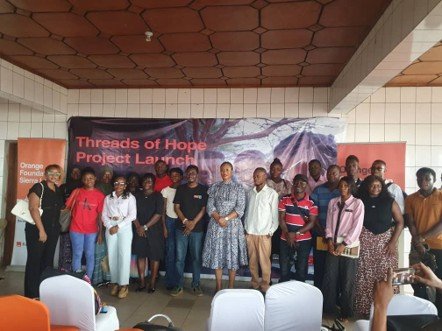
To empower young people and women with practical and marketable skills that can help them build a successful and brighter future, the Orange Foundation Sierra Leone has officially launched the Threads of Hope Project, an initiative targeting 400 young people and women across four districts.
The project was officially launched on Wednesday, 2nd September 2026, at the Freetown Innovation Hub on Sanders Street, Freetown. The ceremony attracted stakeholders, young people, women, beneficiaries and members of the media.
The six-month project is being implemented in partnership with Project 1835 and will provide training in areas including T-shirt printing, embroidery, computer-aided design, graphic design, entrepreneurship and basic digital literacy.
The project will target 150 beneficiaries in Freetown, 150 in Makeni, 50 in Bo and 50 in Kono, with participants drawn from both urban and rural communities.
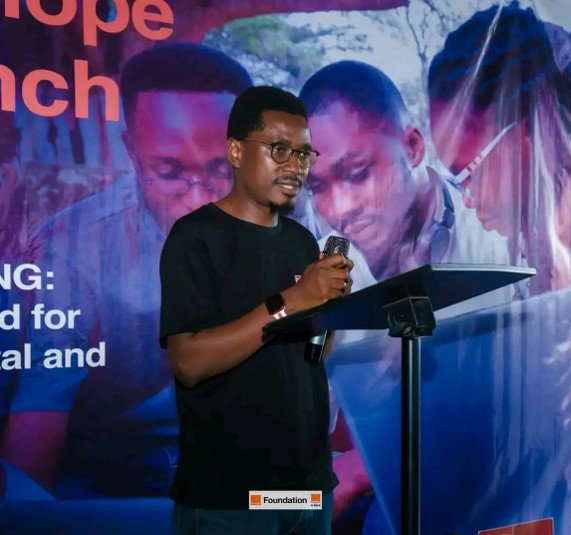
Speaking at the launch, Project 1835 Team Leader, Mahmoud Javombo, described the occasion as a significant milestone, noting that the organisation considers young people to be one of Sierra Leone’s greatest resources.
Javombo said the partnership with the Orange Foundation would provide young people with a platform to acquire skills that could help them become economically independent.
He noted that some of the beneficiaries entered the programme without knowledge of skills such as T-shirt printing, embroidery, computer-aided design and graphic design but expressed confidence that the six-month training would equip them with practical competencies. “We believe that the strength of Sierra Leone really relies on the young people. We value them as the biggest resource,” Javombo said.
He disclosed that the project received significant interest from young people across the country, with approximately 1,300 people applying for only 400 available places. He encouraged those selected to take full advantage of the opportunity, describing their selection as evidence of their commitment to acquiring skills.
Javombo also highlighted Project 1835’s previous interventions, including a project implemented in partnership with the World Bank that targeted 3,000 young people in Bo and Kenema, with beneficiaries receiving cash grants of $300 each. He also referenced the organisation’s collaboration with UNDP in supporting young people.
He assured the Orange Foundation that Project 1835 would work diligently to ensure the project’s beneficiaries successfully complete the training and make meaningful use of the skills acquired.
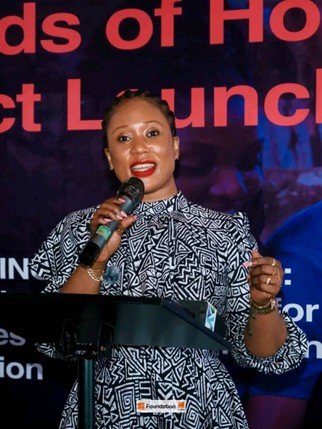
For her part, the Director of the Orange Sierra Leone Foundation, Madam Katta, said the Foundation was pleased to see young people demonstrating interest in digital skills, which she described as increasingly important in the modern economy.
She said the Orange Foundation’s interventions are largely centred on education, inclusion and digital technology because of the growing importance of digital skills globally.
According to Madam Katta, the Foundation operates several initiatives aimed at improving access to digital education, including the Women’s Digital Center, which provides free digital learning opportunities for young women in Freetown, Makeni, Kenema and Bo in partnership with the National Youth Commission.
She also referenced the Digital School Kits programme, which provides digital learning equipment and training to students and teachers, as well as the Orange Digital Center in Freetown and ODC Clubs in Bo and Makeni.
Madam Katta explained that the decision to partner with Project 1835 was based on the need to support local innovation hubs while utilising their specialised expertise.
She said the Foundation does not necessarily have to conduct every training programme itself but can support organisations with the capacity and expertise to deliver skills development programmes to young people.
“We have signed a partnership and assigned them the responsibility to train 400 young people across Freetown, Makeni, Bo, and Kono,” she said.
She emphasised that the project is designed around the principle of “learn to earn”, stressing that beneficiaries are expected to acquire skills that can translate into income-generating opportunities after the training.
Madam Katta cited embroidery, graphic design and T-shirt printing as examples of skills with potential commercial value, noting that businesses, organisations and individuals regularly require such services.
She encouraged the beneficiaries to take the opportunity seriously and use the training as a stepping stone towards establishing their own businesses and livelihoods.
The Orange Foundation Director further disclosed that the project had been in preparation for about a year before its official launch.
She expressed optimism that the impact of the initiative would become visible within the next six months and said the Foundation looked forward to attending the beneficiaries’ graduation ceremonies and celebrating their success stories.