

By: Mariama Bundu
The Minister of Foreign Affairs and International Cooperation, Alhaji Timothy Musa Kabba, has highlighted what he described as the significant achievements of President Julius Maada Bio since assuming the Chairmanship of the ECOWAS Authority of Heads of State and Government, saying the President’s leadership has strengthened regional peace, democratic governance, and integration across West Africa.
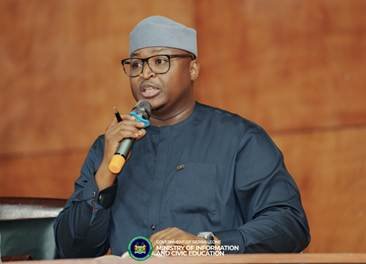
Speaking at the Government Weekly Press Briefing on Tuesday, 7 July 2026, Timothy Kabba said President Bio’s stewardship has renewed confidence in the Economic Community of West African States (ECOWAS), reinforcing the regional bloc’s role in promoting peace, stability, economic cooperation, and democratic governance.
The Minister explained that ECOWAS, established on 28 May 1975, was created to promote regional integration, economic cooperation, trade, and the free movement of people across West Africa. He noted that the organisation later expanded its mandate to include peace and security in response to the political instability and civil conflicts that affected the sub-region during the 1990s.
According to Kabba, President Bio has aligned his leadership with the founding principles of ECOWAS by prioritising democratic governance, regional security, and political stability, stressing that lasting economic development can only be achieved in an environment of peace and security.
Highlighting key interventions, the Minister cited the attempted coup in Benin Republic on 8 December 2025 as a defining moment of President Bio’s leadership. He said the President moved swiftly to engage regional leaders, including Nigeria, and mobilised ECOWAS support that helped prevent the attempted overthrow of the Beninese Government.
Kabba said intelligence reports indicated that the perpetrators intended to destabilise Benin and seize strategic facilities that could have been used to finance terrorist activities, posing a serious threat to regional security.
The Foreign Minister also credited President Bio with supporting democratic transitions in Guinea and Guinea-Bissau through sustained diplomatic engagement under both the ECOWAS and African Union frameworks.
He said Sierra Leone played an active role in supporting Guinea’s transition to democratic governance by facilitating high-level diplomatic engagements and encouraging a constitutional process aimed at delivering credible elections.
Similarly, he noted that President Bio contributed to efforts that supported Guinea-Bissau’s return to constitutional governance, with the transitional authorities announcing a roadmap for national elections while advancing constitutional reforms.
Kabba further disclosed that President Bio has maintained dialogue with the Alliance of Sahel States (AES), comprising Burkina Faso, Mali, and Niger, in an effort to preserve cooperation between the three countries and ECOWAS despite their withdrawal from the regional bloc.
He said the continued engagement demonstrates President Bio’s commitment to fostering regional unity and ensuring that collaboration on peace and security remains a priority across West Africa.
Looking ahead to the forthcoming ECOWAS Summit, the Minister revealed that recommendations from the 68th Ordinary Session of the ECOWAS Authority of Heads of State and Government and the 94th Ordinary Session of the Executive Council, held in Abuja, will be considered during statutory meetings ahead of the Heads of State Summit scheduled for Freetown and Lungi.
He explained that reports from ambassadors, the Administration and Finance Committee, the Mediation and Security Council, and the Council of Ministers will be consolidated before being presented to Heads of State during the summit on 19 July.
Kabba also said Sierra Leone’s investment in modern conference facilities in Lungi has enhanced the country’s capacity to host major international conferences and high-level diplomatic engagements.
He described the upcoming ECOWAS Summit as a historic opportunity to showcase Sierra Leone’s progress since the end of the civil war and reaffirm its growing contribution to regional peace, security, and integration.
“The hosting of this summit demonstrates that Sierra Leone has emerged stronger, more stable, and better positioned to contribute meaningfully to regional and global affairs,” the Minister stated.