

By Lemuella Tarawallie
The United Nations Children’s Fund (UNICEF), in collaboration with the Budget Advocacy Network (BAN), on Thursday launched the 2025 Open Budget Survey (OBS) Report, calling for stronger transparency, accountability, and increased investment in children amid growing fiscal pressures in Sierra Leone.
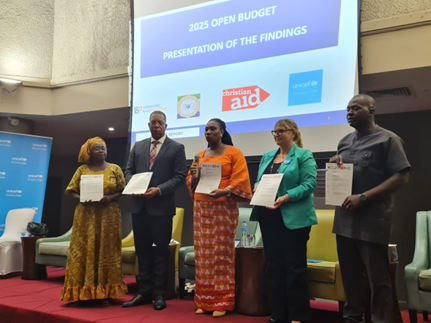
The event, held at the Radisson Blu Hotel in Freetown under the theme “Accountability at a Crossroads: Safeguarding Budget Transparency and Child-Centered Spending in Sierra Leone,” brought together government officials, development partners, civil society representatives, parliamentarians, media practitioners, and public finance experts.
Chairing the programme, Aminata Kelly Lamin of BAN described the Open Budget Survey as an independent assessment of transparency, public participation, and oversight within Sierra Leone’s public finance management system. She said the report provides an opportunity for stakeholders to review progress, identify challenges, and strengthen efforts to ensure public resources are managed openly and responsibly.
“The findings of the Open Budget Survey are not merely scores. They are a call to action for government, parliament, oversight institutions, civil society, development partners, and citizens to work together in strengthening public financial management,” she stated.
Presenting the survey methodology, Policy Analyst Abubakarr Tarawally explained that the assessment evaluates countries based on three key pillars: transparency, public participation, and oversight. Conducted every two years using internationally recognized standards, the survey measures the availability of budget information, opportunities for citizen engagement, and the effectiveness of oversight institutions such as parliament and audit bodies.
He noted that while citizen participation in budget formulation has improved, involvement remains limited during budget implementation and oversight stages.
BAN National Coordinator Abubakarr Kamara emphasized the importance of ensuring that budget information is publicly available, timely, and comprehensive. He noted that the survey relies on objective evidence, particularly publicly accessible government documents, to assess transparency and public engagement.
Speaking on behalf of UNICEF, Acting Representative Liv Elin Indreiten described the national budget as more than a technical document, saying it reflects a country’s priorities and values. She stressed that transparency is essential to ensuring resources allocated to health, education, water and sanitation, social protection, and child protection reach those who need them most.
While acknowledging improvements in public participation and oversight, Indreiten expressed concern that more than six out of ten children in Sierra Leone continue to experience poverty and limited access to essential services.
She also highlighted the country’s growing debt burden, noting that debt servicing over the past five years exceeded total expenditure across all social sectors combined.
“In 2026 alone, spending on public debt servicing is projected to be six times the health allocation and more than double the education budget,” she disclosed.
Indreiten further noted that child protection services remain severely underfunded, with projected spending amounting to only SLE16 per child annually.
“Investing in children is not a charitable act; it is the smartest and most important investment a nation can make,” she emphasized.
Representing the International Monetary Fund (IMF), Resident Representative Wayne Mitchell underscored the importance of budget transparency and credibility in promoting good governance and accountability. He warned that transparency alone is insufficient if approved budgets do not reflect actual spending outcomes.
Mitchell said Sierra Leone’s budget credibility has often been affected by revenue shortfalls, spending overruns, inflationary pressures, and weak commitment controls. However, he acknowledged progress through ongoing public financial management reforms, improved debt management, and enhanced financial reporting systems.
He called for realistic revenue forecasting, stronger parliamentary oversight, stricter implementation of audit recommendations, and greater citizen participation in monitoring public expenditure.
Launching the report on behalf of the Ministry of Finance, Acting Director of Budget Ilara Madhi reaffirmed the government’s commitment to fiscal transparency, accountability, and citizen engagement.
She highlighted achievements including expanded publication of budget documents, improved accessibility of Citizens Budgets, strengthened oversight mechanisms, and increased engagement with civil society and the media.
While acknowledging existing challenges, Madhi pledged that the government would continue improving access to budget information and deepening public participation.
“Our goal is to ensure that no citizen feels left in the dark regarding how public resources are utilized,” she said.
The launch concluded with a panel discussion and interactive session, during which participants examined the survey findings and explored ways of strengthening transparency, accountability, and citizen participation in Sierra Leone’s budget process.