

By Mariama Bundu
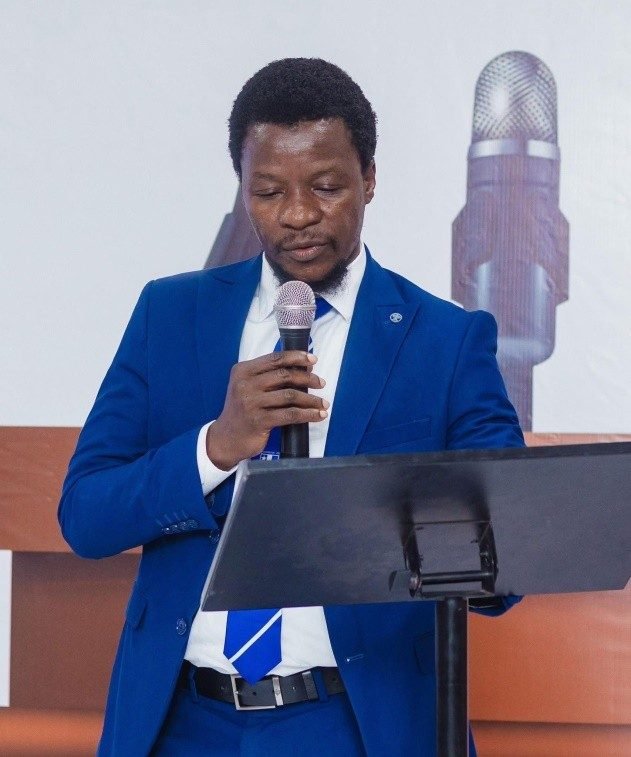
A renowned lawyer and former President of the Sierra Leone Bar Association, Basita Michael, has expressed concern over what she describes as inconsistency in the application of justice and public moral outrage, amid the ongoing national debate on Female Genital Mutilation (FGM).
The issue has recently sparked widespread public discussion in Sierra Leone, with mixed reactions from citizens and activists. The controversy intensified following the First Lady of Sierra Leone, Fatima Maada Bio, who was seen weeks ago supporting and dancing with members of the Sande (Bondo) society in Kenema. Her appearance drew strong criticism from anti-FGM activists, who interpreted it as indirect endorsement of the practice.
In response to the backlash, the First Lady later took to her official Facebook page, defending her actions as an expression of cultural heritage, arguing that traditional practices should be respected. She also faced further controversy after reportedly being cancelled from delivering a keynote address at an event, amid heightened tensions over her perceived position on the issue.
Additionally, she was accused by critics of making remarks targeting individuals opposed to FGM, suggesting that some activists are motivated by financial gain rather than genuine concern. These claims have further deepened the national debate on culture, human rights, and advocacy.
In a detailed response, Basita Michael made it clear that she does not support FGM under any circumstance. “I do not hold a brief for the First Lady, and I remain unapologetically and unequivocally opposed to the practice of FGM,” she stated. “The physical, psychological, and human rights implications are too serious to be trivialised or excused under the guise of culture or politics.”
However, she cautioned against what she described as selective outrage, particularly the cancellation of speaking engagements based solely on perceived positions.
According to her, similar inconsistencies exist globally, where individuals and institutions linked to serious human rights violations have been allowed to speak on international platforms and receive recognition. She argued that leaders accused or associated with grave abuses, including war crimes, democratic backsliding, and governance failures, have in some cases been granted prestigious platforms abroad without equivalent public backlash.
Basita Michael further referenced the contradiction between public messaging and domestic realities, noting that officials often speak internationally on democracy, accountability, and the rule of law, while similar principles are perceived to be weakened at home through institutional failures or inaction.
She also pointed to concerns about the drug crisis affecting communities, arguing that despite public alarm over its impact, some individuals linked to the crisis continue to be engaged in public discourse on governance and accountability.
While reaffirming that criticism of FGM remains valid and necessary, she stressed that public accountability should be applied consistently.
“The real issue is not whether FGM should be condemned it should,” she noted. “The issue is the uneven application of moral outrage, where some are isolated while others implicated in far more serious matters continue to enjoy legitimacy and platforms.”