


By Yusuff Moseray Suma
The Africa Media Network for the promotion of health and the environment (REMAPSEN), has held it 4th media forum in the republic of Benin with a key focus on discussing the neglected tropical diseases-NTDs in Africa.
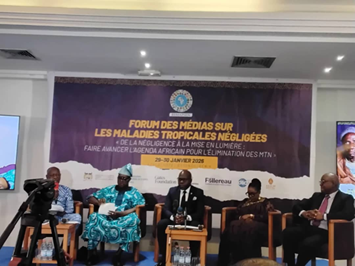
The 4th REMAPSEN Media Forum on NTDs is themed “From Neglect to Spotlight: Driving Africa’s Neglected Tropical Diseases Elimination Agenda”, bringing together journalists, health experts, policymakers, researchers, and development partners to amplify Africa’s response to NTDs.
The forum brought together over twenty journalists and health practitioners from across anglophone and francophone countries where REMAPSEN operates.
As the media plays a crucial role in africa to ensure stories on health and environment are reported and the media has been identified as a critical catalyst in the global fight against stigmatization of people living with Neglected Tropical Diseases (NTDs), as stakeholders called for stronger advocacy, innovation, and inclusive financing strategies to accelerate elimination efforts in Africa, this formed part of recommendations and experience-sharing during a panel discussion titled “Equity, Innovation and Sports: Serving Communities for the Elimination of NTDs”
In africa today, stigma has brought many people affected with various diseases into a laughing situation and some unforgettable experience.
Speak Up Africa’s Partnership Director, Sophietou Diop urged journalists to go beyond traditional reporting by deliberately engaging philanthropists and private-sector actors to invest in Africa’s fight against NTDs.
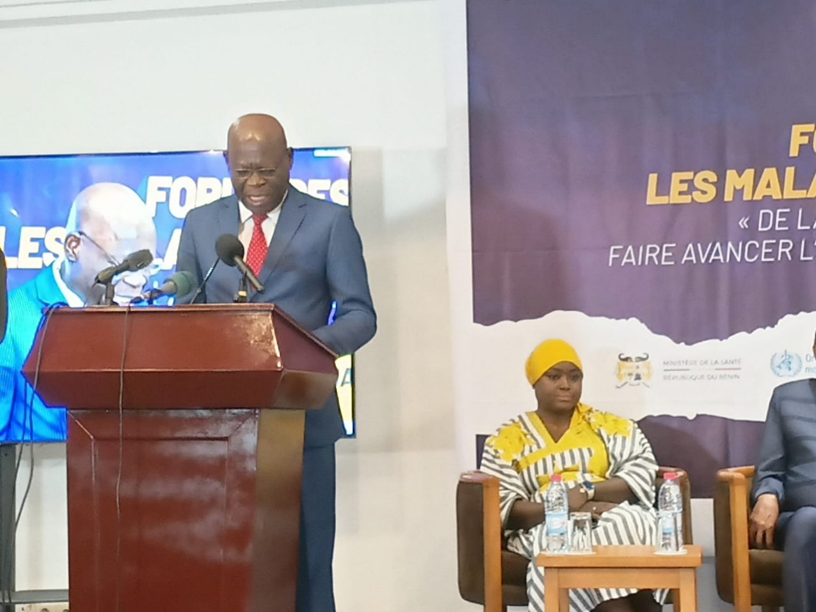
She stressed the need for artistic and creative advocacy, combined with strong technical knowledge of NTDs, to effectively align media initiatives with elimination goals and achieve measurable impact.
Ian Dénagnon Mahinmi, French-Beninese international basketball player, Founder of I AM Foundation called on the media to leverage sports as a strategic tool for financial resource mobilization in the fight against NTDs and other related disturbing diseases in africa.
He emphasized the power of athletes and youth-led initiatives in driving sensitization against stigma, advocating for quality healthcare, and breaking barriers to funding through sporting activities and education.
According to the NBA champion, engaging young people and sports figures can enhance early detection, promote treatment-seeking behavior, and reduce discrimination against those affected by NTDs.
This panel Emefa Ama Atiamoah of the Multimedia Group, Ghana, featured Speak Up Africa’s Partnership Director, Sophietou Diop, Ian Dénagnon Mahinmi, French-Beninese international basketball player, Founder of I AM Foundation and the Raoul Follereau foundation medical adviser Mr Roch Christian Johnson.
Raoul Follereau foundation medical adviser Mr Roch Christian Johnson highlighted the vitality of tactical disease screening as a strategy to prevent stigma and misconceptions associated with National tropical diseases-NTDs.
He appealed and called on governments and relevant stakeholders and health experts to provide the psychological support and quality healthcare services to vulnerable populations especially people living with NTDs.
He further emphasized that addressing social determinants, sustainable financing for treatment, and exploring alternative funding mechanisms remain the backbone of reducing the burden of NTDs across affected communities.
In another development, stakeholders in the health sector have identified lack of awareness, inadequate resource mobilization, limited access to treatment, and stigmatization as major challenges confronting the elimination of Neglected Tropical Diseases (NTDs) in Africa.
These issues were highlighted during a panel discussion titled “Status of NTDs in Africa: Data, Progress, Challenges and Opportunities” at the 4th REMAPSEN Media Forum.
Panelists at the session, stressed that poverty remains a critical driver of NTDs, noting that most affected populations live in remote and underserved areas lacking basic social and health facilities.
According to the panelists, poverty not only exposes people to NTDs but also limits their ability to seek timely government intervention and access healthcare services, thereby worsening the disease burden.
Speaking on efforts by the Benin Republic Government, the panel revealed that the country’s National Assembly has passed a law aimed at eliminating NTDs, pledging to integrate all necessary measures to ensure its effective implementation.
They also disclosed that the government has increased budgetary allocation for NTDs from two billion to four billion, signaling stronger political commitment to the fight against the diseases.
Meanwhile, speaking to journalists on the sidelines of the forum, REMAPSEN President, Mr. Youssouf Bamba, said NTDs disproportionately affect remote, poor, and underserved communities, further entrenching cycles of poverty and marginalization.
He explained that the diseases are described as “neglected” not because they are rare, but because they have historically received insufficient attention, funding, and prioritization at both national and international levels.
“Unlike high-profile diseases such as HIV/AIDS, tuberculosis, or malaria, NTDs often remain invisible to decision-makers, donors, and even the media,” Bamba noted.
He stated that the forum aims to celebrate Africa’s remarkable achievements in combating NTDs, while showcasing the return on investment of NTD programmes and positioning Africa’s progress as one of the world’s most underreported global health success stories.
According to him, the forum also seeks to highlight opportunities and challenges in NTD elimination, with emphasis on innovative domestic financing, integration of services, research and development, and the broader social and economic impact of eliminating NTDs.
Bamba added that the discussions would help position NTD elimination as central to poverty reduction and development priorities, including education, climate change response, and pandemic preparedness.
He further explained that the forum is designed to strengthen journalists’ capacity to report accurately and compellingly on NTDs, encourage the production of high-quality media content that informs and inspires action, and promote collaboration among journalists, health professionals, researchers, policymakers, partners, and other key stakeholders.
Для получения подробной информации о процедуре и порядке проведения испытаний си, вы можете ознакомиться с нашими материалами по ссылке: испытания си.
Важной частью является проведение испытаний при различных нагрузках.
https://experiment.com/users/ssolidbets26
Started imagining how I would explain the topic to someone else after reading, and a look at sharesignal gave me more material for that imagined explanation, content that improves my own ability to discuss a topic is content that has actually transferred knowledge rather than just decorating my screen for a few minutes.
Going to share this with a friend who has been asking the same questions for a while now, and a stop at glassharbortradehall added a few more pages I will pass along too, this is the kind of generous information that earns a small thank you from me right now and again later this week.
http://melleherve.fr/
Le projet Melleherve se presente comme une equipe de confiance orientee vers le marche francais, qui delivre une approche complete a ceux qui recherchent des resultats, en valorisant sur la confiance et la transparence. Decouvrez davantage via le lien.
melbet вывод киргизия https://www.melbet70382.help
заказать кухню под ключ https://zakazat-kuhnyu-18.ru
Совместное банкротство супругов — законный способ списать долги семьи через одну процедуру. Переходите по запросу повлияет ли банкротство на детские пособия. Поможем подготовить документы, учесть общее имущество, защитить ваши интересы в суде и пройти процедуру с минимальными рисками. Консультация юриста — первый шаг к финансовому освобождению.
пицца куба ул халтурина В сердце Тулы, где каждый переулок хранит свои истории, раскинулась настоящая пицца-империя, ведомая брендом “Куба Пицца”.
Mostbet Casino мостбет
круглосуточный вывод из запоя нарколог 24 круглосуточный вывод из запоя нарколог 24 .
mostbet prognozlar mostbet prognozlar
pin-up kirish 2026 http://pinup87630.help
лечение наркомании лечение наркомании .
Планируя отдых в Вену, стоит предварительно ознакомиться с главными достопримечательностями Вены — от Карлсплац и дворца правосудия до уникальных мест вроде дома моря и кафе Cafe Sacher Vienna. Если вы желаете узнать, сколько км от Праги до Вены или какое расстояние между Веной и Зальцбургом, то это необходимо знать для организации маршрута. Для навигации можно воспользоваться вена аудиогидом или посмотреть карту достопримечательностей Вены, которая поможет выбрать интересные точки для визита.
Зимой Вена удивительно красива благодаря рождественским ярмаркам 2024 и 2025 года, а для тех, кто ищет выгодные отели в Вене, есть много вариантов в центре и на окраинах. Также стоит учесть на электричку S7 расписание и варианты транспорта, включая трамвай Вена Баден, чтобы легко передвигаться по городу. Кстати, памятник советским воинам, героически погибшим в 1945 году, находится именно в Вене — это занимательный исторический факт вена достопримечательности .