

By Lemuella Tarawallie
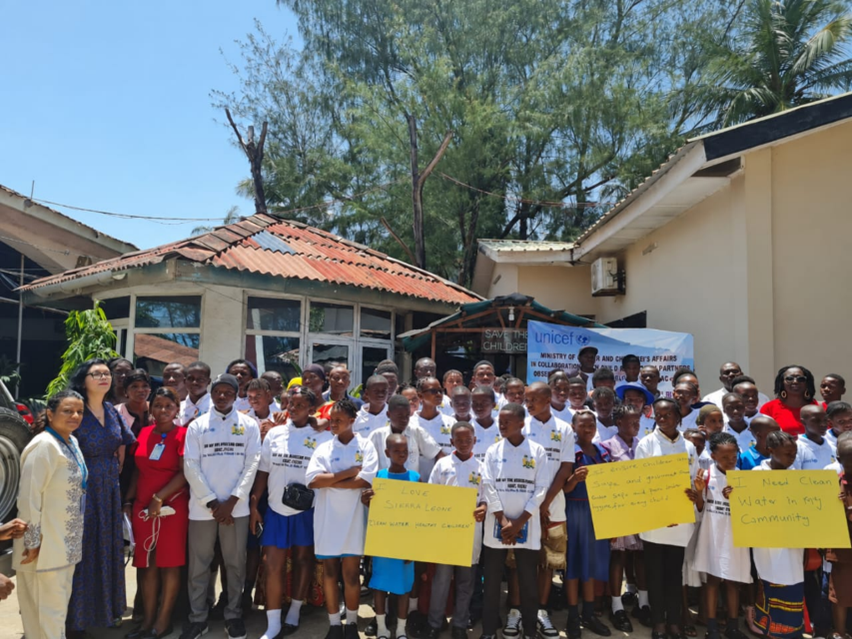
UNICEF, Government and Partners including Save the Children, Ministry of Gender and Children Affairs, Minister of Health, Ministry of Social Welfare, Water Resources and Sanitation, National Commission for Children, Child Rights Coalition on the day of Africa Child renewed call for Universal Access to Clean Water and Child Rights.
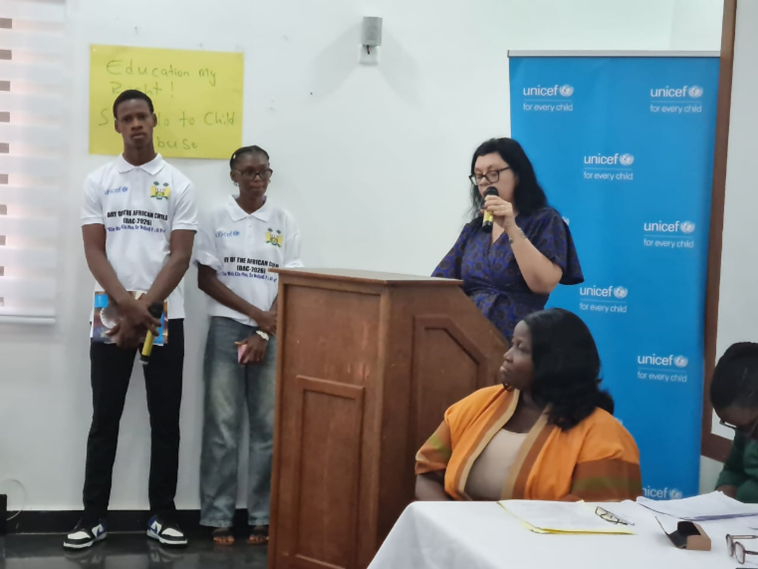
Under the Theme: Ensuring Universal Access to Water, Sanitation and Hygiene for Every Child in Africa.
During the National Children Conference on Tuesday 16th June 2026 at the Family Kingdom Conference Hall in Freetown.
The UNICEF Officer in Charge, Mona Korsgard, in her statement on behalf of UNICEF-SL, delivered a strong warning on the financing gap slowing progress in the sector.
She noted that although rural access to basic drinking water has improved from 38 percent in 2010 to 54 percent in 2022, and urban access is nearing 80 percent, too many children are still left behind.
She stressed that investment in water, sanitation and hygiene remains critically low, with the sector receiving less than one percent of government expenditure in recent years. Korsgaard urged stronger and more predictable financing, warning that without it, sustainability will remain uncertain.
She called for behaviour change, community ownership, climate-resilient infrastructure, and stronger partnerships with local actors and the private sector, stressing that services must not only be delivered but maintained and protected for future generations.
Representing the Ministry of Social Welfare, Mary J Kamara in her statement appealed for collective responsibility, stressing that water, sanitation and hygiene are central to child survival, education and dignity.
She warned that children without access to safe water and sanitation face higher risks of disease and school absenteeism, ultimately affecting their development and future opportunities. She called on government institutions, schools, communities, development partners, parents and children to work together to improve hygiene practices and maintain facilities.
She encouraged children to become champions of cleanliness in their homes and schools, emphasizing that their voices must not only be heard but must actively shape national decision-making and responses.
Augustine Tucker, Professional Head of the Ministry of Water Resources and Sanitation, highlighted government progress in expanding water supply systems, improving sanitation infrastructure, and strengthening hygiene services in schools, health facilities and communities. He pointed to ongoing monitoring frameworks and data systems designed to improve planning, accountability and service delivery.
However, he acknowledged that significant challenges remain, particularly in reaching vulnerable and underserved communities where access to safe water and improved sanitation is still limited. He called for sustained investment, innovation, accountability and stronger coordination among stakeholders to accelerate progress toward universal access.
Henry M. Sheku, Deputy Commissioner of the National Commission for Children, placed child rights at the centre of the discussion, insisting that every child has the right to safe water, sanitation, dignity, health and education. He warned that without universal access to water, sanitation and hygiene services, national efforts to improve child wellbeing will remain incomplete.
He called for stronger accountability from government, development partners, civil society and the private sector, stressing that commitments must be translated into real action. He further emphasized equality and inclusion, stating firmly that no child should be left behind regardless of gender, location or social background.
The Advocacy Manager of Save the Children, Victoria Squire, speaking on behalf of the Child Rights Coalition, urged stakeholders to move beyond dialogue and confront existing gaps with urgency and honesty.
She noted that while progress has been recorded, challenges remain significant and require coordinated solutions.
She encouraged stakeholders to use the platform to raise concerns and propose practical actions that can accelerate the realization of child rights across Sierra Leone.
The National Children Conference climaxed with the presentation of the national position paper and a call to action, which was read by Grace Marcathy of the Children Forum Network. The children issued a powerful call for urgent investment in safe, affordable and child-friendly water, sanitation and hygiene services.
They demanded targeted support for girls and children with disabilities, stressing that no child should be excluded from dignity and basic services.
They also called for meaningful participation in decision-making processes, insisting that policies affecting children must reflect their lived realities. Their message was clear and direct, demanding stronger collaboration among all stakeholders to ensure every child grows in a safe, healthy and dignified environment.