

By Samuel Serry
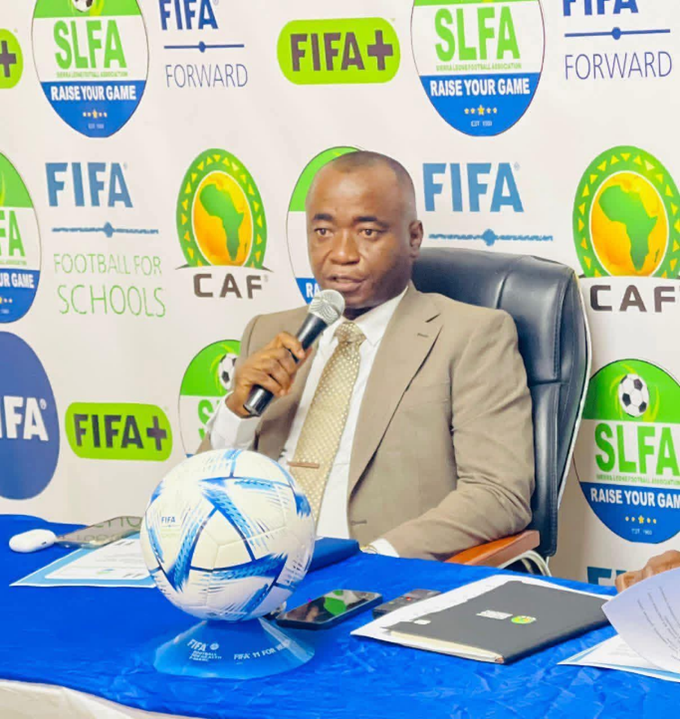
When the President of the Sierra Leone Football Association (SLFA), Babadi Kamara, recently launched the construction of a perimeter fence, a borehole and other facilities at Makeni’s Wusum Stadium, the announcement was met with mixed reactions. To some, it was a minor project unworthy of fanfare; to others, it was a long-overdue intervention. Yet, beneath the surface of steel posts and wire mesh lies a deeper conversation about leadership, equity, and the future of football infrastructure in Sierra Leone.
In a country where sports facilities are chronically underdeveloped, even the simplest infrastructure carries symbolic weight. A stadium fence may not excite the imagination like a modern grandstand or floodlights, but it represents order, security, and intent—three things Sierra Leonean football has often lacked.
Wusum Stadium is not just another football ground. It is a historic sporting space in northern Sierra Leone, deeply rooted in community life. For years, it has hosted league matches, youth tournaments, and social gatherings, often under challenging conditions. The absence of a proper perimeter has made crowd control difficult, exposed the pitch to damage, and limited the stadium’s ability to meet basic organizational standards.
By initiating this project, Babadi Kamara sends a clear signal: regional sports facilities deserve attention, not just those in Freetown or other favored urban centers. This matters in a country where perceptions of regional neglect can quickly turn into resentment. Sports, perhaps more than any other sector, have the power to unify across geography and politics.
Kamara’s tenure at the SLFA has often been judged against his most visible achievement—the Southern Arena in Bo, a privately funded, modern stadium that has raised expectations nationwide. Critics sometimes ask why similar facilities do not exist elsewhere. The Makeni fence project, while far less ambitious, demonstrates a different but equally important leadership quality: incremental development.
Not every intervention must be grand. Sustainable progress is often built through deliberate, affordable steps that improve functionality and standards. A secured stadium creates the conditions for better match organization, improved safety for fans, and increased confidence from sponsors and football authorities.
A Necessary Caution
However, it would be a mistake to treat this fence as an end in itself. Sierra Leone’s stadium challenges go far beyond perimeter security. Issues such as poor drainage, lack of seating, inadequate sanitation, and weak maintenance culture remain unresolved across the country.
If projects like the Makeni fence are not followed by broader, coordinated investment, they risk becoming symbolic gestures rather than catalysts for real change. Infrastructure development must be holistic, guided by a national vision for sports that links facilities, youth development, club licensing, and community ownership.
The Bigger Picture
Football administrators are not just managers of the game; they are custodians of public trust. In that sense, Kamara’s presence in Makeni and his decision to launch this project carry social significance. They suggest a willingness to be seen, to engage, and to act—even when the project is modest.
The real test will be consistency. Will other regional stadiums receive similar attention? Will maintenance be prioritized after construction? Will local authorities and communities be empowered to protect and utilize these facilities effectively?
The Makeni Stadium fence may not transform Sierra Leone football overnight, but it is a foundation, not a distraction. It reminds us that progress does not always arrive with fanfare; sometimes it begins with securing the ground beneath our feet.
Babadi Kamara’s challenge now is to ensure that this fence becomes part of a larger story—one where every region sees tangible investment, where infrastructure matches ambition, and where football once again becomes a disciplined, dignified, and unifying force in Sierra Leone.