


By Lemuella Tarawallie
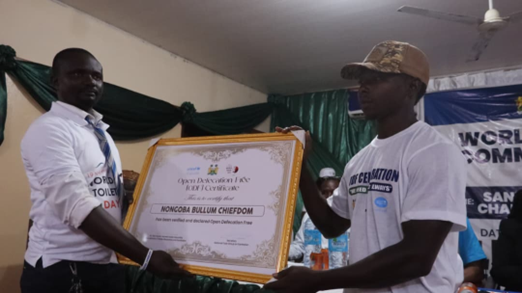
UNICEF Sierra Leone, in partnership with the Ministry of Water Resources and Sanitation, has certified five chiefdoms, Imperri, Makpele, Malen, Nongoba Bullom, and Kongbora, as Open Defecation Free (ODF).
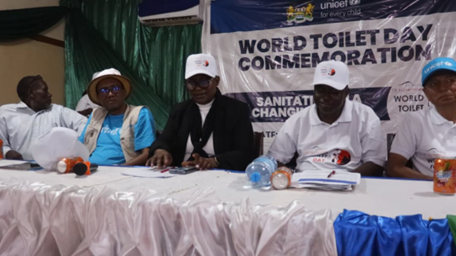
The declaration formed part of the 2025 World Toilet Day celebrations held on Wednesday, 19 November, at district council halls in both Moyamba and Kambia under the global theme “Sanitation in a Changing World.”
By Lemuella Tarawallie
UNICEF Sierra Leone, in partnership with the Ministry of Water Resources and Sanitation, has certified five chiefdoms, Imperri, Makpele, Malen, Nongoba Bullom, and Kongbora, as Open Defecation Free (ODF).
The declaration formed part of the 2025 World Toilet Day celebrations held on Wednesday, 19 November, at district council halls in both Moyamba and Kambia under the global theme “Sanitation in a Changing World.”
Ahead of the national ceremony, UNICEF and independent journalists visited communities in Kongbora Chiefdom and Senehun Yorko, where residents showcased locally built toilets designed to protect the environment, improve hygiene, and reduce disease outbreaks, innovations, and climate-resilient WASH strategies to ensure long-term sustainability.
UNICEF Deputy Representative Alpha Cissé described the occasion as historic and inspiring.
“These chiefdoms have joined a growing list of communities that have embraced dignity, health, and progress by ending open defecation. By doing so, they protect themselves from preventable diseases such as cholera and diarrhoea, which remain leading contributors to child mortality.”
He confirmed that 21 chiefdoms across five districts have already achieved ODF status, with nine more nearing completion.
Cissé highlighted inequities caused by poor sanitation and called for climate-resilient systems:
“Floods, droughts, and rising sea levels threaten toilets and sewer networks. Our sanitation solutions must therefore be inclusive, accessible, and environmentally sustainable.”
He reaffirmed UNICEF’s commitment to supporting government efforts, including the integration of climate-resilient sanitation into Sierra Leone’s Nationally Determined Contributions.
Speaking during the ceremony in Moyamba, the Minister of Water Resources and Sanitation, Dr. Sao-Kpato Hannah Isatta Macarthy, described the achievement as a testament to government leadership and community commitment.
She praised children and teachers for helping raise awareness on WASH issues:
“You have made my work easy. You have identified the core issues, and I feel proud seeing young people articulate them clearly.”
The Minister emphasized that the creation of a standalone Water Resources and Sanitation Ministry, separated from Energy and later from Health, demonstrates the President’s deliberate political will to prioritize WASH.
As a woman, she noted, the sanitation agenda has special significance:
“Water is valuable to women. Safe toilets protect women’s dignity and reduce risks such as gender-based violence, especially for girls who may be forced to attend to nature in unsafe spaces.”
Dr. Macarthy stressed that sanitation requires a multisectoral approach, involving health authorities, local councils, development partners, and community structures.
“Government leadership, community ownership, and partner support form the triangle that drives WASH progress.”
She further disclosed that her ministry is pursuing policy reforms, modern sanitation innovations, and climate-resilient WASH strategies to ensure long-term sustainability.
Country Director for Living Water Sierra Leone, Mrs. Rosemarie Yeama Blake, stressed the need for lasting partnerships and long-term community ownership.
“Today is not just about celebrating toilets. It is about strengthening partnerships and ensuring sustainability at all levels.”
Schoolchildren performed dramatizations highlighting the health risks of open defecation and the benefits of proper sanitation.
Representing the Paramount Chief of Kaiyamba Chiefdom, Chief Joeanis Brima emphasized the importance of behavioural change and innovation in sanitation.
“We still have houses without toilets. We must adopt better practices if we are to protect our communities.”
The Deputy Secretary of the Ministry of Water Resources and Sanitation added that sanitation is a basic human right, not a privilege, and urged district stakeholders to adopt resilient systems suitable for changing environmental conditions.
During the certification process, representatives from all five chiefdoms pledged to enforce community bylaws, promote hygiene education, and sustain ODF status.
88vinchat isn’t bad honestly. I’ve won more than I’ve lost, which is always a plus. Give vinchat a try and see what you think.
11qlogin, logging in for some fun! Seems easy to use and secure which is a bonus. Good place to begin. If you want to try, check it out: 11qlogin