

By Lemuella Tarawallie
UNICEF, in partnership with the Government of Sierra Leone and with support from the Mastercard Foundation, has officially launched a nationwide verification and geo-mapping exercise of Community Health Workers (CHWs), marking a major digital shift in the country’s primary healthcare system.
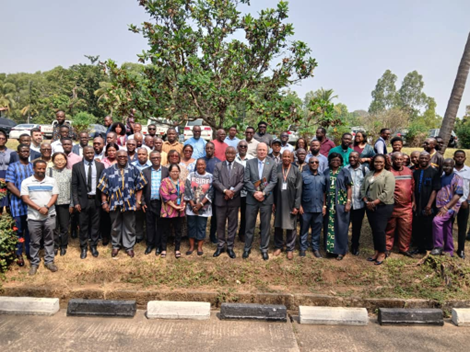
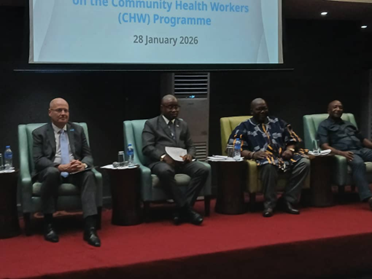
The initiative, launched on Wednesday, 28 January 2026, aims to strengthen community health delivery, improve accountability, and advance universal health coverage, particularly for children and families living in last-mile communities.
The UNICEF Country Representative, Rudolf Schwenk, stated that for years, community health workers—often described as the backbone of Sierra Leone’s primary healthcare system—have carried enormous responsibility with limited tools, recognition, and structured support. Many remained “invisible” within fragmented data systems that failed to communicate with one another.
“This exercise is about knowing the faces, the places, and the work,” senior health officials emphasized. “We cannot afford a system where people are paid but not present, or where communities are left without service providers.”
The geo-mapping will be conducted across 16 districts over a 60-day period, combining biometric verification, GPS location capture, and workforce analysis. The process will also identify active but unofficial health workers who may qualify for certification and integration into the national system.
According to health authorities, the final outcome will be a single source of truth: a geo-referenced dataset that will support multiple health programs, including maternal and child health, malaria, immunization, and supply chain planning.
Schwenk further stated, “Every child deserves access to life-saving services, no matter where they are born or live. This program strengthens community health systems while building the skills of the women and men who serve on the frontlines.”
“Our partnership with the Mastercard Foundation reflects a shared commitment to government-led solutions that deliver results for children. This is not just a grant launch; it’s a commitment to turn national vision into action.”
Over 6,000 community health workers are already engaged, with more than 2,000 mapped in the National Children’s Registry to improve planning, targeting, and accountability, he emphasized. “Community health workers quietly do heroic work, often with limited tools and support, yet they are respected and deeply dedicated,” he concluded.
Deputy Minister of Health I, Dr. Charles Senesie, in his keynote address, described community health workers as “the foot soldiers of healthcare,” stressing that effective support begins with accurate data. “You cannot plan, finance, or improve what you cannot see,” he said, noting that nearly 80–90 percent of healthcare investment is anchored in primary healthcare.
UNICEF’s role in the initiative is to provide technical leadership, supporting government-led systems in health policy, workforce development, supply chains, and digital health infrastructure, ensuring sustainability at scale.
Officials were clear that the program’s success depends on full national ownership. District Medical Officers (DMOs) have been urged to serve as custodians of the data, uphold quality assurance standards, and ensure that errors do not compromise decision-making.
The Ministry of Health highlighted that the country’s health system is built on four main pillars: primary healthcare, secondary and tertiary care, referral systems, and health security. Primary healthcare alone accounts for about 80–90 percent of national health investment, underscoring the central role of community-based services.
“Community health workers are the foot soldiers of our health system. We depend on them every day, not just in theory, but in practice,” a senior official said.
The initiative also sends a strong signal to development partners: Sierra Leone is serious about evidence-based planning, accountability, and digital transformation. “Investing in community health is an investment in children’s survival, development, and future,” officials said.
Deputy Minister of Health I, Dr. Charles Senesie, reiterated that “for every child, especially those living in the last mile, UNICEF remains committed to ensuring that life-saving services reach them, wherever they are.”
Officials disclosed that a new digital application is being introduced to support community health workers, improve real-time data collection, and ensure integration with the national health information system (DHIS2). This initiative will form part of a broader Community Health Information System designed to reach the “last mile” and ensure that services and supplies get to the people who need them most.
“Our data has gaps, but the more digitalized we go, the better we can scrutinize, verify, and use that data in real time,” the Ministry stated.
In closing, the Ministry praised the dedication of community health workers across the country, noting that the new digital system is not intended to punish anyone but to recognize hard work, improve service delivery, and provide better support to those serving in remote and underserved communities.
The Director of Primary Health Care, Dr. Brima Osai Kamara, stated, “It is no longer enough to count health workers; we must know where they are, what they are doing, and whether they are truly delivering services. People should not be paid because they have a name on a list; they must be paid because they are present, supervised, and working. This is the time to see faces, not just figures. Early detection, timely follow-up, and community trust—these are the real gains of the CHW programme.”
The Chief Medical Officer, Dr. Alie Wirie, stated that standardized training and clearly defined roles have transformed CHWs into key actors in community healthcare. “Healthcare works best when communities are part of delivering it. With our human resource challenges, Community Health Workers are not optional; they are essential.”
The former Chief Executive Officer, Alhaji Mohamed Bailor Barrie, added, “As we deliver services, we must strengthen the CHW system, not overload it. Today, we gather as a mission, community, and partners to map the CHW program and understand exactly where we stand. People working tirelessly in their communities, often without recognition, are the backbone of service delivery to the needy. Our goal is to build on this foundation and establish a strong, resilient health system. I am committed to ensuring that our efforts continue, grow, and make a real impact.”
The National Coordinator of the Community Health Worker Program, Ministry of Health, Elizabeth Musa, in her vote of thanks, stated, “We are working on the unknown. We don’t know exactly how many CHWs are out there or if they’re where they should be. Every household deserves a Community Health Worker. No community should be left behind. CHWs are the backbone of our healthcare system. Without them, primary healthcare cannot succeed.”
She stressed that if CHWs are not properly allocated, entire communities lose access to essential health services. “That’s unacceptable. Geo-mapping is not just data collection; it’s verification, correction, and finalization of the CHW program. Accurate data allows us to plan better, deploy resources efficiently, and attract donor support where it’s needed most. We aim for 100 percent coverage. Every CHW in the right place, serving the right community,” she concluded.