

The Sierra Leone Association of Journalists (SLAJ), in partnership with the European Union and funded through International IDEA, has concluded a nationwide training for journalists on conflict sensitive reporting around the Tripartite Process and its recommendations.
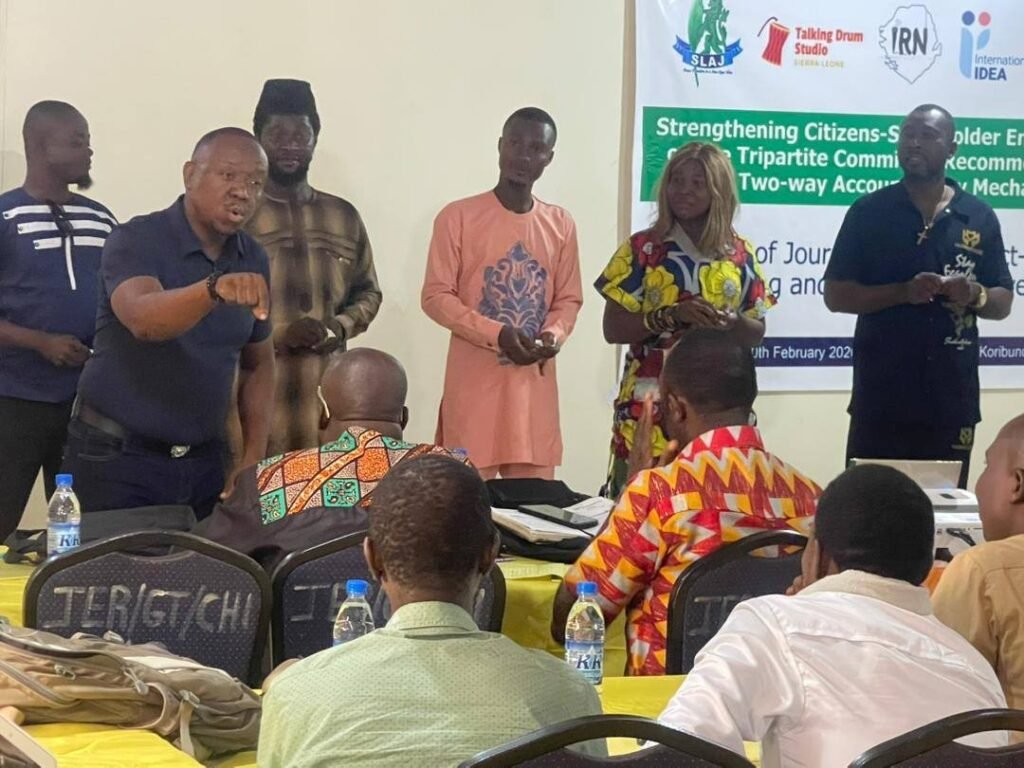
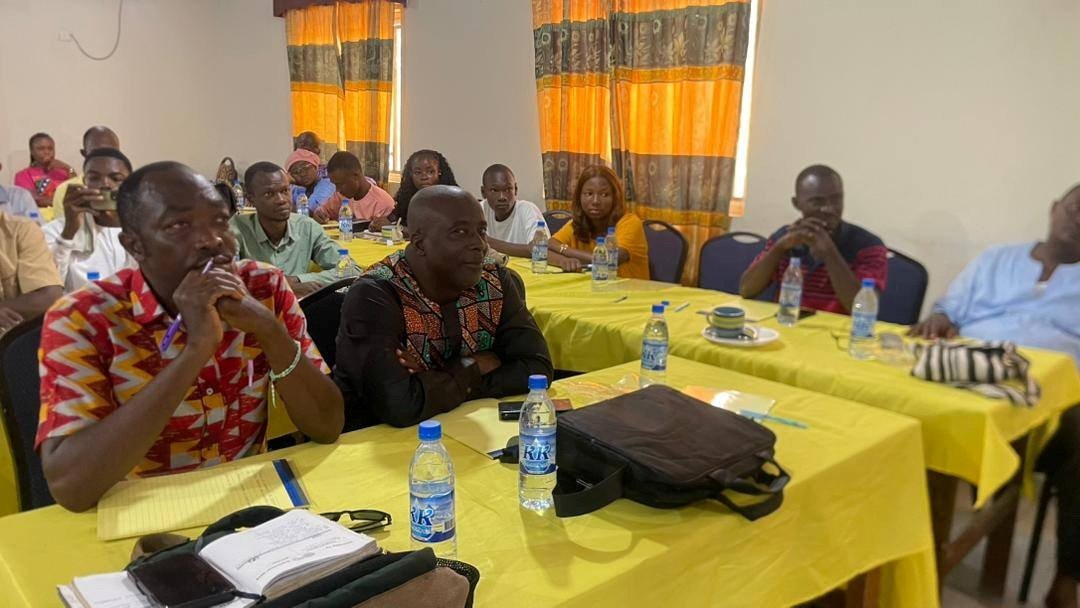
The training, implemented under a consortium comprising the Independent Radio Network (IRN) and Talking Drum Studio (TDS) as lead partner, engaged about 250 senior journalists across the North, North West, South, East and Western Area regions. Participants included radio and television station managers, heads of programmes, producers and senior reporters.
The final sessions conclude this weekend at the J & E Hotel in Bo City (Southern Region) on Friday 20th February 2026, and the Port Loko District Council Hall in the North West Region on Saturday, 21st February 2026, marking the end of a structured nationwide capacity-building initiative that began in July 2025.
The training centred on the people-focused components of the 80+ recommendations emerging from the Tripartite process. It aimed to strengthen journalists’ understanding of: conflict sensitive reporting and accountable governance; people-centred Tripartite recommendations; common ground journalism; and media’s role in promoting two-way accountability mechanisms.
The broader project is titled: “Strengthening Citizens–Stakeholders Engagement on the Tripartite Recommendations and Two-Way Accountability Mechanism.”
Regional State Counsel Southern Region, Augustine Sheku Esq., led the training on the tripartite recommendations, emphasizing the need for journalists to understand the issues in order for them to engage their audiences from an informed position.
Journalism lecturer, James Tamba Lebbie facilitated the aspects of conflict-sensitive reporting around the recommendations.
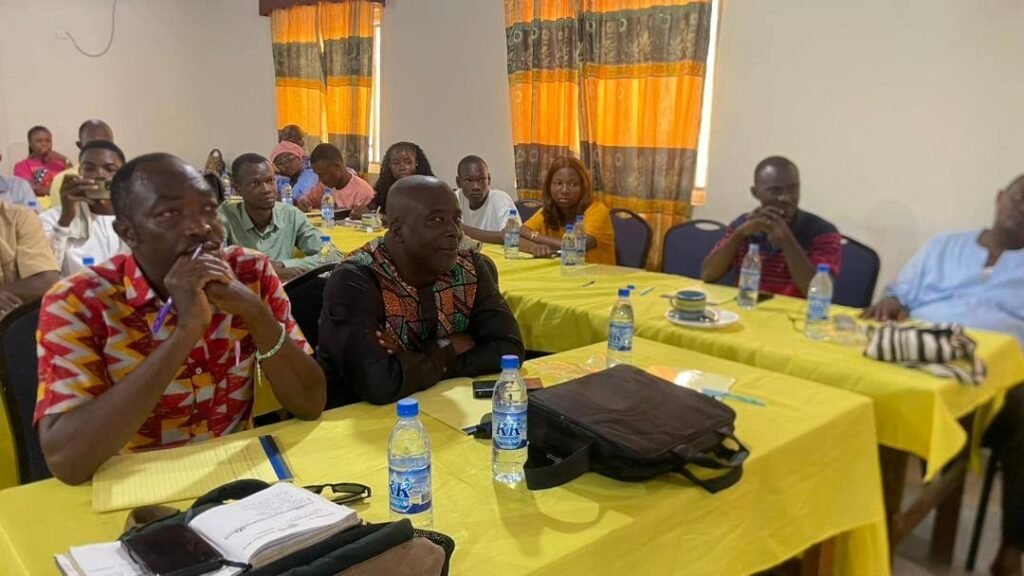
Speaking during the closing engagements, SLAJ President, Alhaji Manika Kamara, thanked the European Union and International IDEA for their continued support in building the capacity of journalists.
He noted that the training comes at a critical time as Sierra Leone prepares for another national election cycle, amid ongoing political debate around the implementation of the Tripartite recommendations.
“Journalists can only discharge their responsibilities effectively when they fully understand the issues at stake. As the country moves towards another election cycle, the media must rise above partisanship and focus on accurate, people-centred and conflict-sensitive reporting that strengthens democratic stability,” Kamara said.
Participants across the regions highlighted several challenges in reporting on the Tripartite recommendations, including: limited access to simplified versions of the recommendations for public education; political polarisation and mistrust among stakeholders; online misinformation and coordinated disinformation campaigns; safety concerns when covering politically sensitive developments; and limited technical understanding of proposed electoral reforms, among others.
Journalists also raised concerns about the amendment bill already tabled in Parliament seeking changes to aspects of the electoral system. Many noted the need for deeper training on interpreting legislative processes to ensure accurate and balanced reporting that informs citizens rather than fuels tension.
Several station managers called for sustained engagement beyond training workshops, including editorial support frameworks and peer-learning networks.
This training builds on a series of successful collaborations between SLAJ and the European Union aimed at strengthening media professionalism and democratic participation in Sierra Leone.
Recent partnerships have included: media campaigns to debunk fake news and disinformation during the COVID-19 pandemic; support for conflict sensitive reporting during the 2023 national elections; development of SLAJ’s Media Manifesto: “The Media We Want”; annual EU-supported beach cleaning and civic engagement initiatives; and capacity building on governance, accountability and public interest journalism.
These collaborations have significantly enhanced the institutional capacity of SLAJ and strengthened the role of the media as a democratic pillar in the governance system and processes in Sierra Leone.
Ex-Officio of SLAJ and Project Coordinator working closely with Talking Drum Studio in implementing the project, underscores the strategic importance of the initiative:
“This project goes beyond training journalists; it is about strengthening the democratic fabric of Sierra Leone. When media practitioners understand complex political processes like the Tripartite recommendations and electoral reforms, they are better positioned to bridge the gap between citizens and institutions. Our collaboration with the European Union and International IDEA continues to demonstrate that investment in the media is an investment in peace, accountability and national cohesion,” said Ahmed Sahid Nasralla.
He further emphasised that sustaining democratic gains requires continuous capacity building, institutional support, and a commitment to ethical and public interest journalism.
As Sierra Leone gradually approaches another electoral cycle, SLAJ looks forward to collaborate with partners to encourage newsrooms to integrate conflict sensitive frameworks into editorial policies; promote continuous peer review and fact-checking mechanisms; deepen citizen-focused reporting on governance reforms; engage Parliament and other institutions to improve information access; and strengthen safety awareness for journalists covering politically sensitive issues.
The conclusion of this nationwide training marks a significant milestone in enhancing responsible journalism and reinforcing the media’s role as a stabilizing force in Sierra Leone’s democracy.
Through sustained partnership with the European Union and International IDEA, SLAJ remains committed to empowering journalists to inform, educate and unite the nation during critical democratic transitions.