

By Lemuella Tarawalllie
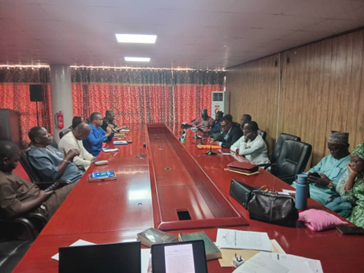
The Parliamentary Oversight Committee on Lands, Housing and Country Planning has, on Friday 13th March 2026, probed senior officials from key land management institutions, including the Sierra Leone Road Authority (SLRA), Lands Commission, and Sierra Leone Housing Corporation (SALHOC), to answer questions relating to encroachment on road reserves and growing concerns surrounding the management of right of way across the Western Area.
The meeting, chaired by Quintine Sallia Konneh, brought before the committee the Director General of the Sierra Leone Road Authority, Alfred Jalil Momodu; the Commissioner General of the National Lands Commission of Sierra Leone, Abubakarr Sappay Foray Musa; and the Director General of the Sierra Leone Housing Corporation, Joseph Munda Sandi, alongside his deputy, Emmanuel A. Tommy.
Opening the session, Hon. Konneh reminded the officials that the committee derives its authority from Section 93 of the Constitution of Sierra Leone to oversee public institutions and address issues of national importance.
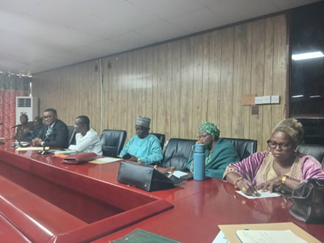
“Parliament is not here to intimidate institutions,” Hon. Konneh stated. “Our mandate is to support your work, identify the challenges you face, and ensure that institutions entrusted with managing national resources deliver effectively for the people of Sierra Leone.”
He said the meeting was prompted by increasing reports of illegal construction on road reserves and persistent land disputes, particularly in the Western Area.
According to him, concerns about land management have also reached the highest level of government.
“The President himself has expressed concern about the number of land issues being reported to him directly,” Konneh said. “Institutions created to manage land must take responsibility and collaborate to resolve these problems.”
He also raised concerns about reports of a three-storey private school building in the Grafton area allegedly obstructing a designated right of way.
Responding to the committee, SLRA Director General Alfred Jalil Momodu explained that the authority strictly regulates activities within road reserves but continues to face widespread illegal encroachments.
“Between 2020 and 2025, the Sierra Leone Road Authority received more than four thousand applications relating to right of way usage,” Momodu revealed. “Out of those applications, only seventy-eight were approved. Most of the structures currently occupying road reserves are completely illegal,” he stated.
He explained that road reserves are designated spaces reserved for future road expansion, as well as utilities such as electricity supply, water pipelines, and telecommunications infrastructure.
“We always include clear conditions in our agreements that, if government needs the land for development purposes, those structures must be removed,” Momodu added.
Commissioner General Abubakarr Sappay Foray Musa told the committee that the National Lands Commission was established following landmark land reforms enacted by Parliament in 2022.
“The Commission was created to serve as the central institution responsible for regulating land governance in Sierra Leone,” Musa said. “Our role is to ensure transparency in land administration, investigate disputes, and protect lawful land rights.”
Meanwhile, SALHOC Director General Joseph Munda Sandi acknowledged the significant challenges facing the corporation, particularly in relation to housing development.
“SALHOC was established in 1982 to drive government housing initiatives,” Sandi explained. “However, one of our biggest challenges today is the absence of a land bank that can attract investors to support large-scale housing development.”
Supporting his Director General, Deputy Director General Emmanuel A. Tommy also highlighted structural issues affecting the corporation.
“SALHOC was set up as a social enterprise,” Tommy told the committee. “But over the years, the institution has struggled with limited resources and structural challenges, which have affected its ability to fully deliver on its mandate.”
Committee member Alex Mattia Rogers also raised concerns about the complexity of land documentation and the apparent overlap in institutional responsibilities.
“There appears to be confusion over who exactly has authority over certain land matters,” Rogers observed. “If we do not clearly define those responsibilities, these conflicts will continue.”
Concluding the meeting, Chairman Konneh emphasized the need for stronger coordination among all institutions responsible for land governance.
“The solution lies in collaboration,” he said. “When these institutions work together effectively, we can minimize land disputes and ensure orderly national development.”
The committee is expected to continue consultations with the Ministry of Lands and other stakeholders before the end of the parliamentary recess, as part of efforts to address the country’s persistent land governance challenges.