

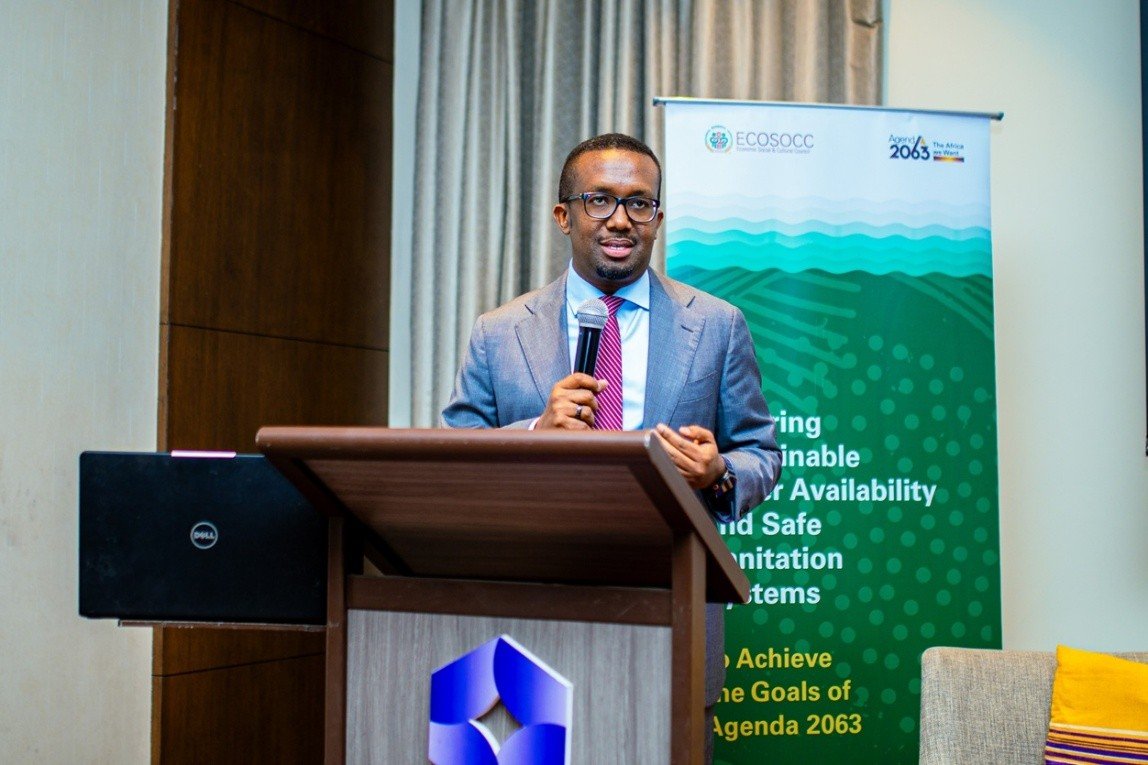
The President of the Federation of African Journalists (FAJ), Omar Faruk Osman, has called for stronger and better-supported media systems across Africa to safeguard information integrity in the face of growing climate misinformation.
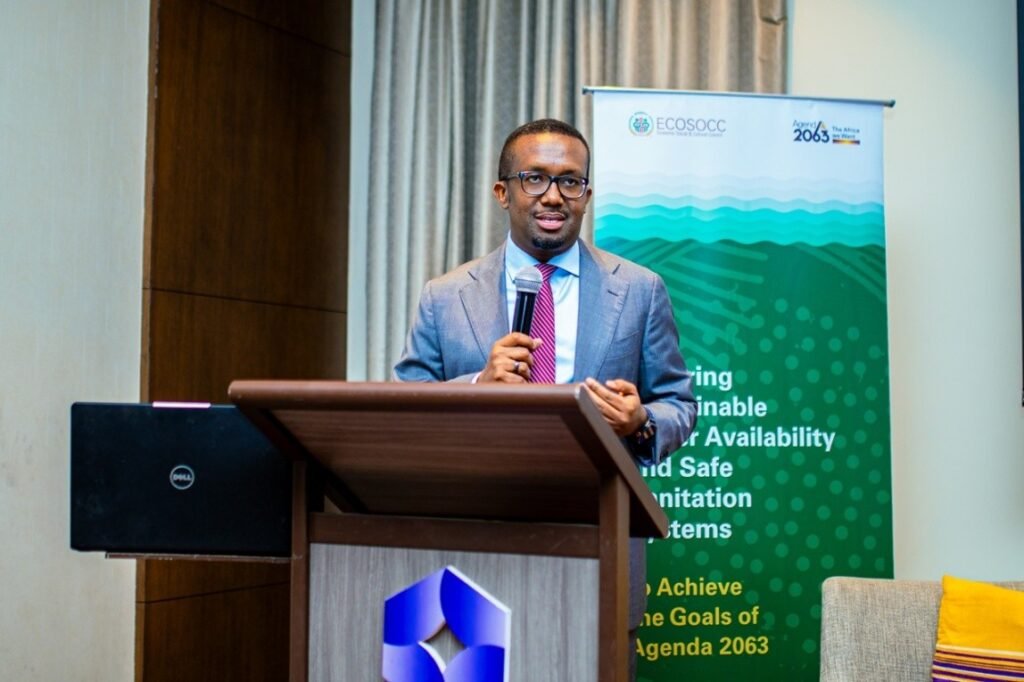
Speaking at a high-level side event during the recent Summit of the African Union in Addis Ababa, convened by the Federation of African Journalists (FAJ) in collaboration with AU ECOSOCC and supported by Oxfam, the FAJ President underscored the critical role of professional journalism in advancing climate justice and accountability across the continent.
Addressing policymakers, development partners and civil society actors, Omar emphasised that climate change represents not only an environmental emergency, but also an information challenge requiring coordinated continental action.
In his remarks, the FAJ President stressed that journalists are central to ensuring transparency in climate finance, exposing greenwashing practices, and amplifying the voices of communities most affected by droughts, floods and displacement.
He noted that while Africa contributes the least to global greenhouse gas emissions, it bears a disproportionate share of climate impacts. This imbalance, he argued, makes accurate and accessible information essential for democratic participation and accountability.
“Information integrity is fundamental to climate governance,” he stated, highlighting the need for professional, ethical and well-supported journalism to counter misinformation and politically motivated distortions of climate narratives.
Omar warned that misinformation thrives where media systems are weak. Across many African countries, he observed, newsrooms struggle with limited resources, shrinking budgets, and insufficient access to scientific data.
He called for sustained investment in media capacity, including training, data access, investigative reporting support and stronger institutional frameworks for journalism.
According to him, strengthening journalism is not optional; it is a prerequisite for effective climate action.
“When professional journalism is supported and independent, public trust is strengthened. And without public trust, climate policies cannot succeed,” he emphasised.
The FAJ President urged the African Union and international partners, including the European Union, to prioritise media development within climate governance frameworks.
He advocated for: open and transparent access to climate finance data; support for investigative climate reporting; protection and safety guarantees for journalists covering environmental issues; and direct institutional partnerships with FAJ to coordinate continental responses.
Omar stressed that climate information integrity must be embedded within broader policy discussions at continental level, rather than treated as an afterthought.
He reaffirmed FAJ’s commitment to working collaboratively with regional bodies, civil society organisations and media institutions to strengthen climate reporting standards and accountability mechanisms.
Under his leadership, FAJ has increasingly positioned itself as a continental voice for journalists’ rights and professional standards in emerging global policy areas, including climate governance.
Concluding his intervention, Omar reiterated that the fight against climate misinformation must be anchored in strong, independent journalism.
“Climate justice requires informed citizens,” he noted. “And informed citizens depend on credible journalism.”
His remarks reinforced FAJ’s role as a key institutional stakeholder in Africa’s climate discourse and highlighted the Federation’s readiness to engage constructively with continental and international partners to safeguard information integrity.