

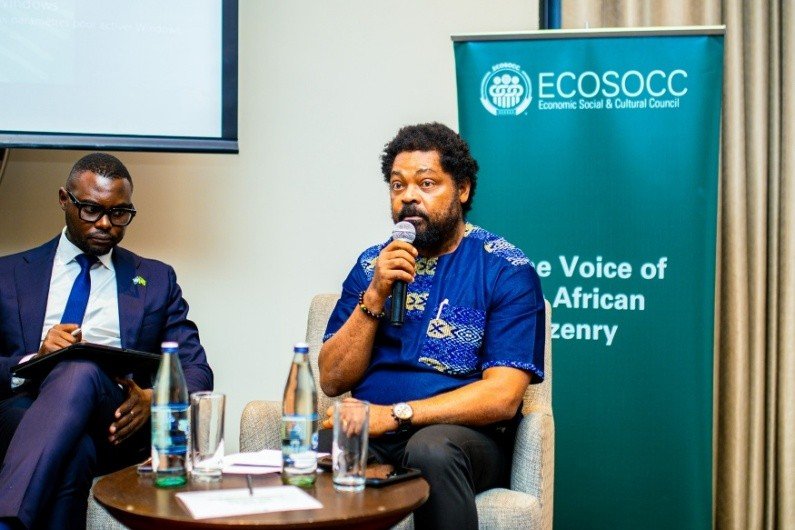
At a high-level side event during the recent Summit of the African Union in Addis Ababa, convened by the Federation of African Journalists (FAJ) in collaboration with AU ECOSOCC and supported by Oxfam, the Chair of the Climate Working Group of the Federation of African Journalists (FAJ), Ahmed Sahid Nasralla, delivered a strong and solution-driven intervention on preserving information integrity around climate change in Africa.
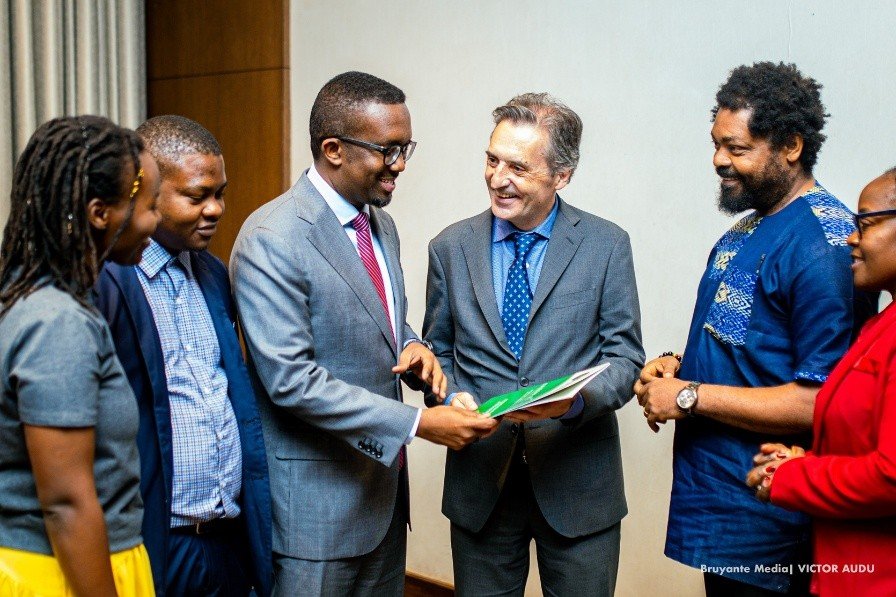
Addressing policymakers, development partners and media stakeholders, Nasralla framed climate misinformation not merely as a communication problem, but as a justice issue.
“Africa contributes less than four percent of global greenhouse gas emissions, yet we suffer some of the most severe impacts,” he stated. “If climate justice is our goal, then information justice must be our foundation.”
In his presentation, he shifted the debate from abstract concerns about “fake news” and “dis/misinformation” to structural realities facing African newsrooms.
He highlighted that many journalists covering climate issues operate without science desks, without access to data tools, without training in interpreting complex reports such as those produced by the Intergovernmental Panel on Climate Change (IPCC), and without sustained newsroom funding.
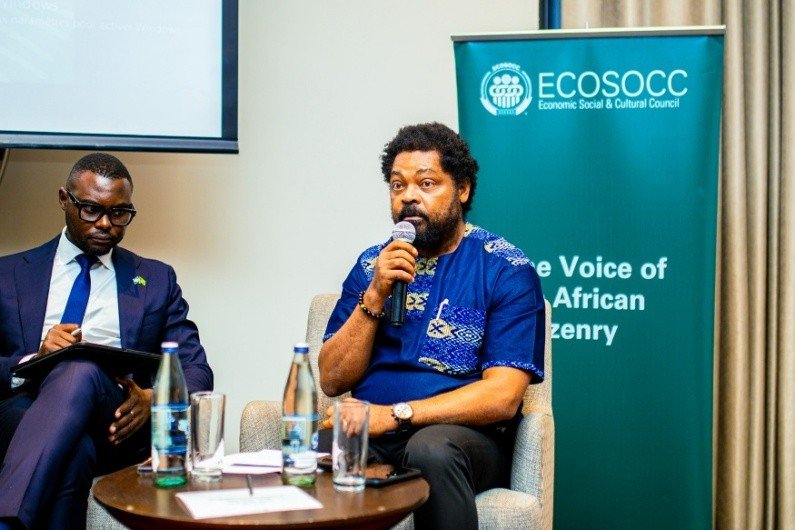
“IPCC reports run into thousands of pages. The average African reporter works under tight deadlines, in under-resourced environments, and often without specialised training. Complexity becomes confusion, and confusion creates space for distortion,” he noted.
Nasralla further warned of the growing risks of climate disinformation and greenwashing across the continent, citing cases where extractive companies brand themselves as environmentally responsible, carbon credit projects displace communities, and climate finance announcements fail to materialise.
“Without strong investigative journalism, greenwashing can easily become policy,” he cautioned.
The rise of social media as a primary news source for millions of Africans, combined with shrinking newsroom budgets, he argued, has made the situation more urgent. Climate reporting in many countries remains project-based and donor-dependent.
“When funding ends, coverage disappears. That is not a problem of dis or misinformation. That is structural fragility,” he said.
Moving beyond diagnosis, the FAJ Climate Chair outlined practical steps the Federation is prepared to implement.
Drawing from his experience with the iVerify factchecking platform he established with support from UNDP and partners during the 2023 elections in his country, Nasralla proposed the establishment of a Pan-African Climate Verification Network: a small, coordinated system of trained journalists across regions capable of responding rapidly to viral climate misinformation and producing regular integrity briefs.
He also announced plans for a multilingual Climate Reporting Toolkit to simplify complex concepts such as climate justice, loss and damage, carbon markets and just transition for African journalists, alongside a verified Climate Source Directory linking reporters to trusted scientists (especially African scientists), meteorological agencies and climate finance experts.
“FAJ is not here only to convene workshops. We are here to build systems,” he stressed.
During the interactive session, he expanded on FAJ’s institutional response, explaining that the Federation has already taken proactive measures at continental level.
He informed participants that FAJ has formally established a Climate Working Group, which he chairs, with a clear mandate to strengthen climate journalism across Africa.
The Working Group, he revealed, has developed a structured two-year strategic plan focused on capacity strengthening, verification mechanisms, source networking, cross-border collaboration and institutional sustainability.
Importantly, FAJ has also begun gathering country-specific data through its national unions and associations across the continent. The information being collected includes: the state of climate impacts in each country; progress and policy developments; major crises and emergencies; priority areas requiring intervention; and the status of journalist networks covering environment and climate change.
This continental mapping exercise aims to produce a comprehensive African climate media report highlighting intervention areas by country, region and thematic cluster.
He made it clear that FAJ does not view climate change as an environmental beat alone.
“At FAJ we see climate change from a broader perspective, not just an environment subject matter,” he emphasized. “It is a human interest story, a political story, a financial story, a migration story, a peace and security story, and ultimately a livelihood story.”
He stressed that the Federation understands the climate challenge within the African context, where drought affects food security, floods disrupt education, mining impacts communities, and climate finance often lacks transparency.
“FAJ is not waiting for donor funding before organising itself,” he added. “We are building the foundation first, because climate information integrity in Africa must be owned by African institutions.”
Meanwhile, in a respectful but firm appeal to partners including the African Union and European Union, he urged support for newsroom systems rather than conferences alone.
He called for investment in climate desks within newsrooms; open and simplified climate finance data dashboards; support for investigative reporting grants; inclusion of press freedom protections within climate governance frameworks; and the establishment of an AU–FAJ Climate Information Integrity partnership platform.
“If climate data is not publicly accessible, misinformation will thrive,” he warned.
The immediate past president and Ex Officio of the Sierra Leone Association of Journalists (SLAJ) concluded with a line that resonated strongly in the room:
“Climate justice begins with information justice. Without trusted information, there can be no public trust. And without public trust, climate action cannot succeed.”
The intervention positioned FAJ as a strong participant in continental climate discussions, but more importantly as an institutional partner ready to safeguard information integrity as a pillar of Africa’s climate future.