

By Ishmail Saidu Kanu
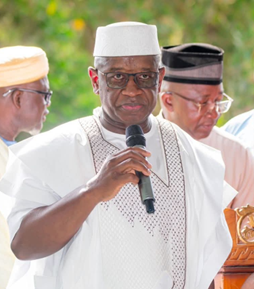
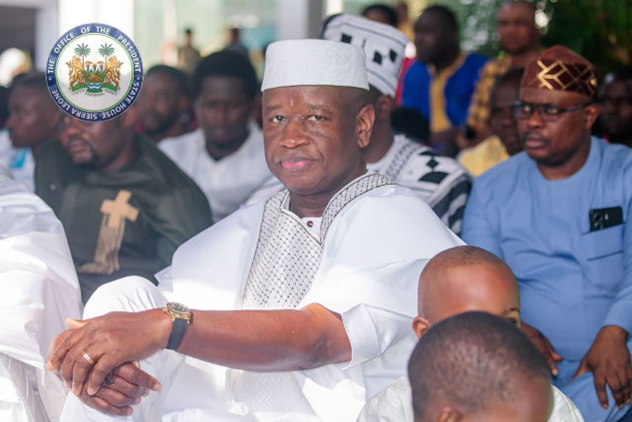
President Julius Maada Bio, on Friday, participated in Eid-ul-Fitr prayers at State Lodge, conveying an address that foregrounded the principles of national cohesion, tolerance, and responsible citizenship.
In his remarks, the President issued a cautionary admonition against malice, observing that “God doesn’t hear bad prayers” and underlining the ethical notion that ill intent ultimately rebounds upon its originator.
The President urged citizens to embrace a practice of mutual goodwill, citing the multiplicative social and moral benefits of communal prayers and positive civic engagement.
President Bio’s address further demonstrated a jurisprudential awareness of social stability, expressing concern over the corrosive effects of political polarization on the collective spirit of goodwill and public trust.
He invoked the normative principles of empathy and neighbourly love as foundational to a stable civil society, stressing that these duties transcend sectarian or socio-economic divisions.
The President recounted his presence in the Middle East at the outbreak of the US, Israel-Iran conflict, mentioning the speculative claims circulated on social media suggesting he was ‘stranded’ or gravely ill. In response, he stated candidly: ‘By Allah’s grace, I won’t have cancer and only God would determine my return to Him; nobody else’.
Bio categorically dismissed these assertions, affirming the theological principle that “only God determines life and death,” while simultaneously underscoring the practical importance of international cooperation in facilitating his safe repatriation to Sierra Leone.
In assessing the broader socio-economic implications of global instability, President Bio clarified that rising fuel prices and the escalating cost of living are externally driven phenomena, not attributable to domestic policy failures.
The President also lauded Sierra Leone’s enduring tradition of religious pluralism, emphasising the peaceful coexistence of Christians and Muslims, including the shared observance of periods of fasting; a testament to the country’s constitutional commitment to freedom of religion and civic harmony.
The President called upon citizens to uphold principles of collective responsibility and moral rectitude, even towards those with ill intentions, while expressing optimism that future leadership will continue to develop public interest and national development.
He acknowledged the inherent constraints of governance, noting that leadership entails profound responsibility, legal obligations, and the recognition of systemic limitations.