

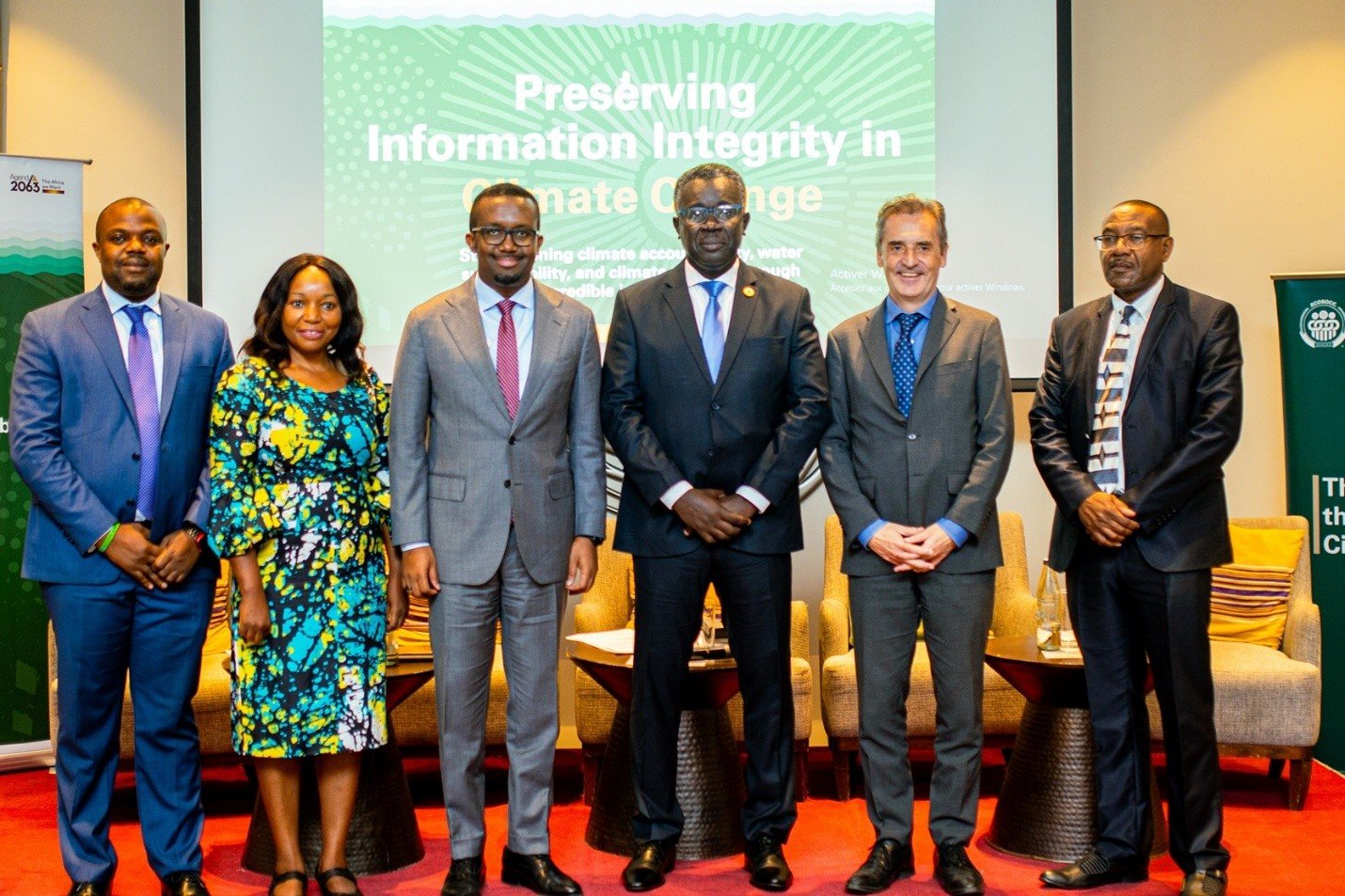
A high-level side event held on the margins of the recent Summit of the African Union in Addis Ababa brought together policymakers, media leaders and development partners to examine the growing challenge of preserving information integrity around climate change in Africa.
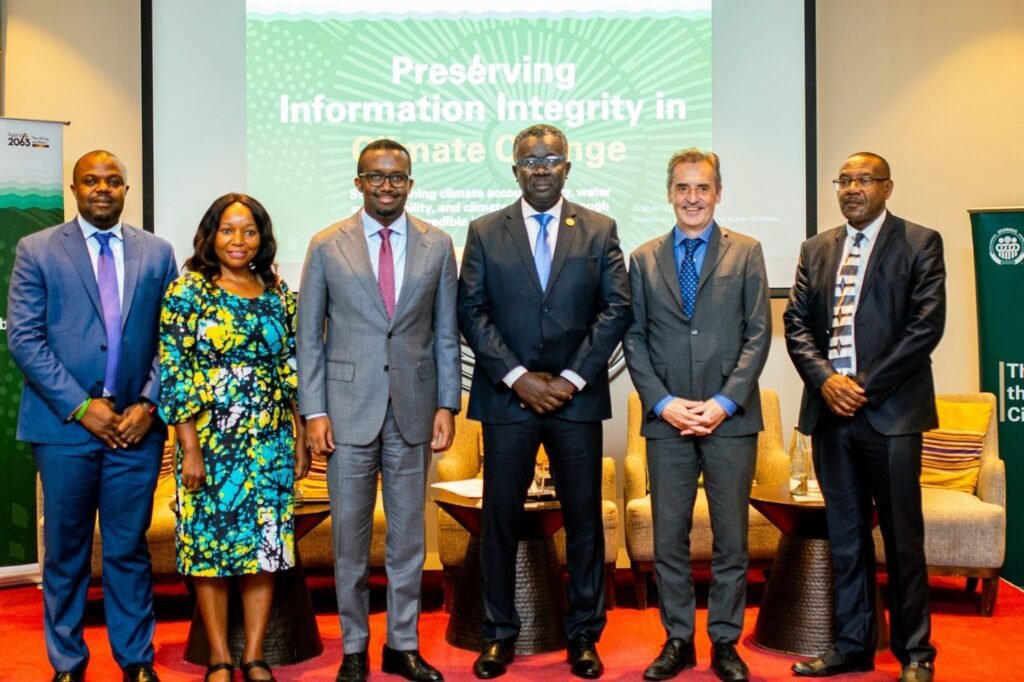
The event, convened by the Federation of African Journalists (FAJ) in collaboration with AU ECOSOCC and supported by Oxfam, focused on the intersection between climate justice, media accountability and governance transparency.
Speakers agreed that while Africa contributes less than four percent of global greenhouse gas emissions, it faces some of the most severe consequences of climate change, including drought, flooding, food insecurity and displacement.
Several contributors warned that climate misinformation and greenwashing are emerging as serious governance risks across the continent.
Panelists noted that extractive companies increasingly market themselves as environmentally responsible while communities raise concerns about land use, displacement and environmental degradation. Others pointed to climate finance pledges that are announced publicly but are slow or unclear in implementation.
Participants emphasised that without transparent data, public access to environmental impact assessments, and investigative journalism, misinformation can undermine public trust in climate action.
A recurring message throughout the session was that climate misinformation is not merely a communications issue, but a structural challenge linked to weak information systems.
Discussions highlighted the realities faced by African newsrooms covering climate change.
Many media houses lack specialised science desks, data journalists or sustained funding for investigative reporting. Climate coverage in numerous countries remains project-based and donor-driven, making it difficult to institutionalise reporting on climate accountability.
Speakers observed that the rapid growth of social media as a primary news source has intensified the spread of unverified claims, with misinformation often travelling faster than evidence-based reporting.
Participants stressed that strengthening professional journalism through training, data access and institutional support is central to protecting information integrity.
In his remarks, FAJ President Omar Faruk Osman underscored the essential role of professional journalism in ensuring transparency, accountability and public participation in climate governance. He called for stronger continental partnerships to reinforce media systems and safeguard journalists covering environmental issues.
The Chair of the FAJ Climate Working Group, Ahmed Sahid Nasralla, further outlined practical initiatives the Federation is preparing to implement, including a Pan-African Climate Verification Network, a multilingual Climate Reporting Toolkit and a verified database of African climate experts accessible to journalists across the continent.
He also informed participants that FAJ has already established a Climate Working Group with a structured two-year strategic framework aimed at strengthening systems rather than organising isolated events.
In addition, FAJ has begun gathering country-level information through its national unions and associations to map climate impacts, priority intervention areas and the status of environmental journalism networks across Africa. The exercise is expected to inform a comprehensive continental climate media report.
Speakers emphasised that climate change should not be treated as a standalone environmental beat, but as a cross-cutting issue affecting health, migration, livelihoods, politics, finance, peace and security.
Throughout the event, there were strong calls for the African Union and international partners, including the European Union, to invest in sustainable media systems.
Recommendations included:
• Establishing open and simplified climate finance data dashboards.
• Supporting investigative reporting grants.
• Funding newsroom infrastructure rather than short-term conferences.
• Embedding press freedom protections within climate governance frameworks.
• Creating structured partnerships between AU and EU institutions and FAJ.
Participants agreed that information integrity is foundational to climate justice and that credible journalism remains a pillar of democratic climate governance.
As discussions concluded, the message from Addis Ababa was clear: safeguarding climate information in Africa requires policy commitments, and most importantly resilient media institutions capable of holding power to account and informing citizens accurately.