

One of the key military figures convicted of crimes against humanity for his involvement in Guinea’s 2009 stadium massacre has died in custody, authorities say.
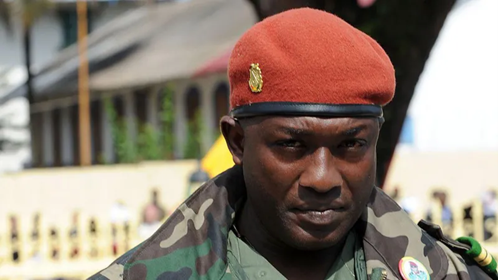
Aboubacar Sidiki Diakité – also known as Toumba – died early on Wednesday in hospital following a medical emergency, the prison administration said.
He was serving a 10-year sentence for his role in one of the darkest episodes in Guinea’s history in which more than 150 people were killed in the capital, Conakry, as they demanded an end to military rule. At least 109 women were also raped.
While in custody, Diakité remained a controversial figure, creating a political party and attempting to run for president.
Last year, he declared his intention to stand in the presidential elections, which was rejected by the Supreme Court after it ruled he was ineligible.
At the time of the massacre, Diakité was commander of the presidential guard and a close ally of Guinea’s then military ruler, Moussa Dadis Camara.
According to the prison administration, Diakité was declared dead at the Samory Touré Military Hospital in Conakry, where he was taken late on Monday.
Citing his medical report, the administration said he presented symptoms characterised by gastric swelling, abdominal pain and constipation.
His death has prompted mixed reactions in Guinea where memories of the 2009 violence remain politically sensitive, with people still waiting for justice.
One political expert likened his death to “the end of an era”, telling the BBC: “He died, but the full truth died with him.”
Tens of thousands of people had gathered at a stadium on 28 September 2009 to protest against the possibility of Camara running for president.
On Camara’s orders, security forces opened fire on the crowd. More than 150 people were killed and hundreds more injured.
According to judicial findings, at least 109 women and girls were also raped.