

By Lemuella Tarawallie
The AIDS Healthcare Foundation (AHF) Sierra Leone, in partnership with civil society organizations and development partners, on Wednesday, 10 June 2026, has launched the Freedom from Debt Campaign in Sierra Leone, while also reaffirming its commitment to strengthening pandemic preparedness and community resilience across Sierra Leone.
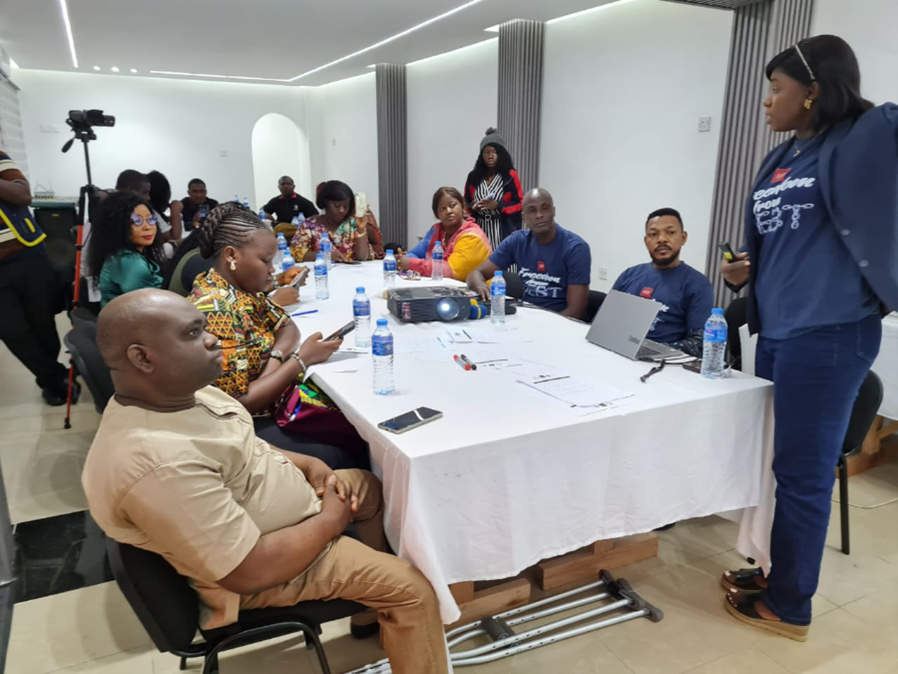
During the launch at the Family Kingdom Conference Hall in Aberdeen, Freetown, AHF Sierra Leone’s Advocacy and Protection Manager, Esther Teh, in her statement, described the initiative as a national and global movement advocating for debt justice, fiscal accountability, and sustainable public financing.
She said the campaign seeks to draw attention to the growing burden of sovereign debt on developing countries and its impact on essential public services.
According to Teh, more than 3.3 billion people globally live in countries that spend more on debt interest payments than on health or education, while more than 45 countries allocate more resources to debt servicing than to healthcare.
“The Freedom from Debt Campaign reframes sovereign debt as a human rights issue. Nations should not be forced to choose between paying creditors and keeping their citizens alive,” she added. She disclosed that Sierra Leone’s public debt stock stood at NLe 62.7 billion, equivalent to approximately US$2.61 billion in 2025, with external debt
accounting for NLe 42.9 billion and domestic debt amounting to NLe 20.8 billion.
Teh noted that the growing debt burden threatens fiscal sustainability, public service delivery, and long-term development outcomes.
“The campaign is not against borrowing. It is a call for social justice, equity, responsible borrowing, transparency, accountability, and prudent debt management. Borrowed resources must produce meaningful development outcomes in healthcare, education, agriculture, social protection, and employment,” she emphasized.
She called for greater transparency in public debt management, stronger parliamentary oversight, increased citizen participation in debt-related decision-making, and the protection of investments in critical sectors such as health and education.
During discussions with participants, Teh stressed that excessive debt servicing continues to reduce the government’s ability to invest in social services and development programmes.
Referencing a 2024 global debt analysis, she noted that Sierra Leone spent approximately 148.5 per cent of its revenue and 93 per cent of its expenditure on debt servicing.
“Imagine if those resources were invested in healthcare, education, infrastructure, and social protection. The impact on the lives of ordinary Sierra Leoneans would be significant,” she said.
Meanwhile, AHF Sierra Leone Medical Manager, Dr. Ifeanyi Egeonu, delivered a statement on behalf of the AHF Sierra Leone Country Director during the launch of the Freedom from Debt Campaign.
Dr. Egeonu said the initiative reflects a shared commitment to strengthening community resilience and preparedness for future public health emergencies.
He recalled Sierra Leone’s devastating experience during the Ebola outbreak between 2014 and 2016, which recorded nearly 9,000 infections and close to 4,000 deaths, severely weakening the country’s health system and disrupting economic activities.
He noted that lessons learned from Ebola, COVID-19, and recent concerns surrounding Mpox have underscored the importance of resilient health systems, rapid emergency coordination, effective risk communication, and strong community trust.
“These experiences have taught us that communities are not only beneficiaries of health interventions but are also the first line of defence during public health emergencies,” Dr. Egeonu stated.
He highlighted the critical role played by community leaders, youth groups, women’s organizations, religious institutions, and local health workers during the Ebola epidemic through surveillance, contact tracing, awareness raising, stigma reduction, and behaviour change communication.
According to him, Sierra Leone has since made significant progress in strengthening pandemic preparedness through enhanced disease surveillance, improved emergency coordination, expanded laboratory capacity, stronger infection prevention measures, and increased community health worker engagement.
Dr. Egeonu noted that AHF Sierra Leone has contributed to these efforts through healthcare worker training, community capacity building, provision of emergency supplies and infection prevention materials, as well as infrastructural support to health facilities.
He urged stakeholders to contribute their expertise, innovations, and experiences towards building sustainable community-driven preparedness systems capable of responding effectively to future outbreaks.
“We recognize that sustainable pandemic preparedness can only be achieved when communities are empowered, informed, and actively engaged in planning and response efforts,” he said.
He further encouraged participants attending the three-day learning sessions to share experiences, discuss challenges, and identify practical solutions that can strengthen preparedness at both community and national levels.
Dr. Egeonu commended the Government of Sierra Leone, civil society organizations, community groups, and development partners for their continued dedication to safeguarding public health and strengthening national resilience.
He reaffirmed AHF Sierra Leone’s commitment to supporting initiatives that promote health security, community empowerment, and sustainable public health systems.
The event concluded with calls for stronger collaboration among government institutions, Parliament, civil society organizations, development partners, the media, and citizens to ensure debt accountability, improved social investment, and greater preparedness for future public health emergencies.
Both Esther Teh and Dr. Egeonu emphasized that sustainable development can only be achieved when countries invest in their people and communities, rather than allowing debt burdens to undermine critical social services and public health systems.
“Freedom from Debt is not just a campaign. It is a movement for survival, justice, and prosperity,” Teh concluded, while Dr. Egeonu called on all stakeholders to work together to build stronger, healthier, and pandemic-ready communities across Sierra Leone.
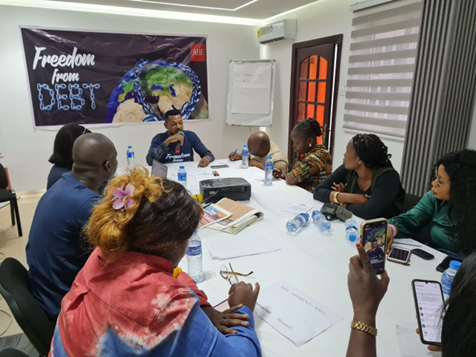
The Freedom of Debt Campaign climaxed with questions from journalists and Civil Society Organizations activists present in the room.