

By Lemuella Tarawallie
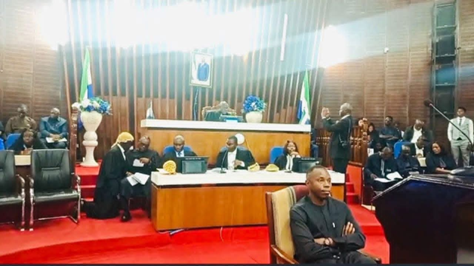
The National Security and Central Intelligence Act 2026 has been enacted into law following its passage through the committee stage of the whole House and its third reading in Parliament.
The new legislation is expected to strengthen Sierra Leone’s institutional capacity to address emerging threats such as terrorism, organized crime, cyber risks, and regional instability, while promoting accountability and adherence to the rule of law.
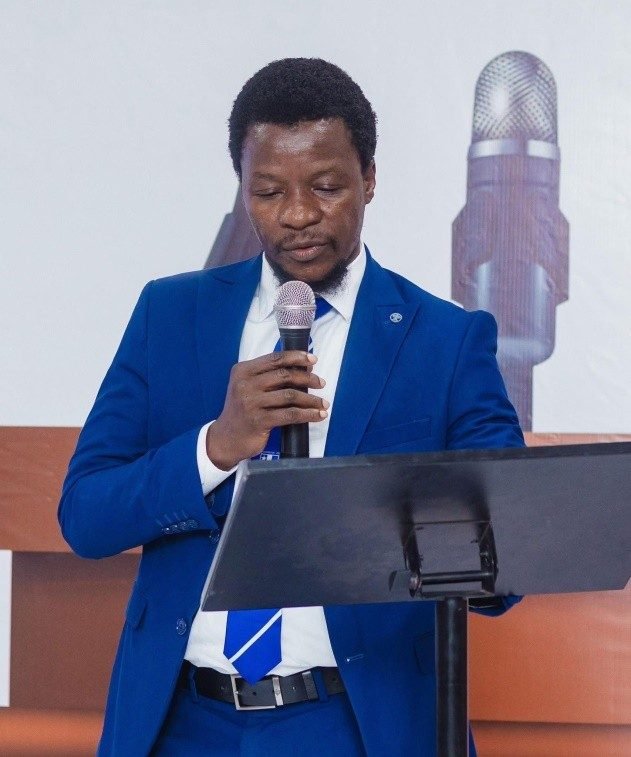
Presenting and piloting the bill in Parliament, Chief Minister Dr. David Moinina Sengeh underscored the depth of legislative scrutiny the bill had undergone. He noted that the Act enhances coordination across all levels of the national security system, from chiefdom and district structures to the National Security Council, while also improving intelligence oversight in line with global best practices.
A key provision of the Act is the establishment of a State Protection Service, tasked with providing mandatory close protection to high-ranking state officials.
Dr. Sengeh emphasized that the legislative process was thorough and inclusive. “This bill was presented over three months ago and has gone through several committee stages. This is the democracy we promised our people, where the wisdom of traditional authorities, the vigilance of civil society, and the contributions of Honourable Members converge to do what is right for our country,” he said.
He further explained that the law is designed to modernize the country’s response to evolving security threats. “This includes protection for the President, the Vice President, the Speaker, the Chief Justice, former Presidents, and former Vice Presidents, among others. It ensures that the guardians of our democracy are adequately protected,” he added.
According to the Chief Minister, the new service will be formed by drawing personnel from existing security institutions. “This is not about creating an entirely new force, but about reorganizing and strengthening existing structures by bringing together personnel from the police and the armed forces, alongside specialized recruits,” he clarified.
He also linked national security to economic development, noting that a stable security environment is essential for attracting investment and sustaining growth. “Security is the foundation upon which development stands. Without it, progress is fragile; with it, opportunities grow for businesses, communities, and future generations,” he said.
However, parliamentary debate on the bill revealed differing views, particularly regarding provisions for state-managed security personnel assigned to former office holders. Some Members of Parliament raised concerns about replacing trusted security aides.
Responding to these concerns, Dr. Sengeh maintained that national security decisions must ultimately rest with the state. “The state has a broader understanding of potential threats. Any changes are made in the interest of safety and national stability,” he stated.
Concluding the debate, the Leader of Government Business, Matthew Sahr Nyuma, described the legislation as timely, noting that it reflects Parliament’s responsibility to safeguard the nation and ensure continuity in governance.
The Speaker of Parliament, Segepoh Solomon Thomas, presided over the proceedings that led to the bill’s passage.
With its enactment, the National Security and Central Intelligence Act 2026 is expected to strengthen Sierra Leone’s security architecture. Attention will now turn to its implementation and the extent to which it enhances public safety and confidence nationwide.