


By Mariama Bundu
A new citizens’ reform initiative, Running Out of Time Salone (ROOTS), was officially launched on Wednesday, 11 March 2026, at LACS Villa on Cantonment Road off Riverside Drive in Freetown, with civil society leaders, media professionals and governance advocates calling for stronger citizen engagement to improve accountability and national development.
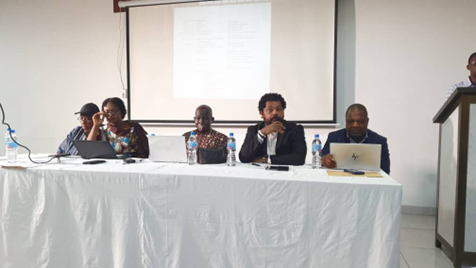
The initiative, described as a non-partisan citizen reform movement, seeks to mobilize Sierra Leoneans across regions, tribes and political affiliations to demand better governance, economic reforms and responsible leadership.
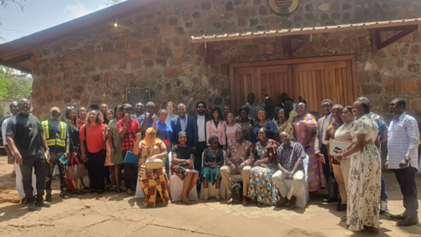
The launch attracted representatives from civil society organizations, the media, governance institutions and development partners, all emphasizing the need for citizens to play a more active role in shaping public policy and holding leaders accountable.
Speaking at the event, the Executive Director of the Institute for Governance Reform (IGR), Andrew Lavali, highlighted the paradox between Sierra Leone’s abundant natural resources and the persistent poverty affecting many communities.
Lavali pointed out that resource-rich areas such as Tonkolili and mining communities linked to rutile production remain among the most deprived in the country despite the wealth generated from those resources.
He also raised concerns about the management of public revenues and national projects, citing examples such as the toll road project and the high cost of obtaining a Sierra Leone passport.
According to him, many citizens feel excluded from decision-making processes and have little confidence in state institutions.
Lavali referenced public perception surveys showing declining trust in key institutions, noting that citizens’ confidence in the police and the justice system has been affected by concerns over accountability and transparency.
He stressed that organized citizens can become a powerful force for change, adding that political parties often maintain the status quo while citizens struggle with economic hardship and poor service delivery. “The power of political parties is nothing compared to the power of organized citizens willing to demand standards,” he said.
Lavali said ROOTS aims to build a nationwide movement that will encourage Sierra Leoneans to engage more actively in governance and demand policies that improve their welfare.
Former President of the Sierra Leone Association of Journalists (SLAJ), Ahmed Nasralla, who facilitated the unveiling of the initiative, described ROOTS as a long-awaited platform to unite citizens around national development issues.
He said the movement is intended to go beyond political party interests and focus on building a stronger civic culture that prioritizes accountability and good governance.
Nasralla emphasized that Sierra Leoneans must begin to demand higher standards from public officials while working collectively to improve the country.
The President of the Sierra Leone Association of Journalists, Alhaji Manika Kamara, officially unveiled the ROOTS logo during the ceremony.
Manika said the initiative aligns with broader efforts to strengthen democratic governance and protect citizens’ rights, including freedom of expression.
He noted that journalists and civil society organizations have long advocated for reforms that promote transparency and accountability, including the repeal of Part V of the 1965 Public Order Act, which previously criminalized libel.
Manika said citizens must continue to exercise their constitutional rights responsibly and contribute to national dialogue without fear of intimidation.
He added that Sierra Leone’s unity should transcend tribal, regional and political divisions. “We have only one Sierra Leone,” Manika said, urging citizens to work together in the interest of the nation.
Chairman of the Political Parties Regulation Commission (PPRC), Emmanuel Koivaya Amara, officially launched the movement and commended its focus on civic participation and policy engagement.
Amara noted that democracy should not be limited to elections but must also involve ideas, policy debate, accountability and active citizen participation.
He said the mandate of the commission is to ensure political parties operate in accordance with democratic principles and the laws of Sierra Leone.
According to him, a politically informed and organized citizenry can help improve the quality of political debate and encourage political parties to focus on development policies and national solutions. “The democratic future of Sierra Leone will be stronger when citizens are active participants in shaping public policy and demanding accountability,” he said.
Hey guys, 55lllogin is the latest one I’m testing. Pretty straightforward. Doesn’t seem to have anything special, but could be worth a quick look. Just my 2 cents. Go see it 55lllogin.
Alright, giving 5557betcasinologin a whirl. That is a mouthful! Site seems okay, but I’m always a bit skeptical at first. Let’s see if it delivers. Worth checking out 5557betcasinologin.
What’s up gamers? 44winlogin just popped up. The login process was smooth, which is always a good sign. Now time to see if the games are worth it. Will update you all later! Try it out 44winlogin.