

Gov’t, APC Discuss Electoral Reforms
By Ishmail Saidu Kanu
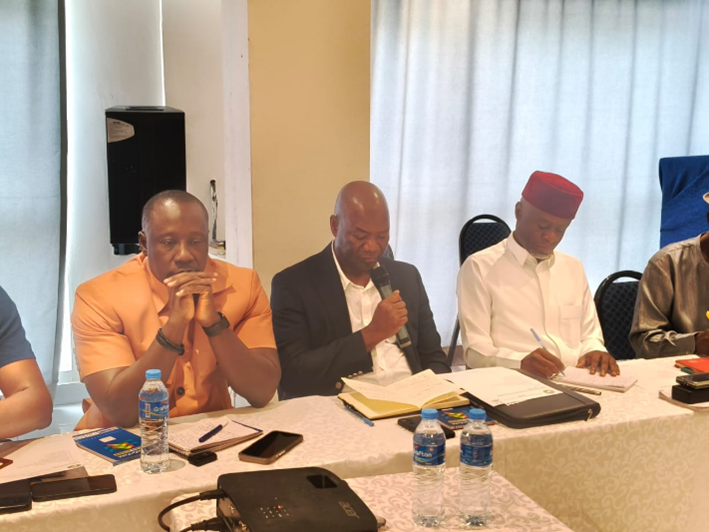
The Independent Commission for Peace and National Cohesion (ICPNC), in the exercise of its statutory mandate to promote peace, prevent conflict, and push national cohesion, convened a high-level roundtable dialogue between the national executive of the All Peoples Congress (APC) and the Attorney General and Minister of Justice, Alpha Sesay Esq, together with his delegation.
The engagement, which took place at the New Brookefields Hotel, provided a formal platform for constructive engagement on matters arising from the 2023 Sierra Leone presidential election and the subsequent establishment of the Tripartite Committee mandated to review aspects of the electoral process and propose reform measures.

Deliberations during the meeting centered on the implementation of the Tripartite Committee’s recommendations and addressed several issues raised by the APC relating to census credibility, transparency and accountability in electoral administration, challenges associated with voter registration processes, and cartographic exercises relevant to electoral boundary considerations.
Concerns were also articulated in respect of the recent appointment of Edmond Sylvester Alpha, who was sworn into office by President Julius Maada Bio at State House on 3 March 2026. The matter was discussed within the broader context of institutional confidence and public trust in electoral governance structures.
In his remarks, Attorney General and Minister of Justice Alpha Sesay Esq stressed that dialogue remains the most appropriate and constitutionally consistent mechanism for addressing political grievances and institutional concerns.

The AG underscored the importance of sustained engagement among political actors and stakeholders in order to strengthen democratic governance, promote national stability, and ensure that electoral reform processes are conducted within the framework of transparency, legality, and mutual respect.
The meeting was attended by international partners in an observer capacity, including representatives from the United Nations, the United Nations Development Programme, and the Economic Community of West African States (ECOWAS), indicating the broader international interest in supporting democratic governance and institutional stability in Sierra Leone.
Executive Secretary of ICPNC, Hawa Samai, noted that the continuation of structured dialogue and institutional engagement remains essential to sustaining the progress achieved thus far.
She further mentioned that the Commission will facilitate additional consultations with relevant institutions and technical committees in order to address the specific concerns raised and to promote inclusivity, transparency, and accountability within the ongoing electoral reform process.
Through these engagements, the ICPNC continues to discharge its mandate as an independent peace infrastructure institution by promoting dialogue, mitigating political tensions, and nurturing consensus-based approaches to resolving national issues.
The Commission reaffirmed its commitment to supporting processes that strengthen democratic institutions, uphold the rule of law, and maintain sustainable peace and national cohesion in Sierra Leone.