

By Lemuella Tarawallie
The Parliamentary Oversight Committee on Defence has summoned officials of the Republic of Sierra Leone Armed Forces (RSLAF) and the Ministry of Defence to clarify widespread public allegations regarding the reported sale and relocation of Juba Barracks.
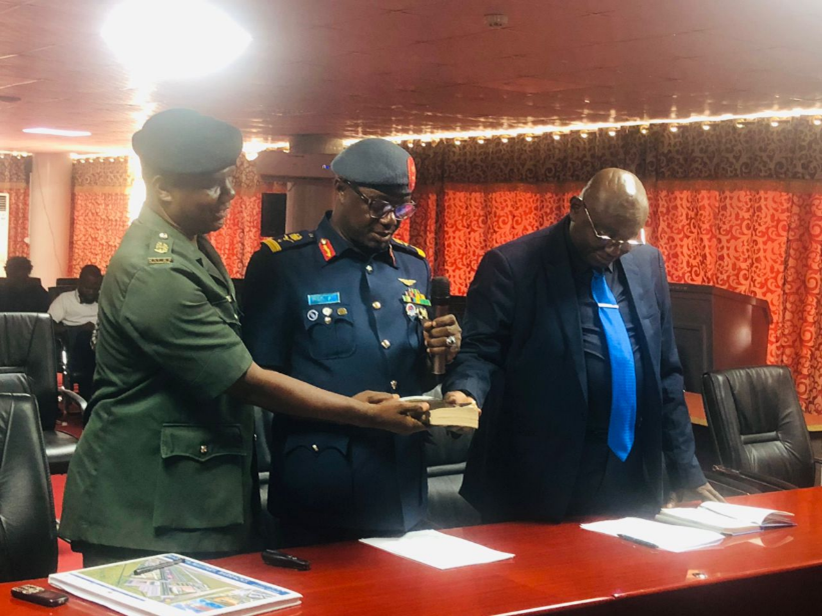
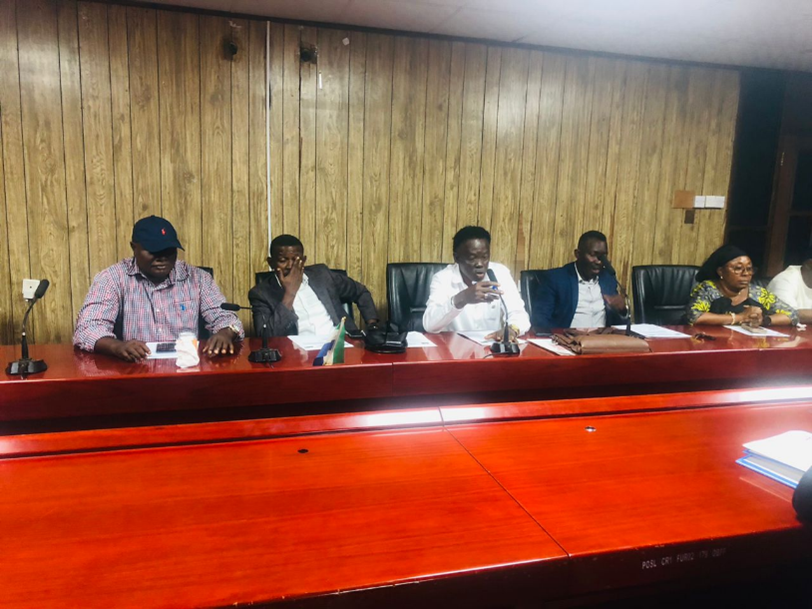
Chairperson of the Committee, Hon. Alex Mattia Rogers, said the decision to summon officials of the RSLAF and Ministry of Defence followed intense media speculation claiming that Juba Barracks had already been sold.
“We have brought this to the attention of the public because of the sensitivity of the issue,” he stated.
“There have been widespread allegations in the media that Juba Barracks has been sold. As a legislative oversight body, it is prudent that we call you to provide clarification.”
He emphasized that the Committee derives its authority from Section 93 of the Constitution, which empowers parliamentary committees to investigate ministries and departments and grants them powers similar to those of the High Court, including summoning witnesses.
The Committee requested three critical documents: the military relocation plan, a temporary accommodation strategy, and a formal report on the state and condition of Juba Barracks.
Director General of the Ministry of Defence, Mr. Gilbert Cooper, confirmed receipt of the notification and assured members that the Ministry was prepared to provide the requested documentation.
Mr. Cooper disclosed that the matter was deliberated at a Defence Council meeting held on 30 December 2025. He explained that the Defence Council, chaired by President Julius Maada Bio, instructed the Ministry to explore options, including a possible trade-off arrangement to construct new barracks in Masiaka or another suitable location.
However, he categorically denied claims that the property had been sold.
“I want to state clearly that this is still at the planning stage. We have not finalized any plan, and Juba Barracks remains government property,” he said.
Chief of Air Staff, Air Commodore Hassan Sei Coomber, painted a stark picture of conditions at the 65-year-old facility.
“When Juba Barracks was built, it was at the extreme end of the city. Today, the facilities are no longer befitting for 21st-century soldiers,” he said.
He revealed that only about 30 percent of personnel are accommodated within the barracks, despite the force numbering between 7,000 and 8,000.
“People are now using toilets to sleep in. People are using kitchens to sleep in. The sanitation is poor. This affects health, administration, and operations,” he stressed.
Three options were presented to the Defence Council: a Public-Private Partnership (PPP), phased development in installments, or a conditional trade-off. While the PPP model appears most viable, he emphasized that no buyer has been selected and no land has been sold.
“Transparency and accountability will guide the entire process,” he assured, noting that collaboration would involve the Ministry of Lands, the Assets Commission, the Ministry of Works, civil society, and the Attorney General’s Office.
Committee member Hon. Juliana Fatorma commended the presentation but questioned why Parliament was only being formally engaged now, despite discussions reportedly dating back to 2024.
“Are you going to tell us that the barracks is not for sale, but rather it is just relocating?” she asked.
She also raised concerns about environmental assessments, Sierra Leone’s weather vulnerabilities, and whether part of Juba Barracks would be retained for emergency access.
Hon. Alpha Foday Maddie Jabbie strongly supported the initiative, describing Juba Barracks as a congested post-colonial structure plagued by poor sanitation and civilian encroachment.
“Our military personnel sacrifice their lives to protect this country. It is only right to improve their living conditions,” he said.
Hon. Princess Kadie Daramy urged the Ministry to maintain consistent communication with Parliament.
“On social media they ask us what is happening, and we cannot answer. Please keep us informed,” she said.
Hon. Soriba Turay also weighed in, emphasizing the need for due process, national interest, and proper valuation should any trade-off arrangement proceed. He cautioned that matters relating to strategic state assets must be handled with utmost care and transparency to avoid public distrust.
“We must ensure that whatever decision is taken protects national security and serves the best interest of the people of Sierra Leone,” he stated, adding that Parliament must not only be informed but actively involved at every critical stage of the process.
In his closing statement, Chairperson Rogers noted that substantial clarification had been provided and cautioned against misinformation.