

By Lemuella Tarawallie
The United Nations Children’s Fund UNICEF has supported the Ministry of Basic and Senior Secondary Education (MBSSE) to develop a comprehensive advocacy and communication strategy to strengthen Early Childhood Education (ECE) in Sierra Leone.
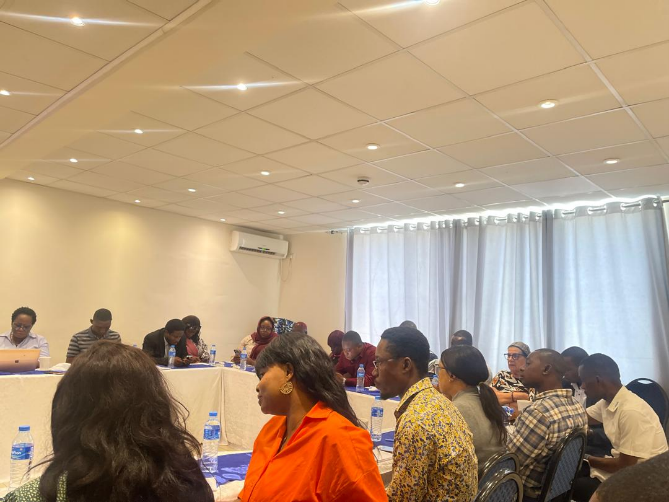
The engagement, held at New Brookfields Hotel, brought together government officials, development partners, civil society actors, education stakeholders, and journalists in a design clinic. Principal Consultant of Beyond Group, Abdullah Tajwar, said the clinic built on two weeks of interviews and community discussions to identify challenges and gaps.
Tajwar highlighted the national commitment to early learning. “Whoever we have spoken to, whether part of the Ministry of Education, another ministry, civil society, an NGO, or even a teacher in a remote village school, everybody has expressed passion for education,” he said. He emphasized that educating children at a young age has positive returns across their educational lifecycle.
Five core priority areas emerged. On school feeding, stakeholders noted that nutrition is inseparable from learning, but pre-primary learners are largely excluded. Tajwar questioned whether universal coverage is feasible if updated data increases the number of pre-primary schools.
Teacher stipends were another key issue. Many pre-primary teachers in several districts remain unpaid despite meeting Teachers Service Commission licensure requirements. Communities often attempt to fund salaries, but these arrangements are unsustainable. In Port Loko, some teachers are leaving classrooms for better-paying mining jobs, a trend that could undermine instructional quality.
Supervision and monitoring challenges were also discussed. School Quality Assurance Officers are overstretched, leading to inconsistent data and weak feedback between districts and headquarters.
Infrastructure gaps were highlighted, including lack of teaching materials, poor water, sanitation and hygiene facilities, and absence of classrooms specifically designed for early learners.
On public financing, Consultant Katherina Klindtwart noted that although free education at age five has increased enrolment, funding for pre-primary remains limited, with current government commitment reportedly at about two percent compared to earlier references of eight to ten percent.
Alimatu Macintyre raised concerns over data discrepancies. She stated, “There are inconsistencies in the Foundational Learning Network database regarding the number of recognised pre-primary schools.
The programme’s financing, she noted, is supported through government collaboration with partners and sector ministries, including Agriculture and Health. Theodore Knox-Gibe explained, “We have a lot of partners that can also do it,” adding that pre-financing arrangements are sometimes used before reimbursements are processed. He clarified that partners such as the World Food Programme and Plan International support financing, while food preparation and supervision are handled at the school level. “The school itself does it,” he confirmed.
Throughout the engagement, discussions focused on who advocacy should target, through which channels, and at what strategic moments. Participants agreed that Early Childhood Education in Sierra Leone is now a national priority.
Stakeholders expressed hope that the new Advocacy and Communication Strategy will lead to stronger financing, improved supervision, sustainable teacher pay, inclusive school feeding coverage, and better infrastructure for Sierra Leone’s youngest learners.