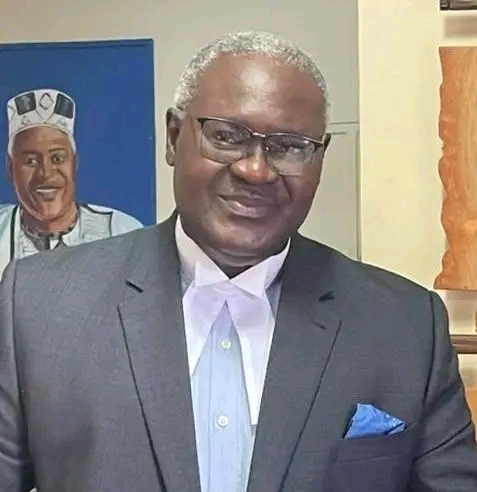


Chief Justice Komba Kamanda
The Judiciary of Sierra Leone continues to face major challenges in delivering timely and effective justice across the country. Limited funding, poor infrastructure, weak case management systems, and a lack of proper housing for judicial officers, particularly in rural areas, are key obstacles affecting the performance of the justice system.
In many provincial areas, courts operate in dilapidated buildings that are unfit for legal proceedings. Judges and magistrates often lack accommodation, making it difficult to post and retain qualified staff in remote districts. The absence of modern case management systems also leads to delays in handling matters before the courts, further weakening public confidence in the justice process.
These issues were outlined in the Justice Sector Half Yearly Report (January-June 2025), produced by the Justice Sector Coordination Office. The report summarizes the activities, achievements, and challenges of ten core justice sector institutions and assesses their performance under the Justice Sector Reform Strategy (2024–2030). It brings out the ongoing efforts to improve access to justice, build institutional capacity, and boost the efficiency of the justice system.
Despite these challenges, the Judiciary, under the leadership of Chief Justice Hon. Komba Kamanda, has made notable progress in 2025. Working under the national Justice Sector Reform Strategy (2024-2030), the Judiciary has focused on improving access to justice and strengthening judicial efficiency.
One major achievement was the launch of a Sexual Offences Model Court in Bo, the first in the Southern Region and the third in the country. The court is designed to speed up sexual offence cases and provide support to survivors, in line with the national “Hands Off Our Girls” campaign. The move is seen as a vital step in protecting vulnerable groups and restoring trust in the justice system.
In April 2025, the Chief Justice also held discussions with the Anti-Corruption Commission to address delays in corruption cases. He reaffirmed the Judiciary’s commitment to fair and timely trials and pointed to ongoing reforms aimed at clearing case backlogs.
The Judiciary also commissioned its first ultramodern law library at the Main Law Courts in Freetown. The facility, which includes an e-library, internet access, and research tools, is intended to boost legal research and support the work of judges, lawyers, and law students. There are plans to extend this initiative to other cities as funding becomes available.
Moreover, seven new magistrates were welcomed through a familiarization session focused on judicial values such as integrity, impartiality, and accountability. The Chief Justice reminded them of their responsibility to uphold public trust through professionalism and ethical conduct.
By Mohamed Kamara