


By Ishmail Saidu Kanu
The 2024 Auditor General’s Report has disclosed findings that raise serious operational concerns regarding the National Emergency Medical Services (NEMS).
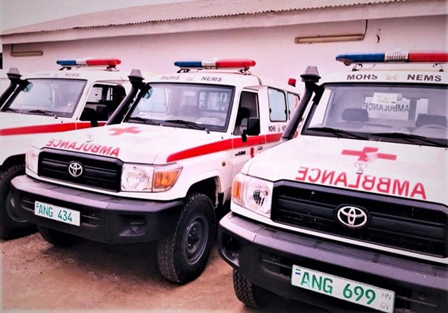
Of particular gravity is the revelation that 85 ambulances were found with empty oxygen cylinders, a circumstance that calls into question the agency’s compliance with minimum emergency medical standards and its duty of care to patients requiring life-saving intervention.
The audit further established that 40 ambulances were grounded at the NEMS workshop in Hastings for prolonged periods without timely remedial action.
Delays in the release of funds for district-level repairs, inadequate inspection and diagnostic procedures prior to maintenance, and disruptions in fuel supply were identified as systemic weaknesses materially affecting service delivery.
In addition, more than 24 ambulances were involved in road traffic accidents during the period under review. The report raises concerns regarding the recruitment of drivers without adequate professional training, thereby exposing the agency to potential negligence claims and liability risks.
An ambulance bearing registration number ANG 443 was reported stolen; however, no police report was presented for audit verification, indicating deficiencies in asset control and accountability mechanisms.
Beyond operational deficiencies, the audit identified major statutory non-compliance.
NEMS failed to remit statutory deductions totaling NLe4,175,582.01, comprising withholding taxes, PAYE obligations, and NASSIT contributions. Such non-remittance may constitute a breach of fiscal and employment-related statutory duties, potentially depriving the State of revenue and adversely affecting employees’ social security entitlements.
Although management asserted that evidence of certain payments was available, no documentary proof was produced for audit inspection, leaving the matter unresolved.
The report also revealed that 100 staff members, including paramedics and drivers, resigned during the year under review, thereby posing a substantial threat to operational continuity.

Compounding these challenges are infrastructural impediments such as poor road conditions, particularly during the rainy season, river crossings in referral cases, and inadequate communication systems in hard-to-reach communities.
In view of these findings, the audit underscores the urgent necessity for corrective measures to ensure statutory compliance, strengthen internal controls, and restore operational integrity.