

By James Conteh
More than 194 vehicles belonging to the Ministry of Health have been declared unroadworthy, with no immediate plan in place for their repair or disposal, according to the latest Auditor-General’s Report.
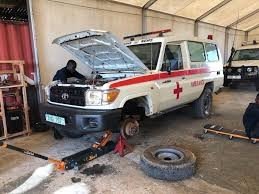
The audit revealed that the Ministry currently faces a shortage of functional vehicles for its operations, even as hundreds remain grounded, some of them abandoned in private garages. In addition, 37 vehicles and 32 motorbikes listed in the Ministry’s asset register were not presented for physical verification, raising concerns over asset management and accountability.
The report also disclosed that assets valued at NLe1.2 million, procured in 2024 for various departments within the Ministry, were neither available for audit verification nor recorded in the official assets register, exposing government property to possible loss or theft.
On infrastructure, the audit found that 12 government hospitals and three District Health Management Team (DHMT) offices, awarded to 15 contractors in 2021 at a cost of NLe75.4 million, remain incomplete four years after contract signing. Despite this, advance payments totaling NLe21.3 million were disbursed to contractors.
Further concerns were raised over the Lumley Government Hospital project, where the Ministry paid US$679,053.33 in full to a contractor less than three months after signing an addendum, even though key components of the work were still unfinished and no third-party verification had been conducted.
The audit also flagged NLe3.4 million paid directly to 13 patients for overseas medical treatment, without justification or supporting documentation showing travel or payment to medical facilities abroad.
While the Ministry explained that some vehicles were unavailable due to emergency operations during the Monkeypox outbreak, the Auditor-General noted that most of the issues remain unresolved, as many assets were still not presented and the asset register had not been updated.
The report recommends urgent engagement with contractors, recovery of funds where necessary, and improved asset management to safeguard public resources and strengthen health service delivery.